
Is Dermatology Really the Best Paid per Hour? Crunching the Numbers
Is dermatology actually the highest paid per hour—or did someone just repeat that on Reddit enough times that everyone took it as gospel?
Let’s cut through the folklore.
People throw around “derm is king for dollars per hour” like it’s a law of nature. Same with “radiology is close,” “gas is good but lifestyle is worse,” and “primary care is doomed.” Most of this is based on vibes, one attending’s life choices, and cherry‑picked anecdotes.
If you care about actual dollars per hour, you have to do something doctors are strangely bad at: math.
Not RVUs. Not gross salary flexed on Instagram. Realistic income ÷ realistic hours, after training, and with some sense of risk and sustainability.
Here’s what the data actually shows.
What the Numbers Say (Not What the Forums Say)
First, anchor the discussion with something real. Let’s pull from ranges you’ll see repeatedly in MGMA, Medscape, Doximity, and compensation reports from large systems and private groups.
Typical attending income ranges (U.S., full-time, clinical, no weird ownership windfalls):
| Specialty | Approx Annual Income Range (USD) |
|---|---|
| Dermatology | $400k – $650k+ |
| Orthopedic Surgery | $600k – $900k+ |
| Radiology | $450k – $700k |
| Anesthesiology | $400k – $650k |
| Emergency Medicine | $350k – $550k |
| Family Medicine | $230k – $320k |
Now, those numbers are useless without hours. That’s where the myth starts to crack.
Realistic weekly hours (clinical + charting + call work, averaged over a year) for non-outlier jobs:
- Dermatology: ~35–45 hrs/week, usually low call
- Radiology: ~45–55 hrs/week, some evenings/weekends/nights
- Anesthesiology: ~45–60 hrs/week, OR cases + call
- Ortho: ~55–70 hrs/week, operative + clinic + call
- EM: ~34–40 clinical hrs/week, but nights/weekends/holidays and burnout tax
- Primary care: ~45–55 hrs/week, endless inbox and click-hell
Let’s turn that into something you can actually compare: dollars per hour.
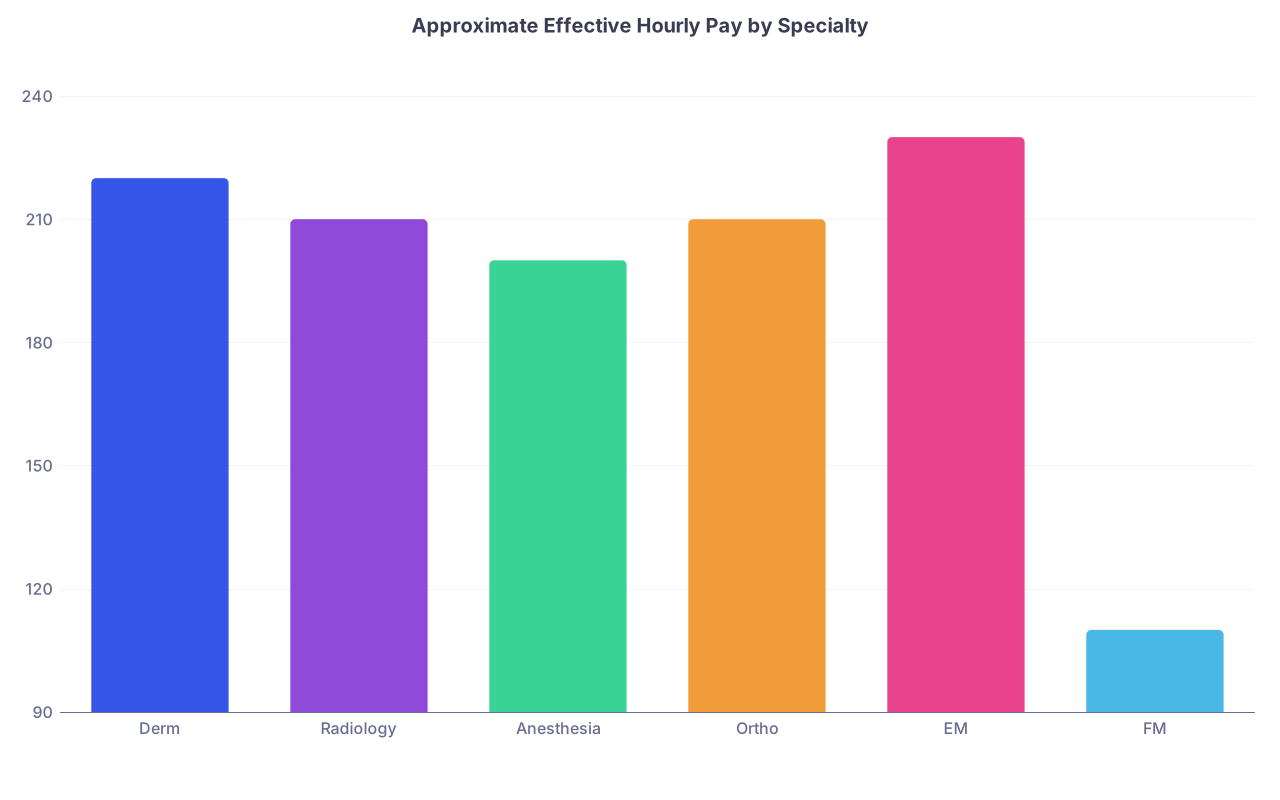
| Category | Value |
|---|---|
| Derm | 220 |
| Radiology | 210 |
| Anesthesia | 200 |
| Ortho | 210 |
| EM | 230 |
| FM | 110 |
These numbers assume:
- Full-time work year (~48–50 working weeks)
- Inclusive of after-hours charting and call work
- Conservative mid‑range compensation
They’re approximate, but close enough to expose the lie: dermatology isn’t some insane hourly outlier. It’s in a tight band with radiology, anesthesia, and EM.
So why does derm get the “best paid per hour” crown?
Because people confuse three separate things:
- Dollars per hour
- Hours that feel humane
- The emotional misery tax of your work
Derm does extremely well on #2 and #3, and “good but not magical” on #1. People remember vibes more than math.
Dermatology: Strong, But Not a Unicorn
Dermatology is a good deal. Very good. But let’s talk specifics instead of fairy tales.
Typical full-time dermatologist in private practice or a decent employed setup:
- Compensation: $450k–$600k is common; $350k academic on the low end, $800k+ if heavy cosmetics/procedures/ownership.
- Schedule: 4 days/week is very common; 32–36 clinical hours, plus a bit of admin.
- Call: Usually light, often phone-only, low acuity. Sometimes basically irrelevant.
Let’s run a pretty standard scenario:
- $500k/year
- 4 days/week, 8.5 hours/day on-site including some charting
- ~48 working weeks / year → 32 hours/week * 48 = 1,536 hrs/year
$500,000 ÷ 1,536 ≈ $325/hour
That looks insane. But here’s the trick: this is a good derm job, possibly with some cosmetics/procedural mix and efficient scheduling. Plenty of people make less, work a bit more, or are stuck in academic underpay.
Take a more conservative derm profile:
- $420k/year
- 4.5 days/week, ~9 hours/day including charting, no major cosmetics
- 48 weeks/year → 40.5 hrs/week * 48 ≈ 1,944 hrs/year
$420,000 ÷ 1,944 ≈ $216/hour
That’s very solid, but no longer mythical.
I’ve seen hospital-employed derms making ~$380k with heavy general clinic, inbox bloat, and 5 days/week. Those come out closer to ~$170–$190/hour. Still good. Not magic.
Now: does derm have excellent control of hours, predictability, and low emotional trauma? Absolutely. That’s part of the appeal. But it’s not mathematically untouchable.
Who Actually Competes or Beats Derm per Hour?
Let’s look at a few common comparison specialties.
1. Emergency Medicine
EM gets a lot of hate recently (and some of it’s deserved: market saturation and corporate staffing problems are real), but on an hourly basis, pure math is pretty favorable.
Common scenario:
- $350–$450k/year
- ~1,500–1,700 clinical hours/year (most full-time groups)
- No charting at home, but nights/weekends/holidays and shift work
Take $400k at 1,600 hours:
$400,000 ÷ 1,600 = $250/hour
That’s better than our conservative derm example and in the neighborhood of a strong derm job.
If you join a high-paying democratic group, rural site, or do more shifts:
- $450k–$500k/year
- 1,700–1,800 hours
$475,000 ÷ 1,750 ≈ $271/hour
So why doesn’t EM get the “best paid per hour” reputation?
Because the hours are at 2 am on Christmas with drunk trauma, psych holds, and no beds. The hour is well paid. The life costs something.
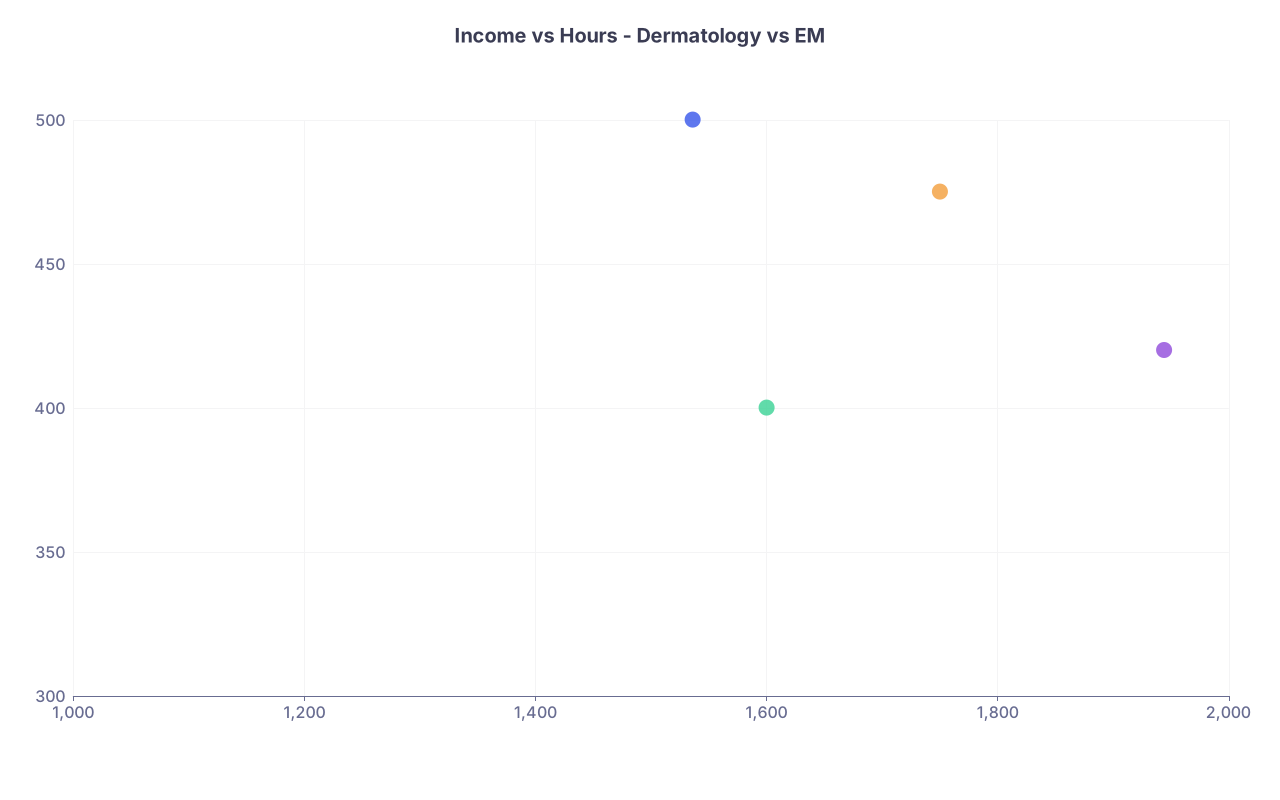
| Category | Value |
|---|---|
| Derm (lean) | 1536,500 |
| Derm (average) | 1944,420 |
| EM (average) | 1600,400 |
| EM (high) | 1750,475 |
(Values in the chart are [hours/year, income in thousands]. It illustrates how similar the slopes really are.)
2. Radiology
Radiology is often the real derm competitor on dollars per hour.
A bread‑and‑butter private practice or telerad job:
- $500k–$650k/year
- ~45–50 hours/week including call/after-hours work
- 48 weeks → say 2,300–2,400 hours/year
$550,000 ÷ 2,350 ≈ $234/hour
Not an outlier. But if you join a high‑productivity telerad group:
- $700k–$900k/year
- ~2,100–2,300 hours/year (some do more, some less)
$800,000 ÷ 2,200 ≈ $364/hour
That beats most dermatology jobs. The catch? Intense sitting work, repetitive mental strain, potential night shifts, and productivity pressure. You can make huge hourly numbers in rads, but it’s not casual.
3. Anesthesiology
A lot of anesthesiologists are essentially getting paid in call and weekend premiums.
Typical employed or group practice anesthesiologist:
- $450k–$600k/year
- 48–55 hours/week including OR time + pre/post work + call
- 48 weeks → ~2,400–2,600 hrs/year
$525,000 ÷ 2,500 ≈ $210/hour
Now look at heavy‑call or locums setups, especially rural/high-need:
- $600k–$800k/year
- 2,500–2,800 hours
$700,000 ÷ 2,650 ≈ $264/hour
Again: solid. In line with derm. But the lived experience is not the same: 5 am starts, long cases, overnight call, airway disasters. You’re buying an hourly premium with bodily wear-and-tear and stress.
4. Orthopedic Surgery
Ortho has huge gross numbers but people forget just how many hours they work.
Average group ortho:
- $700k–$900k/year
- 55–70 hrs/week, real
- 48 weeks → 2,640–3,360 hours
$800,000 ÷ 3,000 ≈ $267/hour
That can outrun conservative derm, but the price is obvious. Long training, physically demanding, high malpractice risk, and brutal call in some areas.
The Part Everyone Ignores: Ownership, Cosmetics, and Risk
If you want to break the game on income per hour, you don’t just “pick dermatology.” You combine:
- Ownership (equity in a practice, ASC, imaging center, etc.)
- High‑margin procedures (cosmetics, Mohs, interventional, pain, etc.)
- Leverage (PAs/NPs, techs, or midlevels doing billable work under you)
- Reasonable hours
That combo exists in multiple specialties.
Dermatology Upside
Where derm can become an hourly monster:
- Private practice with high cosmetic volume (lasers, injectables, cash pay)
- Mohs surgeon + dermatopathology reading
- Multi‑location group with equity and midlevel extenders
I’ve seen real‑world derm setups where:
- Income: $900k–$1.2M+
- Hours: ~40/week, 46–48 weeks
1,840 hours/year at $1M → $543/hour
That’s not normal. That’s entrepreneurial + procedural + leveraged.
But the exact same pattern exists in:
- Pain management (PM&R/anesthesia background)
- Interventional radiology
- High‑end plastics
- Ortho with ASC ownership
So the myth isn’t “derm is best paid per hour.” The reality is: “Owning high‑margin, procedure‑heavy, semi‑elective work is best paid per hour.” Dermatology is simply one of several very good vehicles for that.

| Step | Description |
|---|---|
| Step 1 | Residency Training |
| Step 2 | Stable Income |
| Step 3 | Join Private Group |
| Step 4 | Profit Share |
| Step 5 | RVU Only |
| Step 6 | Higher $ per Hour |
| Step 7 | Go Employed Forever |
| Step 8 | Equity or Ownership |
The Hidden Variable: Misery Discount
If you only look at dollars per hour, you’re doing the same thing as premeds who pick specialties off income charts. It’s naive. The more honest way to think:
Effective value per hour = Dollars per hour − Misery discount
Misery discount is:
- Nights, weekends, and holidays
- Being screamed at by families at 3 am
- Charting at home after your kids sleep
- Moral injury (ordering tests or admits you think are nonsense)
- Procedural stress and complication anxiety
Derm has a very low misery discount. That’s why people worship it. Even if the raw hourly is similar to EM or anesthesia, the felt hourly is much higher.
Rough, non-scientific “misery discount” multipliers (based on burnout data, work environment, etc.):
- Dermatology: subtract maybe 10–20% from raw hourly
- Radiology: 20–30% (isolation, long hours, night work for some)
- EM: 40–60% (shift work, intensity, boarding, violence risk)
- Ortho: 30–40% (hours, physical demand, call)
- Primary care: 40–60% (clicks, inbox, admin BS)
That’s why derm feels like a cheat code. Not because it’s mathematically untouchable, but because the gap between money and pain is unusually favorable.
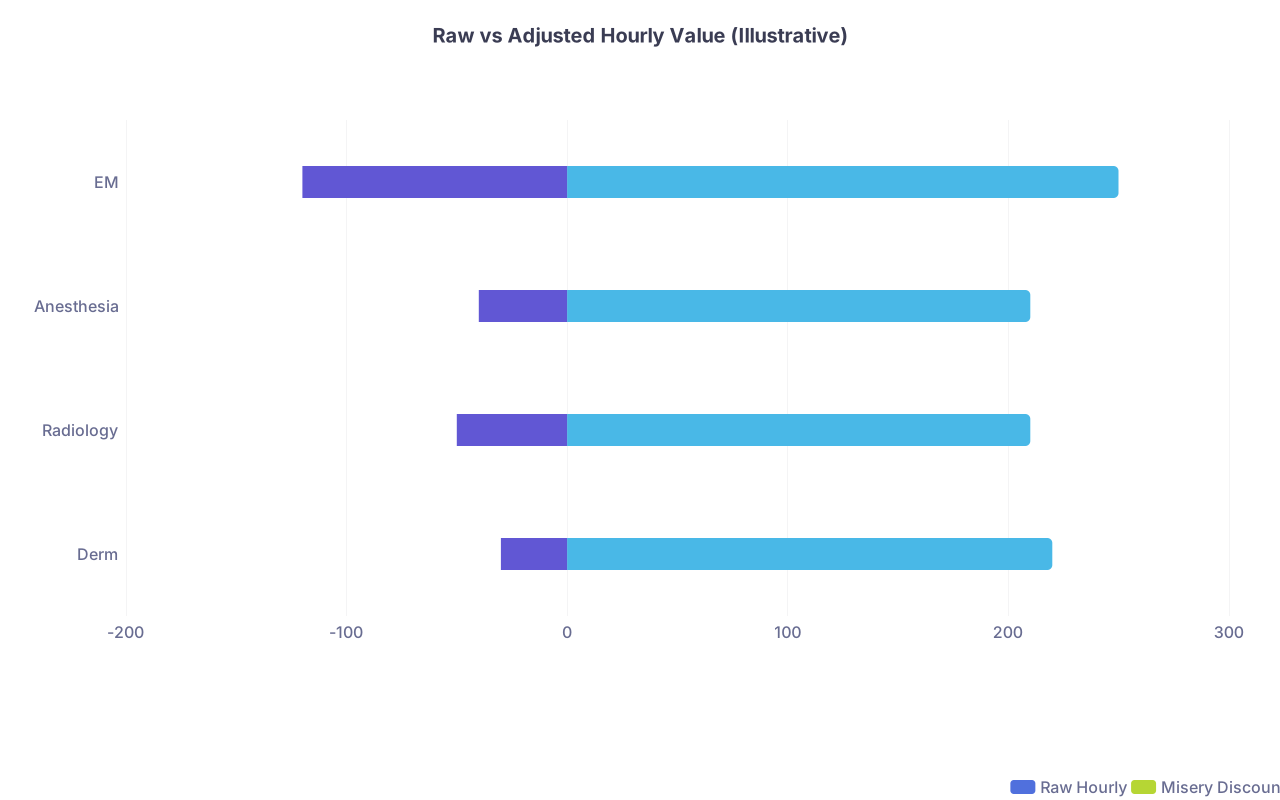
| Category | Raw Hourly | Misery Discount |
|---|---|---|
| Derm | 220 | -30 |
| Radiology | 210 | -50 |
| Anesthesia | 210 | -40 |
| EM | 250 | -120 |
(Again, illustrative, not literal survey data. The point is the relative hit.)
Don’t Fall for the Simplified Leaderboard
Let me be blunt: “Best paid per hour” is a stupid way to pick a specialty. It’s a useful lens—but a terrible master.
Three myths to kill right now:
“Derm is obviously #1 per hour.”
False. It’s among the best, clustered with EM, rads, anesthesia, certain surgical fields, and entrepreneurial pain/IR/plastics. The spread between top contenders is smaller than you think.“If I can’t get derm, I’ve lost the lifestyle-money game.”
Also false. High‑end rads, EM (in the right setup), anesthesia, pain, and some outpatient surgical practices can all create equal or better hourly profiles. The path just isn’t as “clean.”“Income per hour is mostly about specialty choice.”
Only partially true. Your job configuration (employed vs private, academic vs community, ownership vs salary, procedures vs cognitive) often matters as much as the letters after your name.
If you’re trying to be rational:
- First, figure out which kind of work doesn’t make you hate your life by PGY2.
- Then, inside that realm, aim for roles and practice structures that pay well per hour and minimize misery.
You will get more leverage tweaking practice type than quibbling between derm and rads or anesthesia on a spreadsheet.

So, Is Dermatology Really the Best Paid per Hour?
Short answer: No, not reliably. But it’s on the short list, and the life attached to that pay is unusually good.
Mathematically, derm is:
- In the top cluster for income per hour.
- Occasionally the best for individuals with cosmetic-heavy or ownership-heavy setups.
- Often beaten by entrepreneurial rads, pain, EM, highly optimized anesthesia, and some surgical practices on a pure $/hr basis.
Practically, derm is:
- Elite for predictable daytime hours.
- Elite for low‑stress call.
- Elite for low burnout and good control over your schedule.
- Good, not magical, for raw income.
If you chase dermatology purely for the hourly dollars, you misunderstand both the math and the job market. If you respect it as one of several very strong money‑per‑hour and lifestyle options—and pick based on the kind of daily work you can tolerate—that’s rational.
Key Takeaways
- Dermatology is one of the top hourly-paying specialties, not a guaranteed #1; EM, radiology, anesthesia, pain, and certain surgical practices can match or beat it.
- The real advantage of derm isn’t just income per hour, it’s low misery per hour: predictable days, light call, and low acuity.
- Your practice setup—ownership, procedural mix, and hours—moves the needle more than obsessing over tiny differences between “top” specialties on raw income charts.