
Last week I watched a fourth-year scroll through a salary chart on Medscape during a lull on night float. She stared at ortho, plastics, derm, gas… then quietly said, “I don’t want to do any of these. Am I screwing up my future if I pick something lower paid?”
And then she said the line I’ve heard way too often: “What if I regret it forever?”
You’re not crazy for worrying about this.
You see “highest paid specialties” everywhere: ortho, plastics, derm, cards, GI, rad, gas. That same depressing bar chart shows up on every forum, every “Top 10 Highest Paying Specialties” article, every residency gossip thread.
Meanwhile, you’re over here thinking:
- I don’t like the OR.
- I don’t want to be in clinic 90% doing cosmetics / chronic back pain / skin checks.
- I actually like talking to patients.
But also: I have loans the size of a mortgage, I’d like to not panic every time I buy groceries, and the idea of “choosing wrong” feels like a life sentence.
Let’s pick this apart, because there are real tradeoffs here—but the nightmare scenario in your head is way more extreme than reality.
First: No, You’re Not Ruining Your Life If You Don’t Pick Ortho or Derm
Let me be blunt: chasing a specialty you don’t like just for money is one of the fastest paths to a very nice house and absolutely hating your day-to-day life.
I’ve watched:
- A brilliant Step 1 260-something student gun for neurosurgery because “it’s the pinnacle,” only to quit halfway through PGY-2, depressed and wrecked, starting over in neurology.
- An internal medicine resident who “settled” for IM because he didn’t want to work that hard in school, then realized cards/GI/hospital admin pay is actually very solid and aligned more with who he was.
- A derm resident crying in the stairwell because, “I don’t care about another acne follow-up and I feel like a fraud for being miserable in a ‘dream’ specialty.”
Here’s the uncomfortable truth: every specialty has people in it who would trade places with you in a heartbeat if you’re honestly drawn to something else and just scared about salary.
Money fixes some things—loan anxiety, housing, childcare—but it does not fix hating the actual work. If you’re already dreading the core nature of ortho or gas or derm as a student, that doesn’t magically get better when the paycheck is bigger.
What “Highest Paid” Actually Looks Like (Reality vs Panic Brain)
Your brain probably does this thing:
“Top specialty makes $700k. Family med makes $250k. I’m throwing away half a million dollars a year forever if I don’t pick the top-paying one.”
That’s… not how this works.
Let me ground this with rough, rounded attending-level numbers. Yes, these vary by region, private vs academic, procedures, etc., but the order of magnitude holds.
| Specialty | Approx. Annual Salary (USD) |
|---|---|
| Orthopedic Surgery | $600k–$800k |
| Dermatology | $450k–$650k |
| Anesthesiology | $400k–$550k |
| Cardiology (IM subspecialty) | $500k–$700k |
| Emergency Medicine | $350k–$450k |
| Internal Medicine (general) | $250k–$320k |
| Pediatrics | $220k–$280k |
And just to visualize the gap your brain is catastrophizing about:
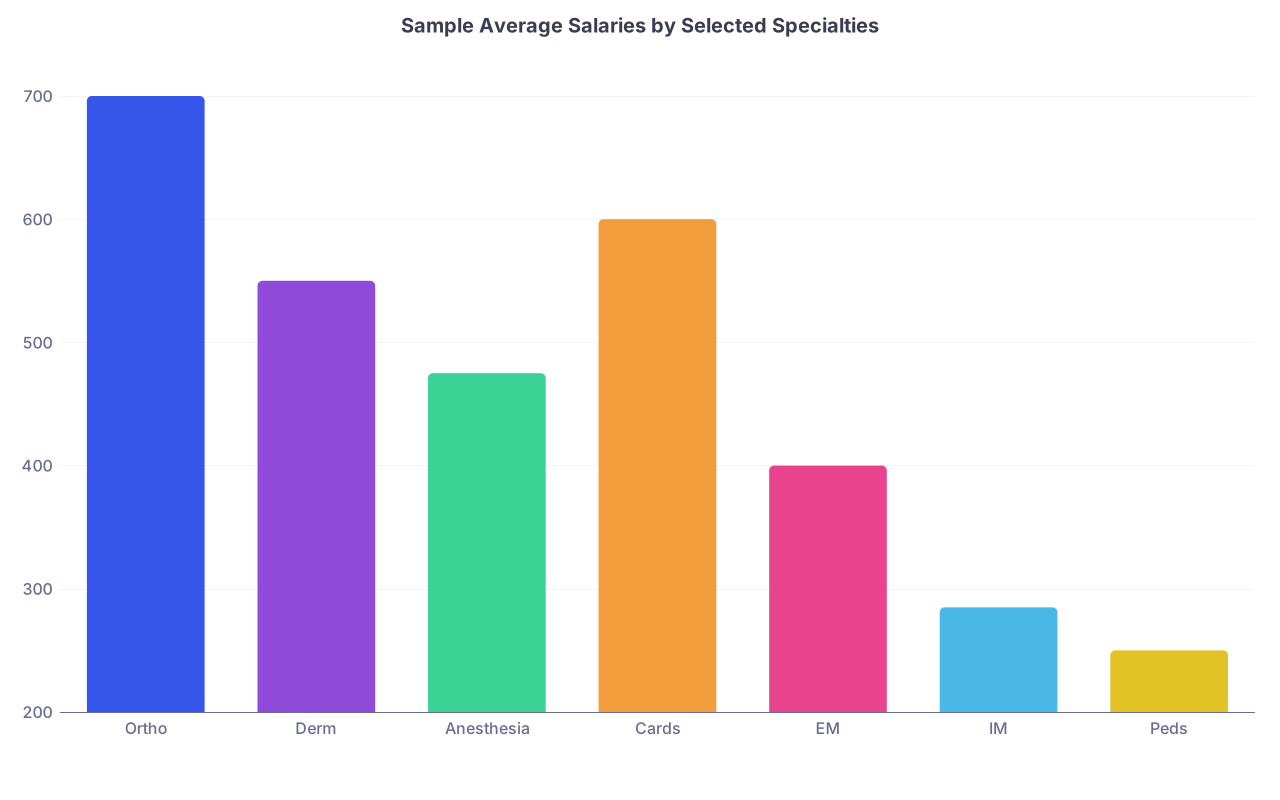
| Category | Value |
|---|---|
| Ortho | 700 |
| Derm | 550 |
| Anesthesia | 475 |
| Cards | 600 |
| EM | 400 |
| IM | 285 |
| Peds | 250 |
Yes, ortho can make way more than peds. That part you’re not imagining.
But here’s what gets lost:
- A general internist or hospitalist making ~$270k in a reasonable COL city can live extremely comfortably.
- A pediatrician married to a non-physician with a solid income can still have a nice house, vacations, kids in activities, retirement.
- A high-paid surgeon in a HCOL city (Bay Area, NYC) can feel constantly squeezed, burned out, paying huge malpractice, paying for private school, buying back time with nannies because they’re never home.
You’re not choosing between “financial stability” and “poverty.” You’re choosing between different flavors of tradeoffs: time, intensity, call, fellowship length, job market, autonomy—and yes, income.
The Fear Underneath: “What If I End Up Poor and Trapped?”
Let’s name the actual monsters under the bed.
Monster #1: Student Loans
You’re thinking: “If I don’t pick a 600k specialty, I’ll drown in loans forever.”
Reality:
Most primary care and IM folks still pay off their loans. It just takes planning instead of brute-forcing it with raw salary.
You can:
- Use PSLF if you’re willing to work for a non-profit system for 10 years.
- Refinance and aggressively pay down in 5–10 years with a moderate lifestyle.
- Combine your income with a partner and hit financial goals a little slower but sanely.
I’ve seen pediatricians with $300k loans who paid them off in under 10 years with discipline and no crazy side gigs. Not because they were secretly rich. Because they weren’t trying to live like an ortho attending in year 1.
Monster #2: Family Expectations / Comparison
There’s a special sting when your family or peers equate “success” with high-paying, flashy specialties.
“I thought you were smart, why not ortho or neuro?”
“You’re only doing family med?”
It hurts. And it messes with your head because you start doubting your own preferences.
The part people don’t say out loud: that same family isn’t the one doing your night shifts. Or being on trauma call. Or telling another family their child died on the table. They don’t carry your pager. You do.
Monster #3: Regret
This is the one that eats you: looking up in your 40s thinking “I should have gone into X, I’d be making so much more by now.”
That’s possible. I won’t lie to you. People absolutely fantasize about other specialties.
But I’ve seen something else much more often: high-paid specialists quietly saying, “If I could go back, I might have chosen something with fewer emergencies / more flexible hours / less pressure.” Regret runs in all directions.
What If I Actually Like the “Lower-Paid” Stuff?
So what if you genuinely like:
- Primary care
- Psych
- Peds
- Hospital medicine
- Outpatient IM
- OB (yes, not usually top-tier pay when you factor lifestyle, especially academics)
You’re not broken. You just don’t line up perfectly with the salary leaderboard.
Where you do have to be smart is how you do that specialty.
For example, in internal medicine:
- General IM in an academic center: lower pay, more teaching/research, often great colleagues, more “prestige” in some circles.
- Hospitalist in a community setting: more shift-based, often significantly higher pay, more autonomy, can stack shifts and take long chunks of time off.
- Outpatient primary care in a high-volume RVU model: can burn you out if you’re not careful, but also can be structured well with team support and decent income.
- Add procedural focus (cards, GI, pulm/crit): yes, these are higher paid, but the path starts with liking IM in the first place.
Same with pediatrics:
- General peds clinic: lower pay, but incredibly meaningful relationships with families.
- NICU / PICU fellowship: higher acuity, more intense, usually higher pay.
- Urgent care peds or locums: different schedule options, sometimes surprisingly competitive pay.
And psych:
- Outpatient: flexible, often concierge / cash options, solid income if you build well.
- CL psych, interventional psych (ECT, TMS), addiction: ways to increase value and income.
The point: you’re not locked into “low paid” versus “high paid.” There’s a wide spectrum within each specialty.
Lifestyle vs Income vs Sanity: The Triangle You Can’t Escape
There’s this unspoken triangle you’re negotiating:
- Income
- Lifestyle (hours, call, nights, weekends)
- How much you actually like the work
You don’t get all three maxed at once. Something always gives.
People get into trouble when they:
- Ignore #3 (liking the work) for #1 (income) and end up burned out and bitter.
- Ignore #1 completely and then panic later when they want a certain lifestyle (home, kids, city) they can’t comfortably afford.
- Assume #2 (lifestyle) will magically appear in any specialty “if they just find the right job.”
Here’s the adult version that no one likes to admit:
You can absolutely be a general internist making 275k, working 40–50 hours/week, enjoying your patients, and feel okay financially if you live in a sensible city and don’t try to emulate an NFL player’s lifestyle.
You can also be an ortho surgeon making 700k, constantly on call, missing holidays, outsourcing half your life to other people, and feel trapped.
Or reverse. Depends on how you set it up.
How to Think About This Without Spiraling
Let me walk you through a more grounded way to approach this, because the endless “what if” loop will eat you alive.
1. Separate “Do I Hate It?” From “Does It Pay Enough?”
First question: “If these specialties all paid the same, what would I actually want to do?”
If ortho, gas, derm, neurosurg still don’t appeal to you when money is taken off the table, that’s a strong signal. That’s not fear. That’s preference.
Then ask: “Is my preferred specialty enough for the life I want, with realistic expectations?”
Not “Can I buy a yacht?”
More like: “Can I support a family, have a decent house, save for retirement, maybe travel sometimes, without living paycheck to paycheck?”
Most residency-trained physicians in the US—even in lower-paid specialties—can answer “yes” to that with some planning.
2. Reality-Check the Numbers With Your Future
Use some back-of-the-envelope math rather than vibes.
Rough version:
- Take a realistic attending salary range in your preferred specialty in a mid-COL area (not San Francisco, not rural nowhere).
- Subtract:
- 20–25% taxes (ballpark)
- 10–20% for loans for 5–10 years
- Housing at a sane percent of take-home
- Reasonable expenses, not Instagram-influencer level
You’ll likely find that:
- You’re not going to be poor.
- You might not be “casually flying first class everywhere” rich. That’s fine.
- You will feel different from peers in tech/finance in some markets; that’s real. But most of them also hate their jobs.
If you like visuals for timelines, here’s roughly how anxiety tends to play out over the training years, regardless of specialty:
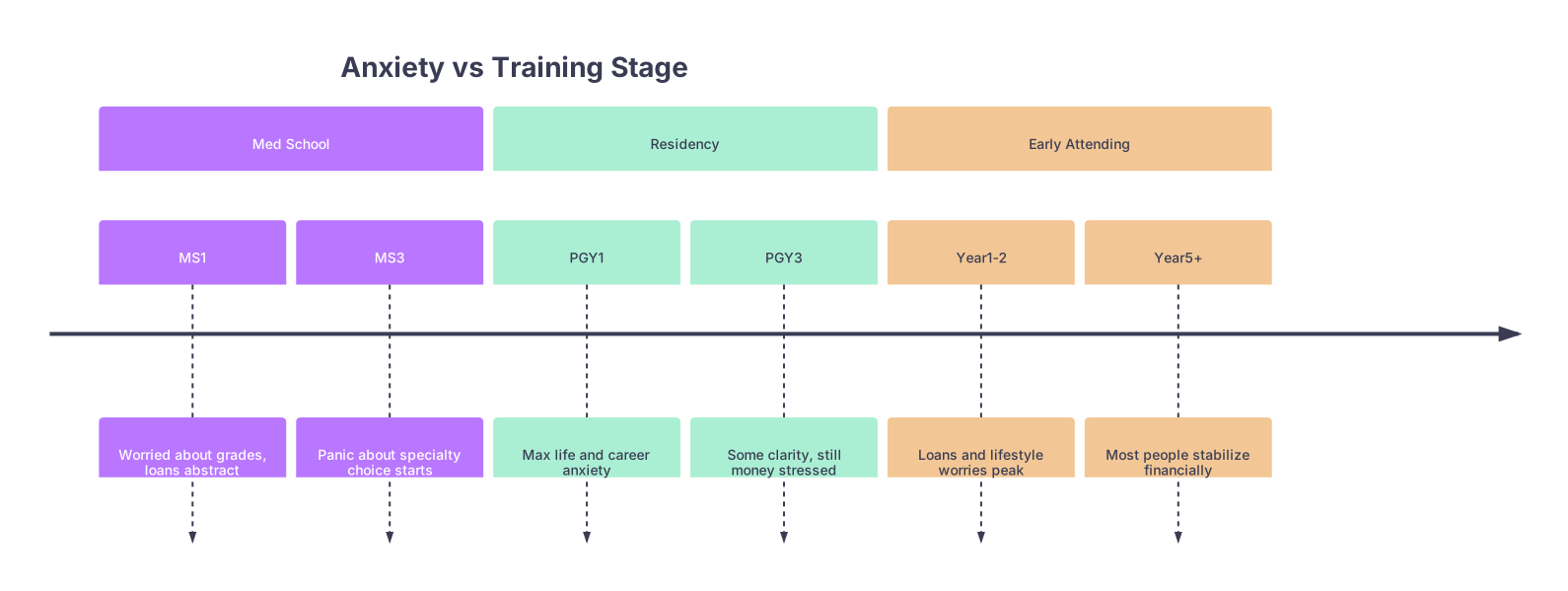
| Period | Event |
|---|---|
| Med School - MS1 | Worried about grades, loans abstract |
| Med School - MS3 | Panic about specialty choice starts |
| Residency - PGY1 | Max life and career anxiety |
| Residency - PGY3 | Some clarity, still money stressed |
| Early Attending - Year1-2 | Loans and lifestyle worries peak |
| Early Attending - Year5+ | Most people stabilize financially |
3. Talk to Attendings Who Actually Live It
Not the ones on YouTube flaunting their Tesla. Real people in real jobs.
Ask them:
- “If you could redo it, would you pick the same specialty?”
- “How do you feel about your income vs the life you want?”
- “What tradeoffs surprise you the most?”
You’ll hear:
- EM docs worried about the job market and burnout.
- Ortho and gen surg folks worried about longevity of operating into their 60s.
- Psych and primary care folks who are quietly content and not on fire internally.
- Specialists making bank who still feel trapped in toxic groups.
Suddenly it’s less “high pay = good life, low pay = misery” and more “everything is tradeoffs, so I might as well pick tradeoffs I can live with.”
You’re Allowed to Want Comfort And A Work You Can Stand
One more thing: don’t swing too far in the other direction and martyr yourself.
You’re not obligated to choose the lowest-paid field to be “pure” or “patient-centered” just because you feel guilty wanting a decent income. That’s another trap.
You’re allowed to:
- Like EM because shift work + good money appeals to you.
- Like cards or GI because procedures + higher pay + complex physiology is your thing.
- Choose a “lifestyle specialty” partially because the lifestyle matters.
Just be honest with yourself. If your gut keeps pulling you toward psych or peds or IM, and the only reason you’re resisting is “but ortho makes more” — please don’t bulldoze your own intuition.
Your future self is the one who has to get out of bed at 3 am for that specialty. Not the Medscape salary graph.
Quick Reality Snapshot: It’s Not All Or Nothing
Here’s a simple comparison, not to sway you one way or another, but to show that it’s not as black-and-white as it feels at 2 am.
| Factor | Ortho Surgery | Hospitalist IM |
|---|---|---|
| Training Length | 5 yrs + fellowship? | 3 yrs IM only |
| Approx Salary | ~$600k–$800k | ~$250k–$350k |
| Call | Heavy, operative | Varies, often shifts |
| Schedule | OR days + clinic | 7 on/7 off typical |
| Lifestyle Control | Moderate | High (shift-based) |
And another view: how much does your actual happiness depend solely on salary versus other factors?
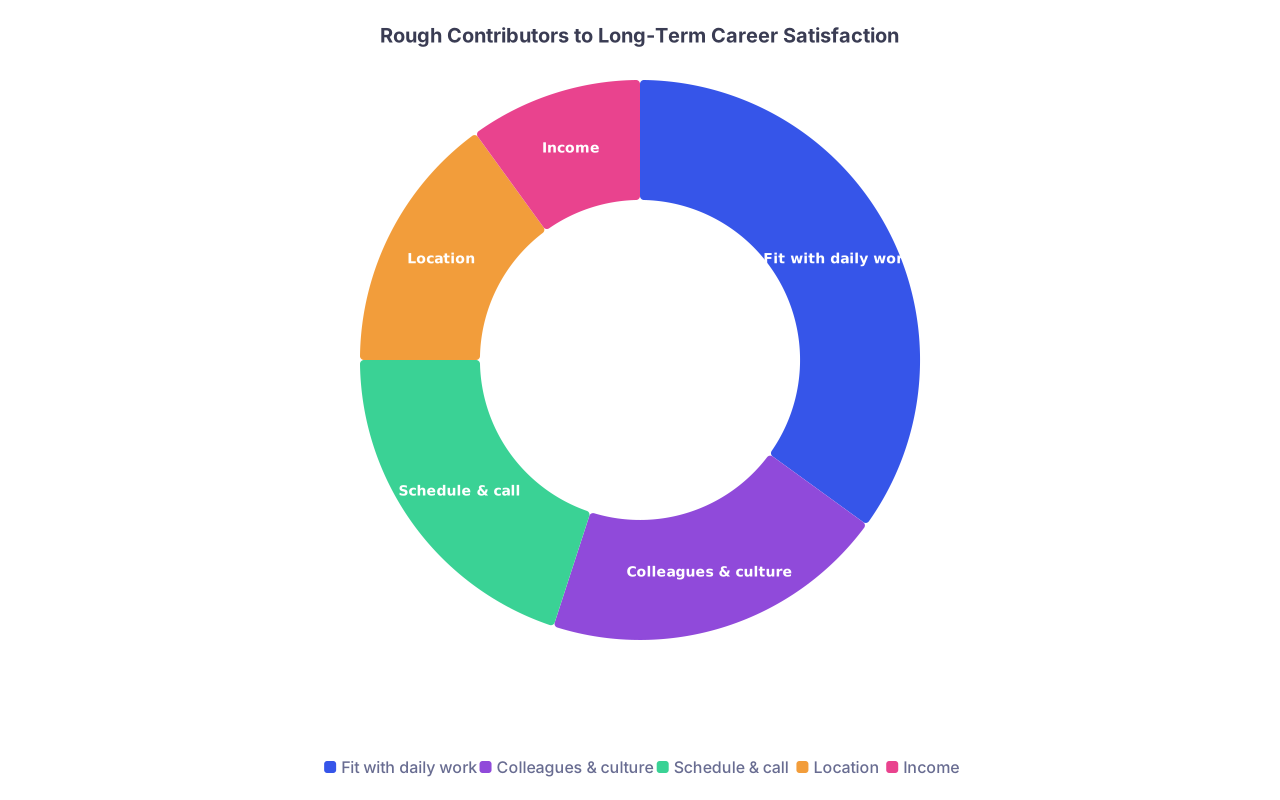
| Category | Value |
|---|---|
| Fit with daily work | 35 |
| Colleagues & culture | 20 |
| Schedule & call | 20 |
| Location | 15 |
| Income | 10 |
Is that scientifically precise? No. But it matches what I hear from attendings again and again. Income matters. But it’s not the whole pie.
FAQ: The Five Questions Everyone Asks But Is Afraid to Say Out Loud
1. Will I regret not going into a higher-paying specialty when I’m older?
Maybe. You might have moments of “what if.” Most people do, no matter what they chose.
But long-term regret usually comes more from hating your day-to-day life than from not maxing out your income. If you pick something you actively dislike just because it pays more, you’re setting yourself up for a different, nastier kind of regret.
2. Can I realistically pay off $300k+ in loans in a lower-paying specialty?
Yes, with planning and patience. People in peds, psych, IM, FM do it all the time. They:
- Pick reasonable cost-of-living locations.
- Avoid lifestyle inflation right after residency.
- Consider PSLF or loan repayment programs. You might not erase them in 3 years like a procedural specialist might, but you’re not doomed.
3. What if my family is disappointed I’m not picking a “prestigious” or high-income specialty?
They might be. That sucks. But they’re not the ones working your call nights.
You’re the one who has to practice this for 30+ years. It’s okay to disappoint people to avoid resenting your entire career. Over time, most families come around when they see you stable, competent, and not miserable.
4. Is it stupid to factor money into my specialty choice at all?
No. Ignoring money completely is just as naive as only focusing on it.
You should absolutely think about:
- Your goals (kids? city vs rural? partner’s career?)
- How much stability you want
- How sensitive you are to financial stress
Just don’t let money be the sole deciding factor when everything in your gut says you’ll hate the actual work.
5. What if I still don’t know what I want and I’m running out of time to decide?
That’s normal. Most people feel at least somewhat unsure when they submit ERAS.
If you truly don’t love any of the ultra-high-paying fields and they don’t fit you well, that’s already information. Focus on the ones that feel “least wrong” when you imagine the day-to-day: clinic vs procedures, acute vs chronic, kids vs adults, shift vs continuity.
You don’t need 100% certainty. You need a specialty where, on your worst day, you can still say, “This sucks…but it’s my kind of suck.”
If you remember nothing else:
- You are not throwing your life away by not choosing the top-paid specialties.
- Money matters, but so does waking up and not dreading the next 10 hours.
- You can build a very comfortable, stable life in “non-elite” specialties if you’re intentional—without selling your soul to a field you secretly hate.