Balancing Work and Life as an IMG Resident: Strategies for Sustainable Success
Becoming an International Medical Graduate (IMG) in residency is an impressive milestone that reflects years of dedication, sacrifice, and resilience. Yet once you match into an IMG residency program, the pressure often increases rather than eases. You are expected to adapt to a new healthcare system, excel clinically, prepare for exams, and often navigate immigration and cultural transitions—all while trying to maintain your physical and emotional well-being.
Achieving a healthy work-life balance during medical training is not a luxury; it is a core professional skill that will sustain your career and protect you from burnout. This guide explores practical, realistic strategies tailored specifically for IMGs to maintain balance, protect their mental health, and still thrive in residency.
Understanding the Unique IMG Residency Experience
Before building a strategy for work-life balance, it helps to clearly understand what makes the IMG Residency journey distinct. Recognizing these unique stressors allows you to anticipate challenges and create targeted coping mechanisms instead of simply “pushing through.”
Cultural and System Adaptation
Many IMGs enter residency after training in a completely different medical environment. Even if your medical knowledge is strong, the “hidden curriculum” in U.S. or Canadian training programs can be unfamiliar:
- Patient expectations may differ (e.g., shared decision-making, informed consent styles, involvement of families).
- Communication norms with nurses, attendings, and other team members can be more informal or more hierarchical than you are used to.
- Electronic health records (EHRs) may be new and initially time-consuming.
- Documentation requirements for medicolegal and billing purposes are often more extensive than in other countries.
This adaptation period can be exhausting, especially when layered on top of long hours. It is important to recognize that this added cognitive and emotional load is real and temporary—you are not “behind,” you are adapting.
Visa, Immigration, and Financial Pressures
For many IMGs, the stress of residency goes beyond clinical performance:
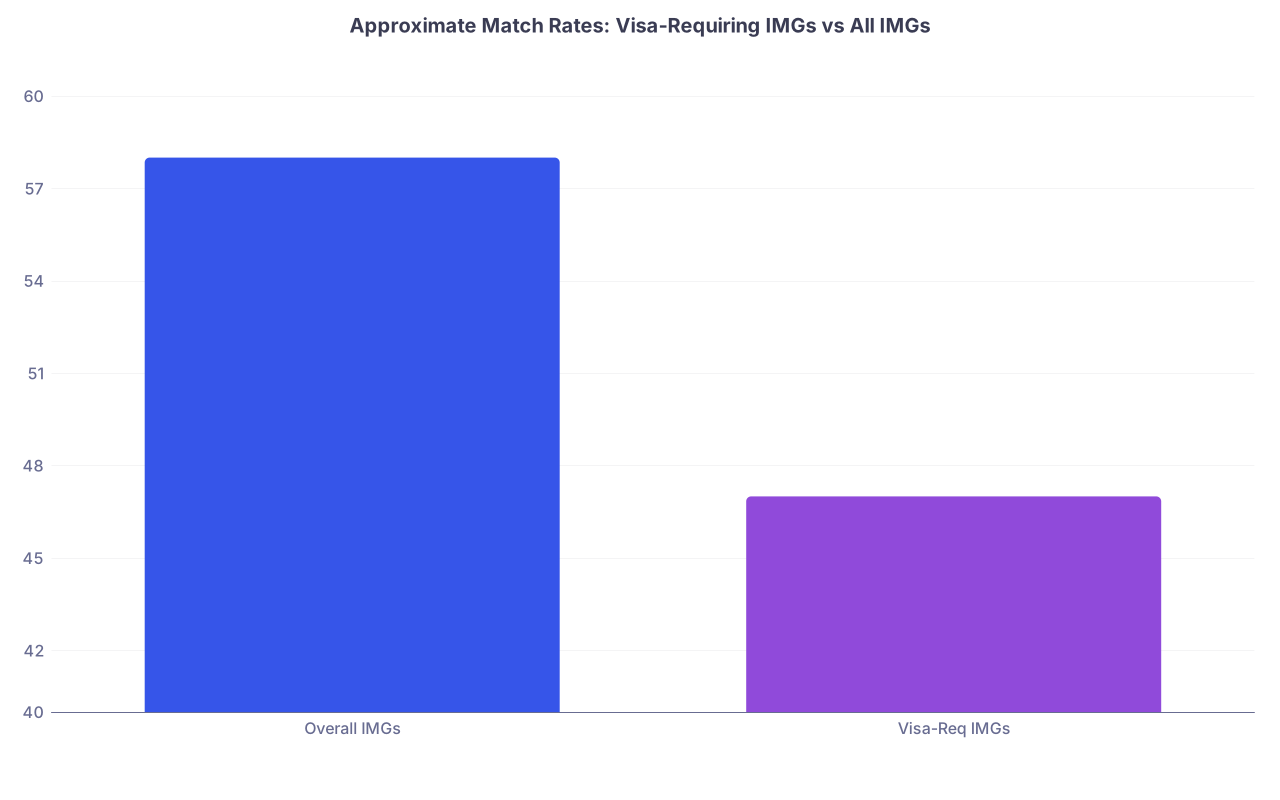
- Visa issues (J-1, H-1B, or others) can create uncertainty about long-term plans.
- Licensing and credentialing steps might still be in progress during early residency.
- Financial responsibilities such as supporting family abroad or managing debt can add additional strain.
These pressures can make it tempting to overwork, accept every extra shift, or neglect rest in an effort to “prove” your value. But sustainable performance requires boundaries and strategic planning, not self-sacrifice without limits.
The Extra Pressure to Prove Yourself
IMGs are often highly motivated and may feel they must exceed expectations to counter biases or assumptions about foreign training. This can lead to:
- Reluctance to say “no” to extra tasks
- Fear of admitting when you need help
- Overstudying at the expense of sleep and self-care
- Difficulty taking vacation or days off
Recognizing this internal pressure is critical. The goal is not to lower your standards but to align them with realistic human limits and long-term career sustainability.
The Challenge of Building a New Support Network
Many IMGs train far from their families and long-time friends. Time zone differences and busy schedules make it harder to stay connected. At the same time, building new relationships in a different culture can feel slow and uncomfortable.
Yet professional connections, peer support, and community are some of the most protective factors against burnout. Prioritizing these from the start is one of the most powerful work-life balance tools you have.

Core Strategies for Work-Life Balance During IMG Residency
1. Setting Clear Boundaries Between Work and Personal Life
Healthy boundaries are not about doing less—they are about protecting the energy you need to do your best work. In residency, where your time is highly structured, boundaries must be intentional and explicit.
Define Your “Protected” Times and Spaces
- Protected time at home: Decide in advance which evenings or parts of the weekend are non-negotiable for rest, family, or personal activities. Treat this time like an important meeting.
- Physical boundaries: Create a small, designated “no-work zone” in your living space where you do not check hospital emails or study (e.g., your bed or dining table).
- Digital boundaries: Turn off non-urgent notifications when not on call; avoid checking work email right before bed or first thing in the morning.
Communicate Your Limits Professionally
- Let co-residents know when you are available and when you are off-duty (as long as it aligns with your program’s expectations).
- If you are consistently overwhelmed, request a meeting with your chief resident or program director to review your schedule and workload.
- Learn respectful phrases such as:
- “I want to do this properly—can we prioritize the most urgent tasks first?”
- “I’m concerned about missing important learning if I stretch myself too thin. Could we discuss how best to distribute this workload?”
Boundary-setting is a skill you will use for your entire career as an attending; residency is where you begin practicing it.
2. Mastering Time Management in Medical Training
Residency will always be busy, but better Time Management can create pockets of rest, reduce anxiety, and improve your academic performance.
Use Prioritization Frameworks
Instead of working from a long, overwhelming checklist, categorize tasks:
- Urgent and Important (e.g., unstable patient, imminent deadlines) – do immediately.
- Important but Not Urgent (e.g., board exam prep, research, visa paperwork) – schedule in your calendar.
- Urgent but Less Important (e.g., some administrative tasks) – try to delegate or batch together.
- Neither Urgent nor Important – minimize or eliminate where possible.
This prevents you from spending your limited energy on low-value tasks while neglecting long-term priorities.
Time Blocking for Predictability
Structure your day into blocks:
- 06:00–07:00 – Exercise + breakfast
- 07:00–17:00 – Clinical work
- 17:00–18:00 – Handover, commute
- 18:30–19:30 – Study/review
- 19:30–22:00 – Dinner, personal time, family calls, relaxation
Even if every day cannot follow the same pattern, having a default template reduces decision fatigue and makes it easier to protect self-care and family time.
Leverage Technology Strategically
Use digital tools to simplify your life, not clutter it:
- Task management: Apps like Todoist, Notion, or Trello to track work, study, and personal tasks.
- Calendar: Google Calendar or Outlook with color-coded blocks (clinical, study, personal, admin).
- Micro-learning: Question bank apps on your phone for 10–15 minute study bursts during downtime.
- Automation: Use recurring reminders for rent, visa renewals, exam registrations, and regular check-ins with family.
The key is to keep your system simple and consistent. Overly complex setups can create more stress.
3. Building Strong Support Systems as an IMG
No one gets through residency alone. The most successful IMGs actively build multiple layers of support: peers, mentors, family, and community.
Peer Support: Your Daily Lifeline
- Connect with co-residents early: Join group chats, attend informal gatherings, and be willing to ask and offer help.
- Normalize vulnerability: Sharing challenges (“I’m still getting used to the EHR,” “I’m struggling with night shifts”) invites honest connection.
- Debrief tough cases: After emotionally heavy events (e.g., codes, poor outcomes), debrief with a colleague, senior, or attending when appropriate.
Having even one or two peers you trust deeply can significantly reduce isolation and burnout.
Mentorship: Guidance from Those Ahead of You
Aim for a small “board of mentors,” not just one person:
- Clinical mentor: Helps you grow as a clinician and navigate specialty-specific expectations.
- IMG-focused mentor: Understands visa, culture, and adaptation issues.
- Career mentor: Guides you through fellowship options, research, and long-term plans.
Practical steps:
- Ask your program director or chief resident to recommend potential mentors.
- Send a brief, respectful email: introduce yourself, mention your goals, and request a short meeting.
- Arrive prepared with questions (career goals, board prep, research opportunities, work-life balance tips).
Community and Belonging Outside the Hospital
Work-life balance improves dramatically when you feel rooted outside of medicine:
- Local cultural or faith communities connected to your home country or language.
- Resident wellness groups or IMG associations at your institution.
- Hobbies-based groups: sports teams, music groups, language exchanges, or book clubs.
Even one weekly non-medical activity can re-energize you and remind you that your identity is larger than your job title.
4. Self-Care Strategies that Actually Work for Residents
Self-care is more than spa days or vacations—it is the daily, practical maintenance of your physical and mental health so that you can safely care for others.
Physical Health: The Foundation of Performance
Exercise:
- Aim for at least 3 short sessions per week (even 20 minutes counts).
- Choose realistic options: brisk walks, resistance bands at home, short online workouts, or stairs at the hospital.
- Consider “habit stacking”: 10 minutes of exercise before your morning shower or right after getting home.
Nutrition:
- Meal prep on lighter days: cook large, simple meals and freeze portions.
- Keep healthy, portable snacks (nuts, fruit, yogurt, protein bars) in your bag or locker.
- Stay hydrated: carry a refillable water bottle; use habit reminders to drink water between patient encounters.
Sleep hygiene:
- Protect your sleep like a prescription: target 7–9 hours when possible.
- Create a brief pre-sleep routine (dim lights, phone away, short relaxation practice).
- For night shifts: use blackout curtains, white noise, and a consistent “pre-sleep” wind-down even at odd hours.
Emotional and Mental Health: Building Resilience
Mindfulness and relaxation:
- Use apps like Headspace, Calm, or Insight Timer for 5–10 minute sessions.
- Practice simple techniques: box breathing (inhale 4s, hold 4s, exhale 4s, hold 4s) between patients or before bed.
Coping with difficult emotions:
- Acknowledge feelings of loneliness, imposter syndrome, or homesickness instead of suppressing them.
- Journal briefly after tough days—3–5 minutes is enough—to process your experiences.
- If you notice persistent sadness, anxiety, or burnout symptoms, use your institution’s confidential counseling services or employee assistance program.
Enjoyment and hobbies:
- Schedule small joys: a favorite TV show episode, short calls with loved ones, music, or creative activities.
- Protect at least one block per week for something that is purely enjoyable and non-medical.
Self-care is not selfish; it is part of your ethical responsibility. A healthier physician is a safer and more compassionate physician.
5. Balancing Clinical Duties with Academic and Exam Demands
Residency often feels like two full-time jobs: clinician and student. For IMGs, this might include additional licensing exams and overcoming unfamiliar exam formats.
Integrate Learning into Your Clinical Day
- Turn cases into mini-study sessions:
- After seeing a patient with COPD, quickly review guideline-based management or read a short article.
- Keep a small notebook or phone note titled “Questions to Review” and tackle them later.
- Use “teachable moments”:
- Ask attendings: “Is there a resource you recommend to read about this case?”
- Offer to present a brief topic at morning report; teaching consolidates your learning.
Create a Structured Study Plan
- Map your training year: Identify exam dates (USMLE Step 3, specialty boards, in-training exams) and heavy rotation blocks.
- Plan in cycles:
- Lighter rotations: more intensive studying and question banks.
- Heavier rotations: maintenance work (review flashcards, 10–20 questions a day).
- Use spaced repetition with tools like Anki or other flashcard apps to make studying efficient and cumulative.
Use Available Academic Resources
- Residency programs often provide:
- Board review courses
- Subscriptions to question banks or online platforms
- Protected academic time for conferences or didactics
- Ask seniors which resources gave them the best result for the least time investment. Avoid trying every resource; choose a few and use them consistently.
6. Leveraging Local and Institutional Support for IMGs
Many institutions recognize the unique needs of International Medical Graduates and have developed tailored support systems.
IMG-Focused Groups and Workshops
Look for:
- IMG associations within your program or hospital
- Cultural adaptation workshops that cover communication styles, conflict resolution, and professionalism in local context
- Visa and immigration information sessions often organized by GME (Graduate Medical Education) offices
Participating in these can:
- Shorten your adaptation period
- Provide role models who share your background
- Offer practical tips on navigating both the healthcare system and daily life in a new country
Professional Development and Networking
- Attend departmental grand rounds, resident retreats, and institutional networking events.
- Volunteer for committees (e.g., wellness, quality improvement, diversity and inclusion) if time allows and if it aligns with your goals.
- Connect with alumni from your program, particularly former IMGs who have successfully completed residency and fellowship.
Each connection you build can support your learning, your well-being, and your future career.
7. Staying Connected with Family and Friends Across Borders
For many IMGs, loved ones live in other countries or distant cities. Maintaining these relationships is a major part of emotional well-being and long-term resilience.
Create Predictable Communication Rituals
- Schedule weekly or biweekly video calls at consistent times, accounting for time zone differences.
- Use shared family calendars or messaging apps to remain part of important events and milestones.
- Send short voice notes when you do not have time for a full call; hearing your voice can be reassuring for both sides.
Share Your Journey Honestly
- Explain your schedule and responsibilities so family understands when you may be less available.
- Celebrate wins together: passing an exam, finishing a tough rotation, receiving positive feedback.
- Share challenges too, while being mindful of not alarming them unnecessarily. This can reduce feelings of isolation and misunderstanding.
Set Realistic Expectations—For Them and for Yourself
- You may not be able to attend every wedding, holiday, or birthday. Acknowledge the sadness and find creative alternatives (recorded messages, virtual celebrations).
- Remember that building your career now can create more stability and flexibility for you and your family in the future.
Staying connected to where you come from can be a powerful source of strength as you build your new life and professional identity.

Frequently Asked Questions About Work-Life Balance for IMG Residents
Q1: How can I manage stress and prevent burnout during IMG residency?
Stress is inevitable in residency, but burnout is not. To manage stress effectively:
- Use structured Time Management: prioritize tasks, use time blocking, and create a realistic weekly plan.
- Build a support network of peers, mentors, and community groups.
- Practice consistent self-care: regular exercise, adequate sleep, healthy meals, and mental health check-ins.
- Use mental health resources: counseling services, wellness programs, and confidential support lines at your institution.
- Set clear boundaries: protect off-duty time, learn to say no when appropriate, and avoid overcommitting.
Notice early warning signs of burnout—chronic exhaustion, cynicism, decreased performance—and seek support promptly rather than waiting for a crisis.
Q2: What are some realistic self-care strategies that fit into a busy residency schedule?
Self-care does not need to be time-consuming. Effective, realistic options include:
- 10–20 minutes of brisk walking or stretching before or after shifts.
- Preparing simple meals in bulk once or twice per week.
- Short guided meditations or breathing exercises during breaks or before sleep.
- Brief journaling on tough days to process emotions.
- Protecting at least one “no-study” evening or half-day per week for rest or hobbies. The key is consistency; small actions done regularly are more powerful than occasional, elaborate self-care routines.
Q3: How can I build a strong support system as an IMG when I don’t know anyone locally?
Start small and intentional:
- Introduce yourself to co-residents and join informal gatherings or group chats.
- Ask your program director or chief resident to connect you with an IMG mentor.
- Attend resident wellness events, interest groups, or departmental activities.
- Look for cultural, language, or faith-based communities in your city.
- Maintain regular contact with family and friends back home to have emotional support from people who know you well.
Relationships take time, but even one or two close connections can make a real difference.
Q4: How do I balance clinical responsibilities with studying for exams and building my CV?
Balance depends on planning and prioritization:
- Map out major exam dates and heavy rotations at the start of the year.
- Use lighter rotations for intensive studying and research or academic activities.
- Integrate learning into clinical work (case-based studying, brief reading after patient encounters).
- Focus on a few high-yield resources rather than many scattered ones.
- Set weekly goals (e.g., number of questions, chapters, or flashcards) and track your progress.
If you feel overwhelmed, discuss your situation with a mentor or program leadership—they can help you adjust expectations, identify resources, or modify your schedule when possible.
Q5: Why is work-life balance so important during residency, especially for IMGs?
For IMGs, residency is often more than just training—it may determine long-term immigration status, career direction, and family stability. Without work-life balance:
- Risk of burnout, depression, and anxiety increases.
- Clinical performance and patient safety can suffer.
- Relationships and physical health may deteriorate.
- Long-term career satisfaction and resilience are jeopardized.
Work-life balance allows you to sustain high performance, protect your health, maintain strong relationships, and enjoy the journey—not just survive it.
By applying these strategies—clear boundaries, effective Time Management, strong support systems, consistent self-care, and intentional communication with family and mentors—you can transform IMG Residency from a purely demanding experience into a growth-filled chapter that supports both your professional goals and your personal well-being.
Work-life balance is not a fixed destination; it is an ongoing practice. Adjust your strategies as your rotations, responsibilities, and life circumstances change. With thoughtful planning and the right support, you can build a medical career that is not only successful on paper, but also healthy, meaningful, and sustainable.