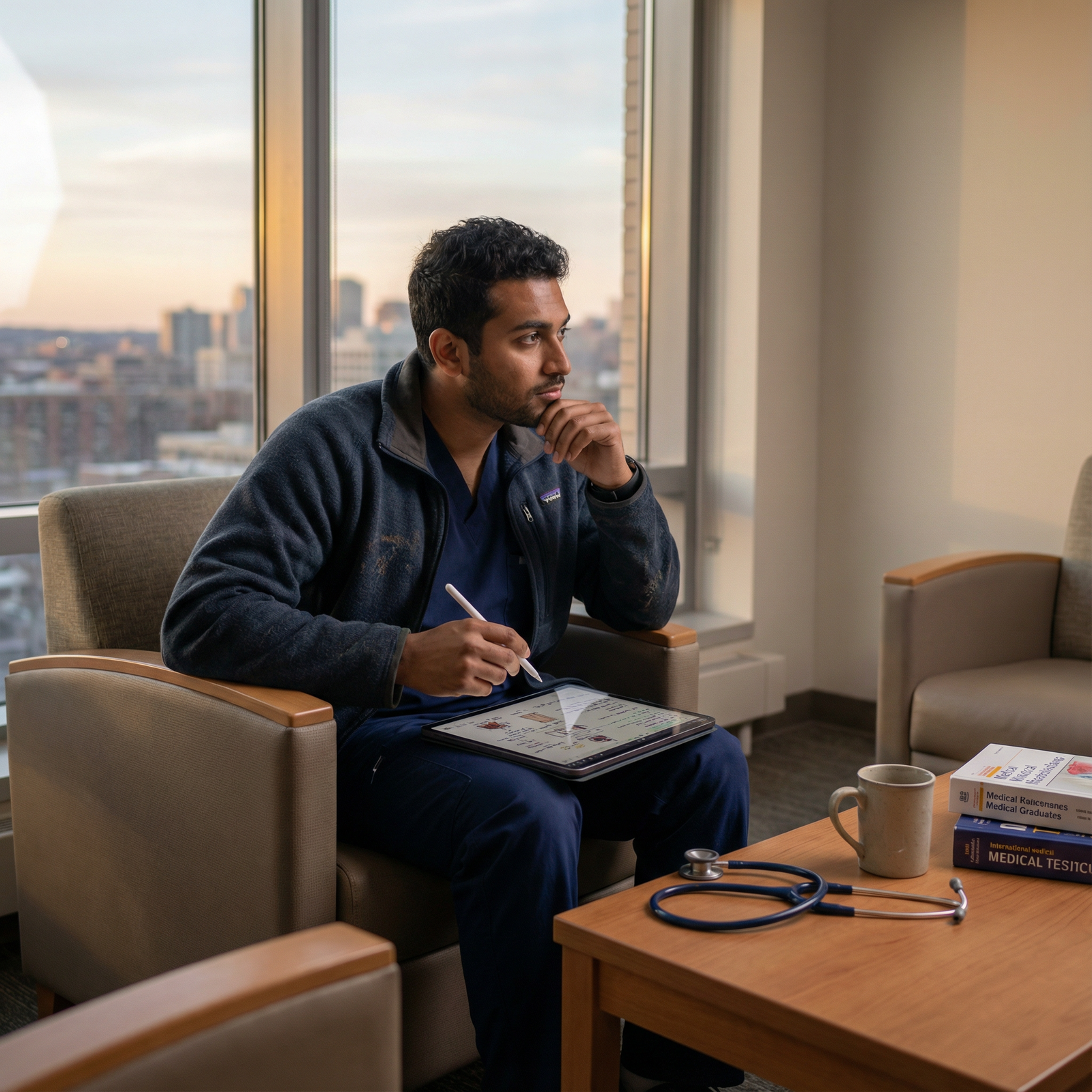
Introduction: Why Strategic Networking Is Essential for IMG Residency Success
For International Medical Graduates (IMGs), navigating the U.S. residency application process is both exciting and challenging. Excellent exam scores and strong clinical experiences are essential—but they are often not enough on their own. A powerful, frequently underestimated factor in residency success is strategic networking.
Effective Networking Strategies within the healthcare community can:
- Open doors to residency programs you might never see advertised
- Provide Mentorship in Medicine from people who understand the IMG journey
- Help you integrate more smoothly into the U.S. Healthcare Community
- Strengthen letters of recommendation and your overall application story
This guide expands on the foundations of networking for IMGs and provides detailed, practical strategies you can start using today. Whether you are still in medical school abroad, actively in the match process, or reapplying after an unsuccessful cycle, you will find concrete steps to build authentic connections that can genuinely impact your residency outcome.
Why Networking Matters So Much for International Medical Graduates
Networking is not about “using” people or collecting contacts—it is about building real, mutually beneficial relationships over time. For IMGs, this is especially critical because you are often starting with fewer local connections than U.S. graduates.
1. Gaining Access to Unwritten and Hidden Opportunities
Many opportunities that strengthen an IMG application are never widely advertised, including:
- Observerships and shadowing positions
- Research assistant roles
- Quality improvement projects
- Extra interview spots or prelim openings after a candidate cancels
Program directors and faculty often fill these positions through:
- Recommendations from colleagues
- Former trainees and trusted residents
- People they have met at conferences or in clinics
When you invest in networking, you position yourself to hear about:
- “We might have an observership spot opening next month.”
- “Our program sometimes takes off-cycle prelim residents—send me your CV.”
- “We had a last-minute cancellation; I’ll see if you can be added to the interview list.”
Without these connections, you may never know these possibilities exist.
2. Mentorship and Strategic Guidance Tailored to IMGs
Mentorship in Medicine is especially valuable for IMGs who may be unfamiliar with:
- The U.S. residency application timeline
- ERAS, NRMP, SOAP, and visa-related issues
- Differences between community vs. academic programs
- Specialty competitiveness in the U.S. versus your home country
A good mentor can:
- Review and refine your CV and personal statement
- Help you choose realistic, data-driven specialty and program lists
- Offer mock interviews and feedback
- Advise on U.S. clinical experience (USCE) strategy
- Provide honest input on whether to strengthen scores, research, or experience
Mentors don’t just give advice; they often become your advocates—reaching out to colleagues, writing strong letters, and vouching for your character and work ethic.
3. Accelerated Knowledge, Skills, and Professional Growth
Networking plugs you into continuous learning opportunities in the healthcare community:
- Grand rounds and specialty conferences
- Skills workshops (simulation, ultrasound, procedures)
- Research meetings and journal clubs
- IMG-specific career and visa workshops
Participating in these spaces signals professionalism and commitment. It also helps you:
- Stay current with guidelines and evidence-based practice
- Practice clinical reasoning in a U.S. environment
- Learn how residents and attendings present cases and interact
This professional growth often translates into stronger performance in observerships, electives, or research, which then leads to more positive evaluations and letters.
4. Cultural Insight and Adaptation to U.S. Medical Practice
Even experienced physicians can feel “like interns again” when transitioning to U.S. healthcare. Networking with residents, fellows, and attendings gives you:
- Real-world examples of communication styles with patients and colleagues
- Insight into expectations around professionalism, punctuality, and documentation
- Understanding of hierarchy and team dynamics in residency programs
You learn subtle but critical things, such as:
- How to present a new patient in 3–5 minutes
- How to succinctly communicate with a busy attending
- How to handle disagreements respectfully in a team
These “soft skills” often determine how comfortable programs feel about ranking you highly.
5. Building a Supportive Community and Preventing Isolation
The IMG journey can be isolating—geographically distant from family, adapting to a new system, and coping with visa and financial pressures. Networking helps you create a support system that includes:
- Other IMGs who understand your specific challenges
- Senior residents who can normalize your fears and setbacks
- Faculty who see your potential and encourage persistence
This support is not just emotional; it often leads to practical help:
- Shared study resources and interview tips
- Leads on USCE, research, or volunteer roles
- Accountability partners to keep your application timeline on track
Core Networking Strategies for IMGs Applying to Residency
Understanding that networking matters is only the first step. The real difference comes from systematic, consistent action. Below are concrete strategies tailored specifically for IMGs.
1. Build a Strong Professional Presence on Key Platforms
LinkedIn: Your Online Professional Hub
For International Medical Graduates, LinkedIn is often the first impression you make on U.S. professionals.
Optimize your profile:
- Professional headshot in business or clinical attire
- Headline that clearly identifies your status and goals
- Example: “International Medical Graduate (MBBS) – Aspiring Internal Medicine Resident – USMLE Step 1 & 2 CK Completed”
- About section summarizing:
- Your medical school and year of graduation
- Exam status and scores if you wish
- Clinical interests and research experiences
- Visa status (optional but often helpful)
Actionable steps:
- Connect with: faculty from observerships, residents you meet, alumni, conference attendees
- Post regularly: share clinical articles, reflections from rotations, or conference learnings
- Engage thoughtfully: comment on posts from physicians in your specialty, ask questions, and thank people who share educational content
This positions you as an engaged, serious future colleague—not just an applicant asking for favors.
Professional Associations and Societies
Joining key organizations solidifies your identity within your desired specialty and the broader healthcare community:
- General: American Medical Association (AMA), state medical societies
- Specialty-specific: e.g., American College of Physicians (ACP), American Academy of Family Physicians (AAFP), American College of Surgeons (ACS), American Psychiatric Association (APA)
Benefits for IMGs:
- Discounted student/trainee membership
- Access to national and regional conferences
- Online member directories and community forums
- IMG or early-career sections with targeted resources
Be more than a “name on a list”—volunteer for a committee, present a poster, or join virtual meetups.
2. Maximize Value from Conferences, Workshops, and Webinars
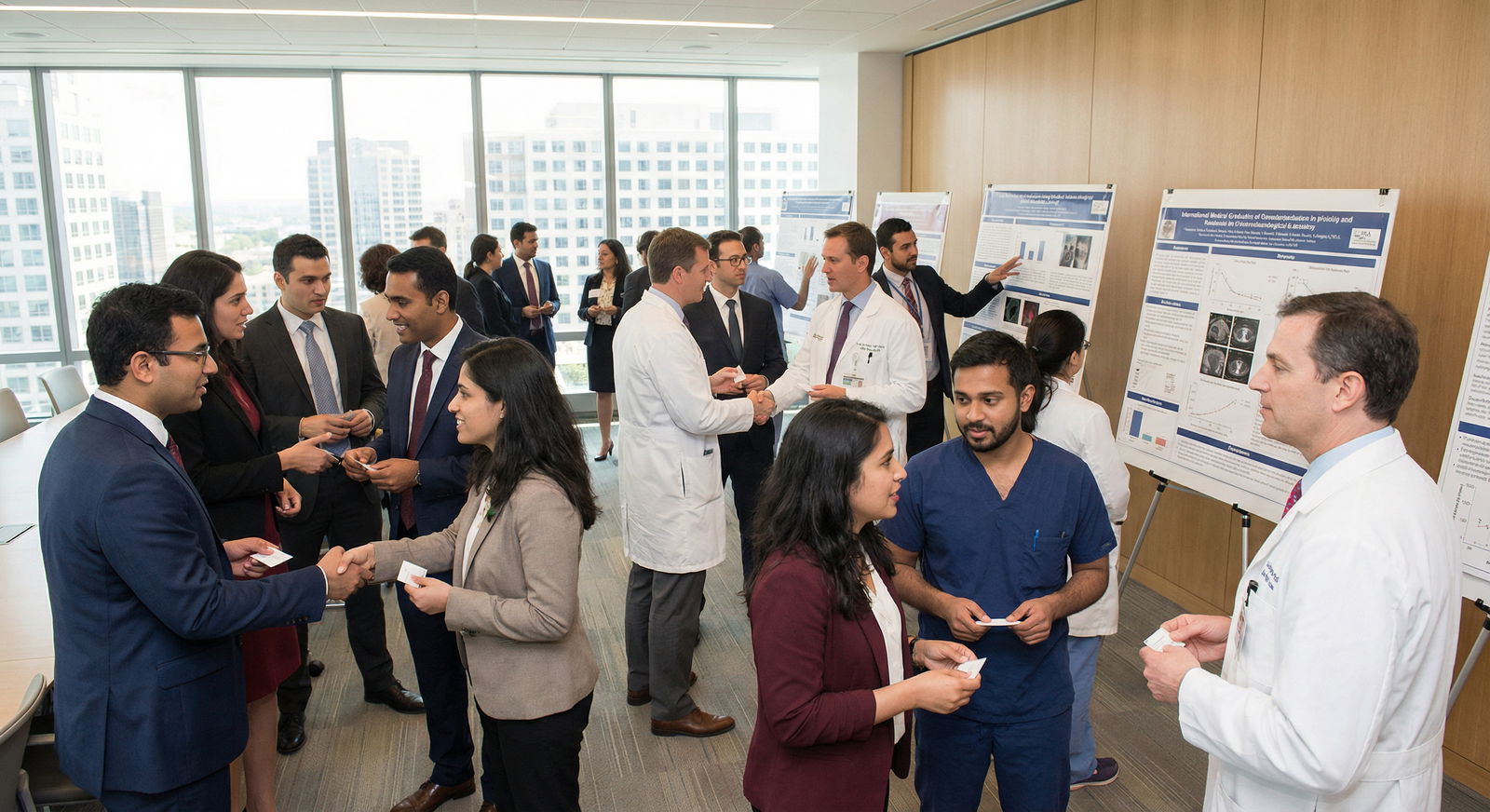
Conferences are concentrated environments where many residency-relevant contacts gather in one place.
Before the Event
- Review the agenda and identify:
- Speakers whose research or roles align with your interests
- Sessions led by program directors or residency leaders
- Reach out to 2–3 people in advance:
- Briefly introduce yourself on LinkedIn or email
- Mention you are an IMG interested in their specialty
- Ask if you might say hello after their talk
Even if they do not respond, you will feel more confident approaching them in person.
During the Event
- Attend specialty sessions where program leadership is likely present
- Prepare a concise self-introduction:
- Name, medical school, current status (e.g., “preparing for the Match”), and career interest
- Ask specific, thoughtful questions:
- “What qualities make IMG applicants stand out in your program?”
- “How do you suggest IMGs gain meaningful U.S. clinical experience in this specialty?”
After a productive conversation, politely ask if you may connect on LinkedIn or via email to keep in touch.
After the Event
Within 48–72 hours:
- Send a personalized thank-you message
- Mention 1–2 key points you learned from them
- Share your CV only if they showed interest or invited it
Consistent follow-up is what transforms a single interaction into an ongoing relationship.
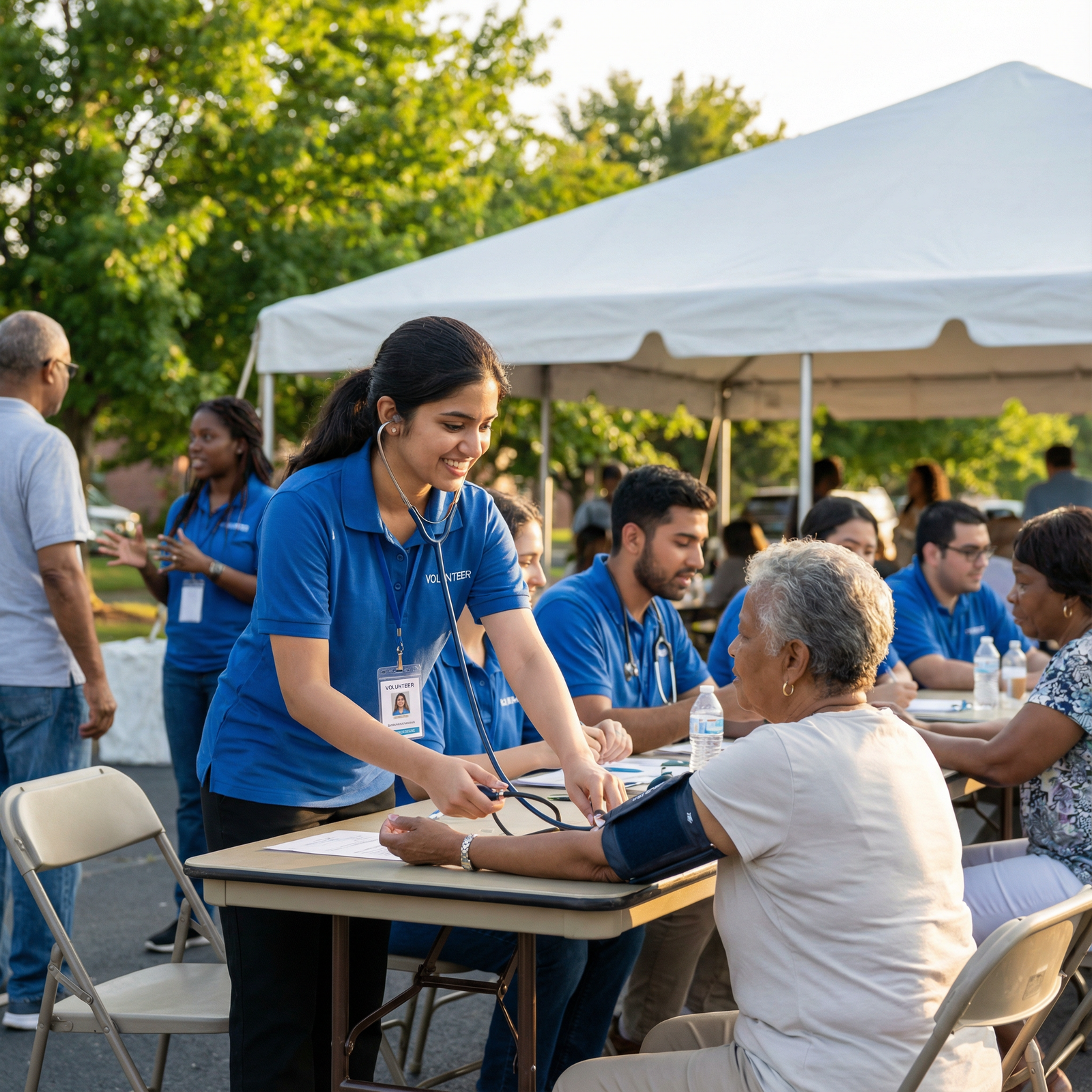
3. Engage in Community Service and Clinical Volunteering
Residency programs value applicants who demonstrate service, compassion, and community involvement—especially in underserved populations.
Clinical and Community Opportunities
- Free clinics and community health centers
- Health fairs, vaccination drives, and screening events
- Medical interpretation (if you are fluent in another language)
- Patient education workshops
These experiences allow you to:
- Interact closely with U.S. physicians, nurses, and allied health professionals
- Demonstrate professionalism and reliability over time
- Earn strong, experience-based recommendation letters
Example: Turning Volunteering into a Professional Bridge
Instead of only “showing up,” be proactive:
- Ask the clinic director how you can be most useful consistently
- Offer to help with basic quality-improvement projects (e.g., patient education materials, chart reviews under supervision)
- Request feedback on your performance and ask how you can grow
The more you contribute, the more likely people are to advocate for you and refer you to opportunities.
4. Develop Intentional Mentorship in Medicine
Mentors can appear in many forms: attending physicians, senior residents, academic advisors, or even advanced IMGs.
How to Find and Approach Potential Mentors
Sources to consider:
- Faculty from observerships and USCE
- Alumni from your medical school working in the U.S.
- Leaders of IMG-focused organizations and support groups
- Attendees you repeatedly see at conferences or local meetings
When you reach out:
- Keep messages short, respectful, and specific
- State your background and goals clearly
- Ask for a brief meeting or call (15–20 minutes) to seek guidance
Example request:
“I am an International Medical Graduate from [Country], currently in [City], preparing to apply for Internal Medicine residency. I greatly admire your work in [specific area]. Would you be open to a brief 15–20 minute conversation about how IMGs can best prepare for this specialty?”
Maintaining Strong Mentor Relationships
- Show up on time and prepared for meetings
- Implement at least some of their advice and share results
- Keep them updated at key milestones (exams passed, USCE obtained, interviews received)
- Offer appreciation, and if possible, small ways you can contribute (help with research tasks, presentations, or data collection)
Over time, mentors may naturally become sponsors—people who use their reputation to actively advocate for you.
5. Use Social Media Strategically and Professionally
Social media can be a powerful Networking Strategy if used thoughtfully.
X (Twitter): Academic and Specialty Communities
Physicians, residency programs, and medical organizations are highly active on X.
Follow:
- Residency programs in your specialty
- Program directors and core faculty
- Journals, specialty societies, and IMG advocacy accounts
Participate by:
- Joining journal clubs using hashtags
- Commenting respectfully on educational threads
- Sharing briefly what you learned from a paper or case
A professional, consistent presence can put you on the radar of influencers in your field.
Facebook and Other Groups
Search for:
- IMG specialty-specific groups (e.g., “IMGs in Internal Medicine USA”)
- Local physician or healthcare community groups in your city
- Visa and immigration support groups for medical professionals
Engage constructively:
- Share opportunities
- Answer questions when you can
- Avoid negativity and unprofessional debates
Remember that anything you post could be seen by future colleagues.
6. Attend Residency Program Open Houses and Information Sessions
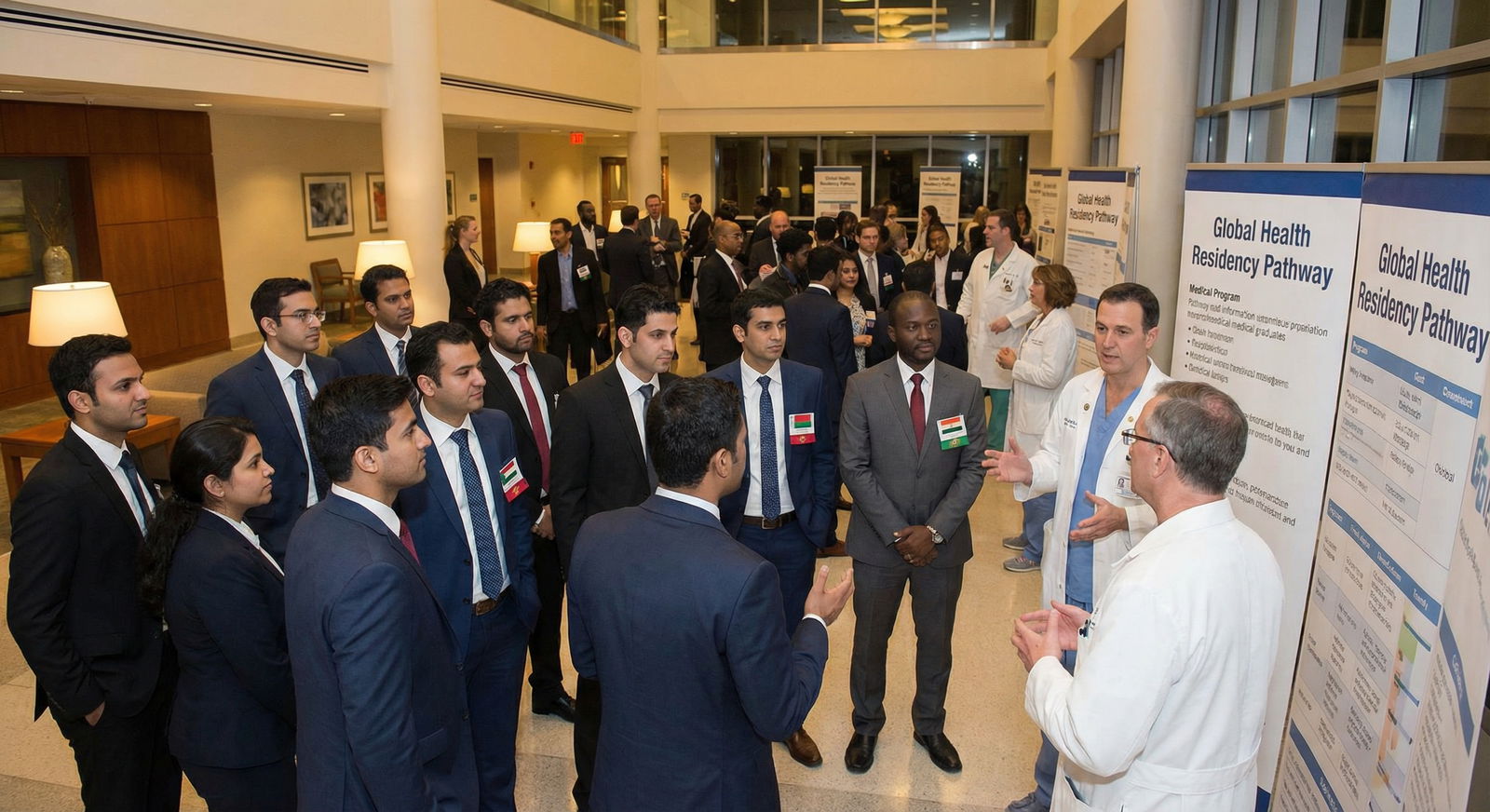
In recent years, many programs have added virtual or in-person open houses, Q&A sessions, and applicant webinars.
How to Make the Most of These Events
Research the program beforehand: patient population, size, strengths
Prepare 2–3 questions that go beyond what is on their website, for example:
- “How does your program support international medical graduates transitioning to the U.S. system?”
- “What opportunities exist for residents interested in global health or community outreach?”
Introduce yourself politely in the chat or at networking breaks
Take notes—you may reference these during interviews or in program-specific communication
Afterward, you can:
- Connect with residents you met on LinkedIn
- Send a short thank-you email to any faculty who answered your questions
Programs take notice of applicants who appear genuinely informed and engaged.
Real-World Case Studies: How Networking Changed IMG Paths
Case Study 1: Leveraging Alumni Networks for Doors to Open
Dr. Maria, an IMG from South America, initially felt lost in the U.S. system. She decided to search LinkedIn and her medical school alumni office for graduates working in the United States.
Her steps:
- Identified 10 alumni in internal medicine across various states
- Sent polite, individualized messages asking for brief career conversations
- Spoke with 4 alumni by phone and 2 via video call
- One alumnus introduced her to a faculty member involved in a residency program’s research track
This faculty mentor:
- Helped refine her CV and personal statement
- Involved her in a small retrospective research project
- Introduced her to the program director during a local conference
Result: Maria secured an interview at that program, received a strong letter from the faculty mentor, and ultimately matched there—largely catalyzed by alumni networking.
Case Study 2: Transforming Volunteer Work into a Residency Recommendation
Dr. Anil, an IMG from India, began volunteering at a free clinic shortly after arriving in the U.S. Initially, he helped with basic tasks—rooming patients, translating, and organizing charts under supervision.
Over 12 months, he:
- Consistently showed up every week
- Took initiative in organizing a small hypertension education project for patients
- Asked clinic physicians for feedback and guidance on the U.S. system
One attending, originally skeptical about IMGs, noticed his dedication. Over time, she:
- Offered him an observership in her hospital clinic
- Introduced him to other attendings
- Wrote a detailed, personalized letter of recommendation praising his clinical judgment, professionalism, and cultural competence
Result: That letter, combined with his volunteer and observership experience, helped him secure a highly competitive Internal Medicine residency spot.
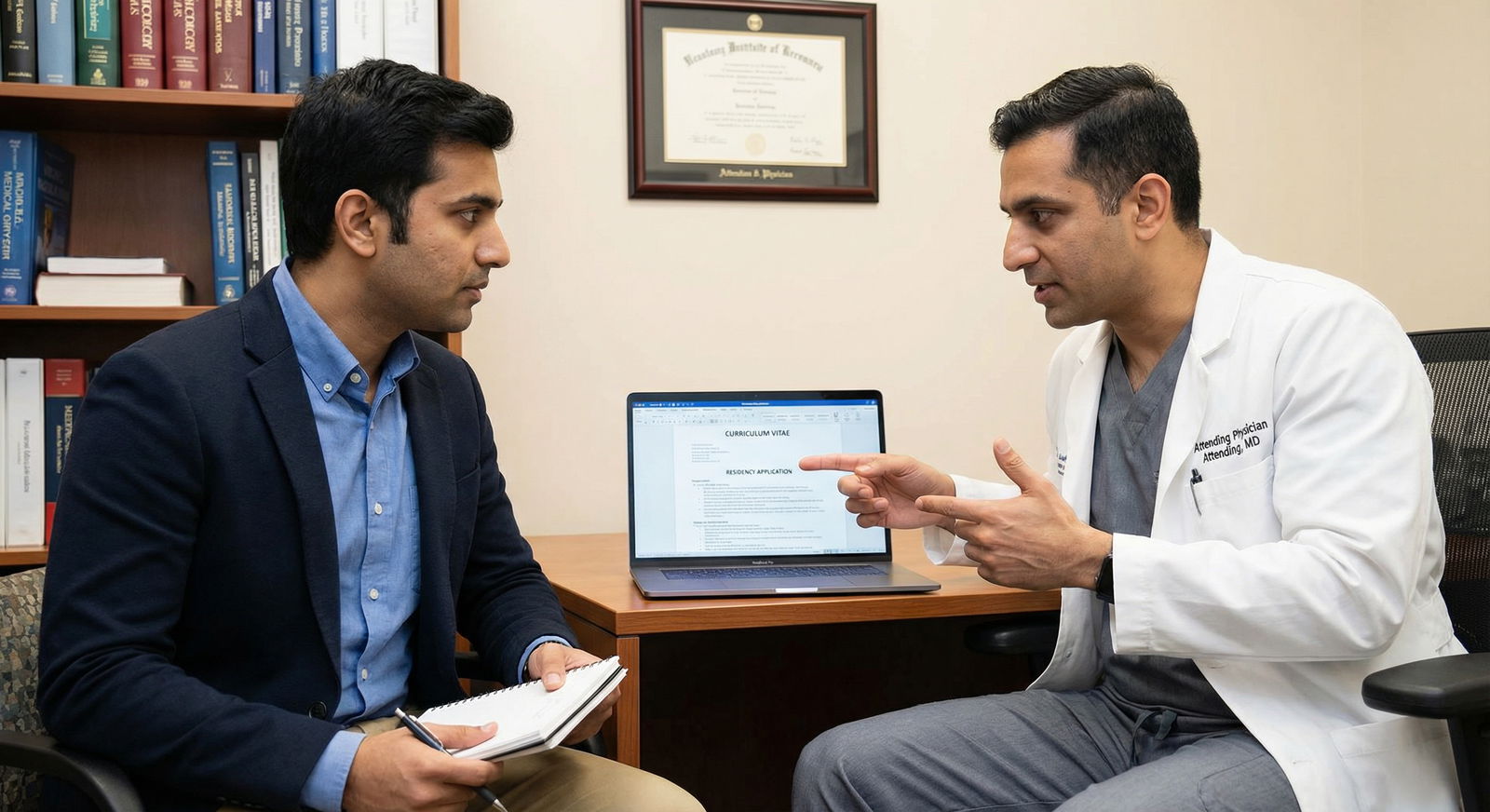
Practical Tips to Make Networking More Comfortable and Effective
Many IMGs feel networking is “awkward” or “too forward.” With practice and structure, it becomes more natural.
1. Prepare a Clear and Concise Introduction
Have a 20–30 second introduction ready:
- Who you are (name, IMG from where, graduation year)
- Your area of interest (e.g., Internal Medicine, Pediatrics)
- Your current step (e.g., preparing for USMLE, seeking USCE, applying for Match)
Example:
“I’m Dr. Ahmed, an International Medical Graduate from Egypt, Class of 2021. I’m currently in [City], preparing to apply for Internal Medicine residency and looking to gain more exposure to U.S. clinical practice.”
2. Focus on Curiosity, Not Self-Promotion
Ask others about:
- Their own training path
- What they enjoy most about their field
- Their advice for someone at your stage
People generally respond well to genuine curiosity, and the relationship can naturally transition to opportunities over time.
3. Track and Nurture Your Network
Use a simple spreadsheet or note app to document:
- Names, roles, and institutions
- Where and when you met
- Key details from your interaction
- Date of last contact and potential follow-up actions
Send periodic updates (e.g., exam passes, major achievements, interview invitations) to mentors and key contacts—this keeps the relationship alive without always asking for something.
FAQ: Networking and Residency for International Medical Graduates
Q1: When should I start networking as an IMG if I plan to apply for U.S. residency?
You can start at almost any stage, but earlier is better. Ideally, begin during your clinical years or soon after graduation. However, even if you are close to applying or reapplying, it is never too late to build connections through observerships, volunteering, conferences, or online platforms.
Q2: How do I avoid coming across as “desperate” or only interested in recommendations?
Focus on learning, contributing, and building genuine rapport. Ask for advice before you ask for a letter or opportunity. Show consistency and reliability over time. When you finally request a recommendation, the person should already know you and your work ethic well.
Q3: What if I am shy or not naturally outgoing—can I still network effectively?
Yes. Networking is a skill, not a personality trait. Prepare talking points and questions in advance, practice introductions with friends, and start with small interactions (emails, online groups, brief conversations after lectures). Many successful physicians are introverts who network through thoughtful, one-on-one relationships rather than large social events.
Q4: Are virtual networking and social media really taken seriously by residency programs?
Increasingly, yes. While programs still prioritize clinical performance and letters of recommendation, virtual interactions—especially through professional platforms like LinkedIn and program-hosted webinars—can help you:
- Learn more about the program culture
- Make your name familiar to residents and faculty
- Demonstrate professionalism and genuine interest
However, always maintain a professional, respectful online presence.
Q5: How can I tell if a mentor or connection is the “right fit” for me as an IMG?
Look for mentors who:
- Understand or are willing to understand the IMG experience
- Offer constructive, honest feedback rather than vague encouragement
- Respect your time and boundaries
- Are open about what they can and cannot do (e.g., whether they can realistically help with letters or opportunities)
You can have multiple mentors: one for research, one for specialty advice, and others for personal or cultural support.
By intentionally building relationships across the healthcare community—through alumni, mentors, volunteering, conferences, and professional platforms—International Medical Graduates can transform a daunting residency journey into a guided, collaborative process. Start small, be consistent, and remember: you are not just networking for a position, but for a long, meaningful career in medicine.