
Deciding to pursue a career in medicine is a serious long-term commitment, and for many future physicians, choosing the right Pre-Med Program is the true starting line. Your pre-med years shape your academic foundation, your readiness for the MCAT, your exposure to clinical care, and ultimately the strength of your medical school applications. With so many options—large universities, small liberal arts colleges, special pre-health tracks, and post-baccalaureate programs—navigating your choices can feel overwhelming.
This guide breaks down the process into clear, practical steps so you can select a pre-med pathway that fits your goals, strengths, and life circumstances. Whether you’re in high school planning ahead or already in college considering a pivot, you’ll find structured, higher education advice to make smarter, more confident decisions.
Understanding Pre-Med Programs and What They Really Mean
Before comparing schools, it’s important to clarify what “pre-med” actually is—and what it isn’t.
Pre-Med Is a Track, Not a Major
In most institutions, “pre-med” is not an official major. Instead, it is:
- A set of prerequisite courses required by most medical schools
- An advising track that helps students prepare for a career in medicine
- A bundle of recommended experiences (clinical exposure, research, service, leadership)
You can be pre-med while majoring in:
- Biology, Chemistry, Biochemistry
- Neuroscience, Psychology, Sociology
- Public Health, Health Sciences, Biomedical Engineering
- Non-science majors such as English, History, Economics, or Philosophy
What matters is that you complete the core pre-med prerequisites, often including:
- Biology with lab (1–2 years)
- General Chemistry with lab (1 year)
- Organic Chemistry with lab (1 year)
- Physics with lab (1 year; algebra- or calc-based)
- Biochemistry (1 semester)
- Math/Statistics (often 1–2 semesters)
- English/Writing-intensive courses
- Behavioral and Social Sciences (Psychology, Sociology) – important for MCAT
Many medical schools also recommend or require:
- Genetics
- Cell Biology
- Ethics or Medical Humanities
- Additional Social Science or Public Health coursework
Beyond Coursework: The Pre-Med Ecosystem
Strong pre-med programs go beyond classes. They typically integrate:
- Clinical experience: shadowing, hospital volunteering, scribing, EMT work, hospice work, etc.
- Research opportunities: lab positions, clinical research, summer research programs
- Service and leadership: community outreach, student organizations, mentorship roles
- Student support services: academic advising, tutoring, mental health services, and MCAT prep resources
Understanding what a comprehensive pre-med experience looks like will help you evaluate and compare programs more effectively.
1. Align Your Pre-Med Path with Your Academic Strengths and Interests
The “best” pre-med program is not just the most prestigious or competitive. It’s the one where you can thrive academically and personally.
Choosing Your Major Wisely
You can get into medical school with any major, as long as you complete the required pre-med courses. When choosing:
Ask yourself:
- Which subjects do I genuinely enjoy and stay curious about?
- In which areas have I consistently earned strong grades?
- Can I see myself taking multiple upper-level courses in this discipline?
Examples:
- If you loved AP Biology and Chemistry in high school, a Biology or Biochemistry major might feel natural.
- If you’re fascinated by human behavior and mental health, Psychology or Neuroscience could be a strong fit.
- If you’re drawn to healthcare systems, health equity, or policy, consider Public Health or Sociology.
- If you’re passionate about literature or philosophy, a Humanities major plus pre-med coursework can make you a distinctive and well-rounded applicant.
Balancing Rigor and Performance
Medical schools care deeply about:
- Science GPA (biology, chemistry, physics, math)
- Overall GPA
- Upward trends and performance in challenging upper-level courses
When evaluating programs, consider:
- Are introductory science courses structured to support student success, or are they extremely “weed-out” focused?
- Are class sizes manageable, especially in lab and upper-level science courses?
- Is there accessible tutoring or supplemental instruction for tough classes like Organic Chemistry and Physics?
Aim for an environment where you can challenge yourself but still maintain strong grades with hard work and efficient study strategies.
2. Evaluate Institutional Reputation—and What’s Behind It
Reputation matters, but not in the simplistic “top school or bust” way you might think. You want an institution that is respected, accredited, and consistently supports pre-med students.
Accreditation and Academic Quality
First, confirm that any institution you consider:
- Holds regional accreditation (in the U.S.), which verifies academic quality and is required for federal financial aid and most medical school recognition.
- Has solid STEM departments with qualified faculty, active research, and robust lab facilities.
Medical School Acceptance Data: Look for Context
Many universities advertise “medical school acceptance rates,” but these numbers can be misleading. When reviewing them, ask:
- Does the rate include only students who applied with advisor approval (self-selected group) or all students who initially declared pre-med?
- Over how many years is the data averaged?
- Do they share the number of applicants and acceptances, not just percentages?
Better indicators than a single acceptance rate:
- Schools that regularly place students in a range of medical schools (state MD, DO, and occasionally top-tier institutions)
- Clear pre-health advising structure with data-driven guidance
Alumni Outcomes and Opportunities
Search the school’s website, LinkedIn, or alumni pages for:
- Graduates who have gone on to MD, DO, or other health professional programs
- Alumni in diverse specialties (internal medicine, pediatrics, surgery, psychiatry, etc.)
- Alumni who pursued research, public health, health policy, or academic careers
Reach out to a few via email or LinkedIn for informational conversations—they can provide honest insights about how well the institution prepared them.
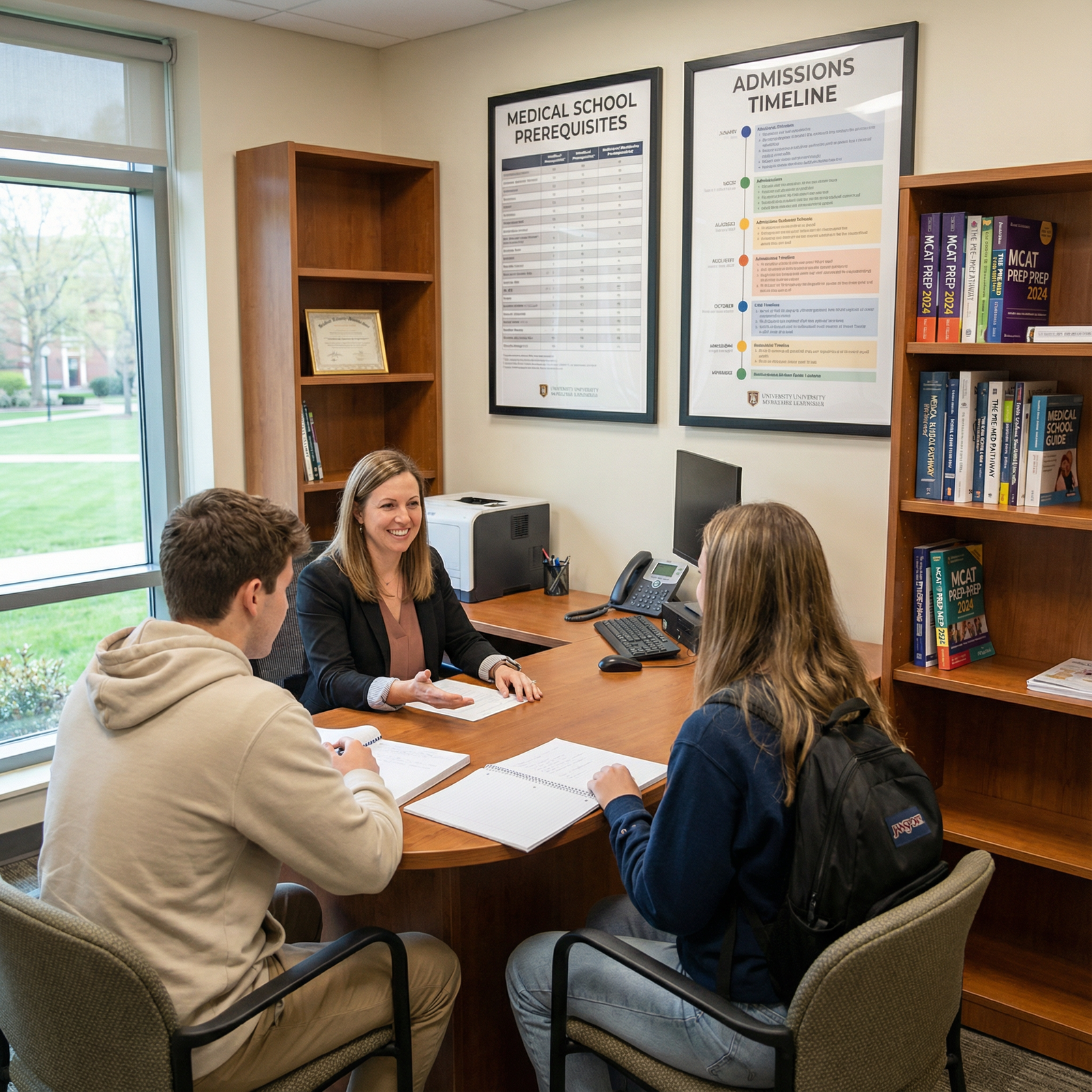
3. Analyze Program Specifics: Curriculum, Experiences, and Student Support
Once you’ve narrowed down a list of schools, take a deeper dive into how each pre-med program is structured.
Curriculum Flexibility and Academic Planning
Look at the school’s course catalog and pre-health advising pages. Important considerations:
- Scheduling flexibility
- Can you spread pre-med requirements over four years, or are you forced into heavy science course loads early on?
- Is it possible to study abroad and still stay on track?
- Double major or minor options
- Are there reasonable pathways to combine, for example, Biology + Spanish, or Chemistry + Public Health?
- Honors or Scholars programs
- Do they offer smaller classes, special seminars, or priority registration that can help you take key pre-med courses when needed?
Well-designed programs offer sample four-year plans for common pre-med majors, which is a sign of thoughtful academic planning.
Research Opportunities: Building Your Scientific Foundation
Research experience is not mandatory for all medical schools, but it’s strongly valued, especially for academic or research-oriented programs.
Questions to ask:
- Are there undergraduate research programs specifically for pre-health or STEM students?
- Can first- or second-year students realistically join labs, or are spots usually reserved for seniors and graduate students?
- Does the school offer summer research fellowships, funded internships, or partnerships with hospitals and research institutes?
- Are there poster sessions or student research days where undergraduates can present their work?
Look for structure: formal application processes, mentorship programs, or research-for-credit options indicate a supportive research environment.
Clinical Experience and Community Engagement
Medical schools expect evidence that you understand what a career in medicine involves. Strong pre-med environments make it easier to gain:
- Shadowing experiences with physicians or advanced practice providers
- Hospital or clinic volunteering positions
- Roles such as medical scribe, EMT, CNA, or patient care technician
- Community health outreach experiences (free clinics, health education programs, mobile health units)
Ask schools:
- Is there a pre-health or pre-med club that organizes shadowing sign-ups or hospital volunteer placements?
- Does the institution have affiliated hospitals or clinics nearby?
- Are there university-sponsored transportation or partnerships that make it easier to get to clinical sites without a car?
Student Support Services: Academic and Emotional Safety Nets
Student support services can be the difference between surviving and thriving in a rigorous pre-med environment. Evaluate:
- Pre-health advising
- Is there a dedicated pre-med or pre-health advising office?
- How many students does each advisor support?
- Are there structured workshops on course planning, time management, MCAT prep, and application strategy?
- Tutoring and academic support
- Is tutoring available for key courses like General Chemistry, Organic Chemistry, Biology, and Physics?
- Are there peer-led study groups or Supplemental Instruction (SI) sessions?
- Mental health and wellness services
- Are counseling services readily available and accessible?
- Are there wellness programs or workshops that acknowledge pre-med stress and burnout?
A program that invests in comprehensive student support services will not only enhance your performance but also protect your mental health.
4. Build a Smart, Balanced List of Potential Pre-Med Programs
Once you understand your priorities, start building a realistic list of schools.
Location and Lifestyle Factors
The right environment will make it easier to stay motivated and engaged over four years:
- Urban vs. rural: Urban campuses often have easier access to hospitals and clinics; rural campuses may offer tighter-knit communities and closer relationships with faculty.
- Distance from home: Consider your support system, travel costs, and how important it is for you to be close to family.
- Climate and campus culture: Weather, political climate, and student life can all affect your day-to-day well-being.
From a pre-med standpoint, proximity to healthcare facilities and research institutions is a big plus.
Financial Considerations: Plan for the Long Game
Remember that medical school itself is extremely expensive. Minimizing undergraduate debt is often an underappreciated form of higher education advice.
Evaluate:
- Tuition and fees at in-state public schools vs. private or out-of-state institutions
- Scholarships, grants, and need-based aid availability
- Work-study or campus job opportunities that won’t derail your academics
- Cost of living: housing, food, transportation, and health insurance
Sometimes, a less expensive state university with strong pre-med support is a better strategic choice than a more famous private institution that leaves you with heavy debt.
Campus Visits and Virtual Exploration
If possible, visit campuses (or attend virtual sessions) with a pre-med lens:
- Sit in on an introductory biology or chemistry class.
- Visit the science buildings, labs, and advising offices.
- Ask current students:
- How competitive or collaborative is the pre-med culture?
- How accessible are professors?
- What are the biggest challenges of being pre-med here?
Keep notes on each campus’s strengths and weaknesses relative to your personal priorities.
5. Learn from People Living the Experience: Students and Alumni
Numbers and brochures only go so far. Direct conversations can reveal what a pre-med program is really like.
How to Connect with Current Students
Use:
- University-sponsored student ambassador programs
- Pre-med or pre-health student organizations
- Social media (Instagram, LinkedIn, school subreddits)
- Virtual Q&A sessions or open houses
Questions to ask:
- What surprised you about the pre-med culture here?
- How supportive are faculty and advisors?
- How easy is it to get shadowing or volunteer positions?
- What would you change about the program if you could?
- Have your classmates been successful in gaining admission to medical school or other health programs?
Reaching Out to Alumni on the Medical Track
Alumni who are now in medical school or residency are a goldmine of perspective:
- Search LinkedIn for “[School Name]” + “MD candidate,” “DO candidate,” “Medical Student”
- Send a brief, polite message explaining your interest and asking if they’d be open to a short conversation
Ask about:
- How well the school prepared them academically for medical school
- Whether their pre-med advising was helpful in navigating AMCAS/AACOMAS, letters of recommendation, and interviews
- What they wish they had known as a pre-med at that institution
These conversations help you see how a particular pre-med environment plays out in real career trajectories.
6. Evaluate How Well Each Program Prepares You for Medical School Applications
Your goal isn’t just to survive pre-med; it’s to be a strong, well-prepared applicant. Look at how each program supports the key components of medical school preparation.
MCAT Preparation and Academic Alignment
Check whether:
- The school’s curriculum aligns well with MCAT content areas (biochemistry, psychology, sociology, statistics, critical analysis)
- There are MCAT prep workshops, practice test days, or partnerships with test prep companies
- The average MCAT scores of applicants from the institution (if provided) are competitive
Informal supports matter too: study groups, mentorship from older students, and professors who are familiar with MCAT-style critical reasoning.
Building a Strong Portfolio of Experiences
Medical schools look holistically at:
- Clinical exposure (shadowing, volunteering, direct patient care)
- Research (if available)
- Service and community engagement
- Leadership roles (clubs, organizations, peer mentoring, RA positions)
- Personal development and reflection
Ask if the school:
- Provides structured pre-med timelines for when to secure experiences and prep for the MCAT
- Has special programs (e.g., summer enrichment, pipeline programs with medical schools, early assurance agreements)
- Offers guidance on writing personal statements and preparing secondaries
Letters of Recommendation and Faculty Relationships
Strong letters of recommendation come from:
- Professors who know you well in and out of the classroom
- Research mentors, clinical supervisors, or pre-health advisors
Smaller schools or programs with lower student–faculty ratios can make it easier to build these relationships. Ask about:
- Pre-health committee letters vs. individual letters
- How the process works for securing committee letters (GPA thresholds, applications, interviews)
- How early students are advised to start building relationships with letter-writers

7. Stay Flexible and Open to Changing Course
Even with careful planning, your interests and circumstances can evolve.
Revisiting Your Goals and Pathway
Over time, you may discover:
- A deep love for research and consider MD/PhD or a research-focused career
- A passion for public health, health policy, or hospital administration
- That another health profession (PA, NP, PT, OT, dentistry, pharmacy, etc.) aligns better with your strengths and values
A strong pre-med environment—and strong student support services—will encourage exploration, self-reflection, and honest conversation about your career in medicine and beyond.
Transfer Options and Alternative Timelines
If your first school or major choice doesn’t fit:
- Explore internal transfers (changing majors, switching colleges within the same university)
- Look into external transfer options to another institution with stronger pre-health support
- Remember that many successful physicians took nontraditional routes, including post-baccalaureate programs or gap years
Your path doesn’t have to be linear to be successful. Adapting wisely is often more important than sticking rigidly to an initial plan.
Conclusion: Crafting a Pre-Med Journey That Works for You
Finding the right pre-med program is about more than chasing prestige—it’s about identifying an environment where you can learn deeply, grow as a person, maintain your well-being, and build a compelling profile for medical school.
As you explore your options:
- Understand what pre-med truly entails: coursework, experiences, and support systems
- Choose a program aligned with your academic strengths, interests, and learning style
- Evaluate institutional reputation with context, focusing on outcomes and advising
- Look closely at curriculum flexibility, research, clinical access, and student support services
- Talk to current students and alumni for real-world insights
- Consider MCAT preparation, letters of recommendation, and application support
- Give yourself permission to reassess and adapt along the way
With thoughtful planning and the right environment, your pre-med years can be both challenging and deeply rewarding—laying a strong foundation for your future career in medicine.
FAQs About Choosing the Right Pre-Med Program
1. What are the most important factors when choosing a pre-med program?
Key factors include:
- Academic fit: Your ability to succeed in science courses and overall curriculum
- Quality of student support services: Pre-health advising, tutoring, and mental health resources
- Access to opportunities: Clinical experiences, research, volunteering, leadership roles
- Financial practicality: Tuition, aid, and long-term debt considerations
- Program outcomes: Medical school acceptances, MCAT performance, alumni trajectories
- Campus culture and environment: Competitive vs. collaborative atmosphere, location, and student life
Aim for a program where you can realistically maintain a strong GPA while building a well-rounded application.
2. Can I get into medical school with a non-science major?
Yes. You can pursue a career in medicine with any major, as long as you complete required pre-med courses. Non-science majors can even stand out if:
- You still perform strongly in your pre-med science courses
- You demonstrate the same commitment to clinical experience, service, and leadership
- You articulate how your major contributes to your future as a physician (e.g., communication skills, cultural understanding, ethics, policy insight)
Many medical schools value intellectual diversity and welcome applicants from humanities, social sciences, and engineering backgrounds.
3. How critical is clinical experience for medical school applications?
Clinical experience is essential. Medical schools want evidence that:
- You understand the realities of patient care and the healthcare system
- You’ve seen both the rewarding and challenging sides of medicine
- You’re committed to direct service and working with diverse patient populations
Common forms of clinical exposure include:
- Shadowing physicians or advanced practice providers
- Volunteering in hospitals, clinics, nursing homes, or hospice programs
- Working as an EMT, medical assistant, scribe, CNA, or patient care tech
A strong pre-med program makes it easier to find and maintain these opportunities.
4. Are all pre-med programs essentially the same?
No. Pre-med environments vary widely in:
- Curriculum structure and course availability
- Pre-health advising quality and accessibility
- Intensity of competition vs. collaboration among students
- Access to nearby hospitals, clinics, and research centers
- Depth of student support services (academic and mental health)
This is why it’s important to research beyond the label “pre-med” and understand how each institution actually supports students interested in medicine.
5. Should I choose a school mostly based on its name and reputation?
Reputation matters, but it should not be your only—or even primary—criterion. A slightly less famous school where you can:
- Earn a strong GPA
- Access robust student support services
- Build deep relationships with faculty
- Gain significant clinical and research experiences
…will serve you far better than a prestige-heavy environment where you’re constantly overwhelmed, unsupported, and unable to do your best work. Balance school name with realistic academic fit, financial feasibility, and overall quality of support for pre-med students.