
The Long Hours Dilemma: Surviving Your First Year as a Medical Intern
The transition from medical school to your Medical Internship year is one of the most intense shifts you will experience in your training. Suddenly, you are no longer just observing—you are writing orders, answering pages at 3 a.m., calling families with critical updates, and managing real patients with real consequences. All of this unfolds against the backdrop of long hours, fragmented sleep, and steep learning curves.
Long hours have always been woven into the culture of medical training. While duty-hour regulations have improved safety and limited the extremes of past generations, first-year interns still routinely face 60–80 hour work weeks. This can feel overwhelming, especially when you’re juggling the pressure to perform, learn, and still show up as a human being outside the hospital.
This guide is designed for that crucial first year as an intern. It will help you understand why the long hours exist, recognize their emotional and physical impact, and—most importantly—build practical strategies for Self-Care, Work-Life Balance, and Burnout Prevention so you can not only survive, but actually grow during this demanding phase of residency.
Understanding the Long Hours Dilemma in Medical Internship
The Reality of Internship Hours Today
In most residency programs, first-year interns work between 60 and 80 hours per week. The exact schedule will vary by specialty and institution, but common patterns include:
Day Shifts (12–16 hours)
For example, 6 a.m. pre-rounds to 6 p.m. sign-out, sometimes longer if admissions and cross-coverage are heavy.Night Shifts (8–14 hours)
Often structured as night float (e.g., 5–6 consecutive nights on, then days off). Nights can feel isolating and are especially disruptive to sleep patterns.Call Shifts (24–28 hours)
Still common in some programs and services (e.g., ICU, OB/GYN, some surgical rotations). You may admit patients overnight, round in the morning, and sign out late morning or early afternoon.
Even when you are “off,” your pager, email, and lingering patient worries can make it hard to fully disconnect. And unlike medical school, there are fewer true “breaks”: no summer vacation, no long elective blocks with reduced responsibility.
Understanding this ahead of time helps you prepare cognitively and emotionally. Long hours are not a personal failure in organization—they are a structural feature of training that require intentional coping strategies.
Why Long Hours Persist in Residency Training
You may reasonably wonder: Why does modern medicine, with all its emphasis on safety and well-being, still rely on such long hours?
Several reasons explain why long hours remain the norm in Medical Internship and residency:
Continuity of Patient Care
- Stable coverage improves patient safety and fosters therapeutic relationships.
- Longer shifts mean fewer handoffs, which reduces communication errors.
- When you’ve admitted and managed a patient over many hours, you develop a deeper understanding of their course and needs.
Intensive Clinical Exposure and Learning
- Residency is compressed training—programs have a limited time to expose you to as many diagnoses, procedures, and clinical scenarios as possible.
- High-volume, high-acuity experiences build pattern recognition and clinical judgment.
- Repeated overnight and weekend shifts simulate the reality of being an attending.
Team-Based Workflow and Shared Responsibility
- When one team member is overwhelmed, others stay to help, which can extend everyone’s hours.
- Teaching moments, family meetings, procedures, and sign-out can all add time to the official “end” of a shift.
- Senior residents and attendings may model staying late to “finish the work,” which can influence intern habits.
Systemic Factors and Staffing Realities
- Limited workforce and fixed budgets mean residents cover a large portion of the in-hospital workload.
- EHR documentation, insurance requirements, and administrative tasks consume large portions of your day.
Understanding the systemic context doesn’t make the hours easier physically, but it can reduce some of the resentment and help you reframe the experience as part of a finite, purposeful stage in your professional development.
The Hidden Costs: Emotional, Physical, and Cognitive Impact of Long Hours
Long hours do more than create fatigue. They shape how you think, feel, and function—both in and outside the hospital.
Emotional and Psychological Toll
Common emotional responses during internship include:
Burnout
Characterized by emotional exhaustion, depersonalization (feeling detached or cynical about patients), and reduced sense of personal accomplishment. You might notice:- Dreading shifts you used to find meaningful
- Feeling numb or irritable with patients or colleagues
- Questioning your competence or choice of specialty
Anxiety and Performance Pressure
- Constant fear of missing something or making a mistake
- Worry about evaluations, fellowship prospects, or how you compare to co-interns
- Rumination about tough cases long after leaving the hospital
Low Mood and Depression
- Loss of interest in hobbies or social activities
- Feelings of hopelessness (“This will never get better”)
- Persistent guilt over perceived mistakes or not doing “enough”
These are common reactions, not personal flaws. Recognizing them early is key to Burnout Prevention and timely support.
Physical and Cognitive Effects of Chronic Fatigue
Long hours and irregular sleep schedules can affect your body and mind in measurable ways:
Sleep Deprivation
- Slower reaction times, impaired judgment, and decreased attention
- Increased risk of needlestick injuries, medication errors, and car accidents after an overnight shift
- Difficulty switching back to a normal sleep schedule after night float
Somatic Symptoms
- Headaches, GI upset, tension pain
- Weakened immune system, more frequent minor illnesses
- Weight changes related to stress eating or skipped meals
Impaired Executive Function
- Trouble prioritizing tasks on busy call nights
- Forgetfulness (e.g., missed orders, delayed documentation)
- Reduced capacity for empathy when exhausted
Being aware of these patterns can help you normalize what you’re experiencing, communicate effectively with your team, and use targeted Self-Care strategies to mitigate the impact.
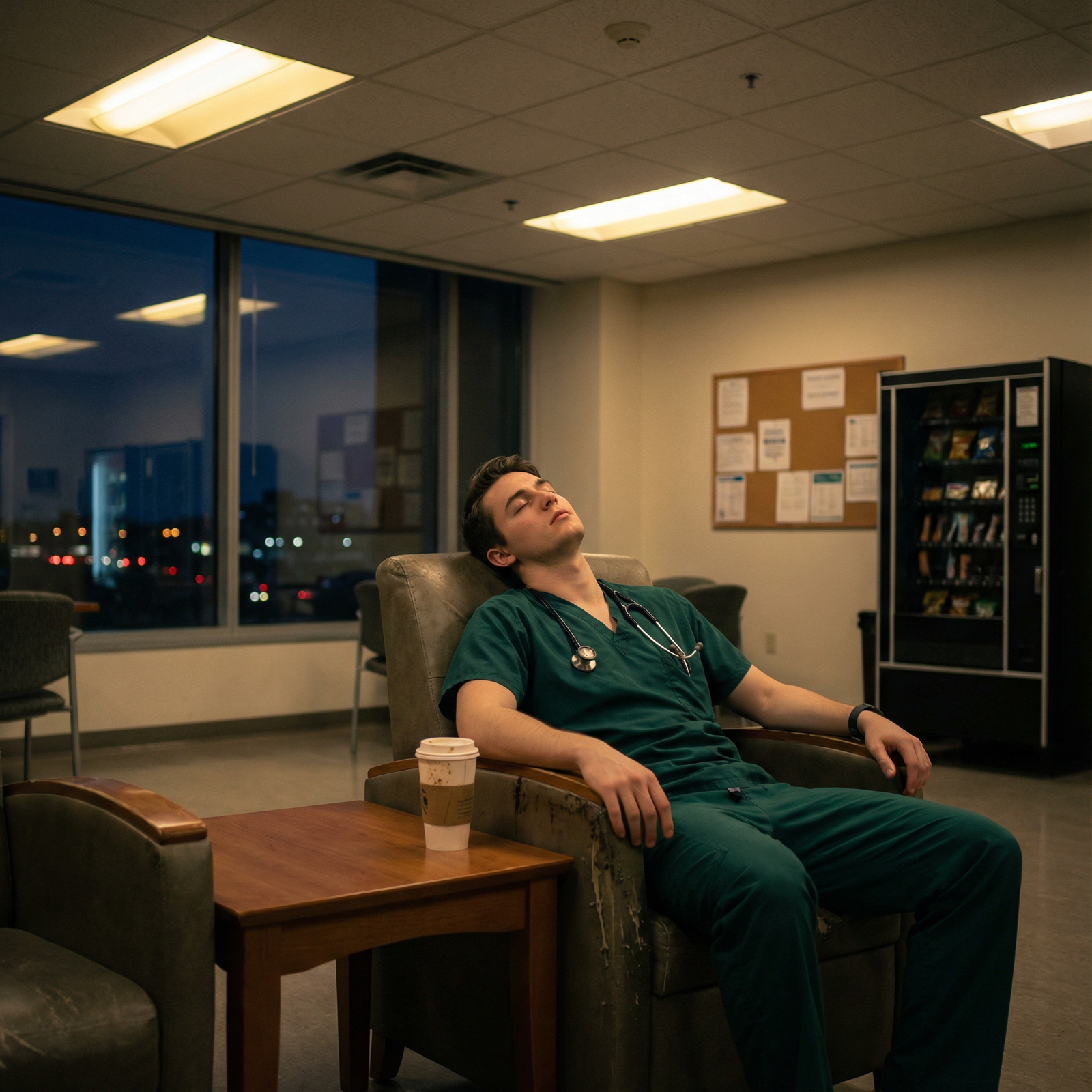
Core Strategies for Surviving—and Growing During—Your First Year
1. Elevate Self-Care from “Luxury” to Non-Negotiable
Self-Care often gets dismissed as a buzzword, but during residency it becomes a practical survival tool. You cannot sustain high-quality patient care if you are constantly running on fumes.
Anchor Habits: Small, Consistent Actions
You may not control your shift hours, but you do control small daily habits that protect your health:
Sleep Hygiene for Shift Work
- Use blackout curtains and white noise for post-call sleep.
- Wear sunglasses on the drive home after nights to reduce light exposure and ease sleep onset.
- Turn your phone on do-not-disturb and let your support system know your sleep schedule in advance.
Smart Nutrition in a Hospital Environment
- Keep a “go bag” in your locker with nuts, protein bars, instant oatmeal, and electrolyte packets.
- On days off, batch-cook or use healthy meal delivery to minimize reliance on vending machines and fast food.
- Aim for steady energy: combine protein + complex carbs (e.g., Greek yogurt and fruit, hummus and whole-grain crackers) instead of just sugar or caffeine.
Movement You Can Actually Maintain
- Micro-exercise: 5–10 minutes of stretching, stairs, or a brisk hallway walk between tasks.
- Short, high-yield workouts on days off (bodyweight circuits, short runs, yoga videos at home).
- Use walking rounds or taking stairs when practical as built-in movement.
Stress-Reset Routines
- One-minute breathing exercises between pages (e.g., inhale 4 seconds, exhale 6 seconds).
- A consistent pre-sleep ritual: shower, change into non-hospital clothes, brief reflection or gratitude, then devices off.
These strategies are less about perfection and more about consistency. Even 10% improvements in sleep, nutrition, and movement can significantly affect your energy and mood.
2. Build a Strong Support Network Inside and Outside the Hospital
You will cope better—and enjoy residency more—if you don’t try to do this alone.
Peer Support: Your Co-Interns and Residents
Share Honestly, Not Just Competitively
- Talk about mistakes, near misses, and fears in a psychologically safe way.
- Normalize asking for help rather than pretending you have everything figured out.
Create Informal Debrief Spaces
- Post-call breakfast with co-interns.
- Short weekly check-ins (“What was your hardest patient this week?” “What went well?”).
Use Collective Wisdom
- Share templates for sign-out, note-writing shortcuts, or checklists for common admissions.
- Crowdsource advice about difficult attendings, rotations, or services.
Mentors and Supervisors
Identify Multiple Mentors
- A senior resident for practical workflow tips.
- An attending for career guidance and specialty-specific mentorship.
- A faculty member known for resident advocacy and wellness.
Be Specific in What You Ask For
- “Can you help me prioritize reading during busy rotations?”
- “Can we discuss how to handle conflict with nursing staff professionally?”
- “I feel like I’m falling behind—can you give me feedback on where to focus?”
Mentorship is one of the strongest protective factors against burnout and can significantly shape your professional identity.
Family, Friends, and Partners
Set Expectations Early
- Explain your schedule honestly and share when things may be worst (e.g., ICU month, night float).
- Clarify that you may respond to messages late or briefly, but that it’s not about them.
Protect Time for Key Relationships
- Schedule brief but meaningful rituals: Sunday coffee with a partner, weekly video call with a close friend.
- On precious days off, resist overbooking; prioritize rest and one or two meaningful interactions.
Maintaining connection outside medicine reminds you that you are more than your role as an intern.
3. Master Time Management and Workflow to Reduce Long-Hour Stress
While you can’t always shorten your shift, efficient workflow can make those Long Hours more manageable and less chaotic.
Start with Clear Priorities
At the beginning of each shift:
- Identify your sickest patients and most time-sensitive tasks.
- Use a running to-do list organized by urgency:
- STAT/urgent (e.g., unstable vitals, critical labs)
- Time-sensitive (e.g., discharges, consults that need to be placed early)
- Can wait (e.g., non-urgent documentation, some follow-up calls)
Reassess this list after rounds and again mid-shift.
Use Tools and Systems
- Checklists for admissions, discharges, and pre-op evaluations help you avoid missed steps.
- Smart phrases and templates in the EHR for common notes to reduce documentation time.
- Batch similar tasks:
- Return several pages at once when possible.
- Place all orders after rounds in a systematic way: vitals/labs > imaging > meds > consults.
Learn the Art of Delegation and Collaboration
- Work closely with nurses, pharmacists, and case managers—ask what they need early in the day.
- Let your senior know early if your list is unmanageable; asking for help at 9 a.m. is better than drowning at 3 p.m.
- Be honest about your limits: “I can get these three discharges done by noon, but I’ll need help with the fourth.”
Effective time management reduces avoidable stress and gives you more mental bandwidth for actual learning.
4. Protect Your Mindset: Reframing, Reflection, and Growth
Your mindset is one of the most powerful tools you have to navigate Long Hours and high expectations.
Reframing the Experience
- View internship as skill-building, not performance-only:
- Every difficult call, code, or angry family interaction is practice for a future scenario as an attending.
- Replace “I’m terrible at this” with “I’m early in my learning curve on this skill.”
- Remember that fatigue and stress will temporarily distort your perception of your abilities.
Structured Reflection
Take 5–10 minutes at the end of a shift (or weekly) to ask:
- What did I learn today?
- What was one thing I did well?
- What is one thing I want to do differently next time?
Write this down briefly if you can—it helps consolidate learning and prevents your brain from focusing only on perceived failures.
Maintain a Sense of Meaning
On the hardest days, reconnect with why you chose medicine:
- Hold onto specific patient stories where you made a real difference.
- Celebrate small wins (catching a subtle diagnosis, explaining something clearly to a family).
- Remember: this intense year is finite. You will not always be an intern.
Using Institutional and External Resources for Burnout Prevention
You are not expected to handle everything alone. Most programs now recognize the importance of resident wellness and Burnout Prevention.
Hospital- and Program-Based Resources
Common supports you should actively explore:
Resident Wellness Programs
- Workshops on stress management, resilience, mindfulness, or financial planning.
- Wellness champions or committees advocating for schedule changes and support.
Confidential Counseling and Mental Health Services
- Free or low-cost therapy, often with providers experienced in working with physicians.
- Employee Assistance Programs (EAP) for short-term counseling, legal, or financial advice.
Formal Debriefing After Critical Events
- Many institutions offer structured debrief sessions after codes, unexpected deaths, or adverse events.
- These can be powerful spaces to process guilt, grief, or fear in a safe way.
Occupational Health and Fatigue Resources
- Policies for napping spaces, transportation after overnight shifts if you feel unsafe driving.
- Protocols to step back if you are too fatigued to function safely.
Professional and Peer Networks
Specialty Societies and National Organizations
- Many offer resident sections with wellness webinars, mentorship programs, and online communities.
Online Communities (used carefully)
- Resident forums and social media groups can provide validation and practical tips, but avoid doom-scrolling or comparison traps.
Engaging with these resources early—instead of waiting until crisis—can dramatically change your experience of internship.

Frequently Asked Questions About Long Hours and Intern Year
1. How many hours do medical interns typically work, and is this safe?
Most interns work 60–80 hours per week, depending on specialty, rotation, and institution. Duty-hour regulations limit maximum weekly hours and continuous shifts, and programs are monitored for violations. While these Long Hours are challenging and not without risk, they are designed to balance patient care needs, educational exposure, and safety.
Your responsibility is to:
- Report chronic duty-hour violations honestly.
- Speak up if you are too fatigued to provide safe care (e.g., driving post-call, managing complex patients).
- Use off-time for genuine rest when possible.
2. How can I maintain any semblance of Work-Life Balance during internship?
Work-Life Balance during residency rarely means equal time—it means intentional time. Practical tips:
- Protect one or two non-negotiables (e.g., weekly call to a parent, therapy appointment, or religious service).
- Use “micro-balance”: 10 minutes of reading for pleasure, a short walk with your partner, one meal at home without your phone.
- On days off, resist overcommitting; mix rest, meaningful connection, and one small personal task (e.g., exercise, hobby, or errand).
Think seasons, not perfection: some rotations will be survival mode, others will allow more space for life outside the hospital.
3. What should I do if I feel overwhelmed, burned out, or depressed?
Feeling overwhelmed at some point in internship is extremely common, but you don’t need to face it alone. Consider:
Immediate steps
- Tell someone you trust: a co-intern, senior resident, program director, or mentor.
- Use institutional mental health resources or EAP services; many allow self-referral.
Signs you should seek professional help urgently
- Persistent thoughts of self-harm or that others would be better off without you.
- Inability to function at work or home due to anxiety or depression.
- Using alcohol or substances to cope with stress or sleep.
Seeking help is a sign of professionalism and responsibility, not weakness.
4. How can I avoid medical errors when I’m exhausted?
You can’t eliminate fatigue entirely, but you can reduce risk:
- Double-check high-risk orders (e.g., anticoagulants, insulin, high-risk antibiotics).
- Use checklists for admissions, discharges, and handoffs.
- When you’re extremely tired, slow down intentionally during critical tasks.
- Ask a colleague or senior to cross-check you if something doesn’t feel right.
- Step back for a brief reset (deep breaths, a sip of water) before writing complex orders.
If you do make a mistake, seek supervision immediately. Early recognition and transparency protect patients and support your growth.
5. Will it get better after my intern year?
For most residents, yes:
- You gain efficiency: tasks that once took an hour may take 15 minutes.
- You build confidence and clinical judgment, reducing decision paralysis.
- Your role shifts from constant “doer” to more of a supervisor and teacher in later years.
- Many programs design lighter or more flexible senior years, with more elective time.
The first year is uniquely intense because you are learning both medicine and how to function in the hospital system. It is temporary, and the skills you gain will serve you throughout your career.
Surviving your first year as a medical intern is not about sheer endurance alone. It’s about deliberately using strategies for Self-Care, Work-Life Balance, and Burnout Prevention while embracing the steep, transformative learning curve of residency. By understanding the reality of Long Hours, leaning on your support systems, using institutional resources, and protecting your physical and emotional health, you can emerge from intern year not only intact—but stronger, more capable, and ready for the next phase of your medical journey.