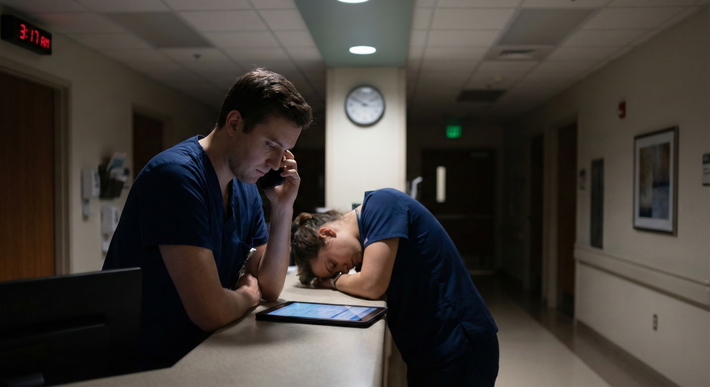
Time Management Hacks for Interns: Maximizing Your First Year
Starting your first year as a medical intern is exhilarating and intimidating all at once. You’re suddenly responsible for real patients, real orders, and real consequences—often on very little sleep. Between pre-rounding, notes, pages, admissions, sign-out, and trying to study, it can feel like there simply aren’t enough hours in the day.
Time Management in your Medical Internship is not just a “nice-to-have” skill; it’s a core competency that affects your stress level, learning curve, patient care, and long-term well-being. With the right Productivity Hacks and Study Techniques, you can move from constantly “putting out fires” to working in a more focused, intentional way that supports both your patients and your own growth.
This guide expands on practical, realistic strategies tailored specifically to interns, helping you build systems that will serve you throughout residency and beyond.
Why Time Management Matters So Much in Internship
Intern year is a perfect storm: high responsibility, steep learning curve, and limited control over your schedule. Effective time management directly supports four critical domains.
1. Stress Reduction and Burnout Prevention
Poor time management amplifies stress. When everything feels urgent and you don’t have a system, you:
- Constantly feel behind
- Ruminate about forgotten tasks
- Stay late to “catch up”
- Sacrifice sleep, exercise, and social life
Intentional time management and clear prioritization:
- Turn a chaotic day into a series of manageable steps
- Reduce decision fatigue by giving you a framework for what to do next
- Help you leave on time more often and protect your off-hours
- Decrease the risk of burnout by creating predictability where you can
2. Enhanced Learning and Study Efficiency
Internship is not just about surviving rotations; it’s also your foundation for board exams and independent practice. With structured time, you can:
- Carve out small but consistent study blocks (even 20–30 minutes)
- Turn daily cases into learning opportunities
- Use active Study Techniques like spaced repetition and question banks
- Maintain a longitudinal approach to your education instead of last-minute cramming
3. Improved Patient Care and Safety
Good time management improves patient care by:
- Ensuring tasks (labs, imaging, follow-ups) are not forgotten
- Allowing more time at the bedside for counseling and shared decision-making
- Helping you respond faster to critical issues because you’re less buried in low-value work
- Reducing errors associated with fatigue and cognitive overload
4. Preserving Your Health and Well-Being
Managed time makes space for:
- Adequate sleep as often as possible
- Short but regular exercise sessions
- Brief mindfulness or decompression practices during or after shifts
- Time with family, friends, or hobbies—even if less than before
The goal is not perfection or rigid control. The goal is intentionality: knowing what you’re doing, why you’re doing it, and what can wait.
Build a Strong Foundation: Own Your Schedule
You don’t control call schedules, but you can control how you work within them. The first step is understanding and organizing your days and weeks.
Create a Detailed Daily and Weekly Planner
Whether digital or paper, use a system you actually enjoy and can access quickly during shifts.
Key elements to track:
- Core clinical blocks:
- Pre-rounding and chart review
- Rounds
- Notes and orders
- Family updates
- Admissions and discharges
- Fixed commitments:
- Conferences, noon lectures, teaching sessions
- Mandatory meetings, check-ins, simulation sessions
- Flexible blocks:
- Quick study sessions (videos, question bank, reading)
- Admin tasks (inbox, disability forms, emails)
- Personal time (meals, brief exercise, decompression)
Practical approach:
Morning micro-plan (5 minutes):
- Before rounds, glance through your patient list.
- Identify “must-do” tasks vs. “nice-to-do” tasks.
- Estimate time for key notes, admissions, and likely discharges.
Evening/End-of-shift reflection (5–10 minutes):
- Note unfinished tasks to hand off or complete the next day.
- Capture 1–2 learning points from the day.
- Quickly adjust your next day’s planner based on today’s reality.
Choose the Right Tools for You
Digital options:
- Google Calendar/Outlook: For rotas, clinic times, conferences, and reminders
- Notion / OneNote / Apple Notes: For longitudinal learning notes and patient pearls
- Task managers (see below): For daily workflow and checklists
Analog options:
- Pocket notebook or index cards for daily patient lists and to-dos
- A small weekly planner that fits your white coat
The tool matters less than consistency. Use one calendar and one primary to-do capture system to avoid fragmented information.

Prioritization Strategies: Doing the Right Things First
As an intern, you’ll quickly realize you can’t do everything at once. Effective Time Management in your Medical Internship is less about working faster and more about choosing what to do first.
Use the ABCDE Method for Clinical and Personal Tasks
Adapt the classic ABCDE framework to your daily workflow:
A – Must do now (urgent and important)
- New chest pain, hypotension, change in mental status
- Critical lab or imaging results that require action
- Time-sensitive orders (antibiotics, anticoagulation, insulin, transfusions)
- Required sign-out and handoff tasks
B – Should do today (important, less urgent)
- Progress notes and discharge summaries
- Family updates that are not emergent but essential
- Follow-up on non-critical but important labs and consults
- Studying a key topic related to one of your complex patients
C – Nice to do (neither urgent nor highly important)
- Deep dives into rare conditions not currently relevant
- Extended reformatting of notes that are already clear and complete
- Extra projects that are not time-sensitive
D – Delegate (when possible)
- Non-clinical tasks that allied health staff or other team members can handle
- Clarifying scheduling issues that the unit clerk can help with
- Simple information gathering that medical students are eager to assist with
E – Eliminate
- Repeatedly checking your phone or email without purpose
- Overediting notes far beyond clinical necessity
- Volunteering for every optional task when you’re already overloaded
Practical tip:
Keep a running list on your patient list or task app with A/B/C labels. When you feel overwhelmed, look at the “A” items and start there.
Triage Your Day Like You Triage Patients
Think in terms of clinical triage:
- Immediate threats to patient safety or your duty to handoff
- Time-sensitive workflow items, like notes needed before attending sign-out
- Important but movable tasks, like reading and longitudinal projects
Accept that some “B” tasks may shift to tomorrow, as long as they are tracked and not forgotten.
Leverage Technology and Systems to Save Time
When used strategically, technology can be one of your most powerful Productivity Hacks in residency.
Task Management Applications for Interns
Consider experimenting with 1–2 of these tools and sticking with what feels intuitive:
Todoist or Microsoft To Do
- Create lists for: “Today,” “This Week,” “Admin,” and “Long-Term Projects”
- Use priority flags to mimic the ABCDE system
- Add quick tasks at the bedside with your phone
Trello or Asana
- Visual boards to manage: research projects, QI initiatives, or clinic follow-ups
- Columns like “To Do,” “In Progress,” “Awaiting Results,” “Completed”
- Great for team-based projects with co-residents
Evernote / Notion
- Capture clinical pearls tied to specific cases
- Build your own searchable “residency wiki” with protocols, dosing guidelines, helpful images, and algorithms
- Organize notes by specialty or rotation
Use the Pomodoro Technique Wisely
The Pomodoro Technique helps maintain focus during cognitive work like studying or writing notes.
How to adapt it to intern life:
Pick a task:
- Writing two progress notes
- Reading one UpToDate article
- Doing 10–15 board-style questions
Set a 25-minute timer:
- Commit to no interruptions you can control (e.g., notifications, casual chatter)
- Keep your pager/phone audible for true clinical needs only
Take a 5-minute break:
- Stand, stretch, sip water, deep breathing
- Avoid getting lost in your phone
After 3–4 cycles, take a 15–20 minute break if your schedule allows.
Even a single Pomodoro block on a busy day can yield meaningful progress on notes or studying.
Optimize Your Electronic Health Record (EHR) Workflow
The EHR can either drain or save time depending on how you use it.
Create and refine smartphrases/templates for:
- H&Ps
- Common admission diagnoses (CHF, COPD, CAP, DKA)
- Discharge summaries
- Routine progress note structures
Learn shortcuts and order sets:
- Ask senior residents for high-yield order sets used on your service
- Save commonly used orders and favorite labs/imaging
Batch EHR work when possible:
- Do similar tasks together (e.g., reconcile meds for all potential discharges at once)
- Review labs/imaging in one focused block instead of constantly refreshing
Study Techniques that Fit a Busy Internship
Studying during internship is less about long hours and more about smart, flexible techniques.
Daily Micro-Review: Short, Consistent Learning Blocks
Aim for 15–30 minutes per day on most days, even if it’s split into smaller chunks.
High-yield approaches:
Active recall:
- Close your resources and try to explain a topic from memory
- Use flashcards (Anki or paper) for core facts, not entire textbook pages
Spaced repetition:
- Revisit key concepts at increasing intervals
- Anki and similar apps handle scheduling automatically
Case-based learning:
- After seeing an interesting patient, read a focused article or guideline
- Write 3–4 bullet-point takeaways and store them in a searchable note
Integrate Learning into Your Clinical Day
Ask yourself 1–2 “learning questions” per shift:
- “What’s the best second-line agent for this?”
- “What are the top 3 complications I should anticipate with this condition?”
Use downtime productively:
- Waiting for labs or between admissions: do 3–5 questions or review flashcards
- Use mobile apps with offline mode for question banks
Turn handouts and lecture slides into:
- Short summary notes in your own words
- Anki cards for core points and algorithms
Form Efficient, Flexible Study Groups
Study groups can provide accountability and peer teaching—but must be tailored to intern schedules.
Guidelines for success:
- Keep sessions time-limited (e.g., 45–60 minutes weekly).
- Rotate topic leads: each person presents 1–2 short cases or board-style questions.
- Focus on exam-relevant and clinically relevant material.
- Use cases from your own patients (de-identified) to anchor learning.
Delegation, Teamwork, and Saying No
You may feel that as an intern you must say yes to everything and do everything yourself. In reality, smart delegation and boundary-setting are essential for safe care and sustainable work.
Master the Art of Delegation
Delegation is not dumping work; it’s aligning tasks with the appropriate team member.
Use nurses and allied health staff appropriately:
- Clarify non-urgent messages that can wait for routine order sets
- Utilize nursing expertise in patient education and monitoring
- Ask care coordinators or social workers for help with disposition issues
Work with medical students:
- Have students draft notes or histories, then you verify and edit
- Ask them to pre-review labs, imaging, or guidelines and report back
- Use this as a teaching opportunity and a time-saver
Communicate with your senior resident/attending:
- If your workload is unsafe or unmanageable, speak up early
- Ask specifically: “I’m juggling X, Y, and Z. Which should I prioritize?”
Learn to Say No Strategically
You can’t protect your time if you never say no.
Times to consider a gentle “no” or “not now”:
- Optional research or QI projects during a brutal ICU or night float month
- Extra committee or teaching roles when you’re already struggling with core duties
- Social commitments that would severely cut into needed rest
Phrases that maintain professionalism:
- “I’d really like to be involved, but my current rotation is very demanding. Could we revisit this next month?”
- “I’m at capacity with my patient load right now and want to make sure I’m providing safe care. Is there a way to reassign or delay this task?”
Protecting your bandwidth is a key Stress Reduction and patient-safety measure, not a sign of laziness.
Protecting Your Time and Energy Outside the Hospital
Time Management isn’t just about your work hours; it’s also about building Recovery time into your life.
Set Boundaries for Self-Care and Recovery
Even small, consistent habits can buffer against burnout.
Sleep first when off-call:
- Structured naps after night shifts (90 minutes or full sleep cycles)
- Blackout curtains and white noise for daytime sleep
Physical activity in small doses:
- A 10–20 minute bodyweight workout at home
- Brisk walk around the block after a shift
- Stretching while watching a short show
Mindfulness and mental decompression:
- 5 minutes of breathing exercises before bed
- Short guided meditations (e.g., Headspace, Calm)
- Brief journaling to offload intrusive thoughts about the day
Maintain social connections:
- Schedule one recurring social touchpoint per week or every other week
- Combine social time with healthy habits (walks with a friend, cooking together)
Batch Administrative Tasks Strategically
Admin tasks expand to fill the time you give them. Constrain them deliberately.
- Designate specific windows (e.g., last 20 minutes of shift or a weekend 30-minute block) to:
- Answer non-urgent emails
- Complete forms and paperwork
- Update CV or research logs
- Avoid checking your email constantly; batch it to 1–2 check-ins per day when possible.
Reflective Practice: Journaling and Continuous Improvement
Reflection helps you refine your systems, not just your clinical judgment.
Keep a Brief Reflective Journal
You don’t need long essays. Aim for 3–5 minutes at a time, a few times per week.
Prompts that support performance and well-being:
- What was one thing I did well today?
- What challenged me today, and how did I respond?
- What is one small change that could make tomorrow easier?
- What did I learn today that I want to remember?
This practice:
- Consolidates learning
- Highlights patterns (e.g., consistently running behind on a certain task)
- Encourages realistic self-compassion instead of constant self-criticism

Frequently Asked Questions: Time Management for Medical Interns
Q1: How can I quickly prioritize tasks during a chaotic shift?
Use a rapid triage approach:
- Safety first: Handle anything that could harm a patient if delayed (vital sign instability, chest pain, acute mental status change, critical labs).
- Time-sensitive tasks: Orders or notes needed before handoff, procedures with limited windows (e.g., antibiotics, imaging before a cutoff time).
- Important but deferrable: Family updates that can occur later in the day, non-urgent consults, deep-dive reading.
Pair this with a simple system like the ABCDE method in your task list to keep track of what still needs attention.
Q2: Which apps are most helpful for Time Management and Study Techniques during internship?
Commonly used options include:
- For scheduling: Google Calendar or Outlook (for rotations, call schedules, conferences)
- For to-dos: Todoist, Microsoft To Do, or Apple Reminders
- For notes and learning: Notion, Evernote, or OneNote
- For studying: Question banks with mobile apps (e.g., UWorld, AMBOSS), and Anki for spaced repetition
Try one from each category and stick with what feels simple and intuitive rather than constantly switching tools.
Q3: How can I realistically prevent burnout with such a demanding schedule?
You may not avoid stress entirely, but you can lower burnout risk by:
- Protecting sleep whenever the schedule allows
- Using small, consistent self-care habits (10–20 minutes of movement, 5 minutes of mindfulness, brief journaling)
- Setting boundaries on extra responsibilities when you’re at capacity
- Seeking support early—from co-residents, chiefs, program leadership, or mental health services—if you feel overwhelmed for more than a brief period
- Using Time Management and Productivity Hacks to reduce the sense of chaos and regain some control
Q4: Is it possible to study effectively during internship without sacrificing rest?
Yes, if you adjust your expectations and methods:
- Focus on short, regular blocks (15–30 minutes) instead of marathon sessions
- Use high-yield Study Techniques: active recall, spaced repetition, and question-based learning
- Integrate learning with clinical work—reading about your own patients is often the most efficient way to learn
- Be strategic: some months (like wards or ICU) may be “maintenance mode” for studying, while lighter rotations allow more intensive review
Q5: How important is a supportive network during internship, and how do I find one?
A supportive network is crucial for both performance and mental health. It helps you:
- Share tips for rotations, notes, and exam preparation
- Normalize challenges and reduce the feeling of isolation
- Find accountability for goals (exercise, study, research)
To build one:
- Connect with your co-interns and co-residents; attend low-key social events when you can
- Identify 1–2 seniors you trust for honest advice
- Join or form small study groups or interest groups (e.g., research, specialty interest)
- Use mentors and faculty as resources not only for career questions but also for habits and workflow strategies
Effective Time Management during your Medical Internship is a skill you will refine over time, not a one-time fix. Experiment, observe what works for you, and adjust. Small, consistent improvements in planning, prioritizing, and protecting your energy can dramatically change how your first year of residency feels—turning it from pure survival into a powerful, sustainable period of growth.