Conquering the Chaos: Essential Strategies for First-Year Interns
Embarking on your first year as an intern is one of the most intense transitions in your medical career. Overnight, you move from supervised student to responsible physician. Your name is on orders, your pager never seems to stop, and the combination of long hours, steep learning curves, and emotional cases can feel overwhelming.
Yet thousands of interns complete this journey every year—and many learn not just to survive, but to grow, thrive, and find meaning in the chaos.
This guide brings together practical, experience-based strategies to help you make your intern year safer, more sustainable, and more rewarding. We’ll focus on core skills for residency life and challenges: time management, organization, effective communication, self-care, and building the relationships and systems that will carry you through the toughest days of internship.
Understanding the Landscape of Intern Year
From Medical School to Residency: What Really Changes
In medical school, your primary job was to learn. As a first-year intern (PGY‑1), you’re still a learner—but now you’re also a doctor with real responsibility for patients.
Key shifts you’ll notice:
- Ownership of patients: You’re expected to know your patients better than anyone else on the team. You track their labs, understand their medications, notice subtle changes, and advocate for them.
- Constant decision-making: Even when you’re asking for help, you’re expected to propose plans: “For this new fever, I’m thinking blood cultures, CXR, UA, and starting broad-spectrum antibiotics—what do you think?”
- Multiple roles at once: You’re a clinician, communicator, team member, teacher to students, and, increasingly, an independent problem-solver.
- Less structured learning time: Teaching still happens, but often at the bedside or on the fly, woven into a busy clinical day.
Recognizing these changes helps you reset your expectations. Feeling unprepared does not mean you’re failing; it means you’re exactly where every intern starts.
Core Responsibilities of a First-Year Intern
Across specialties and hospitals, most interns will:
- Take focused and comprehensive patient histories and perform physical exams
- Write admission notes, daily progress notes, and discharge summaries
- Place and manage orders for medications, labs, and imaging
- Call consults and coordinate with specialists
- Communicate with patients and families about diagnoses, plans, and expectations
- Present patients on rounds and in sign-out
- Perform basic procedures appropriate to your specialty and training
- Respond to acute changes in patient status, calling for help early when needed
Intern year isn’t about knowing everything—it’s about learning to function safely and reliably within the system, to identify what you don’t know, and to get help fast when you need it.
Mastering Time Management in Internship
Time management is the backbone of surviving intern year. Your clinical workload, educational requirements, and personal life all compete for limited hours. Intentional, structured time management can mean the difference between constant crisis mode and a manageable (if intense) routine.
Build a Daily Structure That Works for You
Create predictable anchors in your day, even when the schedule varies:
Before work (10–20 minutes):
- Review the patient list (if available ahead of time)
- Skim overnight events in the EMR when possible
- Set three priorities for the day (e.g., “Finish two discharge summaries by noon, read about sepsis, leave sign-out on time”)
Pre-rounding:
- See your sickest or most unstable patients first
- Quickly review vitals, overnight nursing notes, new labs, and imaging
- Use a consistent template for bedside checks (vitals, I/Os, pain, lines/tubes, key exam points)
During rounds:
- Take notes in a structured format so you can create orders quickly afterward
- Star or highlight items that require follow-up (calls, consults, imaging)
Post-round block:
- Immediately enter critical orders (pain meds, antibiotics, fluids) before anything else
- Batch similar tasks: call all consults together, write notes in groups, place all lab orders at once
End-of-day:
- Update your patient list with new plans and pending results
- Identify any “loose ends” to cover in sign-out
- Decide on one short learning topic to read about that night or the next day
Prioritizing Under Pressure: Clinical Time Management
Not all tasks are equal. When the pager is going off, you need a quick internal triage system.
Think in this order:
Emergencies / unstable patients
- Acute chest pain, hypotension, respiratory distress, mental status changes, new neurologic deficits
- Go in person. Call for help early: “I’m the intern for bed 12, new hypotension and tachycardia. I’m on my way but we may need backup.”
Time-sensitive tasks
- STAT labs and imaging, antibiotic first doses, pain control, blood product orders, consent for OR/procedures
Disposition-related tasks
- Discharge summaries, prescriptions, patient education, rehab/SNF arrangements that may delay discharge if unfinished
Routine but necessary care
- Daily notes, routine lab checks, med reconciliation, non-urgent consults
Educational activities and documentation refinement
- Reading, refining notes, reviewing guidelines—critical for your growth, but often more flexible in timing
A simple mental or written “A-B-C” list (A = must do now, B = later today, C = whenever possible) can keep you from feeling paralyzed by volume.
Tools and Systems for Time Management
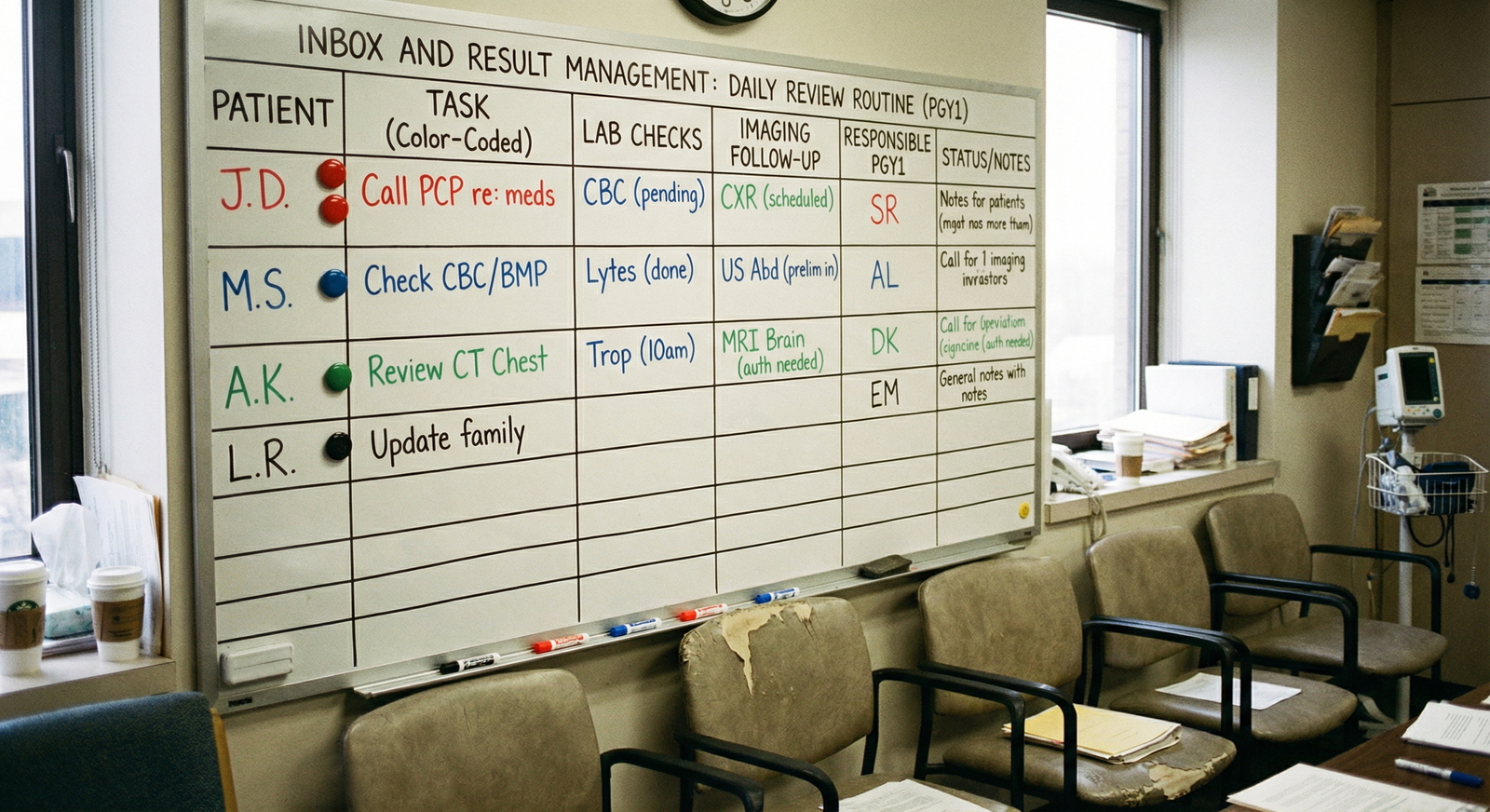
- Digital calendars: Enter call schedules, clinics, didactics, conferences, and deadlines (e.g., evaluations, research submissions).
- Task managers (e.g., Todoist, Notion, or paper index cards): Track recurring tasks (daily labs to follow, weekly teaching prep, monthly portfolio updates).
- Mini “run sheet” for each patient:
- Problems list
- Pending studies
- Tasks for today
- Anticipated disposition date and needs
Over time, you’ll refine these systems. What matters is consistency, not perfection.

Staying Organized in a Fast-Paced Clinical Environment
Time management and organization go hand in hand. Disorganization amplifies stress, leads to missed tasks, and can compromise patient safety.
Clinical Organization: Keeping Track of Patients and Tasks
Use standardized patient lists:
- Include room, diagnoses, active issues, important meds (e.g., anticoagulants, vasopressors, insulin), code status, and anticipated discharge date.
- Keep a column for “To Do Today” and “Pending/Results to Check.”
Checklists are your safety net:
- Morning checklist: overnight events reviewed, vitals checked, new labs, imaging, consult notes.
- Pre-discharge checklist: medication reconciliation, follow-up appointments, patient teaching, discharge summary and prescriptions completed.
- Sign-out checklist: active issues, contingencies (“If X then Y”), pending labs/imaging, code status.
Optimize your EHR use:
- Learn shortcuts and templates early (ask seniors for their favorites).
- Create note templates that include:
- Problem-based assessment and plan
- Checklist of routine issues (DVT prophylaxis, pain, nutrition, lines/tubes)
- Space for follow-up items
- Use “smart phrases” or macros for common counseling scripts (e.g., heart failure discharge instructions).
Organizing Your Learning and Career Development
Internship isn’t just service—it’s a crucial phase of your medical career. Intentional organization of your learning will pay off quickly.
Micro-learning strategy:
- After each challenging case, jot down 1–2 questions on your phone (e.g., “Best initial workup for new-onset ascites?”).
- Aim to read at least one short article or guideline summary per day based on those questions.
Create a simple knowledge system:
- Use an app or notebook to store brief pearls, algorithms, and common order sets.
- Revisit regularly (e.g., 10 minutes before bed or during commute if safe to do so).
Track your growth:
- Keep a running list of procedures you perform, feedback you receive, and milestones you achieve.
- This will be invaluable for evaluations, letters of recommendation, and future fellowship or job applications.
Fostering Effective Communication and Strong Team Relationships
Effective communication is one of the most protective skills you can develop as an intern—for patient safety, for your reputation, and for your sanity. It also underpins strong relationships with colleagues, which are essential to surviving internship.
Communicating Clearly with Your Team
Presentations on rounds:
- Be concise and organized: one-liner → overnight events → focused exam → key labs/imaging → assessment and plan problem-by-problem.
- Speak with a proposed plan whenever possible: “Given her new oxygen requirement and infiltrate, I recommend starting ceftriaxone and azithromycin, obtaining sputum culture, and repeating CXR in 48 hours.”
Structured handoffs:
- Use SBAR or I-PASS:
- Situation / Illness severity
- Background
- Assessment
- Recommendation / Actions
- Synthesis by receiver
- Always include:
- Most concerning active problems
- “If-then” statements for likely events
- What to watch for overnight
- Use SBAR or I-PASS:
Calling consults effectively:
- Prepare a one-liner, key data, and specific question.
- Example: “I’m calling from medicine about a 65-year-old woman with new-onset atrial fibrillation, RVR, and possible heart failure exacerbation. We’ve started rate control and diuresis. Our question: guidance on anticoagulation timing and further workup.”
Communicating with Patients and Families
This is where your professionalism and empathy are most visible.
- Use plain language:
- Replace “myocardial infarction” with “heart attack,” “edema” with “swelling,” “hypertension” with “high blood pressure.”
- Set expectations early:
- “Today we’re focusing on getting your pain under control and making sure your infection is improving. If all goes well, tomorrow we’ll discuss discharge planning.”
- Acknowledge emotions:
- “I can see this is really scary. It makes sense to feel overwhelmed. Let’s walk through what’s happening step by step.”
- Close the loop:
- Ask patients to repeat the plan in their own words: “Just so I know I explained it clearly, can you tell me what you’ll be watching for when you go home?”
Building a Supportive Network: Peers, Seniors, and Staff
Strong relationships are a protective factor against burnout and isolation during internship.
With co-interns:
- Share tips, templates, and resources openly.
- Cover for each other when possible (e.g., trading pages for 10 minutes so someone can grab food).
- Normalize struggle—talk honestly about your experiences and coping strategies.
With senior residents and attendings:
- Identify 1–2 people you feel comfortable turning to for career and personal advice.
- Ask for specific guidance: “Could you watch me present today and give feedback?” or “How do you handle delivering bad news?”
- Show reliability: follow through on tasks, communicate early if you’re falling behind, and accept feedback constructively.
With nurses and other team members:
- Learn names and ask for input: “You’ve been caring for her all day—have you noticed anything different?”
- Respect their expertise and experience, especially regarding practical aspects of care.
- Respond to critical pages promptly and thank them for raising concerns.
These relationships will not only help patients—they will make your internship more manageable, collegial, and, at times, surprisingly rewarding.
Protecting Your Well-Being: Self-Care in a Demanding Internship
The culture of medicine often glorifies self-neglect. But sustained lack of sleep, poor nutrition, and emotional suppression will erode your performance, judgment, and empathy over time. Self-care is not indulgence; it is a professional responsibility.
Sleep: The Non-Negotiable Foundation
- Protect sleep when you can:
- On non-call days, aim for 7–8 hours whenever possible.
- Before night shifts, try a 90–120 minute nap in the afternoon.
- Create a brief sleep routine:
- Even 5 minutes of consistent pre-bed habits (shower, dim lights, no screen, quiet music) can signal your brain to wind down.
- Use your days off strategically:
- Avoid over-scheduling. Sometimes the most productive thing you can do is rest.
Simple, Sustainable Physical Self-Care
Movement:
- Short, frequent movement is realistic: 10-minute walks during lunch, climbing stairs instead of elevators, a quick stretch routine after shift.
- On off days, aim for one longer session of exercise you enjoy (running, yoga, cycling, sports).
Nutrition:
- Keep quick, healthy snacks in your bag or locker: nuts, protein bars, fruit, yogurt.
- Try to eat at roughly consistent times to avoid crashes.
- Hydration is key—keep a refillable water bottle on you when possible.
Emotional Health and Resilience
Intern year can expose you to suffering, death, conflict, and your own limitations. Ignoring your emotions doesn’t make them disappear; they show up as irritability, cynicism, or exhaustion.
Debrief difficult cases:
- Talk to a trusted peer, senior, or mentor after a particularly hard event (e.g., code, patient death, medical error).
- Many programs have debrief sessions—attend them when available.
Use brief mindfulness practices:
- 3 deep breaths before entering a room or answering a difficult page.
- 1–2 minutes of guided breathing in a quiet corner (use an app if helpful).
Know your resources:
- Employee assistance programs (EAP), counseling services, wellness offices.
- Confidential mental health support, often with clinicians experienced in working with healthcare professionals.
Caring for yourself is part of being able to consistently care for others.

Growing as a Clinician: Adaptability, Feedback, and Continuous Learning
Internship is a year-long crash course in adaptability and growth. The residents who advance most quickly are not necessarily the ones who know the most on day one—but the ones who learn efficiently from each experience.
Staying Informed and Adaptable in a Changing Medical Landscape
Clinical reasoning over memorization:
- Focus on understanding why rather than just what: why a certain antibiotic is first-line, why one imaging test is preferred over another.
Curate your learning resources:
- One general reference (e.g., UpToDate, primary specialty text)
- One concise handbook or app (e.g., pocket guide, specialty app)
- Key guidelines bookmarked for your field (e.g., ACC/AHA, IDSA, NIH)
Be flexible in the face of change:
- New attending, different style of rounds, sudden service change—view these as chances to broaden your skill set.
- Ask, “What can I learn from this person’s approach?” even if their style differs from yours.
Seeking and Using Feedback Effectively
Ask for specific feedback regularly:
- Instead of “Any feedback?” try:
- “Could you give me feedback on my presentations this week?”
- “How can I improve my efficiency in pre-rounding?”
- Aim for brief feedback every 1–2 weeks rather than waiting for formal evaluations.
- Instead of “Any feedback?” try:
Receive feedback with curiosity, not defensiveness:
- Listen fully before responding.
- Ask clarifying questions: “Can you give an example?” or “How would you have approached that situation differently?”
- Thank the person for their time and honesty.
Turn feedback into action:
- Choose one concrete behavior to focus on at a time (e.g., “I will practice giving a problem-based plan for each patient on rounds this week”).
- Check in again later: “Last month you suggested I work on X—do you see improvement?”
Reflective Practice: Learning from Your Own Experiences
Simple weekly check-in:
- What went well this week?
- What was difficult?
- What did I learn?
- What will I do differently next time?
Track meaningful moments:
- A thank you from a patient, a diagnostic puzzle solved, a difficult conversation navigated well—these are anchors that can sustain you through harder days.
Reflection transforms experience into expertise—and helps maintain your connection to why you chose this medical career in the first place.
Frequently Asked Questions: Navigating Your First Year of Internship
1. Is it normal to feel overwhelmed or inadequate during intern year?
Yes. Nearly every first-year intern experiences periods of self-doubt, anxiety, or feeling behind. You’re learning a huge amount in a short time, under real pressure. Feeling overwhelmed is not a sign that you’re not cut out for medicine—it’s a sign that you’re doing something very hard.
What helps:
- Talk to co-interns and trusted seniors; you’ll quickly learn your feelings are common.
- Focus on growth: compare yourself to last month, not to senior residents or attendings.
- Celebrate small wins—accurate presentations, improved notes, a grateful patient.
2. How can I improve time management when the day constantly changes?
Expect unpredictability and build flexible systems rather than rigid schedules.
Practical tips:
- Start the day with three priorities and a clear to-do list.
- Group tasks (all discharge paperwork together, all consult calls together).
- Triage requests using “emergent–urgent–routine” mental buckets.
- Review and update your task list at midday and before sign-out.
Over time, your pattern recognition improves, and you’ll anticipate common bottlenecks (e.g., late-afternoon discharges) and plan around them.
3. How do I maintain self-care without feeling like I’m neglecting my patients or team?
Self-care and professionalism are not in conflict—they support each other.
Try:
- Micro self-care: 5-minute walks, quick stretch, deep breaths between tasks.
- Non-negotiables: one solid meal per shift, hydration, and some sleep on post-call days.
- Clear communication: if you’re truly exhausted or unwell, inform your chief or program leadership early so accommodations can be made safely.
You are part of a system designed to provide continuous care. When you rest appropriately, you reduce errors and improve the care you deliver.
4. How important is mentorship during internship and how do I find a mentor?
Mentorship is extremely valuable. A good mentor can:
- Help you navigate residency politics and culture
- Offer specialty-specific advice (fellowships, research, career paths)
- Support you through personal and professional challenges
To find a mentor:
- Note attendings or seniors whose style, values, or career paths resonate with you.
- Start with a brief meeting: “Could I have 20 minutes to ask about your career path and get advice on X?”
- It’s okay to have multiple mentors for different needs (clinical, research, wellness).
5. What should I do if I make a mistake during intern year?
Every physician, at every level, makes mistakes. What defines your professionalism is how you respond.
Steps to take:
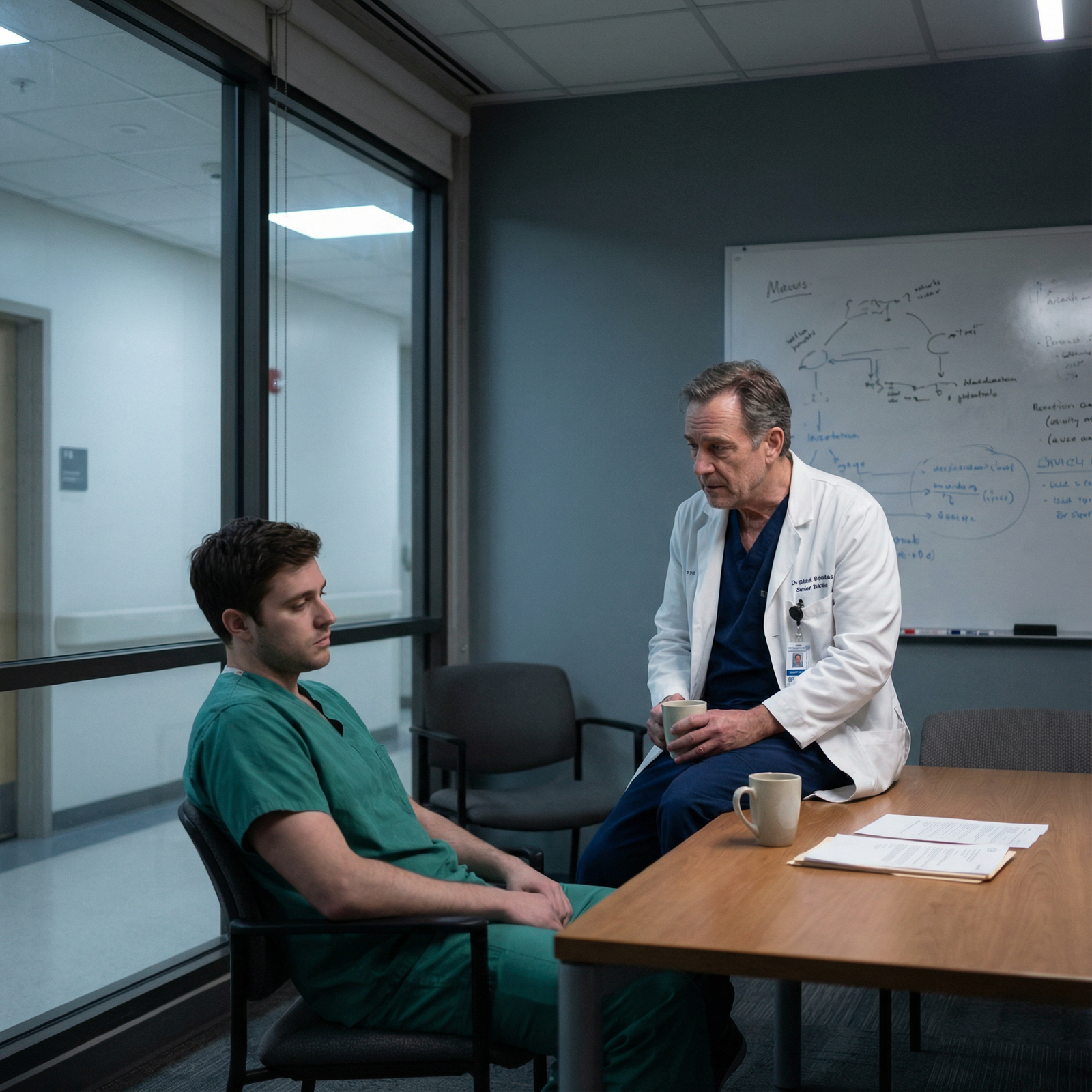
- Ensure patient safety first: Correct the error if possible, escalate to your senior or attending immediately.
- Be honest with your team: Hiding errors is dangerous and erodes trust.
- Participate in disclosure as appropriate: Your attending will guide discussions with the patient and family.
- Reflect and learn: What system or personal factors contributed? How can you reduce the chance it happens again?
- Seek support: It’s normal to feel guilt or distress. Talk with a trusted colleague, mentor, or mental health professional if needed.
Mistakes can be painful but are also powerful learning experiences that shape you into a more careful and compassionate physician.
By approaching your intern year with deliberate time management, organized systems, effective communication, strong relationships, and committed self-care, you can transform what feels like chaos into a challenging but deeply meaningful chapter in your medical career. The goal is not perfection—it’s steady growth, safe patient care, and building a foundation for the kind of physician you aspire to become.