The Short Answer First
Yes, you can get a strong letter of recommendation from shadowing. But here's the thing, only under specific conditions that most students never bother to set up.
I've watched too many applicants submit shadowing letters that read like a timecard: "X showed up on these dates, stayed for this many hours, seemed interested." That's not a letter. That's an attendance record. And program directors see right through it.
The real issue isn't shadowing versus rotations. It's about what you can demonstrate. A rotation where you're physically present but mentally checked out produces a worse letter than strategic shadowing where you ask thoughtful questions, follow up on cases, and build genuine rapport with a physician over weeks or months.
What PDs actually prioritize when they scan your letters: Can this person take care of patients? Do they show up on time? Do they work well with others? Can they handle feedback? Are they someone I'd want on my team at 3 AM?
None of these require a formal rotation to demonstrate. They require a letter writer who's seen enough of you to answer those questions honestly. That's your target. Everything else is logistics.
This article is for educational purposes only. It is not financial advice, not legal advice, and not tax advice. Figures vary by individual circumstances, so consult a qualified professional before acting.
What PDs Actually Prioritize in Letters of Recommendation
I've reviewed letters alongside residency selection committees. I've heard PDs talk candidly about what makes them put a letter in the "keep" pile versus the recycling bin.
The NRMP Program Director Survey consistently shows clinical competence and patient care skills ranked number one. Across every specialty. Academic IM, community FM, surgical subspecialties, doesn't matter. They all want to know you won't hurt anyone.
But "clinical competence" doesn't mean "performed 50 central lines." It means: Can you gather a history? Can you present it coherently? Do you recognize when something's wrong and ask for help? These are observable in shadowing contexts if you're actively engaged, not just standing in the corner.
(See also: home vs. away rotation LORs for more on which type programs prefer.)
Professionalism and work ethic rank second. This is actually where shadowing letters can shine. A physician who's seen you show up early every Tuesday for three months, who's watched you stay late to see an interesting case, who's noticed you treating every patient interaction with respect, that physician can write about your character with specificity that generic rotation letters often lack.
The "insider knowledge" factor matters enormously for IMGs. A letter from a US physician who practiced at a teaching hospital carries weight because it signals you understand how American medicine works. That you've seen the EHR systems, the team hierarchy, the cultural expectations around patient autonomy. Home-country letters, no matter how glowing, just can't verify that.
And here's something uncomfortable: PDs are actively looking for red flags. Letters that lack specific clinical anecdotes feel manufactured. "Excellent student, bright future" is worthless without a story attached. When I see a letter that could describe any applicant, I assume the writer didn't actually know this person well enough to write something meaningful.
Shadowing vs. Rotations: What's Actually Different
The core distinction isn't complicated. Shadowing means you observe. Rotations mean you participate.
But here's where I push back against conventional wisdom: the line between "observing" and "participating" is blurrier than most people admit. I've seen "rotators" whose only job was fetching blankets and looking interested during rounds. Meanwhile, I've seen shadowers who asked to present patients informally, who researched cases overnight and brought relevant articles the next morning, who earned enough trust to be asked "what do you think?" by week three.
The limitation of shadowing for LORs is obvious: you're not writing orders, doing procedures, or owning patient care. The physician can't say "this student managed three complex patients independently." That's a real gap.
But where shadowing can work effectively? Subspecialties with limited rotation spots. Rural and community settings where the physician actually has time to teach. Procedural fields like interventional cardiology or surgical subspecialties where everyone is mostly watching anyway for the first few weeks.
The authenticity problem is real, though. PDs have read thousands of letters. They can spot the difference between "I worked with this student on my team for four weeks" and "this student observed in my clinic." The former carries built-in credibility. The latter requires the writer to overcome that credibility gap with exceptional detail.
I'm not saying shadowing letters are bad. I'm saying they start from a deficit position. You need to compensate.
How to Get a Strong LOR From Shadowing (When It's Your Only Option)
So you're in a position where shadowing is what you've got. No clerkship grades to point to, no sub-internship evaluation forms. Fine. Here's how to maximize what you have.
Strategy 1: Multiply hours with the same physician over an extended period.
A single four-hour shadowing session produces a garbage letter. Eight hours spread across two days? Still garbage. But twenty hours across six weeks where the physician sees you multiple times, starts recognizing your face, and notices you're actually reading about their patients? Now you've got something.
I've seen this work beautifully. A student shadowed a community neurologist every Thursday afternoon for two months. By week three, the physician started pimping her gently during exams. By week six, she was doing parts of the neuro exam herself under observation. The letter described her progression from observer to semi-participant, and that arc is compelling to PDs.
Strategy 2: Seek out "acting internship" or "observership" roles that add responsibility.
Some hospitals and private practices have formal observership programs that grant more access than passive shadowing. Others don't call it anything official but will let you do more if you ask. The key phrase: "Is there anything I can help with?" Not repeatedly, not annoyingly, but genuinely, at appropriate moments.
One student I advised shadowed a hospitalist who let him call consults (with supervision), write draft notes (never submitted), and present patients during attending-only rounds. Technically he was "shadowing." Functionally he was doing a sub-internship. The letter reflected that.
Strategy 3: Choose shadowing in non-traditional settings.
Procedural fields and the OR offer unique advantages for shadowing letters. In the OR, everyone looks the same in scrubs. The line between medical student and shadowing student gets fuzzy. I've seen shadowers in surgical settings get letters that read like mini-rotation evaluations because the surgeon noticed their questions, their preparation, their stamina standing for eight-hour cases.
Critical must-do: Provide your letter writer with ammunition.
This is where most students fail. They ask for a letter, say thank you, and hope for the best. Wrong approach.
Request the letter early, at least six to eight weeks before your ERAS deadline. Then provide:
- Your CV (not just the activities, but context around why certain experiences mattered)
- Your personal statement draft (so they understand your narrative)
- A bulleted list of 3-5 specific interactions or patient cases you remember from your time together
- Any unique contributions you made (even informal ones)
I call this the "LOR briefing document." It transforms a generic letter-writer into someone who has specific examples at their fingertips. The physician might remember that time you caught an incidental finding on a CXR that changed management, but they might not remember it unless you remind them.
Quantity matters: 2-3 strong letters beat 4 mediocre ones.
Don't pad your application with weak letters from physicians who barely remember you. Two letters that read like the writer actually knows you will carry more weight than four that sound like form templates. Programs can tell the difference in about fifteen seconds.
When Shadowing Letters Will vs. Won't Work
Here's where we need some honesty about specialty selection.
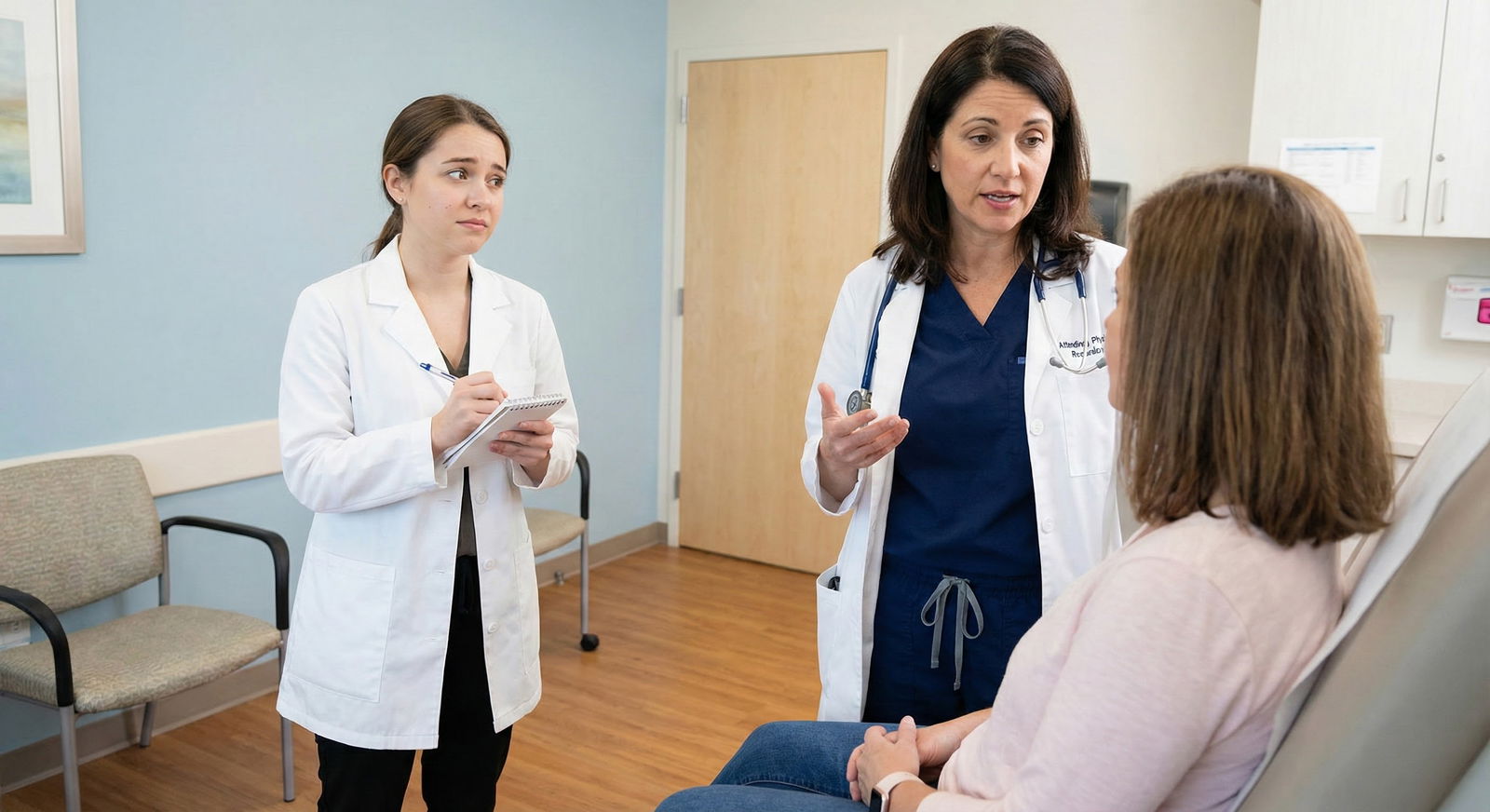
Shadowing letters work best for: Family Medicine, Psychiatry, Neurology, Pediatrics, fields where programs evaluate you heavily through interviews rather than just technical skill metrics. These specialties care deeply about interpersonal skills, empathy, and communication. A strong shadowing letter that describes your bedside manner, your curiosity, your rapport with patients? That moves the needle.
Shadowing letters won't work reliably for: Surgery, Orthopedics, Interventional specialties. These programs need evidence you can handle procedures. They need to know your hands work, that you don't faint in the OR, that you have baseline technical aptitude. A shadowing letter can't credibly address these questions. For these specialties, you need at least one (preferably two) hands-on rotation letters.
The IMG factor deserves special attention. If you're an international medical graduate, a US shadowing letter carries more weight than your home-country clinical letters for most community and mid-tier programs. Why? Because it proves you've seen American medicine up close. You've navigated the EHR, you've observed the medicolegal culture, you've demonstrated English fluency in a clinical setting. These things matter enormously for ranking decisions.
Red ocean versus blue ocean strategy: Don't apply to programs where your letter configuration puts you at an obvious disadvantage. If you're relying on shadowing letters, target community programs, newer residencies, and programs in less saturated geographic regions. Look for programs that emphasize holistic review and mention "team fit" prominently in their materials. Avoid the programs that receive 5,000+ applications, they use rigid filters, and "type of clinical experience" is often one of them.
Your Action Steps
Enough theory. Here's exactly what to do, starting today.
Step 1: Audit your current LOR portfolio.
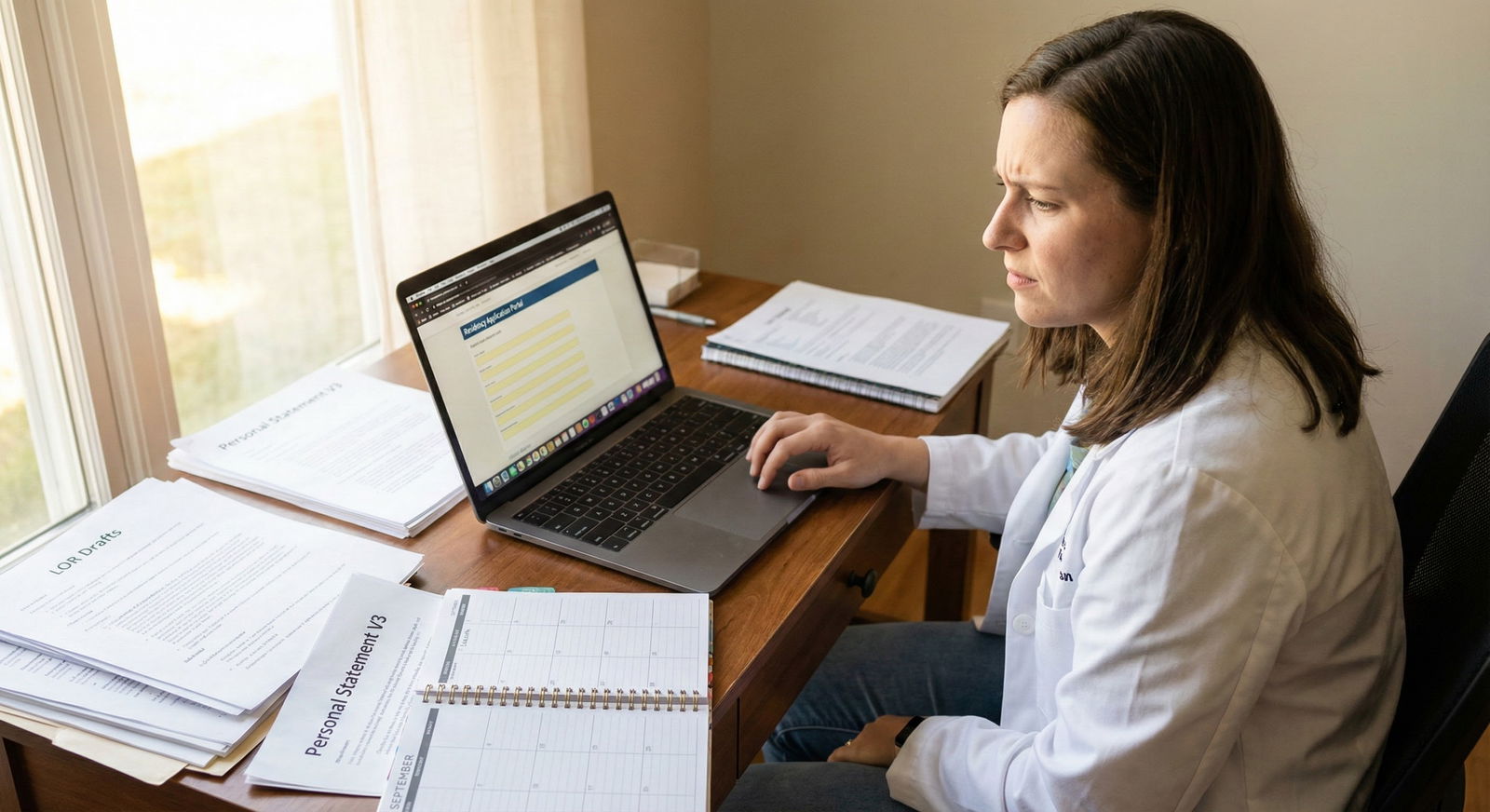
Make a spreadsheet. List every potential letter writer. Next to each name, write what specific patient care competencies they can attest to. If you can't list at least three concrete things (not vague traits, but "observed this student do X in Y situation"), that letter is weak. Identify gaps now, not in September when ERAS opens.
Step 2: Schedule formal meetings with each physician.
Don't ask for a letter via email. Request a 15-minute conversation, in person if possible, video if not. Use that meeting to discuss your career goals, why you're drawn to your chosen specialty, and specifically what you hope they can speak to in their letter. This conversation transforms you from "the student who shadowed me" to "the student I'm invested in."
Step 3: Create your LOR briefing document.
This is a one-page document containing: your CV highlights, your board scores (if strong), your personal statement, and 3-5 specific patient encounters you remember from working with them. Include dates, patient details (de-identified), and what you learned. Hand this to them at your meeting. It's not pushy, it's helpful. Letter writers want to write good letters. Give them the raw material.
Step 4: Consider adding one away rotation or acting internship.
If you're genuinely worried about your letter strength, one month of hands-on experience at a program you're targeting can change everything. Even late in fourth year, even if it means rearranging your schedule. The investment is worth it if it produces one excellent letter that anchors your application. I've seen students scramble to add December rotations and still match because that one strong letter opened doors.
Step 5: Apply strategically.
Match your letters to your programs. Don't send three shadowing-based letters to a surgical program that explicitly requires procedure-heavy evaluations. Don't send home-country letters to programs that emphasize US clinical experience. Use the MSPE and ERAS assignment system deliberately, different letter configurations for different types of programs within the same specialty.
The bottom line: You can match with shadowing letters. I've seen it happen. But the students who succeed aren't passive. They treat shadowing like a mini-rotation. They build relationships. They give their writers everything needed to produce specific, vivid, credible letters. And they apply to programs where those letters will be read, not filtered out by an algorithm.
Your letters exist to answer one question: "Would I want to train this person?" Make sure every letter writer has the evidence to say yes, and the details to back it up.