Most premed advisors give the same cookie-cutter advice. Study 300 hours. Do 10 full-length exams. Push through the discomfort.
That advice is toxic if you have a chronic illness.
Brute-forcing the MCAT while managing POTS, Crohn's, endometriosis, or an autoimmune condition doesn't make you resilient. It makes you crash. I've seen it happen a hundred times. A student tries to keep up with a rigid, neurotypical study schedule, triggers a massive symptom flare, and watches their practice scores plummet.
The standard MCAT playbook assumes your body will cooperate. When it doesn't, you need a different playbook. Preserving your health isn't a cute self-care bonus. It is a hard, non-negotiable prerequisite for score preservation. If your body crashes, your score tanks. Period.
Here is how to fix your strategy, work with your physiology, and protect both your health and your MCAT score.
This article is for educational purposes only. It is not financial advice, not legal advice, and not tax advice. Figures vary by individual circumstances, consult a qualified professional before acting.
The Real Challenge: MCAT Prep When Your Body Won't Cooperate
Let's name the actual problems. Chronic illness doesn't just make you "tired." It fundamentally alters your cognitive and physical bandwidth.
Fatigue from an autoimmune flare makes reading a dense CARS passage feel like wading through wet concrete. Chronic pain makes sitting upright in a hard chair for a 7-hour full-length exam physically agonizing. Brain fog turns basic physics equations into ancient Greek. When you try to force deep, analytical work through these symptoms, you aren't learning. You're just staring at a screen, building frustration, and burning precious energy.
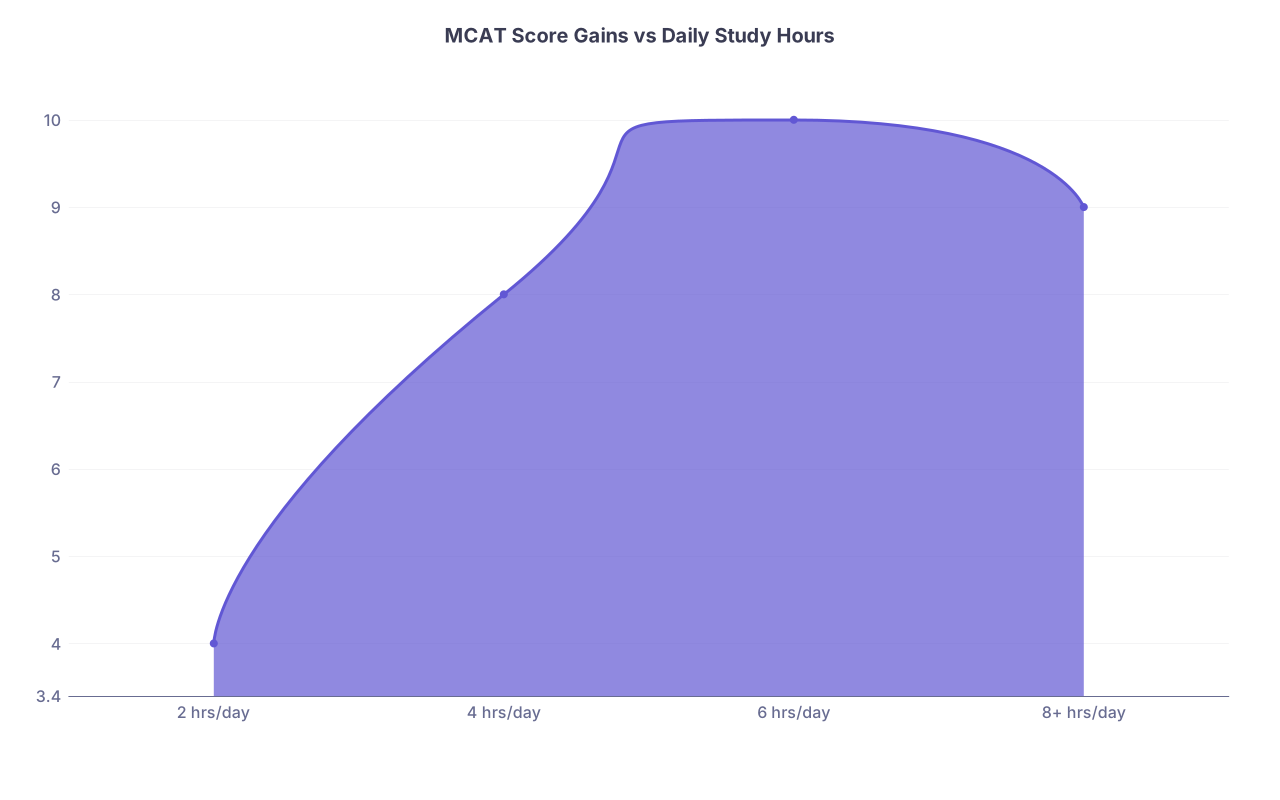
The biggest mistake chronically ill premeds make is treating their illness as a temporary inconvenience rather than a permanent constraint in their study algorithm. You cannot out-study a physiological limit.
The fix requires a paradigm shift. Stop measuring your success by how many hours you logged. Start measuring it by how effectively you used the energy you actually had. Your core philosophy from this day forward: work with your body's current limits, not against some arbitrary Reddit study schedule. You are training to be a physician. Physicians triage. It's time to triage your study habits.
The Energy Audit: Map Your Personal Capacity
You can't manage what you don't measure. Before you open another UWorld block, you need to run an energy audit.
For the next 14 days, track your energy, pain, and concentration levels. Rate them on a simple 1-10 scale every two hours. Use a notes app or a spreadsheet. Don't overcomplicate it.
Once you have two weeks of data, look for the patterns.
- Identify your peak windows: If your chart shows your energy spikes between 9 AM and 11 AM, that is your sacred deep-work window. Schedule your hardest tasks, like CARS passages or Bio/Biochem discrete questions, during this exact time. Protect this window aggressively.
- Map the dips: Look at the 2 PM energy crash in the chart above. That is not the time to learn the Krebs cycle from scratch. Use low-energy periods for passive review. Do Anki flashcards lying down. Listen to MCAT podcasts. Watch Khan Academy videos.
- Build buffer days: You must schedule 1 to 2 absolute zero-study days per week. No Anki. No "light reading." Complete central nervous system rest. This prevents the cumulative fatigue that triggers massive flares.
Your schedule should look nothing like your study partner's schedule. That's the point.
The Adaptive Study Protocol: Micro-Blocks and High-Yield Prioritization
The traditional Pomodoro technique (25 minutes on, 5 minutes off) is often too rigid for chronic illness. You need adaptive micro-blocks.

Break your study sessions into 15-25 minute micro-blocks. When the timer goes off, take a mandatory physical rest break. And I mean actual rest. Don't scroll TikTok. Don't check emails. Lie flat on your back, close your eyes, and let your nervous system down-regulate. This drastically reduces the risk of triggering a symptom flare later in the day.
When your body is fighting you, rely on the 80/20 rule. Focus strictly on high-yield content. Memorize amino acid structures, drill physics equations, and review psychology/sociology terms. Don't waste your limited spoons on low-yield, esoteric biochemistry pathways.
Finally, you need a "Rescue Plan."
There will be days when you wake up and your symptoms are spiking. Your brain is offline. Your body aches. The standard advice is to "take the day off," but taking too many days off breeds anxiety. Instead, execute your Rescue Plan. Keep a curated list of 10-minute, ultra-low-energy tasks ready to go:
- Review exactly 10 Anki flashcards.
- Watch one 8-minute Khan Academy video.
- Read the explanations for 3 UWorld questions you already got right.
Do the 10-minute task. Check the box. Stop. You kept the momentum alive without triggering a crash.
The Support System: Leveraging Accommodations and Medical Care
The AAMC accommodation process is a bureaucracy. Beat it by being over-prepared. If you need extra time, stop-the-clock breaks, or a separate testing room, you have to prove functional limitation.
Here is where most students fail. They bring a vague doctor's note that says, "Patient has lupus and needs extra time." The AAMC will reject that.
Your doctor's documentation must explicitly link your diagnosis to a functional limitation on a computer-based exam.
- Bad letter: "Patient has severe endometriosis and chronic pain."
- Good letter: "Patient's endometriosis causes severe pelvic and lower back pain after 45 minutes of continuous sitting, resulting in loss of concentration. Patient requires a 15-minute stop-the-clock break every hour to stand, stretch, and manage pain."
Get the letter right the first time. Submit it months before your test date.
Next, audit your medication timing. If your pain medication or muscle relaxer causes drowsiness 90 minutes after ingestion, do not take it right before a CARS section. Map your medication side effects to your study blocks, and simulate this exact timing during your full-length practice exams. Test day is not the day to discover your anti-nausea med makes you sleepy.
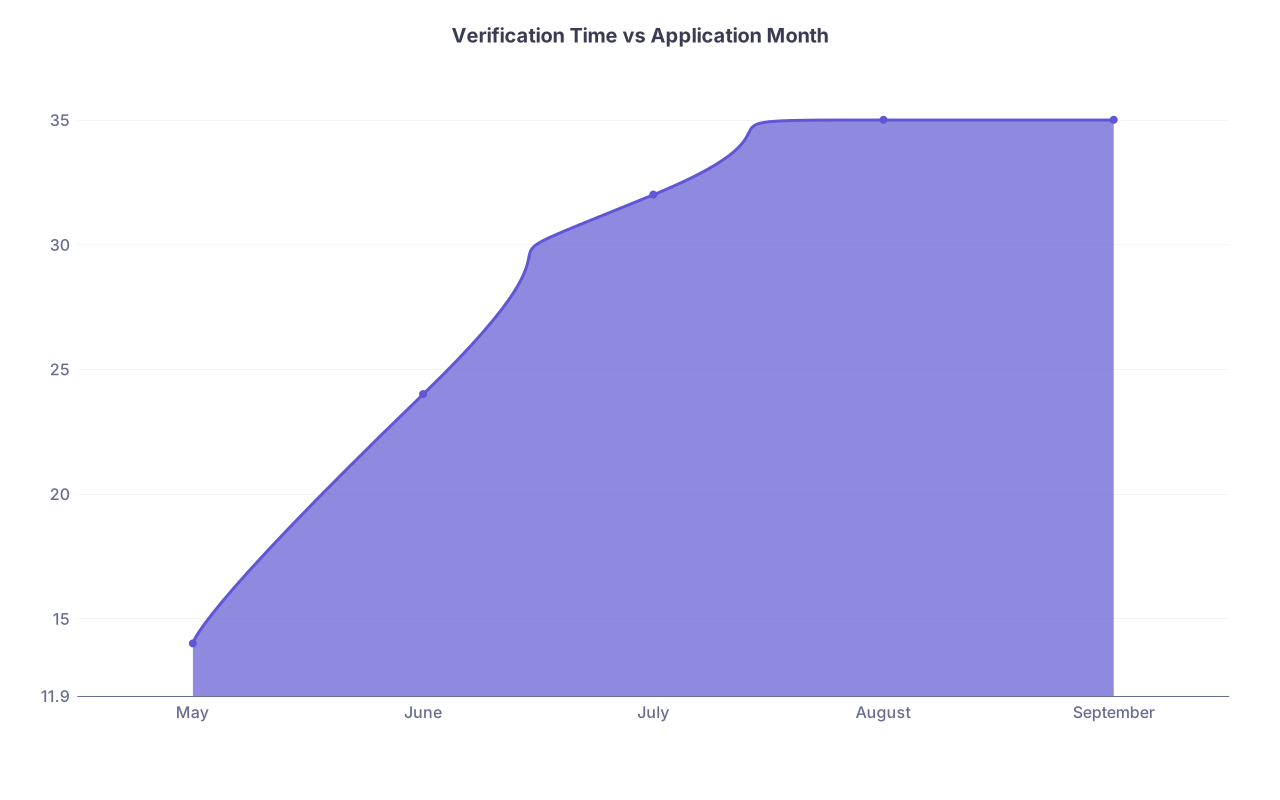
Lastly, build a backup plan for test day. Know the AAMC's reschedule deadlines and fees. Identify a quiet, dark room at the testing center where you can retreat during a stop-the-clock break if you feel a panic attack or pain flare coming on. Control the variables you can control.
Key Takeaways
- Your MCAT score is a direct function of both your knowledge and your physical state. Managing your chronic illness isn't a distraction from studying; it is a legitimate, high-yield study strategy.
- The most effective study plan is the one you can actually execute. Prioritize pacing, secure your accommodations, and protect your health above hitting a rigid, arbitrary schedule.