You know the moment.
You're dressed one notch more formally than you've dressed all month. Your smile is calibrated. Your answers are warmed up. Then the interviewer flips through your file, pauses for half a second too long, and says:
Before you walk into the room, reviewing strategies on how to talk about changing specialties between ERAS and interviews can help you frame your narrative effectively.
"I see your application talks a lot about Pediatrics, but your recent research is in Orthopedics. Tell me about that."
And just like that, your pulse spikes. Because now it feels like you've been caught doing something wrong.
You haven't.
Changing your mind about specialty during interview season is common. Not rare. Not scandalous. Common. The dumb myth is that every strong applicant picked one specialty at age 19, stayed faithful through every rotation, and never had a second thought. That's fantasy. Real medical training changes people. Rotations change people. Patients change people. Good mentors definitely change people.
What matters isn't that your interest evolved. What matters is whether you can explain the evolution like a mature future physician instead of sounding like you threw a dart at a specialty list last Tuesday.
This is where people get themselves in trouble. Not by pivoting. By panicking. By overexplaining. By apologizing for growth. By sounding defensive. By trashing the old specialty to justify the new one. That's the amateur move.
Here's the better move: own the discrepancy, explain the catalyst, and make the pivot sound like what it actually is, evidence that you paid attention during training and learned something real about yourself.
The Scenario: You're Sitting in the Interview Room and Your Application Says Pediatrics, But Your Heart Says Orthopedics
Let's stay in the room for a second.
The interviewer isn't always accusing you. Sometimes they're just trying to figure out whether your story makes sense. But to you, in that moment, it can feel like an indictment. Your personal statement says one thing. Your activities hint at another. Your latest sub-I or research project points somewhere else. It looks messy on paper, and you know it.
I've seen this happen with all kinds of combinations:
- Internal medicine on the primary application, then a late pull toward anesthesia
- OB/GYN-heavy extracurriculars, then a sincere switch to psychiatry
- Pediatrics volunteer work for years, then a third-year surgery rotation that changes everything
- Family medicine language in essays, but pathology mentors writing the strongest letters
None of this is fatal. What's fatal is acting like you have no idea why the change happened.
Interviewers can tolerate a pivot. They do not like chaos.
So if you're in this situation, your immediate goal is simple: make the change sound deliberate, not random.
That means three things right away:
Don't pretend the discrepancy isn't there. If they noticed it, they noticed it. Skipping past it makes you look slippery.
Don't get defensive. You do not need to prove that your old interest was fake or your new one is pure. That tone reads insecure fast.
Don't ramble through your whole life story. Nobody needs the minute-by-minute autobiography of how you arrived here.
What you need is a clean explanation that says: Yes, my interest changed. Here's why. Here's what I learned. Here's why I'm confident now.
That's a strong answer. A grown-up answer.
Also, let's say the quiet part out loud: medicine is one of the few fields where people somehow expect trainees to lock in a lifelong career path before they've had enough exposure to make an informed decision. That expectation is ridiculous. Clinical exposure exists for a reason. If you did your rotations honestly and one of them changed your trajectory, that's not weakness. That's the system working.
The key is presentation. Same facts. Different framing.
A flaky answer sounds like this: "I don't know, I just liked Ortho more."
A mature answer sounds like this: "My early interest in Pediatrics came from longitudinal mentoring and advocacy work, but during clinical rotations I realized I was most energized by procedural problem-solving, biomechanics, and the immediate functional impact of orthopedic care. That shift became clear through direct patient care, not just preference."
See the difference? One sounds impulsive. The other sounds earned.
Myth vs Reality: What Program Directors Actually Think When You Pivot
Here's the myth that causes all the panic:
Myth: If you admit your specialty interest changed, the program will see you as unfocused, unreliable, or less committed than other applicants.
That's wrong. Or at least wildly overstated.
Most experienced faculty know that preclinical interests are often based on limited exposure, idealized assumptions, or the first mentor who took an interest in you. They know students change after third-year rotations because third-year rotations are when medicine gets real. Before that, your "interest" may have been sincere, but still incomplete.
Program directors care much more about whether your current choice is thoughtful than whether your first choice was permanent.
That said, let's not get sentimental. A pivot can still look bad if you present it badly.
Here's when interviewers get concerned:
- You can't explain the change clearly
- Your reasons sound shallow or prestige-driven
- You bash your former specialty
- Your application suggests you changed very recently and still haven't done the homework
- You seem to be auditioning multiple identities depending on who's asking
That's the issue. Not the change itself. The issue is whether the change looks considered.
The reality is much more favorable than applicants think:
Reality 1: Self-awareness is a strength
A student who says, "My earlier experiences drew me toward one field, but clinical exposure showed me I was better suited to another," often comes across as more mature than the student who force-fits every experience into an old narrative that no longer makes sense.
That's because medicine is full of people who ignored obvious signs and stayed on the wrong path too long. Nobody should admire that.
Reality 2: Clinical evolution makes sense
A lot of specialty pivots happen for legitimate, recognizable reasons:
- You discovered you like longitudinal care less than you expected
- You realized procedures matter more to you than counseling
- You found that team workflow in one field fit you better
- A patient population energized you
- The pace, acuity, and problem set matched how your brain works
That's not indecision. That's calibration.
Reality 3: The old specialty doesn't become meaningless
Applicants make this mistake constantly. They think they need to erase the old version of themselves.
Don't.
Your previous interest still counts if you use it correctly. Pediatrics may have sharpened your communication with families. Psychiatry may have made you a better listener. Internal medicine may have strengthened your diagnostic reasoning. General surgery may have built your stamina and procedural confidence.
You're not supposed to say, "Everything before this was a waste." That's nonsense.
You're supposed to say, "That experience prepared me well, even though it led me somewhere new."
That's a powerful frame because it turns apparent inconsistency into breadth.
Myth vs reality, bluntly:
Myth: "Changing specialties means I wasn't serious before."
Reality: It usually means you learned from actual patient care.
Myth: "Programs want unwavering certainty from day one."
Reality: Programs want applicants who know themselves and can explain their choices.
Myth: "Any discrepancy is suspicious."
Reality: Unexplained discrepancy is suspicious. Explained discrepancy is often fine.
So no, you do not need to act ashamed. You need to act clear.
The 3-Step Pivot Framework: How to Explain Your Specialty Change On the Fly
When the question lands, don't improvise emotionally. Use a structure.
Here's the framework I'd use, and I've seen versions of it work over and over.
Step 1: Acknowledge the discrepancy immediately
Do this first. Cleanly. No squirming.
Try something like:
- "Yes, that's fair to notice."
- "You're right, my earlier application materials reflect a stronger interest in Pediatrics."
- "That changed during my clinical training, and I'm happy to explain what shifted."
That opening works because it does three things:
- shows you're not hiding,
- confirms you've thought about it,
- invites the conversation forward.
What not to do:
- "Well, I mean, I've always kind of liked everything..."
- "Honestly my advisor told me to say Pediatrics at first..."
- "I don't think it's really a discrepancy."
Wrong tone. Weak control. You sound cornered.
Step 2: Connect the dots with a real catalyst
Now give them the turning point. Not a vague feeling. A real moment, rotation, patient encounter, or pattern that became impossible to ignore.
Good catalyst examples:
- A fracture clinic where you saw immediate restoration of function and became fascinated by biomechanics
- A trauma rotation where the pace and decisiveness of care clicked for you
- A mentor who showed you the intellectual and technical side of a field you hadn't fully understood
- A patient interaction that made your fit unmistakable
The catalyst needs to be specific enough to sound true.
For example:
"My initial interest in Pediatrics came from years of mentoring and advocacy work with children, and that was genuine. But during my orthopedic rotation, I found myself consistently drawn to the combination of anatomy, biomechanics, and the immediate functional impact of treatment. One patient who stands out was a high school athlete recovering from a tibial fracture. Following that patient from injury to restored mobility made me realize how much I value procedural care tied to visible recovery and return to function."
That works because it's concrete. It doesn't insult Pediatrics. It doesn't sound trendy. It sounds observed.
Notice the difference between a catalyst and a preference statement.
Weak: "I realized I just liked the vibe more."
Strong: "The day-to-day work matched the way I think and the kind of patient outcomes I find most meaningful."
That's the level.
Step 3: Reframe your old experiences as assets
This is the part applicants forget, and it's the part that can actually make the answer excellent.
Once you've explained why you shifted, show how the old specialty still strengthens your candidacy.
For example:
- Pediatrics to Orthopedics: "My pediatric background made me more attentive to family communication, developmental context, and patient education."
- Psychiatry to Emergency Medicine: "My psychiatric training sharpened my de-escalation skills and comfort with emotionally complex encounters."
- Internal Medicine to Anesthesiology: "My medicine foundation improved my physiology-based decision-making and management of medically complex patients."
This final move turns your application from "confused" to "multidimensional."
Here's a full sample answer:
"You're right that my earlier materials reflect a strong interest in Pediatrics. That interest was real and came from long-term work with children and families. During third-year rotations, though, I realized I was most engaged in environments where anatomy, procedures, and functional recovery were central to patient care. My orthopedic rotation, especially following patients through injury and recovery, made that clear. What I bring from my earlier pediatric focus is strong communication with patients and families, patience in education, and comfort building trust quickly. So while my specialty choice evolved, the underlying thread, helping patients regain function and improve quality of life, has actually stayed very consistent."
That answer is solid because it does the whole job:
- acknowledges,
- explains,
- reframes,
- closes with continuity.
That's what you want.
A few delivery tips:
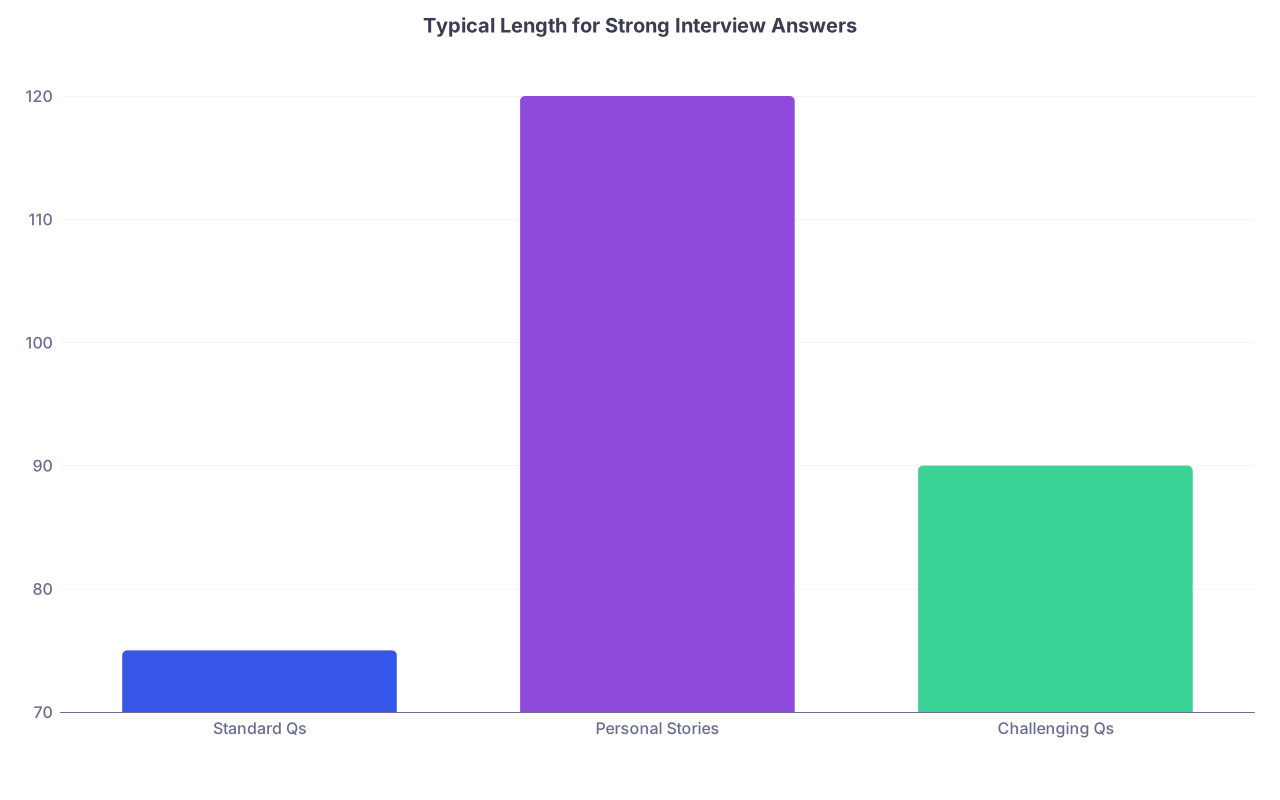
Keep it under 90 seconds
If your answer takes three minutes, you're probably losing the thread.
Don't over-apologize
You're not confessing a crime.
Don't oversell certainty like a caricature
If you suddenly sound like you've loved this specialty since birth, after submitting different materials, you'll look phony.
Do sound settled
The pivot should sound complete, not ongoing. Interviewers don't want to feel like they're catching you mid-identity crisis.
Damage Control: Handling Discrepancies in Your Personal Statement and LORs
Now for the messy paperwork problem.
Because sometimes your explanation is good, but your application still says the old thing. Your personal statement leans hard into one specialty. Your letters come from people in another. Maybe your CV screams one direction while your mouth says another.
That's awkward. Still manageable.
First rule: don't wait for them to piece it together on their own if the discrepancy is obvious. If they bring it up, answer directly. If they don't, you don't need to force a confession in minute one, but be prepared.
If your personal statement reflects the old specialty
Say this:
"That statement reflects where I was in the earlier part of my training. Since then, my clinical experiences clarified that I'm a better fit for [new specialty]. The values in that statement, patient advocacy, communication, continuity, problem-solving, still absolutely apply, but my understanding of where I can contribute most has become more specific."
That script matters because it preserves continuity. You're not saying the statement was fake. You're saying it was earlier.
That's believable. Because it's true.
If your letters are from the old specialty
This is even more common. Maybe your strongest mentors happened to be in the field you first pursued. Fine.
Use a version of this:
"Several of my strongest mentors were in [old specialty], and those letters reflect skills that carry directly into [new specialty], work ethic, teamwork, communication, reliability, and clinical judgment. Although they come from a different field, they speak to how I function in patient care environments, which I think is highly transferable."
If you have at least one letter or experience in the new specialty, mention it. That helps anchor the transition.
Example:
"I also made sure to seek additional exposure in Orthopedics once the shift became clear, so my newer experiences align more directly with my current goals."
Simple. Calm. Adult.
What if the interviewer sounds skeptical?
Don't spar. Don't act offended. Just get more concrete.
If they say: "What makes you confident this new choice will stick?"
You say: "That's a fair question. What gives me confidence is that the shift came after direct clinical exposure and sustained reflection, not a single exciting moment. Since recognizing it, I've intentionally pursued more time in the field, spoken with mentors, and tested whether the day-to-day work still fits. It does."
That answer beats "I just know" every time.
How to close the interview strong
This is the part too many applicants waste.
You do not want the interviewer's last impression to be, "Hmm, odd pivot." You want the last impression to be, "Thoughtful candidate with a strong reason for being here."
So near the end, circle back with a forward-looking statement:
- "What excites me most now is the chance to bring both my prior experiences and my current clarity to this field."
- "Although my path wasn't linear, it helped me arrive at this specialty with a much better understanding of how I want to practice."
- "The pivot ultimately made me more certain, not less."
That last line is especially strong because it flips the whole narrative.

And one more thing. Don't spend the whole interview defending your old materials. That's a trap. Address the discrepancy, then move on to what you can contribute now, your fit, your skills, your perspective, your future in the specialty.
That's the real destination of the conversation.
If they keep you stuck in "why did you change," you haven't redirected effectively.
If you answer well, the pivot stops being damage to explain and starts becoming evidence of judgment.
The bottom line
Changing your specialty interest during interview season is not a character flaw. It's usually a sign that your clinical education did what it was supposed to do. The problem isn't the pivot. The problem is a sloppy explanation.
So if you're sitting in that interview chair and your application says one thing while your current goals say another, do this:
- Acknowledge the discrepancy quickly
- Explain the clinical catalyst clearly
- Reframe your earlier experiences as useful preparation
- Keep the focus on where you're going, not what you're leaving
That's how you stop sounding flaky and start sounding mature.
Your story does not need to be perfectly linear. It needs to make sense.
And if it genuinely does make sense? Say it plainly. Own it. Move forward.