
You walk out of the station. The door clicks shut behind you. Your hands still smell like sanitizer. Your brain is already replaying the moment you blanked on the differential, fumbled the explanation, or watched the examiner's pen stop moving. By the time you hit the corridor, the story has hardened: I'm not cut out for this.
I've watched this exact scene dozens of times, students who are solid on wards suddenly convinced one bad circuit means they should quit medicine. OSCEs are uniquely brutal. Time pressure. Being watched. High stakes. A single awkward silence feels like a public execution. The emotional response is normal. The spiral that follows is optional.
Here's the fix. First 24 hours. Clinical and emotional recovery. And how to stop one failed exam from torching the rest of your performance.
Step 1: Stabilize the First 24 Hours So the Failure Does Not Spiral
Do not open your notes. Do not text the group chat asking "how did everyone else find station 4." Do not decide your future while your cortisol is still spiking.
Use this rapid reset protocol:
- Pause. Three slow breaths. In for four, hold for four, out for six.
- Eat something with actual protein and carbs. Hydrate.
- Walk away from campus if you can. Ten minutes of movement beats thirty minutes of rumination.
- Write two columns on your phone: Facts and Fears. Facts: "I missed the red-flag questions on chest pain." Fears: "I will never be a doctor." Keep them separate. The first is workable. The second is noise.
Then enforce the 24-hour rule. No catastrophic conclusions. No doom-scrolling Reddit threads about failed OSCEs. No major life decisions while you're flooded. Sleep is non-negotiable. Your prefrontal cortex needs it to stop treating this like a threat to survival.
Identify one trusted person, not five, one, and use a short debrief script:
- What happened in the stations that felt worst.
- What I felt in the moment and afterward.
- What I need next (space, feedback, or just someone to say "this happens").
That's it. No performance analysis yet. Stabilization first.
I've seen students skip this step and turn a remediable miss into two weeks of insomnia and identity collapse. Don't. The exam already happened. Your job now is damage control on the nervous system.
How to Review the Exam Without Re-Traumatizing Yourself
Once the acute panic drops, review like a clinician, not a defendant.
Audit by station and skill, never by identity. You are not "bad at medicine." You lost points on data gathering in two stations, rushed the close in one, and froze when the actor got emotional. Those are concrete. Fixable.
Use this structured reflection template for each weak station:
- What went well (force yourself to name at least one thing)
- What went wrong (specific behavior, not "I was terrible")
- Why it happened (time pressure? incomplete framework? anxiety spike?)
- What to practice next (one measurable action)
Write it down. Keep it short. Perfectionistic review, replaying every micro-expression and every missed cue without an action plan, is self-harm dressed up as diligence. Stop after you've extracted three clear skill gaps.
If feedback sheets or video exist, review them with a tutor, OSCE lead, or trusted senior. Do not do this alone if you tend to catastrophize. A good senior will translate "poor communication" into "you interrupted the patient twice and never signposted the examination." That's gold. Vague shame is useless.
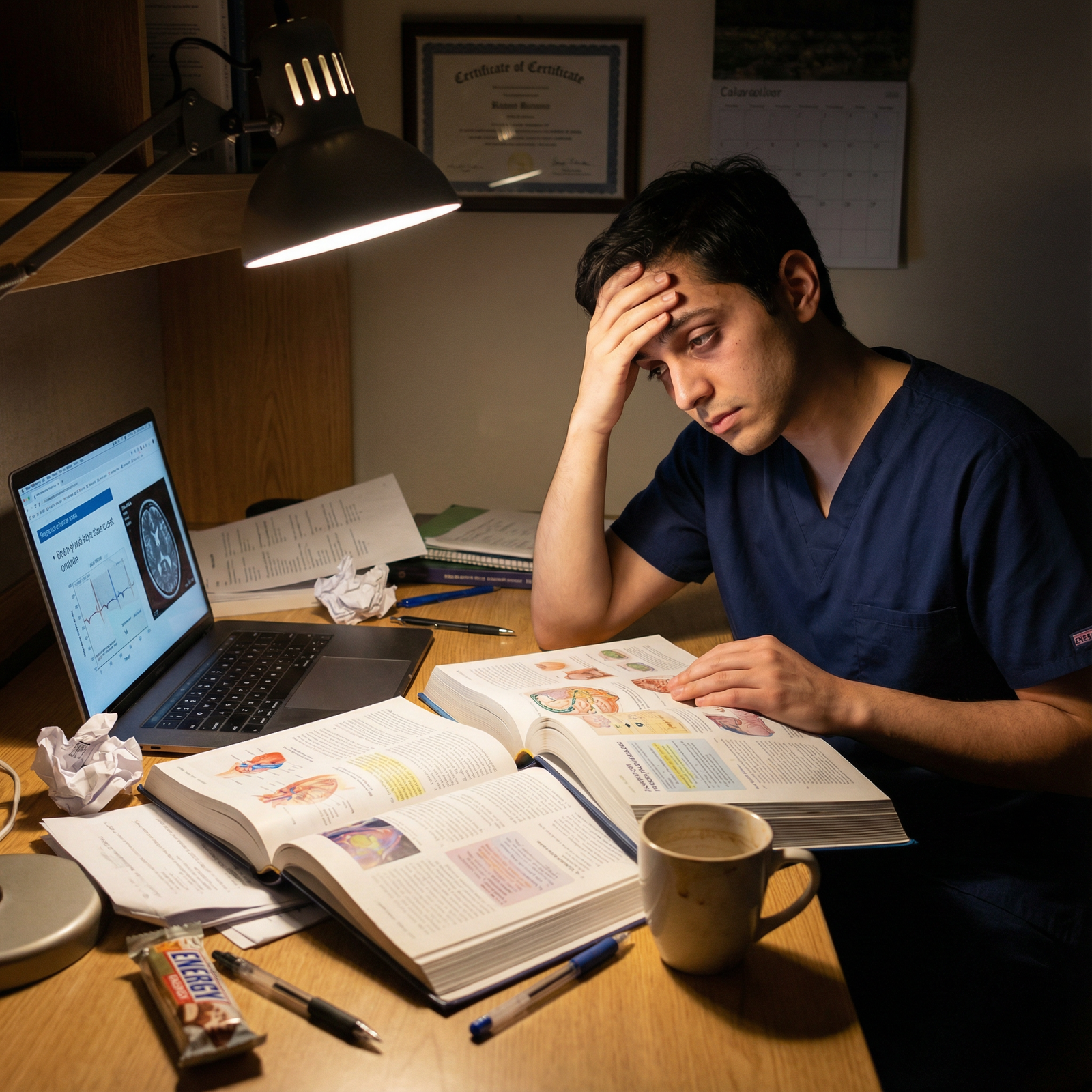
I've sat with students who insisted they "failed everything." Ten minutes with the actual mark sheet showed they passed five stations and bombed two for the same structural reason. Pattern recognition beats self-flagellation every time.
The Recovery Plan: Fix the Skill Gaps, Not Your Self-Worth
Translate those gaps into micro-goals. Not "get better at OSCEs." Instead:
- History structure: open → ICE → systems review in under 6 minutes
- Examination sequence: look, feel, move, special tests without skipping
- Empathy phrases: three ready responses for distress or silence
- Time management: 30-second warning check and forced close
Build a 2-week remediation plan. Short daily blocks beat heroic all-nighters.
Daily practice (60 minutes total, broken up):
- 20 min history frameworks or common presentations
- 15 min physical exam sequences (on a peer, housemate, or yourself in the mirror)
- 10 min communication scripts out loud
- 15 min reviewing feedback notes or checklists
One live rehearsal per week: full timed station with a peer or tutor giving scripted feedback. Spaced repetition. Checklist-based. No endless free-form practice that drifts into chatting.
Track progress with simple metrics so improvement is visible:
- Stations completed under time
- Checklist items hit
- Anxiety rating before/after (1-10)
When you can see the numbers move, the shame loses oxygen.
This is deliberate practice, not more of the same frantic studying that got you here. Target the exact behaviors that cost marks. Everything else is noise.
Protect Your Energy: Prevent Burnout While You Rebuild Confidence
Recovery fatigue is real. Your brain just ran a high-stakes simulation under observation. Overstudying the next day is a classic mistake. It feels productive. It tanks performance.
Set hard boundaries:
- Study windows only. Outside those hours, phone goes on Do Not Disturb for med-school chats.
- No comparison. Everyone lies about how "fine" they felt. Mute the group for a week if needed.
- Self-criticism gets a time limit. Five minutes of honest review, then redirect to the next practice block.
Basic habits that actually prevent burnout:
- Sleep 7+ hours. Non-negotiable.
- Real food, not vending-machine survival.
- Movement, walk, lift, stretch, daily.
- Short breaks every 45-50 minutes.
- One non-medical activity every day. Music, cooking, calling a non-med friend. Something that reminds you that you exist outside the exam.
Know when to escalate. Persistent low mood lasting more than two weeks, panic attacks, hopelessness, or inability to get out of bed are not "normal post-OSCE blues." They are signals to talk to student support, occupational health, or a GP. Medicine culture still undervalues this. Ignore the culture. Get help early.
I've watched strong students turn a failed OSCE into full burnout because they treated rest like weakness. Rest is part of the protocol. Use it.
How to Bounce Back for the Next OSCE or Remediation Attempt
Create a pre-exam checklist the night before:
- Logistics: ID, stethoscope, watch, water, arrival time
- Station strategy: opening line, structure skeleton, closing summary
- Grounding techniques: feet on floor, name three things you see, one slow breath before you knock
Practice a simple reset routine for every station:
- Pause at the door.
- Orient: read the stem twice.
- Structure: open with your framework.
- Close: summarize and safety-net even if the rest was messy.
Rehearse under realistic conditions. Timed. With an observer. With interruptions. Panic drops when the body has done the hard version before.
Reframe the next attempt. It is a data point, not a verdict on your worth as a future doctor. Focus on execution of the process you practiced. Outcome anxiety is a distraction. Process is controllable.
Closing: A Failed OSCE Is a Problem to Solve, Not an Identity to Accept
Stabilize. Review by skill. Remediate with short targeted blocks. Protect your energy so you can keep going.
A bad OSCE hurts. It does not define you. The students who recover fastest are the ones who stop arguing with the mark and start fixing the specific behaviors that produced it.
Pull out the reflection template today. Message one person for a clean debrief. Schedule a 20-minute history practice block for tomorrow morning. Small, repeatable steps. That's how you rebuild.
You failed a station circuit. Now go solve the problem.