
The way most MS2s handle Step prep stress is broken. They wait until they are drowning, then ask how to “cope.”
You cannot “cope” your way out of a system you never structured in the first place.
You’re in MS2. USMLE season is coming. Stress isn’t optional—but the level of chaos is. What you do each week from now until your exam will decide whether you’re wired and functional… or wired and wrecked.
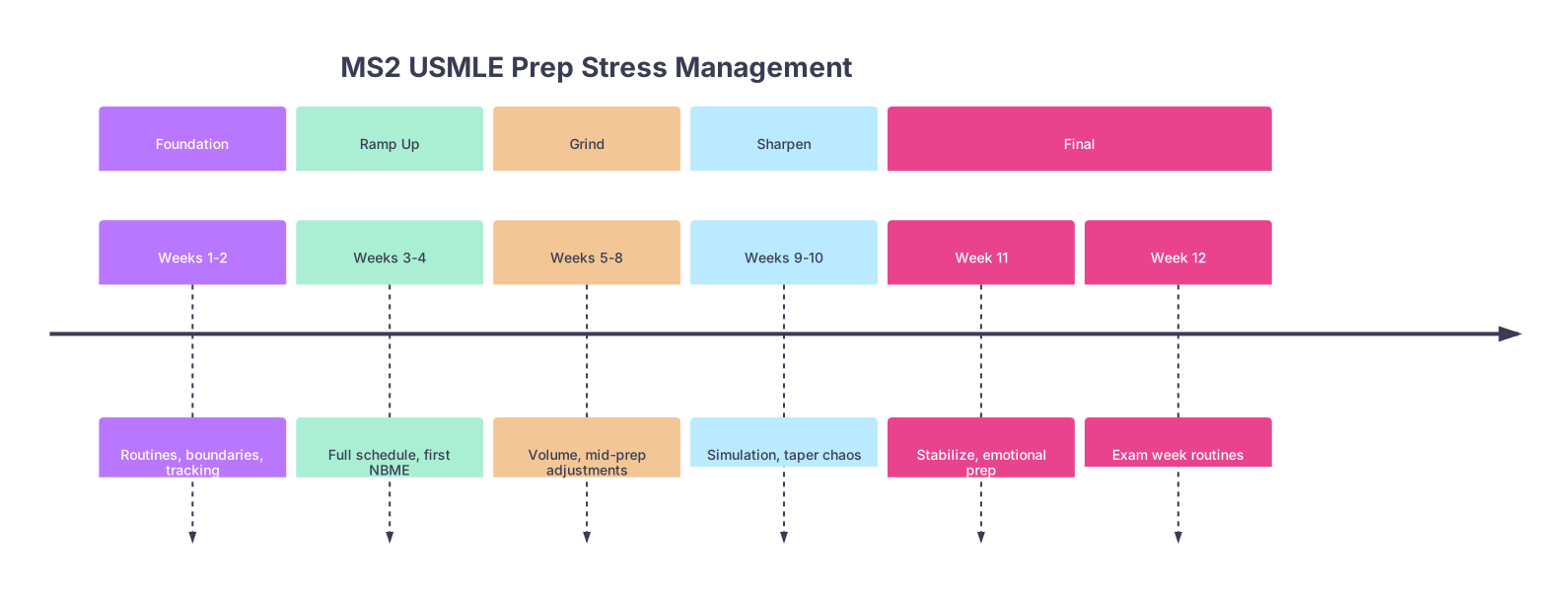
I’m going to walk you through a week‑by‑week stress management timeline for MS2 USMLE prep season. Not vague “self‑care.” Concrete: At this point you should do X, stop Y, and watch for Z.
Big Picture: 12-Week Mental Health Map
Before we zoom in week by week, you need the skeleton.
- Weeks 1–4: Build the “stress foundation”
- Routines, boundaries, baseline sleep, realistic schedule
- Weeks 5–8: Peak content + question load
- Stress rises, you protect your brain like it’s exam‑day equipment
- Weeks 9–10: Taper chaos, sharpen performance
- Less new info, more mental hygiene and test‑day rehearsal
- Weeks 11–12: Pre‑exam and exam week
- Guardrails against last‑minute panic and self‑sabotage
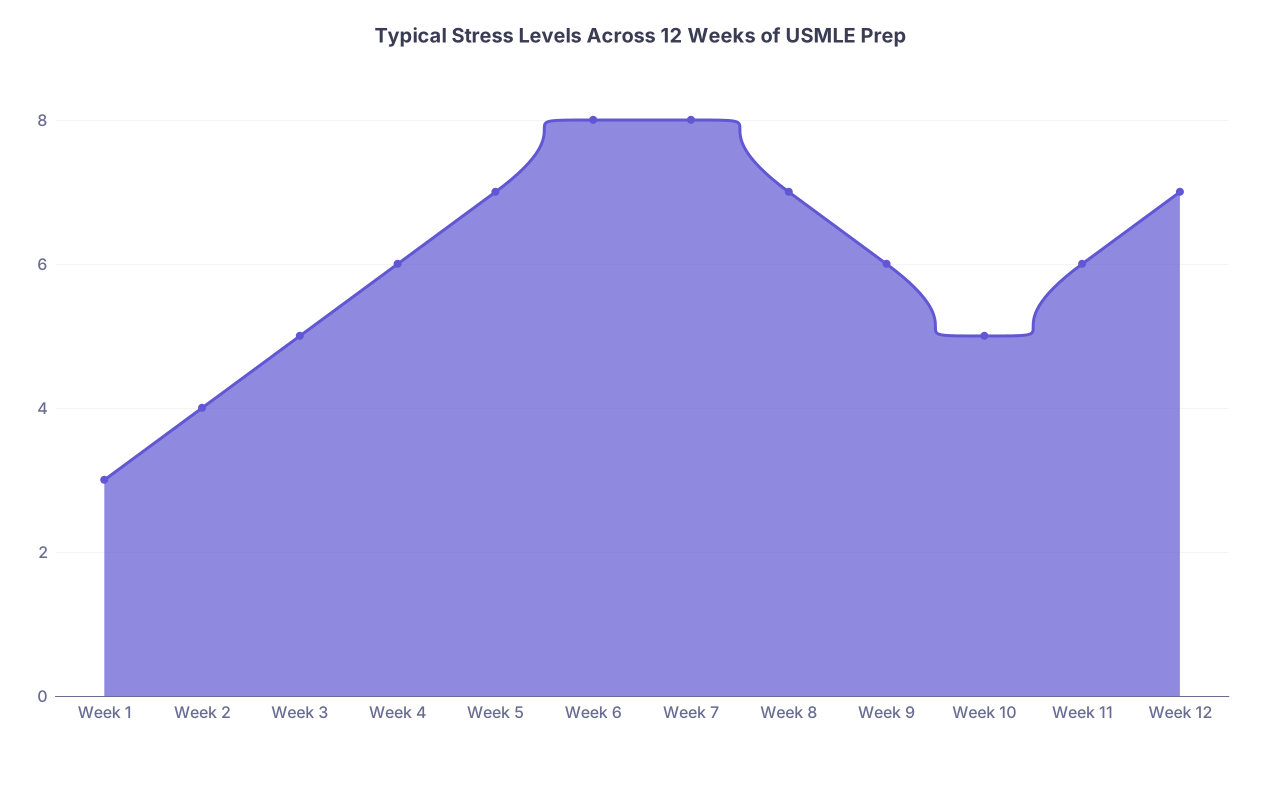
Here’s how stress typically behaves if you do this right:
| Category | Value |
|---|---|
| Week 1 | 3 |
| Week 2 | 4 |
| Week 3 | 5 |
| Week 4 | 6 |
| Week 5 | 7 |
| Week 6 | 8 |
| Week 7 | 8 |
| Week 8 | 7 |
| Week 9 | 6 |
| Week 10 | 5 |
| Week 11 | 6 |
| Week 12 | 7 |
Notice: stress never hits zero. The goal isn’t “calm.” The goal is controlled pressure without meltdown.
Weeks 1–2: Set the Foundation (Stop Digging Your Own Hole)
At this point you should stop pretending you can wing this. Weeks 1–2 are about infrastructure, not heroics.
Week 1: Establish Non‑Negotiables
You’re not “studying for Step” yet. You’re building the system that will keep you from burning out in Week 7.
At this point you should:
Lock in your daily anchors
- Wake/bedtime within a 1‑hour window every day. Yes, even weekends.
- Minimum movement: 20–30 minutes, 5 days/week. Walk, light weights, yoga; I don’t care. But it’s scheduled, not “if I have time.”
- One protected off‑screen block daily (30–60 min). No Anki, no QBank, no socials. Walk, cook, shower, sit on the floor and stare at a wall—just offline.
Build your “Minimum Viable Study Day”
- Define the bare minimum you’ll do on terrible days:
- Example:
- 60–90 UWorld questions (or your main QBank)
- Anki reviews (capped time, e.g., 45–60 minutes)
- 30–60 min of First Aid/Boards book or video review
- Example:
- This is your low‑energy template so you don’t have to think when you feel awful.
- Define the bare minimum you’ll do on terrible days:
Create a hard stop
- Pick a time at which you’re done no matter what. 10 p.m. is reasonable.
- After that: no “just one more video,” no “five more cards.”
- If you don’t protect the end of your day now, your sleep will detonate by Week 4.
Tell 2–3 people your plan
- One classmate, one family/friend, maybe your partner.
- Script it:
“I’m going into USMLE prep season for the next 12 weeks. I’ll be more scheduled, not ignoring you. If I get weird or disappear, please remind me to stick to my plan and sleep.”
This is also the week to audit your current stress leaks:
- Endless group chats
- Doom‑scrolling Reddit/Discord about scores
- Saying yes to every extracurricular
Pick one to cut this week. Not all. One.
Week 2: Build Your Stress “Dashboard”
Now you start measuring so you catch problems early.
At this point you should:
Track 4 simple metrics daily
- Sleep (hours, and rough quality: good/okay/bad)
- Stress (0–10)
- Focus (0–10)
- Mood (0–10)
- Takes 30 seconds. Put this in your notes app or on a whiteboard.
Define your personal “red flags” Decide ahead of time what means you’re sliding:
- 3+ days in a row with:
- Sleep < 6 hours, or
- Mood ≤ 4, or
- Stress ≥ 8
- Panic attacks, frequent crying, or daily intrusive thoughts of quitting medicine
- Using alcohol/weed/sedatives daily to “sleep”
- 3+ days in a row with:
When a rule is broken → you must change something within 48 hours:
- Cut 20% of your daily study volume for 2–3 days
- Move your bedtime earlier
- Book an appointment with counseling or student health
- Set your “no‑comparison zones”
- Choose 1–2 spots where Step talk is banned:
- Example: gym, dinner table, your bed
- If a friend starts “My last NBME was…” you say, “Not in the gym. Pick another topic.”
- Choose 1–2 spots where Step talk is banned:
This feels dramatic now. You’ll be grateful in Week 7.
Weeks 3–4: Ramp Up Without Melting Down
You’re doing more now. This is where people start sacrificing sleep “just for a few days.” That’s how long‑term burnout starts.

Week 3: Stress‑Proof Your Weekly Structure
At this point you should have a stable weekly template:
Example weekly layout:
- 5 heavy days (e.g., Mon–Fri)
- 1 lighter review day (e.g., Sat)
- 1 partial or full rest day (e.g., Sun afternoon off)
Daily structure (example for a heavy day):
- Morning:
- 40–80 QBank questions in timed blocks
- Immediate review of at least half
- Midday:
- Lecture/required MS2 commitments
- Quick walk or reset between blocks
- Afternoon:
- Remaining QBank review
- Focused board resource (Pathoma, Sketchy, First Aid)
- Evening:
- Anki / flashcards (time‑boxed)
- Wind‑down routine, no blue light in the last 30–60 minutes
Stress management add‑ons this week:
- 3–5 minute breathing before first block:
- 4–second inhale, 6–second exhale, repeat
- One non‑med activity scheduled 2x/week:
- Pickup sports, call a friend, cooking, whatever makes you feel like an actual person
Week 4: First Full‑Length + Emotional Recoil
If you haven’t done a full‑length NBME or practice exam yet, this is a good week. Your stress will spike. Plan for it.
At this point you should:
Schedule the test like the real thing
- Same wake time, breakfast, no phone during blocks
- Same breaks pattern you think you’ll use on test day
Pre‑plan the 24 hours afterward
- You will be tempted to:
- Stare at your score obsessively
- Spiral comparing to others
- Convince yourself you’re doomed
- You will be tempted to:
Instead, lock this in:
- Right after exam: 30–60 minutes off screens
- Review only general patterns first (e.g., “I missed pharm and endocrine heavily”)
- That evening: no heavy studying. Light Anki or rest.
- Interpret your score without drama
Use a simple table like this to anchor your reaction:
| NBME Range | Emotional Default | What You Should Actually Do |
|---|---|---|
| Below target by >15 points | Panic, question career | Meet with advisor/tutor, adjust study plan, focus on weak systems |
| Within 10–15 points of target | Anxiety, overcorrect | Keep plan, add 1 focused block/day on weak areas |
| At/above target | Euphoria, complacency | Maintain schedule, do NOT cut question volume |
Your stress in Week 4 isn’t the problem. Your interpretation of one test can either fuel you or break you.
Weeks 5–8: The Grind Zone (Where Most People Crack)
Here’s where you’re in deep. Volume is high, stakes feel real, and your classmates’ highlight reels are everywhere.
This middle band is where mental health actually matters.
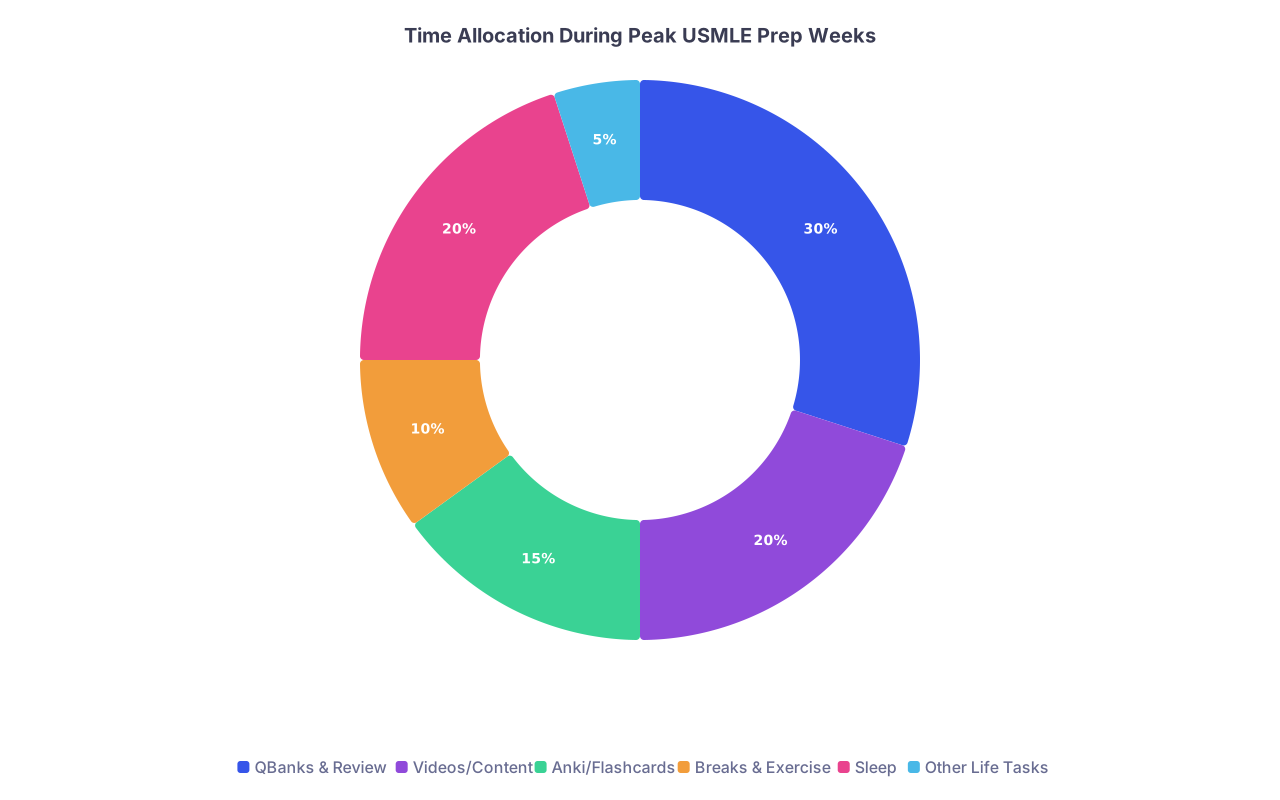
| Category | Value |
|---|---|
| QBanks & Review | 30 |
| Videos/Content | 20 |
| Anki/Flashcards | 15 |
| Breaks & Exercise | 10 |
| Sleep | 20 |
| Other Life Tasks | 5 |
If your real chart has “Sleep” under 15% here, you’re setting yourself up for a crash.
Week 5–6: Tighten Boundaries, Not Screws
At this point you should protect your limits more aggressively, not less.
Audit and cut energy drains Once per week (pick Friday night or Sunday morning), ask:
- Which 1–2 things drained me the most this week that didn’t move my score?
- Common answers:
- Endless resource‑hopping (Amboss + Boards and Beyond + Lecturio + random PDFs)
- Group study that turns into complaining
- Too many group chats and comparison games
- Common answers:
- Cut or cap them:
- Pick one main board video resource, not three
- Limit “Step talk” to one friend or one short check‑in per week
- Which 1–2 things drained me the most this week that didn’t move my score?
Use “micro‑reset” breaks Instead of fake breaks (scrolling, watching Step memes), use real resets:
- 5 minutes: walk the hallway or outside, no phone
- 2 minutes: stretch, unclench jaw/shoulders on purpose
- 10–15 minutes: snack + water + stare out a window
You should have 1 reset between every major block (e.g., between QBank and video, between video and cards).
- Watch for cognitive overload
Signs:
- Rereading the same question and absorbing nothing
- Crying or near tears after small mistakes
- Getting irrationally angry at question stems
If this happens for more than one day:
- Shorten blocks (from 40 questions to 20–30)
- Increase break frequency for 48 hours
- Pull back 10–20% on total daily workload, then ramp back
Week 7–8: Mid‑Prep Checkpoint and Course Correction
By now, you should have:
- 1–2 NBME scores
- A sense of your weak systems
- Noticeable fatigue
At this point you should treat stress management like a scheduled subject, not an afterthought.
- Run a 30‑minute personal “case conference” on yourself
Sit down with:
- Your stress tracker
- Your NBME(s)
- Your daily schedule
Ask yourself:
- What’s working? (Be ruthless: only count what actually improves retention or scores.)
- What’s clearly not worth the anxiety or time?
- Which 1–2 mental health supports helped most? (Walks, therapy, scheduled friend call, etc.)
Then:
- Drop one low‑yield habit (e.g., random YouTube “review,” second QBank you never finish properly)
- Add one high‑yield stability habit:
- Example:
- Weekly therapy or counseling session
- Fixed social call every Wednesday night
- Joining classmates for a walk instead of doom‑scrolling
- Example:
Schedule your next NBME with recovery in mind
- Put it early in Week 8
- The day after should be “lighter” by design
Guard your identity Around now, most people unconsciously merge:
- “My NBME score” = “My value as a future doctor”
You need to separate the two on purpose. At least once a week, do something that reminds you you’re still a human: visit family, play music, go to a religious service, volunteer briefly. Something non‑Step, non‑med.
Weeks 9–10: Taper the Chaos, Protect the Edge
This is where smart people either sharpen their performance… or panic and blow up their routines.

At this point you should shift from “more” to “better.” Mental clarity beats information hoarding.
Week 9: Simulate Test Day, Not Just Content
- Lock in your exam‑day routine
- Wake time
- Breakfast (practice this exactly)
- Caffeine timing
- Break strategy (when you’ll eat + bathroom)
On at least one full‑length in Week 9:
- Use that exact routine.
- Same clothes you’d wear on test day.
- Same kind of snacks.
- Tighten your sleep window
- Aim for 7–8 hours, within a 30–45 minute bedtime window
- No “just one more block” after your cut‑off time
If your mind is racing at night:
- Keep a notepad at bedside; dump the worries/to‑dos, then close it
- No phone in bed. Not negotiable.
- Use targeted anxiety tools
Pick 1–2 you’ll use on test day and practice now:
- 1–2 minute grounding exercise between blocks:
- Name 5 things you see, 4 you feel, 3 you hear, 2 you smell, 1 you taste
- Breathing pattern (e.g., 4‑in, 6‑out)
- 1–2 minute grounding exercise between blocks:
If you only “learn” these the night before the exam, they won’t work.
Week 10: Protect Your Brain Like Equipment
Your brain is now like a race car engine: powerful, but easy to blow if you floor it nonstop.
At this point you should:
Stop adding major new resources
- No brand‑new course
- No “my friend said this QBank is better, I’m switching”
- You finish the race with the tools you’ve been training with.
Shift a bit from volume to precision
- Slightly fewer new questions, more focus on:
- Reviewing error logs
- Re‑doing questions you missed or guessed
- Solidifying high‑yield weak spots (e.g., cardio pharm, renal phys)
- Slightly fewer new questions, more focus on:
Take one meaningful half‑day off
- Not for memorizing. For your nervous system.
- Spend it offline as much as possible.
- This is not laziness; it’s interval training for your brain.
Week 11: The “Don’t Ruin It Now” Week
This is where a lot of people implode. They see the finish line, freak out, and change everything.
| Period | Event |
|---|---|
| Foundation - Weeks 1-2 | Routines, boundaries, tracking |
| Ramp Up - Weeks 3-4 | Full schedule, first NBME |
| Grind - Weeks 5-8 | Volume, mid-prep adjustments |
| Sharpen - Weeks 9-10 | Simulation, taper chaos |
| Final - Week 11 | Stabilize, emotional prep |
| Final - Week 12 | Exam week routines |
At this point you should resist the urge to overhaul.
Fix your information diet
- No new USMLE forums, no last‑minute Reddit deep dives
- Mute or leave high‑anxiety group chats
- If someone posts “I just got a 260 with only 3 weeks of studying,” treat it like spam. Because it is.
Plan your last big review sweep
- Pick 2–3 things:
- Weakest systems (e.g., endocrine, renal)
- High‑yield topics (micro, cardio, neuro anatomy)
- Allocate clear blocks:
- Example:
- Mon: Micro review
- Tue: Pharm
- Wed: Weakest subject blocks
- Thu: Mixed light review
- Fri: Minimal work + wind‑down
- Example:
- Pick 2–3 things:
Normalize last‑week anxiety Stress this week doesn’t mean you’re underprepared. It means you’re human.
When anxiety hits:
- Label it: “This is pre‑exam anxiety, not emergency data.”
- Do a pre‑planned short routine (walk + water + 3 minutes of breathing).
- Then go back to your pre‑chosen task. Don’t improvise.
Week 12: Exam Week – Contained Nerves, Predictable Days
This week isn’t about content. It’s about not sabotaging yourself.

At this point you should have:
- Test date/time locked
- Travel and logistics confirmed
- No major content gaps you’re “just now” discovering
3–4 Days Before the Exam
Slow the volume
- Light review only:
- Skim your annotated First Aid/high‑yield notes
- A small number of questions to stay warm (e.g., 20–30/day), untimed or lightly timed
- No full‑length practice exams
- Light review only:
Pack your exam‑day kit
- ID, confirmation printout/email screenshot
- Snacks you’ve already tested (nothing new or risky)
- Water bottle (if allowed)
- Layers (hoodie/jacket)
- Earplugs if permitted
Lock your sleep schedule
- Go to bed and wake up close to exam‑day times
- Don’t go to bed 2 hours early “to get extra sleep” if it means you’ll just lie there panicking
Day Before the Exam
This is where people ruin themselves with 12‑hour cram marathons. Don’t.
At this point you should:
- Cap studying at 4–6 hours max, ending by late afternoon
- Do:
- Light review of formula sheets or quick facts
- Brief flashcards if that feels comforting, not panicked
- Then:
- Move your body: walk, light stretch
- Prep your clothes and bag
- Eat a normal dinner, not a feast
Evening routine:
- No question banks
- No USMLE forums
- 20–30 minutes of something genuinely relaxing: show, book, music, bath
- Breathing or brief guided relaxation before bed
If you cannot sleep, lying calmly with eyes closed is still better than doom‑scrolling. Do not open your QBank at 2 a.m.
Exam Day Morning
At this point you should stop “prepping” and just execute.
- Follow the routine you’ve practiced:
- Same breakfast
- Same caffeine
- Same arrival window (early but not absurdly early)
Before you start:
- 1–2 minutes of breathing
- Remind yourself: “I’ve answered thousands of questions. Today I’m just answering more.”
Between blocks:
- Follow your break plan. Don’t improvise huge changes.
- If a block goes badly:
- Reset script: “That block is gone. I can still crush the next one.”
- Short grounding exercise. Then move on.
- Don’t autopsy questions with 10 classmates.
- Eat a real meal. Do something that reminds you you’re alive outside of medicine.
Where to Get Help (Before It’s an Emergency)
Some of you reading this are already past the “normal stress” line.
If at any point in this 12‑week window you notice:
- Persistent thoughts that everyone would be better off without you
- Plans or intent to hurt yourself
- Daily thoughts of disappearing, crashing your car, or “not waking up”
That is not “just Step stress.” That is an emergency. You:
- Tell a trusted person today
- Contact campus mental health or student health
- Use emergency services if you’re at real risk
This exam is not worth your life. Period.

The Short Version: What Actually Matters
By the time you hit your test date, three things will matter more than any magic resource:
You built and protected routines early. Sleep, movement, hard stops. Not glamorous, but this is what lets your brain function on game day.
You treated stress management like a requirement, not a luxury. You tracked how you were doing, you adjusted when red flags appeared, and you scheduled rest with the same seriousness as NBMEs.
You didn’t panic‑pivot in the final weeks. You sharpened what you’d already built instead of trashing your system because of one bad day.
Follow this timeline, week by week, and you will still be stressed. That’s normal. But you’ll be stressed and functional—clear enough to let all that work actually show up when it counts.