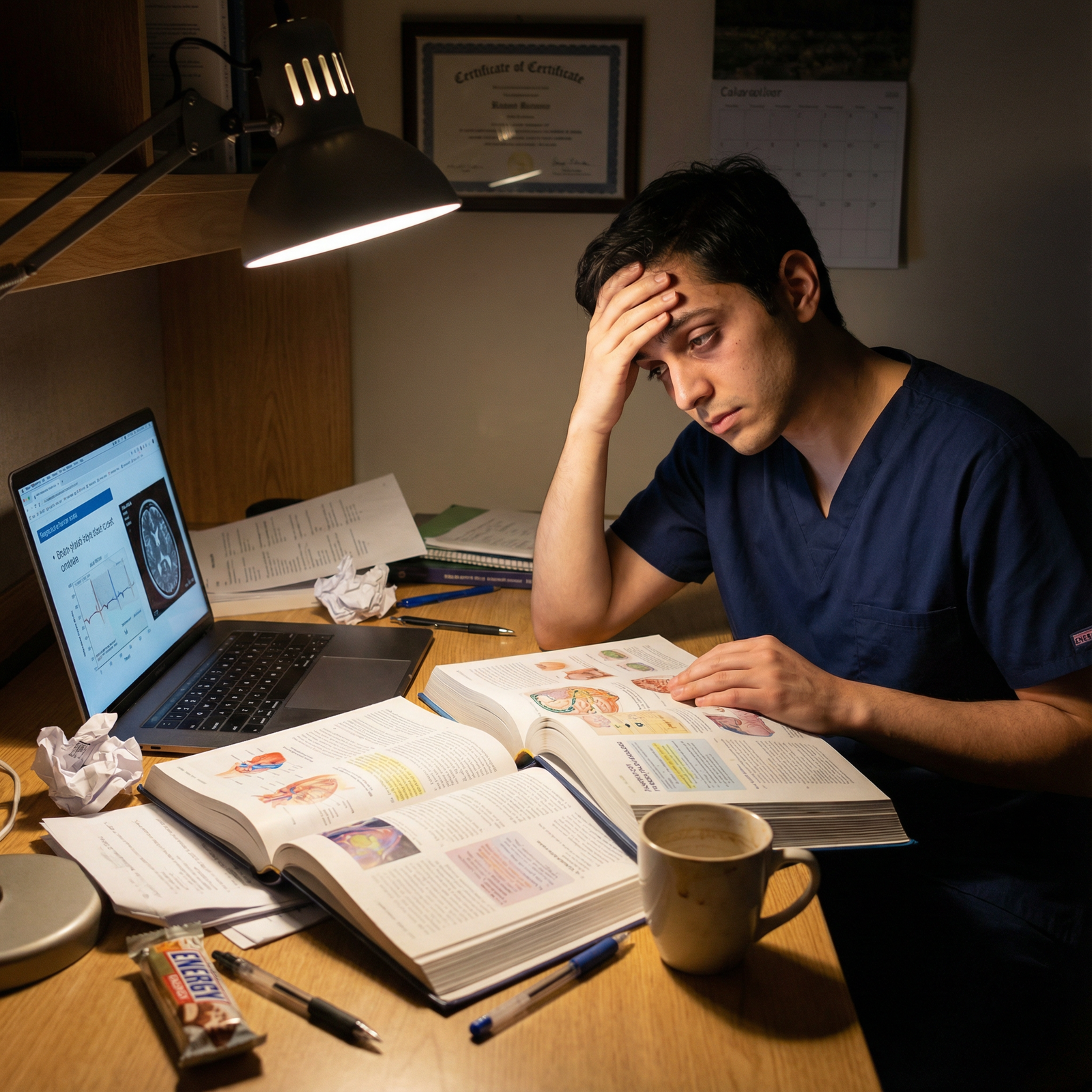
You are wasting your post‑exam crashes. And it is costing you energy, focus, and sanity for the rest of the block.
Most medical students treat the day after a big exam like a chaotic free‑for‑all: sleep until noon, doomscroll, feel vaguely guilty, attempt “productive rest,” then somehow end the day more drained than when they started. I have watched this pattern repeat across classes, schools, and specialties. Same story, different faces.
You can do way better than that.
What you need is a repeatable post‑exam recovery protocol. Not vibes. Not “listen to your body” (which on these days mostly tells you to dissolve into your mattress). A simple, structured playbook that:
- Protects your brain from full burnout
- Lets your nervous system downshift without crashing
- Sets you up to actually start the next block on time and with capacity
Let us build that.
Step 1: Understand What Is Actually Happening To You
You are not “weak” because you crash after exams. You are physiologically fried.
Big exams (NBME, shelf, Step, block exams) hit three systems hard:
- Stress hormones – cortisol, adrenaline
- Sleep architecture – fragmented, shortened, or both
- Decision fatigue – thousands of micro‑decisions in a few hours
Typical post‑exam failure modes I see:
- “Victory bender”: staying up late, alcohol, junk food, social overload → 48‑72 hour hangover, zero quality rest
- “Dead battery”: sleep 12+ hours, barely move, feel heavy and foggy → circadian rhythm trashed
- “Fake productivity”: telling yourself you will “get ahead” → stare at Anki, retain nothing, feel worse
The problem is not that you relax. The problem is that you relax randomly.
You need a deliberate recovery day, just like athletes have after competition.
Step 2: Lock In a Default 24-Hour Recovery Template
You should not be reinventing your post‑exam day every time. The goal is a default you can modify slightly, not a blank slate.
Here is the core structure that works for most students:

| Step | Description |
|---|---|
| Step 1 | Exam Ends |
| Step 2 | Decompress Ritual |
| Step 3 | Transition Walk |
| Step 4 | Light Social / Comfort Time |
| Step 5 | Sleep Reset Night |
| Step 6 | Morning Reset Block |
| Step 7 | Body Care Block |
| Step 8 | Fun Without Guilt |
| Step 9 | 30-45 min Gentle Planning |
| Step 10 | Wind Down + Normal Bedtime |
We will go through these pieces in order.
Step 3: The 2 Hours Immediately After The Exam
These two hours make or break your recovery. Most people blow them.
3.1. No Autopsy, No Post‑Mortem
Exam ends. You walk out. People start:
- “What did you put for that pericarditis question?”
- “Was that osteosarcoma or Ewing?”
Walk away. Literally. Do not stand with the group that is re‑taking the exam out loud.
Script to exit without drama:
“I cannot go through questions right now, I shut that part of my brain off after exams. I’ll catch you all later.”
If they push, repeat once, then physically leave. They will move on to someone else.
3.2. Decompression Ritual (First 30–60 Minutes)
You need a consistent off‑switch. Pick 1–2 things and repeat them after every major exam so your brain starts to associate them with “we are done now.”
Good options:
- Walk alone with music or a podcast (15–30 minutes)
- Grab a familiar comfort snack / drink (not a full meal yet)
- Quick shower and change out of “exam clothes” or scrubs
Sequence I commonly recommend:
- Leave the building
- 20‑minute walk (no exam talk, light audio okay)
- Go home, shower, change into comfortable clothes
Absolutely no:
- Checking grade prediction forums
- Reopening First Aid/AMBOSS/UWorld to “verify” questions
- Rehashing the exam with friends or group chats
Your brain is flooded with “what if” loops. Do not feed them.
3.3. Light Social + Food (Next 1–1.5 Hours)
After you have done your solo decompression:
- Meet 1–3 people whose energy does not drain you
- Get a real meal with actual protein and fiber
- Talk about literally anything except exam content
Think: brunch, early dinner, or coffee shop hang. No five‑hour bar crawl.
Step 4: The Night After — How To Sleep Without Wrecking Tomorrow
The worst move: staying up until 2 a.m. “because I finally can” and sleeping half the next day.
You want recovery, not jet lag.
4.1. The “Plus One Hour” Rule
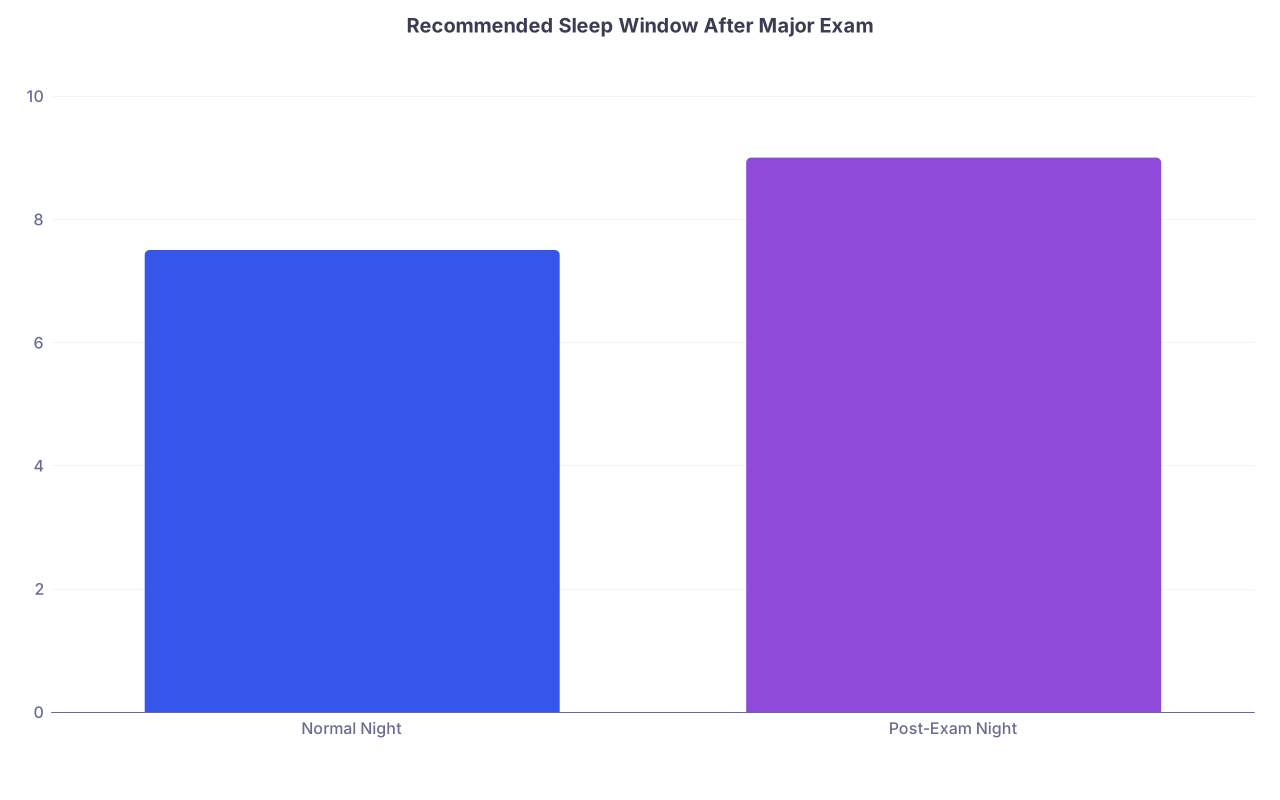
Go to bed no later than 1 hour after your usual exam‑week bedtime.
- If you usually crash at midnight, post‑exam bedtime target is 12–1 a.m.
- If you are an early sleeper (10 p.m.), fine to push to 11 p.m.
You can sleep in a little the next morning, but do not turn it into a 14‑hour marathon.
| Category | Value |
|---|---|
| Normal Night | 7.5 |
| Post-Exam Night | 9 |
Aim for 8.5–9 hours, not a full coma.
4.2. What To Do With The Evening
Post‑exam evening is for pleasure, but with a speed limit.
Good activities:
- Light movie or show (nothing hyper‑stimulating if you tend to ruminate)
- Casual hangout, board games, low‑key restaurant
- Reading something non‑medical
- Short gaming session (60–90 minutes, with a timer)
Hard limits:
- No “I’ll just play one more game” until 3 a.m.
- No “I finally have time to organize my entire life” productivity binge
- No stimulant use “for fun” (you are already sympathetically jacked)
If alcohol is part of your social life, keep it moderate and early. I am not your parent, but I am telling you a hard truth: more than 1–2 drinks the night after a big exam guarantees worse mood and worse recovery for 48 hours. It feels fun and it is terrible value.
Step 5: The Morning After — Structured “Lazy”
This is your actual recovery day. It needs shape, or it dissolves.
Here is a skeleton schedule that works very well:
| Time | Focus Block |
|---|---|
| 8:30–9:30 | Wake + slow breakfast |
| 9:30–11:00 | Body care & errands |
| 11:00–13:00 | Fun / hobby time |
| 13:00–14:00 | Lunch + short walk |
| 14:00–16:00 | Social / rest block |
| 16:00–17:00 | Gentle planning (30–45 min) |
| 17:00–22:30 | Open evening + wind down |
Adjust times, but keep:
- 1 morning block for body and environment reset
- A mid‑day block for pure enjoyment
- A brief afternoon block for light planning
- Reasonable bedtime
5.1. Wake Time: Sleep In, But Not Into Oblivion
Target:
- Wake no more than 2 hours later than your standard wake‑up time
- So if you are normally 7:00, post‑exam wake between 8:30–9:00
Set an alarm. Yes, even “on your day off.” This is not punishment. This is protecting your circadian rhythm from whiplash so you can function during the upcoming block.
5.2. First Hour: Gentle Start, Real Food
Non‑negotiables:
- Hydrate: 12–20 oz water first thing
- Real breakfast with protein (eggs, yogurt, protein shake, whatever you actually eat)
- No social media doomscrolling in bed for 45 minutes
I have watched students burn half their recovery day in bed on TikTok and then wonder why they feel worse. Do not make your first sensory input a firehose.
Step 6: The “Body Care & Environment Reset” Block (60–90 Minutes)
Your brain will not truly calm down if your body is trashed and your environment is a disaster. This block fixes that.
Pick 3–5 of these:
- Movement (20–30 min)
- Light jog, walk, yoga, or easy lift — intensity 4–6/10, not PR day
- Laundry reset
- One full load: exam clothes, scrubs, gross study sweatshirts
- Room reset
- 20–30 minutes: trash out, clear desk, make bed, wipe down surfaces
- Food prep light
- Not a full meal prep marathon; just 2–3 “ready to eat” options for next 2–3 days (pre‑washed salad, rotisserie chicken, pre‑cut fruit, etc.)
Think of it as treating your future self like someone you care about. Because the next block will not.
This is boring, unglamorous stuff that quietly prevents you from spiraling on Wednesday when you are hungry, surrounded by clutter, and behind on cards.
Step 7: The Fun Block — But Make It Real Rest
Now you have earned guilt‑free fun. But be smart about format.
Good “real rest” options:
- Being outside: park, beach, coffee shop patio
- Hobbies that engage hands and a different part of your brain
- Cooking, drawing, instrument, crafts, photography
- Social that feels peaceful rather than chaotic
- One‑on‑one or small group with people you like
Less ideal, but acceptable in moderation:
- Binge‑watching a show
- Scrolling / gaming
Here is the rule:
If you finish the activity and feel heavier, duller, or weirdly empty, it was not recovery. It was numbing.
Aim for at least 2–3 hours of something you can look back on and say: “That actually filled me up a bit.”
Step 8: Non-Negotiable Boundaries On Your Recovery Day
If you do nothing else, follow these six rules:
- No studying. Not “just 30 minutes of Anki.” Your brain needs a clear boundary that says, “We really are off.”
- No major life decisions. Do not decide to switch specialties, break up with your partner, or drop out on your crash day. You are emotionally drunk.
- No exam debrief rabbit holes. Do not spend hours comparing answers, reading Reddit horror threads, or calculating probabilities.
- No 3 a.m. bedtime. You are not in college anymore. You cannot recover from that whiplash in one day.
- No overcommitting to others. You are not available to solve everyone’s problems today. Calendar block it if you have to.
- No full isolation unless you are truly an extreme introvert. See at least one human you trust, even briefly.
Draw these lines ahead of time and stick to them.
Step 9: The 30–45 Minute Gentle Planning Block
This is the part most students skip, then regret.
You do not study. But you do create a soft landing pad for the next 2–7 days.
Set a timer for 30–45 minutes. During that time:
- Open your calendar / task app.
- List the next 7 days. For each day, write:
- Fixed commitments (clinics, classes, labs, call, meetings)
- One realistic “academic priority” for that day (start next block lectures, set up Anki, etc.)
- Identify bottlenecks.
- Long days → pre‑plan easier tasks or pure recovery that evening
- Light days → schedule slightly heavier lift (e.g., outline new unit)
- Set 1–2 small “Day 1 back” tasks.
- Example: “Tomorrow: watch first 2 lectures + re‑activate Anki deck.”
- The key is small, specific, and actually doable.
| Category | Value |
|---|---|
| Sleep | 540 |
| Body/Environment Reset | 90 |
| Fun/Social | 240 |
| Planning | 45 |
| Unstructured | 285 |
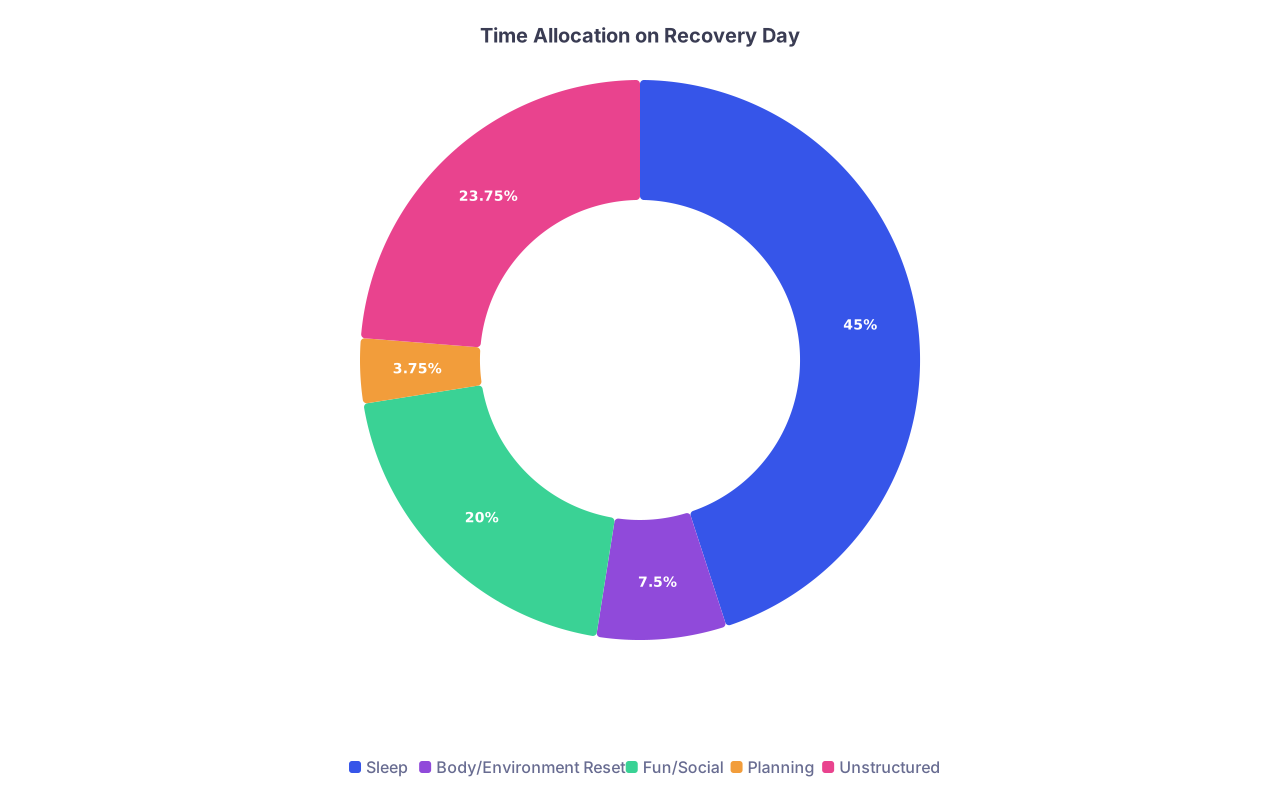
(Values in minutes for a 24‑hour day.)
You end this block knowing tomorrow’s plan, which calms the part of your brain whispering, “You should be getting ahead right now.”
Step 10: Adapting The Playbook For Different Scenarios
Not every exam is the same. You tweak the template, not throw it out.
10.1. After a Massive High-Stakes Exam (Step/Level, Big Shelf)
- Extend recovery to 36–48 hours if you can afford it
- First day: follow the full playbook above
- Second day:
- Morning: light admin + structured start to next thing (e.g., onboarding for rotations)
- Afternoon: another fun block
- Evening: normal bedtime, minimal screens
10.2. During Clinical Rotations (When You Have To Work The Next Day)
If your exam ends at 5 p.m. and you are on wards at 6 a.m.: you still need micro‑recovery.
Condensed version:
- 30–45 minutes solo decompression (walk home + shower)
- 60 minutes: eat, low‑key fun (episode of a show, chat with friend)
- 15 minutes: layout clothes, pack bag for next day, quick check of schedule
- Bed by your usual “pre‑rounds” time, allowing as close to full sleep as possible
- Next afternoon off (or post‑call) → insert a mini‑version of the recovery day (body reset + 2 hours fun + 30 minutes planning)
10.3. When You Have Back-to-Back Exams / Blocks
Sometimes you finish one block Friday and start the next Monday. Here is how to not collapse:
- Friday: evening decompression + social
- Saturday: full recovery day using this playbook (no studying)
- Sunday: half day content ramp‑up, not full blast.
- 2–3 focused hours: outline new block, organize resources, maybe preview a lecture
- Rest of the day: light fun, early bed
You cannot treat every exam like the Olympics and then expect to be fresh every Monday. This is where a planned medium gear saves you.
Step 11: Mental Health Red Flags To Watch For
Sometimes the crash is not just a crash. It is part of something bigger.
Watch for these patterns:
- You feel numb or hopeless for more than 3–5 days after multiple exams in a row
- You have persistent sleep disruption (early waking, insomnia, nightmares) that does not settle after your planned recovery
- You notice heavy substance use every time exams hit (binge drinking, benzos, “just a little” Adderall to get through non‑study days)
- You consistently think, “None of this is worth it,” and it lingers beyond the immediate post‑exam low
At that point, this is not just about a recovery day. You need:
- A real conversation with someone outside your immediate class bubble
- Ideally: school counseling, a therapist, or physician familiar with trainee mental health
You are not special for burning out. Everyone is vulnerable if you push long enough without guardrails. The smart move is to get help early, not white‑knuckle it until something breaks.
Step 12: Create Your Personal Post-Exam Protocol (And Write It Down)
This only works if it is decided in advance. On crash day your judgment is garbage.
Take 10–15 minutes right now and write a one‑page “Post‑Exam Protocol” for yourself:
Name it.
- “M2 Block Exam Recovery Day v1.0”
List your 3–5 immediate post‑exam actions.
- Walk to river with music
- Shower + change into soft clothes
- Eat at X café with friend Y
Time anchors for next day.
- Wake by: ___
- Bedtime window: ___
- Body reset items: ___
- Fun options: ___
- Planning window: ___
Boundaries.
- “I do not: study, check Reddit score threads, discuss questions.”
Who you tell.
- One friend or partner who knows to support this plan, not sabotage it.
You want this written somewhere visible: notebook, phone notes, whiteboard. After each exam, tweak it. You are running experiments on yourself until you find what reliably leaves you feeling genuinely better, not just distracted.
Quick Recap: The Playbook In 8 Moves
If you skimmed everything, here is the spine:
- No exam autopsy. Walk away from post‑exam question debates.
- Ritualized decompression. Walk, shower, change clothes, then socialize.
- Sleep with a speed limit. Bed no later than +1 hour from normal, 8.5–9 hours max.
- Structured “lazy” morning. Reasonable wake time, real breakfast, no doomscrolling.
- Body and environment reset. Movement, cleaning, laundry, light food prep.
- Real fun, not numbing. At least 2–3 hours of something that actually feels good afterward.
- Clear boundaries. No studying, no grading autopsy, no major life decisions.
- 30–45 minutes of gentle planning. Set up your next few days without overloading yourself.
You do not need discipline for this. You need a default. Decide it once. Then run the play after every major exam and adjust.