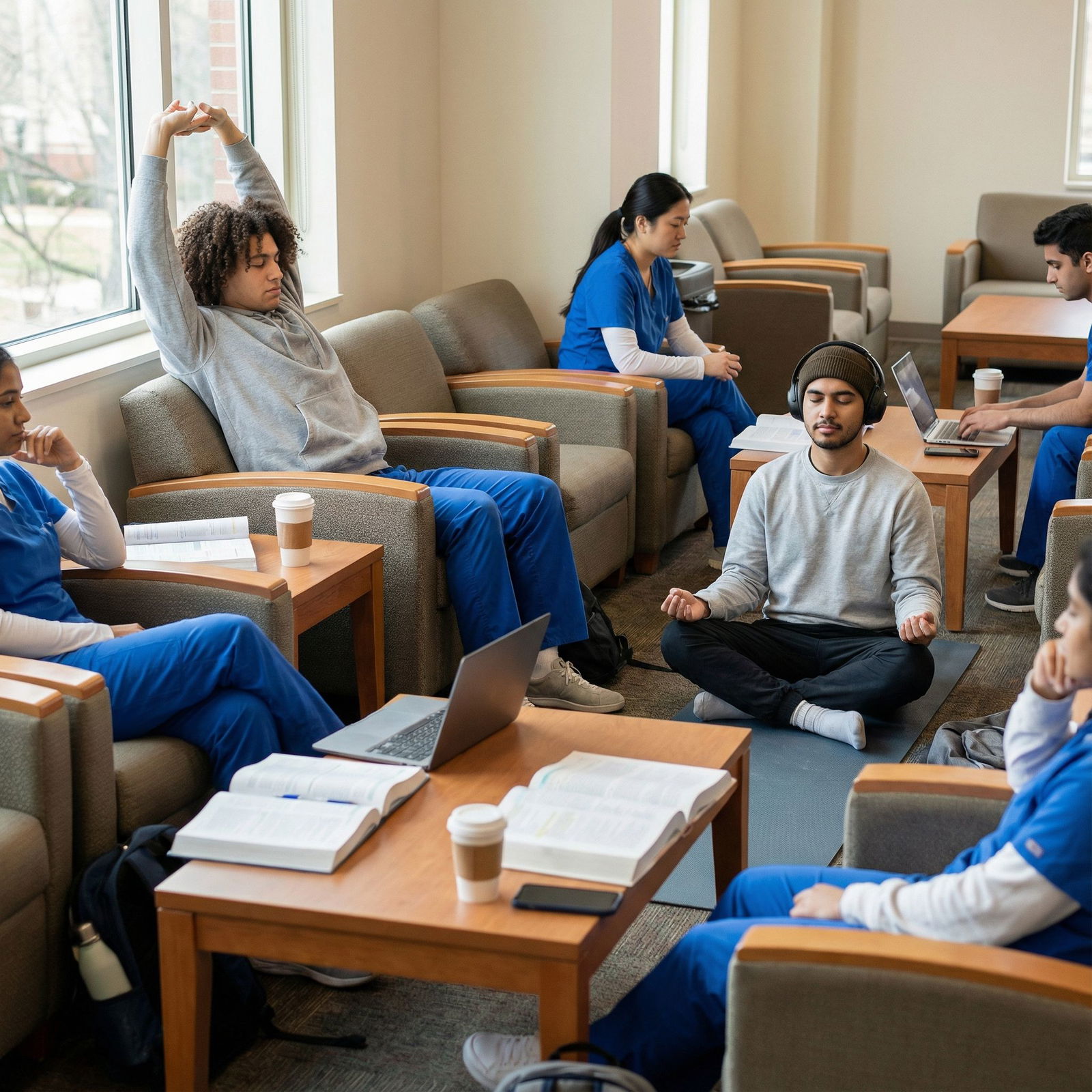
Introduction: Burnout in Modern Medical School Life
Burnout among medical students is no longer a rare or surprising occurrence—it’s common, serious, and often silently endured. While you may have entered medical school excited to learn and care for patients, the reality of endless exams, long clinical days, and the pressure to perform perfectly can quickly erode that initial enthusiasm.
Burnout, as defined by the World Health Organization, is a syndrome resulting from chronic workplace stress that hasn’t been successfully managed. In medical school, "workplace" includes your classrooms, hospitals, study spaces, and even your own desk at home. Burnout typically shows up as:
- Emotional exhaustion
- Cynicism or detachment
- Reduced sense of accomplishment
Unchecked, burnout affects Mental Health, academic performance, professional identity formation, and even patient care during clinical years. The good news is that burnout is not an inevitable part of becoming a physician. With intentional Self-Care, effective Time Management, and strong support systems, you can interrupt the cycle and build sustainable habits that will serve you throughout your career.
This guide explores practical, evidence‑informed strategies for medical students to recognize, prevent, and recover from burnout—without sacrificing your goals or your passion for medicine.
Understanding Medical School Burnout: What It Is and Why It Happens
Recognizing the Symptoms of Burnout in Medical Students
Burnout rarely appears overnight. It creeps in gradually, often disguised as “just being tired” or “just a busy block.” Early recognition is key.
Common symptoms include:
Emotional exhaustion
- Feeling drained before the day even starts
- Needing extensive recovery time after routine tasks
- Feeling like you have "nothing left to give," even to people you care about
Cynicism and detachment
- Rolling your eyes (internally or externally) at patients, classmates, or faculty
- Feeling emotionally numb during clinical encounters
- Questioning why you chose medicine and whether it was a mistake
Reduced sense of accomplishment
- Feeling like you’re not learning enough despite studying constantly
- Comparing yourself to peers and assuming you’re "behind"
- Internalizing mistakes as proof that you’re not cut out for medicine
You may also notice physical and behavioral changes:
- Sleep disturbances (trouble falling asleep, waking frequently, or oversleeping)
- Changes in appetite (undereating, overeating, or heavy reliance on caffeine and sugar)
- Irritability and emotional volatility
- Loss of interest in hobbies and social activities you used to enjoy
- Increased procrastination or difficulty concentrating
If these patterns persist for weeks to months, it’s a strong signal you’re moving beyond normal stress into burnout.
Why Medical Students Are Especially Vulnerable to Burnout
Burnout is not a personal weakness—it’s often a predictable response to chronic, high-intensity stressors. Several features of medical training make Medical Students particularly susceptible:
1. Intense Academic and Performance Pressure
- Massive volume of material and rapidly cycling exam blocks
- High-stakes exams (e.g., USMLE/COMLEX, OSCEs) that feel like they control your future
- Competitive culture around grades, research, and residency placement
Even highly capable students may constantly feel like they’re “not doing enough,” which steadily drains motivation and confidence.
2. Long Hours and Unpredictable Schedules
- Early mornings, late nights, weekend call, and inflexible clinical schedules
- Limited time for exercise, sleep, or meaningful non-medical activities
- Frequent transitions between pre-clinical blocks, rotations, and exam prep
This chronic time pressure makes it difficult to maintain healthy routines and can lead to the feeling that your entire life is consumed by medicine.
3. Perfectionism and Impostor Syndrome
Many medical students are high achievers used to excelling. This can manifest as:
- Perfectionism: believing mistakes are unacceptable or catastrophic
- Impostor syndrome: believing you got into medical school by accident and will eventually be “found out”
These internal narratives amplify stress and make normal learning experiences feel threatening rather than growth-promoting.
4. Emotional Burden of Clinical Exposure
Caring for sick, dying, or vulnerable patients is meaningful—but also emotionally heavy:
- Bearing witness to suffering, trauma, or death
- Navigating difficult interactions with patients, families, or staff
- Feeling powerless when outcomes are poor
Without training in emotional processing or reflection, these experiences accumulate and contribute to emotional exhaustion.
5. Lack of Support or Healthy Culture
- Competitive, comparison-focused environments
- Limited feedback or mentorship
- Stigma around seeking Mental Health support (“If I ask for help, maybe I’m not resilient enough.”)
When you feel like you must “tough it out” alone, burnout flourishes.
Understanding these drivers is crucial not to blame yourself, but to normalize your experience and target realistic, system-savvy strategies.

Strategy 1: Set Realistic, Sustainable Goals Instead of Chasing Perfection
Using SMART Goals to Tame Overwhelm
One root of burnout is feeling like everything is important and everything is urgent. Instead of vague intentions like “I have to master cardiology this week,” use SMART goals:
- Specific – Clearly define what you’ll do
- Measurable – You can track completion or progress
- Achievable – Feasible given your time and energy
- Relevant – Directly tied to your current priorities (exam, rotation, shelf)
- Time-bound – Has a clear deadline or time frame
Example (vague):
“Study cardiology all week.”
Example (SMART):
“From 7–9 pm Monday–Thursday, complete 40 cardiology question bank items per day, review missed questions the same night, and create 5–10 spaced-repetition flashcards from high-yield concepts.”
SMART goals help you move away from guilt-based productivity (“I should study more”) toward plan-based productivity (“I executed today’s plan, so I can rest without guilt”).
Aligning Goals with Your Current Phase of Training
Your goals should evolve with your stage of medical school:
Pre-clinical years
- Focus on building efficient study systems
- Aim for mastery of core concepts + question-based learning
- Integrate early Self-Care habits so they become automatic later
Clinical years
- Set goals around patient encounters (e.g., “Present two new patients per day”)
- Build skills in presentations, documentation, and clinical reasoning
- Protect time for sleep and decompression even during busy rotations
Exam or application seasons
- Prioritize high-yield study and practice questions
- Set clear boundaries around non-essential commitments
- Plan small but consistent Self-Care routines to maintain Mental Health
Letting Go of Perfection to Protect Mental Health
Striving for excellence is healthy; demanding perfection is not. Some mindset shifts:
- Replace “I must know everything” with “I will focus on what is highest yield and safest for patients.”
- Replace “I failed if I didn’t get an A” with “I am building a safe, competent, and sustainable foundation.”
- Replace “I should be doing more” with “I made a plan based on my limits; honoring those limits is part of professional responsibility.”
You are training for a marathon career, not a short sprint. Sustainable goals protect both your future patients and your present well-being.
Strategy 2: Time Management That Honors Both Productivity and Rest
Time Management in medical school is less about squeezing in more hours and more about using your limited time intentionally.
Prioritization: Not Everything Deserves Equal Energy
Consider using a simple priority framework:
- Urgent + Important: Today or right away (e.g., exam tomorrow, patient notes due, urgent email)
- Important but Not Urgent: High-yield studying, long-term projects, research, exercise
- Urgent but Not Important: Some emails, administrative tasks—batch these
- Neither Urgent nor Important: Excessive scrolling, unplanned social media, etc.
Each morning or evening, list 3 “must-do” tasks (not 20). Completing these daily builds momentum and prevents decision fatigue.
Time Blocking: Protecting Your Most Important Resources
Time blocking means assigning specific time periods to specific types of activities:
- Core study blocks: 60–90 minutes of focused work (lectures, questions, Anki)
- Admin blocks: Email, scheduling, paperwork
- Recovery blocks: Exercise, meals, naps, walks, relaxation
- Connection blocks: Time with friends, family, or mentors
Example daily schedule (pre-clinical, exam week):
- 7:00–7:30 – Breakfast and short walk
- 8:00–10:00 – Question bank + review
- 10:15–11:15 – Lecture review / Anki
- 11:15–12:00 – Break + lunch
- 12:00–2:00 – Systems-based review (e.g., cardiology)
- 2:15–3:15 – Gym / physical activity
- 3:30–5:30 – Practice questions + explanation review
- 6:00–7:00 – Dinner + downtime
- 7:30–9:00 – Light review, Anki, prep for next day
- 9:30–10:30 – Relaxation, no screens, bedtime routine
The point isn’t to create a rigid schedule, but to ensure that Self-Care, sleep, and connection are built in—not an afterthought.
Focus Tools: Pomodoro and Single-Tasking
Pomodoro technique: 25 minutes focused work + 5-minute break; after 4 cycles, a longer 15–20 minute break. This:
- Prevents mental fatigue
- Reduces procrastination (“It’s only 25 minutes”)
- Makes long tasks feel more manageable
Single-tasking: Avoid multitasking between lectures, emails, and messages. Each context switch drains cognitive energy. Keep your phone in another room or use website blockers during core study times.
Protecting Sleep as a Non-Negotiable
Sleep is not wasted time—it’s a core cognitive tool:
- Aim for 7–9 hours whenever possible, even on busy rotations
- Keep a consistent wake time
- Avoid heavy caffeine intake late in the day (common in Medical Students)
- Create a short wind-down routine (brief stretching, reading, or meditation)
Quality sleep improves memory consolidation, emotional regulation, and ultimately reduces Burnout.
Strategy 3: Building Supportive Relationships and Professional Community
Isolation is fertile ground for Burnout. Medicine is meant to be practiced—and learned—in community.
Strengthening Peer Connections
Your classmates understand your experience better than almost anyone else:
- Form small, supportive study groups (2–4 people) with compatible learning styles
- Normalize talking about stress and Mental Health, not just grades and scores
- Share resources and strategies rather than competing endlessly
Support doesn’t mean commiseration alone; it also means accountability (“Let’s both go to bed by 11” or “Let’s take a walk after this exam”).
Seeking Mentorship and Role Models
Mentors can help you zoom out from daily stress and see the bigger picture:
Look for residents, fellows, or faculty who:
- Are approachable and respectful
- Seem to have some life balance
- Remember what it’s like to be a student
What mentors can offer:
- Strategy advice (e.g., how to study for a shelf, choose electives)
- Perspective (“One bad grade does not define your career”)
- Networking and advocacy for opportunities
If your school has formal mentorship programs, sign up. If not, you can ask directly:
“Would you be open to meeting for 20–30 minutes to talk about navigating clerkships and work–life balance?”
Using Institutional and Peer Support Resources
Most medical schools now offer Wellness, advising, and Mental Health resources tailored to Medical Students:
- Student wellness centers with workshops on Time Management, stress, and Self-Care
- Confidential counseling services with therapists familiar with medical training stressors
- Peer support programs or student-run groups focused on reducing stigma around Mental Health
Reaching out for help is not a sign of weakness; it’s a professional skill and a reflection of insight and maturity.
Strategy 4: Prioritizing Self-Care as a Core Professional Skill
Self-Care is often misunderstood as indulgence. In medicine, it’s a professional responsibility: your future patients depend on your ability to sustain your own health and functioning.
Physical Self-Care: Treating Your Body Like You’ll Treat Your Patients
Movement
- Aim for at least 150 minutes of moderate activity per week (e.g., brisk walking, cycling)
- Use micro-movements: stair breaks, 5-minute stretching between Pomodoros, short walks during lunch
- On clinical rotations, consider walking or biking to the hospital when feasible
Nutrition
- Stock quick, healthy options: nuts, yogurt, fruit, whole-grain snacks
- Prioritize regular meals to avoid energy crashes
- Be mindful of caffeine: use it strategically, not constantly
Rest and recovery
- Even 10–20 minute “micro-naps” can help on demanding rotation days (when appropriate and safe)
- Build small rituals that signal “off-duty” time: changing clothes after hospital, shower, music, or journaling
Emotional and Mental Self-Care: Processing the Hidden Curriculum
Medical training brings repeated exposure to grief, uncertainty, and sometimes moral distress. Helpful tools:
Mindfulness and grounding
- 5–10 minutes of breathing exercises before or after the hospital
- Brief body scans to notice and release tension
- Apps like Headspace, Calm, or Insight Timer can provide simple daily practices
Journaling
- Reflect on meaningful patient encounters, ethical dilemmas, or personal reactions
- Use prompts: “What did I learn today—medically and personally?” or “What moment stayed with me and why?”
Boundaries with medicine
- Give yourself permission to be more than a medical student
- Protect time where you do not talk about medicine, exams, or applications
Maintaining Identity Beyond Medicine
Burnout often worsens when your entire identity is wrapped up in being “the medical student”:
- Keep at least one non-medical activity alive (music, art, sports, faith community, volunteering unrelated to medicine)
- Stay connected with friends or family outside healthcare
- Remind yourself regularly: “I am a whole person who happens to be in medical school—not only a medical student.”
These practices improve not only Mental Health but also empathy, perspective, and resilience.
Strategy 5: Creating a Balanced Schedule and Knowing When to Say “No”
Balance in medical school doesn’t mean equal time for everything; it means intentional alignment with your priorities and limits.
Designing a Weekly Template
Instead of scheduling each day from scratch, create a weekly template that includes:
- Core study and clinical commitments
- Fixed non-negotiables: sleep, meals, exercise blocks
- Social/relationship time
- Flex time for unexpected tasks or fatigue
Accept that some weeks (e.g., before major exams, ICU rotations) will be unbalanced. Planning ahead can help you add extra recovery time before and after those stretches.
Learning to Say “No” Without Guilt
You will be invited to join research, leadership roles, tutoring, extra clinics, and more. These can be valuable—but saying yes to everything is a fast track to Burnout.
Ask yourself:
- Does this align with my current goals (learning, wellness, specialty interests)?
- Do I realistically have the bandwidth right now?
- What will I need to give up to say yes to this?
If the cost is your Mental Health or sleep, consider deferring or declining. A professional, honest response might be:
“Thank you so much for thinking of me. I’m currently at capacity with my coursework and clinical responsibilities, and I want to make sure I can fully commit to anything I take on. I’ll have to decline for now, but I’d love to stay in touch about future opportunities.”

Strategy 6: Seeking Professional Help Early and Normalizing Mental Health Care
Burnout exists on a spectrum, and sometimes strategies like schedule changes and peer support aren’t enough. Knowing when to seek professional help is critical.
When to Consider Professional Support
Reach out to a Mental Health professional if you notice:
- Persistent sadness, hopelessness, or anxiety
- Frequent crying, irritability, or emotional numbness
- Thoughts like “It would be easier if I didn’t wake up” (even if you don’t intend to act on them)
- Inability to function in basic tasks (attending class, getting out of bed, eating)
- Escalating use of substances to cope (alcohol, stimulants, sedatives, etc.)
These are medical issues—not moral failings. Early treatment leads to better outcomes.
Using On-Campus and Community Resources
Most schools offer:
- Confidential counseling services (often free or low-cost)
- Psychiatrists who understand the demands of medical training
- Workshops on stress management, Mindfulness, Time Management, and resilience
If you’re worried about confidentiality or impact on your record, talk directly with the counseling service about how records are handled. Many Medical Students choose to see providers outside their institution as well.
Protecting Your Future by Protecting Your Present
Addressing Burnout and Mental Health needs early:
- Does not make you a weaker applicant for residency
- Often improves academic performance and clinical functioning
- Demonstrates insight, responsibility, and commitment to sustainable practice
Asking for help is a critical professional competency and will make you a safer, more effective physician.
Strategy 7: Cultivating a Growth Mindset for a Lifelong Career
The way you interpret challenges in medical school has a powerful impact on your resilience.
Adopting a Growth Mindset
A fixed mindset says: “If I struggle, it means I’m not smart enough.”
A growth mindset says: “Struggle is how I learn; my abilities can develop with effort and feedback.”
Practical ways to build a growth mindset:
- Reframe setbacks:
- Instead of “I’m terrible at this,” try “I haven’t mastered this yet, and here’s what I’ll try next.”
- Embrace feedback:
- Ask for targeted feedback on presentations, notes, or exams and use it to make concrete plans.
- Celebrate process, not just outcomes:
- Acknowledge effective strategies you used, even if the result wasn’t perfect.
Redefining Success in Medical School
True success in medicine includes:
- Safe, competent patient care
- Capacity to show up compassionately over a long career
- Integrity, professionalism, and teamwork
- The ability to maintain your own humanity and health
Burnout prevention is not separate from your professional development—it’s central to it.
FAQs: Burnout, Mental Health, and Self-Care in Medical School
Q1: How can I tell the difference between “normal” medical school stress and true burnout?
Normal stress in medical school tends to be temporary and linked to specific events (e.g., exam weeks). You may feel anxious or tired but can still recover with rest, and your motivation returns afterward. Burnout is more persistent and widespread: chronic exhaustion, cynicism, and feeling ineffective that doesn’t improve even when a specific stressor is over. If you notice weeks of low mood, detachment, or declining performance despite effort, that’s a sign to take burnout seriously and seek additional support.
Q2: I feel guilty taking breaks when my classmates are always studying. How do I manage this?
This comparison trap is common among Medical Students. Remember that you only see the visible part of others’ routines—social media posts, library time—not their full schedules or struggles. Breaks are not a luxury; they’re a performance tool. Evidence shows that strategic rest improves memory, focus, and exam performance. Instead of asking, “Do I deserve a break?” ask, “What kind of break will best support my learning and health right now?”
Q3: Can better Time Management really reduce my Burnout risk?
Yes. Poor Time Management leads to cramming, chronic sleep deprivation, neglected Self-Care, and a constant sense of being behind—major drivers of Burnout. Effective Time Management doesn’t mean doing more; it means aligning your time with your values and priorities. When you intentionally protect sleep, exercise, and relationships alongside studying, you create a sustainable rhythm that reduces chronic stress.
Q4: What if my school’s culture feels toxic or unsupportive—am I doomed to burn out?
A challenging institutional culture definitely increases risk, but you still have zones of control. You can:
- Build a small circle of supportive peers and mentors
- Set personal boundaries (e.g., not engaging in harmful comparison talk)
- Use external resources: off-campus therapists, online communities, or national organizations focused on Medical Student Mental Health
You’re not powerless, even in a less-than-ideal environment. Focusing on what you can influence—your habits, your support network, your self-talk—can significantly reduce burnout risk.
Q5: If I’m already burned out, is it too late to recover?
No. Burnout is real and serious, but it’s also treatable. Recovery often involves multiple steps: honest self-assessment, adjusting workload or expectations, prioritizing Self-Care and rest, and often seeking professional support. Many physicians and Medical Students have gone through burnout and emerged with deeper insight, healthier boundaries, and more sustainable careers. The key is not to try to “push through” indefinitely—recognize burnout early and act on it.
By understanding burnout, using effective Time Management, prioritizing Self-Care, and building strong support systems, you can break the burnout cycle and create a medical school experience that challenges you without consuming you. Protecting your Mental Health now is one of the most important investments you can make—in yourself, in your future patients, and in the kind of physician you’re becoming.