
Why Sleep Matters in Medical School: Optimizing Rest for Mental Health, Learning, and Performance
In medical education, where the expectations are intense and the workload seems endless, sleep is often treated as optional—or even as a sign of weakness. Many medical students believe that sacrificing rest is simply “part of the process” of becoming a physician. Late-night study sessions, back-to-back exams, early-morning rounds, and extracurricular commitments can easily push sleep to the bottom of the priority list.
Yet the evidence is clear: chronic sleep deprivation harms mental health, undermines academic performance, and increases the risk of burnout. For a career that demands sharp thinking, empathy, and resilience, consistently shortchanging sleep is one of the most self-sabotaging habits a student can adopt.
This article breaks down why Sleep Optimization is essential during medical school, how sleep affects your brain and mood, the unique pressures that med students face, and practical strategies to protect your rest—even during exam season and clinical rotations.
The Neuroscience of Sleep: Why Your Brain Needs Rest to Learn and Cope
Understanding Sleep Stages and Their Functions
Sleep is not a single uniform state—it’s a highly organized biological process consisting of cycles that repeat every 90–120 minutes. Each cycle includes:
NREM Sleep (Non-Rapid Eye Movement)
- Stage N1 (Light Sleep):
The transition between wakefulness and sleep. Muscles relax, eye movements slow, and you can be awakened easily. This stage helps ease the brain into deeper stages of sleep. - Stage N2 (Stable Sleep):
Heart rate slows, body temperature drops, and brain waves show characteristic “sleep spindles” and K-complexes, which are involved in memory consolidation and sensory disconnection from the environment. - Stage N3 (Deep or Slow-Wave Sleep):
This is the most physically restorative phase. Growth hormone is released, tissue repair occurs, and the immune system is strengthened. Deep sleep is also linked to clearing metabolic waste products from the brain, including beta-amyloid.
- Stage N1 (Light Sleep):
REM Sleep (Rapid Eye Movement)
Brain activity becomes more wake-like, breathing and heart rate can become irregular, and most vivid dreaming occurs. REM sleep supports:- Emotional processing and regulation
- Creative problem solving
- Consolidation of complex learning, procedural skills, and pattern recognition (key for clinical reasoning and diagnostics)
For medical students, both deep N3 sleep and REM sleep are critical. N3 restores the brain and body after long days in the hospital or library, while REM helps integrate new knowledge—such as pharmacology pathways, anatomy details, or clinical decision-making algorithms—into long-term memory.
How Sleep Supports Mental Health and Emotional Stability
The connection between sleep and Mental Health is bidirectional: poor sleep worsens mood and anxiety, and mood disorders disrupt sleep.
Research across student populations has shown that:
- Short sleep duration (often <6 hours per night) is associated with higher rates of depression, anxiety, and stress symptoms.
- Fragmented or inconsistent sleep increases emotional reactivity—small setbacks feel bigger, feedback feels more personal, and coping skills decline.
- Chronic sleep deprivation impairs the brain’s prefrontal cortex (responsible for rational decision-making and impulse control) and amplifies amygdala activity (involved in fear and threat detection). The result: you feel more overwhelmed and less in control.
For future physicians, this has serious implications. Increased irritability, reduced empathy, and poor emotional regulation can harm patient interactions, teamwork, and learning.
Sufficient, high-quality sleep, on the other hand:
- Supports mood regulation
- Reduces perceived stress
- Enhances resilience and frustration tolerance
- Improves your ability to bounce back from disappointing exam scores, tough feedback, or emotionally difficult clinical encounters
In short, sleep is not a luxury—it's a core Mental Health intervention.
The Unique Sleep Challenges of Medical Students
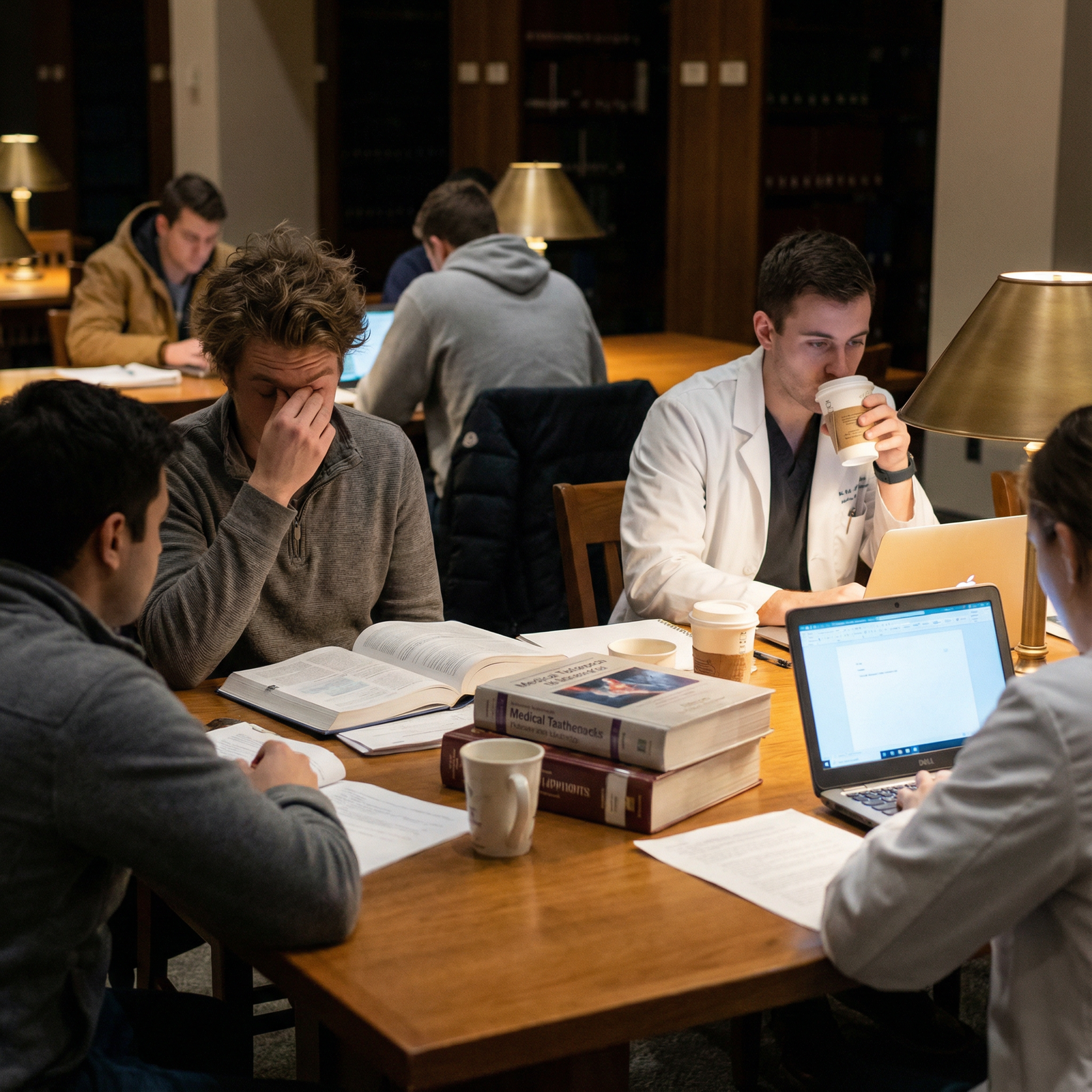
Chronic Workload, Exams, and Cognitive Overload
Medical school compresses a massive amount of information into a short timeframe. The demands include:
- Heavy lecture and lab schedules
- Continuous assessments, quizzes, and board exam preparation
- Clinical rotations with unpredictable hours
- Research, volunteering, leadership roles, and extracurriculars
This relentless workload often leads students to extend their study time late into the night, believing that “one more hour” will translate into better Academic Performance. In reality, the opposite often happens: as sleep declines, so does efficiency, recall, and accuracy.
Common consequences of insufficient sleep include:
- Slower reading speed and poorer retention
- More frequent mistakes in calculations or clinical reasoning
- Difficulty focusing during lectures or rounds
- Increased procrastination and ineffective “zombie studying”
The Culture of Overwork and Sleep Deprivation in Medicine
From early on, many students internalize a dangerous message: “Real doctors push through exhaustion.” This cultural narrative is reinforced by:
- Stories of residents working 24+ hour shifts
- Peers bragging about “pulling all-nighters” before exams
- Faculty or supervisors making offhand comments that normalize fatigue as a badge of honor
This mindset can:
- Pressure students to ignore their own boundaries
- Discourage seeking help for burnout or insomnia
- Normalize unsafe levels of fatigue during clinical responsibilities
Yet modern patient safety literature consistently shows that sleep-deprived clinicians are more prone to errors, impaired judgment, and lapses in attention. As a medical student, practicing sustainable habits now is an investment in your future patients’ safety as well as your own health.
Practical Sleep Optimization Strategies for Medical Students
Sleep Optimization is not about perfection; it’s about making realistic, consistent choices that protect your rest most of the time, even when life is busy. The goal is to create a foundation of healthy sleep habits you can adapt across pre-clinical years, clerkships, and beyond.
1. Build a Consistent, Realistic Sleep Schedule
Your circadian rhythm (internal body clock) thrives on regularity. When your sleep and wake times are predictable, your body:
- Falls asleep faster
- Achieves more restorative deep and REM sleep
- Wakes feeling more refreshed
Actionable steps:
- Pick a target sleep window (e.g., 11:30 p.m.–7:00 a.m.) that fits your typical class or clinic schedule.
- Keep wake time consistent 7 days a week, varying by no more than 1 hour when possible.
- During heavier rotations, protect a core sleep window (even if shorter) that remains stable—e.g., 12:30 a.m.–6:00 a.m. on call-free nights.
- If you must shift schedules (e.g., night shifts), adjust gradually by 60–90 minutes per day when you can.
2. Design a Sleep-Friendly Environment
Your sleep environment should signal “rest,” not “work.”
Optimize your bedroom by:
- Light control: Use blackout curtains or a sleep mask to block light—especially crucial if you’re sleeping after a night shift.
- Noise reduction: Earplugs, white noise machines, or fan noise can help mask disruptive sounds, especially in shared housing.
- Temperature: Aim for a cool room (around 65–68°F / 18–20°C), which supports better sleep quality.
- Comfort: Invest in a supportive mattress and comfortable pillow; these are long-term investments in your Student Well-being.
- Tech boundaries: Keep your bed for sleep and intimacy only. Avoid using it as your primary study spot if you can. Move your laptop and textbooks to a desk or another room.
Screen use:
Blue light from phones and laptops can delay melatonin release and push your sleep phase later. If you must use devices near bedtime:
- Use blue light filters or “night mode”
- Lower screen brightness
- Set a firm digital “cutoff” time 30–60 minutes before bed when possible
3. Create a Brief Pre-Sleep Wind-Down Routine
A consistent pre-bed routine trains your brain to shift from “clinical or study mode” into “rest mode.”
Options to consider (10–30 minutes total):
- Mindfulness or meditation: Apps like Headspace, Calm, or free YouTube meditations can reduce pre-sleep rumination about exams, rotations, or evaluations.
- Breathing exercises:
- Box breathing (inhale 4 seconds, hold 4, exhale 4, hold 4)
- Extended exhale breathing (inhale 4, exhale 6–8) to activate the parasympathetic nervous system
- Gentle stretching or yoga: Loosens muscles stiff from long hours at a desk or standing in the OR.
- Low-stimulation reading: Non-medical, non-stressful material—fiction, essays, or light non-fiction.
Keep this routine simple enough that you can do it even on your busiest nights.
4. Manage Caffeine, Alcohol, and Late-Night Eating
Several common coping tools for stress and fatigue can quietly sabotage your sleep:
Caffeine:
- Limit total intake to ~300–400 mg/day (about 3–4 small cups of coffee), depending on your sensitivity.
- Avoid caffeine within 6 hours of bedtime; for some, even early afternoon coffee can interfere with falling asleep.
- Watch hidden sources: energy drinks, pre-workout powders, some teas, and large chocolate servings.
Alcohol:
- While alcohol might help you fall asleep faster, it fragments sleep, suppresses REM, and leads to non-restorative rest.
- Avoid using alcohol as a “sleep aid,” especially during periods of high stress.
Meals:
- Heavy or spicy meals close to bedtime can trigger reflux and discomfort.
- Aim to finish larger meals 2–3 hours before sleep, with a light snack (e.g., yogurt, banana, or nuts) if you’re hungry later.
5. Use Naps Strategically, Not Habitually
Naps can be powerful tools—especially in medicine, where shifts and call nights are part of the reality.
Evidence-based nap tips:
- Keep naps short (20–30 minutes) to avoid deep sleep and grogginess upon waking.
- Aim for early-to-mid afternoon (e.g., 1–3 p.m.) to reduce interference with nighttime sleep.
- Use “coffee naps” strategically: drink a small cup of coffee, nap for 20 minutes, and wake as caffeine kicks in. This can be helpful before a late-night study session or an evening call shift.
Avoid long, late naps on a regular basis—they often worsen nighttime insomnia and further disrupt your circadian rhythm.
6. Recognize and Address Insomnia and Sleep Disorders
If you:
- Take more than 30 minutes to fall asleep most nights
- Wake frequently and struggle to get back to sleep
- Rely regularly on alcohol or sleep medications to initiate sleep
- Snore loudly, gasp for air, or feel extremely sleepy during the day despite “enough” hours in bed
…then you may be dealing with clinical insomnia, sleep apnea, or another sleep disorder.
In that case:
- Talk to a healthcare provider (student health, primary care, or psychiatry).
- Consider evaluation for underlying causes: depression, anxiety, circadian rhythm disorders, or untreated sleep apnea.
- Ask about evidence-based treatments like Cognitive Behavioral Therapy for Insomnia (CBT-I), which is often more effective and safer long-term than medications.
Sleep, Learning, and Academic Performance in Medical Education
Sleep is one of the most underrated study tools you have. For medical content—dense, detailed, and often conceptual—sleep is non-negotiable.
How Sleep Boosts Memory and Clinical Reasoning
During deep and REM sleep, the brain:
- Replays recent experiences and consolidates them into long-term storage
- Strengthens connections between related concepts (e.g., linking pathophysiology, pharmacology, and clinical signs)
- Prunes irrelevant details so that core patterns are easier to recognize later
For a medical student, this translates to:
- Better recall of lecture material and reading
- Improved performance on practice questions and exams
- Enhanced pattern recognition on the wards (e.g., recognizing a subtle evolving sepsis picture or atypical MI in a young patient)
Students who chronically cut sleep to gain extra study time often:
- Re-read the same material repeatedly without true retention
- Perform worse on standardized exams despite longer hours “studied”
- Feel mentally foggy during complex tasks or OSCEs
Evidence Linking Sleep and Academic Performance
Multiple studies across undergraduate and medical school populations show that:
- Students sleeping 7–9 hours per night on average have higher GPAs and better exam performance than peers who consistently sleep less.
- Consistent sleep schedules (not just total hours) correlate with better cognitive performance and fewer errors.
- Irregular weekday-weekend sleep patterns (“social jet lag”) impair attention and working memory.
For board-style exams (e.g., USMLE, COMLEX), quality sleep during the weeks leading up to the test is more important than a single all-nighter. Sleep supports not only recall but also test-taking endurance and emotional regulation under pressure.
Study Strategies That Respect Sleep
You can support both learning and rest by:
- Planning ahead: Create a realistic study schedule several weeks before major exams to avoid last-minute marathons.
- Using active learning: Practice questions, teaching concepts to peers, and spaced repetition (e.g., Anki) are far more efficient than passive rereading.
- Setting cutoffs: Commit to a nightly “study stop” time—e.g., 10:30 or 11:00 p.m.—after which you shift to your wind-down routine.
- Reviewing before bed: Lightly reviewing flashcards or high-yield summary sheets (not new, complex material) 30–60 minutes before sleep can enhance consolidation.
Mental Health, Support Systems, and Sustainable Success

When to Seek Mental Health Support
Even with good sleep habits, medical training is inherently stressful. If you notice:
- Persistent sadness, anxiety, or irritability
- Loss of interest in activities you previously enjoyed
- Difficulty concentrating, despite adequate sleep
- Thoughts of self-harm or feeling hopeless
- Ongoing insomnia or hypersomnia
it’s critical to seek help early.
Most medical schools offer:
- Confidential counseling services
- Access to psychologists, psychiatrists, or licensed therapists
- Peer support or wellness groups
- Workshops on burnout, resilience, and time management
Using these services is a sign of professionalism and insight—not weakness. Addressing Mental Health concerns improves both your Student Well-being and your ability to care for patients.
Building a Supportive Social and Academic Community
Strong social connections are associated with:
- Better coping with stress
- Lower risk of depression and anxiety
- Improved sleep quality
You can cultivate supportive relationships by:
- Forming study groups that emphasize shared learning and healthy boundaries (e.g., no all-nighters together)
- Checking in regularly with classmates about how they’re managing stress and sleep
- Participating in interest groups, wellness initiatives, or intramural activities
- Setting honest expectations with friends and family about your schedule, while still carving out protected time for meaningful connection
Share sleep-friendly strategies with your peers. If the culture around you glorifies exhaustion, you can model a different approach: working hard while still respecting your basic physiological needs.
FAQs: Sleep, Mental Health, and Academic Performance in Medical School
1. How many hours of sleep do medical students actually need?
Most adults, including medical students, function best with 7–9 hours of sleep per night. Some may feel well on 6.5–7 hours, while others truly need closer to 9. If you:
- Wake feeling rested
- Can focus throughout the day without heavy reliance on caffeine
- Don’t “crash” on weekends
…your sleep duration is probably adequate. If you’re regularly tired, irritable, or unfocused, you likely need more or better-quality sleep.
2. Is it ever okay to pull an all-nighter before an exam or OSCE?
All-nighters are almost always counterproductive. Staying up all night:
- Impairs attention, working memory, and decision-making—exactly what you need during exams
- Increases anxiety and emotional reactivity
- Reduces your ability to recall information you already know
If you’re behind, a better strategy is to study efficiently until a reasonable cutoff, get at least 5–7 hours of sleep, and do a focused review in the morning.
3. I’ve tried basic sleep tips, but I still can’t fall asleep. What should I do?
If you’ve consistently:
- Kept a regular sleep-wake schedule
- Reduced caffeine and screen time in the evening
- Created a comfortable sleep environment
and still struggle to fall or stay asleep for more than 3–4 weeks, consider professional help. A clinician can:
- Screen for anxiety, depression, or other underlying conditions
- Evaluate for sleep disorders (like insomnia or sleep apnea)
- Offer treatments like Cognitive Behavioral Therapy for Insomnia (CBT-I) or, when appropriate, short-term medication support
Don’t wait until insomnia severely impacts your Academic Performance or mood.
4. Can napping really improve my performance in med school?
Yes—short, planned naps can meaningfully improve alertness, mood, and reaction time. They are especially useful:
- After a poor night’s sleep
- Before evening study sessions
- During demanding clinical rotations
Stick to 20–30 minutes, ideally early afternoon. Longer or late-day naps can make it harder to fall asleep at night and may worsen insomnia.
5. How can I balance board prep, rotations, and getting enough sleep?
Balancing these demands requires proactive planning:
- Start board prep early (months in advance) with small, manageable daily goals.
- Use high-yield, active learning tools (Anki, practice questions) instead of endless passive review.
- During intense rotations, prioritize a minimum core sleep window and use short naps as needed.
- Protect at least one evening or block each week for rest and non-medical activities to support overall Student Well-being.
Ultimately, consistent, high-quality sleep is a competitive advantage—not a liability. Protecting your rest will support your Mental Health, sharpen your cognition, and help you grow into the kind of physician you set out to become.