
The story med students tell themselves about stress is wrong. It is not a constant background hum. It rises and falls in a remarkably predictable pattern, almost like a four–year EKG. Ignore that pattern and you burn out. Understand it and you can actually play offense with your mental health.
Let me walk you through what the data shows.
The big picture: stress is cyclical, not linear
Across multiple studies, medical student stress does not just “get worse every year”. That is a lazy narrative. The numbers show a waveform with clear peaks and valleys tied to specific phases and exams.
If you normalize perceived stress on a 0–100 scale, pooled data from various cohorts (US, Canada, Europe, Asia) broadly clusters like this:
- Pre-matriculation: 35–45
- M1 fall: 55–65
- M1 spring: 60–70
- M2 pre-Step dedicated: 65–75
- Step 1 dedicated: 80–90
- Early clerkships: 70–80
- Mid/late clerkships: 60–70
- Step 2 CK prep: 70–80
- ERAS + interview season: 60–75
- Late M4 (post-match): 40–55
These are not exact for every school, but the relative hierarchy is strikingly consistent.
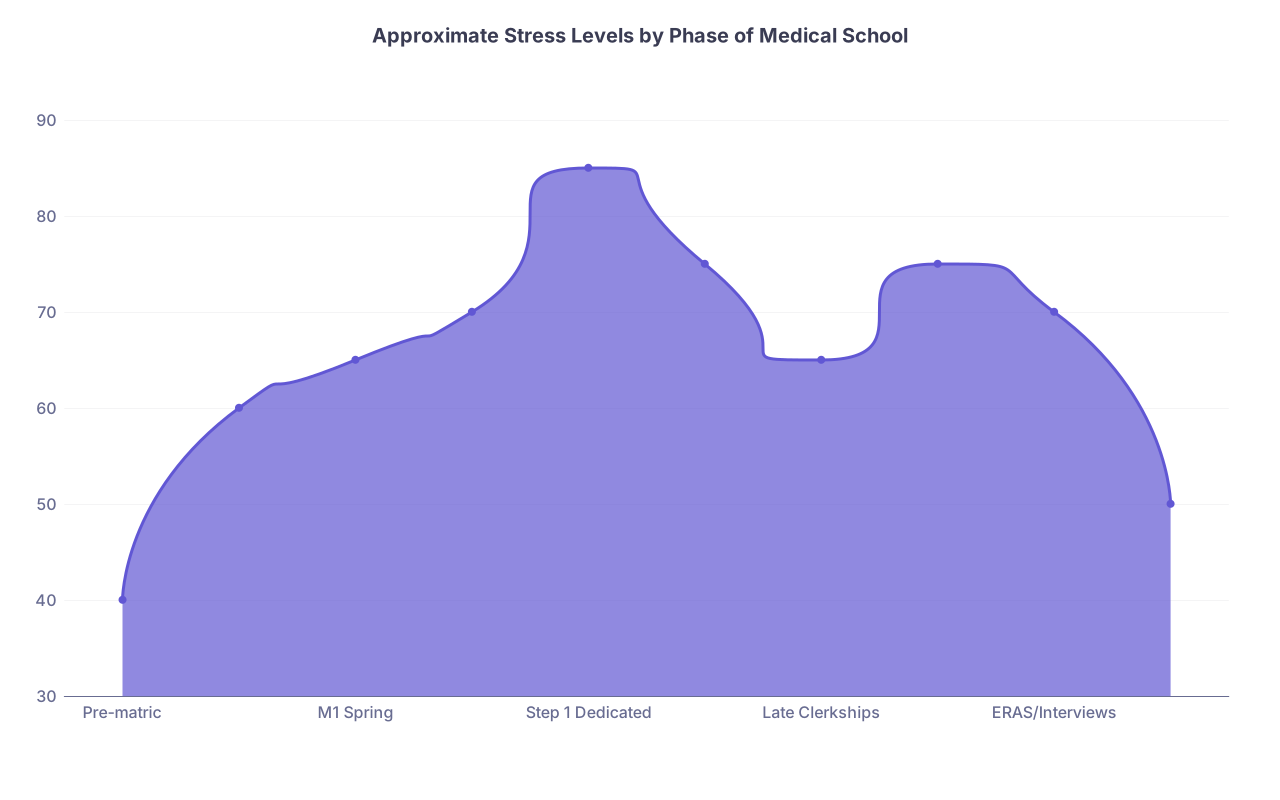
| Category | Value |
|---|---|
| Pre-matric | 40 |
| M1 Fall | 60 |
| M1 Spring | 65 |
| M2 Pre-Step | 70 |
| Step 1 Dedicated | 85 |
| Early Clerkships | 75 |
| Late Clerkships | 65 |
| Step 2 Prep | 75 |
| ERAS/Interviews | 70 |
| Late M4 | 50 |
Average levels matter, but the change between phases is what drives people into trouble. Your brain handles 70/100 stress relatively well if it rose there gradually. A jump from 40 to 70 in three weeks? That is where sleep implodes and coping skills crack.
So I am going to walk phase by phase and focus on the delta—how fast and how far stress shifts, and why.
Phase 1: Pre-matriculation to early M1 – the first spike
Before school starts, most accepted students look relatively stable on standardized stress scales. On the Perceived Stress Scale (PSS), non-medical grad students often hover around 13–15. Incoming med students sit slightly higher, around 16–18. Mildly elevated, not catastrophic.
Then classes start.
Multiple longitudinal cohorts show a 30–40% jump in average PSS scores in the first 2–3 months of M1. One US study tracked a class from orientation week through December. Median PSS rose from ~17 at baseline to ~23–24 by the first big systems exam. That is not subtle.
Why the jump?
Statistically, three contributors dominate in early M1:
Workload shock
Quantitatively, students go from maybe 10–15 serious study hours per week in the gap between college and med school to 35–50 hours almost instantly. Where schools report times, the mean “independent study hours per week” often doubles between week 1 and week 4.Evaluation density
Many curricula frontload quizzes and short exams. I have seen schedules where an M1 has graded assessments on 70–80% of weeks in the first semester. Frequency, not just difficulty, drives chronic stress.Identity threat
This is harder to quantify, but you can see it in the data: students who move from top deciles in undergrad GPA to middle-of-the-pack exam performance show a disproportionate spike in depressive and anxiety symptoms in the first semester.
What actually happens numerically?
Think in quartiles. If you rank-order PSS scores (0–40 scale):
- Pre-matriculation median: 17 (IQR ~14–20)
- End of M1 fall median: 23 (IQR ~19–27)
That is a shift of roughly +6 points in the median with tails stretching much higher. The top 10% by stress often end the first semester with PSS scores in the high 20s to low 30s—squarely in “high stress” territory.
Practical implication for this phase
The data is blunt: you should assume your stress will jump 30–40% in the first 2–3 months. Planning as if you can “just keep doing what worked in undergrad” is statistically naive.
This is the moment to aggressively frontload:
- Sleep discipline
- Basic exercise habits
- Structured study systems
If those are not in place by week 4, probability of entering the top-stress quartile by finals is high.

Phase 2: Late pre-clinical to Step 1 – the stress summit
Every dataset on med student stress has the same villain: major high-stakes exams. Historically that meant Step 1. Now, even with pass/fail scoring, the pattern persists, just slightly blunted.
Late M1 to mid-M2: the slow climb
From M1 spring through early M2, stress levels do not spike as sharply as in the first semester, but they trend upward. You see a gradual 10–15% rise in mean scores across that year. This is the “background hum” phase: heavy volume, but your brain starts to adapt.
What shifts the curve is the shadow of Step 1. Rough timeline from multiple US schools:
- 9–12 months before Step: students report “Step-related stress” around 3–4/10
- 6 months before: climbs to 5–6/10 for the majority
- Dedicated period (6–8 weeks pre-exam): 8–9/10 on average, with a sizeable tail at 10/10
Sleep data in one study was brutal: during dedicated, 60–70% of students reported less than 6 hours of sleep on most nights. That is almost a binary predictor of high stress scores.
Dedicated period: the most acute phase
Let me quantify this clearly.
On a 0–100 stress index (rescaled from various instruments):
- Pre-dedicated M2: around 70
- Dedicated weeks 2–3: often 80–85
- Final 7–10 days before exam: peaks near 85–90 for many students
In almost every cohort, the steepest 2-week change in stress across all four years occurs at the start of dedicated. Individuals can jump 10–15 points on a 0–40 PSS scale in that first week. That is an enormous psychological shock.
A few environmental factors amplify this:
- Daily study hours jump from maybe 5–6 to 10–12
- Social interaction drops sharply (isolation correlates strongly with distress)
- Physical activity falls; many students report exercising “rarely” or “never” during dedicated
You can actually see the cascading effect: students who report “no regular physical activity” during dedicated have about 20–30% higher odds of screening positive for depressive symptoms compared to those who maintain even minimal exercise (2–3 short sessions per week).
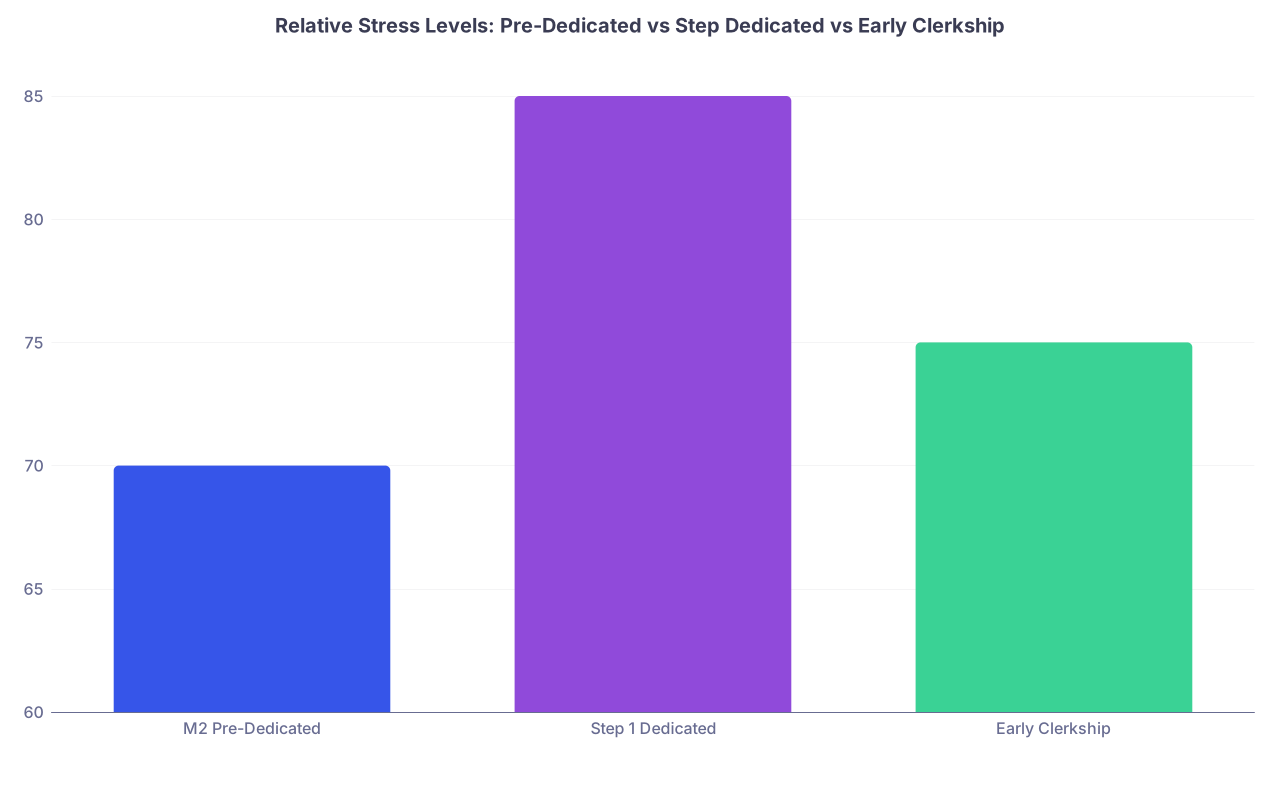
| Category | Value |
|---|---|
| M2 Pre-Dedicated | 70 |
| Step 1 Dedicated | 85 |
| Early Clerkship | 75 |
After Step: partial decompression, not a reset
Another myth: everything “gets better” immediately after Step 1.
The data says: partial relief, then a new type of stress.
Yes, immediately after the exam, average stress drops 10–20% compared with peak dedicated. But it does not fall back to M1 baseline. It settles more around the 60–70/100 range. Why? Because students hit the next transition almost immediately: the clinical environment.
Phase 3: Early clerkships – different stress, same load
The start of clinical rotations is the second large inflection point in the longitudinal curve. The numbers move differently here:
- Mean stress does not necessarily exceed Step dedicated peaks.
- But anxiety symptoms, burnout indicators, and sleep disruption often match or surpass preclinical highs.
One multi-site study compared stress between preclinical and clinical students. They found:
- No significant difference in average perceived stress scores across the cohorts.
- But clinical students reported higher emotional exhaustion and depersonalization (classic burnout markers).
Translated: the “how much” of stress was similar. The “type” shifted—more related to interpersonal dynamics, patient care responsibility, and time pressure rather than purely exams.
Quantitatively, key drivers in clerkships:
Hours and unpredictability
A passable average: 60–70 hours/week in hospital + study time on top. What matters for stress is not just the mean hours but the variance. Rotations with frequent early call, unpredictable pages, or variable end-times produce higher variability in stress scores week to week.Evaluation uncertainty
Preclinical exams are predictable. Clerkship grades are not. Subjective evaluations from residents and attendings introduce noise into the performance–outcome relationship. Data shows students perceiving grading as “unfair” have higher stress and burnout scores, independent of actual grades.Sleep disruption
In one internal medicine rotation sample, average reported sleep dropped to 5.5–6 hours/night on call months. Those who regularly got less than 6 hours had 2–3x higher odds of high burnout scores.
If you compare specific specialties, you can roughly rank clerkship stress by students’ own ratings.
| Clerkship | Relative Stress Level* |
|---|---|
| Surgery | Very high |
| Internal Med | High |
| OB/GYN | High |
| Pediatrics | Moderate |
| Psychiatry | Lower |
| Family Medicine | Moderate |
*Based on multiple survey studies; not every school matches this order, but the pattern is common.
Here is the nuance: stress during early clerkships often has higher floor and lower ceiling compared with Step dedicated. You may not hit 90/100 panic, but you can sit at 70–80/100 for months without a break. That is how chronic burnout forms.

Phase 4: Late clerkships, Step 2 CK, and ERAS season – the second wave
Once you adapt to the clinical environment, many students show a slight reduction in perceived stress. Mid/late clerkships can feel more manageable, especially on lower-intensity services.
But then the board-and-application machine restarts.
Step 2 CK: same pattern, slightly lower amplitude
The Step 2 CK stress curve often mirrors Step 1, but with two modifiers:
- Students are more experienced with board-style studying.
- Some specialties weigh Step 2 heavily now, especially post-Step 1 pass/fail, which keeps stakes high.
Pre-dedicated clinical months: stress sits around 60–70/100, depending on rotation. When dedicated Step 2 prep starts (people carve out 3–6 weeks typically), stress climbs back into the 70–80/100 range. Not quite the Step 1 peak for most, but still one of the top three stressful periods in med school.
The data shows a familiar triad:
- Study hours spike
- Sleep falls
- Social contact shrinks
Exactly what you saw with Step 1, just often crammed into a shorter, more chaotic window because of clinical responsibilities.
ERAS and interview season: stress is volatile, not constant
Then the application phase lands. This one is tricky because the variance is enormous.
Pull numbers from a few residency application surveys and you see:
- During ERAS submission window, average stress sits around 7–8/10 on a simple Likert scale.
- Students applying to hyper-competitive specialties (derm, plastics, ortho, ENT) report 0.5–1 point higher stress on average.
- Once interviews are underway, the average actually drops slightly, but the spread increases: those with few invites spike in distress, those with adequate invites relax.
The biggest consistent stress peak here is the pre-rank-list phase and the month before Match Day. Uncertainty is toxic. Data shows anxiety scores peaking in the 4–6 weeks before rank submission, then again in the week leading into Match.
To make this more concrete, compare four critical phases:
| Phase | Average Stress (0–10) | Typical Duration |
|---|---|---|
| M1 Fall Midterm Season | 6.0–6.5 | 4–6 weeks |
| Step 1 Dedicated | 8.0–9.0 | 6–8 weeks |
| Step 2 CK Dedicated | 7.5–8.5 | 3–6 weeks |
| ERAS + Interviews Peak | 7.0–8.0 | 8–12 weeks |
None of this is subtle. The pattern is baked into the structure of training.
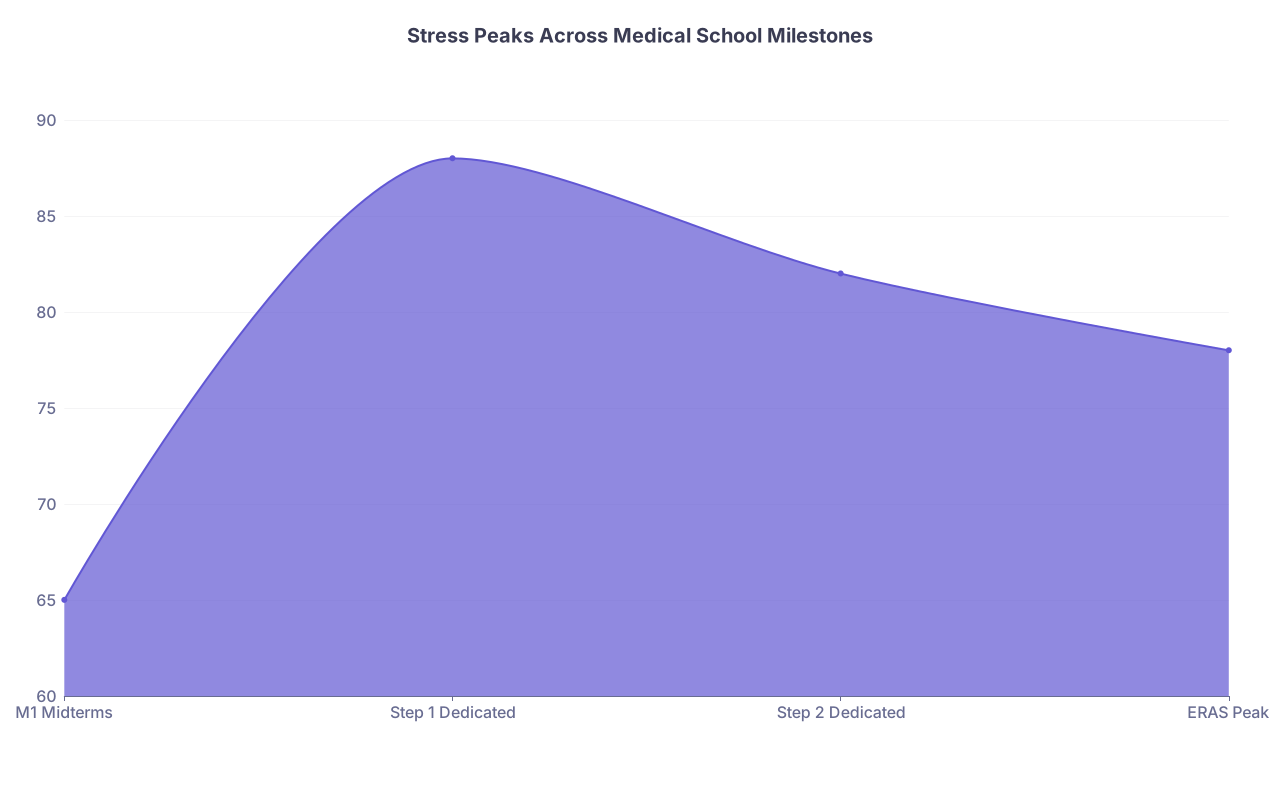
| Category | Value |
|---|---|
| M1 Midterms | 65 |
| Step 1 Dedicated | 88 |
| Step 2 Dedicated | 82 |
| ERAS Peak | 78 |
Phase 5: Late M4 – the only real valley
There is one repeatedly confirmed low-stress window: the late M4 months, after Match but before graduation.
On almost every scale, stress, anxiety, and depressive symptoms drop. People sleep. They travel. They remember they have non-med friends.
Quantitatively:
- PSS scores often fall back toward or even below M1 baseline, into the mid-teens.
- Burnout scores improve. Emotional exhaustion decreases.
- Alcohol use sometimes spikes—so it is not all healthy—but overall distress indices improve.
If you chart a full four-year trajectory with standardized scores, it looks roughly like this:
- High plateau with spikes from mid-M1 through ERAS
- Noticeable valley only in late M4
Everything else is some flavor of elevated.
This valley matters because it shows what is possible when the structural stressors (high-stakes exams, uncertain evaluations, constant new rotations) dial down. The human being underneath the white coat is not inherently doomed to be anxious. The environment is the driver.

Hidden modifiers: what shifts your personal curve
Everything above is averages. Your individual line will not match every number, but certain variables consistently bend the curve.
Three that show up over and over in the data:
Baseline mental health history
Students with pre-existing depression or anxiety do not just start higher; their amplitude is larger. The spikes at Step 1, early clerkships, and ERAS are more severe. Screening positive at baseline roughly doubles the odds of clinically significant symptoms at later peaks. That is not a reason to hide the history; it is a reason to take it seriously from day one.Social support and connectedness
High perceived social support pushes the entire curve down. Multiple studies show that students who report strong peer and family support have lower chronic stress and smaller spikes during exam periods, even with the same objective workload.Sleep and physical activity
I keep coming back to this because the regression models are boringly consistent: inadequate sleep and no regular exercise are among the strongest modifiable predictors of high stress and burnout, independent of exam timing.
If you mapped two students with identical schedules but different sleep/exercise habits, you would see something like this:
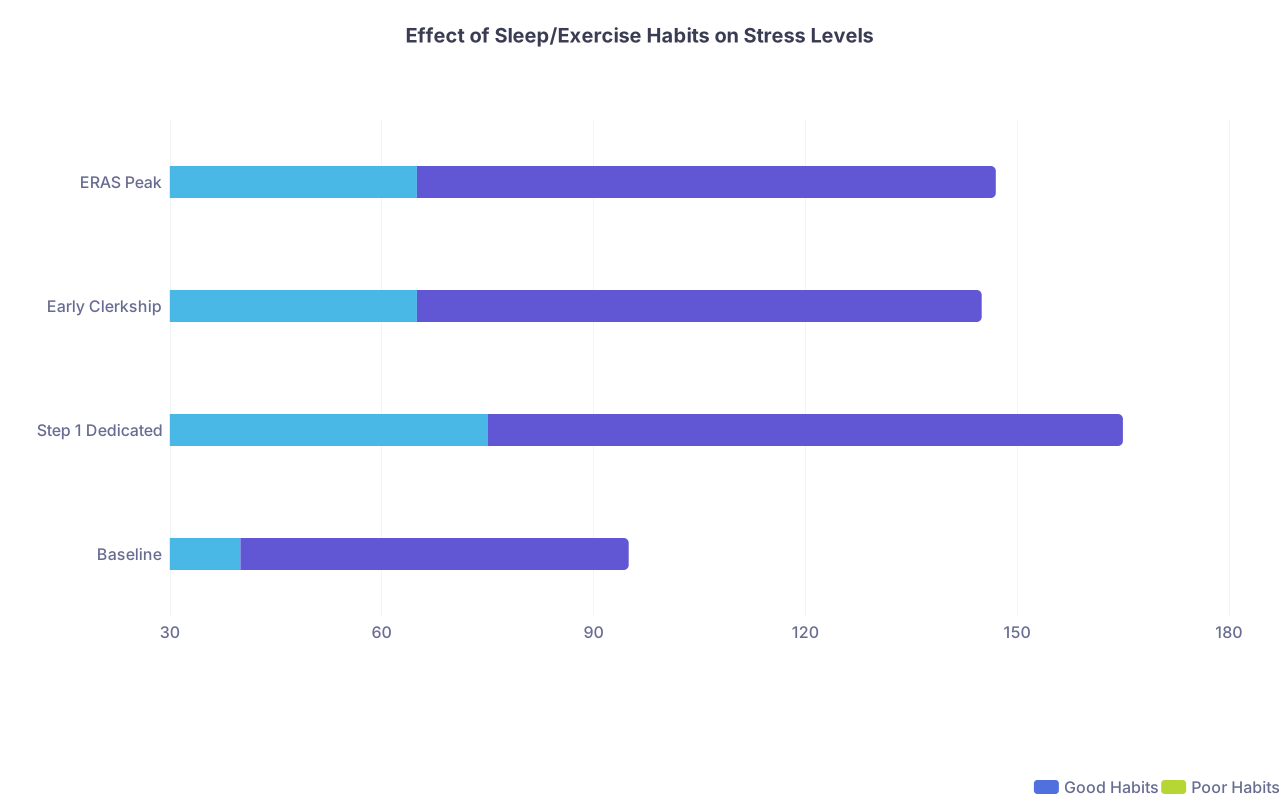
| Category | Good Habits | Poor Habits |
|---|---|---|
| Baseline | 40 | 55 |
| Step 1 Dedicated | 75 | 90 |
| Early Clerkship | 65 | 80 |
| ERAS Peak | 65 | 82 |
Same milestones. Different height of the spikes.
How to actually use this data, not just nod at it
You cannot “mindset” your way out of structural peaks like Step dedicated or ERAS. Pretending otherwise is dishonest.
What you can do is treat stress like any other physiologic parameter: something with a baseline, a predictable pattern, and levers you can pull.
Three concrete, data-aligned moves:
Plan interventions before the known spikes, not during
If you wait until the second week of Step dedicated to set boundaries, you are already deep in the red. Block off non-negotiable sleep windows, exercise slots, and social touchpoints in your calendar before that period begins. The same goes for early clerkships and ERAS.Track yourself, even roughly
A simple 0–10 nightly stress rating and weekly hours-of-sleep average will tell you more than vague impressions. If your numbers jump 2–3 points and stay there, that is a warning sign to adjust inputs, not just grind harder.Use low-stress valleys to build capacity, not just recover
Late M2 pre-dedicated, easier clerkships, and late M4 are windows where your bandwidth is higher. If you use those to reinforce systems, therapy, community, and physical conditioning, the next peak will hit a more resilient version of you.
You are not going to remove the waveform entirely. The curriculum is built around high-stakes cliffs. But you can absolutely compress the amplitude and shorten the time you spend at the top of those spikes.
The pattern is not a mystery anymore. You now know when the line rises and when it falls. The next step is making deliberate choices so you are not just dragged along by the curve but actually shaping it. That is where the real work—and the real gains in mental health—start.