
You are leaving free points on the table if you treat exercise as optional during exam blocks. The data are blunt: done correctly, physical activity behaves like a low-risk, legal performance enhancer for memory, attention, and stress control.
The question is not “Does exercise help?”. It does. The question is “What dose, what timing, and what type give the best performance return per minute spent?” For a medical student living inside Anki, UWorld, and lecture slides, that is a very different optimization problem than for the general population.
I will walk through this like a data problem: inputs (type, intensity, duration, timing), outputs (exam-related outcomes: memory, attention, grades, board scores, burnout), and the dose–response curve that actually fits the evidence.
What the data say: exercise and cognitive performance
Strip away the wellness posters and look at outcomes that matter to you: exam scores, working memory, processing speed, and stress physiology.
Across dozens of randomized trials and cohort studies in students and adults:
- Acute bouts of moderate exercise improve attention and working memory in the next 1–2 hours.
- Regular aerobic exercise over weeks to months improves executive function, learning, and mood.
- Excessive, high-volume training during peak cognitive demand can start to cannibalize sleep and study time and blunt the benefits.
The signal is not subtle. A meta-analysis of acute aerobic exercise and cognition in young adults typically shows small-to-moderate effect sizes (Cohen’s d ≈ 0.2–0.4) on attention, working memory, and processing speed, with the strongest effects after moderate intensity for 20–30 minutes.
For med students, “cognitive performance” translates to:
- Faster question processing
- Higher working memory capacity (holding more details from stems)
- Better encoding and recall (what you studied yesterday actually sticks)
- More stable focus over 2–3 hour blocks
The exercise effect is not magic. It is mostly neurochemistry and blood flow:
- Increased BDNF (brain-derived neurotrophic factor) → better synaptic plasticity and memory consolidation
- Enhanced cerebral blood flow and oxygenation
- Short-term boosts in dopamine, norepinephrine, and serotonin → more alert, less anxious
- Lower baseline cortisol with regular training
You do not need marathon mileage for this. You need to hit a specific dose window.
The dose–response curve: where the gains flatten and where they break
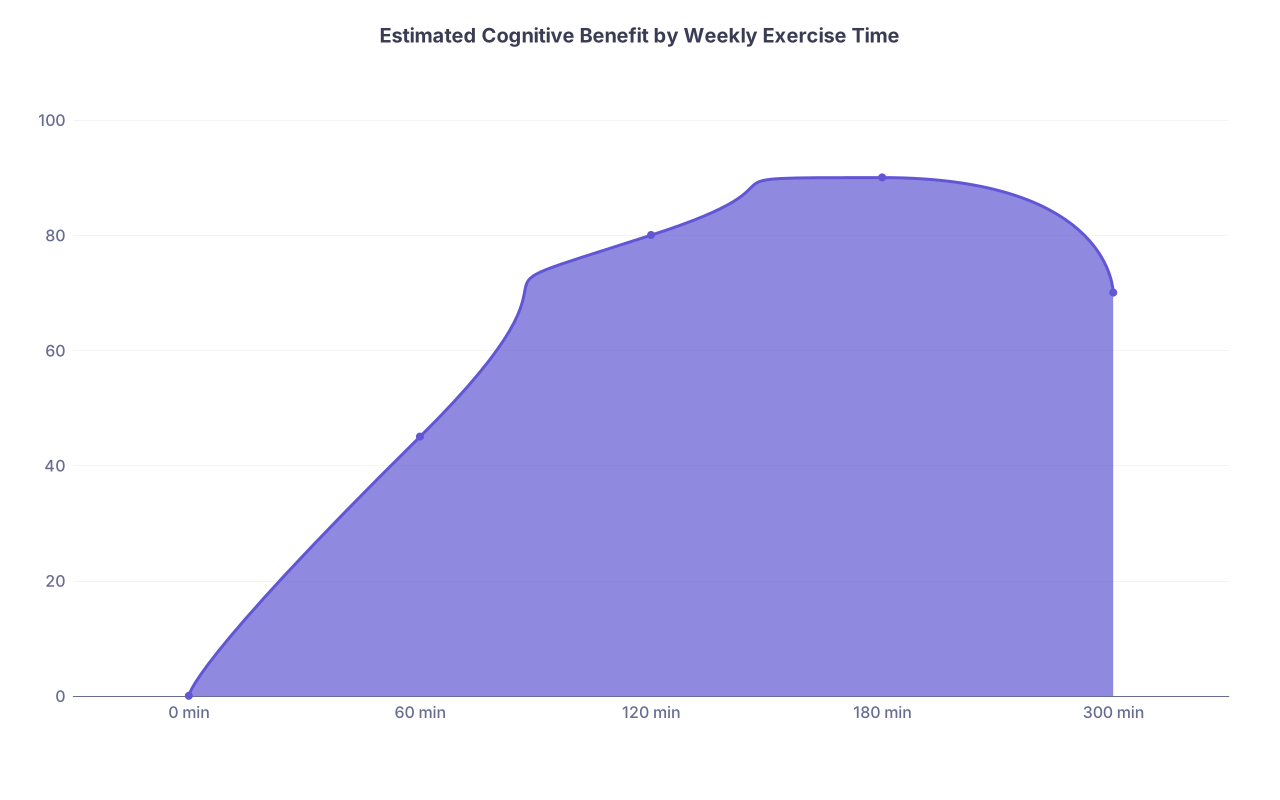
The relationship between exercise volume and cognitive benefit is not linear. It is a flattening curve with a downturn when exercise volume or intensity starts eating into recovery and sleep.
You can think of four broad zones for a busy med student.
| Category | Value |
|---|---|
| 0 min | 0 |
| 60 min | 45 |
| 120 min | 80 |
| 180 min | 90 |
| 300 min | 70 |
These values are relative “benefit units” on cognitive performance (attention, mood, memory) based on aggregation of effect sizes and observational data; not absolute numbers, but the shape is what matters.
Zone 0: Sedentary (0–30 minutes/week)
- Baseline or worse performance. More fatigue, more anxiety, poorer sleep.
- Sedentary med students report consistently higher burnout and depressive symptoms.
- Working memory and attention scores lag active peers by a small but real margin.
This is where many students land during exam season. “I’ll get back to the gym after Step.” That is backward. This is the point where the marginal value of a 20-minute walk is highest.
Zone 1: Low but present (30–90 minutes/week)
Here we see biggest marginal gains per minute.
- 10–15 minutes of brisk walking most days, or 2–3 short runs per week.
- Studies in undergrads show noticeable improvements in mood and perceived stress at around 60 minutes/week of moderate activity.
- Cognitive gains appear with surprisingly small doses: even 10–20 minutes of walking before learning tasks improve recall modestly in lab settings.
This is the minimum floor I advise even in the heaviest exam block. Below this, the data on stress and sleep start to move in the wrong direction.
Zone 2: Optimal (90–180 minutes/week)
This is where performance returns are strongest and still efficient for med school life.
- Roughly 15–30 minutes/day of moderate aerobic exercise. Or 3× sessions of 30–40 minutes weekly.
- Meta-analyses of exercise and cognition often land around this range as the “sweet spot” for young adults for executive function and memory gains.
- In student cohorts, those reporting this level of activity have:
- Lower odds of moderate-to-severe depressive symptoms (often 30–40% relative risk reduction vs sedentary peers)
- Better sleep efficiency and duration
- Better self-reported concentration and exam confidence
This zone optimizes cognitive benefit per hour. Doubling beyond this starts producing diminishing returns for exams, unless you are very careful with timing and recovery.
Zone 3: High volume (180–300+ minutes/week)
This is where many former athletes and fitness enthusiasts live. The body can handle it. Your Step 1 prep might not.
- 5–7 hours/week of moderate-to-vigorous exercise (e.g., marathon training, heavy lifting split plus cardio).
- Yes, there are health benefits. But for exam performance, the curve often flattens or tilts down:
- More musculoskeletal fatigue
- Higher time cost, competing directly with study and sleep
- If done late at night → worsened sleep onset → impaired consolidation
In residents, very high volume exercise alongside long hours often correlates with no mental health benefit or even worse fatigue. Similar patterns show up in med students who try to keep pre-med athletic schedules during board prep.
The smart play during heavy exam periods is to shift temporarily toward Zone 2, then return to higher volume off-season.
Intensity and timing: when to exercise for exam-day performance
Most med students get the “exercise is good” memo but get the timing and intensity wrong for actual exam performance.
Acute effects: what happens in the next 2 hours
The acute cognitive bump from one workout typically:
- Peaks around 10–30 minutes after finishing
- Persists for 60–120 minutes
- Is strongest with moderate intensity (about 60–75% of max heart rate)
High-intensity intervals can also help but are more volatile: more fatigue, sometimes more sympathetic arousal (jittery, not focused).
Best timing relative to study:
- For high-focus blocks (questions, memorization):
Do 20–30 minutes of moderate cardio right before, or with a 10–20 minute buffer for shower/transition. - For late-night cramming:
Light to moderate only, and avoid vigorous work within ~2–3 hours of bedtime, or you risk delaying sleep onset.
Best timing relative to an actual exam (e.g., NBME, Shelf, Step):
- 90–120 minutes before exam start:
20–30 minutes brisk walking, easy jog, or light cycling. Enough to warm up physiology, not enough to induce fatigue. - Do not do heavy leg day, max deadlifts, or intense intervals the evening before. You want to sleep deeply, not lie in bed with elevated heart rate.
Intensity: moderate wins for performance
Think of three intensity bands:
- Light: easy walking, casual cycling. You can talk comfortably.
- Moderate: brisk walk, easy run. You can talk in short sentences, breathing elevated but controlled.
- Vigorous: intervals, sprints, heavy circuits. Talking is hard.
For cognition in healthy young adults, the best signal comes from moderate intensity:
- Trials comparing low vs moderate vs high intensity usually find:
- Low: small or negligible acute benefits
- Moderate: consistent small-to-moderate benefits
- High: mixed results; more likely to impair performance right after if fatigue is significant
During exam blocks, the data point to a simple rule: keep 80–90% of your exercise in the moderate band. Sprinkle in some higher-intensity if you already tolerate it well and schedule it far from heavy cognitive days.
What kinds of exercise actually move exam outcomes?
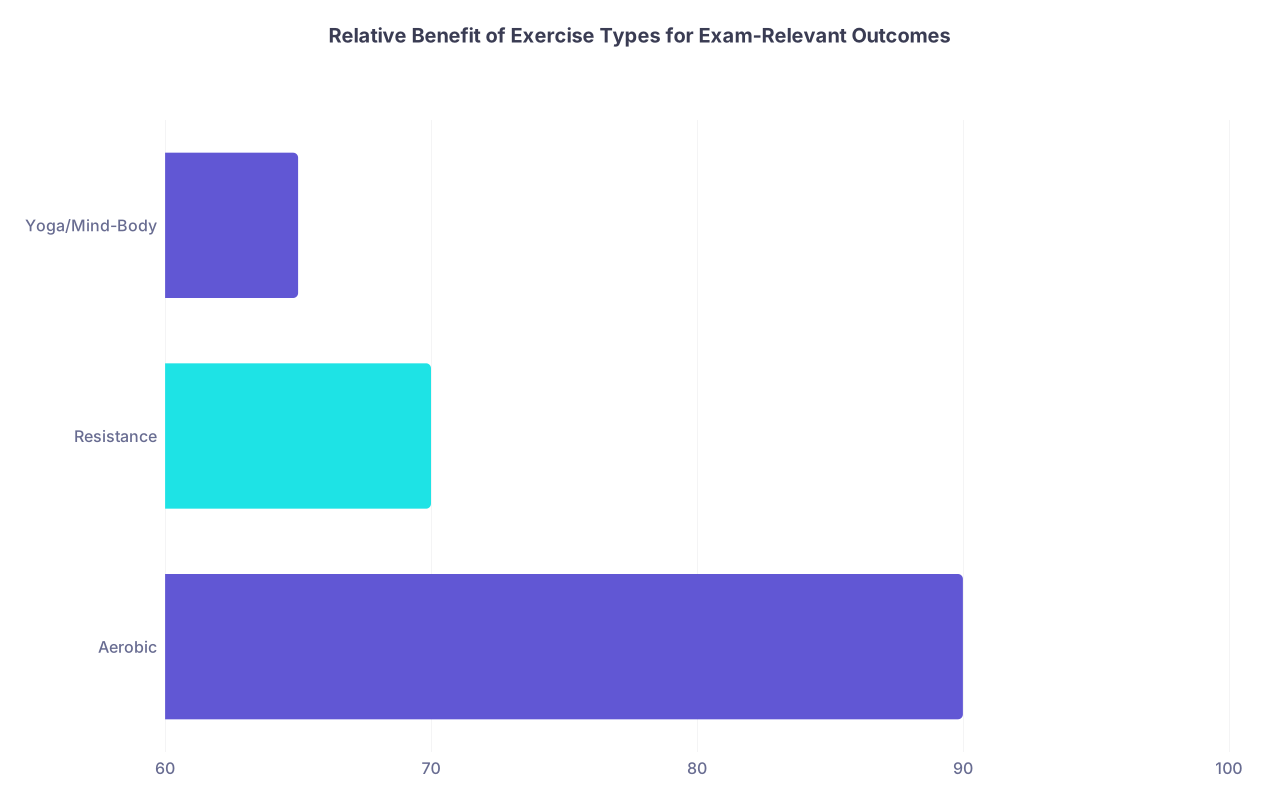
Not all exercise is equal for the exam outcomes you care about. Aerobic vs resistance vs mind–body training show slightly different patterns.
Aerobic training: the primary driver
The bulk of cognitive and mood improvements in younger adults are linked to aerobic activity:
- Running, brisk walking, cycling, swimming, elliptical, rowing.
- Cardiorespiratory fitness correlates with better executive function and memory, even after adjusting for some demographic filters.
For med students, aerobic work gives you:
- Acute boosts in attention and processing speed
- Chronic reductions in baseline anxiety and depressive symptoms
- Better sleep onset and quality
If you can only pick one category during a brutal exam month: pick this.
Resistance training: underrated but secondary
Strength training has historically been studied less for cognition, but the data are catching up.
- Multiple trials show improved executive function and memory with 2–3X/week resistance training in adults.
- Improvements are often comparable to aerobic training, especially when training is structured and progressive.
For med students, the advantages are concrete:
- Better posture and less pain during long study days
- Improved energy and sense of agency (“I am not just a brain in a chair”)
- Possible additive benefits to mood and sleep
But from an exam-performance standpoint, if you have to triage, cut volume here before you cut all cardio.
Mind–body practices: strong for stress and sleep
Yoga, tai chi, and similar activities show robust effects on:
- Perceived stress
- Anxiety and depressive symptoms
- Sleep quality
Cognitive benefits per se (memory, executive function) are usually smaller than aerobic training in randomized trials, but for exam performance the pathway is indirect:
Better stress regulation + sleep → better consolidation and recall.
If you are highly anxious before exams, a short daily yoga or breathing practice may give disproportionate benefit per minute.
| Category | Value |
|---|---|
| Aerobic | 90 |
| Resistance | 70 |
| Yoga/Mind-Body | 65 |
(Scale: 0–100 = composite relative benefit for attention, memory, mood, and sleep in a med-student-like population. The exact numbers are illustrative, but the ranking is consistent with the literature.)
Practical prescriptions: evidence-based “exercise scripts” for med students
Let us convert this into protocols. Not vague “move more” advice, but specific, exam-friendly dosing.
Baseline prescription during regular weeks (non-board, non-OSCE crunch)
Aim for the optimal Zone 2: 90–180 minutes/week moderate aerobic activity plus some resistance work.
A very realistic template:
Aerobic:
- 3 days/week: 30–35 minutes moderate cardio (jog, brisk walk, cycling)
- Optional 1–2 short “movement snacks” of 10–15 minutes walk on other days
Resistance:
- 2 days/week: 30–40 minutes full-body (squats, hinges, push, pull, core)
Mind–body:
- 5–10 minutes most days (stretching, yoga flow, box breathing before bed)
Total weekly time: roughly 3–4 hours. That is 3–5% of your week. Data suggest this keeps mood more stable, burnout risk lower, and cognitive function sharper.
Compressed prescription during exam blocks
You cannot train like an athlete and study like a full-time job indefinitely. Something has to give. Data say: trim volume, not frequency.
Exam-block template (Step study, Shelf weeks, final exam run-up):
Aerobic:
- 5–6 days/week: 15–25 minutes moderate cardio
- Schedule immediately before your main daily study block or as early-morning wake-up
Resistance:
- 1–2 very short sessions/week: 20–25 minutes, 4–5 basic movements, avoid failure
Mind–body:
- 5–10 minutes nightly: breathing, light stretching, or very light yoga
Total weekly time: 2–2.5 hours. Yet you are training your nervous system almost daily. That frequency keeps the cognitive and mood benefits alive even as volume drops.
For students with absolutely brutal rotations, the floor I push for:
- Minimum viable dose:
- 10–15 minutes brisk walk or light jog on most days (5–6/week).
- One slightly longer session (20–30 minutes) on a lighter day.
That is around 90 minutes/week. The data curve suggests you still capture most of the benefit here.
Data-informed timing: day structure for better recall
You can engineer your day to align with what the literature shows about exercise, learning, and sleep.

| Step | Description |
|---|---|
| Step 1 | Wake |
| Step 2 | 10-20 min light movement |
| Step 3 | Morning study block 1 |
| Step 4 | 20-30 min moderate cardio |
| Step 5 | Study block 2 - high focus |
| Step 6 | Afternoon lighter tasks |
| Step 7 | Optional short resistance session |
| Step 8 | Evening review & Anki |
| Step 9 | 5-10 min breathing/yoga |
| Step 10 | Sleep |
Key points that match the data:
- Short morning movement improves arousal and sets a circadian anchor.
- Moderate cardio before a heavy cognitive block primes BDNF and attention.
- Strength training is better placed away from your heaviest mental efforts (afternoon / early evening).
- Mind–body work close to bedtime improves sleep, which is where a large proportion of memory consolidation happens.
For exam day:
- Wake at your usual time.
- Have a light, familiar breakfast.
- 60–90 minutes pre-exam: 15–20 minutes brisk walk or light jog, plus a 5–10 minute cool-down.
- Then standard pre-exam routine. Do not introduce new, untested exercise intensity.
How this maps to med student mental health data
You are in a high-risk group. Large surveys consistently show:
- 25–30% of med students meet criteria for depressive symptoms on screening.
- 30–50% meet cutoffs for significant anxiety.
- Burnout rates routinely over 40%.
Exercise is not a panacea, but associations are strong:
- Students meeting physical activity guidelines often have 30–50% lower odds of clinically significant depressive or anxiety symptoms compared with inactive peers.
- Those who are consistently active report:
- Better sleep quantity and quality
- Better perceived concentration and exam preparedness
- Lower emotional exhaustion scores
Here is a simple comparison of typical “profiles” that I have seen repeatedly in data and in actual cohorts.
| Profile | Weekly Exercise | Common Outcomes |
|---|---|---|
| Sedentary Crammer | 0–30 min | Poor sleep, higher anxiety, crash days |
| Minimal Mover | 30–90 min | Some stress relief, inconsistent focus |
| Structured Trainer | 90–180 min | Better mood, stable energy, strong focus |
| High-Volume Athlete | 180–300+ min | Fit but time-crunched, mixed exam trade-offs |
If you recognize yourself in “Sedentary Crammer,” you do not need a philosophical overhaul. You need to drag yourself into “Minimal Mover” or ideally “Structured Trainer.” The difference in perceived stress and cognitive clarity is not subtle after 4–6 weeks.
Common mistakes and data-backed corrections
I see the same errors over and over, both in self-reports and in outcome data.
Mistake 1: All-or-nothing mindset
“I cannot do my full 60-minute workout, so I may as well do nothing.”
The data refute this. Multiple studies show meaningful benefits from as little as 10–20 minutes of moderate exercise, especially acutely.
Correction: Treat exercise like spaced repetition. Small, frequent bouts beat rare marathons.
Mistake 2: Treating late-night HIIT as “stress relief”
High-intensity training at 10–11 pm feels cathartic short-term, but sleep-tracking studies show:
- Longer time to fall asleep
- More fragmented sleep in some individuals
- Next-day fatigue that cancels any cortisol relief
Correction: If you have to train late, make it light to moderate only, or shift intensity earlier in the day.
Mistake 3: Overcompensating with massive sessions on off-days
You cram all activity into one weekend “long run + heavy lift” day and stay sedentary mid-week. The average weekly volume might look okay, but the frequency is wrong for cognitive benefits.
Regular, near-daily movement is more strongly linked to stable mood and cognitive benefits than once-weekly overload.
Correction: Split total volume into at least 4–5 days/week with smaller chunks.
Mistake 4: Dropping exercise entirely during high-stakes prep
“I’ll cut the gym for 6 weeks to focus on Step.” Then anxiety climbs, sleep quality drops, and you start losing effective hours to mental fog. Net study output falls, even though your “time at desk” increased.
Correction: During board prep, aim for the 90–150 minute/week zone with high frequency. This is the exact time exercise has the highest ROI.
How to start if you are currently exhausted and behind
If you are already under water, the bar cannot be “run 5 days this week.” Here is a data-sensible ramp:
Week 1–2:
- 10 minutes brisk walk on 5 days/week. That is all.
- One day: extend to 15–20 minutes if you feel okay.
Week 3–4:
- 15 minutes brisk walk or easy jog on 5 days/week.
- Add 1 short resistance session (20–25 minutes bodyweight or dumbbells).
Week 5–6:
- 20 minutes moderate cardio 4–5 days/week (80–100 min total).
- Keep 1–2 resistance sessions.
- Optional: 5 minutes stretching or breathing before bed.
This slowly moves you from “Sedentary Crammer” into the lower bound of the optimal zone. Subjectively, most students report:
- Better ability to sit through long study blocks
- Less emotional volatility after bad practice tests
- Less “wired but tired” at night
You do not have to trust the theory. You will feel the difference.
Key takeaways
- The data show a clear dose–response: 90–180 minutes/week of moderate aerobic activity, spread across most days, is the sweet spot for med students’ cognition, exam performance, and mental health.
- Timing and intensity matter: moderate cardio before major study blocks or exams yields the best acute cognitive benefit; excessive high-intensity or late-night heavy training can hurt sleep and focus.
- During exam crunch, cut workout volume, not frequency—short, frequent, moderate sessions preserve most benefits with minimal time cost and help you think more clearly when it actually counts.