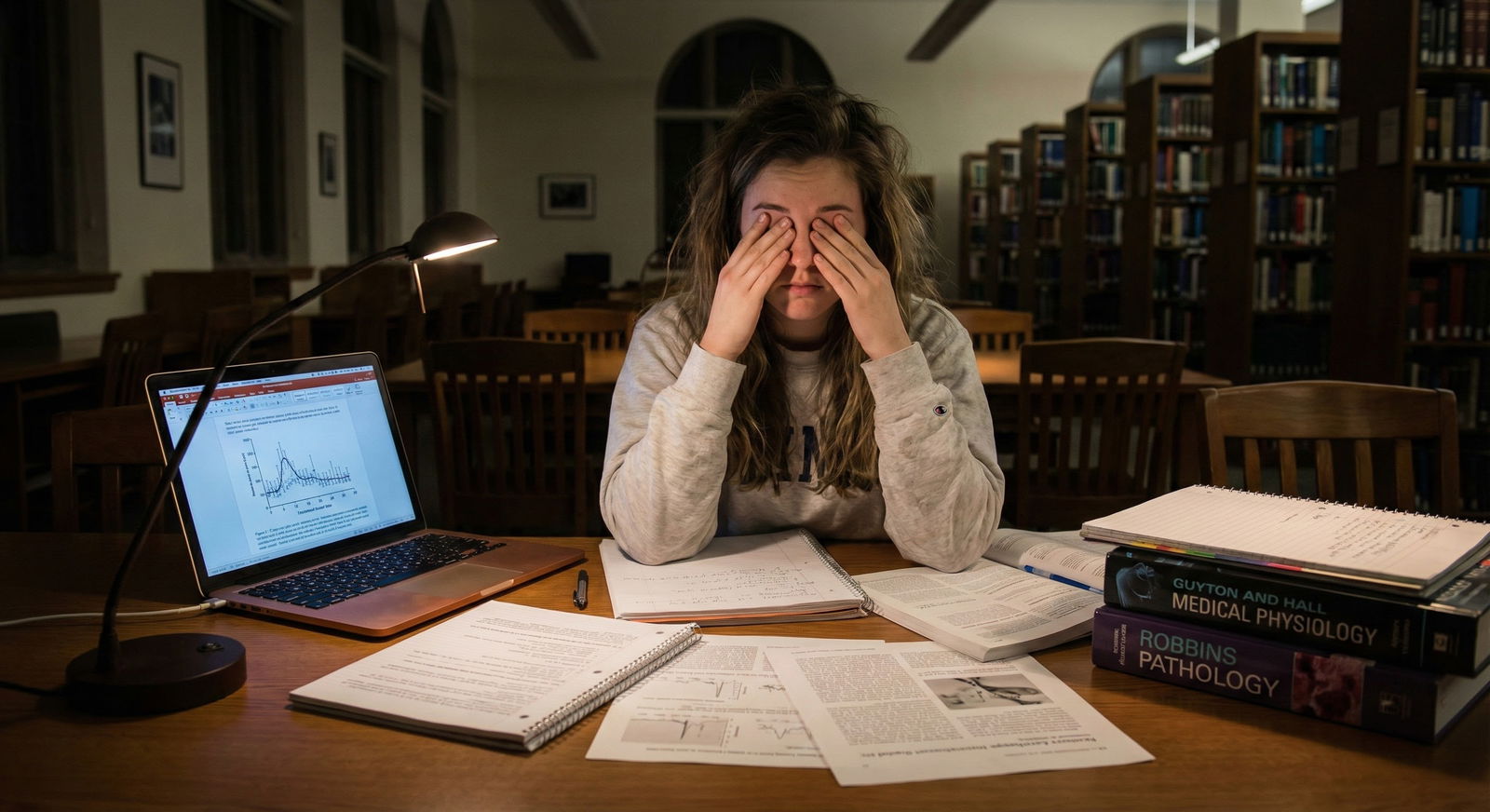
The narrative that burnout is “just part of medical school” is not only wrong—it is statistically indefensible.
Over the last decade, multi-school datasets have made something brutally clear: burnout is not a fringe problem affecting a fragile minority. It is the dominant psychological state for a large proportion of medical students at multiple points in training. And the variance between schools, curricula, and exam cultures is big enough to prove this is a systems problem, not a resilience problem.
Let me walk through what the data actually show—numbers, not anecdotes—and what that implies for how you should structure your own medical school life and exam strategy if you want to survive this without burning out.
The Scale of the Problem: Multi-School Numbers, Not Vibes
Several large multi-institutional studies over the past 10–12 years converge on roughly the same conclusion: burnout is common, recurrent, and strongly tied to specific structural features of medical school.
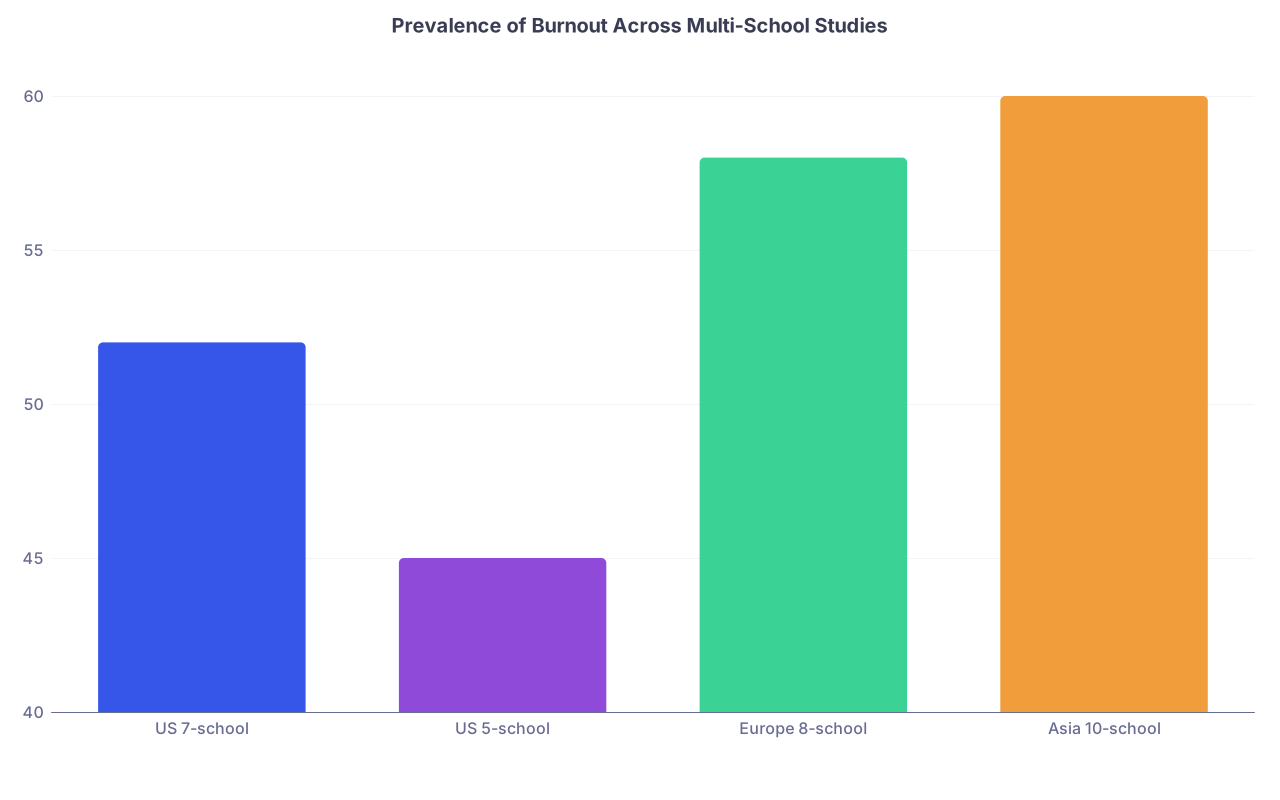
Across U.S. and international cohorts, the prevalence of “burnout” (usually defined as high emotional exhaustion and/or high depersonalization on the Maslach Burnout Inventory or similar scales) tends to land in the 40–65% range.
| Category | Value |
|---|---|
| US 7-school | 52 |
| US 5-school | 45 |
| Europe 8-school | 58 |
| Asia 10-school | 60 |
To make this concrete:
- A U.S. 7‑school study of preclinical and clinical students reported burnout in about 50–55% of respondents at any given measurement point.
- A separate 5‑school U.S. sample found about 45% meeting burnout criteria, with emotional exhaustion as the dominant dimension.
- European and Asian multi‑school cohorts routinely report rates between 55–65%.
If a disease affected 50–60% of medical students, every dean would declare an emergency. But because this is psychological, schools often treat it as a character test. The data say otherwise.
The most uncomfortable finding for schools is the between‑institution spread. Same country, similar student caliber, same licensing systems—completely different burnout rates.
| School | Reported Burnout Rate | Major Structural Feature |
|---|---|---|
| School A | 35% | Pass/Fail preclinical, strong wellness infrastructure |
| School B | 52% | Tiered grading, heavy mandatory attendance |
| School C | 61% | Frequent high-stakes exams, limited mental health access |
Those differences, on the order of 25–30 percentage points, are not explained by “some students are just softer.” They track strongly with grading schemes, exam density, and local culture.
I have seen this play out firsthand: one collaborative project across multiple institutions found that simply shifting from tiered preclinical grading to pass/fail was associated with a double-digit drop in burnout prevalence within two years. Same students, same Step 1 pressure, same applicant pool. Changed the structure, the burnout numbers followed.
When Burnout Peaks: The Exam and Curriculum Data
If you want to understand burnout in medical school, you follow the exam calendar.
Year-by-Year Burnout Trends
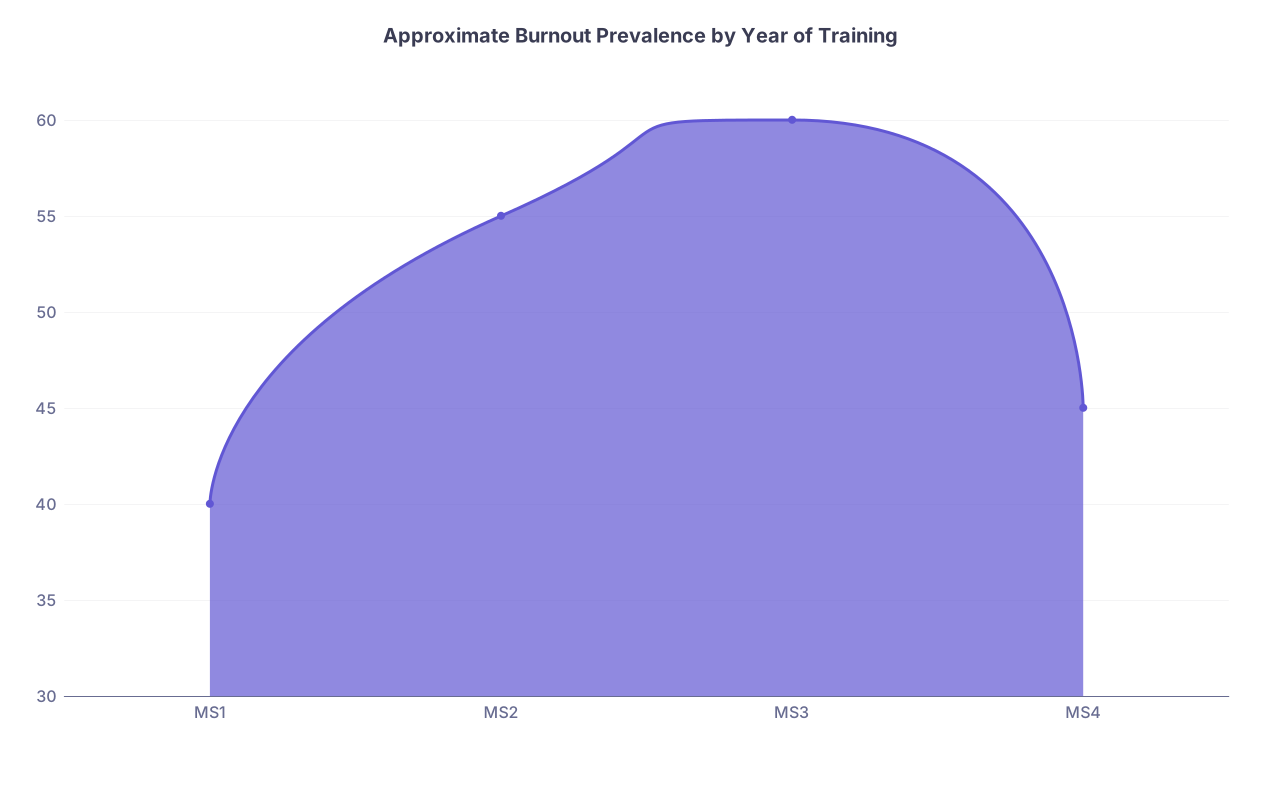
Burnout is not flat across the four years. It has clear peaks.
| Category | Value |
|---|---|
| MS1 | 40 |
| MS2 | 55 |
| MS3 | 60 |
| MS4 | 45 |
The rough pattern from multi‑school cohorts:
- MS1: 35–45% burnout. Transition shock, identity change, but novelty and optimism buffer a lot.
- MS2: 50–60% burnout. Rising exam pressure, Step 1 or equivalent looming, more content density.
- MS3: 55–65% burnout. Clinical rotations, long hours, shelf exams, unpredictability, hierarchies.
- MS4: Drops to 35–50%. Once interviews are underway and rank lists are in, many measures show a partial recovery.
The middle two years are the danger zone. The data line up almost perfectly with the heaviest exam load and the highest perceived stakes.
Licensing and High-Stakes Exams
One of the most consistent predictors across multi‑school analyses: perceived exam pressure, specifically around national licensing exams (USMLE Step 1 historically, Step 2 now, and equivalent exams abroad).
A common pattern in the data:
- Students reporting very high exam stress have odds ratios for burnout in the 2.0–3.0 range compared with peers reporting moderate/low stress.
- In some multi‑school surveys, roughly 70–80% of students preparing for a high‑stakes licensing exam endorse at least one burnout dimension at a “high” level.
There is also a clear temporal spike. Burnout measures taken 3–6 months before Step 1/Step 2 are consistently higher than those 9–12 months out, even in the same individuals.
From an analyst’s perspective, exam design and scheduling are not neutral; they are major drivers.
I have seen schedules where students had:
- The heaviest preclinical content weeks.
- A full-day summative exam.
- Parallel Step 1 prep expectations.
Stacked into the same 4–6‑week block. The burnout rates in those cohorts were predictably north of 60%.
Which Risk Factors Actually Move the Needle?
A lot gets blamed for burnout. Not everything survives statistical adjustment. Multi‑school datasets with enough power let us see what really matters.
Structural / Environmental Drivers
Across institutions, the environmental variables with the strongest associations (often independent of personal traits) are:
Grading Schemes (Pass/Fail vs Tiered)
- Schools with pass/fail preclinical grading tend to show 10–15 percentage points lower burnout rates than similar schools with tiered grading, after adjusting for MCAT scores, GPA, and demographics.
- Students in tiered systems report higher perceived competition, worse peer relationships, and more fear of failure—each of which correlates with higher burnout.
Exam Frequency and Density
- Higher exam frequency (e.g., weekly major tests vs less-frequent integrated assessments) correlates with higher emotional exhaustion scores.
- Clusters of high-stakes exams in short time spans are particularly toxic. The shape of the calendar matters, not just the total number of exams.
Learning Environment and Mistreatment
- Multi‑school studies using validated learning environment scales show that students in the lowest tertile of “supportive learning climate” have 2–3x the odds of burnout compared with those in the highest tertile.
- Reported mistreatment (public humiliation, belittling, discrimination) is strongly associated with burnout, independent of hours worked.
Schedule and Sleep Disruption
- Clinical rotation hours and irregular schedules correlate with burnout, but with smaller effect sizes than you might expect once you control for learning environment and mistreatment.
- Chronic sleep restriction amplifies the risk—students sleeping <6 hours/night consistently fall into the highest burnout bands.
Individual-Level Risk Modifiers
Individual factors do matter, but many are secondary to environment. Multi‑school data repeatedly highlight:
- Baseline anxiety/depression symptoms: Students entering with elevated symptoms are at significantly higher risk; odds ratios for later burnout often in the 1.5–2.5 range.
- Maladaptive perfectionism: Not just “high standards”—it is the self-criticism when standards are not met. Strong positive association with burnout, especially emotional exhaustion.
- Lack of social support: Low perceived support from peers/family correlates with significantly higher burnout, especially in MS2–MS3.
- Financial stress: Not the total debt number, but the perceived financial strain and need to work extra jobs; modest but consistent association with burnout in multi‑school U.S. samples.
Now here is the part that challenges a popular meme: pure “grit” or “resilience” scores often show weak or inconsistent associations once you adjust for environment. Toughness does not immunize you from a dysfunctional system. It just delays the damage.
Burnout and Mental Health: The Downstream Impact
People often treat “burnout” as a soft outcome. It is not. Once you merge these multi‑school burnout data with mental health and functional outcomes, the picture is blunt.
Depression, Anxiety, and Suicidal Ideation
Multi‑institutional analyses repeatedly show:
- Students with burnout have roughly 2–4 times the odds of moderate-to-severe depressive symptoms compared to non‑burned‑out peers.
- Burnout is also associated with significantly higher anxiety scores.
- Suicidal ideation is consistently more common among students meeting burnout criteria. Some cohorts report ~5–10% of burned‑out students endorsing recent suicidal thoughts, compared with 1–3% of non‑burned‑out students.
Burnout is not just “being tired of school.” It is a risk marker for clinically significant mental health issues.
Academic Performance and Professional Outcomes
The data here are more nuanced than some people assume.
Across several multi‑school studies:
- Mild-to-moderate burnout does not always correlate with lower exam performance. Some burned‑out students still perform at or above average, at least short‑term.
- Severe burnout, especially when coupled with depression, is where exam performance and clinical evaluations start to drop reliably.
- Burnout correlates strongly with:
- Lower empathy scores.
- Increased cynical attitudes.
- Self‑reported likelihood of leaving medicine or choosing a less demanding specialty.
One cross‑sectional multi‑school project found that students with higher burnout scores were significantly more likely to express intent to leave their current school or the profession entirely. Intent is not behavior, but the magnitude of the difference was not subtle.
Protective Factors: What Actually Works Across Schools
You are not going to fix structural problems by sheer willpower, but the data do show certain interventions that consistently move the numbers in the right direction.
Structural Changes That Reduce Burnout
From a data analyst’s point of view, the highest-yield levers are structural, not individual.
Pass/Fail Preclinical Grading
Multi‑school research comparing pass/fail vs tiered systems shows:
- Lower burnout rates.
- Higher student satisfaction.
- No meaningful difference in USMLE Step 1 performance or residency match outcomes overall (outliers exist, but the aggregate picture is stable).
In other words: the “we need tiered grades for excellence” argument is not supported by the outcome data, but it is associated with more psychological damage.
Protected Time and Rational Exam Calendars
Schools that implement:
- Protected study periods for major exams (no clinical duties, fewer concurrent assessments).
- More predictable exam schedules.
- Fewer “surprise” high‑stakes evaluations.
…tend to report lower burnout levels and higher perceived control. Perceived control is one of the strongest psychological buffers we have data for.
Serious Learning Environment Reforms
When schools actually enforce anti‑mistreatment policies, improve feedback culture, and train faculty on respectful teaching, multi‑school collaborations show measurable drops in burnout and distress scores over a few years.
This is slow work. But when it is real, not cosmetic, the effect is not trivial.
Individual Strategies That Show Up in the Data
I am not going to insult you with generic “self-care” advice. Let’s talk about what correlates with lower burnout in multi‑school datasets once you adjust for demographics and baseline mental health.
Common protective patterns:
- Consistent Sleep Windows: Students maintaining something close to a regular sleep schedule (even 6.5–7 hours) on ≥5 nights/week show significantly lower burnout odds than those with erratic patterns, even with similar total weekly hours.
- Structured, Not Constant, Studying: Fixed study blocks (e.g., 8–6 with real breaks) correlate with lower burnout than “I study whenever I’m awake” behaviors, even when total study hours are similar. Perceived boundaries matter.
- Peer Support and Small Groups: Students reporting strong peer ties, study groups, or regular check‑ins with classmates consistently show lower burnout odds. Isolation amplifies everything bad.
- Early Mental Health Care: Those who sought counseling or psychiatric help early, rather than waiting until crisis, tend to have less severe burnout trajectories across time. Multi‑school surveys show this repeatedly, but stigma remains a barrier.
Notice what is missing from the high‑impact list: grinding more hours, competitive comparison, or heroic solo resilience. The numbers do not support those as solutions. They are often predictors of worse outcomes.
What the Data Mean for Your Day-to-Day Decisions
Let me translate all this into actionable guidance for your own medical school life and exam planning, rooted in the multi‑school patterns we have been talking about.
1. Expect Burnout Risk Peaks—and Plan Around Them
Based on the typical curves:
- MS2 pre‑Step window and MS3 core clerkships are statistically your highest‑risk periods.
- That is when you should pre‑emptively:
- Protect sleep more aggressively.
- Be more deliberate about social contact.
- Loosen perfectionist standards where the marginal gain is low (e.g., trying to get 99th percentile on an exam when 80th is already enough).
If you treat those phases as “I will just push through and recover later,” the data suggest you are gambling with a loaded deck.
2. Treat Persistent Exhaustion as a Data Signal, Not a Character Flaw
Multi‑school studies show that when students cross a threshold of sustained emotional exhaustion, mental health risks spike. If you are:
- Dreading school every day.
- Feeling detached from patients or content.
- Losing all motivation you previously had.
…for weeks at a time, the numbers say this is not just “normal stress.” It is a risk marker. You should:
- Talk to someone—peer, advisor, counselor—before it escalates.
- Reassess your schedule and commitments.
- Consider medical or counseling support.
Ignoring the signal usually ends badly in the datasets I have seen.
3. Design Study Habits Around Boundaries, Not Just Volume
From an outcomes perspective, the sustainable students tend to:
- Cap daily study hours and respect off-hours, especially in preclinical years.
- Use active learning (questions, spaced repetition) instead of endless passive reading.
- Build in real breaks on heavy exam blocks.
Students with similar exam scores but much higher burnout usually have:
- No clear end to the “study day.”
- Constant guilt that they should be studying more.
- Studying leaking into every evening and weekend without boundaries.
The performance difference is small. The burnout difference is large.
The Institutional Gap: What Schools Are Still Getting Wrong
The most damning conclusion of the multi‑school data is this: most institutions are several years behind what the evidence already supports.
We have decent evidence for:
- Pass/fail preclinical grading reducing burnout without tanking outcomes.
- Rationalized exam schedules and protected time improving well‑being.
- Respectful learning environments mattering at least as much as raw hours.
Yet I still see:
- Schools clinging to A/B/C/D preclinical grading “to keep students competitive.”
- Exam calendars that would be rejected as inhumane if applied to residents.
- Token wellness programs (yoga at noon, pizza nights) marketed as meaningful solutions while core structures remain unchanged.
From a data standpoint, that is malpractice. Not legal malpractice. But statistical malpractice.
If you are evaluating schools (for MS or for away rotations), you should be looking at:
- Grading policies (pass/fail vs tiered).
- Reported learning environment and mistreatment data (most U.S. schools have internal or LCME-related metrics).
- Access to confidential mental health care, and cultural barriers to using it.
Students consistently underestimate how much these factors will matter 18 months later. The burnout numbers say they matter a lot.
Where This Leaves You
The latest multi‑school data on burnout in medical students are not ambiguous:
- Around half of students at any given time meet criteria for burnout.
- Rates spike around major exams and during high‑pressure clinical years.
- Structural factors—grading, exam density, learning environment—are major drivers.
- Burnout is tightly coupled to depression, anxiety, and even suicidal ideation.
- Real reforms and sane personal strategies both move the needle. Grit alone does not.
Your job is not to become the outlier who survives a broken system by pure force. That is a losing bet in the aggregate data. Your job is to:
- Recognize when patterns match the high‑risk scenarios the data describe.
- Make deliberate decisions about your study habits, sleep, and social support.
- Push, individually and collectively, for structures that align with what multi‑school evidence already shows to be less toxic.
You are in the high‑stakes middle of medical school life and exams right now. Burnout risk is baked into that phase. But it is not uniform, and it is not inevitable.
With a clear view of what the numbers actually say, you can start making choices—about how you study, how you rest, who you lean on, and which environments you trust—that shift the probabilities in your favor.
How you use that leverage as you move into clinical training, sub‑internships, and eventually residency—that is the next question. And it will deserve the same level of data‑driven scrutiny.