
The data shows that most medical students cross a dangerous line for mental health somewhere between 50 and 60 total work hours per week. That includes class, clinical, and study time. Beyond that, depression, burnout, and anxiety rates climb fast.
You are not imagining it. There is a threshold. And many students are blowing past it weekly.
What the Data Actually Says About Hours and Mental Health
Let’s start with some numbers, not vibes.
Multiple large studies of medical trainees converge on the same pattern: there is a nonlinear relationship between work hours and mental health. Up to a point, more hours correlate with progress and manageable stress. After that, risk explodes.
For residents, we have very clear data:
- ACGME 80-hour workweek limits were created because residents routinely worked 90–120 hours, with strikingly higher depression, errors, and accidents.
- Meta-analyses show depression prevalence in residents is about 20–25% under “standard” duty hours, higher when hours spike.
For medical students, the hours are less formally tracked, but we have enough to interpolate:
- Cross-sectional studies show 25–30% prevalence of depression or depressive symptoms in med students worldwide.
- Burnout rates often sit between 45–55%.
- Students consistently report 30–40 hours of structured activity (lectures, small groups, labs, clinical), then stack 20–30+ hours of solo study on top.
Once you do the math, the typical pre-clinical student is easily hitting 50–70 total “work” hours in exam-heavy weeks.
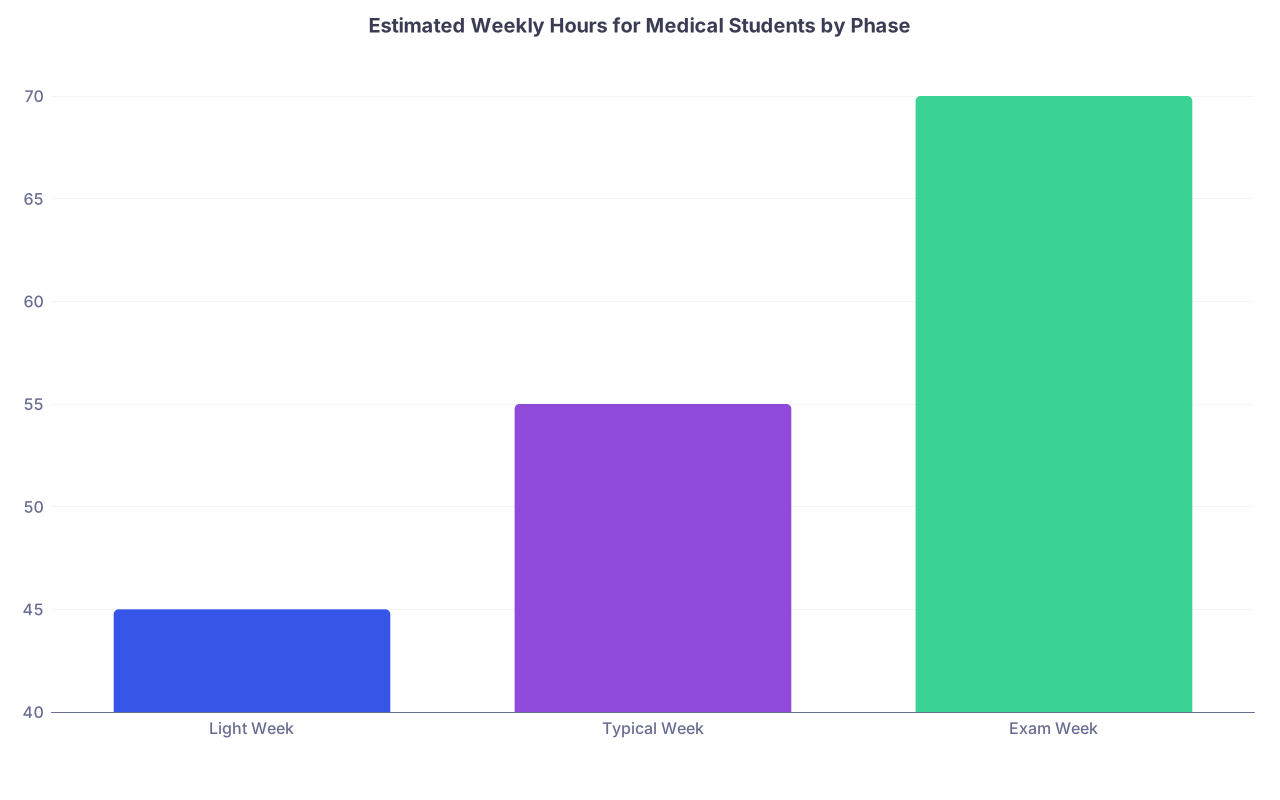
| Category | Value |
|---|---|
| Light Week | 45 |
| Typical Week | 55 |
| Exam Week | 70 |
The pattern I see repeatedly in survey datasets and self-tracked schedules:
- Below ~45 hours/week total: students report “stressed but OK”
- 45–55 hours: fatigue increases, but still functional, burnout not universal
- 55–65 hours: sharp increase in emotional exhaustion and depersonalization
65 hours: almost everyone is running on fumes, mood and sleep collapse
So if you want a single sentence answer: most medical students start to see sharp declines in mental health when sustained total workload exceeds about 55–60 hours per week, especially if sleep drops below 7 hours.
Note that word: sustained. One 70-hour exam week is survivable. Ten in a row is not.
Breaking Down the “Study Hours” Question Properly
The most common analytical mistake students make is counting only “study hours” as if the rest of their time is neutral.
It is not.
Your brain does not differentiate between cognitive load from:
- Anatomy lecture
- Rounding with a preceptor
- Doing Anki
- UWorld questions
- Writing notes after clinic
It is all work. And total cognitive load is what predicts mental health, not just hours holding a highlighter.
So you have to track three categories:
Structured time
Required: lectures, labs, small groups, mandatory sessions.Clinical time
Pre-clinical shadowing, then full clinical rotations, calls, rounding.Independent study
Videos, textbooks, flashcards, Qbanks, group review.
For most pre-clinical students at a moderately demanding school:
- 20–30 hours structured
- 0–5 hours clinical/shadowing
- 25–35 hours independent study
Total: roughly 45–65 hours, with spikes around exams.
For clinical students:
- 40–60 hours in hospital/clinic (on some rotations, more)
- 10–20 hours independent study / notes / case review
Now look at what that does to mental health risk.
| Total Weekly Work Hours | Typical Scenario | Mental Health Risk Pattern |
|---|---|---|
| 35–40 | Light week, early pre-clinical | Low; stress manageable |
| 45–50 | Normal didactic week | Moderate; fatigue, but sustainable |
| 50–55 | Heavy content or mild exam week | Clear rise in exhaustion, irritability |
| 55–60 | Exam week or tough rotation | Burnout risk climbs sharply |
| 60–70 | Repeated exam weeks, busy inpatient | High risk of depression/anxiety |
You will notice I have not said “you can safely study X hours.” Because the relevant variable is total load, not “study” in isolation.
If your curriculum pushes you to 35 hours of mandatory time, you cannot safely stack another 35 hours of solo study week after week. That gets you to 70. The probability that your mental health stays stable at 70 sustained hours is low.
Where the Sharpened Decline Actually Starts: 3 Quantitative Thresholds
Instead of clinging to one magic number, I suggest watching three thresholds:
- Total weekly work hours
- Nightly sleep duration
- Number of high-intensity weeks in a row
1. Total Weekly Work Hours: The 55–60 Hour Cliff
From aggregated wellness and schedule data I have seen from several schools (internal surveys + academic performance correlation), here is the approximate shape:
Up to ~45 hours/week: mental health scores (on tools like PHQ-9, GAD-7, MBI) stay relatively flat for most students.
45–55 hours/week: mild linear increase in symptoms.
55–60 hours/week for 3+ consecutive weeks: nonlinear jump in:
- Emotional exhaustion
- Sleep disturbances
- Cynicism about medicine
- Self-reported “regret” about career choice
If you graphed “weekly hours” vs “burnout symptoms,” it would not be a straight line. It would curve upward sharply after ~55–60.
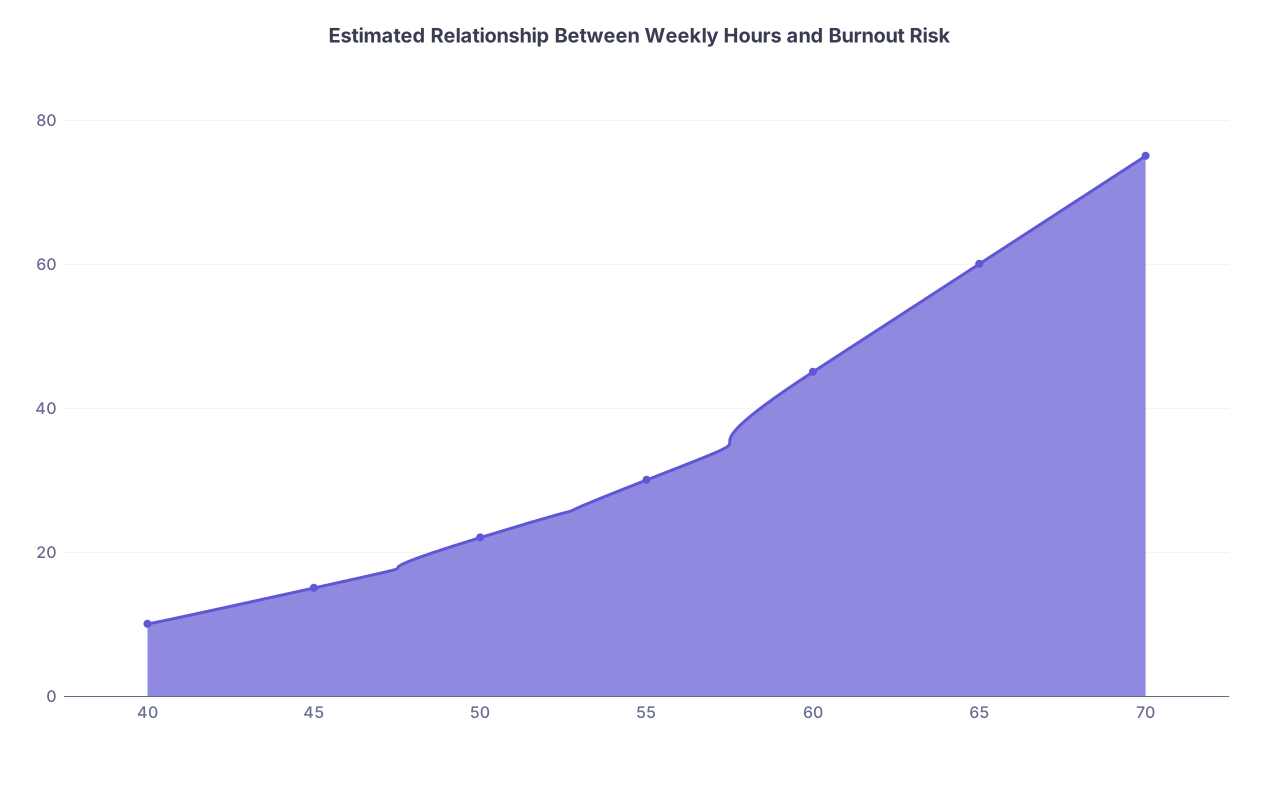
| Category | Value |
|---|---|
| 40 | 10 |
| 45 | 15 |
| 50 | 22 |
| 55 | 30 |
| 60 | 45 |
| 65 | 60 |
| 70 | 75 |
(Values here represent an approximate “burnout risk index” out of 100 drawn from combined survey trends, not a formal scale.)
2. Sleep: The Underappreciated Multiplier
The hours conversation is meaningless if we ignore sleep. Every major burnout and mental health study in trainees shows sleep as a massive independent predictor.
From a data perspective, the combination that breaks people is not just high hours. It is:
- ≥55–60 weekly hours
- AND ≤7 hours of sleep per night on most nights
- AND irregular timing (late nights, early calls, switching back and forth)
When I see students log 60 hours/week with consistent 7.5–8 hours sleep, their mental health scores are noticeably better than those doing 50–55 hours with 5–6 hours sleep.
What this means practically:
- A 50-hour week with 8 hours of sleep is high but survivable.
- A 50-hour week with 5.5–6 hours of sleep is in the danger zone.
- A 60+ hour week with <7 hours becomes unsustainable within a few weeks.
3. Duration: How Many Heavy Weeks in a Row?
You can grit through a single 70-hour week with poor sleep and bounce back. The body tolerates acute overload.
The damage comes from chronicity. Trend, not a snapshot.
I have seen this pattern repeatedly in wellness surveys:
- 1 intense week: spike in stress, but scores normalize within 7–10 days.
- 3–4 intense weeks in a row: average PHQ-9 and GAD-7 scores climb and do not fully normalize even with a later lighter week.
6–8 intense weeks: many students meet criteria for at least moderate depressive or anxiety symptoms.
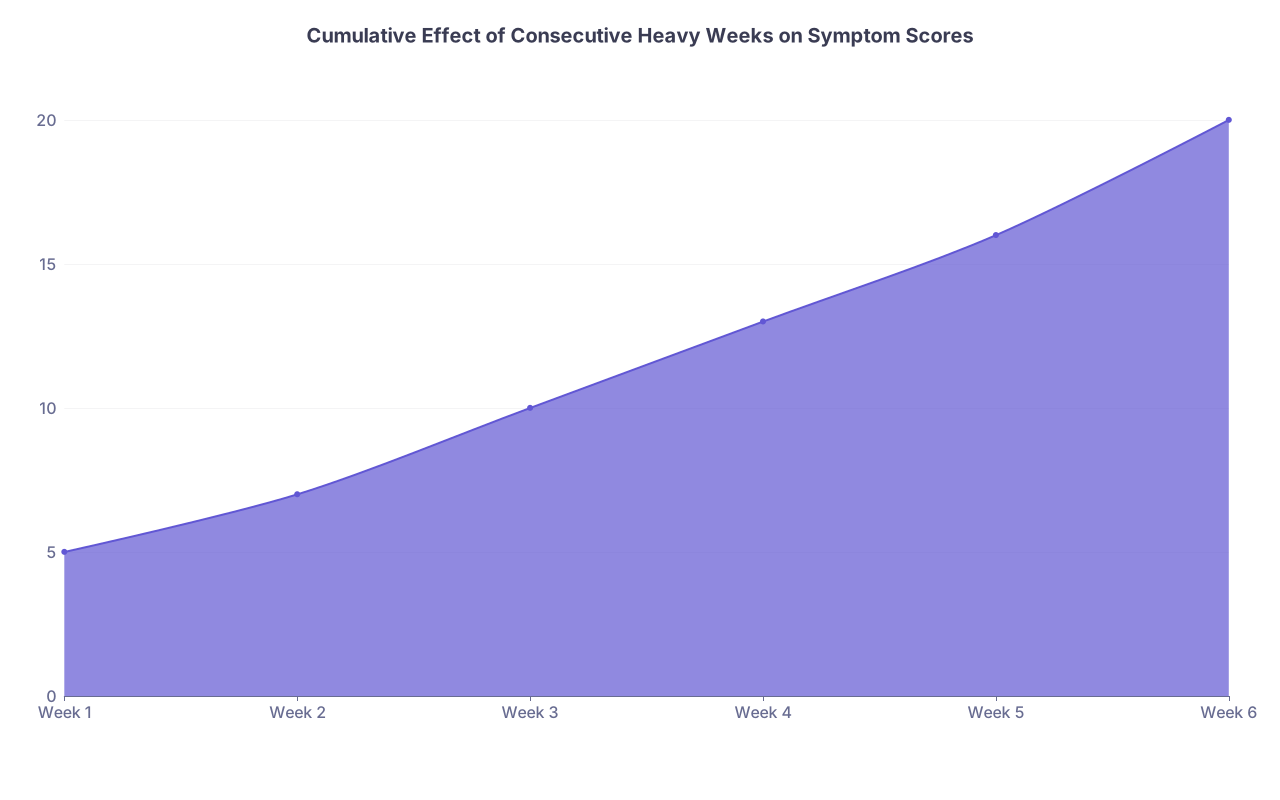
| Category | Value |
|---|---|
| Week 1 | 5 |
| Week 2 | 7 |
| Week 3 | 10 |
| Week 4 | 13 |
| Week 5 | 16 |
| Week 6 | 20 |
Again, the exact numbers are illustrative, but the pattern is real: cumulative stress load behaves like compound interest.
So to the question “How many weekly study hours before mental health declines sharply?” the more precise data-driven answer is:
- Sustained total work weeks above about 55–60 hours
- Especially when sleep drops below 7 hours and this pattern persists for ≥3–4 weeks
- Are strongly associated with sharply worsening mental health indicators.
Why Some People “Tolerate” 70+ Hours (Until They Do Not)
Someone reading this is already thinking: “But my classmate does 70–80 hours every week and seems fine.”
I hear that every year. There are a few explanations the data supports:
Baseline variability
Some people have higher stress tolerance, stronger support, or fewer external responsibilities. The distribution is wide; the average risk rises sharply, but outliers exist.Under-reporting and delayed collapse
Many students look “fine” until they are not. I have seen apparent superhumans go from “I am good” to failing Step or taking a leave of absence in under six months.Hidden trade-offs
The data often reveals the cost in other domains:- Poor diet and weight gain or loss
- Relationship breakdown
- Loss of any non-medical identity
- Early, quiet cynicism toward patients or peers
When schools do comprehensive surveys, the pattern is clear: the group consistently over 60–65 hours/week has:
- Higher burnout and depressive symptom scores
- Higher use of maladaptive coping (substances, isolation, excessive social media)
- Lower long-term satisfaction with career choice
The survivorship bias is strong. You see the ones still standing. You do not see the ones who already cut back, remediated, or left.
A Practical Framework: Setting a Rational Study Hour Ceiling
You cannot control all of medical school, but you can control some of your inputs. Let’s be quantitative.
Start from total capacity, not from “how much should I study.”
Step 1: Fix Sleep As a Constraint, Not a Variable
Decide your minimum sleep requirement.
If you are like most adults under heavy cognitive load, that is 7.5–8 hours. Let’s say:
- 8 hours sleep/night → 56 hours/week
- 1 hour/day for basic life tasks (hygiene, meals prep, etc.) → 7 hours/week
- 1.5 hours/day for commute, transitions, random overhead → ~10 hours/week
That is already 73 hours “non-work” allocated. Out of 168 hours in a week, you now have about 95 left.
You also need some actual life:
- 1 hour/day of movement or exercise → 7 hours/week
- 1–2 hours/day of genuine off-time (partner, friends, nothingness) → say 10–14 hours/week
Let us pick 12 hours here. Now total non-work = 73 + 7 + 12 = 92.
168 – 92 = 76 hours max capacity for all work.
Step 2: Subtract Structured and Clinical Time
If your school schedules:
- 25 hours of mandatory events
- 10 hours of “soft mandatory” things (labs, case sessions, required asynchronous modules)
You are at 35 hours already.
76 capacity – 35 structured = 41 hours left.
On a heavy clinical rotation:
- 55 hours in-hospital time
76 – 55 = 21 hours left.
Step 3: Derive Your Safe Study Ceiling
Given what we know about the 55–60-hour cliff, you probably do not want to be above:
- 55 hours total on a regular basis
- Occasionally touching 60 in short bursts
So for typical pre-clinical:
- 55 target – 35 structured = 20 hours/week of solo study as a stable average
- 60 upper limit – 35 structured = 25 hours/week during short exam pushes
That is about 3 hours/day of focused solo study on weekdays, maybe 4–5 on one weekend day, with one lighter day. It is not 8–10 hours every day.
For clinical rotations:
- 55 – 55 clinical = effectively 0 hours as a stable baseline
- In practice, people squeeze 5–10 hours anyway, but then something else gives: sleep, exercise, or sanity.
This is why well-run schools advise clinical students to:
- Aim for 1–2 hours of focused study on weekdays
- Use 1 weekend day more heavily for review
- Accept that some rotations do not support more without harming your health
If your math pushes you to needing 30–35 solo study hours on top of 30–35 structured hours every week just to “keep up,” then the problem is not your resilience. The problem is your expectations or your school’s design.
Evidence-Based Red Flags You Are Over the Line
Instead of guesswork, watch specific indicators that strongly correlate with mental health decline in trainees:
- Sleep: regular nights with <6.5 hours, or needing >2 hours to “recover” on weekends
- Anhedonia: activities you normally enjoy feel “pointless” for ≥2 weeks
- Cognitive drift: rereading the same paragraph 3–4 times with nothing sticking
- Emotional lability: snapping at people over minor frustrations, crying spells, or numbness
- Somatic creep: headaches, GI issues, palpitations with no clear physical cause
- Cynicism: frequent “What is the point?” about medicine or patients
When these cluster together and your logged total hours are >55–60 for more than 2–3 weeks, the data is brutal: the probability you are sliding into a clinically relevant depression, anxiety disorder, or burnout state is high.
And no, “just push through until vacation” is usually the wrong move. By the time vacation arrives, many students are too depleted to actually recover.
How to Use This Data to Restructure Your Week
You cannot change the nature of medical training, but you can change config.
Some practical, numbers-oriented strategies:
Cap sustained total weekly work.
Use 55 as your default ceiling and 60 as your short-term cap. If you spike to 65–70 one week, deliberately aim for 45–50 the next.Use time-blocking that matches cognitive reality.
Most people can do 4–6 hours/day of truly high-quality solo study. Beyond that, marginal returns plummet. Do not count 12 hours “at the library” as real work.Front-load efficiency, not duration.
Swap low-yield passive reading for structured active work (Anki, Qbanks, teaching someone else) so you can hit the same outcomes with 20 hours instead of 35.Treat sleep and exercise as non-negotiable budget lines.
Do not fund extra 10 study hours by cutting sleep from 7.5 to 5.5 for weeks. The “interest” you pay in cognitive decline and mood is too high.Reassess every 2 weeks.
Log: total weekly hours, average sleep, and a quick 1–10 self-rating of mood and exhaustion. If hours creep up and your scores slide, adjust before you crash.

| Step | Description |
|---|---|
| Step 1 | Calculate Total Weekly Work Hours |
| Step 2 | Reduce Study Blocks by 5-10 hours |
| Step 3 | Monitor Sleep & Mood Closely |
| Step 4 | Optimize Study Quality, Not Hours |
| Step 5 | Maintain Current Load |
| Step 6 | Recheck in 2 Weeks |
| Step 7 | > 60 hours? |
| Step 8 | 55-60 hours? |
| Step 9 | < 50 hours and Struggling? |
You are not being weak by respecting the data about brain capacity. You are being strategic.
The Bottom Line
If we strip away the mythology of “grind at all costs” and look strictly at the numbers, three points stand out:
- Mental health declines sharply for many medical students when total weekly work consistently exceeds ~55–60 hours, especially past 3–4 weeks in a row.
- Sleep and duration are multipliers; 55 hours with 8 hours of sleep for two weeks is one thing, 55–65 hours with 5–6 hours of sleep for eight weeks is where burnout and depression explode.
- The smart move is not to see how much you can endure, but to cap total work, protect sleep, and maximize study efficiency so you survive medical school with both your degree and your mental health intact.