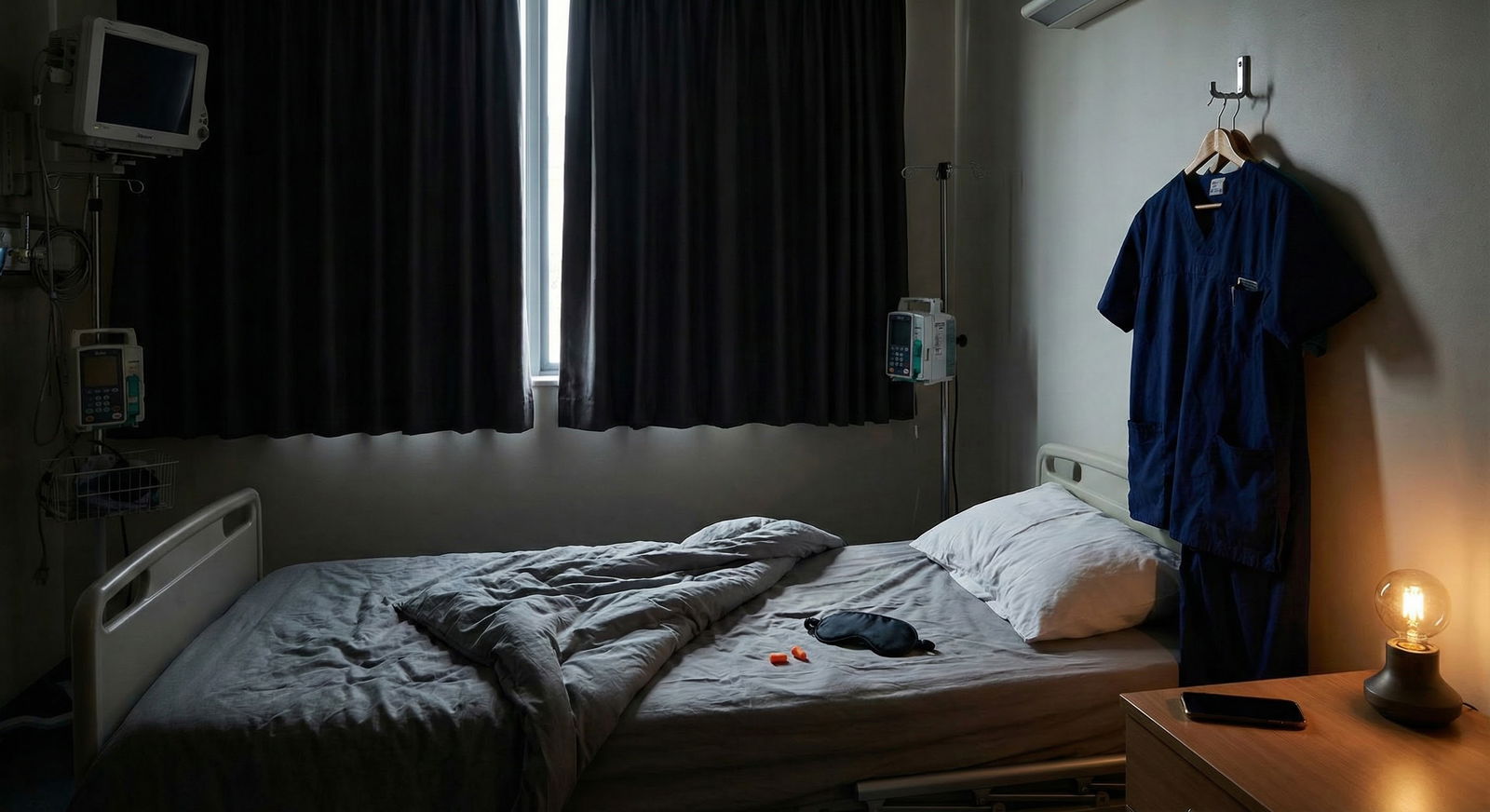
What actually happens if you sleep like 2–3 hours before a huge exam… or don’t sleep at all? Is your score just… doomed?
Because that’s the nightmare, right? You study for weeks, you do the Anki cards, the UWorld blocks, the practice NBME’s… and then the night before your shelf, your Step, your final—your brain just decides, “Nope, we’re staying up.”
And you lie there watching the clock tick from 11:30… 12:45… 2:10… doing the math.
“If I fall asleep now I get 4 hours. Okay now 3.5. Now 3. Now what’s the point?”
Let’s be blunt: this is miserable. And it’s way more common than anyone admits out loud.
I’m going to answer the question you’re really asking: Will one awful night destroy my exam?
And also the ugly follow-up: What if this keeps happening?
How Bad Is One Terrible Night of Sleep, Really?
Let me start with the part your anxiety refuses to believe:
One bad night—by itself—almost never ruins an exam.
Annoying? Yes. Dangerous to your score? Only if you panic and self-sabotage on top of being tired.
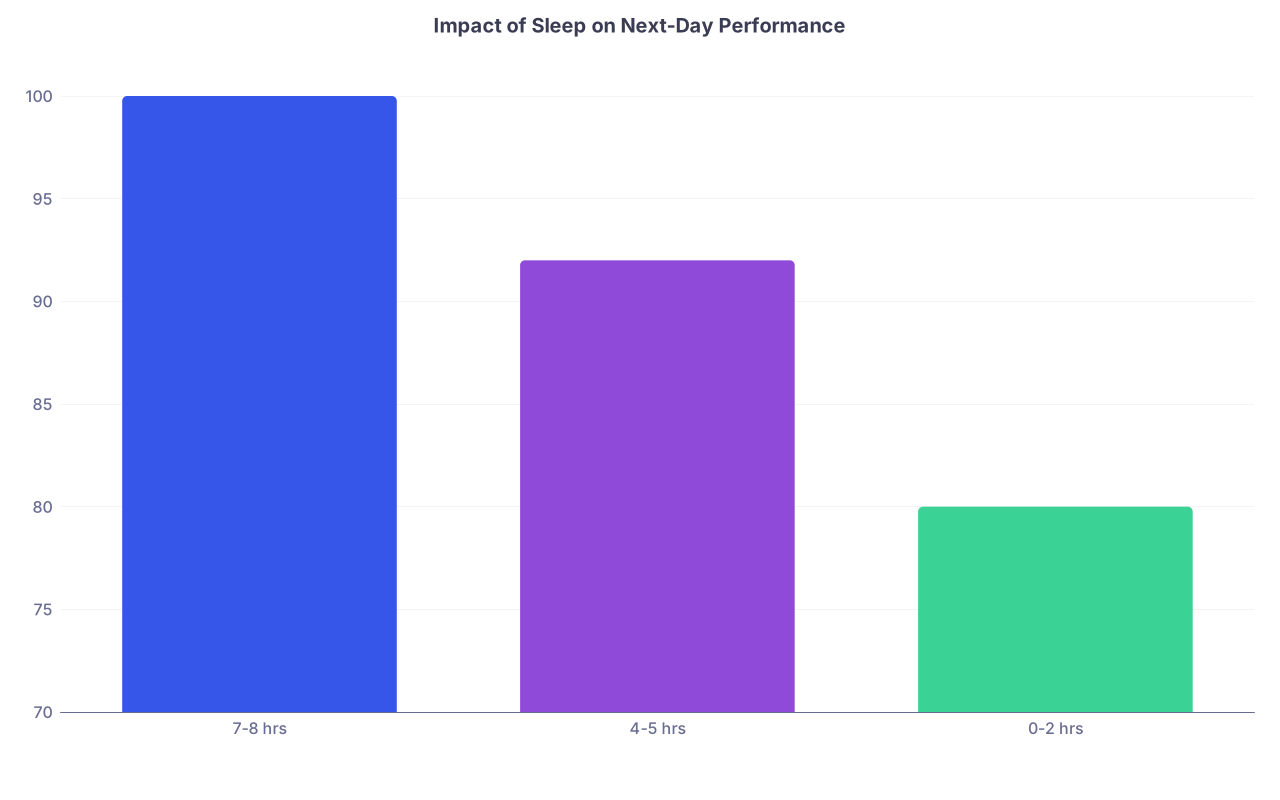
Here’s what we know from actual data on short-term sleep loss and cognitive performance (and what I’ve seen play out with med students over and over):
| Category | Value |
|---|---|
| 7-8 hrs | 100 |
| 4-5 hrs | 92 |
| 0-2 hrs | 80 |
Think of it this way:
- If you usually sleep 7–8 hours and you get 4–5 before the test: you might feel awful, but your actual performance dip is often in the 5–10% range in tasks that need focus and speed.
- If you get basically no sleep (0–2 hours): that can hit you harder—maybe 15–25% decrease in sustained attention and reaction time.
But here’s the catch: that’s raw cognitive performance. Exams are not pure reaction-time tasks. They’re knowledge-heavy. And knowledge built over weeks and months is stubborn. It doesn’t vanish overnight because you slept like garbage once.
I’ve seen:
- A student get 2 hours of sleep before a Step 1 exam and still match into Derm.
- Another barely sleep before an internal medicine shelf and still pull an 80+ percentile because their content base was solid.
The students who actually crash and burn? Almost always the ones who:
- Freak out mid-exam because they feel tired
- Change right answers to wrong ones out of anxiety
- Decide mid-test “It’s over, I’m failing” and mentally give up
So yeah, sleep matters. But your reaction to the bad night often matters more than the bad night itself.
The Big Difference: One Night vs. Chronic Sleep Deprivation
Your brain treats these two situations very differently:
- You sleep fine-ish most nights, but the night before the exam is terrible
- You’ve been sleeping 4–5 hours for weeks, and then the night before is also bad
Those are not the same thing.

Scenario 1: Mostly okay sleep, then one disaster night
Your brain has a buffer. Think of it like a savings account of rest.
You’ve accumulated semi-decent sleep over days, even if not perfect. One short night taps into that reserve.
This usually means:
- You’ll feel more anxious and physically tired
- Your concentration might dip, especially in the afternoon sections
- But your long-term memory (all that content) is still there
A lot of people in this scenario walk out of the exam convinced they failed… and then their score comes back totally fine or even great.
Scenario 2: You’ve been chronically sleep-deprived
This is where things get uglier.
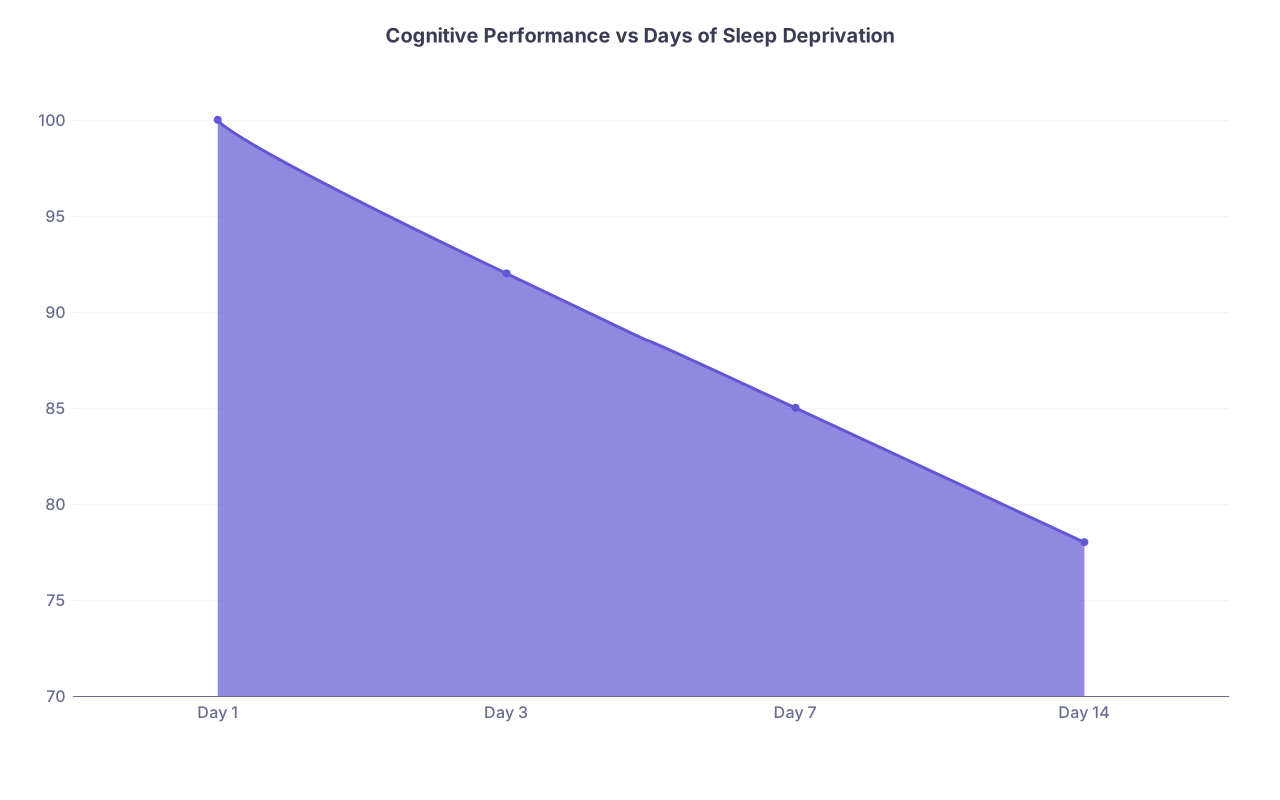
If you’ve been doing 4–5 hours a night for weeks, you’re not just tired. You’re running cognitively impaired all the time, even if you’ve gotten used to it.
| Category | Value |
|---|---|
| Day 1 | 100 |
| Day 3 | 92 |
| Day 7 | 85 |
| Day 14 | 78 |
Long-term partial sleep deprivation can mimic being mildly drunk. You don’t notice how off you are, but:
- You make more careless mistakes
- You misread questions
- You zone out mid-block
If this is you, the damage isn’t from just the night before. It’s from the whole month. In that case, no hack the night before will fully rescue things.
But even then, you’re not doomed. You’re just not operating at your personal max potential. Big difference from “you will fail.”
The Part No One Likes to Admit: Anxiety Is Often Worse Than the Lack of Sleep
Sometimes it’s not “I can’t sleep.” It’s “I’m lying in bed spiraling.”
You know the routine:
- Replaying every question you’ve gotten wrong on UWorld
- Imagining the email saying you failed, your dean being “disappointed,” your career getting derailed
- Obsessively calculating how many questions you can miss and still pass
By 1–2 AM, you’re so worked up that even if your body is exhausted, your brain is red-lining.
Here’s the brutal truth: this anxiety storm does more damage than the actual hours of sleep lost.
When you walk into the exam already convinced you’re underprepared and doomed, your body’s in fight-or-flight:
- Heart pounding
- Hands a little shaky
- Mind racing
That state narrows your thinking. You skim stems. You jump to conclusions. You doubt every answer.
So yes, lack of sleep can slow your processing. But panic hijacks it.
What Actually Helps the Night Before (Besides the Useless “Just Relax” Advice)
You’ve heard the generic garbage: “Just get a good night’s sleep.” Cool. If I could, I would.
So let’s talk about what you can actually do when your brain is already on fire.

| Step | Description |
|---|---|
| Step 1 | Evening Before Exam |
| Step 2 | Stop Studying by 7-8 PM |
| Step 3 | Light Review Only |
| Step 4 | Set up exam bag & clothes |
| Step 5 | Wind-down routine |
| Step 6 | Accept less sleep, focus on calm |
| Step 7 | Sleep 6-8 hours |
| Step 8 | Stop checking clock, rest quietly |
| Step 9 | Get up at set time, no snoozing |
| Step 10 | Feel Tired? |
| Step 11 | Cant Sleep by Midnight? |
1. Stop trying to “cram until you pass out”
Past a certain point, extra questions the night before do almost nothing for your score and wreck your sleep. Bad trade.
A reasonable cutoff: no real studying after 7–8 PM. Light review at most. Skimming a formula sheet or high-yield summary is fine if it calms you. But no heavy lifting.
2. Do a “logistics sweep” early in the evening
This sounds dumb, but it pulls stress out of your body:
- Pack your bag
- Lay out clothes
- Set multiple alarms
- Double-check the testing address and travel plan
You’re telling your brain: the practical stuff is handled. You don’t have to spin on it at 2 AM.
3. If you can’t sleep… stop fighting it like a battle you must win
You’re going to hate this, but it works better than “try harder to sleep”:
If it’s late and you can’t sleep, shift the goal from “I must sleep” to “I will rest.”
You can’t force your brain to turn off, but you can:
- Lie in the dark
- Put on a boring podcast or calming audio
- Do slow breathing (like 4-second inhale, 6-second exhale)
- Let your thoughts be background noise instead of wrestling with them
This way, even if you only drift in and out, your body is at least not burning at maximum alert all night.
4. Accept that “not sleeping” doesn’t automatically equal “failing”
I know your brain is screaming, “But if I don’t sleep I’ll fail and ruin everything.”
Ask yourself: Is that literally true? Or just a fear story?
You know the answer.
Plenty of people:
- Get 3–4 hours
- Feel awful
- Still pass shelves, Step, finals, all of it
Remind yourself of that—on purpose. You don’t have to believe it 100%. You just have to interrupt the doom spiral a little.
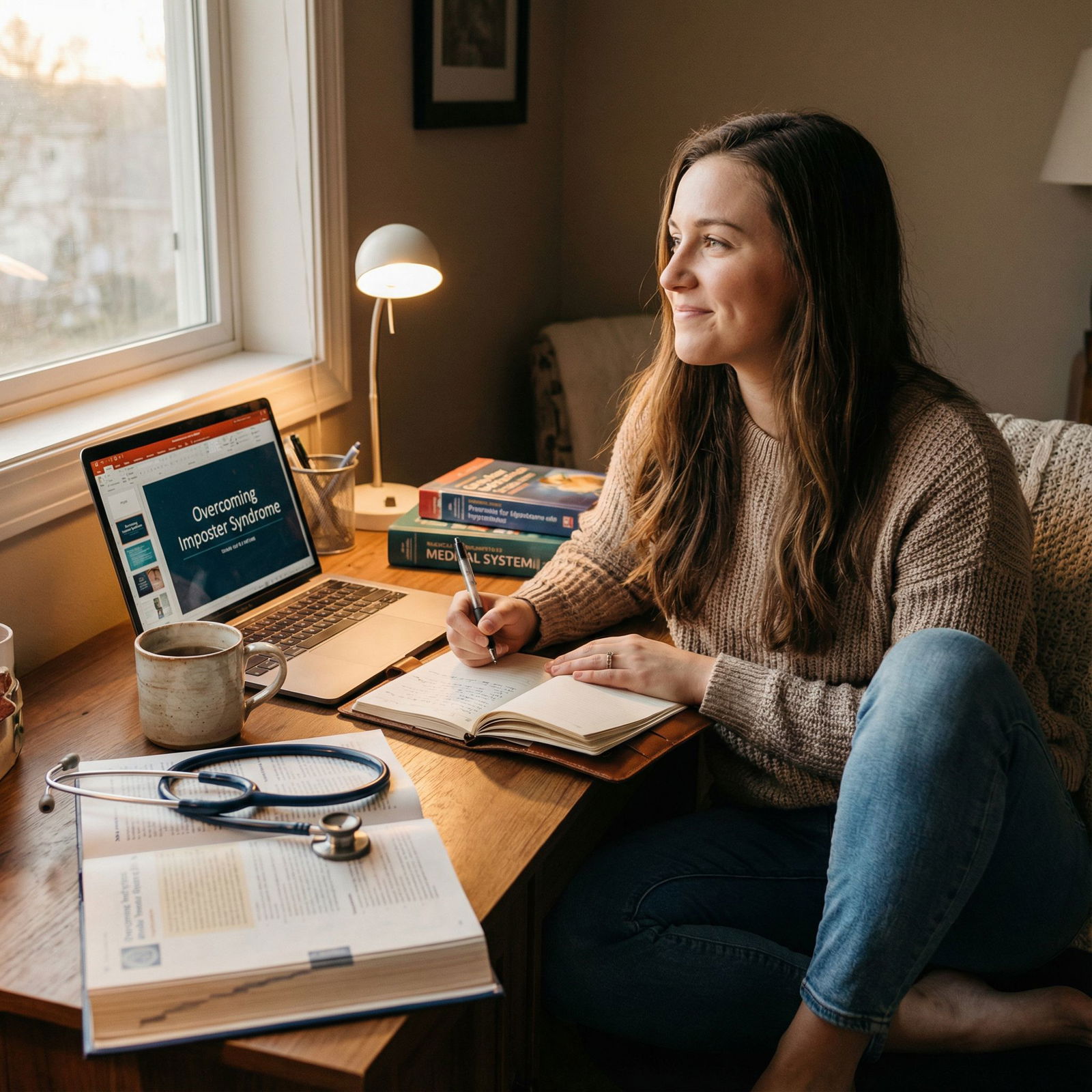
Day-Of: How to Function on Little Sleep Without Imploding
Let’s say worst-case happens: you sleep terribly. Or barely at all.
You wake up and feel like trash. Now what?
Here’s the move:
1. Don’t overcorrect with caffeine
Yes, use caffeine. No, don’t slam three energy drinks because you’re scared.
Too much and you just tip yourself into jittery, sweaty panic. Aim for your usual amount, maybe slightly more, not double or triple.
2. Decide before you walk in: “I’m tired, but I’m still doing this”
You don’t have control over how you slept. You do have control over your exam-day mental script.
Say to yourself (out loud if you need to):
“I’m not at 100%, but I’m okay enough to pass. My job is to calmly pick the best answer I can on each question. That’s it.”
You’re training your brain to focus on doing the task vs. evaluating how doomed you are every five minutes.
3. During the test, stop checking in on how tired you feel
The more you mentally poke it—“Wow I’m so tired, I can’t think, I’m so behind”—the worse it feels.
Your actual job is stupidly simple:
- Read stem
- Underline key info (physically or mentally)
- Eliminate obvious wrongs
- Pick the best remaining answer
Then move on. One question at a time. You do not need to “feel great” to do this.
When This Isn’t Just a One-Off: Exam Insomnia as a Pattern
If this happens once or twice during med school, okay. Unpleasant, but survivable.
If this happens before every single exam? Or any time something matters? That’s not just “bad luck.” That’s an anxiety pattern.
And those usually don’t just magically fix themselves.

You might notice:
- You start feeling panic the day before or even earlier
- You dread going to bed because you know you’ll just lie there
- You get racing heart, tight chest, upset stomach when you think about exams
- You feel mildly on edge constantly during exam season
This is where talking to someone—a therapist, campus counseling, a trusted physician—stops being “overreacting” and starts being basic maintenance for your brain.
I’ve seen students go from:
“I get 2 hours before every exam and feel like I’m going to vomit”
to
“I’m still nervous, but I get 5–6 hours and I’m functional”
just by:
- Doing short-term therapy for test anxiety
- Learning actual tools (not inspirational quotes, I mean real strategies)
- Sometimes using short-term meds prescribed thoughtfully
You’re not weak if you need help. You’re just a human being in a high-pressure environment with a nervous system that’s freaking out. Very fixable, if you stop pretending it’s nothing.
Does It Affect Long-Term Mental Health?
You might also be quietly scared of this:
“If I keep doing this—sleepless nights, stress spikes—am I setting myself up for burnout or depression later?”
You’re not wrong to worry.
Chronic poor sleep + constant high stress = higher risk of:
- Depression
- Anxiety disorders
- Burnout
- Physical symptoms (GI issues, headaches, constant colds)
But you’re also not helpless.
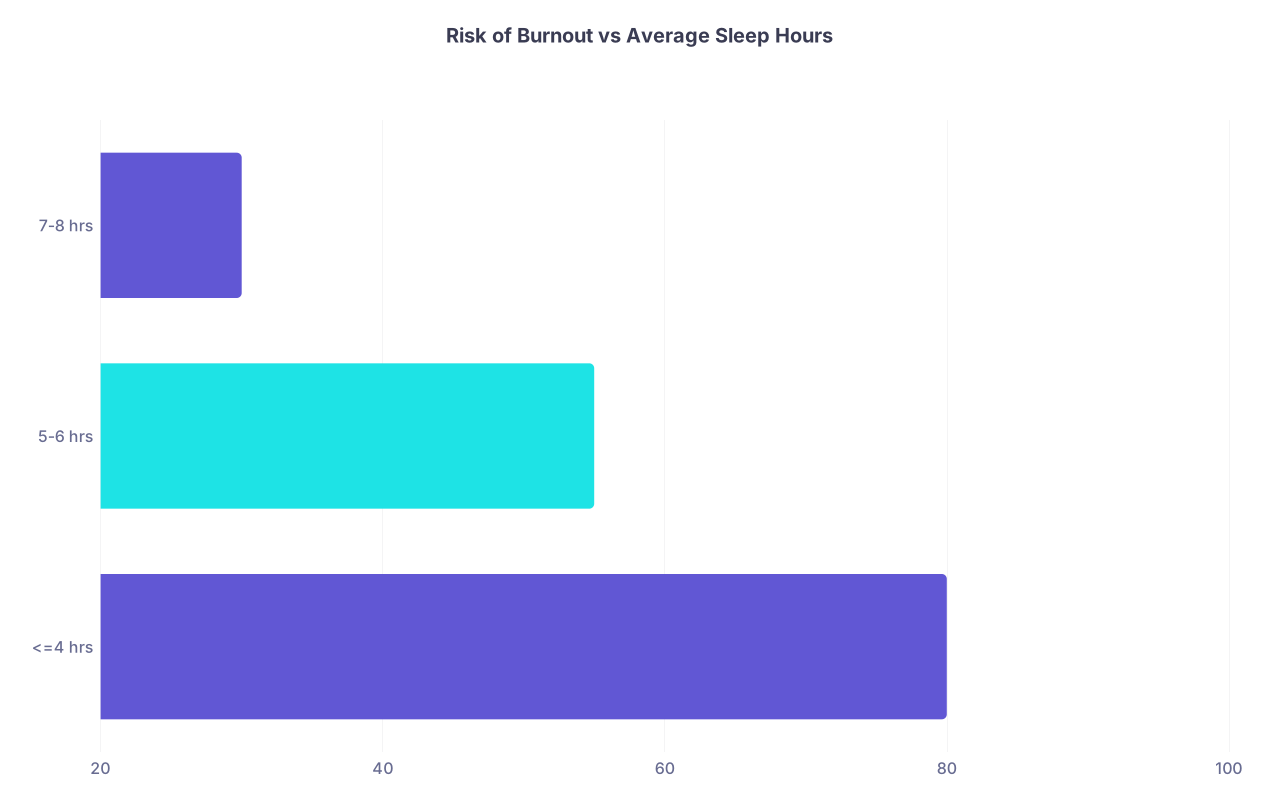
| Category | Value |
|---|---|
| <=4 hrs | 80 |
| 5-6 hrs | 55 |
| 7-8 hrs | 30 |
You don’t need perfect 8-hour sleep every night to protect yourself. You need “good enough most of the time” and a refusal to normalize feeling awful 24/7.
And yes, part of that is not brushing off persistent exam insomnia as “just how I am.”
The Honest, Messy Bottom Line
Here’s my blunt answer to the question that probably made you click this:
“What if I can’t sleep before big exams? How much will it hurt?”
My take:
One bad night alone?
Annoying. Uncomfortable. Maybe a small performance hit.
But not usually catastrophic. Absolutely not an automatic fail.Chronic bad sleep for weeks, then a bad night?
That can drag your score below what you’re capable of.
Not because you’re “not smart enough,” but because your brain’s been running on fumes.The thing most likely to tank you on test day?
Not the sleep alone.
The combination of poor sleep + full-blown anxiety spiral + self-sabotaging mid-exam.
So no, you’re not doomed if you had a horrible night. You’re tired. You’re scared. You’re still capable of passing—and sometimes even doing well.
Your real job now is to stop adding suffering on top of the lack of sleep.
FAQ (Exactly 4 Questions)
1. Should I ever consider canceling or rescheduling the exam if I didn’t sleep?
If it’s a high-stakes exam (Step, COMLEX, major shelf) and you got literally zero sleep and you have the realistic option to reschedule without massive consequences, I’d at least consider it.
But if you slept 3–4 hours? I wouldn’t. Most people do fine enough, especially if their prep was solid. Just don’t let “I’m tired” become “So I’m definitely failing.”
2. Is taking something to sleep (melatonin, meds) the night before a good idea?
Trying a totally new medication or supplement for the first time the night before a huge exam is risky. You don’t know how you’ll react—grogginess, weird dreams, feeling hungover.
If you’re going to use something, test it well before exam week. For chronic insomnia, talk to a doctor or psychiatrist. Don’t self-experiment at 11 PM the night before Step 1.
3. What if I keep waking up early and can’t fall back asleep before exams?
That’s classic anxiety. Your brain is basically hitting the panic button at 4–5 AM. If it happens often, I’d treat it as a sign to get real help: therapy, coping tools, maybe meds.
Short-term, if you wake up early and can’t get back to sleep, stay in the dark, keep your eyes closed, and focus on calm breathing. Even if you don’t fully sleep, you’re at least resting your body.
4. How do I stop replaying exam questions afterward and freaking out?
You probably won’t stop completely, but you can limit the damage. Set a rule: you’re allowed to ruminate for 10–15 minutes, then you have to physically change locations or activities—walk, shower, call someone, anything.
If you catch yourself spiraling later, tell yourself: “Score is already decided. This thinking changes nothing.” It sounds cheesy, but repetition helps interrupt the loop.
One specific next step:
Tonight, before your next exam creeps closer, write down a simple “night-before plan” on paper: what time you’ll stop studying, what you’ll do for 30–60 minutes to wind down, and what time you’ll be in bed—even if you just lie there. Put it somewhere you’ll see it. Don’t wait until 11 PM on exam eve to improvise.