
You’re not imagining it: medical school is designed in a way that can break people.
That’s a harsh way to start, but I’d rather be honest than give you some “self-care fixes everything” fluff. You’re looking around thinking, If I already feel like this now, what happens in residency? And under that is the darker question you don’t say out loud: What if I completely fall apart before I even get there?
Let’s drag that fear into the light. Because burnout doesn’t usually hit like a lightning strike. It’s more like a slow leak. You don’t notice it until you’re running on fumes and everyone’s still telling you, “Just push through this block, you’ll be fine.”
What Burnout Actually Looks Like in Med School (Not the Instagram Version)
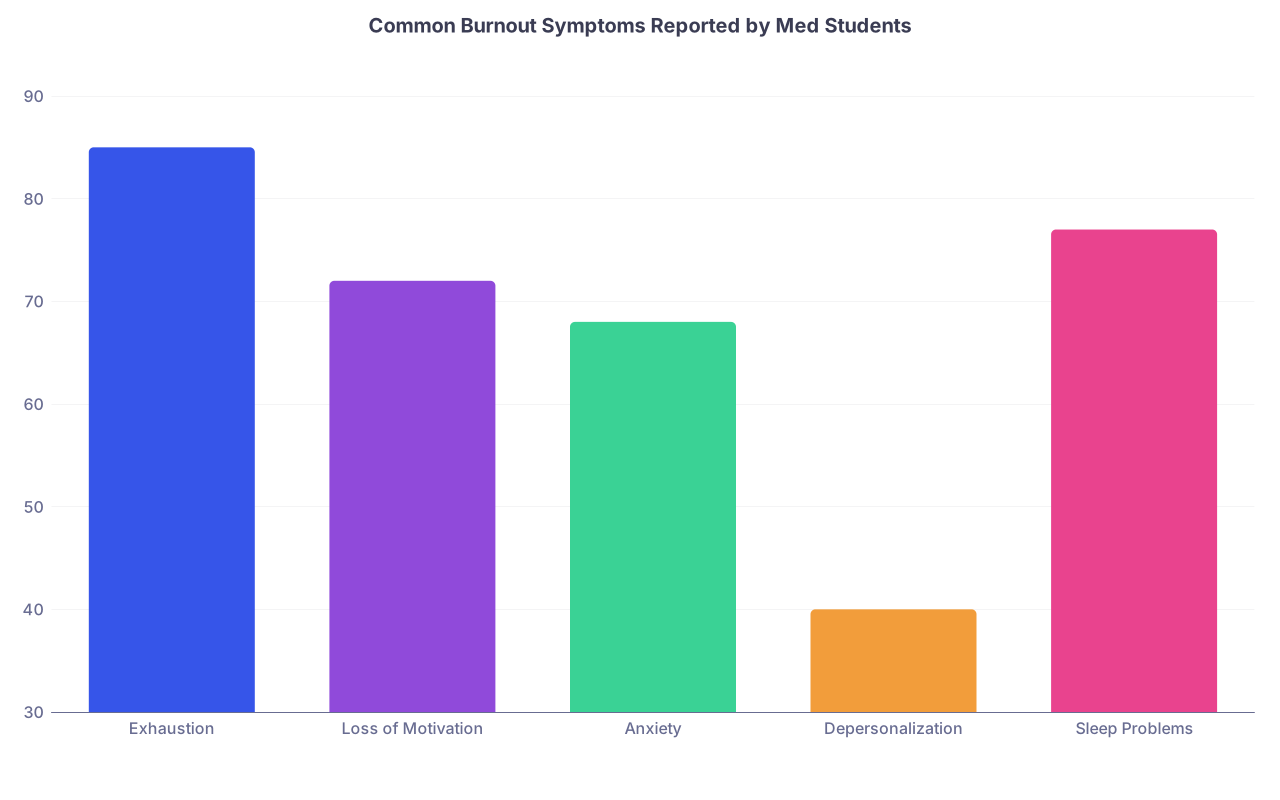
| Category | Value |
|---|---|
| Exhaustion | 85 |
| Loss of Motivation | 72 |
| Anxiety | 68 |
| Depersonalization | 40 |
| Sleep Problems | 77 |
Burnout isn’t just “tired” or “stressed.” You’re a med student—those are your baseline. Burnout is a pattern. A cluster of things that start creeping in and don’t really leave.
Here’s how it actually tends to show up in medical school:
- You’re exhausted even after “rest.” You take a weekend “off,” sleep in, watch Netflix, do all the things, and Monday you still feel like you’ve been hit by a bus.
- You stop caring… and it scares you. You read about a patient case and feel nothing. You miss one more lecture and shrug. Then later you panic about how numb you felt.
- You feel like everyone else is built for this but you. They post Anki streaks and 260 Step scores; you’re proud you showered twice this week.
- You’re constantly asking: Is this normal exhaustion or am I breaking? And no one gives a clear answer.
Let me be definitive: if you’re regularly feeling hopeless, detached, and like you’re on autopilot just to survive the week—no, that’s not “just med school.” That’s your mind waving a red flag and everyone acting like it’s a school color.
The Early Warning Signs You Keep Talking Yourself Out Of
You probably already see some warning signs but you’re incredibly good at minimizing them. “It’s just this exam.” “It’s just this rotation.” “It’s just this month.”
Here are the things that should make you pause, even if they seem “small” compared to other people’s disasters.
1. Your Inner Voice Has Turned Vicious
You mess up a question and your brain doesn’t say, “I should review that.” It says:
- “You’re too stupid for this.”
- “Everyone else gets this easily.”
- “You’re going to be a dangerous doctor.”
If the soundtrack in your head is constant self-attack instead of self-correction, that’s not you “motivating yourself.” That’s you slowly shredding your own confidence. Which makes everything harder, which leads to more mistakes, which feeds the same cycle.
2. You Don’t Recognize Your Own Motivation Anymore
Remember when you actually cared about learning why diseases happen? When a cool physiology concept made you weirdly happy?
Now:
- You only study out of fear (of failing, of being humiliated, of not matching).
- You can’t answer the question “What do I want?” without referencing rankings, scores, or what your classmates are doing.
- When you picture graduation, you don’t feel proud. You just feel… tired.
That hollow feeling is not “growing up.” It’s emotional depletion.
3. Your Body Is Screaming, You’re Ignoring It
Burnout lives in the body long before it crushes your brain.
Watch for:
- Headaches almost every day
- Weird chest tightness that you write off as “anxiety but I can deal”
- GI issues (nausea, diarrhea, constipation) that magically appear during exams or rotations
- New or worsening insomnia—or the opposite, sleeping 10+ hours and still exhausted
- Random crying for no clear reason
And yes, I know the med student response: “It’s probably just cortisol, I’ll be fine.” That’s the problem. You’ve learned to label pathology but not intervene in your own.
4. You Start Thinking in All-or-Nothing Disasters
You miss one quiz and your brain jumps straight to:
“Great, I’ll fail this block, then fail Step, then not match, then I’ll be $300k in debt working at Starbucks explaining the renin-angiotensin system to confused customers who just want coffee.”
That spiraling story is catastrophizing. It can feel so “logical” that you don’t even question it. But if everything in your mind becomes a potential total-life-collapse, you’re living in a constant sympathetic surge. That state isn’t sustainable.
5. You’re Emotionally Checked Out… Or On Edge All the Time
Two common flavors:
- Numb: You feel like you’re watching your own life on a screen. Things happen to you, not with you. You say “I’m fine” because you honestly don’t feel much at all.
- Raw: Tiny things set you off. Someone’s late with group notes and you want to scream. A mild question from an attending feels like an attack.
If your emotional responses don’t match what’s happening—or they feel delayed, muted, or exaggerated—that’s another sign your system is overloaded.
The Med School Trap: Why You Don’t Catch Burnout Until It’s Bad
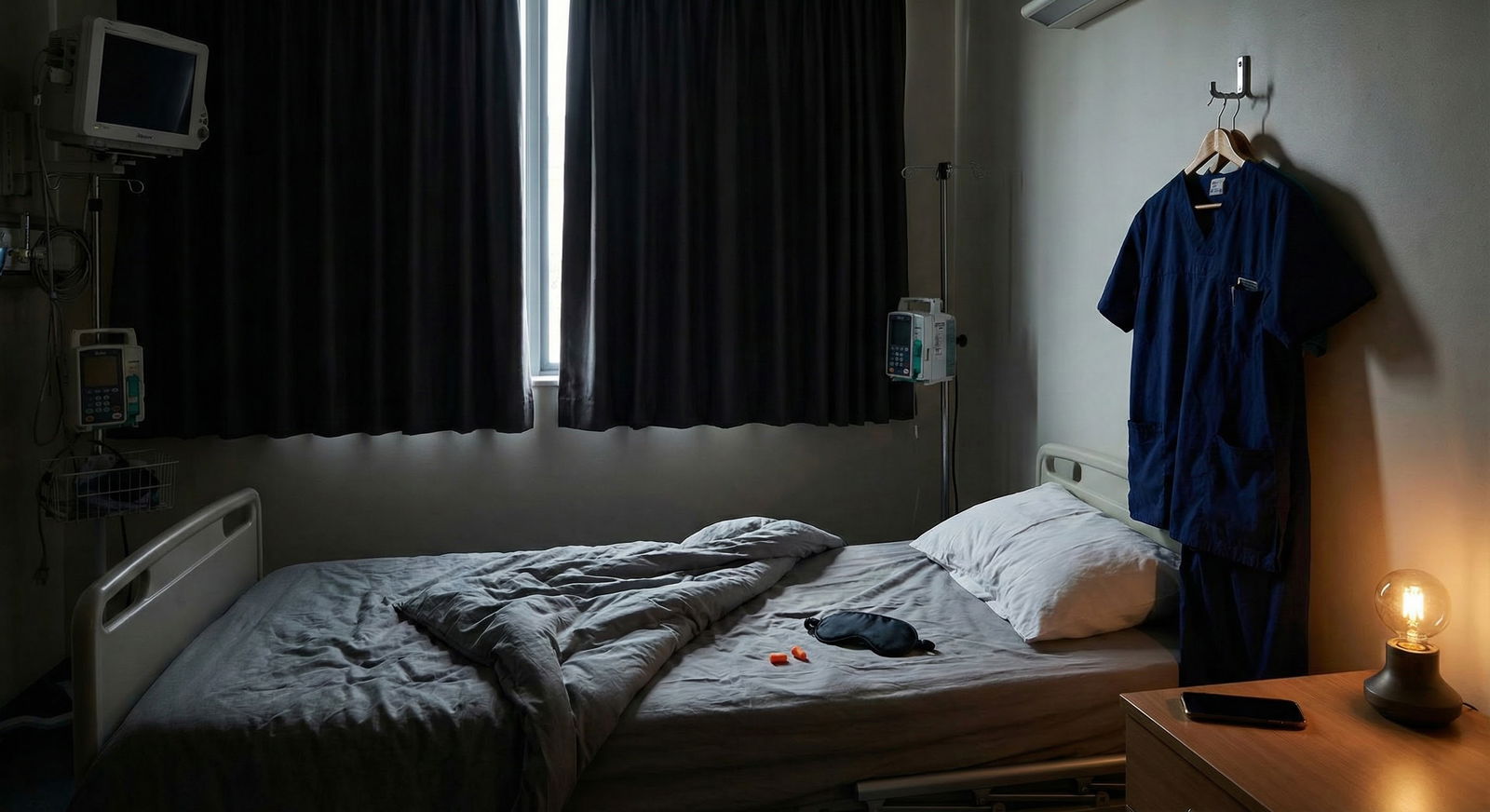
You’re not missing the signs because you’re stupid. You’re missing them because the whole system is built to normalize dysfunction.
Here’s how the trap works:

| Step | Description |
|---|---|
| Step 1 | Increased workload |
| Step 2 | Less sleep & rest |
| Step 3 | Declining performance |
| Step 4 | More studying to compensate |
| Step 5 | Social withdrawal |
| Step 6 | Emotional exhaustion |
| Step 7 | Burnout symptoms |
| Step 8 | Blame self & push harder |
Med students almost always respond to early burnout in one of three ways:
- They double down on work, thinking they can “outrun” the feeling.
- They detach and do the bare minimum, then hate themselves for it.
- They swing wildly between overworking and shutting down.
You tell yourself: “Residency will be worse, so I should get used to this.” That’s the survival logic almost everyone uses. And it’s backwards.
If you’re already burning out now, adding more hours, more responsibility, and more sleep deprivation won’t magically make you stronger. It’ll just finish what med school started.
How to Tell If You’re Just Overwhelmed vs Actually Burning Out
Everyone’s overwhelmed. Not everyone’s burned out. You’re trying to figure out which one you are without sounding “dramatic.”
Use this as a rough gut-check:
| Feature | Overwhelmed (High Stress) | Burned Out (Chronic) |
|---|---|---|
| Duration | Days to a few weeks | Weeks to months |
| Energy after rest | Some improvement | Almost no improvement |
| Motivation | Still care, just stressed | Don’t care or feel numb |
| Emotions | Anxious, pressured | Cynical, hopeless, detached |
| Performance | Fluctuates, can rebound | Gradual ongoing decline |
| Self-talk | “This is a lot” | “I’m a failure, I can’t do this” |
Plain English version:
- If you have a brutal week, crash on Sunday, then feel somewhat better Monday → overwhelmed.
- If every week feels brutal, rest never refills the tank, and you’re losing the will to even try → you’re edging into burnout.
You don’t need to “earn” the word burnout by completely collapsing. You’re allowed to call it what it is when the pattern is obvious… even if you’re still getting good grades. (Yes, burned-out people can still get honors. That’s half the problem—they look “fine” on paper.)
The Fear Underneath It: “If I Admit I’m Struggling, I’ll Ruin My Career”

Let me name the career fears you probably won’t say to your dean or advisor:
- “If I see a therapist, they’ll put something in my chart and I’ll never get licensed.”
- “If I take a leave, I’ll never match. Or I’ll get labeled as ‘fragile.’”
- “If I tell anyone how bad this feels, they’ll think I can’t handle medicine.”
Here’s the ugly truth: the system does sometimes punish vulnerability. Certain state licensing questions are intrusive and outdated. Some schools handle leaves terribly. Some attendings still say garbage like “Back in my day we just pushed through.”
But here’s the other truth you absolutely cannot ignore: the system will not protect you when you break.
If you end up failing multiple blocks because you can’t function, or you impulsively walk off a rotation, or you reach a point of self-harm—that has way more impact on your record and your future than you quietly getting help early.
Asking for help strategically and early is damage control, not career suicide.
Concrete Things You Can Do Without Blowing Up Your Life
I know the usual advice: “meditate, exercise, drink water.” You’ve heard all that. You also know that “go on a walk” doesn’t magically fix existential dread.
So here are things that actually move the needle and don’t require you to become a wellness influencer overnight.
1. Do a Brutally Honest Life Audit (30 Minutes, No Aesthetics)
Grab a piece of paper. Make four columns:
- Sleep
- Work/Study
- People
- Things that are just for you (not for CV, not for networking, not for productivity)
Write what the last 7 days actually looked like. No ideal schedule. Just the depressing truth.
Most med students discover:
- Sleep is trashed or wildly inconsistent
- Work/study eats 70–80% of waking time
- People = group studies, classmates, maybe partner (all school-adjacent)
- The “just for me” column is almost blank
That’s not sustainable. You don’t fix burnout by adding more “optimization.” You fix it by rebuilding even small parts of a life that doesn’t only exist to pass exams.
2. Set One Non-Negotiable Boundary (Yes, Just One)
You probably won’t overhaul your life. Fine. Don’t. Just pick:
- A sleep boundary: “Laptop closed by 11:30 pm no matter what.”
- Or a time boundary: “No academic work from Friday 9 pm to Saturday noon.”
- Or an availability boundary: “I don’t respond to non-urgent messages after midnight.”
One thing. And you keep it like your life depends on it. Because long-term? It kind of does.
3. Stop Studying in Crisis Mode 24/7
Your brain thinks you’re in danger all the time. Of course it’s exhausted.
Try this for a week:
- Schedule very clear “on” and “off” blocks for studying. Even if they’re long.
- During “on,” you’re actually on: phone away, no doomscrolling.
- During “off,” you’re actually off: no “just one more Anki card.”
That line between on/off is what your nervous system needs. Chronic gray-zone half-studying keeps your anxiety simmering and never lets you reset.
4. Talk to Someone Who Isn’t Graded On You
Not your attending. Not a resident who might write you a letter.
Aim for:
- School counseling center (ask anonymously first about confidentiality)
- An external therapist (especially one with med student/resident experience)
- A trusted older student who’s survived what you’re in now
You’re not looking for magical solutions. You’re looking for someone who can say, “No, this isn’t just you being weak,” and help you untangle what’s burnout and what’s standard med school misery.
5. Watch for the “Red Flag” Thresholds
Here is where you stop treating it as “I’ll be fine” and treat it as urgent:
- Passive thoughts like “If I got hit by a car and didn’t have to keep doing this, that’d be kind of a relief.”
- You stop going to required activities and just… don’t care about the consequences.
- You start using alcohol, benzos, or other substances not to relax but to escape being conscious.
- People close to you say, “You don’t seem like yourself at all,” and you actually agree.
That’s not drama. That’s danger. At that point, you pull the emergency cord: crisis lines, urgent mental health services, talking to a dean you trust. Career fears are secondary to staying alive and intact enough to have any career at all.
Will Burnout Now Mean You’ll Definitely Burn Out in Residency?
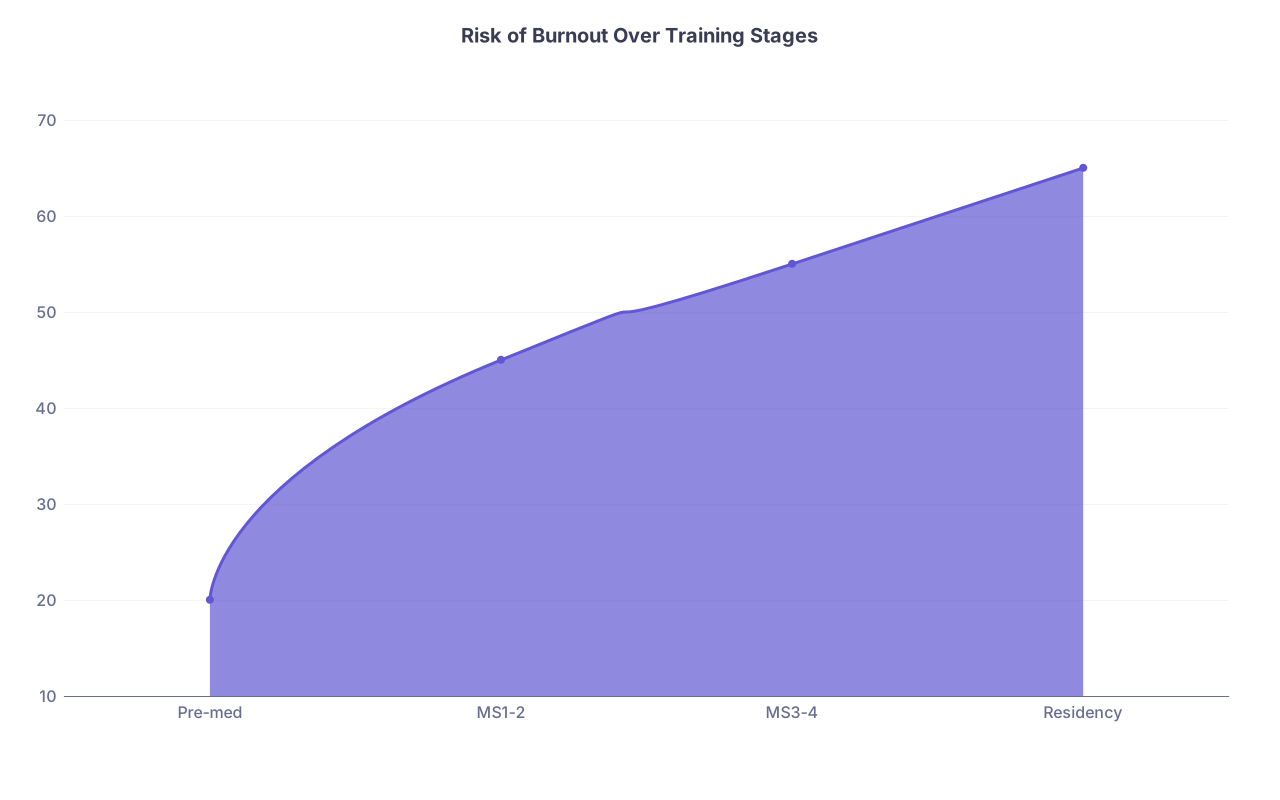
| Category | Value |
|---|---|
| Pre-med | 20 |
| MS1-2 | 45 |
| MS3-4 | 55 |
| Residency | 65 |
No. You are not doomed.
Here’s the pattern I’ve actually seen:
- People who deny any struggle in med school, white-knuckle it, and call burnout “weakness” → often shatter hard in residency when the system really turns up the pressure.
- People who hit a wall in med school, confront it, get help, maybe adjust pace or expectations → often build better boundaries and coping skills that actually protect them in residency.
The danger isn’t that you’re scared of burning out.
The danger is pretending you’re not.
You noticing these signs now—reading something like this and actually asking, “Is this me?”—is the opposite of failure. It’s the first real adult thing you’re doing in a career that loves to confuse self-sacrifice with strength.
You’re not weak for worrying about burning out. You’re awake.
FAQ (5 Questions)
1. If I’m already feeling burned out in pre-clinicals, does that mean I’ll never survive clinical years?
No. Pre-clinicals are a specific kind of grind—isolated, high-volume, low-feedback. Some people actually do better once they’re on the wards because the work feels more real and less like endless flashcards. But if you’re already burned out, clinical years will expose any cracks in your coping. Use now to stabilize—sleep, boundaries, support—so you’re not starting MS3 already on empty.
2. Will taking a leave of absence destroy my chances of matching?
A well-documented, medically-supported leave usually does less harm than multiple failures, poor evaluations, or unexplained gaps. Programs care more about how you handled challenges than the mere fact that you had them. A leave taken early, with a clear reason and a solid return, looks a lot better than pretending you’re fine until everything collapses in your third or fourth year.
3. How do I know if this is “real burnout” and not just me being lazy?
Lazy people don’t worry they’re lazy this much. If you want to care but feel like your brain and body won’t cooperate, that’s not laziness—that’s capacity getting overwhelmed. Look at patterns: chronic exhaustion, loss of motivation in things you used to value, increasing cynicism, and no real relief even after rest. That’s burnout territory, not “I just don’t feel like it.”
4. Is talking to a therapist actually useful if the system itself is the problem?
Therapy won’t magically make med school humane. But it can give you a buffer and a toolkit so you’re not fully at the mercy of the system. You can’t control exam schedules or call nights. You can control how quickly you notice you’re slipping, how you talk to yourself, how you set micro-boundaries, and when you escalate for more help. That difference can be the line between “miserable but functioning” and “crashing out.”
5. What if I do everything “right” and still feel burned out—does that mean I chose the wrong career?
Not necessarily. Sometimes it means you chose the wrong way to do this career, not the wrong field itself. The version of medicine you see in med school is harsh, rigid, and prestige-obsessed. There are saner pockets in certain specialties, certain programs, certain practice models. If, after real support and recovery, you still feel fried by the work itself, then it’s fair to question the fit. But you don’t make that call from rock bottom. You make it from as close to stable as you can get.
Years from now, you won’t remember the exact score you got on that random block exam or how many Anki cards you were behind. You will remember whether you treated yourself like a person worth protecting, or just a body you used up trying to become a doctor.