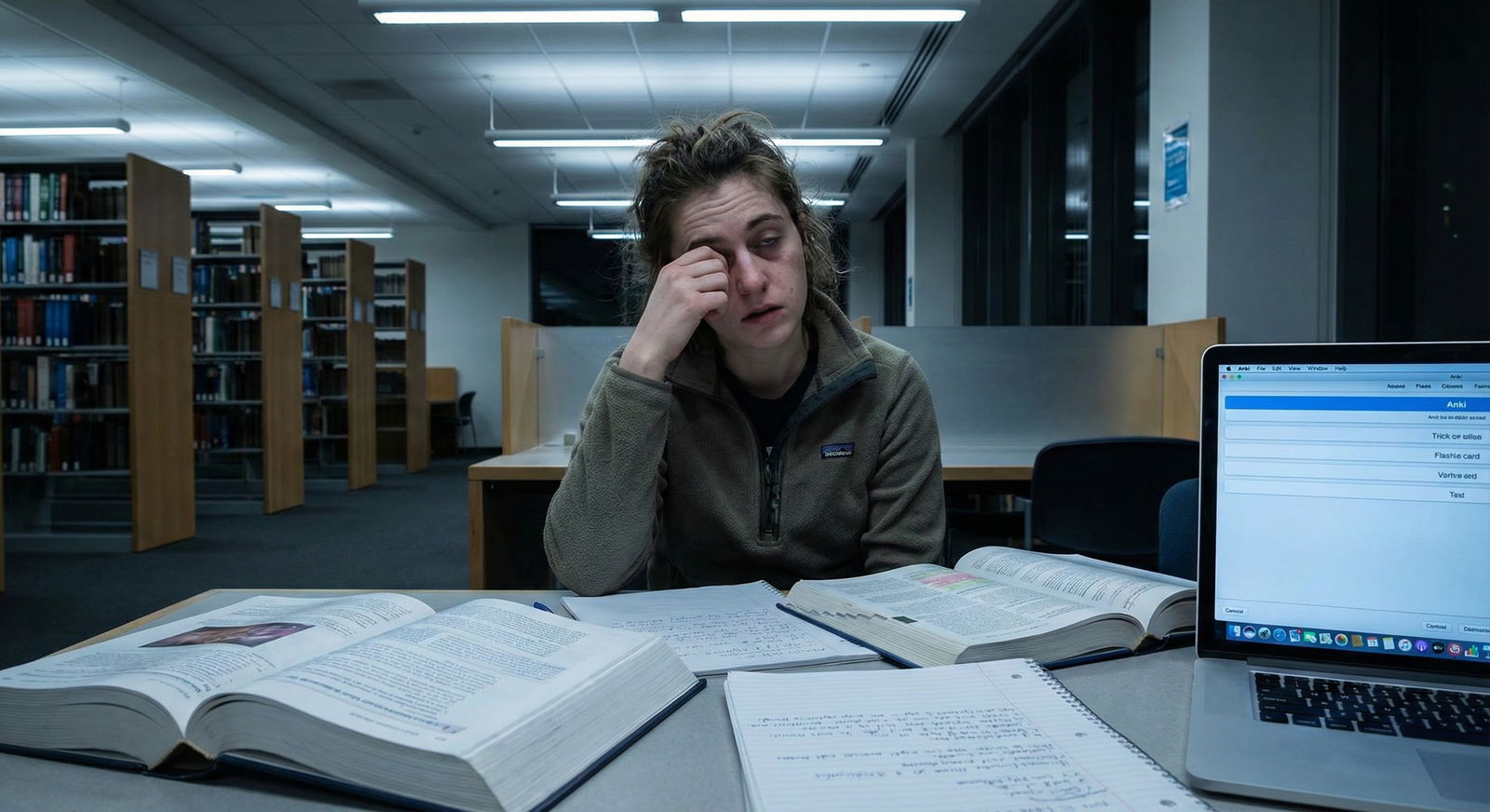
What do you do when it feels like everyone else in your class is handling med school just fine… and you’re the only one barely holding it together?
Because that’s what it feels like, right?
Everyone else looks:
- Steady in small group
- Calm on rounds
- “Busy but good!” when you ask how they’re doing
Meanwhile you’re thinking: “If anyone could see inside my head, they’d pull me from this program for being too fragile.”
Yeah. I’ve been there. And I’ve watched a lot of other people be there while pretending they weren’t.
Let’s actually talk about what’s real vs what your brain is currently screaming at you.
The “Everyone Else Is Fine” Illusion
You walk into the library.
You see:
- Someone with Anki open at 5 a.m.
- Two people laughing over coffee, half-opened First Aid between them
- A guy watching Boards & Beyond at 2x speed, taking color-coded notes
Your brain: “Cool. Everyone’s thriving. I’m toast.”
Here’s the part you’re missing: you’re comparing your internal chaos to everyone else’s external performance.
Medical school is like a giant, emotionally repressed costume party.
The costume is: “I’m good. Just tired.”
Most people:
- Cry at home, not on campus
- Freak out in group chats, not on ward rounds
- Ask for extensions quietly, not on Instagram
You’re not seeing:
- The person who had a panic attack in their car before OSCEs
- The classmate who literally failed an exam and is now re-taking, quietly disappearing from social stuff
- The gunner-looking student who is on antidepressants and hasn’t told anyone
I’ve heard so many versions of:
“I thought you were totally fine; I was comparing myself to you” from people who were barely hanging on.
Everyone’s silently comparing themselves to everyone else’s best performance.
You are not uniquely weak.
You’re just more honest with yourself about how hard this is. That’s not a flaw.
How Bad Is It Really? Your Brain’s Not a Reliable Narrator
The problem with anxiety is it doesn’t just tell you that things are hard. It rewrites the entire story:
- “I’m more stressed than I should be”
- “Other people are busy, I’m drowning”
- “If I say I’m struggling, they’ll think I’m not cut out for medicine”
I’m going to say something blunt: med school is already hard. Your anxious brain makes it look catastrophic.
Think of it like this:
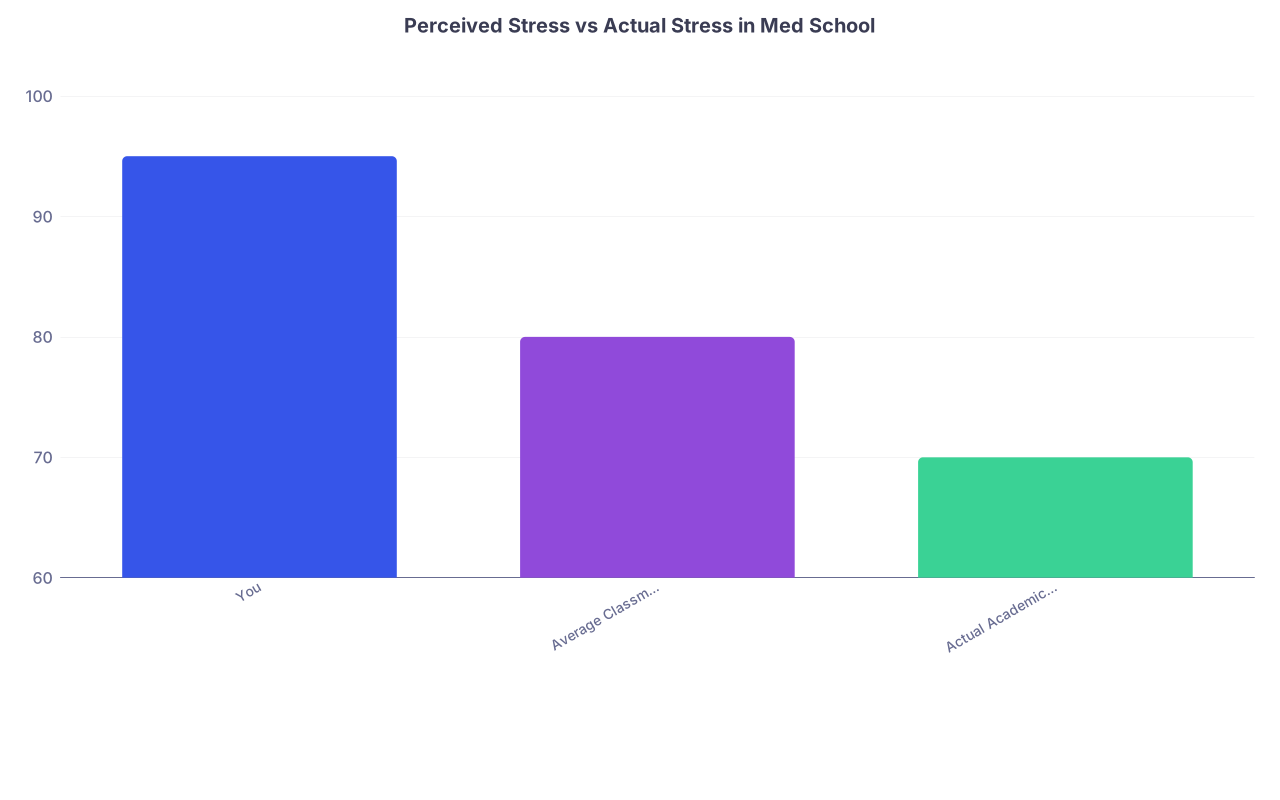
| Category | Value |
|---|---|
| You | 95 |
| Average Classmate | 80 |
| Actual Academic Load | 70 |
- Actual load: heavy, objectively
- Average stress: very high
- Your perceived stress: “I’m 2 inches from total collapse”
The academic demand is real. But your interpretation — “this proves I don’t belong” — that’s the part that lies.
Signs your brain is over-amplifying:
- You interpret “I’m tired” from others as “They’re handling it better than me”
- You minimize your own effort (“I’m just lazy”) while glorifying others’ (“She’s so disciplined”)
- You see any mistake — wrong answer on rounds, lower quiz score, missed question on UWorld — as a personality verdict, not a learning step
None of that is “you seeing clearly.” That’s you looking through a lens that is permanently turned up to disaster mode.
What You’re Not Seeing: The Hidden Struggle Around You
I know it feels like everyone else is somehow “built for this.” But if you actually could listen to internal monologues during exam season, it would sound like a psych ward waiting room.
You’d hear:
- “If I fail this block, I’ll never match.”
- “I’m pretty sure I’m the dumbest one here.”
- “I haven’t slept properly in three weeks and my chest hurts constantly.”
Let me break down what often actually exists in a class, even if nobody talks about it openly:
| Issue | Rough Proportion (Unofficial, but common) |
|---|---|
| Significant anxiety | 30–50% |
| Depressive symptoms | 20–40% |
| On meds / in therapy | 15–30% |
| Burnout feelings | >50% |
| Considering quitting | 10–20% |
These aren’t “some rare weaklings.” This is your cohort.
You just don’t see the breakdowns in lecture halls because people hold it together until they get to:
- Their car
- The bathroom stall
- The shower
- Their notes app at 2 a.m.
And then they come back the next day in fresh scrubs, and you walk by thinking they’ve cracked the code.
They haven’t.
They’re just hiding it in the exact same way you try to.
Reading the Room Without Destroying Yourself
You’re probably doing this thing where “reading the room” actually just means “collecting evidence that I’m the worst one here.”
Let’s fix that.
1. Stop using everyone else as a diagnostic tool for your worth
You notice:
- Someone stayed until midnight in the library
- A friend watched 4 lectures in one day
- A classmate did 200 Anki reviews before 9 a.m.
Your interpretation: “They’re serious. I’m not.”
Reality: you have no idea:
- If they’re massively behind
- If they’re burning out
- If they understood anything they just did
- If they’re way more anxious than you
You can observe the room for grip on reality (“Are we all completely over this exam?”) but not for worthiness (“Am I allowed to be here?”). Different job.
2. Ask better questions than “How are you?”
You want to know how everyone’s coping but all you hear is:
“Busy, tired, hanging in there.”
Try more specific questions with people you trust:
- “Real answer: how much are you actually understanding vs memorizing?”
- “On a 1–10 scale, how close are you to meltdown this week?”
- “Are you actually sleeping?”
You’ll be surprised how quickly “I’m good” turns into “Honestly, I’m wrecked.”

3. Separate “coping well” from “performing well”
Someone can:
- Crush exams
- Sound slick on rounds
- Present a patient beautifully
…and still be:
- Not sleeping
- Numb or miserable
- Running purely on fear
High performance doesn’t equal healthy coping.
You might be doing worse academically but coping more honestly — which is uncomfortable, but actually healthier long term.
Spotting When You’re Actually Not Okay (Not Just “Med School Tired”)
Here’s the scary part — and I won’t sugarcoat this: there is a point where you’re not just “stressed like everyone else.” You’re in the danger zone.
And med school culture does a great job of normalizing red-flag behavior as “dedication.”
Here are signs you’re not just anxious, you’re really not okay:
- You wake up and immediately feel dread, every day, no breaks
- You’re crying multiple times a week and it’s starting to feel normal
- You can’t concentrate long enough to actually read a page, not just occasionally, but constantly
- You’re skipping meals or bingeing because you “don’t have time” or “don’t care anymore”
- You have thoughts like “If I got into a car accident and didn’t have to take this exam, that wouldn’t be so bad”
That last one? That’s not just stress. That’s your brain waving a massive red flag.
This is where people usually say, “If you feel this way, reach out for help.”
So I’ll say it more bluntly: if this is you and you keep pretending it’s fine because “everyone else is stressed too,” you’re playing chicken with your own mental health.
You’re not weak for needing help. You’re just hitting the limit of how much psychological abuse a human can take from their own expectations and this system.
How to Cope Without Trying to Out-Suffer Everyone
Let me guess: part of you thinks the “right” way to prove you belong is to suffer quietly and work more than everyone else.
That’s how people break. Fully. Not in a cute “I’m so tired lol” way. In a medical leave sort of way.
Let’s talk about coping that’s actually sustainable, not Pinterest-inspirational.
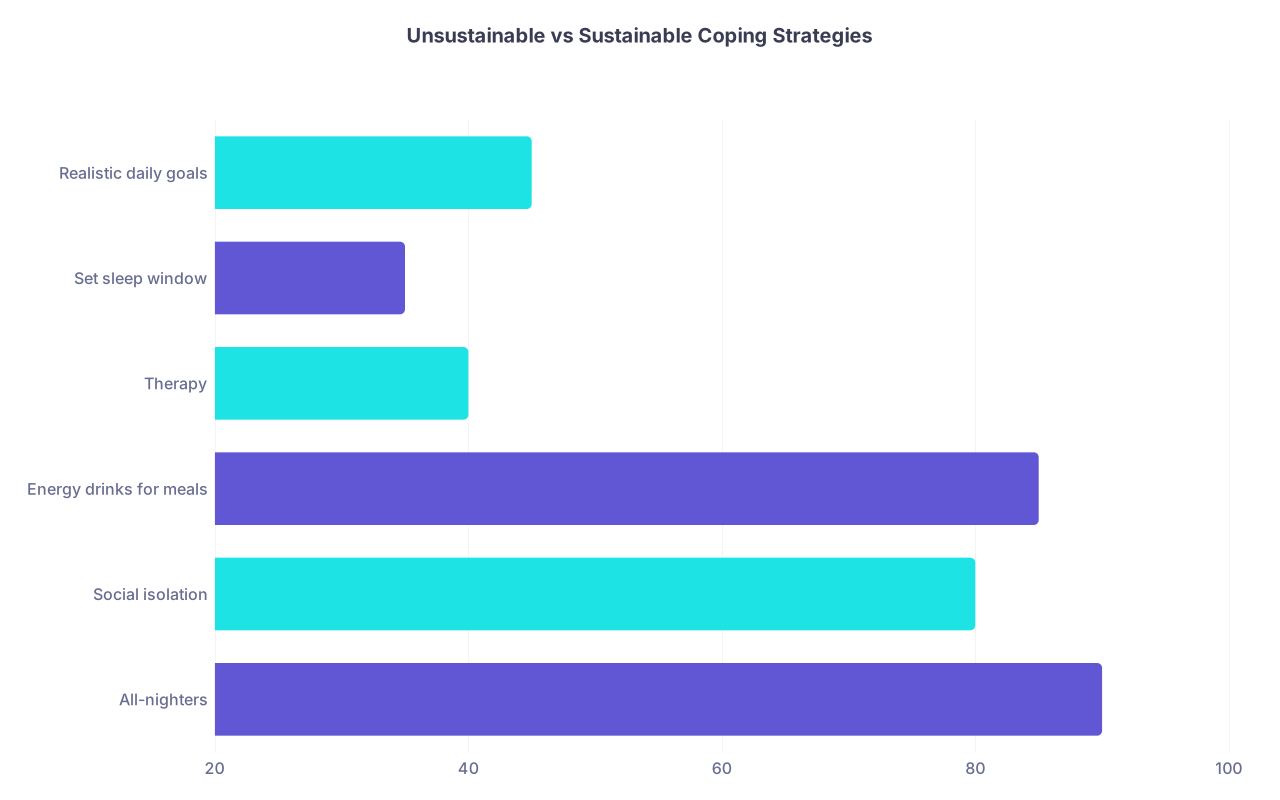
| Category | Value |
|---|---|
| All-nighters | 90 |
| Social isolation | 80 |
| Energy drinks for meals | 85 |
| Therapy | 40 |
| Set sleep window | 35 |
| Realistic daily goals | 45 |
Left side: what everyone brags about.
Right side: what actually keeps you functional.
A few things that are boring but non-negotiable:
- Sleep with boundaries, not perfection
No, you won’t get 8 hours every night. But if you’re “studying” until 2 a.m. while reading the same page 5 times, you’re not actually working — you’re just marinating in anxiety.
Set something like: “Books shut by midnight no matter what.” You’ll feel guilty at first. Then your brain will slowly remember how to be a brain.
- Have at least one person you’re honest with
Not the “haha we’re all dying” level. The “I’m actually scared I can’t do this” level.
This can be:
- A classmate
- A partner
- A sibling
- A therapist
You don’t need a big circle. You need 1–2 people who see the real version of you.
- Stop turning every bad day into a personality judgment
Bombed a quiz?
Struggled to answer a pimp question?
Blanked in OSCE?
This doesn’t mean:
- “I’m stupid.”
- “I’m behind forever.”
- “I shouldn’t be here.”
It means:
“Med school is designed to be more than I can perfectly manage. Today, it was more than I could handle. That sucks. It doesn’t define my entire trajectory.”
Easier said than done, yeah. But you can practice this.
Therapy, Accommodations, and the Fear of Being “Found Out”
I know what your brain says:
“If I go to counseling, if I get formal accommodations, someone’s going to flag me as not fit to be a doctor.”
Here’s reality:
Most schools would rather quietly help you stay functional than deal with a student in full crisis, failing out or getting seriously harmed.
You are not the first anxious, depressed, burnt-out student they’ve seen.
You’re not even in the top 20 weirdest cases.

Stuff you can actually do:
- Email student mental health / counseling service. They’ve absolutely seen med students worse off than you.
- Ask your dean of students or wellness office (quietly) about academic support — reduced load for a block, exam accommodations, etc.
- If needed, talk to a physician about meds. Half your “everyone else is coping better” group is probably already on something and just not talking about it.
I’ve seen students only reach out when they were on the verge of dropping out or getting hospitalized. You don’t get extra moral points for waiting until you’re completely shattered.
Concrete Ways to “Read the Room” Without Destroying Yourself
If you still want to get a sense of how your peers are doing — in a healthy way — here’s how.
1. Ask anonymous, real questions in group chats or anonymous forms
Stuff like:
- “On a scale of 1–10, how burnt out are you right now?”
- “Anyone else feeling like they’re behind on literally everything?”
You’d be amazed how quickly people answer “same” when someone else goes first.
2. Pay attention to patterns, not isolated data points
One person doing 1,000 flashcards a day doesn’t mean that’s “normal.”
Look for averages:
- How many hours a day are most people actually studying (when they’re honest)?
- How many practice questions are people doing per week, not just bragging about once?
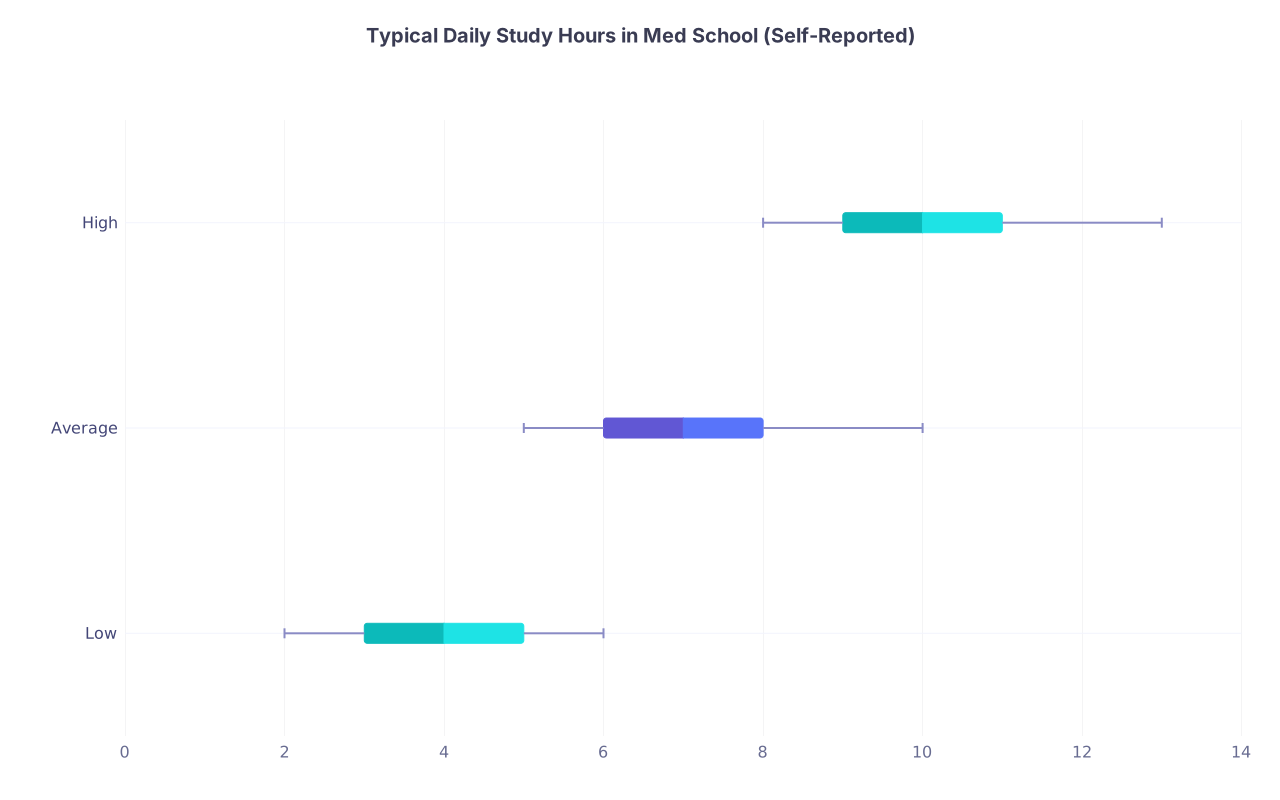
| Category | Min | Q1 | Median | Q3 | Max |
|---|---|---|---|---|---|
| Low | 2 | 3 | 4 | 5 | 6 |
| Average | 5 | 6 | 7 | 8 | 10 |
| High | 8 | 9 | 10 | 11 | 13 |
You’re not supposed to feel great all the time at “average.” You’re supposed to feel stretched, tired, and occasionally overwhelmed. That’s not failure. That’s standard.
3. Keep a tiny log for yourself
Not of productivity. Of sanity.
Each day, answer:
- Did I sleep at least 5–6 hours?
- Did I eat something resembling real food?
- Did I speak honestly to one person at least once this week?
If those are all consistently “no,” that’s not med school being hard. That’s you slipping into crisis mode. Time to bring in support.

| Step | Description |
|---|---|
| Step 1 | Feeling Overwhelmed |
| Step 2 | Adjust Study Plan |
| Step 3 | Talk to Trusted Friend |
| Step 4 | Prioritize Sleep & Food |
| Step 5 | Contact Counseling/Dean |
| Step 6 | Monitor & Reassess |
| Step 7 | Daily Functioning Okay? |
| Step 8 | Basic Needs Met? |
| Step 9 | Still Struggling? |
You’re Not the Only One Faking Calm
Look — I know that logically you probably understand that other people struggle.
But emotionally, it still feels like you’re the outlier. The fragile one. The borderline case.
You’re not.
You’re just more aware of your own internal mess than of anyone else’s. And med school rewards performance, not honesty, so everyone learns to put on the same mask.
You’re not reading the room wrong because you’re stupid. You’re reading it wrong because the room is curated — by fear, by culture, by everyone trying to look like they’re fine.
You don’t have to be the chill, unbothered, “I’m coping great” med student to belong here. You’re allowed to be the anxious, overthinking, “I cry sometimes after exams” med student and still become a good doctor.
Key takeaways:
- You’re almost certainly not the only one barely coping — you’re just the only one whose inner world you actually see.
- High performance from your classmates doesn’t mean healthy coping; stop using others as proof you’re weak.
- If your day-to-day life feels like constant dread and collapse, that’s not “normal med school stress” — that’s your sign to pull in real support, not suffer harder.