
You do not have a “willpower problem.” You have a systems problem.
When medical students tell me, “I literally cannot focus,” they almost always blame laziness, lack of motivation, or some vague flaw in their character. That is wrong. What you actually have is a combination of cognitive overload, poor conditions, and zero concrete protocol for what to do when your brain refuses to cooperate.
So let us fix that.
Below is exactly what to do when you sit down to study and your brain is just… blank, scattered, or crawling Twitter for the fifteenth time. This is not mindset fluff. It is a stepwise protocol you can run—like an emergency algorithm—for those “I can’t focus at all” days.
Step 1: Run a 3-Minute Systems Check (Before You Blame Yourself)
If you skip this, you will waste hours fighting your brain instead of fixing the problem.
You run H&Ps, ROS, and check vitals on patients. Start doing the same for your own cognition.
1.1 Check the Four Non-Negotiables
You cannot out-discipline your physiology. Quick screen:
Sleep:
- Last night: under 5–5.5 hours? Your focus will be objectively impaired.
- Last 3 nights: averaging under 6 hours? Your working memory is compromised.
Food (and blood sugar):
- Last real meal >4–5 hours ago?
- Only caffeine + sugar today?
- Feeling shaky, irritable, or “brain foggy”?
Hydration / Caffeine balance:
- <1–2 glasses of water so far?
3 coffees/energy drinks already? Jittery, racing thoughts, or crashy?
Stress load:
- Any acute hits in the last 48 hours? (exam result, conflict, patient death, breakup, family issue)
- Mind constantly replaying one event or conversation?
If any of those are badly off, your next step is not another Anki card. It is micro-correction:
- 300–500 ml water
- Small balanced snack (protein + complex carb + some fat)
- 5–10 minute walk, ideally outside
- Decide: Are you catastrophically sleep-deprived or just under-rested?
If you slept 2–3 hours post-call and you are trying to “crush UWorld,” focus is not your main issue. You need a damage-control plan for a low-cognition day, not heroic fantasies.
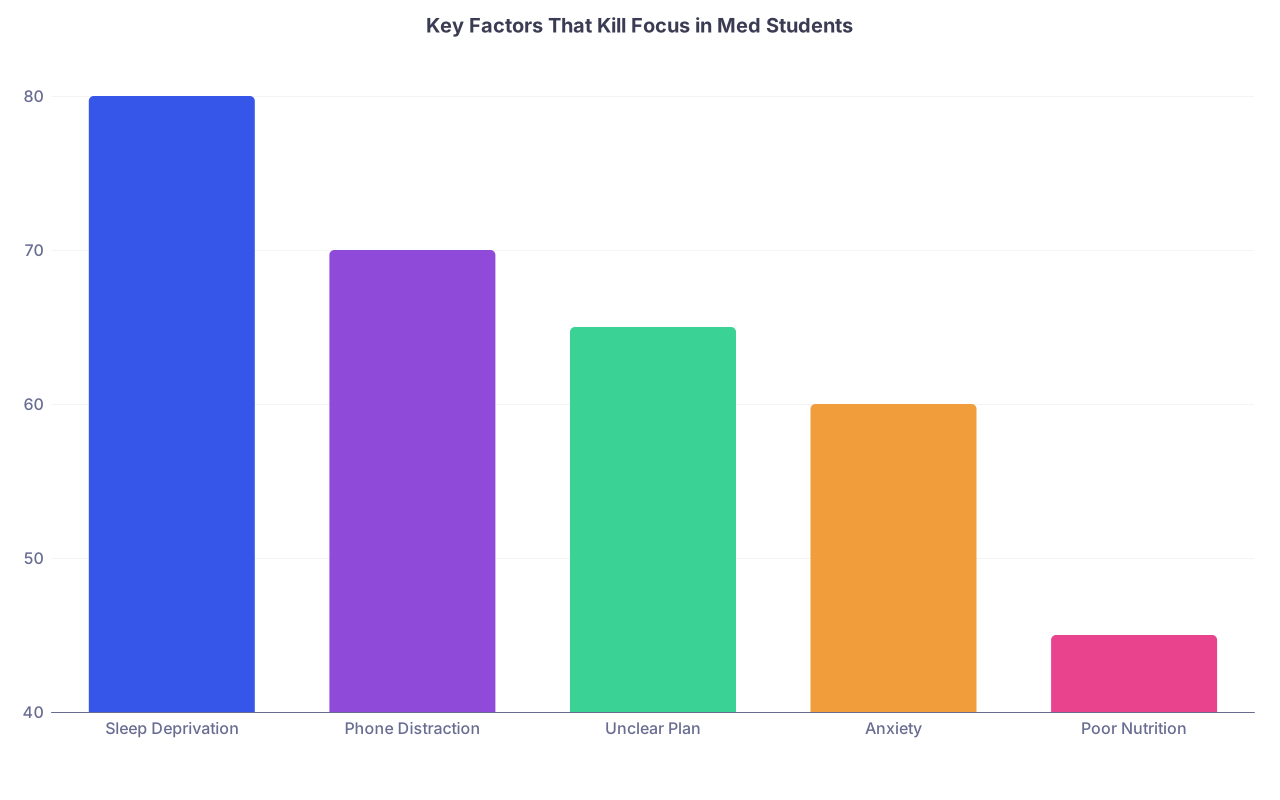
| Category | Value |
|---|---|
| Sleep Deprivation | 80 |
| Phone Distraction | 70 |
| Unclear Plan | 65 |
| Anxiety | 60 |
| Poor Nutrition | 45 |
1.2 Decide Your Cognitive Tier for Today
Brutal honesty. Rank yourself:
- Tier 1: Sharp – Slightly tired maybe, but can follow complex reasoning, do practice questions, synthesize.
- Tier 2: Dull but Functional – You can read, review, click Anki, but deep reasoning is slower.
- Tier 3: Fried – You re-read the same sentence 4 times, cannot hold a paragraph in working memory, feel emotionally raw.
Stop pretending a Tier 3 brain can do Tier 1 tasks. That mismatch is exactly why you end up doom scrolling and then hating yourself.
Decision:
- Tier 1 → You can run the full study protocol below.
- Tier 2 → You will run a modified, lighter protocol with more structure and shorter blocks.
- Tier 3 → You go into recovery + minimum viable productivity mode, which I will spell out later.
For now, accept the tier. No drama. Just like GCS scoring—objective, not moral.
Step 2: Hard Reset Your Brain (10–20 Minutes)
When you “cannot focus at all,” your default response is usually one of two bad strategies:
- Keep forcing yourself to read the same line.
- Escape into your phone.
Both train your brain that study time = misery or distraction. You have to break that loop with a deliberate reset.
2.1 The 10–20 Minute Reset Protocol
Do one of these. Not all. One.
Option A: Outdoor Reset (best choice)
- Go outside. Leave your phone in your pocket or bag.
- 10–15 minutes of brisk walking.
- No podcasts, no studying, no calls.
- Let your eyes look far away (not a screen, not a book).
- Breathe slower than usual. In for 4–5 seconds, out for 6–7 seconds, periodically.
Option B: Movement Reset (if you cannot go outside)
- 5–10 minutes of light bodyweight movement:
- 10 squats × 3
- 10 wall pushups × 3
- 30–60 seconds of shaking out arms/legs
- Then 3–5 minutes of box breathing:
- In 4 seconds → hold 4 → out 4 → hold 4. Repeat.
Option C: Sensory Reset (if you are in the library and stuck)
- Put on noise-cancelling headphones or soft neutral noise (brown noise, rainfall).
- Close eyes for 5 minutes with slow breathing.
- Then 5 minutes of gentle stretching in your chair.
This reset is not procrastination. It is equivalent to stabilizing a patient before starting a long case. You are resetting your nervous system out of fight-or-flight and into a state that can actually handle information.
Step 3: Define a Single Clear Target (Kill the Vague Study Plan)
Unfocused students almost always have vague goals:
- “Study cardio.”
- “Do some Anki.”
- “Review lectures.”
That is nonsense. Your brain hates fuzziness. Especially when stressed.
You must define one concrete target for the next block. Something measurable you can either fail or complete.
Good targets:
- “Complete 15 UWorld questions on heart failure with full review.”
- “Do today’s 120 due Anki cards for pharm.”
- “Outline 2 lectures (renal 1 and 2) into my own notes.”
- “Summarize 1 practice NBME question block mistakes.”
Pick one. Not three. You are going to run a short, high-friction block to rebuild trust in your attention.
| Vague Goal | Concrete Target |
|---|---|
| Study cardio | Complete UWorld set: 15 HF questions + review |
| Do Anki | Clear 150 due Anki for micro only |
| Review lectures | Outline Renal 1 & 2 slides into 2 pages of notes |
| Prep for OSCE | Practice 2 full H&Ps with checklists |
If you are in Tier 2 or Tier 3 brain mode, your target must be smaller than you think is “reasonable.” You are not trying to be reasonable. You are trying to get a win.
Step 4: Engineer a Distraction-Proof 25–40 Minute Block
Now you turn this into a protocol. Not vibes.
4.1 Physical Environment: Minimum Spec
You do not need a perfect environment. You need one that is “not blatantly hostile to concentration.”
Checklist:
- Desk or table (not your bed).
- Chair with back support.
- Only the materials you actually need for the next 30 minutes. Nothing else.
- Phone physically away from reach:
- Best: in another room.
- Acceptable: in bag, behind you, on airplane or focus mode.
If you insist on “needing” your phone for Amboss / UpToDate / 2FA, you are probably lying to yourself. Use your laptop for resources. Phone stays away.
4.2 Software Environment: Lock It Down
Before you start the block:
- Close all unrelated browser tabs (email, social, WhatsApp web).
- Open only:
- Question bank / Anki / PDF viewer / OneNote / Notion—whatever you will actually use.
- Consider a blocker app:
- Mac/Windows: Cold Turkey, Freedom, FocusMe.
- Mobile: Forest, Stay Focused, Flipd.
Set the blocker for at least the length of your next block.
4.3 The Micro-Block Protocol (Pomodoro With Teeth)
You are going to run this exactly, not approximately.
Set a timer:
- Tier 1 brain: 35–45 minutes.
- Tier 2 brain: 25–30 minutes.
- Tier 3 brain: 10–15 minutes, max.
Announce your task out loud or on paper:
- “Next 25 minutes = only UWorld heart failure set.”
Start the timer and DO NOT:
- Check messages.
- Change your task.
- Open new tabs unrelated to the target.
When (not if) your mind drifts:
- Notice it.
- Write a one-word note on scratch paper: “text,” “food,” “IG,” whatever.
- Bring attention back to the task.
That is it. No self-lecture, no guilt.
When timer ends:
- Stop. Even if you feel “in the zone.”
- Take a 5-minute break:
- Stand up, move, bathroom, water.
- Do not start a new deep conversation or open any app that will suck you in.

| Step | Description |
|---|---|
| Step 1 | Pick single clear target |
| Step 2 | Set timer 25-40 min |
| Step 3 | Remove phone & distractions |
| Step 4 | Focus on target only |
| Step 5 | Note distraction on paper |
| Step 6 | Timer ends |
| Step 7 | 5-min movement break |
| Step 8 | Mind wanders? |
Do 2–3 blocks like this before judging your “focus” today. You are retraining your prefrontal cortex like a muscle that has been deconditioned by constant micro-distractions.
Step 5: Pick the Right Work Type for Your Brain State
Certain study tasks are cognitively heavier than others. If you mismatch task and brain tier, you will burn out and conclude, “I just cannot focus.”
Here is how to match them.
5.1 Tier 1 Brain (Sharp): Do High-Yield Heavy Lifts
This is your best cognitive bandwidth. Use it properly.
Priority tasks:
- New, challenging UWorld/AMBOSS blocks with full explanations.
- NBME practice exams and serious review.
- Integration tasks:
- Making concept maps.
- Teaching concepts aloud to an imaginary learner.
- Doing “why not the other answers?” review.
Block structure:
- 2–4 × 35–45 minute blocks, then a longer 15–20 minute break.
- Then repeat if your schedule allows.
5.2 Tier 2 Brain (Dull but Functional): Do Structured, Medium-Demand Work
Your attention is there, but sluggish. You fix that with strong structure and shorter intervals.
Best tasks:
- Anki reviews with a strict cap per block.
- Rewatching key segments of lectures at higher speed while taking minimal notes.
- Focused reading of sections you already partially know.
- Reviewing mistakes from prior question blocks.
Block structure:
- 25–30 minute work blocks.
- 5–7 minute breaks.
- Very clear sub-goals: “60 Anki cards” or “10 pages of path review.”
5.3 Tier 3 Brain (Fried): Minimum Viable Productivity + Recovery
This is where most med students make a terrible mistake. They insist on doing Tier 1 work with a Tier 3 brain, fail, and then drown in guilt. I am telling you directly: that approach is dumb.
When you are truly fried:
Your primary job is to:
- Prevent further burnout.
- Protect your future brain function.
- Squeeze out low-intensity, low-friction work where possible.
Example Tier 3 tasks:
- Very easy Anki reviews on topics you almost know by heart.
- Light content exposure: listening to a Board & Beyond or Sketchy video lying down.
- Organizing digital files or schedules.
- Reviewing condensed summaries you already made.
Rules:
- 10–15 minute blocks max.
- 5–10 minute breaks.
- Frequent check-ins: “Am I getting more or less functional?”
If after 2–3 short blocks you still feel like concrete, you pivot to full recovery mode: sleep, therapy, walk, talk to someone, decompress. That is not weak. That is preserving your next 5 days of focus.
Step 6: Use Micro-Tools When Your Attention Slips Mid-Block
Even with a good block setup, your attention will wander. Constantly. That is normal.
Here is what you do when it happens instead of spiraling.
6.1 The 5-Second Reset
When you catch yourself staring at your phone, tab, or wall:
- Put the thing down or close the tab.
- Look at a single point (dot on the wall, corner of laptop) for 5 seconds.
- Take one slower breath.
- Say (quietly) what you are doing next:
- “Back to Q12.”
- “Restart Anki card 43.”
This takes 10 seconds. It breaks the autopilot loop.
6.2 The “Last Question” Technique for Question Banks
When doing questions and your focus drops:
- Commit to “just one more question with full attention.”
- Then allow yourself to stop if you are still fried.
Your brain can usually tolerate one more question. Often that is enough to regain rhythm.
6.3 The Distraction Parking Lot
Your brain throws random thoughts at you:
- “Email that attending.”
- “Text Alex back.”
- “Order groceries.”
- “Look up that weird symptom.”
Instead of following each thought, you:
- Keep a scratch paper next to you.
- Every time a “to-do” pops up → write one or two words.
- Promise yourself: “I will look at this during my break.”
This sounds trivial. It is not. This is how you stop your executive function from constantly being hijacked.
Step 7: Fix the Bigger Stuff If This Is Happening Every Day
If you occasionally cannot focus, the protocol above is enough. If you almost always cannot focus, then there is a deeper issue you need to stop ignoring.
Here are the main culprits I see repeatedly in med students.
7.1 Chronic Sleep Debt
If you are averaging 5–6 hours a night more than 3–4 nights a week, your focus problems are not a mystery.
Non-negotiable changes:
- Fixed wake time 6–7 days a week (even on weekends) within 1 hour.
- Screen cutoff 30–60 minutes before bed (blue light + dopamine hit at midnight = wrecked sleep architecture).
- Caffeine curfew 8–10 hours before target bedtime.
I have watched students jump from “I can’t concentrate for 10 minutes” to “I can do 2-hour blocks” simply by going from 5 hours to 7 hours of average sleep.
7.2 Unmanaged Anxiety or Depression
If your attention problems sit on top of:
- Persistent low mood, guilt, or hopelessness.
- Anhedonia (you do not enjoy anything, even things you used to like).
- Constant anxiety, rumination, catastrophizing.
- Physical symptoms: chest tightness, racing thoughts, stomach issues.
Then pure “study hacks” will not fix this. You need support.
Concrete actions:
- Talk to your school’s mental health service or counseling center.
- Get an appointment with a therapist or psychiatrist who works with trainees.
- If you are already under care, tell them explicitly: “My attention is shot. I cannot focus enough to function.”
This is not weakness. It’s triage.
7.3 Possible ADHD or Other Neurodivergence
If you’ve had lifelong:
- Difficulty sustaining attention in tasks that are not immediately rewarding.
- Chronic procrastination and disorganization.
- Restlessness, fidgeting, interrupting.
- “All or nothing” cycles of hyperfocus and then complete shutdown.
And in med school it suddenly became unmanageable, you might need a formal evaluation.
Action steps:
- List concrete examples of how attention issues are impacting you in med school.
- Ask your primary care or student health for a referral for ADHD assessment.
- Do not self-diagnose with TikTok. Get evaluated properly.
Treating underlying ADHD (behaviorally and sometimes with medication) can be a game-changer for focus.
Step 8: Build a Daily “Attention Hygiene” Routine
You brush your teeth twice a day. You need a similar routine for your attention.
Here is a simple daily structure that actually works for most med students.
8.1 Morning: Set the Cognitive Tone
Within the first hour of waking:
- 5–10 minutes outside light exposure (even if cloudy).
- Hydrate.
- Quick planning:
- Identify 1–3 key tasks for the day (not 10).
- Decide your first focused block and what it will be.
Avoid:
- Rolling over and opening social media.
- Diving straight into email or group chats.
Even 15 minutes of scroll as your first input trains your brain for fragmented attention all day.
8.2 Midday: Swap Mindless Scroll for Intentional Reset
Most students hit a slump post-lunch. They treat it with 45 minutes of chaotic scrolling.
Do this instead:
- Finish eating.
- Walk for 5–10 minutes.
- Then run one short 15–25 minute block of low-to-medium intensity work.
- Only then give yourself 5–10 minutes of mindless phone time if you really want it.
You are flipping the order: work → relax, not distract → guilt.
8.3 Evening: Protect Tomorrow’s Focus
Last 60–90 minutes before bed:
- No heavy planning, no emotionally loaded conversations if possible.
- Light tasks:
- Prep bag, clothes, and materials for tomorrow.
- Capture outstanding to-dos on a list so your brain is not holding them in working memory.
- Screen wind-down: at least 30 minutes of non-screen activity (shower, stretching, real book, quiet music).
This is how you stop lying awake running loops of unfinished tasks.
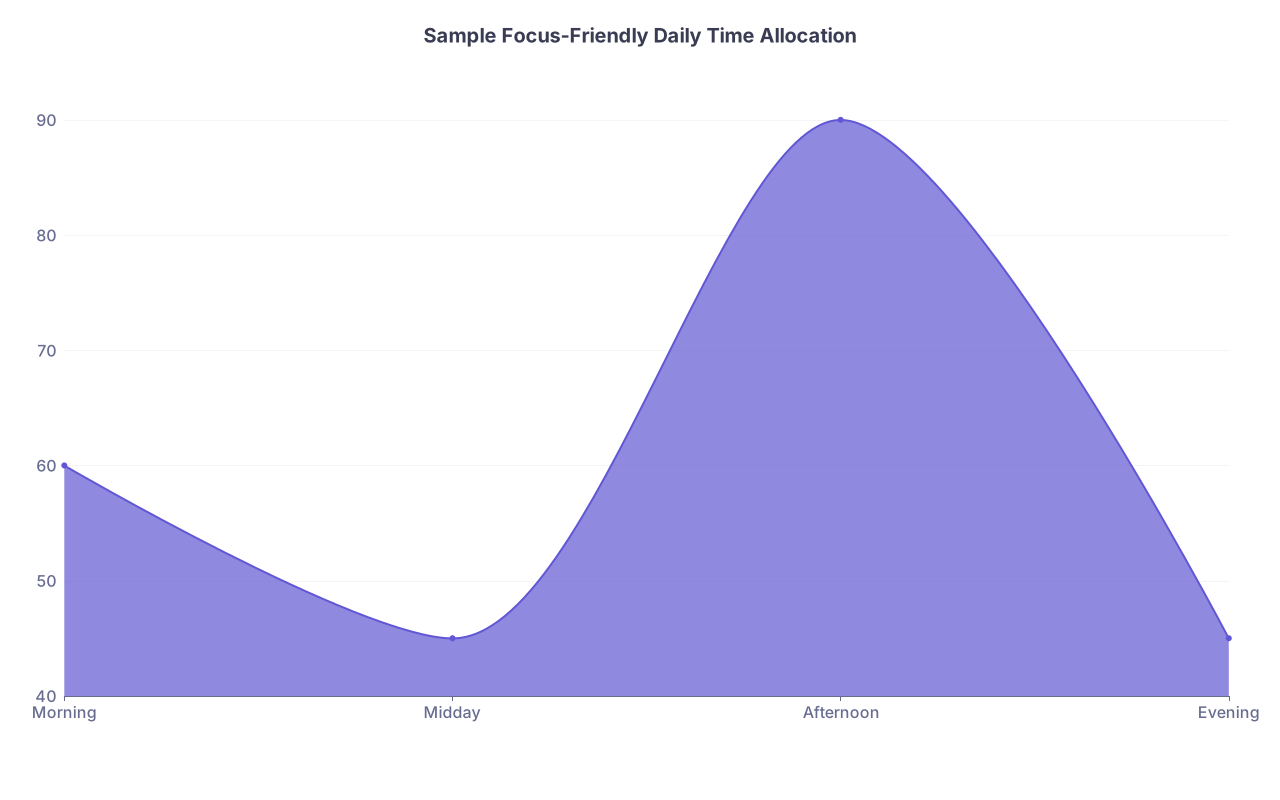
| Category | Value |
|---|---|
| Morning | 60 |
| Midday | 45 |
| Afternoon | 90 |
| Evening | 45 |
(Values = minutes in focused blocks. The point is not perfection, it is regularity.)
Step 9: Know the Difference Between a Bad Day and a Dangerous Pattern
There are red flags where “I can’t focus” is no longer a study problem. It is a safety issue.
Take this seriously if you notice:
- You cannot focus at all on anything, even fun activities or conversations.
- You are missing clinical responsibilities or patient care tasks due to mental fog.
- You are having thoughts like, “None of this matters,” “Everyone would be better off if I disappeared,” or any self-harm ideas.
- Friends or peers are saying, “You seem really off lately,” repeatedly.
At that point:
- Tell someone today: a trusted friend, partner, class dean, mental health provider.
- Use your school’s emergency or after-hours mental health line if needed.
- If you have active self-harm thoughts, go to the ED or call your local emergency number.
You would never ignore a crashing patient because “it is probably fine.” Do not do that to yourself.
Step 10: A Realistic Example: 1 “Hopeless” Day, Fixed
To make this concrete, here is how I would walk a student through a day where they wake up already feeling ruined.
Scenario:
MS2, boards in 7 weeks. Slept 4.5 hours after staying up doing questions. Wakes up anxious, exhausted, and cannot focus reading even a meme, let alone First Aid.
Protocol:
Systems check → Tier 3 brain.
- Under-slept. High anxiety. Physically depleted.
Immediate reset:
- Drink water, small snack.
- 15-minute walk outside with no phone.
Redesign the day:
- Accept that today will not be a “heroic” study day.
- Set a realistic target: 3–4 light-to-medium blocks total.
Block 1 (25 minutes):
- Task: 80–100 “easy” Anki reviews of old material.
- Environment: desk, phone away, single app open.
- 5–7 minute break: stretch, breathe, no phone till after break.
Block 2 (25 minutes) after 10–15 minutes:
- Task: Rewatch a 20-minute Boards & Beyond video on a topic already familiar.
- Take very minimal notes.
Long break (45–60 minutes):
- Proper meal.
- Maybe short nap (20–30 minutes), or quiet, non-digital downtime.
Block 3 (30 minutes):
- Task: Review explanations for 10–12 old UWorld questions that were previously marked incorrect.
- “Why was the right answer right; why were the others wrong?”
Evaluate at this point:
- If still fried → stop high-intensity work for the day.
- Evening: self-care, early bed, protect tomorrow’s sleep.
That student will go to sleep having actually done something, without deepening their burnout. The next day, with better sleep and less self-loathing, they can return to Tier 1 or Tier 2 level work far more easily.

Step 11: If You Are on Clinical Rotations: Adjust the Protocol
Clerkships and rotations kill focus in a different way: long days, early starts, constant pager interruptions, emotional load.
You cannot always control your schedule. You can control how you use the fragments.
11.1 Micro-Blocks Between Cases or Patients
Instead of:
- 10 minutes → Instagram
- 15 minutes → random group chat
Run:
10–15 minute Anki micro-blocks:
- 20–30 cards focused on the current rotation.
- Only that deck, nothing else.
5–10 minute question review:
- One question at a time with full explanation, not mindlessly clicking through a block.
11.2 Commute and Breaks
Use them deliberately:
- Commute in: brief audio review, or silence. Not constant stimulation.
- Lunch: 10 minutes to eat, 10–15 minutes for 1–2 questions or reviewing Anki, then 5 minutes of real mental break.
The key: decide in advance what each chunk of time is for. Do not leave it to the moment.
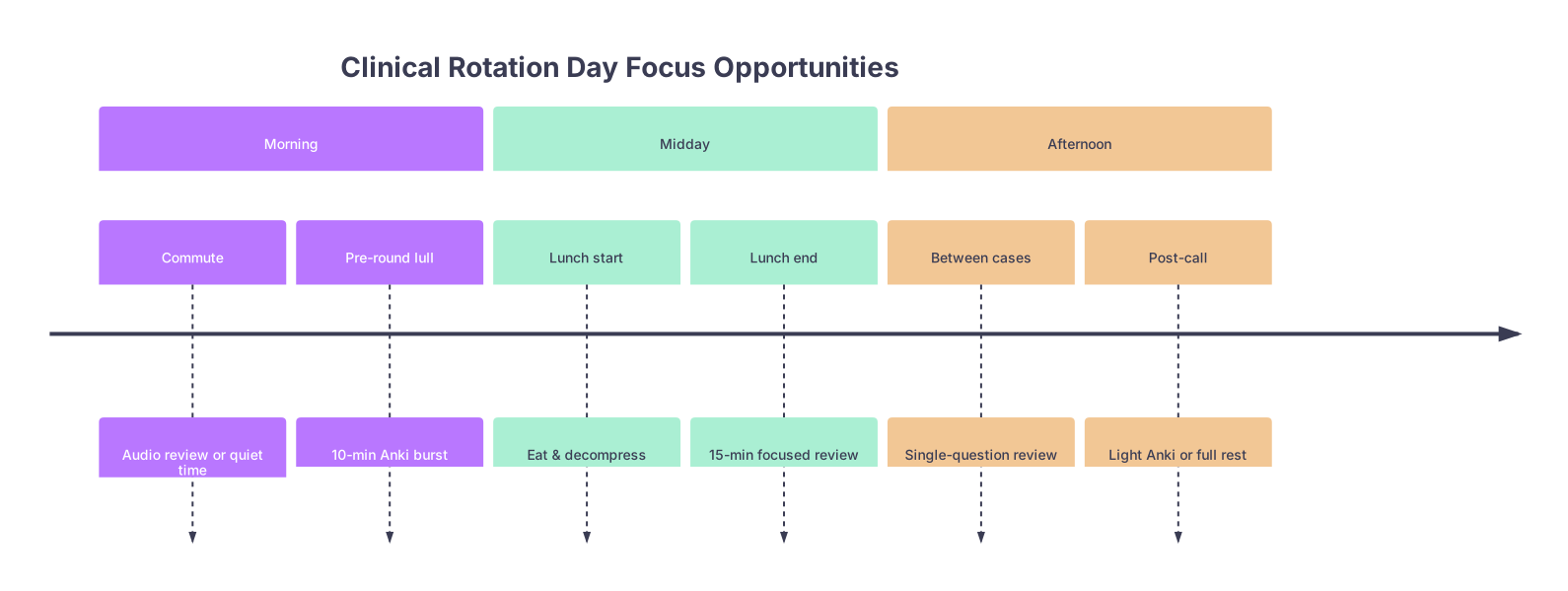
| Period | Event |
|---|---|
| Morning - Commute | Audio review or quiet time |
| Morning - Pre-round lull | 10-min Anki burst |
| Midday - Lunch start | Eat & decompress |
| Midday - Lunch end | 15-min focused review |
| Afternoon - Between cases | Single-question review |
| Afternoon - Post-call | Light Anki or full rest |
Step 12: Stop Using Shame as a Focus Tool
One last thing. Shame does not improve attention. It wrecks it.
I have heard variations of this countless times:
- “Everyone else is studying 10 hours a day; I can barely do 3.”
- “Maybe I am not cut out for medicine if I cannot even sit still.”
- “What is wrong with me? I used to be so disciplined in undergrad.”
Here is what is actually happening:
- The cognitive load in medical school is radically higher.
- Your environment is a nonstop distraction machine (phone, group chats, endless notifications).
- You were never taught serious focus hygiene or protocols.
So you are not failing a test everyone else passed. You are trying to run a modern operating system on outdated hardware and no manual.
The protocol in this article is the manual. It will not make you a productivity robot overnight. But if you run it consistently, you will absolutely see:
- Longer periods where you can stay engaged.
- Less time lost to doom scroll spirals.
- Far less guilt at the end of the day.
Your Next Step Today
Do this right now:
- Set a 20–25 minute timer.
- Put your phone in another room or in your bag.
- Pick one tiny, concrete task:
- 20 Anki cards, or
- 3 UWorld questions, or
- 2 pages of lecture review.
Run just one clean block using the protocol: no multitasking, no new tabs, distraction parking lot on a scrap paper.
When the timer rings, stand up and walk for 3–5 minutes.
That is your first rep. Do not wait until you “feel ready to focus.” This is how you train your brain to focus again—one clean block at a time.
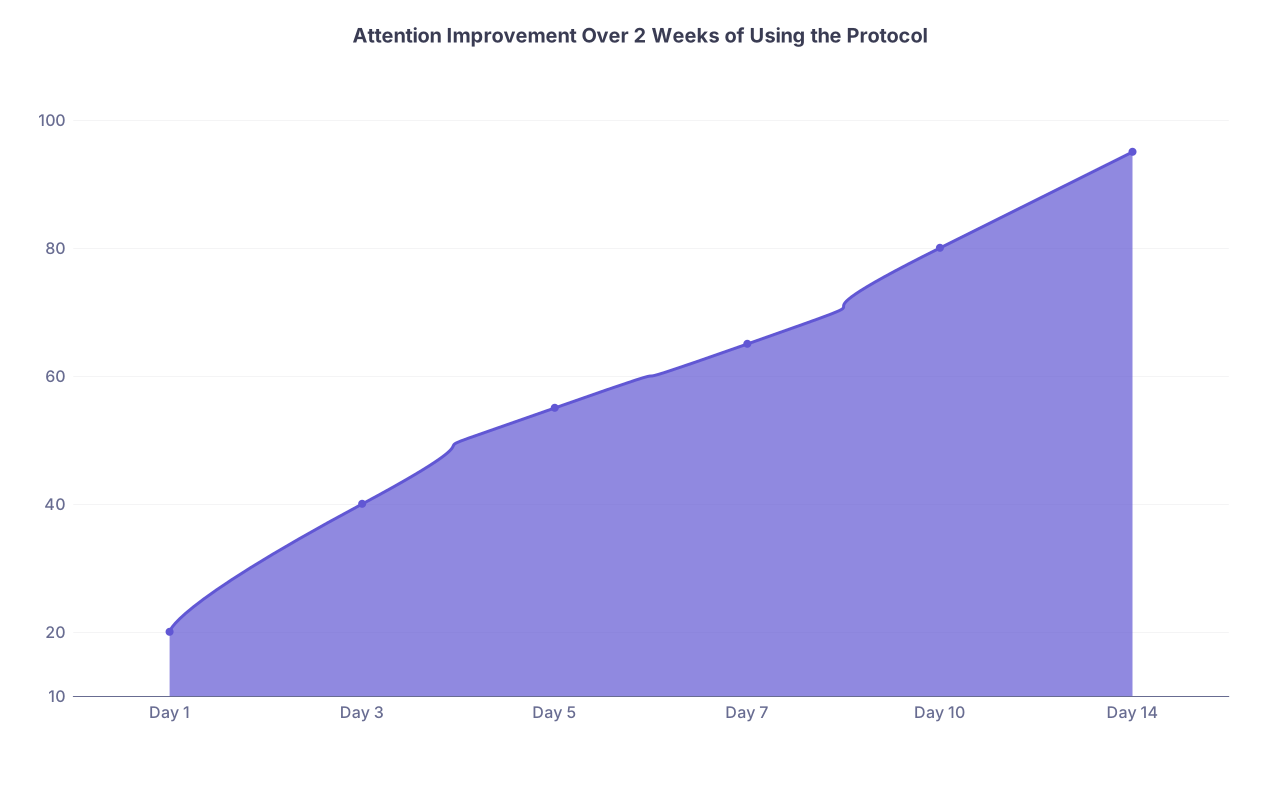
| Category | Value |
|---|---|
| Day 1 | 20 |
| Day 3 | 40 |
| Day 5 | 55 |
| Day 7 | 65 |
| Day 10 | 80 |
| Day 14 | 95 |
(The numbers represent minutes of effective focused study per day. Your curve will not be perfect, but it will trend up if you keep running the protocol.)