
Micro‑breaks are not cute productivity hacks. Used correctly, they are the difference between a sharp brain at hour 6 and a useless zombie at hour 3.
Most medical students are doing breaks wrong. Either:
- They plow through 6–8 hour “study blocks” with no real rest, then crash hard.
- Or they “take breaks” that are just TikTok, WhatsApp, or doom‑scrolling… which fry their attention even more.
You want micro‑breaks that actually restore your brain, not drain it.
This guide is the practical version. No fluffy “listen to your body” nonsense. You will get:
- What a real micro‑break is (and is not)
- Exactly how often to use them on long study days
- A menu of micro‑breaks that work for memorization, practice questions, and cramming
- A plug‑and‑play schedule you can test this week
- Fixes for the three things that usually ruin breaks: your phone, guilt, and momentum
1. What Micro‑Breaks Actually Are (And Why Most Fail)
A micro‑break is:
- 30 seconds to 5 minutes
- Done on purpose
- Designed to reduce mental fatigue or physical strain
- Not cognitively demanding and not emotionally agitating
That last part is where most people fail.
Scrolling Instagram for 5 minutes is not a break. It is a cognitive slot machine:
- High stimulation
- Rapid context‑switching
- Emotional spikes (envy, FOMO, anger, whatever the algorithm feeds you)
Your brain leaves that “break” more fragmented than before.
Think of your mental energy like this:
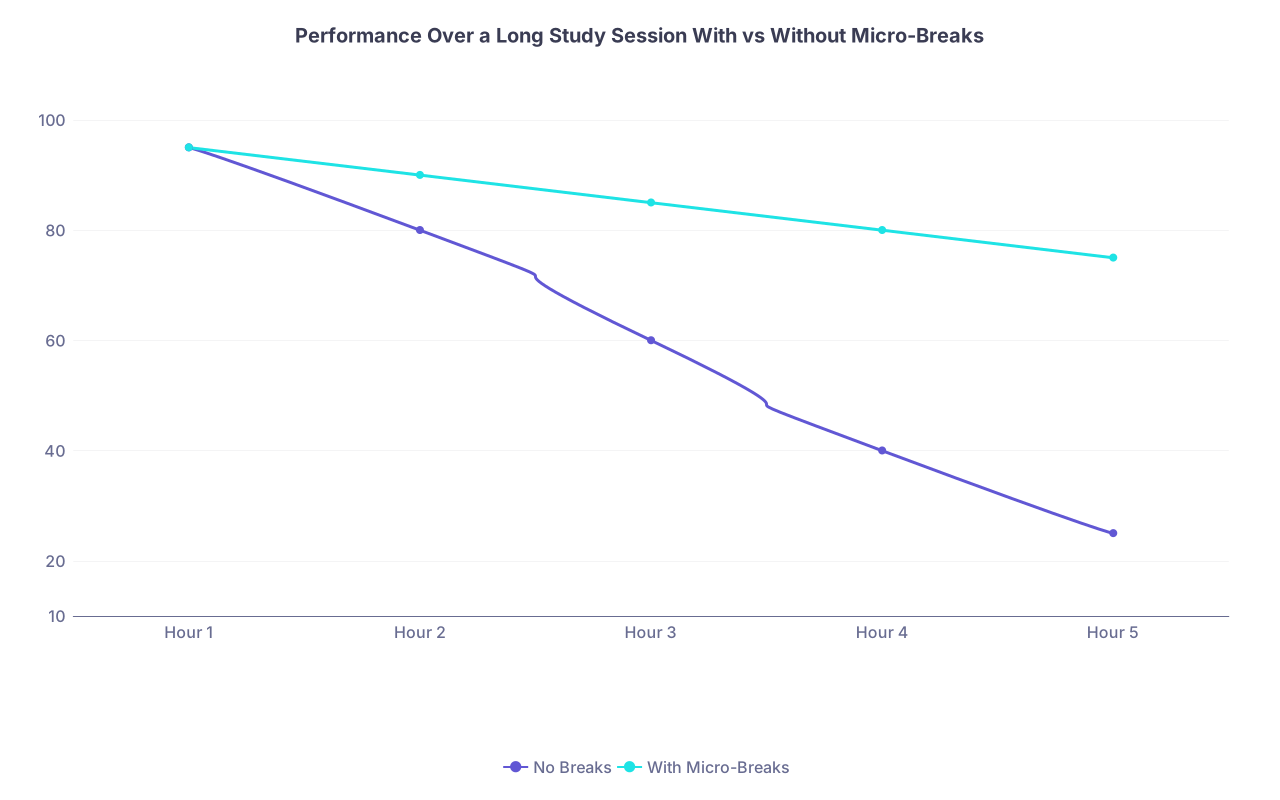
| Category | No Breaks | With Micro-Breaks |
|---|---|---|
| Hour 1 | 95 | 95 |
| Hour 2 | 80 | 90 |
| Hour 3 | 60 | 85 |
| Hour 4 | 40 | 80 |
| Hour 5 | 25 | 75 |
No breaks: you slide steadily downhill.
Smart micro‑breaks: you get small resets that keep you in the functional zone.
The three rules of a real micro‑break
Short
- 30 seconds to 5 minutes
- You are not “going to the gym,” you are pressing reset.
Low stimulation
- No social media. No email. No gaming.
- If it has endless scroll or notifications, it is not a micro‑break.
Intentional
- You decide when it starts and when it ends.
- You do one simple activity, then you go back.
You follow those three rules, your break will help you, not hijack you.
2. How Often Should You Take Micro‑Breaks?
There is no perfect universal number. But there are patterns that work for most med students under load.
I will give you three evidence‑supported structures. Pick one and test it for 3 days.
| Protocol | Work Block | Micro-Break | Best For |
|---|---|---|---|
| 25/5 (Pomodoro) | 25 min | 5 min | Early M1/M2, low stamina |
| 50/10 | 50 min | 10 min | Most students, Step prep |
| 90/10-15 | 80–90 min | 10–15 min | Deep work, advanced focus |
Option 1: 25 / 5 (Pomodoro‑style)
- 25 minutes focused work
- 5 minute micro‑break
- After 4 cycles, take a 20–30 minute longer break
Good for:
- Those who are easily distracted
- Very dense new material (first time through biochem, for example)
- Bad days when your brain just will not cooperate
Downside: Interrupts flow if you are actually in a groove.
Option 2: 50 / 10 (My default recommendation)
- 50 minutes work
- 10 minutes micro‑break
- After 3–4 cycles, take a 30–45 minute longer break
Why this works for med school:
- Most question blocks (UWorld, AMBOSS) fit nicely in 50 minutes
- Long enough to get into real focus
- Frequent enough to prevent that 2 p.m. wall
Option 3: 90 / 10–15 (Deep focus blocks)
- 80–90 minutes work
- 10–15 minutes break
Use this when:
- Doing deep conceptual review (e.g., pathophysiology)
- Doing long case sets or multi‑system questions
- You have trained your focus and 50 minutes feels too short
If you are consistently fried before the end of your block, you chose the wrong structure. Drop down to 50/10 for a week.
3. The Four Types of Micro‑Breaks You Actually Need
Your brain does not just get “tired.” Different systems wear down at different times:
- Visual system (screens, tiny text, Anki cards)
- Muscles and joints (neck, back, wrists)
- Working memory / attention
- Emotional / motivational systems
So you need different types of micro‑breaks, not just “walk around sometimes.”
We will build you a simple break toolkit:
- Physical resets
- Visual resets
- Cognitive resets
- Emotional resets
Use them strategically depending on what you are studying and how you feel.
4. Physical Micro‑Breaks: Fix the Body Before It Screams
This is where most med students could cut their pain by half.
Neck strain. Upper back knots. Wrist pain from Anki or question banks.
Physical micro‑breaks are quick, ugly, and extremely effective.
Core physical resets (30–120 seconds each)
Do 1–3 of these every break, especially if you are on your laptop all day.
Neck decompression
- Sit or stand tall.
- Gently tuck your chin like you are making a double chin.
- Hold 5 seconds, relax. Repeat 5–10 times.
- Then slowly turn head left/right, looking over shoulder, 5 times each side.
Thoracic spine extension
- Sit in your chair.
- Put both hands behind your head, elbows out.
- Lean back over the top of your chair, gently extend your upper back.
- Take 3 deep breaths in that position.
Wrist and forearm reset
- Extend your arm straight out, palm up.
- With other hand, gently pull fingers down and back (wrist extension stretch) for 15–20 seconds.
- Flip palm down, gently bend wrist down (flexion stretch) for 15–20 seconds.
- Switch sides.
Standing shake‑out
- Stand up.
- Shake arms, hands, and legs out vigorously for 20–30 seconds.
- Add 5–10 gentle shoulder rolls.
Mini walk
- Walk to the bathroom, kitchen, or down the hallway and back.
- 1–3 minutes, no phone.
- Look at objects far away (out a window, down the hall).
How often?
At least once every hour, non‑negotiable. Your spine will thank you in residency.
5. Visual Micro‑Breaks: Save Your Eyes (And Your Headaches)
You stare at near targets all day: laptop, tablet, phone, notes.
That is strain on your ciliary muscles and can trigger headaches, eye fatigue, and the “screen hangover” at night.
Use the 20–20–20 rule:
- Every 20 minutes
- Look at something 20 feet away
- For 20 seconds
No apps needed. Just do it between Anki cards or whenever you look away.
Quick visual reset (30–60 seconds)
- Sit back.
- Pick a point outside or far across the room.
- Focus on it sharply for 10–15 seconds.
- Then let your eyes defocus and soften your gaze for another 10–15 seconds.
- Blink slowly 10 times.
This sounds trivial. It is not. Do it consistently and you will feel the difference by late afternoon.

6. Cognitive Micro‑Breaks: Rest Without Going Numb
Your working memory and attention need short, controlled rests.
The mistake is replacing study with more stimulation (phone, social media, YouTube).
Cognitive micro‑breaks should:
- Use different mental circuits than what you were just using
- Be low‑stakes
- Not pull you into a rabbit hole
Effective cognitive micro‑breaks (1–5 minutes)
Breathing reset (box breathing) – 1–2 minutes
- Inhale through nose for 4 seconds.
- Hold for 4 seconds.
- Exhale through mouth for 4 seconds.
- Hold empty for 4 seconds.
- Repeat 4–8 cycles.
Stare + breathe (zero‑effort mode) – 1 minute
- Sit back.
- Pick a neutral spot (blank wall, corner).
- Soft gaze, not focused.
- Breathe slowly.
- No phone. No thinking “productively.” Just idle.
Micro‑journal brain dump – 2–3 minutes
- Take a scrap paper or note.
- Write: “What is stuck or bothering me right now?”
- Dump bullets: “Still confused about RAAS,” “Need to email Dr. Lee,” “Stressed about OSCE.”
- Close it. Go back with a clearer head.
One‑song reset – 3–4 minutes
- Choose one calm or neutral song (instrumental works well).
- Stand, stretch lightly, breathe while listening.
- When the song ends, so does the break. No autoplay.
These are not “meditation practice.” They are resets. Nothing fancy.
7. Emotional Micro‑Breaks: Combat Stress and Guilt
There is a specific kind of fatigue that hits med students: not physical, not exactly cognitive. It is emotional.
You know it:
- You are not that sleepy.
- You could technically keep reading.
- But everything feels heavier. Every question feels personal. Motivation dies.
That is emotional burnout creeping in. Powering through it constantly is how you rack up chronic stress and start hating medicine.
You need short emotional resets.
Fast emotional resets (1–3 minutes)
Name and normalize – 60 seconds
- Literally say to yourself (quietly):
- “I feel ___ (overwhelmed / frustrated / anxious / behind).”
- “Of course I feel this way. I am in med school studying for ___.”
- That second sentence matters. It tells your brain: this feeling is expected, not a disaster.
- Literally say to yourself (quietly):
Micro‑gratitude – 1–2 minutes
- Write down 3 very small, specific good things:
- “Coffee tastes good today.”
- “I finally understand nephrotic vs nephritic.”
- “I have a decent study chair.”
- No need to “feel grateful.” Just write them.
- Write down 3 very small, specific good things:
Connection ping – 1–3 minutes
- Send a single message to someone safe:
- “Hey, thinking of you. Long study day, how are you?”
- Or a funny meme / inside joke.
- Set a rule: you do not keep chatting. You reply later during a real break.
- Send a single message to someone safe:
This is how you vent a bit of pressure without falling into a 30‑minute texting spiral.
8. Matching Breaks to What You Are Studying
Not all study blocks are equal. Micro‑breaks that help during Anki may not be ideal after a 40‑question UWorld set.
Here is a simple matching guide.
| Study Task | Primary Fatigue | Best Micro-Break Types |
|---|---|---|
| Anki / flashcards | Visual + cognitive | Visual + physical |
| Reading (First Aid, texts) | Visual + posture | Physical + visual |
| Question banks | Cognitive + emotional | Breathing + walk |
| Group study | Social + cognitive | Solo quiet + stretch |
Examples
1. Doing Anki for 50 minutes
- Break:
- Stand up, shake out arms (30–60 seconds).
- Look out the window for 30 seconds.
- Box breathing for 1 minute.
- Back to it.
2. Doing 40 UWorld questions timed (around 1 hour)
- Immediately after block:
- Do not grab your phone.
- Stand up, walk to kitchen and back (2–3 minutes).
- Slow breathing (1–2 minutes).
- Brief emotional check: “That was rough, but normal for UWorld.”
- Then start reviewing explanations.
3. Long reading block (pathoma text, Robbins, etc.)
- Every 50 minutes:
- Thoracic extension over chair.
- Neck decompression.
- Focus on a far object for 30 seconds.
Match break to the main system you just overloaded.
9. A Plug‑and‑Play Long Study Day With Micro‑Breaks
Here is how a real 8‑hour study day can look with breaks that help rather than sabotage.
Sample 8‑hour study day (50/10 structure)
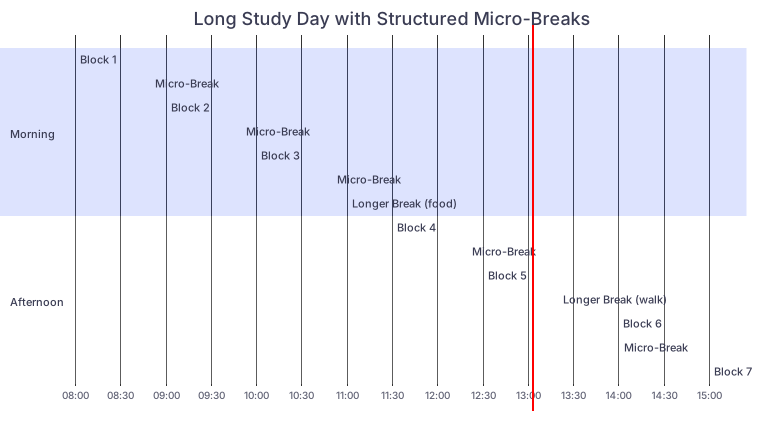
| Task | Details |
|---|---|
| dateFormat HH | mm |
| axisFormat %H | %M |
| Morning: Block 1 | Anki :a1, 08:00, 0:50 |
| Morning: Micro-Break | b1, 08:50, 0:10 |
| Morning: Block 2 | UWorld Set :a2, 09:00, 0:50 |
| Morning: Micro-Break | b2, 09:50, 0:10 |
| Morning: Block 3 | Review Qs :a3, 10:00, 0:50 |
| Morning: Micro-Break | b3, 10:50, 0:10 |
| Morning: Longer Break (food) | c1, 11:00, 0:30 |
| Afternoon: Block 4 | Content Review :a4, 11:30, 0:50 |
| Afternoon: Micro-Break | b4, 12:20, 0:10 |
| Afternoon: Block 5 | Anki :a5, 12:30, 0:50 |
| Afternoon: Longer Break (walk) | c2, 13:20, 0:40 |
| Afternoon: Block 6 | Mixed Practice :a6, 14:00, 0:50 |
| Afternoon: Micro-Break | b6, 14:50, 0:10 |
| Afternoon: Block 7 | Light Review :a7, 15:00, 0:50 |
What the micro‑breaks can look like in practice:
08:50 (after Anki):
- Stand, wrist stretch, neck decompression, 20‑second far‑focus.
09:50 (after UWorld questions):
- Walk to kitchen, refill water, no phone, 2 minutes.
- Box breathing for 1 minute.
10:50 (after question review):
- Thoracic extension over chair, shoulder rolls.
- 60‑second stare + soft gaze.
11:00–11:30 (longer break):
- Actual food.
- 5–10 minute walk, ideally outside.
- Check phone if you must, but set a timer.
12:20 (after content review):
- Quick visual reset and neck stretch.
- Micro‑gratitude list (3 bullets).
13:20–14:00 (longer break):
- Leave your study space.
- Light movement: walk, a few stairs, short mobility routine.
- No heavy screens.
14:50 (after mixed practice):
- 3 minutes: breathing reset + stand + shake‑out.
This is not glamorous. It works.
10. The Three Things That Ruin Micro‑Breaks (And How To Fix Them)
Let me be blunt. The usual problems are not mysterious. They are predictable.
Problem 1: Your phone eats the break
You “check something” and 10 minutes vanish. Or 30.
Fix: Build friction between you and your phone.
- Put it out of reach while studying. Different table, behind you.
- During micro‑breaks, phone stays where it is. You only touch it during longer breaks (20+ minutes).
- If you absolutely must be reachable, use:
- Focus mode with only calls from favorites
- No banners, no previews, no social notifications
You will be uncomfortable at first. That discomfort is your addiction showing, not a reason to stop.
Problem 2: Break guilt
You stand up and immediately think: “I should not be taking a break; I am behind.”
So you either:
- Skip breaks and burn out by 3 p.m.
- Or you “break” with your materials still open, glancing back and forth. Which is not a break.
Fix: Treat breaks as part of the plan, not a failure of willpower.
- Decide your work/break structure before the day starts (e.g., 50/10).
- Write it down. That schedule is now your “attending.” You follow orders.
- When guilt shows up, use this script:
- “This 10‑minute reset pays for itself in the next 2 hours of focus.”
You are not slacking. You are preserving function.
Problem 3: Break inertia — you cannot restart
You sit back down and suddenly cleaning your email inbox feels more urgent than cardiology.
Fix: Pre‑decide your restart action before you take the break.
Right before you stand up, write a single line:
- “Next: questions 21–40, cardiology, timed.”
- Or: “Next: finish reading CHF section, pages 210–220.”
When you sit back down, do not think. Just execute that line.
If you are really prone to inertia:
- Set a 30‑second “restart timer” when you sit.
- When it goes off, you start that pre‑decided task immediately. No bargaining.
It feels mechanical. That is the point.
11. Tracking What Works For You (Data, Not Vibes)
You are in medicine. Treat your studying like a patient: measure, adjust, repeat.
For one week, track:
- Which break structure you used each day (25/5, 50/10, etc.)
- Your perceived focus each block (1–10)
- Total actual study hours (not clock time)
- End‑of‑day energy (1–10)
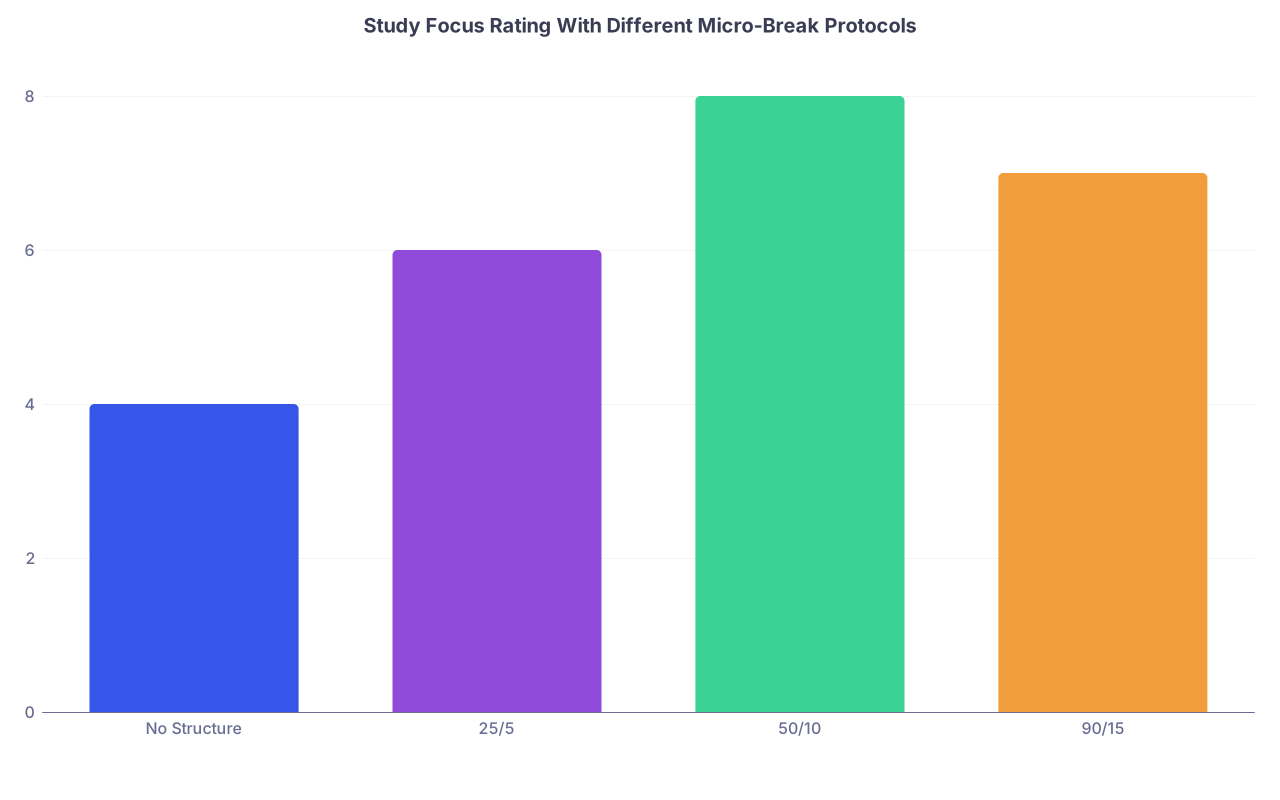
| Category | Value |
|---|---|
| No Structure | 4 |
| 25/5 | 6 |
| 50/10 | 8 |
| 90/15 | 7 |
You will quickly see:
- Which pattern gives you the highest sustainable focus
- Which time of day you need more frequent breaks
- Whether your problem is under‑breaking or over‑breaking
Adjust like this:
- If you are mentally dead by mid‑afternoon → shorten work blocks or improve sleep.
- If you are always breaking early → you are under‑rested or overdistracted. Fix sleep and the phone.
12. Putting It All Together
You do not need the perfect system. You need something simple that you actually follow for weeks, not hours.
Here is a minimal protocol you can start with tomorrow for a heavy study day:
- Choose 50/10 as your default.
- During each 10‑minute break, do:
- 1 physical reset (neck, back, walk).
- 1 visual reset (far focus).
- 1 cognitive or emotional reset (breathing or quick brain dump).
- Keep your phone away from your body. Only touch it during longer breaks.
- Pre‑decide the next task before every break. Write it somewhere visible.
- Run this for 3 days. Then tweak based on how you feel at 2 p.m. and 6 p.m.

Key Takeaways
- Micro‑breaks only work if they are short, low‑stimulation, and intentional. Social media does not qualify.
- Use a simple work/break structure (50/10 for most) and match your break type to the fatigue: physical, visual, cognitive, or emotional.
- Protect your breaks from your phone and protect your focus with pre‑decided “next actions.” That is how you survive long study days without burning out.