
What’s actually happening when you start waking up with dread before M2 lectures and just call it “part of the grind”?
Let me be blunt: early anxiety in medical school is not a “quirk,” not just “type A energy,” and not something you should proudly white-knuckle through because everyone else looks fine.
Ignoring it is a high‑risk mistake.
I’ve watched students brush off their first real anxiety symptoms—and then watched the same students:
- Fail a single high‑stakes exam and spiral
- Freeze in an OSCE and start doubting their entire career
- Hit clinicals already burned out and emotionally numb
Not because they were weaker. Because they waited too long.
You’re in a culture that quietly rewards suffering and punishes vulnerability. That culture is wrong. And if you follow it blindly, it will chew you up.
Let’s walk through the specific mistakes people make with early anxiety in med school—and how to avoid becoming the cautionary tale your class whispers about later.
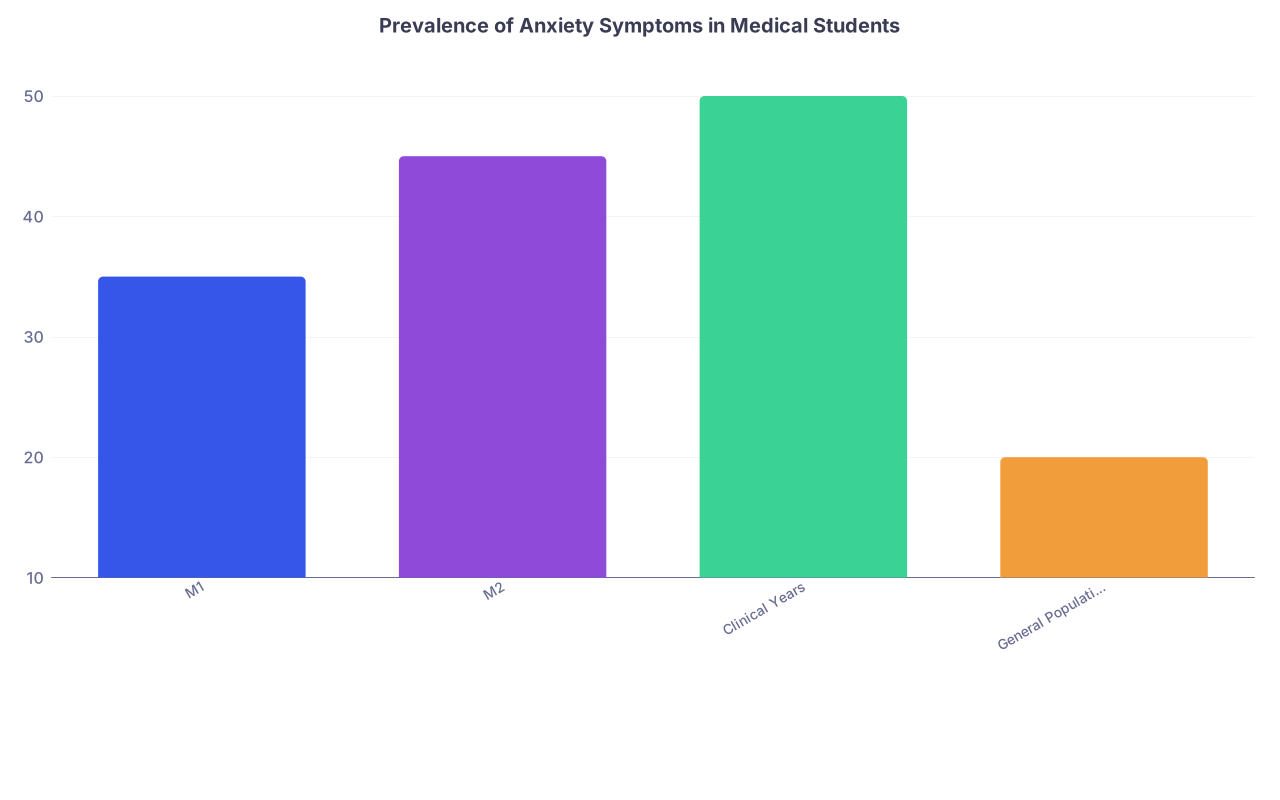
| Category | Value |
|---|---|
| M1 | 35 |
| M2 | 45 |
| Clinical Years | 50 |
| General Population (Peers) | 20 |
1. The First Big Mistake: Calling Early Anxiety “Normal” Stress
There is normal stress in medical school. But students blur the line between “hard but manageable” and “early warning signs of something serious.”
Here’s the mistake:
You normalize symptoms that would concern you in a patient.
If a patient said:
- “My heart races for no reason several times a day.”
- “I wake up at 4 a.m. with my chest tight and can’t fall back asleep.”
- “I constantly think I’m going to fail or be exposed as a fraud.”
You wouldn’t say, “Yeah, sounds like second year.”
You’d document. You’d assess. You’d follow up.
But when it’s you? You tell yourself:
- “I just need to work harder.”
- “Once this exam block is over, I’ll be fine.”
- “Everyone else is dealing with this; I’m just soft.”
You’re not “soft.” You’re symptomatic.
Red flag checklist (that too many med students minimize)
If any of this has been happening consistently (say, 2 weeks or more), it’s not something to ignore:
- You feel a sense of dread most mornings
- You can’t “turn your brain off” enough to sleep, even when exhausted
- You’re studying more hours but absorbing less
- You keep imagining worst‑case scenarios (failing out, humiliating yourself on rounds, disappointing your family)
- You start avoiding certain lectures, labs, or people because they spike your anxiety
- You’re using caffeine or energy drinks to push through constant fatigue
- You feel on edge, like you’re always about to be called on and exposed
One or two of these during a rough week? Maybe just stress.
A cluster of them, persisting? You’re past the “normal stress” line.
Don’t make the “I’ll deal with it after this exam block” mistake. There will always be another block.
2. The Quiet Slide: How Ignored Anxiety Wrecks Your Performance
Here’s the irony most anxious med students miss:
The thing you’re most afraid of—failing, underperforming, looking incompetent—is exactly what untreated anxiety makes more likely.
This isn’t just “emotional fluff.” There are predictable ways anxiety sabotages your studying and exam performance.
Cognitive impact you can’t just “out-grind”
When anxiety ramps up and stays up:
Working memory tanks.
You can read the same UWorld explanation three times and still not retain it because your brain is already busy simulating disaster.Attention fragments.
You “study” for 5 hours, but it’s really 20–30 second chunks between intrusive thoughts and checking schedules, Reddit, or your email.Recall under pressure drops.
You know that answer. You’ve seen that question. But your heart’s pounding, you’re sweating, and your frontal lobe is on vacation.
I’ve watched students who knew the content score 20+ points lower than their practice exams because their anxiety never got addressed. They didn’t have a knowledge problem. They had a mental health problem masquerading as a study problem.
Functional damage you will feel
Untreated anxiety starts to erode your daily functioning in subtle ways:
- You procrastinate more but study longer, then feel guilty constantly
- You re‑read notes rather than do questions, because questions feel like a threat
- You stop going to optional sessions or office hours, so you lose support
- You sleep less, which worsens cognition, which worsens anxiety
- You start avoiding asking for help because you’re ashamed you’re struggling
This spiral doesn’t usually look dramatic at first. It looks like:
- “I’ll just stay in tonight instead of going to that review session.”
- “I’ll do questions tomorrow when I feel more focused.”
- “I’m too behind to fix anything now, I just need to cram.”
By the time boards or shelf exams hit, you’re not just underprepared. You’re emotionally fried.
| Feature | Tough Week Stress | Concerning Anxiety (High-Risk to Ignore) |
|---|---|---|
| Duration | Days | Weeks to months |
| Sleep | Mildly reduced, recovers | Persistent insomnia or early waking |
| Thoughts | “This is hard” | “I’m a failure/fraud” |
| Function | Still getting things done | Avoiding tasks/people/exams |
| Physical symptoms | Tension, fatigue | Palpitations, chest tightness, GI upset |
If you recognize yourself more in the right column and you’re still saying “I’m fine, just stressed,” you’re doing exactly what lands people in real crisis later.

| Step | Description |
|---|---|
| Step 1 | Early Anxiety Symptoms |
| Step 2 | Minimize & Normalize |
| Step 3 | Sleep & Focus Worsen |
| Step 4 | Academic Performance Drops |
| Step 5 | Shame & Isolation |
| Step 6 | Major Exam Failure or Burnout |
| Step 7 | Crisis: LOA, Remediation, or Dropout |
| Step 8 | Early Acknowledgment |
| Step 9 | Support & Treatment |
| Step 10 | Stabilized Functioning |
3. The Culture Trap: “Everyone Else Is Managing, I Should Too”
Here’s one of the most dangerous illusions in med school: the hallway snapshot.
You see your classmates:
- Laughing between lectures
- Posting “grind” stories on Instagram with coffee and laptops
- Talking about research, tutoring, leadership roles
So you conclude: “They’re fine. I’m the weak one.”
You’re missing the backstory.
You don’t see:
- The person who cries in the shower every morning before coming in
- The one who’s on an SSRI and sees a therapist weekly
- The one who barely slept last night because of panic attacks
- The one seriously questioning staying in medicine but too scared to say it out loud
Medical culture trains you early to:
- Compete rather than connect
- Hide vulnerability
- Wear exhaustion like a badge
- Treat mental health as secondary, optional, or “for people really struggling”
So you hide. You underreport. You cope alone.
And that’s exactly how mild, treatable anxiety turns into full-blown burnout or depression.
If you only compare your internal chaos to others’ external highlight reels, you will always misjudge how “bad” things are.
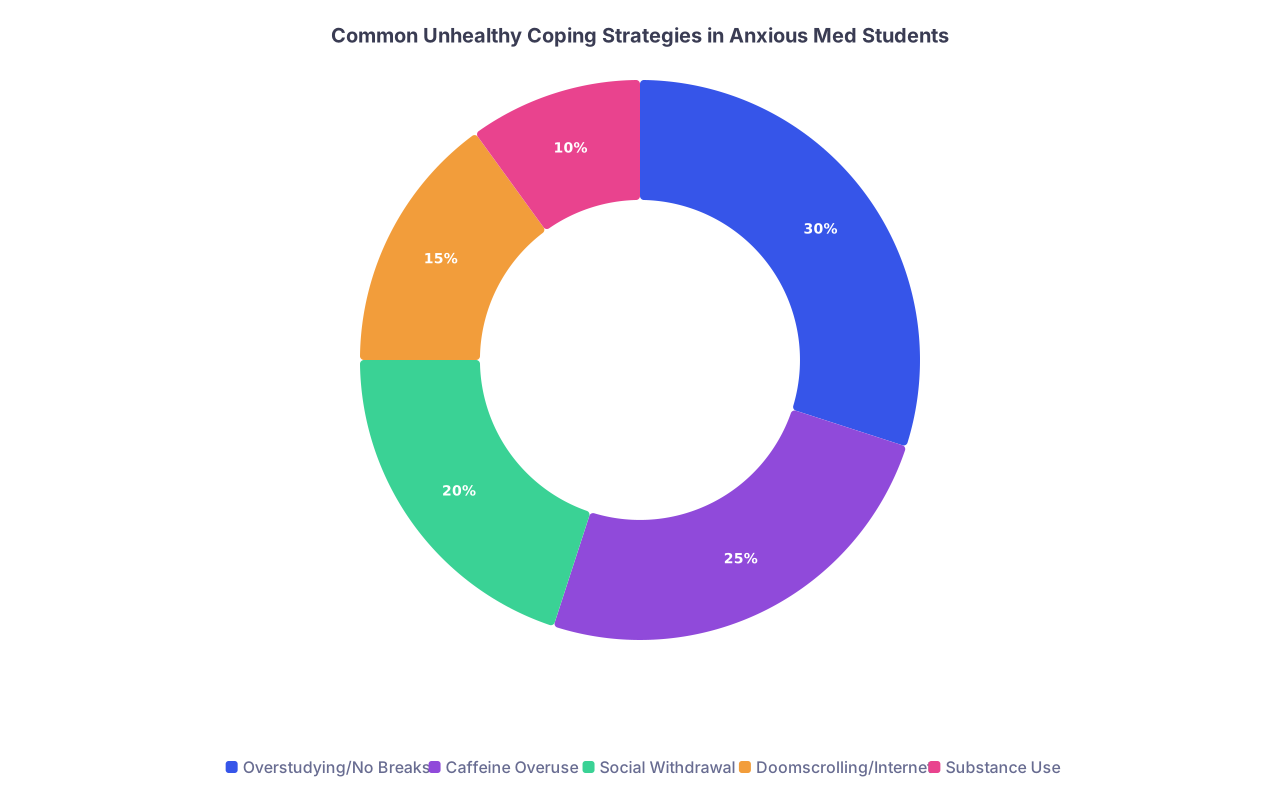
| Category | Value |
|---|---|
| Overstudying/No Breaks | 30 |
| Caffeine Overuse | 25 |
| Social Withdrawal | 20 |
| Doomscrolling/Internet | 15 |
| Substance Use | 10 |
4. The Short-Term Coping Mistakes That Backfire Hard
Once anxiety shows up, most med students do something about it. The problem is, a lot of what you instinctively do makes things worse.
Here are the big errors I see over and over.
Mistake 1: “I’ll just work harder”
You decide the solution to anxious underperformance is… more hours.
So you:
- Cut sleep
- Cancel all non‑study activities
- Double your Anki reviews
- Stack more resources on your already overloaded plan
Result:
- You’re more exhausted
- Your brain is less efficient
- You start making careless mistakes
- You feel even more anxious because effort isn’t translating into results
More hours on a broken system isn’t dedication. It’s self‑sabotage.
Mistake 2: Caffeine and stimulants as a “solution”
You’re tired, foggy, and behind. Obvious “fix”: pile on coffee, energy drinks, maybe “borrow” an ADHD friend’s stimulant prescription.
You know better pharmacologically. Yet I’ve watched people slam 400+ mg caffeine daily and wonder why their anxiety and sleep are wrecked.
This is how you quietly build:
- Heart racing
- GI irritation
- Sleep disruption
- Worsening baseline anxiety
And then you blame yourself, not the vicious cycle you just built.
Mistake 3: Avoidance disguised as “strategic focus”
This one’s subtle.
You start skipping:
- Small groups where you might be cold‑called
- Labs where you feel incompetent
- Practice questions because getting them wrong hurts your ego
You tell yourself you’re “streamlining” or “focusing on high‑yield content.”
In reality, you’re reinforcing the belief that you can’t tolerate discomfort. You’re training your brain: “Those situations = danger.” Anxiety loves this. It grows.
Mistake 4: Isolation as self-protection
You stop telling people how you’re actually doing.
You might say “I’m stressed” but not “I had a panic attack last night thinking about OSCEs” or “I’m terrified I made a mistake going into medicine.”
So you lose:
- Peer validation (“I’m feeling that too”)
- Study support and accountability
- Perspective (“This exam isn’t actually career‑ending”)
Alone, your anxiety gets louder and more convincing. It becomes your only narrator.

5. The Real Risk: What Happens When You Don’t Intervene Early
Here’s what I want you to really hear:
The danger of ignoring early anxiety isn’t just “you’ll feel bad.” It’s structural.
It affects your:
- Academic trajectory
- Professional reputation
- Physical health
- Long‑term relationship with medicine
Academic and career fallout
Common sequences I’ve seen:
- Early anxiety → chronic poor sleep + scattered studying → borderline exam scores
- Borderline scores + growing self‑doubt → Step/COMLEX performance below your practice range
- Weak board performance → limited specialty options + intensified pressure
- All of this → more anxiety, not less
I’ve watched students who could’ve matched into competitive specialties end up drastically narrowing their options—not for lack of intelligence, but because untreated anxiety strangled their performance when it mattered most.
And then there’s remediation, leaves of absence, or even withdrawal. Those don’t usually pop out of nowhere. The roots are often in ignored early signs.
Physical and emotional burnout
Chronic anxiety doesn’t just live in your head. You start seeing:
- GI issues (nausea, IBS‑like symptoms before exams or rounds)
- Headaches, migraines
- Chronic muscle tension and pain
- Increased infections because your immune system is taking the hit
Emotionally, you risk:
- Losing any joy in medicine
- Feeling detached or cynical with patients before you even start residency
- Numbing out with Netflix, substances, or endless scrolling because being present is too uncomfortable
If you burn out in medical school, you’re already behind the curve heading into residency, which is not gentler.
6. Doing This Right: How to Respond to Early Anxiety Before It Blows Up
Here’s where you avoid the mistake most people make: waiting for a crisis.
Think less “emergency room” and more “preventive medicine.” Early, low‑intensity, smart interventions.
Step 1: Name it accurately
Stop calling everything “stress.”
Try being precise:
- “I’m having persistent anxiety symptoms.”
- “My functioning is impaired by how anxious I feel.”
- “This is not just a busy week; it’s a pattern.”
This isn’t semantics. The language you use determines whether your brain files this as “ignore” or “address.”
Step 2: Do a quick self-assessment
Take 10 minutes and ask yourself:
- How many days in the last 2 weeks have I felt extremely anxious or on edge?
- Am I avoiding anything because it makes me too anxious?
- Has my sleep changed significantly?
- Is my performance slipping despite working as hard or harder?
If your honest answers concern you as a clinician, they should concern you as a person.
Step 3: Use the support that already exists (and stop assuming it’s “not for you”)
Most medical schools actually have more mental health resources than students realize—or use.
Common options:
- On‑campus counseling or embedded psychologists for students
- Confidential mental health services separate from academic records
- Peer support groups or wellness programs
- Faculty mentors or advisors explicitly assigned to check on you
The mistake is assuming:
- “Those are for people really struggling.”
- “If I use that, it’ll be on my record.”
- “People will think I can’t handle medicine.”
Reality: the people in trouble are more often the ones who don’t use these supports early.
Step 4: Treat adjustments as performance tools, not admissions of failure
This is the mindset shift most high-achievers resist.
Small, intentional adjustments can dramatically change your anxiety baseline:
Structured study windows with real breaks
Not “scroll Twitter for 10 minutes and call it a break.” I mean get up, move, change environment.Sleep as a non‑negotiable
6–8 hours. Dark, cool room. No phone in bed. You know the science; start respecting it.Exercise as prescription, not luxury
20–30 minutes of movement most days. Not for aesthetics. For neurochemistry.Caffeine ceiling
Set a hard limit and a cut‑off time. You’d counsel a patient on this; apply it to yourself.
These aren’t “wellness fluff.” They are basic nervous system maintenance. Ignoring them while complaining about anxiety is like ignoring insulin while complaining about blood sugars.
Step 5: Know when it’s time for professional help
Here’s when you stop trying to DIY:
- Anxiety is daily and persistent
- Sleep is consistently disrupted
- You’re having panic attacks
- You’re starting to have passive thoughts like “It would be easier if I just disappeared”
- Your performance is dropping and you can’t turn it around with basic changes
Seeing a therapist or psychiatrist isn’t an overreaction. It’s the same as going to endocrine clinic when lifestyle alone isn’t touching the A1c.
7. What You Don’t Have to Do (Let’s Kill Some Myths)
Let’s be clear about what taking early anxiety seriously does not mean.
You do not have to:
- Tell your entire class what you’re dealing with
- Announce anything on social media
- Disclose every detail to faculty you don’t trust
- Take a leave of absence at the first sign of trouble
- Go on medication immediately
You can:
- Start privately with a therapist
- Confide in one or two trusted peers
- Loop in a single faculty mentor or dean you actually feel safe with
- Try non‑pharmacologic strategies with professional guidance
The mistake is thinking your only options are “ignore it” or “have a dramatic meltdown and pause your career.” There is a lot of territory in between.
FAQ: Early Anxiety in Medical School
1. How do I know if what I’m feeling is “bad enough” to justify getting help?
If you’re asking that question, you’re already closer to “yes” than “no.” Use this rule: if anxiety is regularly interfering with sleep, focus, studying, relationships, or basic functioning, it’s “bad enough.” You don’t wait until you’re failing exams or having daily panic attacks. Think like a doctor—you’d rather see a condition at Stage I than Stage IV.
2. Will seeking mental health help in med school hurt my chances for residency?
This fear is common and overblown. Using counseling services or seeing a psychiatrist is confidential and typically not part of your academic record. What actually hurts applications more often? Failing courses, poor board scores, professionalism flags, or unexplained leaves of absence—many of which are downstream from untreated anxiety. Stabilizing your mental health protects your career.
3. What if my school’s culture is very “tough it out” and I’m scared to be seen as weak?
You won’t change the culture overnight, but you don’t have to participate in its worst parts. Choose carefully who you open up to: a trusted dean, a supportive resident, a nonjudgmental classmate. Use confidential services that bypass departmental gossip. Quietly protecting your mental health is not weakness. Marching yourself into burnout to look “tough” is.
4. I’m already behind. Isn’t focusing on mental health now just going to put me further behind?
No. Being severely anxious and sleep‑deprived is already putting you behind, even if your hours studied look impressive. Think of mental health work as “fixing the leaking boat before rowing harder.” A few weeks of focused adjustment and support can save you months of ineffective grinding and prevent big hits like remediation or board failures.
5. What if I start therapy or meds and they don’t work? Does that mean I’m just not cut out for this?
No. It means you need a different approach, just like you’d try another treatment plan if the first antihypertensive failed. Therapy style, therapist fit, medication choice, dosages—these all matter and sometimes take time to optimize. Needing more than one attempt isn’t evidence you don’t belong in medicine. It’s evidence that you’re treating a real condition with real complexity.
Open your calendar right now and block 30 minutes in the next 48 hours. During that time, do one concrete thing: email student mental health services, message a trusted mentor, or complete a short self‑assessment for anxiety. Do not push this off to “after the next exam.” That’s how small, fixable problems become life‑altering ones.