Most medical schools are quietly sitting on a mental health infrastructure you’ll never hear about on interview day—and almost no one in your class is actually using it.
Let me tell you what really happens behind the scenes.
Faculty stand up at orientation and say, “Please reach out if you’re struggling. We care about your wellness.” Then six weeks later, those same people are sitting in promotions meetings asking, “Why didn’t this student seek help earlier?”
The ugly truth: there are support systems. Many are actually decent. But they’re buried under stigma, bad communication, and students’ fear of looking weak or “on the radar.”
I’ve sat in those meetings. I’ve heard program directors whisper, “Did anyone flag this earlier?” while the student is at home thinking, “I didn’t want them to know I was drowning.”
Let’s fix that for you.
The Counseling Services Nobody Talks About Honestly
Every school brags, “We offer free confidential counseling.” What they don’t tell you is how it actually works, and what you can safely use it for.
Here’s the insider version.
Most med schools have one of three setups:
| Setup Type | Who Provides Care | Confidentiality Risk |
|---|---|---|
| In-house CAPS | University counseling center | Very low |
| Med school–embedded psychologist | Hired by the med school | Low–moderate |
| Off-site contracted therapist | External group/clinic | Very low |
In promotions meetings, we almost never hear specific details from these services. The wall between “student health/mental health” and “academic affairs” is thicker than you think. The therapist isn’t emailing your dean a note saying “they cried for an hour about anatomy.”
What does sometimes happen:
- If you’re at risk of harming yourself or others, or clearly unable to function safely, they’ll escalate. That’s not about grades. That’s about not letting you crash and burn.
- If you want accommodations (more on that later), you give permission for a very limited information transfer: usually just “this student qualifies for X accommodation.”
What students get wrong:
They think, “If I go to counseling, I’m admitting I can’t hack it.”
What faculty actually think when we see a student who appropriately used resources: “Good. They did the adult thing.”They wait until they’re failing, then show up asking for miracles.
Counseling is much more effective at “catching you before the slide” than resurrecting you after 3 failed exams and a professionalism concern.
The students who handle med school best mentally aren’t the ones who need no help. They’re the ones who treat counseling as part of the training infrastructure, like simulation lab—extra support while you’re learning under pressure.
If you want to test the waters without a huge commitment, most centers offer brief consults. You don’t have to marry the therapist. You’re just getting a read on whether you click with them.
The Disability Office: The Most Underused Power Tool
The disability office is the single most misunderstood support system in med school. Students picture wheelchairs and extra time for “severe” learning disabilities. That’s… outdated.
Modern disability offices quietly support:
- ADHD (diagnosed or strongly suspected)
- Anxiety disorders
- Depression
- Sleep disorders
- Chronic pain, migraines
- PTSD
- Major life events that derail functioning
Here’s what students don’t realize:
Academic deans love when these offices exist and function, because it gives them a clean, legally defensible way to support you. It turns “this student is struggling” into “we have a defined accommodation plan.”
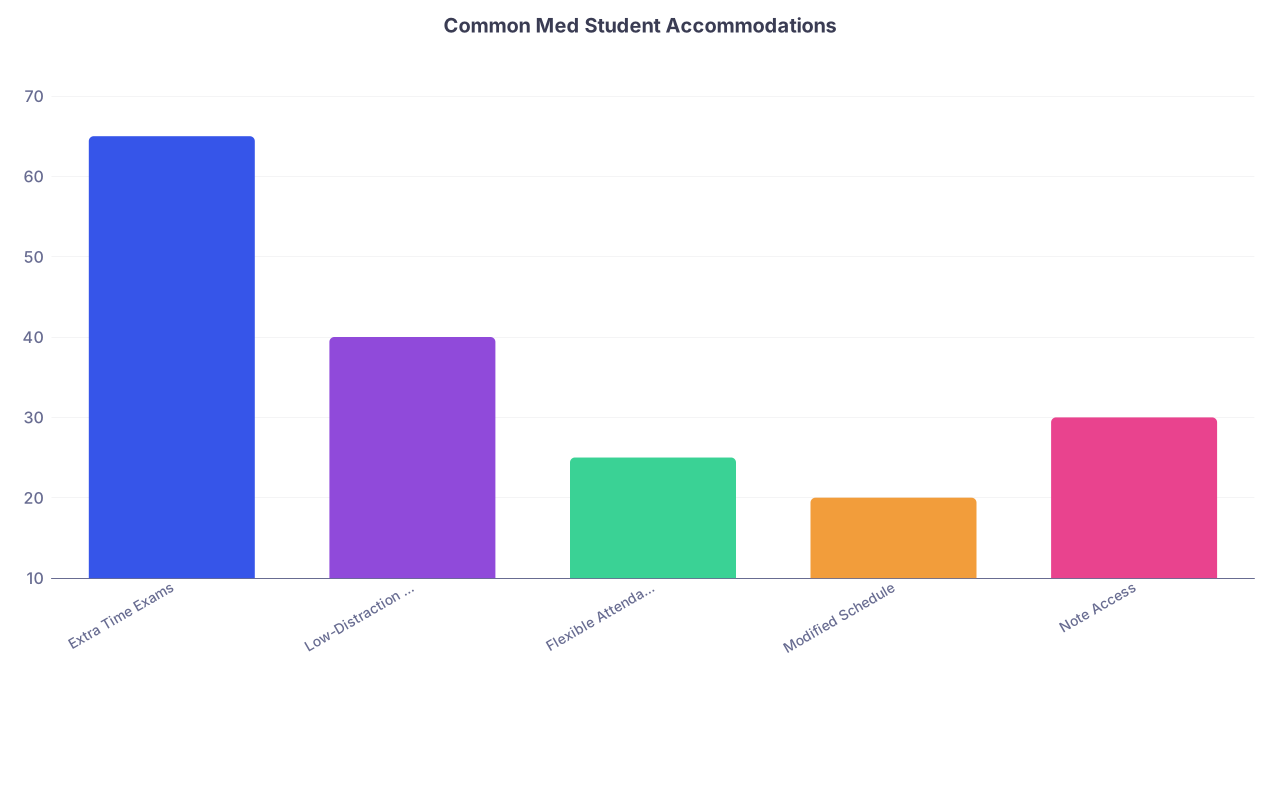
| Category | Value |
|---|---|
| Extra Time Exams | 65 |
| Low-Distraction Room | 40 |
| Flexible Attendance | 25 |
| Modified Schedule | 20 |
| Note Access | 30 |
These percentages aren’t official stats, but they’re roughly what I’ve seen across a few schools—most accommodations fall into those buckets.
What you can actually get (if supported by documentation):
- Extended time on written exams
- Separate/quiet testing rooms
- Flexibility with attendance for medical/psych appointments
- Adjusted clinical schedules after hospitalizations or major episodes
- Occasionally, modified rotation timing after serious crises
The classic mistake:
A student with untreated ADHD or anxiety scrapes by through M1–M2, then hits clinicals, starts missing deadlines, and gets tagged as “unreliable.” Only then do they show up with a diagnosis.
By that point, the narrative has formed: “strong knowledge, variable professionalism.”
If you suspect something is going on—attention, processing speed, panic attacks on exams—go early. Get evaluated. Quietly. You’re not signing your soul away. You’re building a paper trail that protects you when things get hard.
And no, deans are not sitting around gossiping: “Did you know Alex has testing accommodations?” They don’t have time. What they do have time for is this: “This student failed their first exam. Did we offer them disability services?” Because that’s where schools get burned: not offering what the law requires.
Academic Support Offices: The “Legit” Way to Struggle
Students are weirdly more comfortable saying, “I’m dumb” than saying, “I need help.” So they avoid academic support like it’s a remedial hall of shame.
That’s not how faculty see it.
Most med schools have:
- An Office of Academic Support / Learning Services
- A designated academic success director
- Peers paid to tutor or coach
Behind closed doors, when we see a struggling student who already engaged with these offices, there’s a very different tone:
“They’re doing everything right. We need to adjust how we’re supporting them.”
Compare that to:
“No shows to tutoring, never met with learning support, didn’t respond to outreach” → “Are they taking this seriously?”

Here’s what’s actually on offer that you probably aren’t using:
- Someone to tear apart your study plan and rebuild it in 30 minutes
- Real data on how past students changed strategies and passed after failure
- Board prep strategy that isn’t just “do more questions”
- Someone who can document that you’ve been engaged and proactive
I’ve sat across from students who failed Step 1/Level 1 and still refused to attend academic support because they “didn’t want to look bad.” Meanwhile, the students who swallowed their pride after the first shaky quiz? They adjusted early and quietly passed everything.
If your school has learning specialists who aren’t physicians, don’t dismiss them. They live in the data. They see patterns across hundreds of students. They know what works for ADHD brains, anxious brains, tired brains.
Using academic support is one of the safest “on-the-record” things you can do because it reflects positively: engaged, coachable, invested.
Ombuds Offices & Anonymous Channels: The Pressure Relief Valves
You know those situations that are clearly not okay, but you’re scared to say anything?
The attending sets a malignant tone on rounds. A resident yells at you for asking questions. A preclinical lecturer repeatedly makes sexist jokes.
Everyone in the room knows it’s wrong. No one wants to be “that student.”
That’s where ombuds offices, anonymous reporting tools, and “climate surveys” show up as hidden support.
Every year, med schools send out a climate survey asking things like:
- Have you witnessed mistreatment?
- Have you experienced harassment?
- Do you feel comfortable reporting concerns?
Students click through and think nothing happens. But I’ve watched entire departments get quietly restructured based on those “anonymous” trends. Not overnight—but over 1–2 years, faculty disappear from required teaching, clerkship leaders change, certain sites no longer take students.

| Step | Description |
|---|---|
| Step 1 | Student Has Concern |
| Step 2 | Talk to Dean/Student Affairs |
| Step 3 | Ombuds/Anonymous Report |
| Step 4 | Pattern Identified Across Reports |
| Step 5 | Clerkship/Faculty Reviewed |
| Step 6 | Site or Faculty Changes |
| Step 7 | Needs Immediate Safety? |
The ombuds office, if your school has one, is underused for mental health, too. It’s not therapy. It’s a confidential sounding board for:
- “My advisor is also my evaluator. Is this conflict of interest?”
- “I’m on probation and feel like the process is unfair. What are my options?”
- “I’m being pressured into a remediation plan that doesn’t feel right.”
They can’t magically fix everything. But they can tell you what’s normal, what’s not, and where the hidden landmines are. They often know which deans actually intervene and which just talk.
The smartest students I’ve seen use ombuds early, not as a last resort. They reality-check their situation before they burn a bridge or send an angry email that gets forwarded to the promotions committee.
Peer Support & “Affinity” Spaces That Actually Work
Most students laugh off wellness groups and peer support as performative fluff. Sometimes they’re right. A pizza party doesn’t fix burnout.
But there are a few peer-based systems that actually move the needle on mental health if you use them correctly.
I’ve seen three models work:
Peer mentors with real authority
Some schools train M3/M4s to be peer advisors who can:- Walk you through schedule changes
- Recommend “safe” attendings or rotations if you’re fragile
- Tell you which deans are actually supportive around leave or remediation
The value isn’t emotional alone. It’s tactical: “Take this attending when you’re coming off leave; avoid this service right after a crisis.”
Identity-based and interest-based groups
Groups for first-gen students, LGBTQ+ students, underrepresented in medicine, parents, chronic illness, etc.
These spaces short-circuit the “everyone else is fine; it’s just me” illusion.Student-run mental health or wellness organizations
The real benefit isn’t the programming. It’s the culture. Being around people who treat mental health as normal business instead of shameful failure makes you more likely to get help when you actually need it.
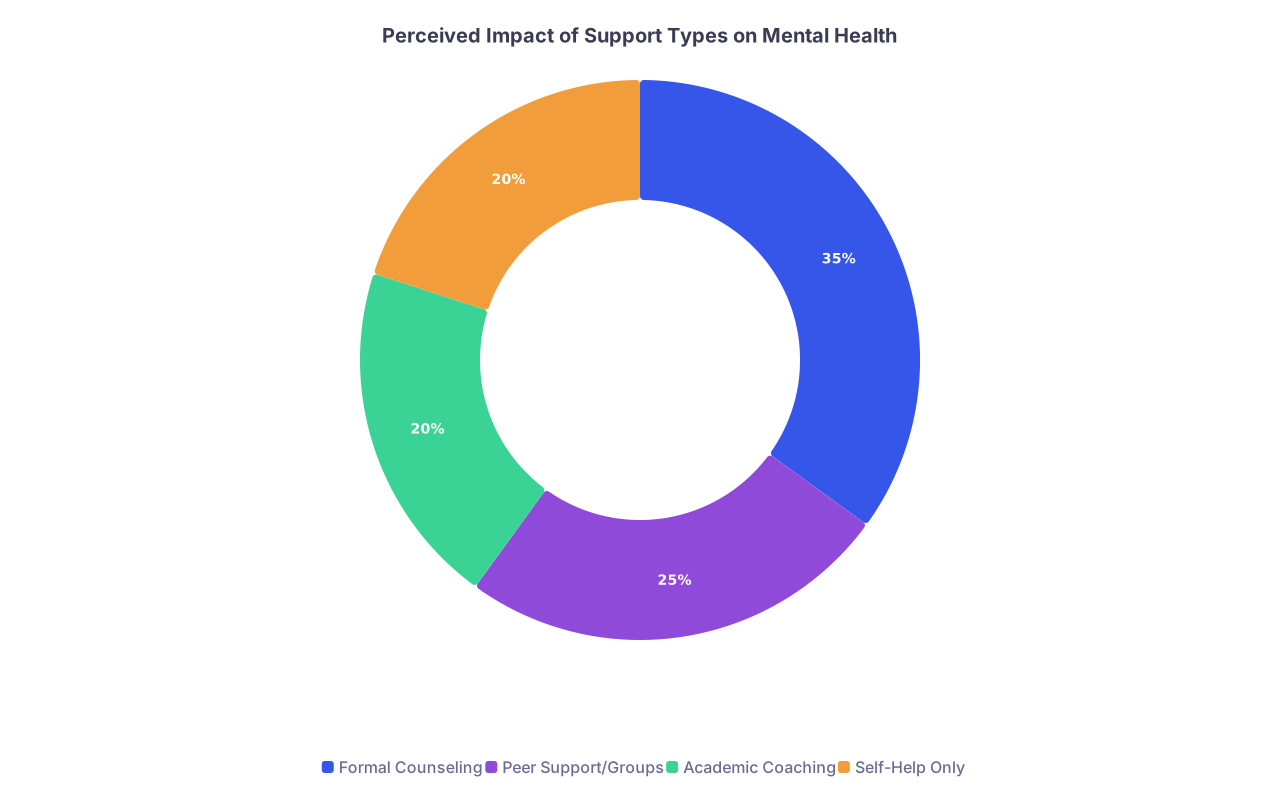
| Category | Value |
|---|---|
| Formal Counseling | 35 |
| Peer Support/Groups | 25 |
| Academic Coaching | 20 |
| Self-Help Only | 20 |
Again, not official numbers. But this reflects what students tell us in exit interviews and debriefs.
You don’t need to be a “wellness person” to use these groups. You can show up selectively:
- When you’re coming back from a leave of absence and don’t want to explain your life story to people who won’t get it
- When you’re starting to think you might be neurodivergent or dealing with something others in your identity group have navigated
Do not underestimate the relief of hearing a classmate say, “Yeah, I started meds in M1. Best decision I made.”
Faculty Allies and the Quietly Safe People
Here’s something nobody tells you: on every faculty list, there are 2–5 people who are informally known as “the safe ones” for students in trouble. Other faculty send you to them when things are bad.
They are often:
- The associate dean of students who actually returns emails
- A clerkship director who’s seen hundreds of struggling students and doesn’t scare easily
- A faculty advisor who’s known as “too soft” by the hardliners (which is exactly who you want)

You find them not by guessing, but by asking upperclassmen privately:
- “If someone needed to take a leave, who would you actually talk to?”
- “Who helped people after Step failure?”
- “Who backed students up when there was a bad attending?”
When students come to those people early with:
“I’m not okay. I’m not failing yet, but I can see the cliff,”
you’d be surprised how much flexibility suddenly appears:
- Rearranged exams
- Gentle pushes toward counseling or disability services
- Shielding from the most malignant clinical sites
The mistake is going to the wrong person first. For example, telling a random research PI you’re burned out and expecting advocacy. They may care. They also may panic and over-escalate.
Good allies know how to triage: what must be documented, what can stay informal, how to protect your record and your health.
Leaves of Absence and “Pause Buttons” You Don’t Realize Exist
Almost every med school allows:
- Short-term leaves (medical, personal, family)
- Long-term leaves (usually up to a year, sometimes more)
- Temporary reductions in load (taking half the block, delaying boards, etc.)
Students treat taking a leave like career suicide. Faculty—at least the reasonable ones—do not.
Here’s the part students rarely hear:
When we sit on residency selection committees and see an extra year in your training, the question is not automatically, “What’s wrong with them?”
The actual conversations go like this:
- “Took a year for health reasons, came back, clean performance after that.” → Neutral to mildly positive: resilience.
- “Failed multiple courses, repeated exams, no documented leave, lots of vague ‘family issues’ stories.” → Red flag for ongoing instability.
Sometimes a clean, documented pause looks better than four years of limping along.

| Step | Description |
|---|---|
| Step 1 | Student Struggling |
| Step 2 | Emergency Support & Evaluation |
| Step 3 | Try Adjustments First |
| Step 4 | Consider Formal Leave |
| Step 5 | Return with Clear Plan |
| Step 6 | Monitor & Adjust |
| Step 7 | Acute Risk? |
| Step 8 | Still Impaired? |
If you’re considering a leave:
- Talk to someone trusted (that safe dean, an ombuds, a mental health provider) before you talk to the entire committee.
- Get clarity: will this be listed as “medical,” “personal,” or just reflected in your timeline without labels?
- Ask existing residents from your school how PDs usually react; some schools have a culture of normalizing this, others are behind.
The key: do not wait until you’re failing everything and showing up late to clinics. Voluntary, planned leave looks very different from being forced out and then clawing your way back.
Off-the-Record Help: The Looser Networks
Not everything runs through formal offices.
There are quieter, informal support structures:
- The “doc in town” students see for private therapy or ADHD management, completely outside the university
- Alumni from your school, now residents, who know exactly how your dean writes MSPEs and which issues actually get mentioned
- Residents from your home program who will bluntly tell you, “No one cares that you repeated M2, they only care about how you performed after”

This is where mentoring matters. Even one honest resident in your target specialty can recalibrate your anxiety.
For example, I’ve watched a student obsess over a failed M1 anatomy exam. An IM resident from the same school told them: “My PD has never once mentioned my first-year courses. They cared about Step 2 and letters. Stop bleeding over that quiz.”
That conversation did more for their mental health than five generic wellness workshops.
How to Actually Start Using These Systems (Without Blowing Up Your Spot)
You don’t need to walk into student affairs and announce, “I’m drowning.” Start small, be strategic, and yes—protect your future self.
Here’s a practical sequence that works:
Quiet self-assessment.
Ask yourself: Is this mainly academic, emotional, health-related, or environment-related?One low-risk conversation.
- For academic issues: academic support office
- For mental health symptoms: counseling consult or external therapist
- For environment/abuse: ombuds or trusted upper-level
Decide what needs to be formal.
- Formal = disability accommodations, official leaves, documented remediation
- Informal = schedule tweaks, advice, coping strategies
Loop in a “safe” faculty ally once you have a rough plan.
That way, when questions come up at promotions or MSPE time, there’s at least one senior voice saying, “I know this student. They handled their issues responsibly.”Document your own story.
Keep a brief, private log: dates, what you accessed, what changes helped. This is for you later, when you’re crafting your narrative for residency: “I hit a wall, here’s what I did, here’s how I improved.”
You’re not trying to create a record of weakness. You’re building a record of mature, measured responses to stress—exactly what people want in a resident.
FAQs
1. Will using counseling or disability services hurt my chances at competitive residencies?
No, not if you use them smartly. Residency programs don’t get a report saying, “This student went to therapy” or “has testing accommodations.” What they do see are outcomes: your performance, leaves of absence, exam attempts, narrative comments. Using support early often prevents the very red flags PDs care about—repeated failures, erratic professionalism, unexplained performance swings.
2. Should I tell my faculty advisor about my mental health diagnosis?
Only if they’re one of the “safe” people and there’s a reason. If disclosure will help them advocate for schedule flexibility, letters, or leave, and you trust them, limited sharing can help. If they’re also in charge of your evaluations and you’re not sure how they handle this stuff, be vague: “I’m working closely with student health on some medical issues and have a plan in place.” You don’t owe anyone every detail.
3. Is taking a leave of absence for mental health going to label me forever?
No, but how you handle it matters. A well-planned, clearly documented leave with solid performance after you return is usually seen as a sign of insight and resilience. What scares committees more is chaos: failing repeatedly, disappearing, then reappearing with no coherent explanation. A clean pause with a strong “after” phase is far easier to defend than chronic underperformance you try to power through.
4. I’m afraid if I ask for help, it’ll get back to the promotions committee. Is anything truly confidential?
Therapy and medical treatment are protected. Promotions committees don’t get your session notes. Disability offices share only what’s necessary to implement accommodations, usually without specifying diagnoses. Things that can reach promotions: repeated course failures, professionalism concerns, unexcused absences, or behavior that impacts patient care. Ironically, avoiding support makes those scenarios more likely. Using support tends to keep you off the radar, not put you on it.
Remember:
Most schools already built the safety net. They just did a terrible job teaching you how to use it.
The students who do best aren’t the ones who “never struggle.” They’re the ones who treat support systems like any other clinical tool—used early, strategically, and without shame.