The wellness flags that actually trigger Dean’s Office emails are not the ones they talk about at orientation.
You’re told about “help is always available,” “we care about your wellbeing,” and “we’re watching out for you.” What you are not told is this: behind closed doors, there’s an informal list. A pattern-recognition system that faculty, course directors, and administrators use to decide when you’ve crossed from “stressed med student” to “risk to yourself, classmates, or the school’s metrics.”
I’ve sat in those meetings. I’ve heard the phrases:
“He’s on our radar now.”
“She’s decompensating.”
“We may need to talk to the Dean’s office about this one.”
Let me show you what actually puts you on that radar—and what’s just noise.
The Myth vs. Reality of “Wellness Monitoring”
Every school dresses this up differently, but the machinery is the same.
On paper, the narrative is: “We track your wellbeing so we can support you.”
In practice, there’s a parallel concern: “We track your behavior so you don’t become a liability.”
Here’s how it really works.
Most schools have some version of:
- A Student Progress Committee (SPC)
- A Professionalism Committee
- A Mental Health / Wellness Taskforce
- A Dean or Associate Dean of Student Affairs/Medical Education
You don’t see the machine, but you feed it. With every missed exam, odd email, failed rotation, hallway story one attending tells another, and “anonymous” concern a classmate files.
Your name gets brought up in three main situations:
- You affect patient care.
- You affect the school’s accreditation/data.
- You appear to be a high-risk mental health or professionalism concern.
That third category is where wellness red flags live. And no, they are not all “you said you’re depressed.” Many are patterns of behavior that scream “This person is not coping” to faculty who’ve watched hundreds of students crack in similar ways.
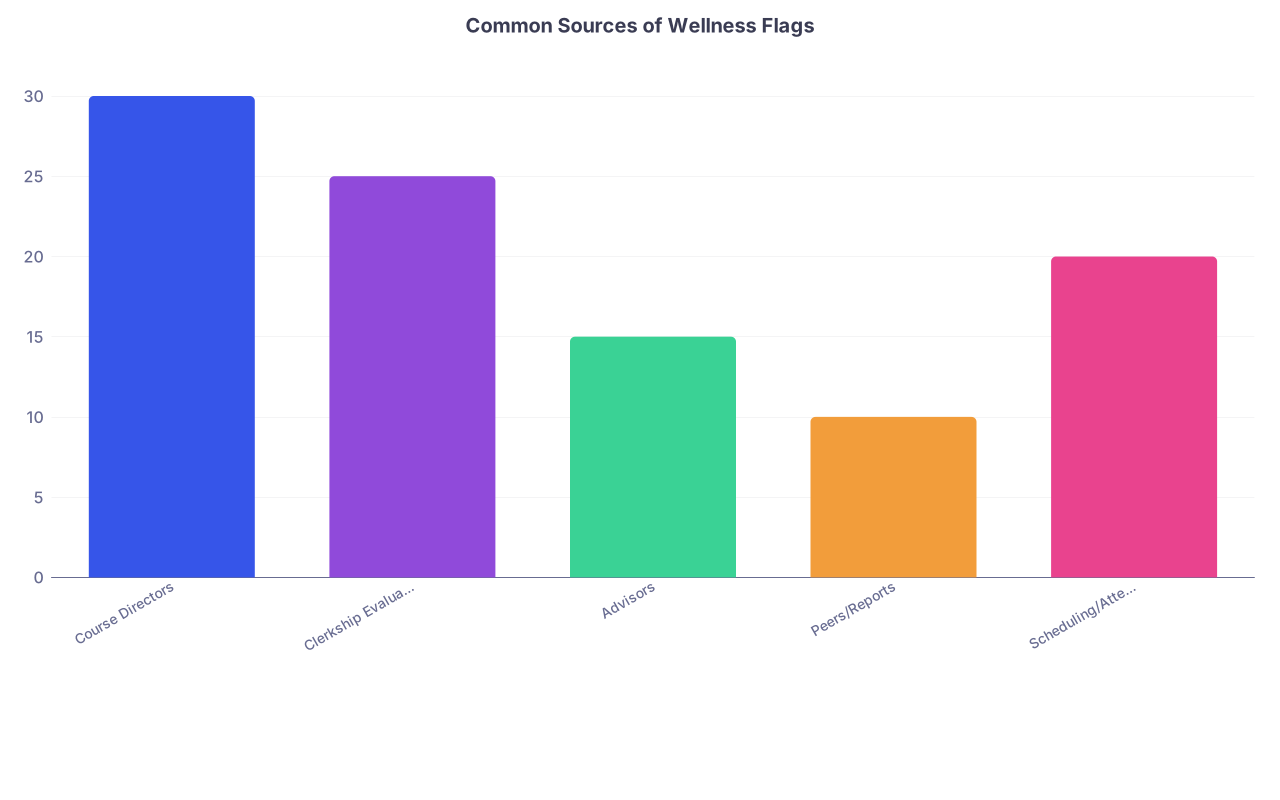
The Hidden Data Streams: Where Wellness Flags Actually Come From
Before we talk specific red flags, you need to understand where the intel comes from. You think you’re flying under the radar. You’re not.
| Category | Value |
|---|---|
| Course Directors | 30 |
| Clerkship Evaluations | 25 |
| Advisors | 15 |
| Peers/Reports | 10 |
| Scheduling/Attendance Data | 20 |
Rough breakdown, from what I’ve seen across multiple schools:
Course and clerkship directors
They’re the biggest source. End-of-block debriefs often include, “Anyone we’re worried about?” You don’t see that question, but it’s there. Your name comes up when:- You suddenly tank an exam after doing fine before.
- You miss mandatory sessions “for health reasons” repeatedly.
- Your demeanor changes sharply: withdrawn, agitated, tearful.
Preclinical small-group and PBL/CBL facilitators
These folks are uniquely positioned to see behavioral changes. The facilitator who watches you go from engaged and thoughtful to silent and vacant is the one emailing the block director: “I’m a little concerned about X.”Clerkship evals & attending comments
Residents and attendings don’t usually write “This student is depressed.” They write:- “Frequently late for rounds, seems tired and disengaged.”
- “Struggled with reliability, required repeated reminders.”
- “Professionalism concerns—multiple absences, poor communication.”
That’s code for: this might be wellness.
Advisors and mentor meetings
When you start canceling advising meetings repeatedly? Or you show up and say things like “I haven’t slept more than 3 hours in days” or “I kind of don’t care if I fail anymore”—that doesn’t just evaporate. Advisers “loop in” the Dean’s office, often “informally” at first.Peers and “anonymous” reports
Your classmate who’s honestly worried and your classmate who’s annoyed you keep missing group work both have access to reporting channels. The schools say those go to “support services.” In reality, they often end up at the Dean of Students or similar.Scheduling and attendance systems
You think you’re just “rescheduling” an OSCE here, a quiz there, a standardized patient session next week. Someone in admin is staring at the spreadsheet: one name with six reschedules in a term. That gets talked about.
The Unspoken Wellness Red Flags That Actually Trigger Emails
Let’s get concrete. These are the kinds of patterns that turn into emails that start with:
“Hi [Your Name], I wanted to check in and see how you’re doing. Would you be open to meeting…?”
The tone feels friendly. The backstory is not.
1. The Attendance-Excuse Spiral
One absence is noise. Two is an eyebrow raise. A pattern—with certain details—sets off alarms.
What really flags you:
- Multiple missed mandatory sessions (labs, small groups, clinical skills) with vague or repeated health excuses.
- “Migraine”/“stomach bug”/“family emergency” every other week.
- Frequent last-minute cancellations for OSCEs or required clinical experiences.
I’ve been in review meetings where someone says, “This student has had eight ‘sick’ days this block. Has anyone checked in?” Translation: We’re worried this student is not actually just sick.
The concern isn’t the absences alone. It’s what they often correlate with: depression, anxiety, panic, sometimes substance use. When your email excuses start sounding copied, non-specific, or oddly formal, faculty start wondering: “Is this person falling apart?”
What quietly pushes it to the Dean’s office is when:
- There’s a pattern across multiple blocks or rotations.
- You’re slippery in communication—late to respond, vague about details.
- Staff or faculty feel “uneasy” or manipulated.
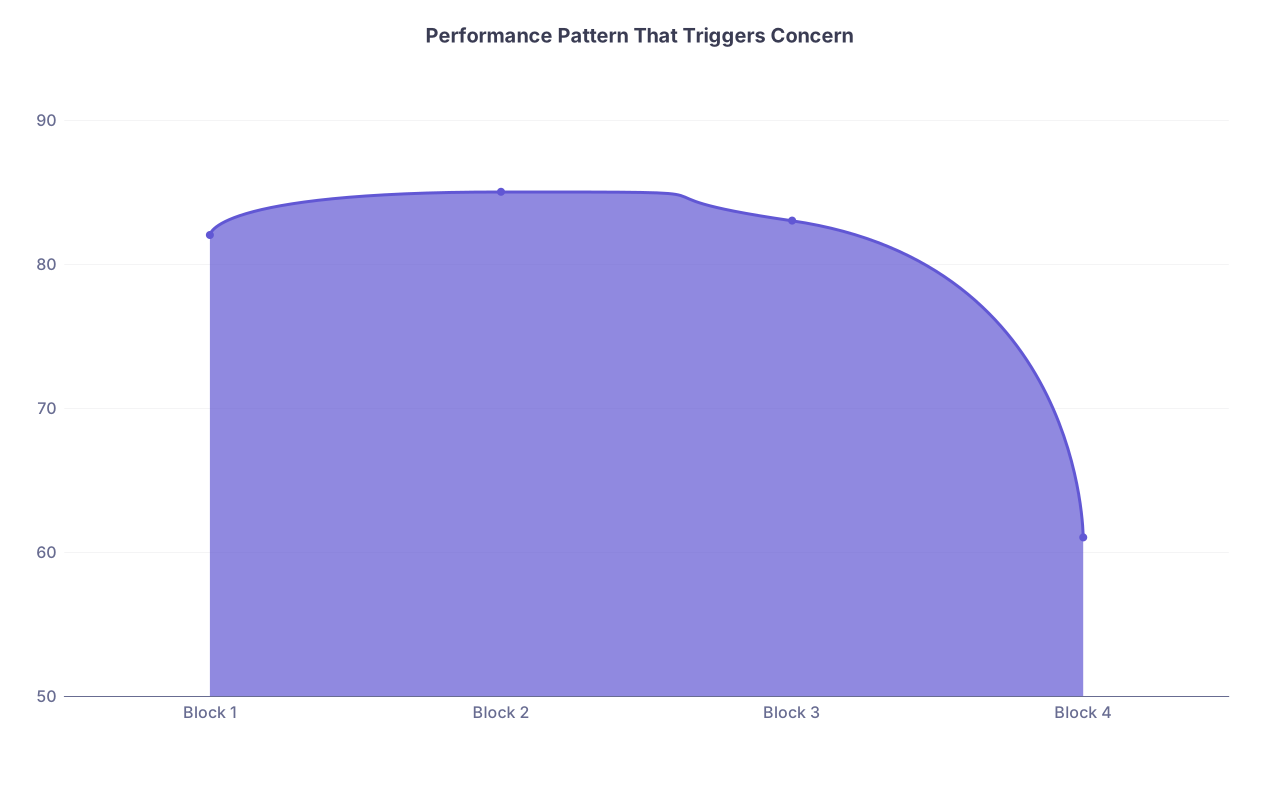
2. The Sudden Academic Cliff-Dive
Students have bad exams. That’s not interesting. What gets attention is trajectory.
Here’s the pattern that makes people talk:
- You were solidly mid-to-high performance in preclinicals. Then in one block you crash—barely passing or failing outright.
- Your practice NBME or COMSAE scores drop by 20+ points out of nowhere.
- You go from engaged emails and questions to complete silence, then bomb a major exam.
| Category | Value |
|---|---|
| Block 1 | 82 |
| Block 2 | 85 |
| Block 3 | 83 |
| Block 4 | 61 |
Faculty know what a content gap looks like. That’s consistent underperformance. Different animal. The “cliff-dive” is what whispers: something else is going on.
I’ve heard exact phrases like:
“This isn’t an academic issue; this is a wellness issue.”
or
“She’s not suddenly stupid. She’s not okay.”
That’s when the email moves from “You need to meet with the course director” to “The Dean’s office would like to invite you to discuss support options.”
3. Personality Flip in Clinical Years
Clerkship directors talk to each other. You rotate, but your reputation travels ahead of you.
Big wellness red flag: when multiple services say some version of “This isn’t the student we expected.”
Here’s the pattern:
- Rotation 1: “Pleasant, engaged, a little quiet but solid.”
- Rotation 2: “Increasingly withdrawn, flat affect, seemed exhausted.”
- Rotation 3: “Frequent tardiness, poor initiative, tearful after feedback.”
- Rotation 4: “Borderline unsafe from inattention, seems burned out or depressed.”
One director says, “Has anyone checked in on [Name]?” Another says, “We saw the same thing.” Now it’s escalated.
What gets reported isn’t “They’re sad.” It’s:
- “Marked change in affect.”
- “Diminished resilience to routine feedback.”
- “Borderline unprofessional behavior likely related to wellbeing.”
That “related to wellbeing” phrase is the pivot. That’s when you get moved from “problem student” box to “wellness concern” box. Different committee. Different kind of meeting. Same Dean’s office.
4. The “Crying in Too Many Places” Pattern
Yes, crying is normal. I’ve seen students cry after bad exams, after brutal pimping, after a rough patient death. No one’s opening a case file for that.
The email-triggering pattern is:
- You cry in multiple settings—skills lab, advisor meetings, feedback sessions—over relatively small triggers.
- Faculty or residents describe you as “fragile,” “on edge,” or “unable to tolerate stress.”
- You disclose dark thoughts in those moments—statements like “None of this matters anyway,” “I don’t care what happens to me,” or “I wish I could disappear.”
When two or more faculty send some version of “I’m concerned for this student’s mental state,” your name lands in a very specific discussion: Do we need to involve formal wellness, psychiatry, or the Dean?
There’s a line you rarely see: “We have a duty to protect the student and the institution.” Embedded in that is fear of self-harm, fear of serious incident, fear of future complaint.
5. Odd or Escalating Email Behavior
Students underestimate how much their written communication shapes perceptions of their mental state.
These kinds of emails raise quiet alarms:
- Long, rambling, highly emotional emails sent late at night to multiple faculty.
- Accusatory or paranoid tones: “Everyone is against me,” “You’re trying to sabotage my career.”
- Incoherent structure, sudden ALL CAPS emphasis, or obviously written in a distressed state.
No, one unhinged-sounding email does not get you marched to psych. But if a course director reads an email and thinks, “This student is not thinking clearly,” they often forward it—sometimes with the subject line “FYI—concerned about [Name].”
I’ve literally seen:
“Looping you in—getting increasingly concerning communications from this student. Might be worth a wellness check.”
That “looping in” is how you end up on a Dean’s calendar.
6. The Disappearing Act
This one really makes administrators nervous.
You go dark. You stop replying to emails. You miss an exam or a required session without explanation. Your phone number on file doesn’t work. Your friends say: “I haven’t seen them in weeks.”
Every Dean’s office has lived through or heard about the worst-case scenarios—students found after suicide attempts, severe psychotic breaks, or medical crises. So the threshold for worry about “disappearance” is low.
Triggers here:
- Missed high-stakes event + no response to multiple contact attempts.
- Pattern of withdrawal combined with previous wellness concerns.
- Hints in previous encounters that you’re barely holding it together.
When admin cannot reach you, you escalate from “email from Dean” to potential welfare check. Sometimes that involves campus security or local police. Nobody advertises this, but it happens.
How These Red Flags Move Behind the Scenes
You should understand the typical pipeline, because it explains the timing and tone of the emails you get.

| Step | Description |
|---|---|
| Step 1 | Faculty/Staff Notice Issue |
| Step 2 | Informal Email or Conversation |
| Step 3 | Name Raised in Small Group or Clerkship Debrief |
| Step 4 | Local Check-in by Course Director |
| Step 5 | Escalate to Dean/Student Affairs |
| Step 6 | Deans Office Outreach Email |
| Step 7 | Meeting & Support Plan |
| Step 8 | Pattern Across Blocks? |
It usually progresses like this:
First signal
A single faculty member feels uneasy and emails a course director or student affairs contact: “FYI, might be worth checking on [Name].” No action yet, just awareness.Pattern recognition
Your name appears again. Different person. Different block. Now someone connects dots: “We’ve heard about [Name] before.” That’s the shift.Quiet internal discussion
This part you never see. A 10–15 minute segment at the end of a meeting: “Any students we should be concerned about?” Your name is spoken. People share anecdotes. There’s often more information about you than you realize.Decision: outreach vs. surveillance
Sometimes they decide: “Let’s just monitor for now.” Other times: “Let’s bring them in and offer support.” That’s when the official, gentle-sounding email appears.The email itself
It’s rarely, “We think you’re unwell.” It’s usually some version of:- “We like to check in with students periodically, and your name came up as someone it might be good to meet with.”
- “Given some recent academic challenges, we’d like to connect you with resources.”
- “I’d love to hear how you’re doing and how we can support you.”
Hidden line between the words: We’re concerned enough that we want documentation that we reached out.
What They’re Actually Afraid Of
Everyone pretends this is purely about student wellbeing. That’s only half-true.
The other pressures:
- Accreditation and match outcomes – Too many leaves of absence, dismissals, or impaired graduates and LCME/COCA starts asking questions.
- Liability – If a student harms themselves or someone else, the first question is: “Did the school know there were problems?”
- Reputation and culture – They don’t want a pattern of students saying “I was screaming for help and no one cared” on anonymous surveys.
So wellness red flags aren’t just mental health cues. They’re risk signals. When you trip enough of them, administration moves not only to help you, but to protect the institution.
I’ve sat in rooms where the conversation turned from compassion to risk in a single sentence:
“I’m really worried about her… We also have to think about what happens if we keep passing her in this state.”
How to Stay Safe and Get Help Without Making Things Worse
Here’s the part students never get clearly: your goal is not to stay “invisible.” That’s how people spiral until they’re forced out. Your goal is to control the narrative.
A few hard truths and strategies.
1. Voluntary disclosure beats reactive damage control
If you’re struggling, one preemptive, measured disclosure to a trusted person is better than three crisis reports from scattered faculty.
Example of controlled disclosure to your advisor or a student affairs dean:
- “Over the past few months I’ve been dealing with significant anxiety/depression that’s now affecting my performance. I’m getting care and I want to be proactive in planning so I can be safe and successful.”
This says: I know something is wrong. I’m not ignoring it. I’m not a secret liability. That shifts the tone of every subsequent meeting.
2. Vague, repetitive excuses scream “I’m not okay”
If you’re repeatedly missing things for mental health reasons, stop hiding behind generic “sick” emails. It backfires.
You don’t need to overshare, but something like:
- “I’m managing an ongoing health issue that impacts my functioning some days. I’m working with my physician/therapist. I’d like to talk with Student Affairs about a more sustainable plan rather than repeatedly rescheduling.”
Sounds responsible. Shows insight. Turns you from a problem into a partner.
3. If you get “the email,” don’t ghost it
Ignoring the Dean’s office email is how a gentle check-in becomes a formal concern.
Here’s the insider reality: a calm, organized response actually lowers their anxiety about you.
Something like:
- “Thank you for reaching out. I’d be glad to meet. I’ve had some challenges recently but I’m actively addressing them and appreciate the opportunity to talk about support and planning.”
You walk in. You look put together. You speak with some insight. You outline steps you’re already taking (therapy, schedule changes, study support). That meeting becomes a box they’re relieved they can check: “Student engaged in care, not in immediate danger.”
4. The line you do not want to cross
There are two phrases that escalate everything:
- “I don’t want to be here anymore.”
- “Sometimes I think everyone would be better off if I weren’t here.”
If you say something that sounds like imminent self-harm, they are ethically and legally locked into a different path: emergency evaluation, possible involuntary stuff, mandatory documentation.
Be honest if you’re having dark thoughts, but be precise. There’s a difference between:
- “I’ve had passive thoughts that I’d be okay not waking up, but no intent or plan, and I’m working on this in therapy.”
vs.
- “I’ve been planning how I’d do it.”
First requires robust support and monitoring, second forces their hand into crisis mode.
What You Should Really Take From All This
You’re not crazy for suspecting the school watches you more closely than they admit. They do. The faculty who seem “casually” concerned very often are reporting back, even if informally.
But it’s not purely adversarial. Many of them genuinely do not want to watch another student crack and get dismissed or disappear. They’ve seen too many bright people burn themselves to the ground trying to white-knuckle their way through.
You do not have to choose between “tell no one and implode” and “tell everyone and lose control.” There’s a middle path:
- Be strategic about who you tell and how you frame it.
- Anticipate which behaviors look like wellness red flags and either avoid them or explain them proactively.
- Treat any outreach email from the Dean’s office as a chance to steer the story, not as a verdict.
Because the truth is, the students who survive serious mental health struggles in medical school—and still match—are usually not the ones who were the least sick. They’re the ones who learned to work with the system just enough to get support, without letting the system define them as broken.
You’re allowed to be struggling. You’re allowed to need help. Just do not let your distress show up first as a pattern of absences, cliff-dives, and incoherent emails that other people narrate for you.
Own your story early. It will shape how those “concerned” conversations go more than you think.
With that foundation, you’ll be in a much stronger position not only to survive exams and rotations, but to walk into residency as someone who understands their own limits and how to protect them. How you handle your first serious crack in med school often predicts how you’ll handle the first time residency tries to break you. But that’s a future battle—for another day.