
The biggest myth about “wellness check-ins” is that they end when you stand up and leave the room. They don’t. The real work—and the real consequences—start after you walk out.
Let me walk you through what actually happens behind the scenes after you click that “I’d like to talk” link, fill out a wellness survey, or meet with the “support” person your school keeps advertising in cheery emails.
Most students only see the front stage: the cozy office, the reassuring phrases, the “we’re here for you.” I’ve sat in the back rooms where faculty, student affairs, and sometimes legal quietly ask: “So what do we actually do with this?” You deserve to know that part too.
1. The First 24–48 Hours: Who Sees What, and How Fast
Here’s the part nobody explains clearly: not all “wellness check-ins” are the same, and they don’t all trigger the same chain reaction.
There are three main buckets your school uses, even if they don’t call them this.

Bucket 1: Fully confidential counseling
This is usually campus counseling/psych services or an external therapist the school contracts with. In most US and Canadian schools:
- These people are not part of your evaluation or grading.
- They don’t report to the dean’s office.
- Notes are kept in a separate health record, not your academic file.
If your “wellness check-in” was explicitly set up with licensed mental health professionals (psychologist, LCSW, psychiatrist) who say, “I’m not involved in your evaluation,” then what happens after the visit is mostly clinical:
- They write a note.
- They maybe discuss your case anonymously in team huddles.
- They schedule follow-up if needed.
Student affairs usually hears nothing, unless one of three red flags happens:
- Clear, current suicidal intent or plan
- Clear, current homicidal intent or plan
- You’re so impaired (psychosis, mania, intoxication on duty) that patient safety is at risk
Every campus has a slightly different “threat protocol,” but the pattern is the same: regular distress stays in-house; acute risk gets escalated.
Bucket 2: Semi-confidential “wellness” via student affairs
This includes:
- “Check-in with your learning community advisor”
- “Meet with your college mentor”
- “Talk to the wellness dean”
- Required wellness meetings after exam failures, professionalism concerns, or attendance problems
These are not confidential in the clinical sense. That’s the first secret most students miss.
What happens afterward:
- The advisor documents the encounter, usually in some kind of internal note.
- That note might go into a student affairs system, not your transcript, but very much accessible to anyone in that office.
- The advisor may email or talk to the course/clerkship director if performance is involved.
I’ve sat in those meetings where someone says: “He met with me last month, reported feeling burned out but denied safety concerns. I advised counseling. He didn’t follow up.” That’s how your “casual” check-in gets resurrected months later.
Bucket 3: Occupational/employee health type check-ins
This happens if:
- You present while on rotation and look unsafe (e.g., extreme sleep deprivation, bizarre behavior).
- There’s an exposure or injury but you reveal concerning mental health background.
- There’s been a significant professionalism event, and psych/Occ Health is quietly looped in.
These are the least “student-facing” and the most institutional. After the check-in, what actually happens is usually discussed in small, invitation-only meetings: student affairs, risk management, sometimes legal, occasionally the hospital DIO if you’re on clinical rotations.
Nobody advertises these meetings. They happen.
2. Who Talks About You After the Check-In (And What They Actually Say)
Let me be blunt: there’s always a question behind closed doors—
“Is this a distressed student… or an unsafe student?”

| Step | Description |
|---|---|
| Step 1 | Wellness Check-In Completed |
| Step 2 | Emergency Protocol |
| Step 3 | Hospital / Crisis Care |
| Step 4 | Return-to-School Process |
| Step 5 | Student Affairs Review |
| Step 6 | Routine Follow-Up Only |
| Step 7 | Monitoring Plan / Recommendations |
| Step 8 | Acute Risk? |
| Step 9 | Performance or Safety Concerns? |
Here’s how the conversations usually go depending on your situation.
Scenario 1: You’re struggling but safe
Example: You tell the wellness counselor you’re anxious, not sleeping, crying after exams, but you deny suicidal thoughts and you’re still functioning.
What happens next:
If it’s truly confidential counseling:
The conversation stays with them. The “after” is just clinical—follow-up appointment, maybe referral to psychiatry, maybe encouragement to reduce workload.If it’s student affairs:
They may add a note: “Student reports anxiety and stress, denies suicidal ideation. Recommended counseling, study support, schedule adjustments.”
Then, in later promotion/committee meetings, that note can quietly soften how your record looks. Faculty do sometimes say: “He was going through a lot that semester and sought help; I’m less worried.”
That’s what nobody tells you: seeking help early often gives you more protection later, not less, because there’s a documented story. When I’ve sat on promotions committees, the students we worry most about are the “no warning, no record, then sudden collapse” types.
Scenario 2: You disclose suicidal thoughts
This is where the backroom process really kicks in.
If you say anything close to “I’ve thought about ending my life,” here’s what usually happens after you leave:
- The clinician/advisor documents your exact words. Verbatim or nearly.
- They stratify risk: passive vs active, plan vs no plan, means vs no means.
- If there’s an active plan or intent, they trigger an emergency response: same day psych eval, ER, or crisis team.
Behind the scenes:
- A brief alert goes to student affairs: “Student evaluated for suicidal ideation; currently safe but requires close follow-up.”
- If there’s hospitalization, there’s a whole second layer: medical leave paperwork, required documentation to return, sometimes a formal “fitness for duty” style evaluation.
Here’s the uncomfortable secret: once inpatient hospitalization happens, institutional memory gets long. Years later, in a borderline professionalism or performance case, someone will say, “Remember, he had that hospitalization M2 year.” They’re not supposed to bias decisions with that, but they do, even if only subtly.
It doesn’t mean you’re doomed. I’ve seen plenty of students with prior psych hospitalization match into strong residencies. But it changes how schools manage you: closer monitoring, more documentation, more “are we covered” thinking.
3. How Your Information Is Shared (and Where It Actually Stays)
Students always ask some version of: “Is this going to go in my permanent record?” You deserve a grown-up answer.
| Setting | Who Sees It | Goes on Transcript? | May Reach Promotions Committee? |
|---|---|---|---|
| Campus Counseling Center | Mental health clinicians | No | Rarely, only via summary letter |
| Student Affairs Office | Deans, advisors, staff | No | Yes, often summarized |
| Course/Clerkship Director | Director + sometimes team | No | Indirectly, via narrative input |
| Occupational Health | Occ Health + legal/risk | No | Sometimes in serious cases |
Here’s the unvarnished reality:
Your transcript and MSPE (dean’s letter) usually don’t say “this student was depressed.” They only show academic and professionalism outcomes: leaves of absence, failures, remediation, professionalism actions.
Your internal file in student affairs is where the story lives. That file doesn’t go to residency programs directly, but it shapes how your school describes you in narrative ways.
Residency programs generally don’t see the raw wellness or counseling notes. They see outcomes: LOAs, gaps, odd sequences of rotations, professionalism flags.
The real question your school asks after every serious wellness concern is: “What’s our liability and what’s our responsibility?”
So they quietly tighten the net:
- More frequent check-ins.
- Required letters from treating clinicians before you return from leave.
- Informal instructions to clerkship directors: “Let us know early if anything seems off.”
You may never be told this explicitly, but I’ve watched those emails get sent.
4. What Triggers Formal Action vs “Soft” Monitoring
Not every wellness check-in starts a process. But some absolutely do. The line is not always as clear as policies pretend.
Here’s how it usually breaks:
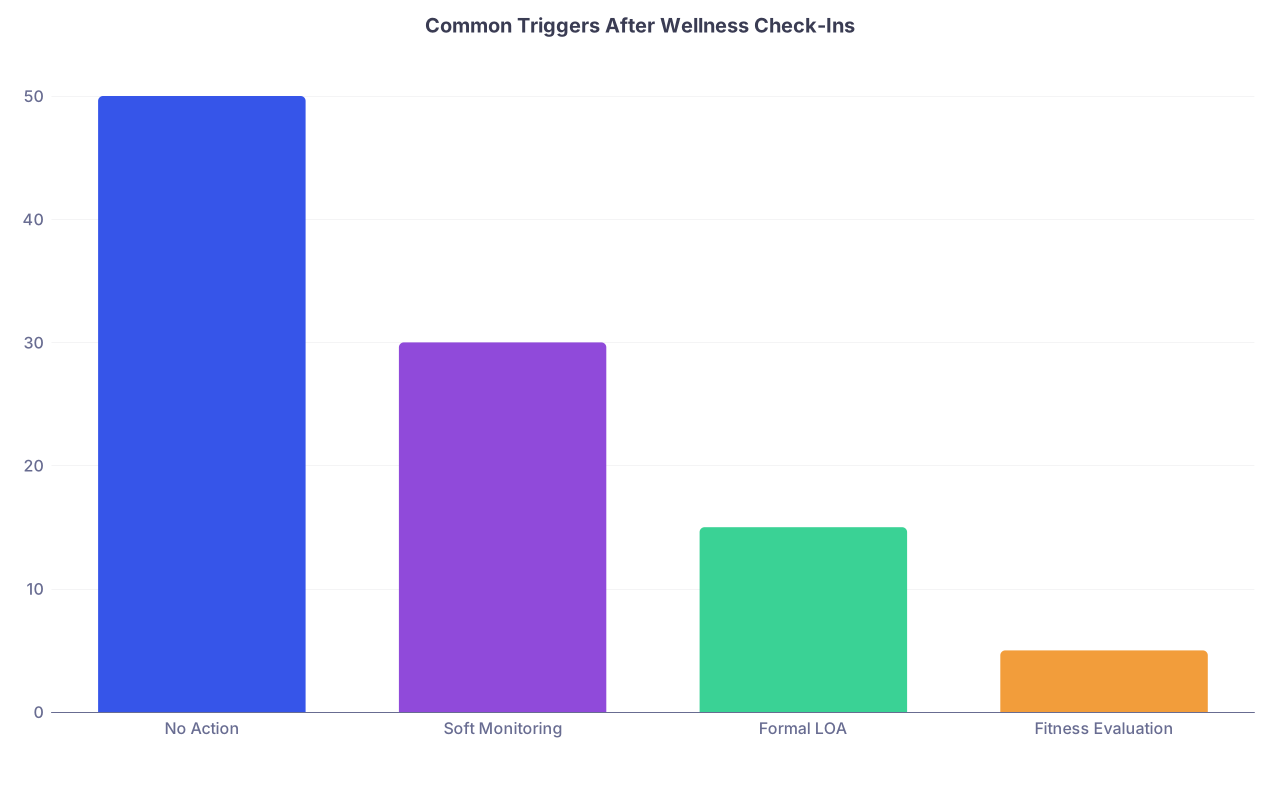
| Category | Value |
|---|---|
| No Action | 50 |
| Soft Monitoring | 30 |
| Formal LOA | 15 |
| Fitness Evaluation | 5 |
Think of outcomes in four tiers.
Tier 1: No institutional action
You got anxious around exams, talked to counselor, maybe started therapy or meds. You’re functioning, your grades pass, no patient safety issues.
Behind the scenes: nobody outside counseling is talking about you. You’re statistically the majority.
Tier 2: Soft monitoring
Things that push you into this category:
- Repeated exam failures with reported anxiety or depression.
- Faculty noticing you looking exhausted, withdrawn, or unprofessional, then hearing “He’s under a lot of stress” from student affairs.
- You self-disclose significant distress but deny acute safety concerns, and your performance is brittle.
What happens after that wellness check-in:
- Student affairs flags your name for “follow-up.”
- Your advisor might check in quarterly “just to see how you’re doing.”
- During promotions meetings, your name gets an extra minute of discussion. People remember your story now.
There’s no formal label. No official “watchlist.” But there’s a very real informal one in people’s heads.
Tier 3: Formal leave of absence (LOA)
Triggers:
- You or your clinician decides you need time away.
- You’re too impaired to safely function on rotations.
- You’re hospitalized or need a level of care that’s incompatible with training.
After that check-in, the machine turns on:
- LOA paperwork, often requiring treatment plans.
- Return policies: letters from psychiatrists, sometimes “independent” evaluation.
- Schedule reengineering: you’re moved to a later clerkship group, Step timing changes, sometimes even graduation date shifts.
Quiet but crucial: faculty track how you handle the LOA, not just that you took one. Cooperative, engaged, adherent to treatment? They’re usually supportive. Chaotic, avoidant, non-responsive to emails? That follows you.
Tier 4: Fitness for duty / fitness to practice evaluation
This phrase may never be said to your face, but once it’s said in a closed meeting, the tone changes.
This level kicks in when:
- Multiple concerning episodes occur (unprofessional behavior, erratic affect, too many “near misses” clinically).
- There’s serious substance use concern.
- You present as potentially dangerous to self or others, even if you’re not actively suicidal at the moment.
What actually happens:
- The school may require an evaluation by an external psychiatrist or a physician health program.
- The evaluator sends a summary: diagnosis, risk assessment, recommendations, fitness for ongoing training.
- Your continuation usually comes with conditions: treatment adherence, random screens, regular reports.
You’ll never see the exact wording used in internal discussions, but I’ve heard these phrases many times:
- “We need to be confident they’re safe for patient care.”
- “What will we say if something goes wrong and we ignored this?”
That’s the legal voice creeping in.
5. How This Affects Exams, Rotations, and Your Career Trajectory
This is the piece nobody connects clearly: your mental health story and your exam/rotation path are deeply intertwined behind the scenes.
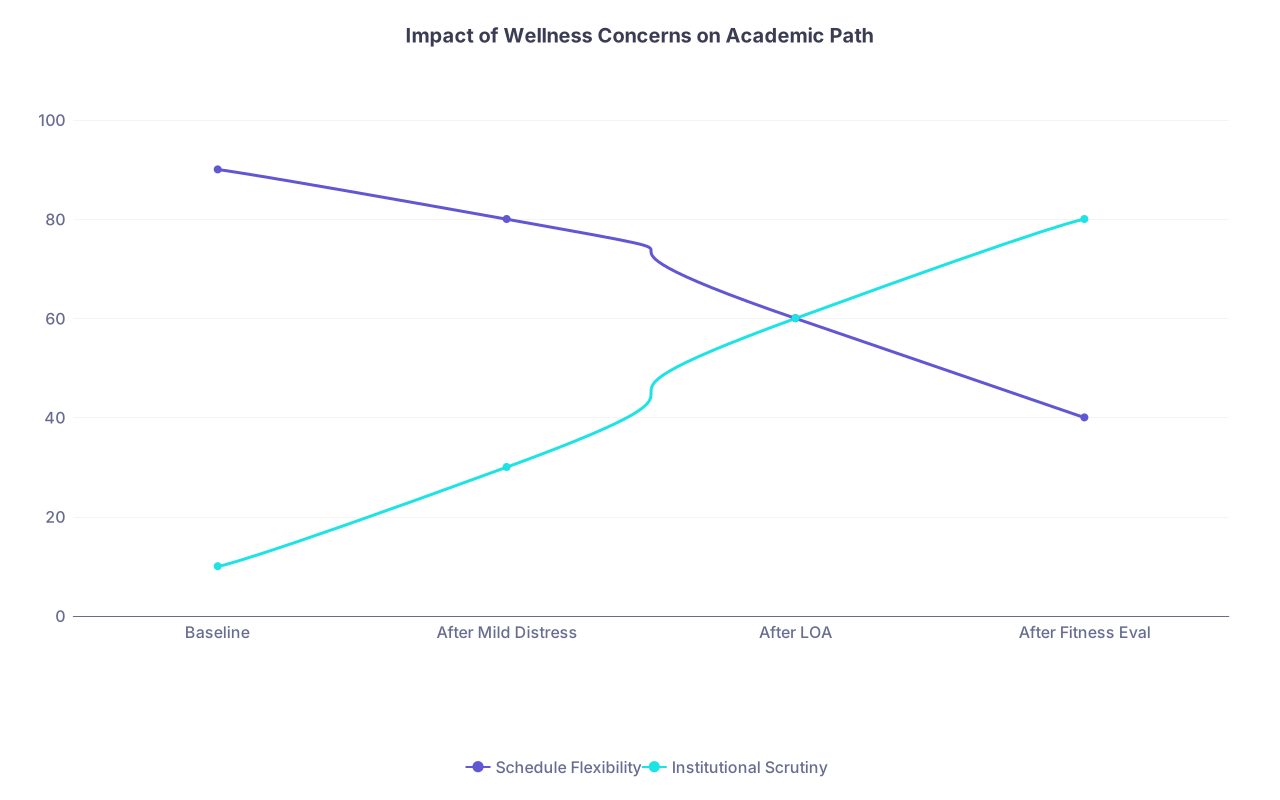
| Category | Schedule Flexibility | Institutional Scrutiny |
|---|---|---|
| Baseline | 90 | 10 |
| After Mild Distress | 80 | 30 |
| After LOA | 60 | 60 |
| After Fitness Eval | 40 | 80 |
Exams
After a significant wellness flag:
- Schools are more willing to approve testing accommodations. They’d rather you have extra time or breaks than fail repeatedly.
- They may strongly “recommend” you delay Step/Level 1 or 2. That “recommendation” can feel like a demand.
I’ve seen this play out like clockwork:
M2 student barely passes first two systems, has a wellness check-in where they break down, gets documented as “major depressive episode,” and suddenly the school insists on pushing Step 1 three months later “for your well-being.”
You feel punished. They feel they’re protecting you—and themselves. Both can be true.
Clerkships
On rotations, this is what actually happens after your wellness check-in if you’re in the “soft monitoring” or higher category:
- Clerkship directors sometimes get a vague heads-up. “Keep an eye on her; she’s had a rough year.”
- Your occasional late note, dazed affect, or mild unprofessional comment gets interpreted differently. There’s a story attached now: “This fits with what we’ve heard.”
Is that fair? Not always. Is it real? Absolutely.
But there’s a flip side: If you’ve been open, engaged in treatment, and improving, attendings can become your strongest advocates. I’ve heard variations of:
“She’s gone through hell, but she’s doing the work. I’d trust her with my patients.”
That goes into your narrative comments and your letters. Quietly powerful.
6. How to Use the System Without Letting It Use You
The point is not to scare you out of seeking help. That’s stupid and dangerous. The point is to be strategic.

Here’s how the best students I’ve seen handle this.
Know which lane you’re in every time
Before or at the start of any wellness-related meeting, you ask:
- “Are you in any way involved in my academic evaluation or promotions decisions?”
- “Is this conversation confidential in the clinical sense, or can it be shared with student affairs?”
- “Where, if anywhere, will notes from this meeting be stored?”
If they dance around the answer, assume student affairs can see it. If they say “I’m a licensed clinician and not involved in evaluation,” that’s counseling lane, different rules.
Use confidential services for depth, student affairs for structure
This is the smart split:
- You talk about suicidal thoughts, childhood trauma, and medication changes with counseling/psychiatry.
- You talk about schedule changes, LOA, exam timing, and accommodations with student affairs—and keep explanations broad: “Under treatment for a medical condition affecting concentration and stamina.”
You do not need to hand your entire psych history to your dean to justify an exam delay. A simple letter from a treating clinician with functional limitations is enough.
Document on your own terms
You keep a private record (even just a doc on your laptop or a notebook):
- Dates of appointments
- Major recommendations
- Any agreed-upon accommodations or schedule changes
When the institution does something—approves a delay, sets conditions for return—you ask for it in writing. That way, if memories get selective later, you’re not relying on vague recollections.
7. What Doesn’t Happen (Despite Your Worst Fears)
Let me reassure you about a few things, based on actual committee conversations.
No, people are not sitting there saying, “He saw counseling three times; he shouldn’t be a doctor.” They don’t have that data, and they wouldn’t care that specifically even if they did.
No, your routine counseling visits do not go in your dean’s letter. What shows up are outcomes—gaps, delays, LOAs—not the reasons in psych jargon.
No, one tearful wellness check-in during M1 won’t secretly blacklist you for residency. Programs care about: exams, narrative comments, letters, and whether there were professionalism disasters.
The patterns that do scare faculty are different:
- Repeated denial that anything’s wrong while performance craters.
- Angry, hostile responses to feedback, then wellness language used as a shield.
- Concerning behavior on rotations that feels dangerous or wildly unpredictable.
So if you’re showing insight, seeking help, and steadily improving—even if it’s slow—most educators will quietly be on your side.
FAQ: What Students Always Ask After a Wellness Check-In
1. Can a wellness check-in get me kicked out of medical school?
Not by itself. What gets students dismissed is a pattern: repeated course/rotation failures, serious professionalism violations, or refusal to follow essential treatment/safety recommendations after documented concerns. A single honest conversation about distress, even suicidal thoughts without plan or intent, very rarely leads to dismissal. It may lead to more support, monitoring, or, in severe cases, recommended leave.
2. Will residency programs know I had a mental health leave of absence?
They’ll see that you had a gap or LOA if it changes your training timeline. Your school has to explain breaks in training in the MSPE, but they often phrase it generically: “personal” or “medical” leave. They’re not required—or allowed—to disclose specific diagnoses without your consent. Programs usually care more about what you did afterward: did you come back, perform well, and get strong letters?
3. Should I tell my dean about suicidal thoughts if I already told my therapist?
If your therapist is independent and you’re safe (no active plan or intent), there’s usually no requirement to tell your dean. However, if your mental state is affecting exams, attendance, or rotations, it can be strategically smart to disclose functional impact (not all details) to student affairs so they can support schedule changes or accommodations. Keep clinical details with your therapist; share impairments and needs with the dean.
4. Can I refuse a recommended leave of absence or fitness evaluation?
You can refuse, but there are consequences. Schools can make continued enrollment contingent on completing evaluations or following safety recommendations. I’ve seen students try to “lawyer up” and resist every step; it almost always ends badly. A better move is to engage, ask for clarity in writing, and, if needed, get your own clinician or attorney to help negotiate reasonable, time-limited conditions rather than flat refusal.
5. How do I talk about all this if it comes up in a residency interview?
You stay high-level and outcome-focused. Something like: “During medical school I faced a significant health challenge that required me to step back briefly and re-evaluate how I manage stress. I used that time to get appropriate treatment, adjust my habits, and I returned stronger—since then I’ve had solid clinical performance and reliable functioning. It taught me how to recognize limits early and seek help appropriately.” You do not need to list diagnoses or hospitalization details unless you choose to.
If you remember nothing else, remember this:
Most wellness check-ins don’t ruin careers; silence and denial do. The system isn’t purely benevolent, but it’s also not out to get every struggling student. Your job is to know which lane you’re in, control who knows what, and use help early—before the backroom meetings start asking, “Why didn’t we see this coming?”