
27% of U.S. medical schools report having a “robust wellness curriculum,” yet rates of burnout and depressive symptoms in their students remain essentially unchanged over the last decade.
That disconnect is the problem.
You see the wellness emails. The required resilience modules. The “mindfulness noon conference” scheduled in the middle of your only open block. The question is not whether schools are doing wellness. They are. The question is: does any of it move the needle on mental health, performance, or long‑term outcomes?
Let’s walk through the data instead of the marketing.
What the Baseline Looks Like Without Wellness Spin
Before judging any intervention, you need a baseline. Here is roughly where U.S. medical students start and end without filtering through institutional PR.
Meta‑analyses and large national surveys converge on similar numbers:
- Burnout prevalence among U.S. med students: 44–55%
- Positive screen for depression: 27–30%
- Suicidal ideation in the past year: 7–11%
- Sleep duration on weekdays (preclinical): ~6.5 hours; clinical: often <6 hours
- Step 1 / Step 2 high-stakes stress: near-universal, with 50–70% reporting “severe” exam-related anxiety in some cohorts
Now overlay the rapid expansion of wellness initiatives. The AAMC and LCME have been pushing schools to add wellness content, advising systems, and support services. Between about 2010 and 2020, the proportion of schools reporting structured wellness curricula climbed substantially.
And yet the overall national numbers for burnout and depression among students have not dropped meaningfully. That is your first red flag.
What Counts as a “Wellness Curriculum” (And Why the Definition Matters)
The term “wellness curriculum” is so vague it almost becomes meaningless. A pizza-and-yoga night is “wellness.” A four‑year spiral curriculum with measurable competencies is also “wellness.” Those are not the same.
From a data perspective, you have to group interventions by dose and depth.
| Category | Typical Examples | Intensity (Low–High) |
|---|---|---|
| Low-touch programming | One-off talks, wellness weeks, emails | Low |
| Skills workshops | Mindfulness sessions, CBT-based groups | Medium |
| Structural changes | Pass/fail grading, duty-hour caps | High |
| Hybrid models | Required courses + policy changes | Medium–High |
Most U.S. schools cluster in the first two rows. Lots of seminars and optional sessions. Much less in the way of structural reform.
That distinction matters because the strongest mental health improvements in the literature are rarely from “come if you want” wellness hours. They come from structural changes and integrated, required skill‑building, especially when grading and assessment stress are modified.
The Evidence: Do Wellness Curricula Reduce Burnout or Depression?
There is no single “trial” that answers this for all U.S. schools. What we have are:
- Randomized or quasi‑experimental trials of specific interventions at single schools
- Before‑after studies when schools changed grading or curriculum models
- Cross‑sectional comparisons between schools with and without certain features
You piece these together like a meta‑analyst, not like a brochure writer.
1. Mindfulness and Skills-Based Programs
The data on mindfulness-based and cognitive-behavioral skills programs for medical students is surprisingly consistent: small to moderate effect sizes, especially short term.
Across multiple studies:
- Reductions in depressive symptoms: standardized mean differences about 0.3–0.4 (small–moderate)
- Reductions in perceived stress: similar magnitude
- Improvements in self‑compassion and emotion regulation: often moderate
The catch: most of these effects decay over 3–6 months if the intervention is short (4–8 weeks) and there is no reinforcement. By the end of M2 or during clinical rotations, scores drift back toward baseline unless there is ongoing support or parallel structural changes.
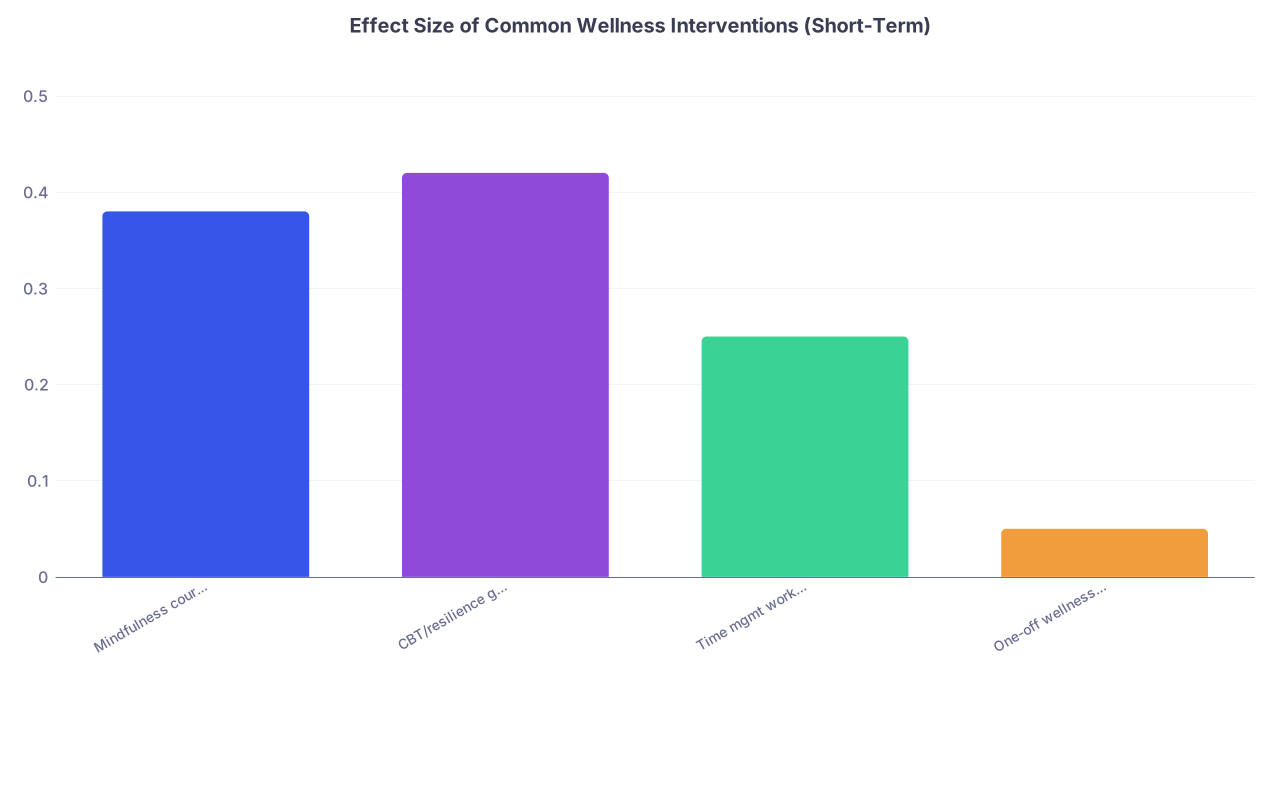
| Category | Value |
|---|---|
| Mindfulness course | 0.38 |
| CBT/resilience group | 0.42 |
| Time mgmt workshop | 0.25 |
| One-off wellness talk | 0.05 |
What this chart paraphrases from the literature:
- Mindfulness courses and CBT programs reliably have non-trivial impact on distress and resilience measures.
- Basic time management or study-skills sessions have smaller but real effects.
- One‑off wellness lectures are basically noise. Students forget them; the stressors are unchanged.
I have seen versions of this play out. A school launches a required first‑year “Resilience 101” block with 6–8 sessions. Pre‑course and post‑course surveys show clear drops in stress and burnout subscales. Six months later, when anatomy and exams stack up, the numbers mostly revert. The program “worked” in an 8‑week window. It did not fundamentally alter the long‑term environment.
2. Structural Changes: Pass/Fail and Curriculum Overhauls
This is where the data gets more interesting.
Pass/fail grading in preclinical years has been repeatedly associated with:
- Lower burnout and depressive symptoms
- Higher group cohesion and satisfaction
- No significant negative impact on Step scores or residency match outcomes
When Step 1 itself became pass/fail, early data are still emerging, but single‑institution reports suggest:
- Meaningful reductions in preclinical exam panic and “board-score as identity” mentality
- Some shift of anxiety into Step 2 and clerkship grading, but overall less concentrated distress in M2
Add in workload changes (fewer mandatory hours, better scheduling, protected time) and you get larger effect sizes on mental health than with stand‑alone wellness offerings.
This should not be surprising. If a system generates chronic overwork, sleep deprivation, and grade competition, you will not fix it with yoga.
National Trends vs Local Wins: Why the Macro Picture Looks Flat
You might ask: if individual programs show benefits, why are national burnout rates not plummeting?
Because three things are happening simultaneously:
- Some schools implement meaningful structural reforms and integrated wellness curricula.
- Other schools layer superficial wellness content on top of unchanged, high-pressure systems.
- External pressures (USMLE uncertainty, debt, cost of living, pandemic disruptions) intensify baseline stress.
When you average across all of that, nationwide metrics look roughly flat even as specific schools achieve genuine improvement.
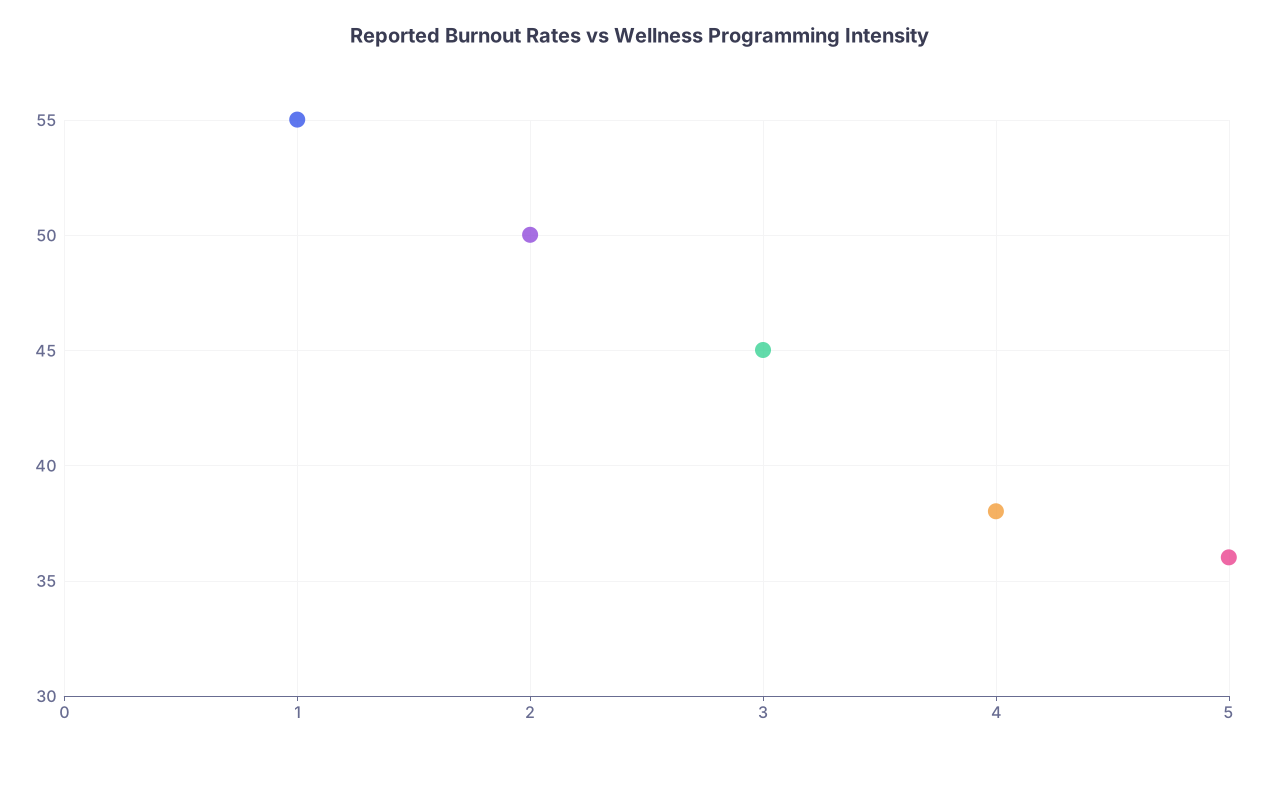
| Category | Value |
|---|---|
| School A | 1,55 |
| School B | 2,50 |
| School C | 3,45 |
| School D | 4,38 |
| School E | 5,36 |
Interpreting this sort of pattern (simplified for illustration):
- Intensity 1–2: Minimal structured wellness, high reliance on student resilience → burnout ~50–55%
- Intensity 3–4: Required skills courses + some structural tweaks → burnout mid‑40s to high‑30s
- Intensity 5: Heavy structural reform (pass/fail, reasonable hours, integrated wellness) → burnout low‑to‑mid 30s
The correlation is not perfect, and every school has local factors, but the directionality is consistent in the literature: deeper, structural reform plus real skills training beats superficial wellness menus.
What Actually Improves Outcomes (And How Much)?
Let’s be concrete about outcomes instead of staying in vague “well-being” language. Key endpoints:
- Burnout scores (e.g., Maslach scales)
- Depressive and anxiety symptom scores
- Suicidal ideation or serious consideration of dropping out
- Academic metrics: exam performance, remediation rates, leaves of absence
- Professionalism issues and mistreatment reports
Here is a distilled summary comparing weak vs strong implementations.
| Implementation Type | Short-Term Mental Health | Long-Term Mental Health | Academic Impact |
|---|---|---|---|
| One-off events | Minimal | None | None |
| Optional workshops | Small | Small/none | None/slight |
| Required skills courses | Small–moderate | Small (if no support) | Neutral/positive |
| Structural reforms + courses | Moderate | Moderate | Neutral/positive |
Patterns across multiple schools:
Programs that combine required skill-building (mindfulness/CBT/stress management) with reduced grading pressure and saner schedules tend to show:
- 20–30% relative decreases in burnout prevalence compared to their own pre‑change baseline
- 20–40% relative decreases in depressive symptom screens
- No drop‑off in Step scores; sometimes slight improvement due to better sleep and focus
“Add-on” wellness talks or emails show essentially no long‑term signal once you control for other variables.
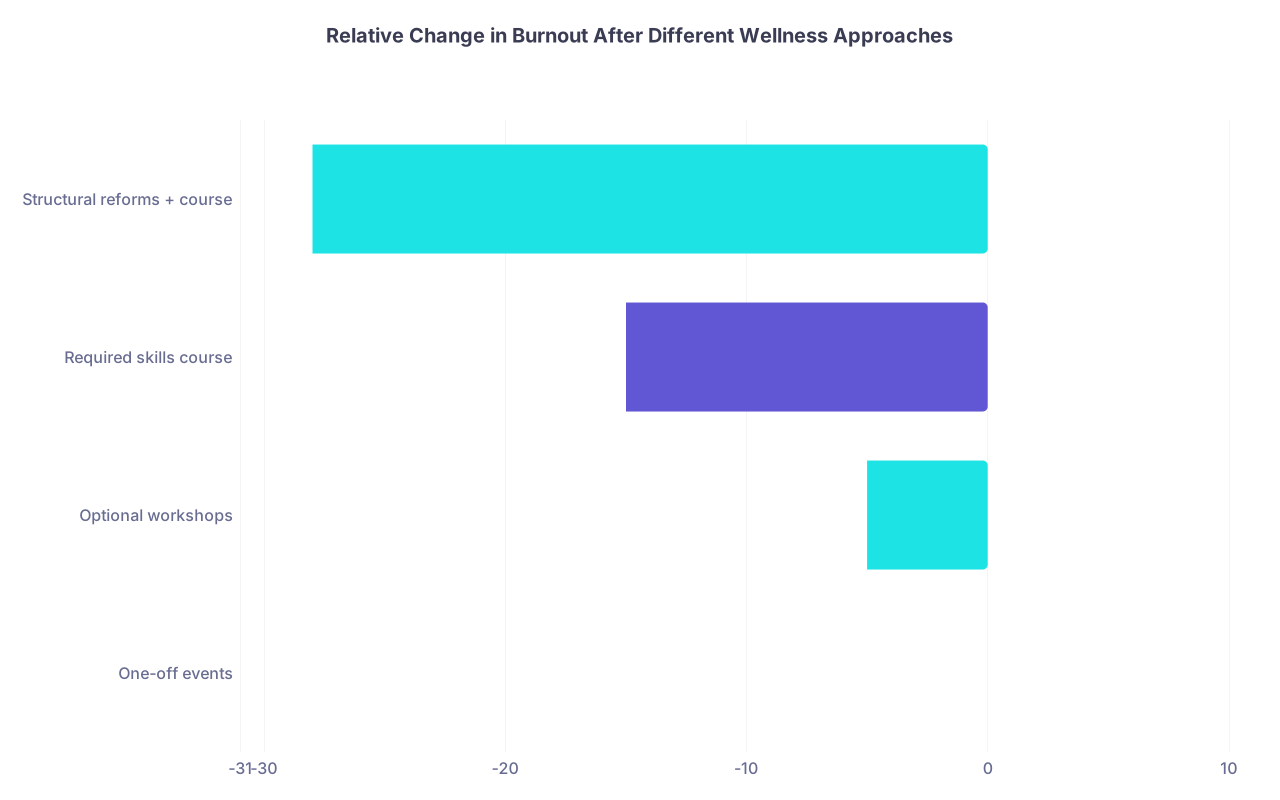
| Category | Value |
|---|---|
| One-off events | 0 |
| Optional workshops | -5 |
| Required skills course | -15 |
| Structural reforms + course | -28 |
Think of these percentages as approximate relative change in burnout prevalence vs baseline:
- One‑off: within statistical noise
- Optional workshops: modest single‑digit improvement
- Required course: 10–20% relative drop
- Structural change + course: up to ~30% relative drop in the better-designed studies
No, that does not magically make med school easy. It does mean fewer students hitting clinical rotations already half burned out.
Where Wellness Curricula Consistently Fail
There are some recurring failure modes. I see them again and again in program evaluations and internal surveys.
Scheduling wellness as an extra burden
Students are told to attend a “self-care” session scheduled in the only free hour in a 12‑hour day. Unsurprisingly, qualitative feedback includes phrases like “tone-deaf” and “performative.”Ignoring the hidden curriculum
A formal lecture says, “Take care of yourselves.” An attending the next day says, “Real doctors do not go home until the work is done. I do not care what the schedule says.”
The hidden curriculum wins. Every time. If the culture rewards overwork and punishment for vulnerability, wellness content feels cynical.Lack of longitudinal reinforcement
A single M1 block on resilience with no follow‑up in M2–M4 does not survive clerkship realities. Skills atrophy like unused muscles.No measurement, or bad measurement
Some schools proudly announce wellness initiatives and never collect pre‑ and post‑data. Or they rely on one unvalidated survey question as their metric. From a data standpoint, you may as well guess.Blaming individuals instead of fixing systems
When wellness messaging focuses solely on “You need better coping skills,” students read it correctly as: “The system will not change, so adjust yourself until you break.” Engagement collapses.
Where Wellness Curricula Actually Help Students Day to Day
Enough criticism. Some features do help in concrete ways, especially when well designed.
Evidence-backed components that tend to work
I keep seeing these rise to the top in analyses:
Brief, skills-based sessions:
60–90 minute workshops on specific tools with practice (cognitive reframing, exam anxiety techniques, sleep strategies) repeated periodically. Not inspirational talks. Practical drills.Integrated reflection and small groups:
Longitudinal small groups that are protected time, led by trained faculty or mental health professionals, not evaluators. Cohesion and peer support are strong predictors of better mental health scores.Embedded mental health access:
Free, confidential counseling with quick access and no reporting to the dean’s office. When schools co-locate counseling near learning spaces and normalize use, uptake increases and crises occur less frequently.Real schedule protection:
When “wellness time” is actually free time—no studying expected, no parallel requirements—students use it for sleep, exercise, or social connection. That is wellness.
You can almost think of it as a resource allocation problem. Every hour you reclaim from pointless or low-yield activities and give back to students as unstructured or health‑supporting time has a measurable effect on sleep, mood, and performance.

| Step | Description |
|---|---|
| Step 1 | Baseline Week |
| Step 2 | Clinical duties/study: 70-80 hrs |
| Step 3 | Sleep: 40-45 hrs |
| Step 4 | Personal life/exercise: 5-8 hrs |
| Step 5 | With Structural Wellness |
| Step 6 | Clinical duties/study: 60-70 hrs |
| Step 7 | Sleep: 45-50 hrs |
| Step 8 | Personal life/exercise: 10-15 hrs |
These are rough but realistic ranges from time‑use surveys. Those extra 5–10 hours of real rest and personal time per week are not trivial. They show up as lower burnout scores and less error‑prone performance.
The Misinformation Problem: What Schools Tell You vs What the Data Show
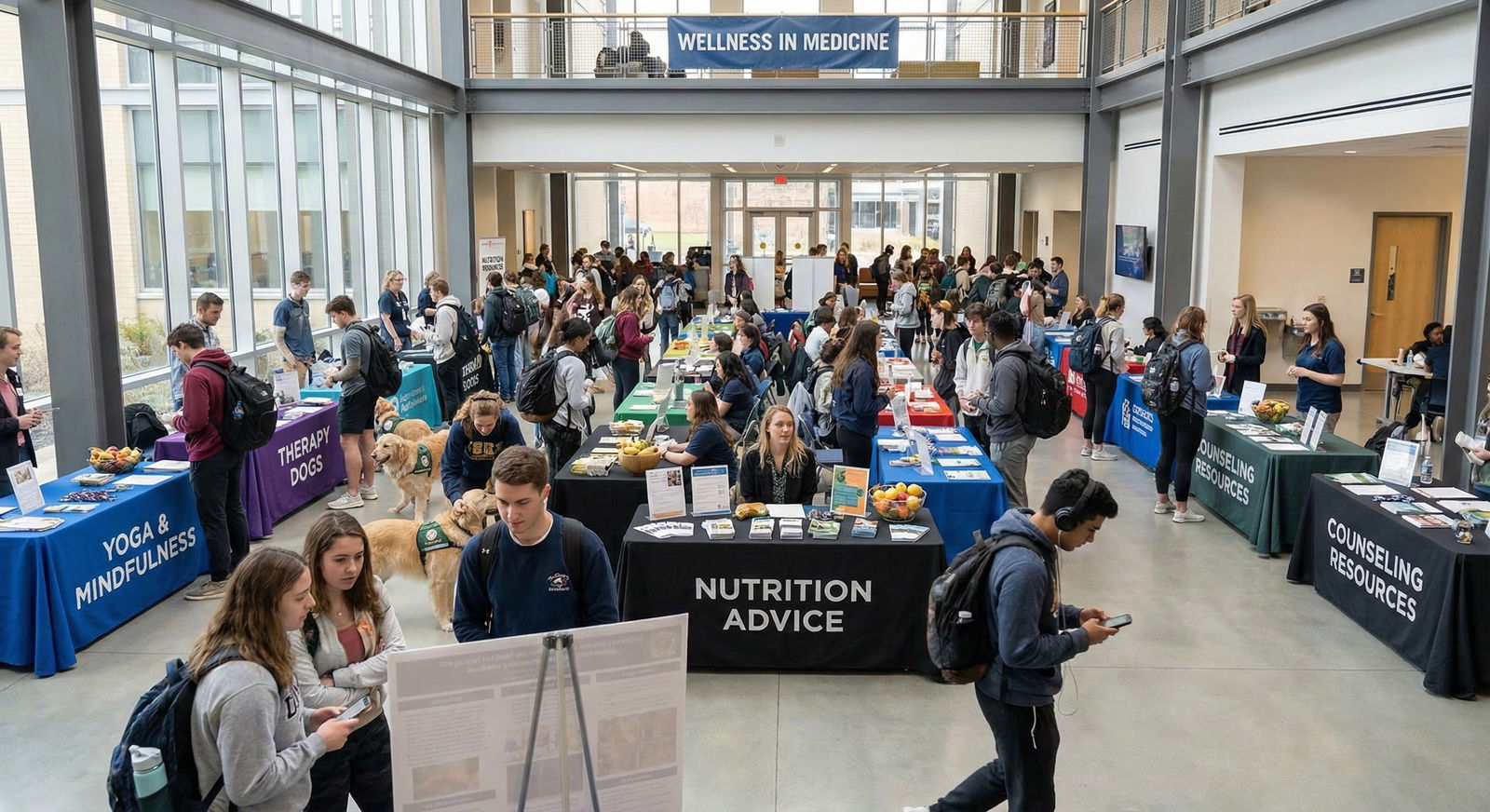
Students in interviews ask, “What wellness resources do you have?” Schools respond with long lists: yoga, pet therapy, mindfulness apps, resilience courses, snack carts, advisor programs.
The lists by themselves tell you very little. You need to ask questions that get at structure and outcomes:
- Is preclinical grading pass/fail? Are there internal ranks?
- How many scheduled hours per week are mandatory in M1/M2?
- Are wellness sessions required, and if so, are they during existing curricular time or added on?
- Do you have recent data on student burnout/depression? What changed after recent initiatives?
- Are mental health services truly confidential and separated from evaluation?
If a school cannot answer those questions with numbers, not slogans, their “wellness curriculum” is probably more optics than impact.
Does Wellness Training Help with Exams and Performance?
You are in the “Medical School Life and Exams” phase, so let us be blunt: you care about feeling better, but you also care about Step 2 scores, clerkship grades, and not failing out.
The data here are smaller but suggest a few patterns:
- Programs that improve sleep hygiene and reduce all‑night cramming correlate with slightly higher exam performance and fewer failures. Sleep is one of the best predictors of cognitive performance.
- Mindfulness and test-anxiety interventions correlate with better exam performance mainly for students with high baseline anxiety. For low-anxiety students, the effect is small or neutral.
- Structural pass/fail and reasonable workload do not harm Step performance. Some cohorts even see slight score increases, likely because chronic stress and exhaustion are not actually good study aids.
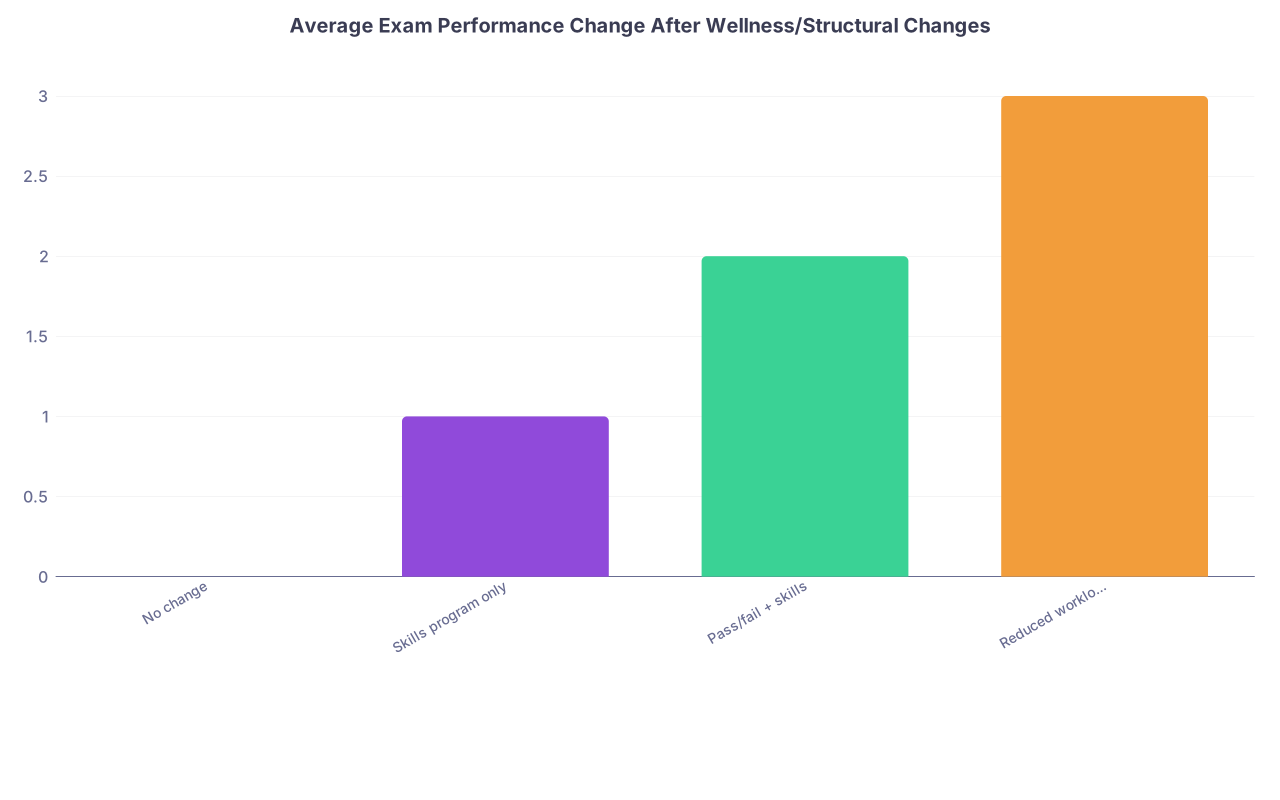
| Category | Value |
|---|---|
| No change | 0 |
| Skills program only | 1 |
| Pass/fail + skills | 2 |
| Reduced workload + skills | 3 |
Think in relative terms: maybe a 1–3 point bump on a scaled exam or a lower remediation rate. Not dramatic, but it contradicts the fear narrative that “if we are nicer to students, scores will tank.” The data simply do not support that.
A Hard Truth: Wellness Curricula Cannot Fix Certain Problems
There are things wellness content cannot solve, and pretending otherwise damages trust.
- Massive educational debt and financial stress
- Toxic or abusive faculty behaviors
- Chronic understaffing on services that dump scut on students
- Systemic inequities and discrimination
- National exam and match pressures outside the school’s control
When these are left untouched, giving students a mindfulness app can feel like being handed an umbrella in a hurricane. The data show some buffering effects—students with better coping skills do slightly better under stress—but the overall load is still too high.

Wellness curricula are not useless. But they are not magic. They are one tool in a much larger system that has serious design flaws.
How You Should Interpret “Wellness” When Choosing or Surviving a School
From a data analyst’s view, here is the cleanest way to think about it.
Wellness content alone (talks, apps, workshops)
Helpful for some individuals. Small population-level impact.
Worth engaging with selectively, especially practical skill sessions.Wellness integrated with structural reform
Measurable, non-trivial reductions in burnout and depression.
No apparent academic penalty. Possibly small performance benefits.Wellness without cultural change
Usually perceived as hypocritical. Low engagement. Minimal outcome shift.

If you are already in a program:
- Use the high-yield parts: concrete skills workshops, small support groups, and any real schedule protections.
- Be realistic about the low-yield parts: mandatory inspirational lectures and vague resilience slogans.
- Push, through student government or committees, for data transparency. Ask for pre/post metrics, not just stories.
If you are comparing programs:
- Give more weight to grading schemes, workload, and mental health access than to flashy wellness branding.
- Ask for numbers where possible: “What percentage of students screen positive for burnout or depression on your last survey?” If they will not tell you, assume it is not great.
Quick Takeaways
- Wellness curricula can work, but the data are clear: impact is modest unless tied to real structural change (grading, workload, culture).
- One-off or purely optional wellness events have essentially no long-term effect on burnout or depression at the population level.
- The most effective programs combine required, skills-based training with pass/fail systems, reasonable schedules, and embedded mental health care—without sacrificing academic outcomes.