
The last 30 days before Step 1 or COMLEX Level 1 will not make you a genius. They will decide whether you hold it together or quietly fall apart.
You do not need another Anki deck. You need a sanity-preserving timeline.
Below is a day‑by‑day, week‑by‑week checklist for the final month. Assume you have already done the heavy lifting. At this point you should stop trying to “catch up” on everything and start acting like someone protecting a $100,000 investment in their brain.
Big Picture: The 30‑Day Structure
At 30 days out, your priorities change:
- Protect sleep.
- Preserve focus.
- Avoid panic‑driven, low‑yield behavior.
Here is the macro‑structure you are aiming for:
| Phase | Days Out | Primary Focus |
|---|---|---|
| Phase 1 | 30–21 | Calibrate & stabilize routine |
| Phase 2 | 20–11 | Targeted fixing & repetition |
| Phase 3 | 10–4 | Taper intensity, sharpen recall |
| Phase 4 | 3–1 | Mental freshening & logistics |
| Exam Day | 0 | Execution, not learning |
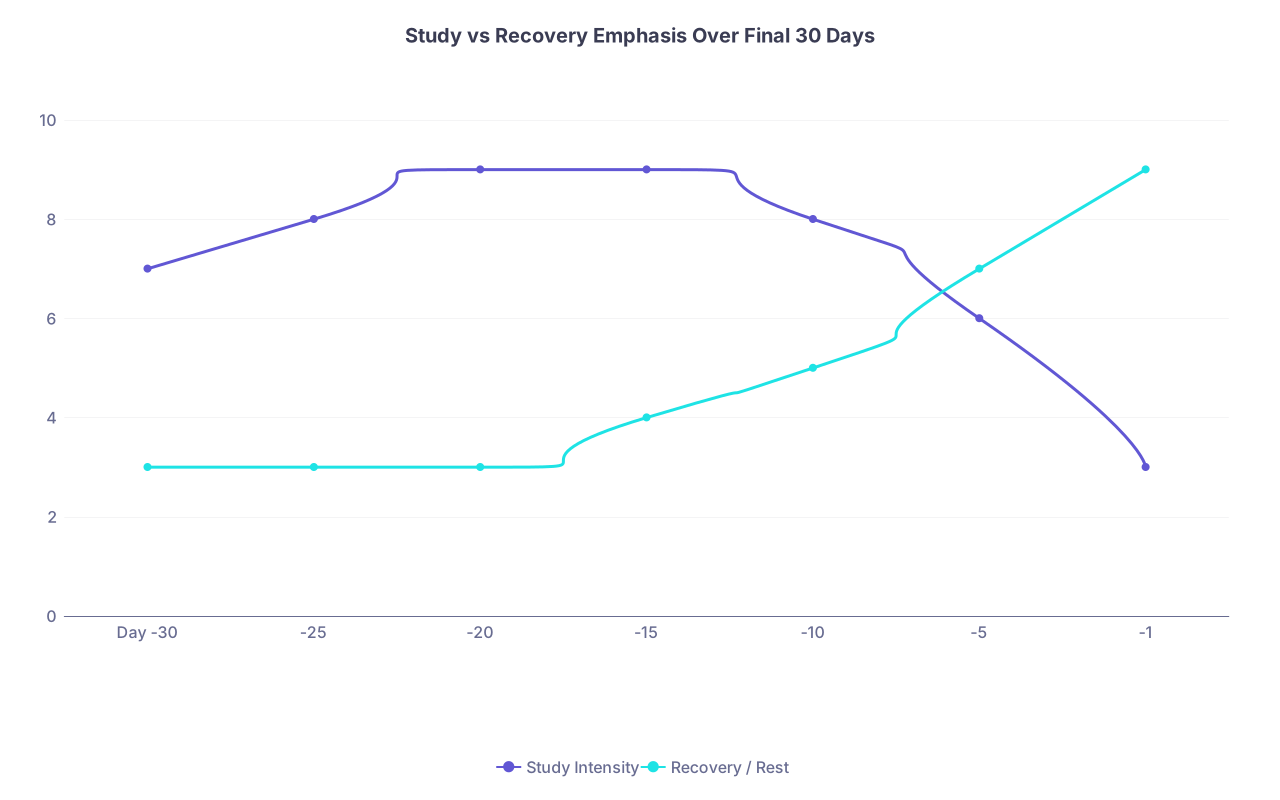
| Category | Study Intensity | [Recovery / Rest](https://residencyadvisor.com/resources/med-student-mental-health/how-to-plan-rest-and-recovery-across-a-6-week-dedicated-study-block) |
|---|---|---|
| Day -30 | 7 | 3 |
| -25 | 8 | 3 |
| -20 | 9 | 3 |
| -15 | 9 | 4 |
| -10 | 8 | 5 |
| -5 | 6 | 7 |
| -1 | 3 | 9 |
Think of it like a training taper before a marathon. Last 30 days are for sharpening and not getting injured. Cramming twelve hours a day right to the end is how people score below their practice average.
Days 30–21: Stabilize Your System
These ten days are about locking in a repeatable daily template.
At this point you should:
- Fix your wake and sleep times.
- Decide how many questions per day is sustainable.
- Stop adding new resources. Seriously. No new Qbank, no new 300‑page PDF.
Daily Checklist (Days 30–21)
Morning:
- Wake at your target exam‑day time (or 30–60 minutes earlier).
- Light snack + caffeine (if you use it; keep the dose consistent).
- 40–80 timed, random questions (UWorld / Amboss / COMBANK / COMQUEST), exam‑style blocks:
- USMLE: 40 questions, 1 hour, mixed.
- COMLEX: 50 questions, 1 hour, OMM mixed in.
- Immediate brief review of absolute misses (do not deep dive every line yet).
Midday:
- 30–45 minutes of movement: walk, light jog, bike, or body‑weight circuit.
- Quick lunch; no massive sugar crashes.
Afternoon:
- Deep review of morning block:
- For each question: What was tested? Why did I miss or guess?
- One line per card or note if truly needed. No novels.
- 20–40 more questions (shorter block) in weaker systems.
Evening:
- 60–90 minutes of high‑yield review:
- For Step: Sketchy path/micro reviews, Boards & Beyond clips for chronic weak spots, UFAPS‑style notes.
- For COMLEX: Green book / OMM review, Savarese, OPP tables.
- Shut screens 60 minutes before bed.
Target total: 6–8 focused hours, not 12 chaotic ones.
One‑Time Tasks in This Window
By Day 25 you should:
- Schedule:
- Last 2 full‑length practice exams.
- Last Qbank reset or “marked” question review days.
- Decide:
- Step + COMLEX combo? Which comes first and how far apart? (Common: Step first, COMLEX 7–14 days later.)
- Confirm:
- Test center location and parking.
- Required IDs, confirmation email.

| Step | Description |
|---|---|
| Step 1 | Wake Up |
| Step 2 | Breakfast |
| Step 3 | Travel to Center |
| Step 4 | Check-In |
| Step 5 | Block 1 |
| Step 6 | Break |
| Step 7 | Blocks 2-4 |
| Step 8 | Lunch Break |
| Step 9 | Blocks 5+ |
| Step 10 | End Exam |
Days 20–11: Targeted Fixing and Reality Checks
This is where most students either sharpen or spin out. At this point you should narrow, not expand.
Two Anchors in This Window
Full‑Length Exam #1 (NBME, UWSA, COMSAE, or COMLEX practice)
- Schedule it around Day 18–15.
- Take it under real conditions:
- Same start time as your real exam.
- Timed, no pausing “to pee” every block.
- Same snacks, same breaks you plan for test day.
-
- No more than half a day of intense review.
- For each block:
- Tag each miss: content gap vs. misread vs. fatigue vs. panic.
- Pull out only recurring content gaps into a short, brutal list:
- Example: “Renal phys acid–base, lysosomal storage diseases, diuretics mechanisms, OMM sacrum, EKG basics.”
These recurring gaps dictate the next 7–10 days.
Weekly Focus Plan (Days 20–11)
You have roughly 10 days. Allocate them by systems, not feelings.
Example split:
- 3 days: Your worst system (e.g., neuro or renal).
- 2 days: Second‑worst.
- 2 days: Pharm + micro blitz.
- 1 day: OMM / ethics / biostats (especially for COMLEX).
- 2 “mixed catch‑up” days: redo wrongs / marked questions.
Each day in this phase:
Morning:
- 40–80 timed, random questions (not just your weak system; the real exam is mixed).
- Immediate review of major errors.
Afternoon:
- 20–40 questions targeted to the “system of the day.”
- Focused content review:
- 2–3 short, high‑yield videos.
- Or 1–2 high‑yield AnKing / Lightyear style decks.
Evening:
- 30–45 minutes:
- For Step: Cheat sheets / formula sheets, image patterns.
- For COMLEX: OMM viscerosomatic levels, Chapman points, special tests.

Days 10–4: Taper and Sharpen
This is where you stop increasing volume and start protecting performance.
At this point you should:
- Take Full‑Length Exam #2 around Day 9–7.
- Begin decreasing total question load.
- Shift mindset from “I am learning new things” to “I am executing what I know.”
Full‑Length #2
- Same rules: real timing, real breaks.
- This score usually brackets your final performance.
- You will not magically jump 20 points from here.
- You also will not crater if you do not lose your mind in the last week.
Next Day (after Full‑Length #2):
- Half‑day focused review:
- Again, extract patterns of weakness.
- Create a 4–5 page “Final Hits” document:
- One page: pharm mechanisms + antidotes.
- One page: micro buzzwords / organism‑drug pairs.
- One page: biostats formulas, ethics triggers.
- One page: path patterns (renal, cardio, neuro, endocrine).
- For COMLEX: add page for OMM:
- Diagnoses summaries.
- Common treatments and positions (HVLA, counterstrain, FPR).
You will re‑read this document multiple times in the last 4–5 days.
Daily Checklist (Days 10–4)
Morning:
- 40–60 timed, mixed questions (not more).
- Brief review. Focus on:
- Why your first instinct was right or wrong.
- How to recognize classic patterns faster.
Midday:
- Movement (still non‑negotiable).
- Errands you have been avoiding:
- Reconfirm exam date, time, location.
- Check route, traffic, parking costs.
- Pick out clothing layers for unpredictable test center AC.
Afternoon:
- 1–2 hours of targeted content only.
- Re‑read “Final Hits” document.
- Optional: small deck of “panic cards”:
- 20–30 cards with your absolute worst facts.
Evening:
- Wind‑down earlier. Sleep becomes exam prep now.
- Try a tech‑curfew: no Qbank, no group chat “score flexing,” no Reddit doomscroll after 9 p.m.
You are not being “lazy.” You are tapering.
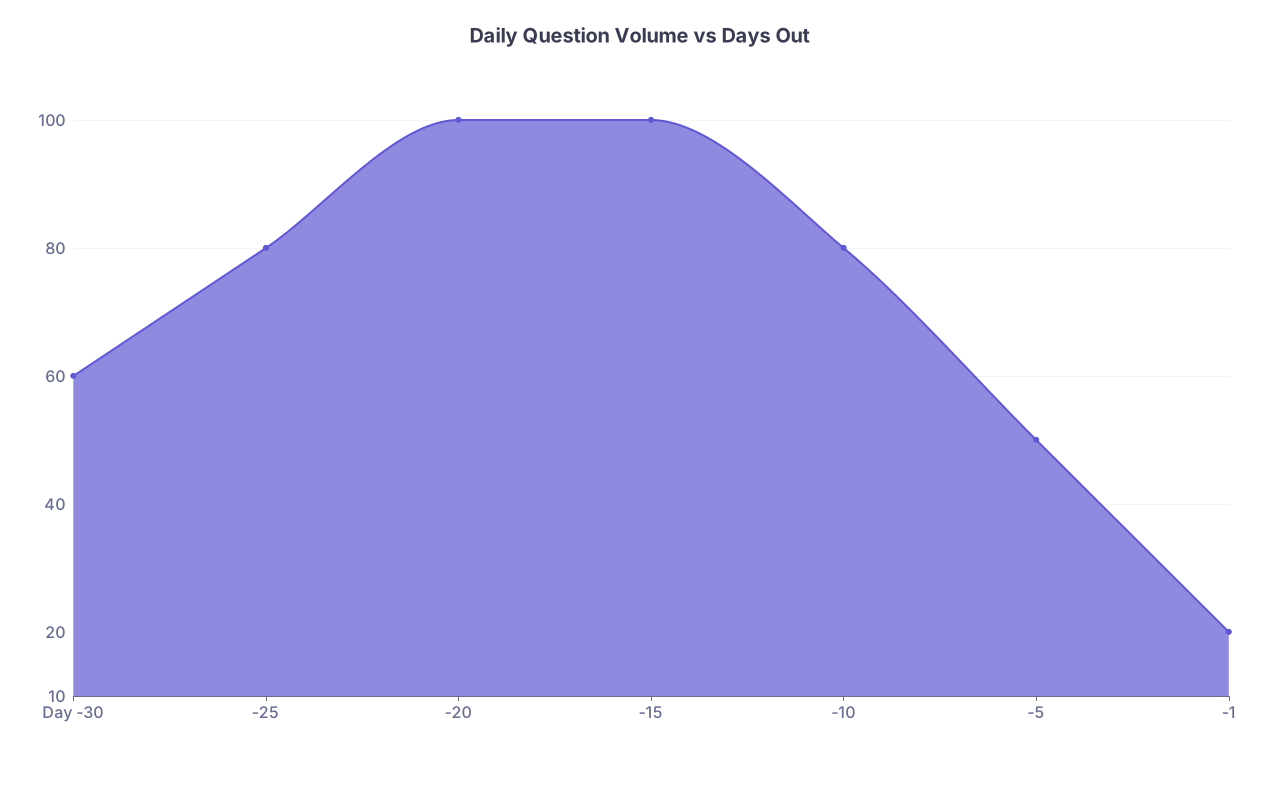
| Category | Value |
|---|---|
| Day -30 | 60 |
| -25 | 80 |
| -20 | 100 |
| -15 | 100 |
| -10 | 80 |
| -5 | 50 |
| -1 | 20 |
Days 3–1: Protect Your Brain, Not Your Ego
These three days break a lot of people. Panic convinces them to:
- Start a brand new OMM resource.
- Do 3 NBMEs back‑to‑back.
- Sleep 4 hours because “I’ll sleep after.”
Do the opposite.
Day -3
At this point you should:
- Do your last substantial question day:
- 40–60 mixed questions in the morning.
- Quick review in the afternoon.
- Light content:
- Re‑read portions of “Final Hits.”
- Skim formulas, tables, or high‑yield images.
Non‑academic tasks:
- Pack:
- ID, confirmation printout, wallet.
- Earplugs (if allowed), headphones (for breaks, not test).
- Water bottle (again, check rules).
- Simple snacks: nuts, granola bar, fruit, not experiment food.
- Set out exam outfit:
- Comfortable layers, nothing scratchy or tight.
Sleep target: normal bedtime.
Day -2
No full blocks today. No practice exam. You gain very little and risk everything.
At this point you should:
- Do no more than 20–30 light questions, untimed:
- Maybe from your “marked” list.
- Stop if you feel rattled.
- 1–2 hours max of content:
- Only re‑reading familiar material. No deep dives.
Life tasks:
- Drive or map your exact route.
- Confirm how long it actually takes.
- Where to park. Where the entrance is.
- Plan meals:
- Dinner the night before: bland, familiar.
- Breakfast for exam day: decided in advance and tested during prior practice exams.
Evening:
- Something that signals “I am done for today”:
- Short walk with music.
- One episode of a show you have watched before.
- Screens off 60–90 minutes before bed.
- Set 2 alarms. Place your phone out of arm’s reach.
Day -1 (The Day Before)
Treat this like pre‑op. You are not learning; you are preserving function.
At this point you should:
- Avoid:
- UWorld.
- New videos.
- Online forums.
- Allow:
- 60–90 minutes total of flip‑through review:
- Your “Final Hits” document.
- OMM diagrams.
- Visual mnemonics you already know.
- 60–90 minutes total of flip‑through review:
Midday:
- Light movement only.
- Prepare your exam day bag:
- ID, keys, snacks, water, any allowed comfort items.
- Small sheet with your “test‑day rules” (see below).
Evening:
- Review your test‑day rules sheet (short, not dramatic):
- “If I panic, I will:
- Pause and take one slow breath.
- Re‑read question stem only.
- Eliminate obvious wrongs.
- Pick best remaining and move on.”
- “If I am behind on time at Q 15, I will not go back to earlier questions. I will keep moving.”
- “If I panic, I will:
- Go to bed at a sane hour. Lying awake is not fixed by another 20 flashcards.

Exam Day (Day 0): Execution Mode
You are not a student anymore. You are a test‑taking machine for the next 8–10 hours.
Morning of Exam
At this point you should:
- Wake with enough time for:
- Shower.
- Breakfast you have used before your practice tests.
- Small caffeine dose if that is your norm. Do not double it “for focus.”
- Do not:
- Open your Qbank.
- Check your email for “inspiration.”
- Scroll group chats about the exam.
Consider 5–10 minutes of very light mental warm‑up:
- 5 easy cards from your panic deck.
- Or a few biostats formulas.
Then stop.
At the Test Center
Logistics:
- Arrive 30–45 minutes early.
- Use the restroom before check‑in.
- Confirm your name and details on the screen.
During the exam:
- First 3–5 questions will feel harder than they are. This is normal.
- Use your test‑day rules:
- One question at a time.
- If you are stuck at 75 seconds: eliminate 2, mark if needed, move on.
- Break strategy:
- Schedule small breaks rather than one giant one.
- Eat and drink on breaks even if you are not starving; you are fueling focus.
For COMLEX (extra note):
- Expect some questions to feel vague or oddly worded.
- Do not fixate on “this is a terrible question.”
- Instead, ask: “What are they most likely aiming at from what I actually know?”
| Step | Description |
|---|---|
| Step 1 | Wake Up |
| Step 2 | Breakfast |
| Step 3 | Travel to Center |
| Step 4 | Check-In |
| Step 5 | Block 1 |
| Step 6 | Break |
| Step 7 | Blocks 2-4 |
| Step 8 | Lunch Break |
| Step 9 | Blocks 5+ |
| Step 10 | End Exam |
Non‑Negotiable Mental Health Rules for the Final 30 Days
You are in a pressure cooker. You will not “feel fine” the whole time. That is normal. You still need guardrails.
Sleep Minimum
- Aim: 7+ hours most nights.
- Reality: You will have a few bad nights. That does not ruin your exam.
- I have seen students score above their practice average after sleeping terribly the night before. Adrenaline is powerful. Chronic deprivation is the real issue.
Social Media and Score Talk
- Hard rule starting at Day -14:
- Mute or exit group chats that constantly ask, “What did you get on NBME 25?”
- Block Reddit / Discord threads about people scoring 20 points higher than you.
- Your brain does not need that noise.
Panic Plan
You should literally write this down:
“If I have a meltdown (crying, shaking, cannot focus), I will:
- Stop studying for at least 30 minutes.
- Text or call [name] and say, ‘I am freaking out, I need a grounding check‑in.’
- Take a walk, shower, or step outside.
- Resume only when my heart rate feels closer to normal.”
This is not weakness. It is risk management.

Quick Sanity Checklist: What You Should Stop Doing
From 30 days out onward, cut aggressively:
- Switching major resources every few days.
- Endless Anki reviews that leave no time for question blocks.
- Doomscrolling success stories and “I failed Step 1” posts nightly.
- Studying through meals every day.
- Pretending you will somehow review all of First Aid one more time cover‑to‑cover.
Replace them with:
- Focused mixed blocks.
- Short, daily movement.
- A stable wake‑sleep schedule.
- A tight list of “non‑negotiable” topics for your last 10 days.
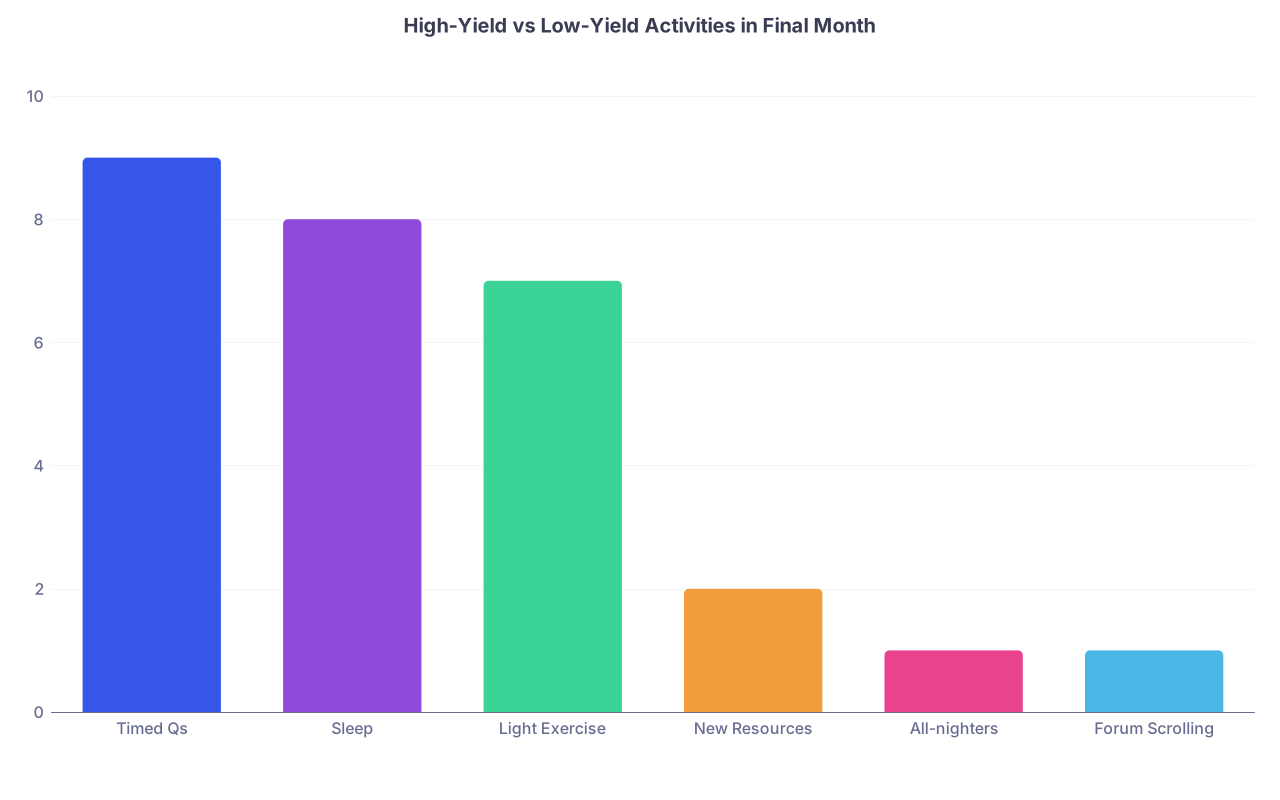
| Category | Value |
|---|---|
| Timed Qs | 9 |
| Sleep | 8 |
| Light Exercise | 7 |
| New Resources | 2 |
| All-nighters | 1 |
| Forum Scrolling | 1 |
The Bottom Line
Three points to carry with you:
- The last 30 days are about stability, not heroics. A consistent routine with tapered intensity beats last‑minute marathons.
- Your mental health is a scoring factor. Sleep, movement, and boundaries with social media will protect more points than any new resource this month.
- On exam day, you are not trying to know everything. You are trying to calmly apply what you already know, one question at a time.
Follow the timeline. Guard your sanity. The score will follow the habits you protect now.