Most medical students waste their post-exam week and then wonder why they still feel wrecked.
You do not need a spa retreat. You need 3 disciplined days with a clear schedule that tells your brain and body: exam season is over, recovery mode is on.
This is a 3-day, hour-by-hour style reset for the first three days after a major exam block (shelf, OSCE block, or boards-style exam). Use it right after your last exam in a cluster, before you drift into the next block.
Big Picture: What These 3 Days Are For
At this point you should stop pretending you can “just power through.” You have:
- Cognitive fatigue from weeks of high-intensity studying
- Sleep debt you have normalized but your body has not
- Mood instability from cortisol spikes and endless practice questions
These three days are not a vacation. They are a structured intervention.
Your goals over 72 hours:
- Normalize sleep (timing and quality, not just duration)
- Unload mental residue from the exam and close that loop
- Rebuild routine around food, movement, and social contact
- Gently preview what is coming next so Monday-you is not ambushed
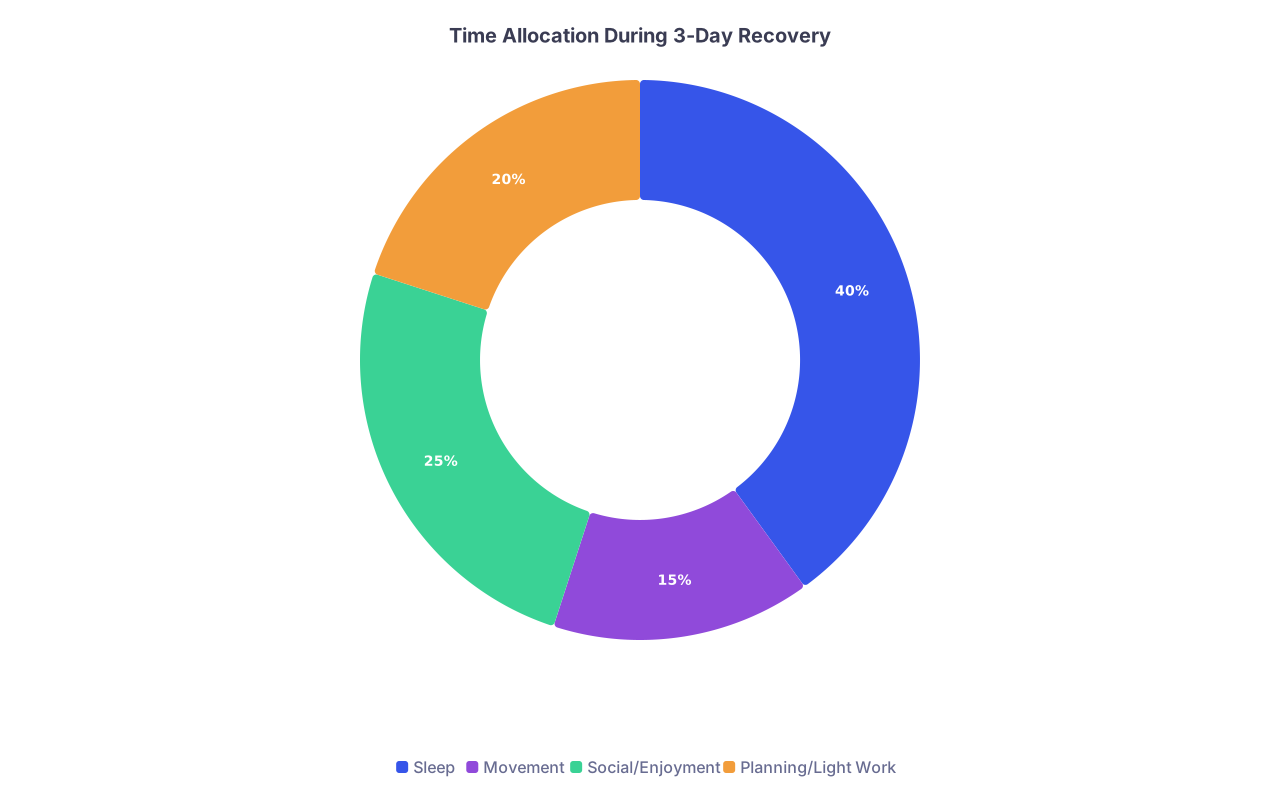
| Category | Value |
|---|---|
| Sleep | 40 |
| Movement | 15 |
| Social/Enjoyment | 25 |
| Planning/Light Work | 20 |
If you follow the timeline reasonably closely, by the end of Day 3 you should feel:
- 30–50% less exhausted
- Less obsessed with replaying exam questions
- Less dread about the next block starting
Let us go day by day.
Day 0 Evening: Immediately After the Exam
This is the trap zone. What you do in the first 6–8 hours sets the tone.
Within 1 hour after the exam
At this point you should:
Physically leave the exam environment.
Do not linger in hallways, do not stand in circles dissecting questions.- Say one sentence to friends: “I’m not discussing questions today, I’m wiped.”
- Then walk away. Yes, really. The post-mortem is gasoline on anxiety.
Hydrate and eat something real.
- Protein + complex carbs: sandwich, burrito bowl, whatever is not sugar-only.
- Caffeine only if it is before 2–3 PM. You are rebuilding sleep now.
Do one “closure” action.
- Delete the exam app from your device if it is a dedicated platform.
- Put all exam-related papers in a single folder or box and close it.
This is you telling your brain: task completed.
Late afternoon / early evening (3–7 PM)
At this point you should shift from adrenaline to decompression, but not to a binge.
60–90 minutes of low-stimulation downtime:
- Walk outside, slow pace.
- Shower, change into non-study clothes.
- Light TV is fine; no doom-scrolling med Twitter or Reddit score prediction threads.
Social contact:
- See 1–2 people who are not going to spiral about the exam.
- Script: “Let’s not talk about the exam. Tell me about your week instead.”
No big decisions:
- Do not check grades.
- Do not start planning “how I’ll fix everything next block.” You are not in a mental state for quality decisions.
Night (9–11 PM)
Non-negotiable here: protect sleep onset.
- Aim for bed within your typical range, not 3 AM. If you have been going to bed at 1–2 AM during study crunch, pull it back to around midnight, not 9 PM. Too early and you just lie there wired.
- No alcohol “to celebrate” on Day 0 if you are already exhausted. It wrecks sleep architecture and you wake up feeling worse.
Day 1: Reset the Nervous System
Day 1 is about calming your physiology and cleaning up your environment.
At this point you should not touch serious studying. Light preview is allowed at the end of the day if you insist. That is it.

| Step | Description |
|---|---|
| Step 1 | Exam Ends |
| Step 2 | Day 0 Evening |
| Step 3 | Day 1 Reset |
| Step 4 | Day 2 Rebuild Routines |
| Step 5 | Day 3 Light Re-engagement |
Morning (7–10 AM)
Wake time:
Let yourself sleep in 1–2 extra hours compared to your usual pre-exam schedule. Not 5 hours.
Oversleeping to noon just pushes the problem.First hour after waking:
- Hydrate (actual water, not just coffee).
- Eat breakfast with protein and fat (eggs, yogurt, nut butter), not just cereal.
- Get light: 10–20 minutes by a window or outside. Your circadian rhythm is trashed; this helps.
No exam content. No checking results.
If you catch yourself Googling “passing score for ___,” close the tab. You cannot change the outcome now.
Late morning (10 AM–12 PM)
At this point you should move your body, gently.
30–45 minutes:
- Walk, light jog, yoga, or basic strength circuit.
- Intensity: you should be able to hold a conversation. This is for blood flow, not PRs.
Optional 20–30 minute tidy:
- Clear your desk of old flashcards, sticky notes, half-filled notebooks.
- Put textbooks for that exam on a shelf.
Physical de-cluttering reduces cognitive “noise.” I have watched students’ shoulders drop visibly after this.
Early afternoon (12–3 PM)
Now you stabilize mood and energy.
Proper lunch. Again, real food.
20–30 minute non-academic reading or hobby: fiction, sketching, music. The goal is to remind your brain that it has other modes besides “anxious recall.”
Short nap is allowed if:
- Before 3 PM
- 20–30 minutes max, set an alarm
Longer naps push back nighttime sleep and leave you groggy.
Late afternoon (3–6 PM)
At this point you should do your mental debrief. One time only.
Take 20–30 minutes with pen and paper:
- Write three headings:
- What went well this exam block
- What consistently did not work
- What I want to change next block
Under each, 3–5 bullets. Concrete, behavior-level items:
- “Started UWorld too late, crammed 50 Q/day last week.”
- “Studied alone at home → distracted. Library days were better.”
- “Kept skipping lunch on long study days → headache, worse focus.”
Then stop. Do not turn this into a 12-page self-critique. You are capturing data, not punishing yourself.
After debrief, close it:
- Put the page in a folder labeled “Next Block Plan.” You will revisit on Day 3.
Evening (6–10 PM)
Day 1 night is for controlled enjoyment.
- Dinner with friends or family.
- One movie, game night, or non-medical social activity.
- Light screens are fine, but set a cutoff about 1 hour before bed for intense media or social media spirals.
Target bedtime: around your usual, maybe 30–60 minutes earlier. You are aiming for ~8.5–9 hours tonight.
Day 2: Rebuild Your Baseline Routines
Day 2 is where most students go off the rails. They either:
- Slide into full-on lazy mode and then feel guilty, or
- Panic and start studying 6+ hours “just in case”
Both are bad. Day 2 is about normal-day structure with lower cognitive load.
Morning (7–9 AM)
At this point you should set your target wake time for the next month.
- Wake within 30 minutes of that time. No more “I’ll catch up on 3 months of sleep” fantasy.
- Same breakfast pattern as Day 1. Your body likes predictability.
Morning task (30–60 minutes):
- Environment reset, deeper:
- Wash that stack of mugs or water bottles that migrated to your desk.
- Change sheets.
- Do a quick room sweep: trash, laundry, random printouts.
You are telling your brain: new phase, clean slate.
Late morning (9–12)
Now you reintroduce focused work, but not exam-level.
Block 1: 60–90 minutes
Choose one of:
Catch up on non-urgent life admin:
- Answer neglected emails
- Pay bills, schedule dentist/PCP
- Update your calendar with upcoming block schedule
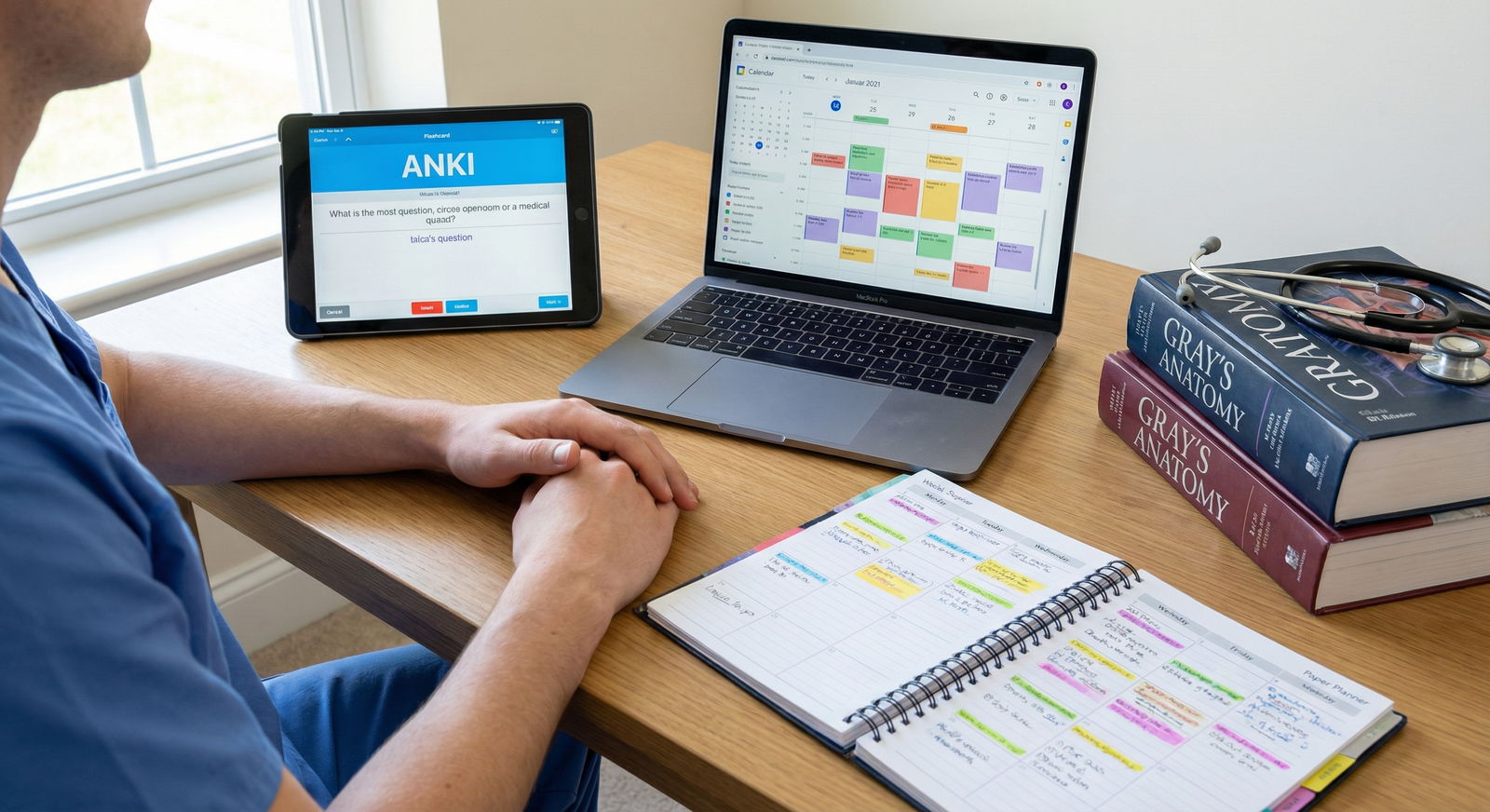
Or light academic task related to the next phase, such as:
- Downloading next block’s syllabus and scanning main topics
- Setting up Anki decks, not doing them yet
- Organizing digital folders for new lectures or rotations
Then take a 15–20 minute break. Walk, stretch, do not doom-scroll.
Early afternoon (12–3 PM)
- Lunch with protein and slow carbs again. You see the pattern. Bodies run better when you feed them like an adult.
Block 2: 60–90 minutes
- Continue light planning or admin.
- Or do a single low-stress academic block:
- 20–30 minutes reading broad overview of next unit (e.g., first chapter of a general text)
- Skim, do not try to memorize.
If you feel your brain “slipping off the page” repeatedly, stop. That is fatigue, not laziness.
Short walk afterward, 15–20 minutes.
Late afternoon (3–6 PM)
At this point you should move more seriously.
- 45–60 minutes moderate exercise:
- Gym session with simple routine
- Sports with friends
- Longer walk with hills
Consistent physical activity is the fastest lever you have on mood and sleep re-regulation after an exam period.

Evening (6–10 PM)
- Dinner. Keep alcohol moderate or skip it. You are stabilizing, not sabotaging.
Then 45–60 minutes of intentional relaxation:
- Long shower or bath
- Non-medical hobby: instrument, art, cooking something slightly more involved
- Light conversation with someone who does not only talk about school
If anxiety about the exam starts spiking hard at night:
- Write down the intrusive thoughts once.
- Underneath, write: “I cannot change this exam. Tomorrow I will focus on X.”
- Then redirect to a sensory activity: shower, stretching, or calming audio.
Aim for bed at your target wake-time + ~8 hours. You are trying to get your circadian rhythm back on track, not just “catch sleep whenever.”
Day 3: Controlled Re-Engagement With Work
Day 3 is the bridge. By the end of Day 3 you should feel:
- More rested than before the exam
- Environment cleaned and organized
- Concrete plan for the next block in hand
- Back to 3–4 hours of light–moderate focused work, not 8-hour death march
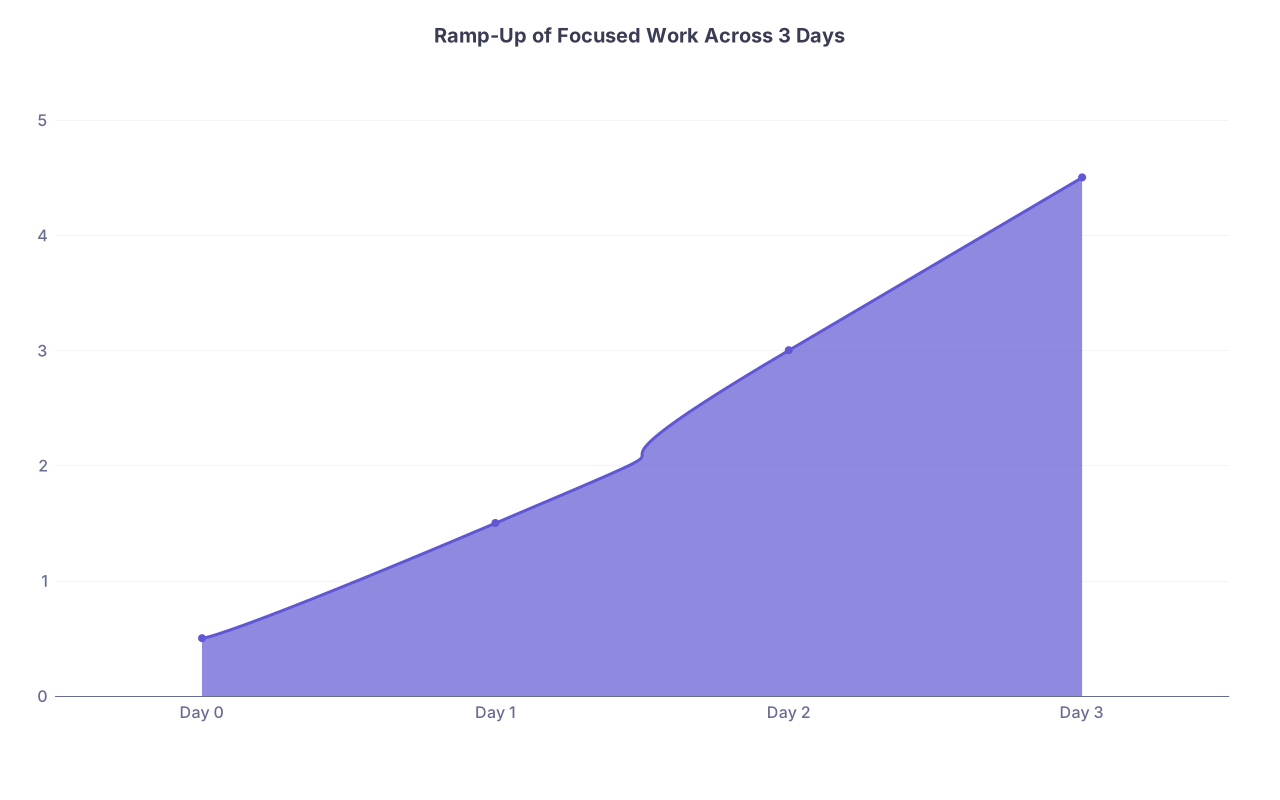
| Category | Value |
|---|---|
| Day 0 | 0.5 |
| Day 1 | 1.5 |
| Day 2 | 3 |
| Day 3 | 4.5 |
Morning (7–9 AM)
At this point you should be on your target wake time or very close.
- Morning routine now stabilized:
- Wake, hydrate, breakfast, 10–15 minutes light exposure
- 5-minute checklist for the day: 3 main tasks, nothing more
Block 1: 90 minutes
- Start with planning using the Day 1 debrief notes:
- Look at “What I want to change next block.”
- Translate each item into 1–2 practical actions. Example:
- “Started QBank too late” → “QBank: 10 questions/day starting Week 1.”
- “Library days were better” → “Library Mon/Wed/Fri 9–12.”
Write this into your digital or paper calendar.
You have now turned vague regret into scheduled behavior. That matters.
Late morning (9:30–12)
Block 2: 90 minutes
- Actual light content work related to the next block:
- Skim the first 1–2 lectures
- Read a high-yield chapter summary
- If starting a clinical rotation: review 1–2 key guidelines (e.g., hypertension, diabetes for IM)
The key: do not seek exhaustion. You should end this block feeling like you could do more, not like you were crushed.
Short break after: snack and movement.
Early afternoon (12–3 PM)
- Normal lunch. You see the pattern by now.
Block 3: 60–90 minutes
Choose one:
Academic
- Make your template for the new block: note structure, rounding templates, study schedule grid
- Install or organize resources: question banks, apps, reference PDFs
Or life logistics
- Batch cook 2–3 simple meals for future busy days
- Do a real grocery run: proteins, vegetables, snack upgrades
You are building the infrastructure that future-you will rely on when the next hectic period hits.
Short walk or stretching afterward.
Late afternoon (3–6 PM)
At this point you should test your working endurance a bit.
Block 4: 60–90 minutes
- Mixed work:
- 30–45 minutes of focused reading or questions (if appropriate for the upcoming block)
- 15 minutes revisiting your schedule, adjusting based on how you feel
- 15–30 minutes prep for the first official day (pack bag, lay out clothes, organize notes)
You are aiming to feel: “This is manageable. I’m not thrilled, but I can do this.”
If you feel complete dread, tight chest, or strong avoidance:
- Scale back intensity.
- Swap to planning / low-stakes tasks and movement.
- Consider reaching out to student wellness if this is a pattern, not just post-exam crash.
Evening (6–10 PM)
This is your pre-launch evening.
- Have a calm dinner, ideally not in front of a screen.
- Brief (10–15 minute) check that everything is ready for tomorrow:
- Clothes, bag, IDs
- Device chargers
- Printed or digital schedule
Then choose one genuinely enjoyable, totally non-academic activity for 60–90 minutes. Protect this. It signals closure to this reset period.
Bedtime: at your target time, phone outside arm’s reach. No last-minute deep-dives into grade portals or Reddit.
Quick 3-Day Snapshot
| Day | Main Goal | Max Focused Work | Key Non-Negotiable |
|---|---|---|---|
| 0 | Decompress + sleep | 0–30 min | No question post-mortem |
| 1 | Calm + debrief | ~60–90 min | One-time written debrief |
| 2 | Rebuild routines | ~2–3 hours | Moderate exercise session |
| 3 | Controlled re-engage | ~4–5 hours | Concrete plan for next block |
FAQs
1. What if I have another exam or quiz less than a week later?
Then compress, but do not skip recovery. Use:
- Day 0: same as above
- Day 1: combine “reset” with 2–3 hours focused studying for the next test
- Day 2+: ramp back faster, but keep at least one block per day for movement and non-academic life.
If you cut recovery to zero, your performance on the second exam usually drops more than the extra study hours help.
2. Is it okay to take a full “no study at all” week after boards?
For a major milestone like Step 1/2 or Level 1/2, a longer break can be fine, but only if it is structured. I have watched many students take an unstructured “week off” and slide into worse sleep, worse mood, and more anxiety. If you take a week, front-load it with these 3 days, then keep a light daily routine (fixed wake time, movement, basic planning) rather than dissolving into chaos.
3. How do I know if what I am feeling is just exam burnout or something more serious?
Normal post-exam crash: last 3–7 days, improves with rest, you still have moments of enjoyment. Red flags that suggest depression or significant anxiety rather than just fatigue:
- Persistent low mood >2 weeks
- No interest in things you normally enjoy
- Major appetite or weight changes
- Thoughts like “everyone would be better off without me” or any suicidal thinking
If you see those, do not wait. Contact student mental health, your PCP, or a trusted attending/resident and say exactly what you are experiencing.
4. What if my friends all want to go hard partying the night of the exam?
You are allowed to say no. If you want to join, set boundaries:
- Decide your end time before you go
- Cap your drinks (and stick to it)
- Have a backup plan to leave without drama
One brutal hangover can wipe out half of Day 1 and delay your reset. If you are already hanging by a thread, protecting sleep and a calmer night is not “being lame.” It is being strategic.
Key takeaways:
Use the first 72 hours after a major exam as an intentional reset, not a free-for-all. Close the mental loop with a brief written debrief, then stop rehashing questions. Rebuild sleep, movement, and basic routines first; only then ramp academic work back thoughtfully.