
It’s 6:12 a.m. on a Monday. Your first clerkship starts today. You’re half-way through a cold breakfast, scrolling through Reddit posts about “surviving third year,” low-key panicking that everyone else is more prepared, more resilient, more something than you.
Here’s the part nobody says clearly enough: clerkship year is as much a mental health marathon as it is a medical training year. If you don’t build a rotation-by-rotation game plan, the year will build one for you. And you probably won’t like it.
So I’m going to walk you through the year in order: before it starts, then core rotations one by one, with concrete mental health moves for each phase.
Big Picture: Your Clerkship-Year Mental Health Timeline
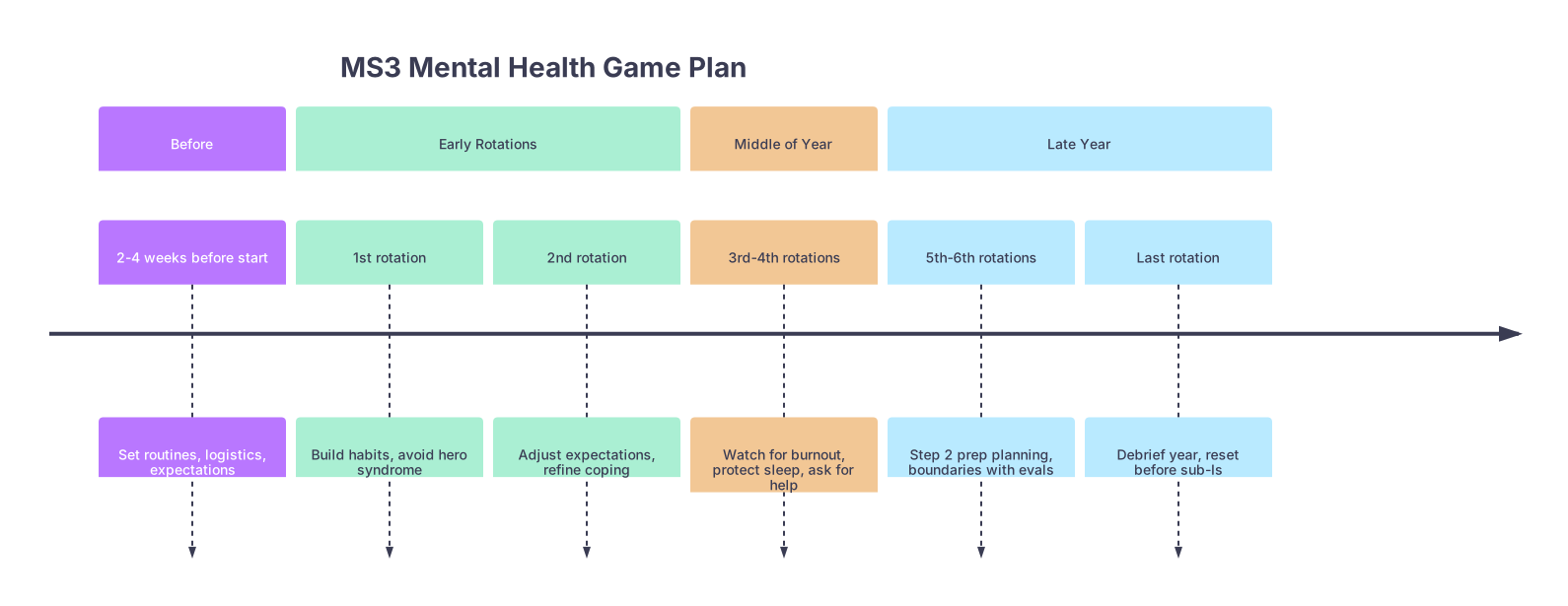
| Period | Event |
|---|---|
| Before - 2-4 weeks before start | Set routines, logistics, expectations |
| Early Rotations - 1st rotation | Build habits, avoid hero syndrome |
| Early Rotations - 2nd rotation | Adjust expectations, refine coping |
| Middle of Year - 3rd-4th rotations | Watch for burnout, protect sleep, ask for help |
| Late Year - 5th-6th rotations | Step 2 prep planning, boundaries with evals |
| Late Year - Last rotation | Debrief year, reset before sub-Is |
At each point, you should know:
- What your main mental health risk is
- What habits you must protect
- When to pull the “this is not fine” alarm
Let’s go in sequence.
2–4 Weeks Before Clerkships Start: Build the Base
At this point you should stop cramming random resources and actually design your life for the next 12 months.
Week-by-week pre-clerkship setup (mental health edition)
3–4 weeks before:
You should:
- Pick fixed “non-negotiables” for the whole year:
- Sleep window (e.g., 11 p.m.–5 a.m. on surgery, 10 p.m.–6 a.m. on others)
- One weekly social contact (call with a friend, partner night, whatever)
- One weekly physical activity (walk, gym, yoga, it doesn’t matter – consistency does)
- Decide your “floor” habits:
- On the worst days, I will still:
- Eat something with protein twice a day
- Drink water (fill bottle twice)
- Send 1 text to a human who likes me
- On the worst days, I will still:
These are not self-care Instagram quotes. These are damage-control protocols.
2 weeks before:
You should:
Map out your rotation order and flag rough patches:
- Back-to-back inpatient rotations?
- Night float + exam the following Monday?
Plan buffer weekends:
- After surgery or heavy IM inpatient, block that weekend in your calendar as “recovery only” now. Do not wait until you’re fried and then try to negotiate with yourself.
Create a tiny “on-call mental health kit”:
- 1–2 grounding exercises saved in your phone (box breathing, 5–4–3–2–1 sensory check)
- Short playlist that calms you (download it, hospitals have dead zones)
- A note in your phone titled “Read this when today sucks” written by you, now, sane:
- Why you started this
- 2–3 people who believe in you
- A reminder that evaluations are not your identity
1 week before:
You should:
- Lock down logistics:
- Commuting plan
- Lunch plan (are you packing; where’s the cafeteria; what’s open overnight)
- Where the bathrooms and quiet stairwells are on the main hospital map
- Have one explicit conversation with yourself:
“My goal this year is to learn and stay healthy, not to be the best student on every service.”
Nobody believes this the first time they say it. Say it anyway.
Rotation 1: Internal Medicine – The “I Know Nothing” Month
Most schools start you on IM or Family Med. Let’s assume IM first.
At this point you should expect:
- Imposter syndrome at 11/10
- Emotional exhaustion from constant newness, not from workload alone
- Over-personalizing every piece of feedback
Week 1: Survival and Observation
Focus on:
- Learning the rhythm, not the medicine
- Keeping a stable sleep/wake time as much as the call schedule allows
Daily checklist:
- Before you walk in: 3 deep breaths in the car / bus / stairwell
- Midday: one 5-minute break where you:
- Sit down
- Put your phone on airplane mode
- Drink water
- After sign-out: quick mental “debrief”:
- 1 thing you did well
- 1 thing to improve tomorrow
- Then stop. No replaying every conversation in bed.
Mental health landmines on IM:
- Residents projecting their stress on you (“Why didn’t you know that?”)
- Seeing your first death or code
- Getting crushed by “slow” write-ups
Your moves:
- When someone snaps, mentally tag it as “data about their day, not my worth.”
- After a rough patient event:
- That day: tell one person (classmate, friend, partner): “I had a bad patient situation today. I don’t want to share details, but I’m shaken.”
- Within a week: if it’s still looping in your head, talk to student health or a trusted attending. Waiting doesn’t magically fix trauma.
Weeks 2–4: Adjusting, Not Overcorrecting
At this point you should:
- Stop trying to read 3 chapters a night “to catch up”
- Protect your one weekly thing (gym, therapy, friends)
If you notice:
- You’re dreaming about patients every night
- You’re staying 2 hours late just to pre-chart perfectly
- You feel guilty every time you leave the hospital
You need to:
- Set a “hard stop” time: pick a realistic time you will leave unless explicitly asked to stay.
- Tell yourself: “My job is to be a safe, learning student, not a second-year resident.”
Rotation 2: Surgery – The “I Don’t Even Sit” Month
For many, this is the most mentally brutal core rotation. Long hours, early starts, hierarchy strong enough to knock you over.
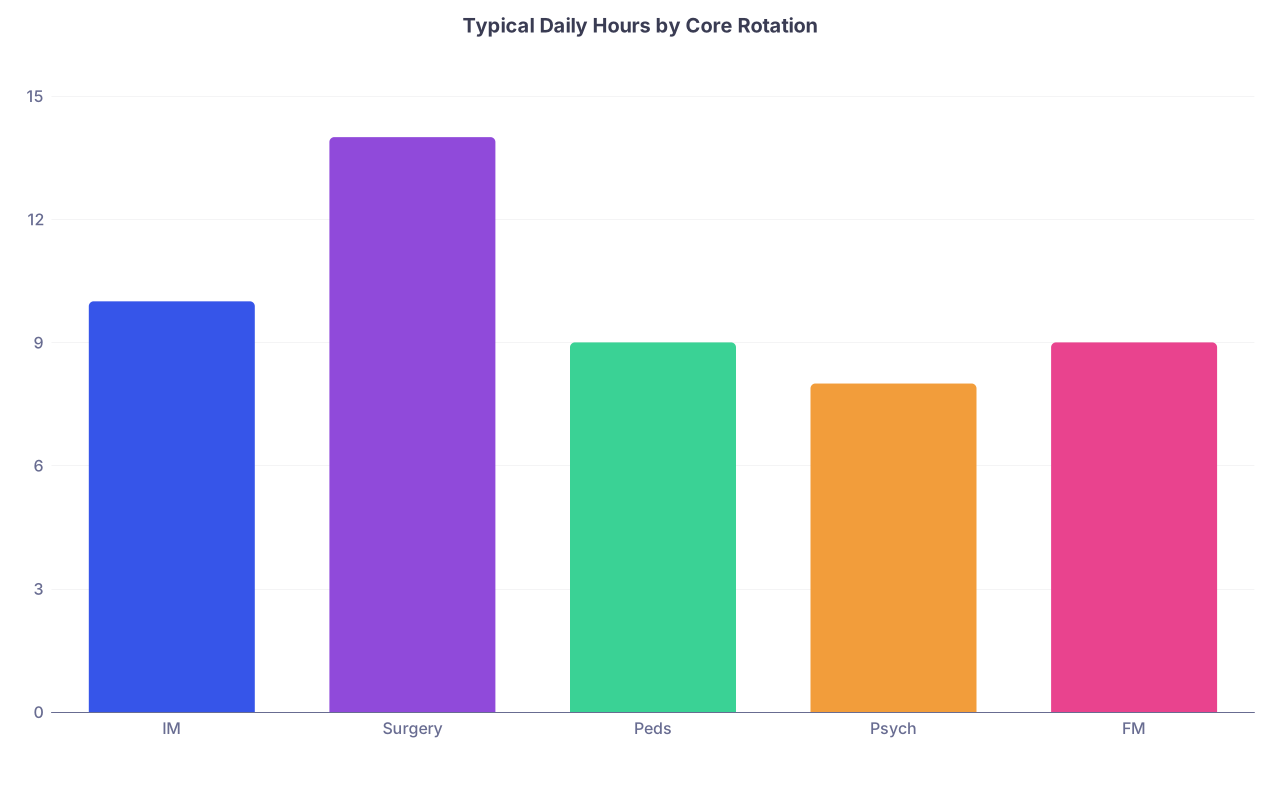
| Category | Value |
|---|---|
| IM | 10 |
| Surgery | 14 |
| Peds | 9 |
| Psych | 8 |
| FM | 9 |
At this point you should prepare to trade:
- Perfection in studying
- Social life on weekdays For:
- Baseline physical and emotional survival
Week 0–1: Prepping for the Hit
Before surgery starts:
- Shift your sleep schedule 3–4 days early:
- Move bedtime/wake time 30–45 minutes earlier each day
- Decide what “minimum viable self-care” looks like:
- 10-minute walk during lunch
- 5-minute stretch before bed
- Sunday meal-prep or at least buying grab-and-go that isn’t just sugar + caffeine
First week, your rules:
- You’re not allowed to judge yourself by how much you read. Only by:
- Did I show up on time?
- Was I kind and curious?
- Did I protect my temper and not pass stress downward?
Weeks 2–4: Managing Sleep Deprivation and Harsh Culture
Key risks now:
- Emotional numbness
- Snapping at people outside the hospital
- Normalizing unhealthy behavior as “this is surgery, deal with it”
You should:
Have a micro-routine for post-call days:
- Step 1: Eat something salty + protein (you will crave junk; compromise a little)
- Step 2: 90-minute nap max (longer wrecks your internal clock)
- Step 3: 10 minutes of “non-medical life” (show, music, calling your sibling)
Create distance from toxic comments:
- When an attending belittles you: silently label it “unprofessional, not truth.”
- Do not go home and build your identity around a single sarcastic remark.
Red flags this rotation:
- You can’t remember the last time you laughed at something not medicine-related
- You’re fantasizing about walking out of the OR and never coming back
- You’re using alcohol or other substances just to “come down” every night
At that point, you should:
- Talk to someone outside your class who’s been through it (MS4, resident you trust)
- And if the spiral continues for more than 1–2 weeks: schedule with mental health services. This isn’t overreaction. This is early intervention.
Rotation 3: Pediatrics or OB/GYN – The Emotional Whiplash Block
Many schedules slot Peds or OB/GYN next. They have a different flavor of stress: emotionally intense, family-heavy, lots of exams and checklists.
Early Peds: “All the Feelings”
At this point you should expect:
- Sick kids to hit you harder than sick adults
- Moral distress when you see family dynamics you can’t fix
Weekly pattern you want:
- One intentional emotional outlet:
- Journal 10 minutes
- Voice memo rant into your phone
- Therapy session if you have access
For tough cases:
- You should give yourself permission to feel bad. That doesn’t mean you’re not “cut out” for medicine.
- Use a 3-step reset on the drive home:
- Say the patient’s first name out loud and wish them well, consciously.
- Name your feeling in one sentence: “I feel helpless and sad.”
- Then deliberately shift your attention to something small and concrete: what you’ll eat, what you’ll watch, who you’ll text.
Early OB/GYN: Bodies, Boundaries, Burnout Risk
OB/GYN can combine:
- Night shifts
- Trauma (miscarriage, fetal demise, sexual assault histories)
- Strong personalities
You should:
- Set internal boundaries:
- You are allowed to feel triggered.
- You are allowed to step out briefly after a traumatic delivery or case. Quietly telling the resident “I need a 5-minute break” is not weakness; it’s safety.
If you have your own history of trauma:
- Plan ahead with your therapist or student support before the rotation.
- Decide what you will and will not disclose to your team.
- Have an “if I get overwhelmed” script ready:
“I’m feeling a bit lightheaded; I need a moment” works whether it’s physical or emotional.
Rotation 4: Psychiatry – When Your Own Stuff Gets Loud
Psych is a mirror. At this point in the year, you’re usually:
- Sleep-depleted
- Behind on studying for some shelf
- Emotionally fatigued
Then you spend all day talking about mood, anxiety, trauma, suicidality.

First 1–2 weeks: Separate You from the Patient
You should expect:
- To see pieces of yourself in many patients
- To worry you have every diagnosis you hear about
Mental health rules for this block:
- No self-diagnosing in the middle of the night. If you’re concerned? Book an actual evaluation. Do not just spiral on Google.
- Protect transition time after clinic:
- 15 minutes tech-free: walk outside, sit on a bench, whatever.
- Consciously leave the workday there.
Watch for:
- You’re absorbing patients’ hopelessness
- Your own mood is getting significantly lower
- You’re starting to have passive “I wish I could disappear” thoughts
At this point you should not push through solo. Tell:
- A therapist
- A trusted faculty member
- Or mental health services
That’s literally what they’re there for. You are not the first MS3 who started antidepressants on psych.
Rotation 5: Family Medicine / Outpatient – The “I Should Be Fine” Trap
By now you think you should have it all together. You don’t. Almost no one does. This is often when quiet burnout sets in.
Key risks:
- Cynicism about patients (“another back pain visit… sure”)
- Numbing out because “it’s just clinic”
- Realizing Step 2 is looming and panicking
| Phase | Primary Risk |
|---|---|
| First rotation | Imposter syndrome |
| Heavy inpatient | Sleep deprivation |
| Mid-year | Burnout/cynicism |
| Psych rotation | Emotional overload |
| Late year + Step 2 | Anxiety/overwhelm |
What you should do this block:
- Use the more regular hours to repair damage:
- Get back to consistent exercise if it dropped off
- Re-establish social contact beyond your group chat of miserable classmates
- Set clear study blocks for shelf + Step 2:
- 45–60 minutes after clinic, 4–5 days/week
- One lighter day where you don’t touch UWorld at all
Emotionally:
- Notice if sarcasm and bitterness are turning from coping style into worldview.
- Once a week, write down one patient interaction that reminded you why you came to medicine. Not because we’re doing a gratitude journal performance, but because your brain is wired to remember the worst stuff by default.
Final Core Rotation: Whatever’s Left – The “I’m So Tired” Stage
Your last core (often Neurology or whatever you didn’t hit yet) happens when:
- You’re mentally exhausted
- You’re already thinking about Step 2, sub-Is, residency
At this point you should:
- Stop aiming for “peak performance”
- Start aiming for “finish with your health at least 70% intact”
Month structure: maintenance, not heroics
Week 1:
- Reassess:
- How is your sleep, really?
- Any persistent symptoms: daily anxiety, constant tearfulness, serious anhedonia?
- If you’ve been white-knuckling all year, this is your last clean window to get help before sub-internships and applications.
Weeks 2–4:
- Protect evenings:
- 1 evening/week = absolutely no medicine talk, no questions, no studying
- Avoid major life decisions:
- Do not decide “I hate all of medicine” when you’re a depleted MS3 in week 3 of a frustrating neuro service. Hold that thought until after a real break.
Threaded Through the Whole Year: Exams, Evals, and Saying “Enough”
Shelf Exams and Step 2 Anxiety
Every rotation, shelf stress will try to eat your mental health.
Your baseline strategy:
- From day 1 of each rotation:
- 10–20 questions/day on weekdays
- Slightly more on one weekend day, or not—depending on rotation intensity
Mental health guardrails:
- If your practice scores are low, fine. Adjust study, do not punish yourself.
- Do not tie your worth to percentile. I’ve seen mid-percentile shelf scorers become excellent residents because they learned how to prioritize, not because they memorized every guideline.
When Step 2 enters the picture (usually mid–late year):
- At this point you should plan backwards:
- How many weeks off will you get?
- What’s realistic given your last rotations?
- If anxiety about Step 2 starts causing:
- Insomnia more than 3 nights/week
- Panic attacks
- Avoidance of studying entirely
You need to:
- Shrink the plan:
- Shorter study blocks
- Fewer resources
- One person (advisor, mentor) to sanity-check your schedule
- And consider meds or therapy support if your baseline anxiety is out of control. That’s a treatment, not cheating.
Evaluations: Not Letting Feedback Destroy You
Throughout the year, evals will land like judgment from Mount Olympus. Some will be fair; some won’t.
Your rules:
- You must not read a single evaluation after 10 p.m. or on post-call days.
- For every bad eval comment, you need to ask:
- “Is this a pattern across multiple people?”
- “Can I turn this into a behavior I experiment with next rotation?”
If you get a clearly unfair or biased evaluation (I’ve seen plenty):
- You should:
- Document specifics (date, context, what was said)
- Talk to the clerkship director or your school’s ombuds/advocacy office.
- You do not need to eat blatant discrimination or abuse just because you’re a student.
Non-Negotiable “If/Then” Rules for the Year
Think of these as your emergency algorithms.

| Step | Description |
|---|---|
| Step 1 | Feeling overwhelmed |
| Step 2 | Use support habits |
| Step 3 | Talk to peer/mentor |
| Step 4 | Schedule mental health visit |
| Step 5 | Continue care & monitor |
| Step 6 | Immediate crisis help |
| Step 7 | Lasting > 2 weeks? |
| Step 8 | Affecting sleep, appetite, function? |
| Step 9 | Thoughts of self-harm? |
Rule 1 – Mood:
- If low mood, anxiety, or irritability lasts >2 weeks and:
- You’re not enjoying anything
- Or you’re dreading every single day
→ You should schedule a mental health visit. Not “think about it.” Book it.
Rule 2 – Function:
- If you:
- Can’t get out of bed for required activities
- Stop showering or eating regularly
- Start missing clinical duties
→ At this point you should tell your school. They can adjust schedules, grant leave, or support you way more than you think. Silence helps no one.
Rule 3 – Safety:
- If you have:
- Recurrent thoughts of wanting to die
- Thoughts or plans to hurt yourself
→ This is immediate: call your country’s crisis line, use your school’s emergency protocol, or go to the nearest ED. Yes, as a med student. Yes, they’ll take you seriously.
A Quick Visual: Where Your Energy Goes by Rotation
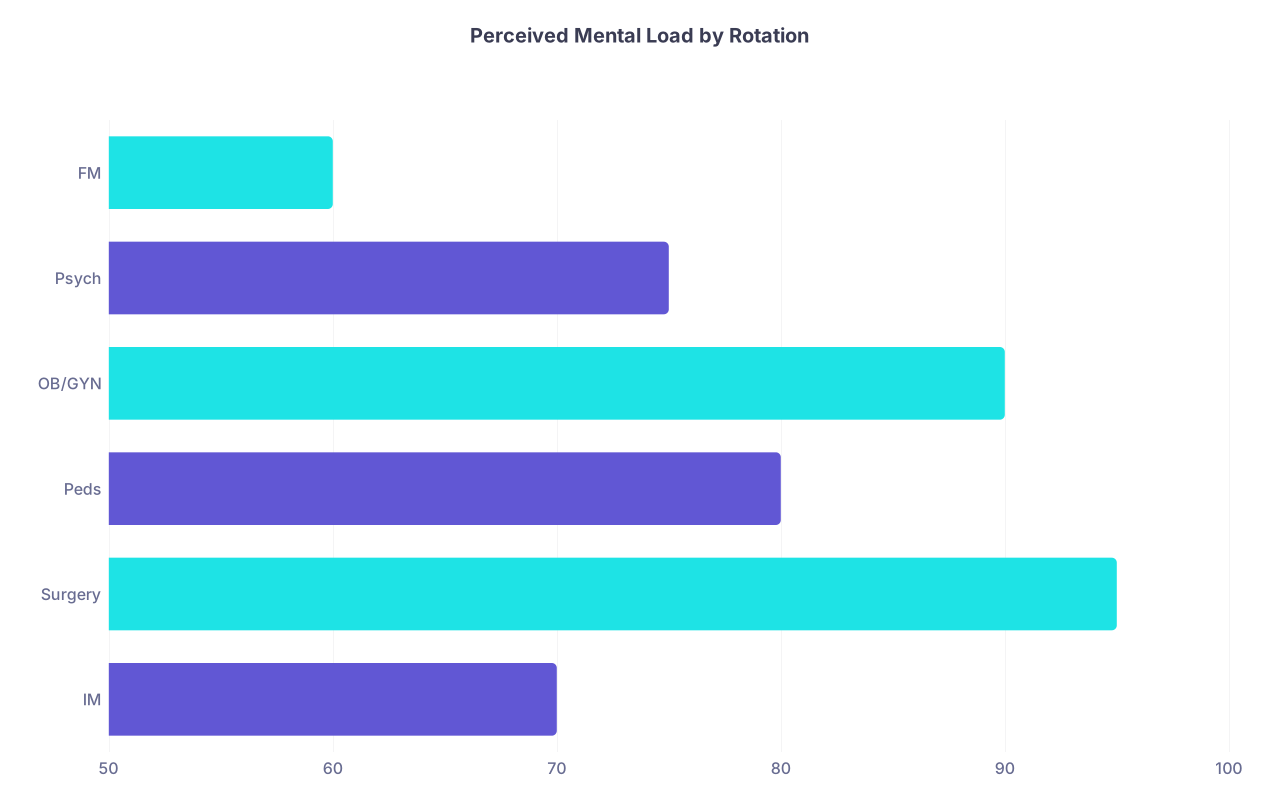
| Category | Value |
|---|---|
| IM | 70 |
| Surgery | 95 |
| Peds | 80 |
| OB/GYN | 90 |
| Psych | 75 |
| FM | 60 |
(Scale is rough, but you get the point: some months you’re just holding on. That’s expected.)
Bottom Line: Your Year, Your Rules
Three things I want you to walk away with:
Clerkship year is designed to push your limits. If it feels hard, that means you’re normal, not weak. The game is keeping yourself intact, not impressing every attending.
You need a rotation-by-rotation plan. Before each block starts, ask: “What’s the main risk to my mental health this month, and what 2–3 habits am I protecting no matter what?”
Asking for help is part of the job, not a failure at it. The students who do best long-term aren’t the ones who suffer in silence; they’re the ones who treat their own mental health like an actual medical problem—evaluated, monitored, and treated early.
You’re about to learn medicine. Make sure you don’t forget the patient you’re dragging through every rotation: yourself.