
You are standing in a new workroom. Different hospital. Different attending. Different badge color. It is 6:25 a.m. on Day 1 of a new rotation, and your heart is already going a bit too fast.
New expectations. New team culture. New EMR workflows. Same brain, same body, same 24 hours.
This is where most students either start drowning in chaos or quietly build a routine that makes the rest of the block survivable. The difference shows by the end of Week 2. Every time.
You are here: the first 14 days of a rotation. This is where you lock in a resilient routine—or you let the rotation “happen to you” and spend four weeks in reactive mode.
Let’s walk it chronologically.
Big Picture: Your 14-Day Routine Blueprint
At this point you should understand the phases:
- Days 0–1: Intel gathering and “minimal viable routine”
- Days 2–3: Locking in anchors (sleep, commute, meals)
- Days 4–7: Refining workflow + micro-habits on the wards
- Days 8–10: Stress-testing your routine as workload ramps up
- Days 11–14: Protecting mental health and exam prep for the long haul
Think of these first two weeks as a setup sprint. You are not just surviving. You are building a machine—your daily routine—that will carry you through the rest of the rotation with less anxiety and more control.
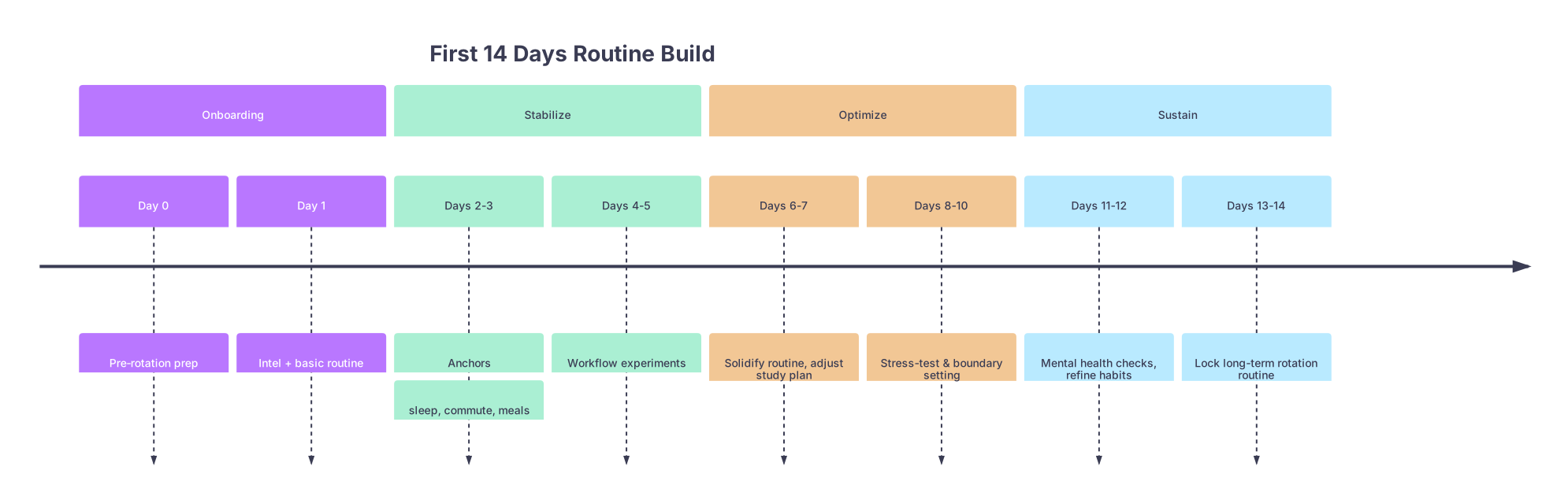
| Period | Event |
|---|---|
| Onboarding - Day 0 | Pre‑rotation prep |
| Onboarding - Day 1 | Intel + basic routine |
| Stabilize - Days 2-3 | Anchors |
| Stabilize - Days 4-5 | Workflow experiments |
| Optimize - Days 6-7 | Solidify routine, adjust study plan |
| Optimize - Days 8-10 | Stress-test & boundary setting |
| Sustain - Days 11-12 | Mental health checks, refine habits |
| Sustain - Days 13-14 | Lock long-term rotation routine |
Day 0: The Night Before – Build Your “Rotation Starter Pack”
At this point (the night before it starts) you should not be “studying everything.” That is panic behavior. Your job is logistics and psychological framing.
1. Gather intel (30–45 minutes)
- Re-read the rotation syllabus and any “expectations” email.
- Text someone who just finished that site:
- “What time does your team actually show up?”
- “What did the attending care about?”
- “Any unspoken rules?”
- If there is a clerkship-specific handbook (IM, surgery, psych), skim the first 10–15 pages only: schedule, call structure, grading.
You are not trying to learn medicine here. You are trying to eliminate surprise.
2. Decide your wake-up and bedtime for Days 1–3
You need a default before the chaos hits.
- Look at start time (e.g., round at 7:00, pre-round by 6:30).
- Work backwards:
- Hospital arrival: 15–20 min before your first responsibility.
- Commute: actual tested time + 10–15 min buffer.
- Morning ready time: 30–40 minutes (up, shower, pack).
Pick:
- A wake time you can sustain (e.g., 4:50 a.m. for surgery)
- A hard “lights out” window (e.g., between 9:30–10:00 p.m.)
Not perfect. Just consistent for the first three days.
3. Pack your physical and mental “go bag”
- White coat, badge, hospital-specific stuff (scrubs rules, parking tag).
- Portable survival:
- 2 snacks you can eat in 60 seconds (nuts, bar, trail mix).
- A full water bottle.
- Small notepad + 2 pens.
- Phone charger.
- Mental health item:
- 5–10 minute calming tool on your phone (short meditation, breathing app, Spotify playlist) downloaded and queued.
Lay everything out. Visual clutter at 4:30 a.m. is a morale killer.
Day 1: Minimal Viable Routine (MVR)
Day 1 is not about being impressive. It is about data collection and not imploding.
At this point you should aim for “competent, observant, and not in the way.”
Morning of Day 1
Your goals:
- Arrive without drama.
- Observe the flow.
- Capture the expectations.
Checklist:
- Follow your pre-decided wake-up and departure times.
- When you find the team, ask one clean question early:
“Can you walk me through what time you like students here and what you expect us to have done before rounds?” - Write this down. Exact times. Tasks. Examples:
- “Pre-round all your patients and have notes started by 6:40.”
- “No formal pre-rounding; just know your patients for 8:00 rounds.”
- “Students carry 3–4 patients, presentations 3 minutes max.”
Midday: Map your “hidden schedule”
By lunch on Day 1, you should be building a mental time map.
Notice:
- When do rounds actually start vs what is on paper?
- Does your attending linger and teach? Or speed-run?
- When is the dead space? (Pre-rounding done early, waiting for attending, OR turnover time.)
- When do residents realistically eat?
On your phone or in your pocket notebook, block rough time chunks:
- 6:00–7:00: Pre-round
- 7:30–10:30: Rounds
- 10:30–12: Notes / orders / scut
- 12–12:30: Maybe lunch?
- 12:30–4:00: Floor work / consults / OR
- 4:00–5:30: Finish notes, check out
This does not need to be exact. It is the skeleton you will hang your routine on.
Evening: 30-minute debrief and reset
Non-negotiable: a short structured debrief that first night.
- 10 minutes – Brain dump:
- What went well?
- Where did you feel most lost?
- What time did things actually happen?
- 10 minutes – Adjust tomorrow’s wake and commute (if needed).
- 10 minutes – Light review:
- Skim 1–2 UWorld questions or 3–5 pages of a rotation text on something you actually saw.
Then stop. Do not spiral into 3 hours of anxious studying. You are building something sustainable.
Days 2–3: Anchors – Sleep, Commute, Meals, Study Slot
By Day 3, your life should feel at least partially predictable, even if the service is chaotic. That predictability comes from anchors.
At this point, you should lock in four anchors:
- Wake time
- Bedtime window
- Commute timing
- One guaranteed focused study block per day (even 25–30 minutes)
Morning anchors (Days 2–3)
- Test your wake time.
- If you arrived more than 30 minutes early on Day 1 and did nothing, you can shift 10–15 min later.
- If you barely made it, move 10–15 min earlier.
- Build a 5–7 minute morning “mental warmup”:
- 1 min: check schedule and to-do from previous night.
- 3–5 min: intentional planning: “Top 3 things I will not drop today” (e.g., follow-up labs, present X patient, ask resident for feedback).
- 1 min: quick breathing/grounding (box breathing; 4–4–4–4).
This is not mindfulness theater. It is how you stop feeling like the day is just slamming into you.
Meal anchors
This sounds trivial. It is not. Low glucose = anxious, irritable, slower thinking.
Across Days 2–3, observe:
- When can your team reliably eat?
- Who decides break timing? Attending vs senior vs chaotic free-for-all?
Then decide:
- A default “if everything goes wrong” snack time (often mid-morning or mid-afternoon).
- A “real food” window when you usually can inhale something (often 11:30–1:30 or 5:00–7:00).
You will not hit it perfectly. But if you carry food and commit to those windows, you avoid the 4 p.m. crash that makes you hate every rotation.
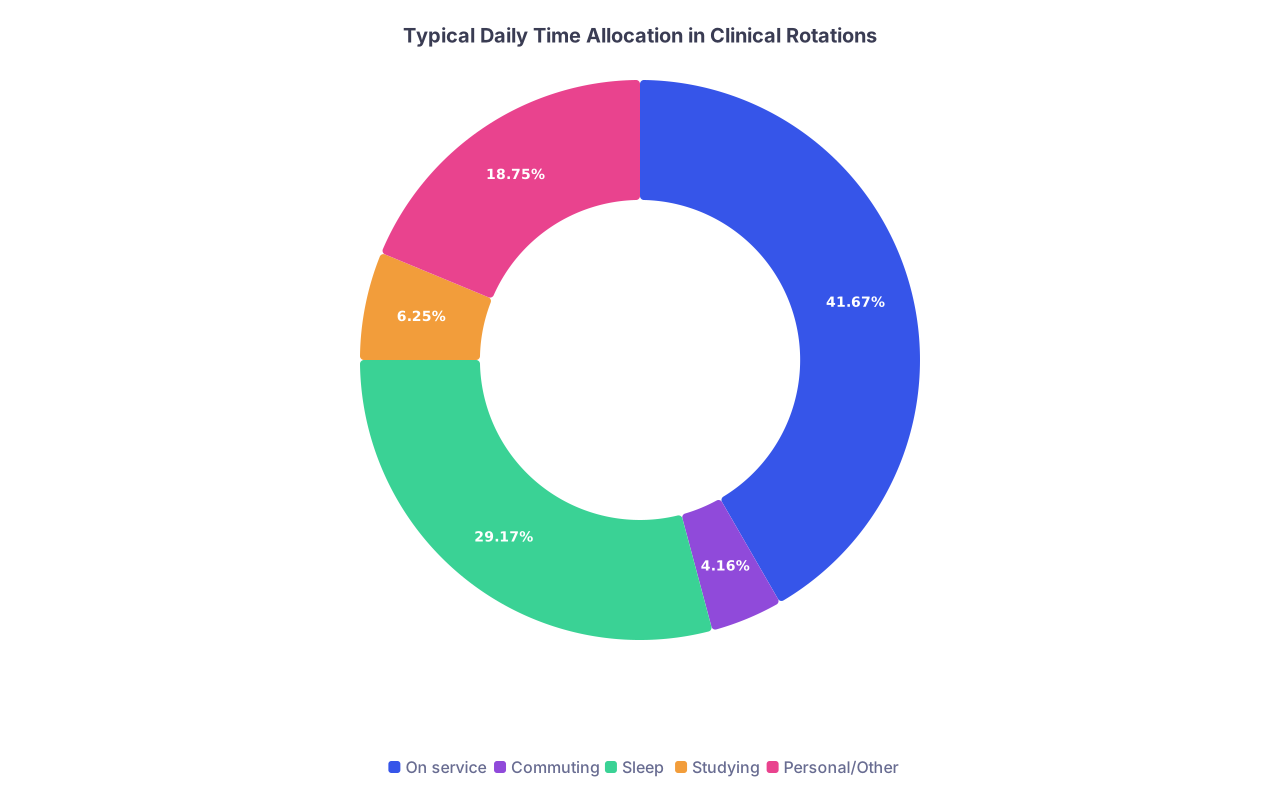
| Category | Value |
|---|---|
| On service | 10 |
| Commuting | 1 |
| Sleep | 7 |
| Studying | 1.5 |
| Personal/Other | 4.5 |
Study anchor: the 30–60 minute non-negotiable
By the end of Day 3, you should know where your one protected study block fits. Common options:
- Early morning (rarely sustainable on surgery but possible on psych).
- Immediately after you get home, before shower/food/phone.
- After dinner, with a hard stop time.
I have watched students crash hard when they say, “I will study when I can.” Translation: “I will study only when guilt overwhelms me.”
Pick:
- 25–30 minutes minimum on brutal days.
- 45–60 minutes on normal days.
- Only 1–2 resources (e.g., UWorld/AMBOSS + clerkship book).
If you are on surgery or medicine, that may literally be:
- 10–15 questions per day, or
- One topic you saw clinically that day.
Consistency beats heroics.
Days 4–7: Build Your On-Service Workflow
By Day 4, the novelty is fading. Fatigue is creeping in. This is where people start slipping into survival mode.
At this point you should be deliberately iterating your workflow, not just accepting whatever habits you fell into on Day 1.
Morning on-service routine (Days 4–7)
You want a repeatable sequence from alarm to first patient.
Example:
- Alarm → no phone scrolling. Straight to bathroom.
- Get dressed, pack bag (which is already mostly prepped from night before).
- 3-minute review of:
- Today’s patients.
- Any labs or imaging you need to check early.
- Commute:
- Either quiet time, or one short podcast/rapid review on something relevant (do not cram brand new stuff; consolidate).
On the floor:
- See patients in the same order each day.
- Use the same pre-rounding checklist:
- Vitals
- Overnight events
- Labs
- I/O
- New imaging
- One learning question per patient (“Why is she on this beta-blocker?”)
Write that structure somewhere visible for a week. Your future tired self is less smart than you think.

Microroutines during the day
Days 4–7 is where you add small habits that protect your brain:
The 2-minute reset
Between tasks or whenever you feel overloaded:- Step into the hallway or bathroom.
- 4 slow breaths, count to 4 in / 4 hold / 4 out / 4 hold.
- Ask: “What is the single next thing?” Do that only.
The pager/phone rule
When your phone/pager goes off:- Pause what you are thinking.
- Write down what you were doing.
- Handle page.
- Return to written note and resume.
Sounds simple. Saves you from that scattered, half-finished sense that fuels anxiety.
Teaching → learning capture
When your resident teaches something:- Scribble a 1-line summary and a keyword.
- That evening, you turn each of those into 1–2 flashcards or a brief note.
Over a week, this becomes hundreds of tiny study reps with zero extra “study time.”

Evenings in Days 4–7: Protecting your energy
Fatigue will be real now. This is where students do dumb things like doom-scroll in bed until midnight “because I deserve it.”
You need a simple evening sequence:
Arrival home (5–10 minutes)
- Drop bag.
- Change clothes immediately (physical signal: workday is over).
- Drink water, quick snack if needed.
Decompress (10–20 minutes maximum)
- Something low-friction: short episode, music, brief walk, shower.
- Set a timer. Unstructured “collapse on couch” time expands brutally.
Study block (30–60 minutes)
- 10–15 questions or 1–2 targeted topics.
- Briefly tie back to patients you saw: “This is Mrs. X’s heart failure.”
Tomorrow prep (5–10 minutes)
- Pack bag.
- Glance at tomorrow’s OR schedule / clinic list if available.
- Write “Top 3” for tomorrow.
Then bed. Not perfect. Just consistent.
| Anchor | Target By Day 7 | Red Flag Pattern |
|---|---|---|
| Wake time | Within 15 min variance | Random wake times each day |
| Bedtime | 7–8 hours opportunity | In bed past midnight routinely |
| Study block | 30–60 min most days | “Catch-up” 4–5 hr once weekly |
| Meals | 1 real + 1–2 snacks | Going 8+ hours without food |
Days 8–10: Stress-Test and Boundary Set
By the second week, services often get busier. New admissions, new attending, maybe call or weekend shifts. Your routines are about to be tested.
At this point you should expect stress, not treat it as a failure.
When the day explodes
Example: it is Day 8. Rounds overran, someone coded, the attending wants you to scrub into a late case, and any plan you had is gone.
Your move is not “abandon the routine.” Your move is “switch to contingency mode.”
Create a contingency plan beforehand:
If I get home after X time (e.g., 9 p.m.), then:
- 5–10 minute brain dump only (no real studying).
- 5 minutes checking labs / tasks for early morning.
- Prioritize sleep.
If I miss my usual study block, then:
- Minimum: answer 3–5 questions on the bus or while dinner cooks.
- Or do a 10-minute review of your daily teaching notes.
- Good enough counts.
Resilient routines bend without snapping. The rigid “perfect day or nothing” mindset is what wrecks mental health.
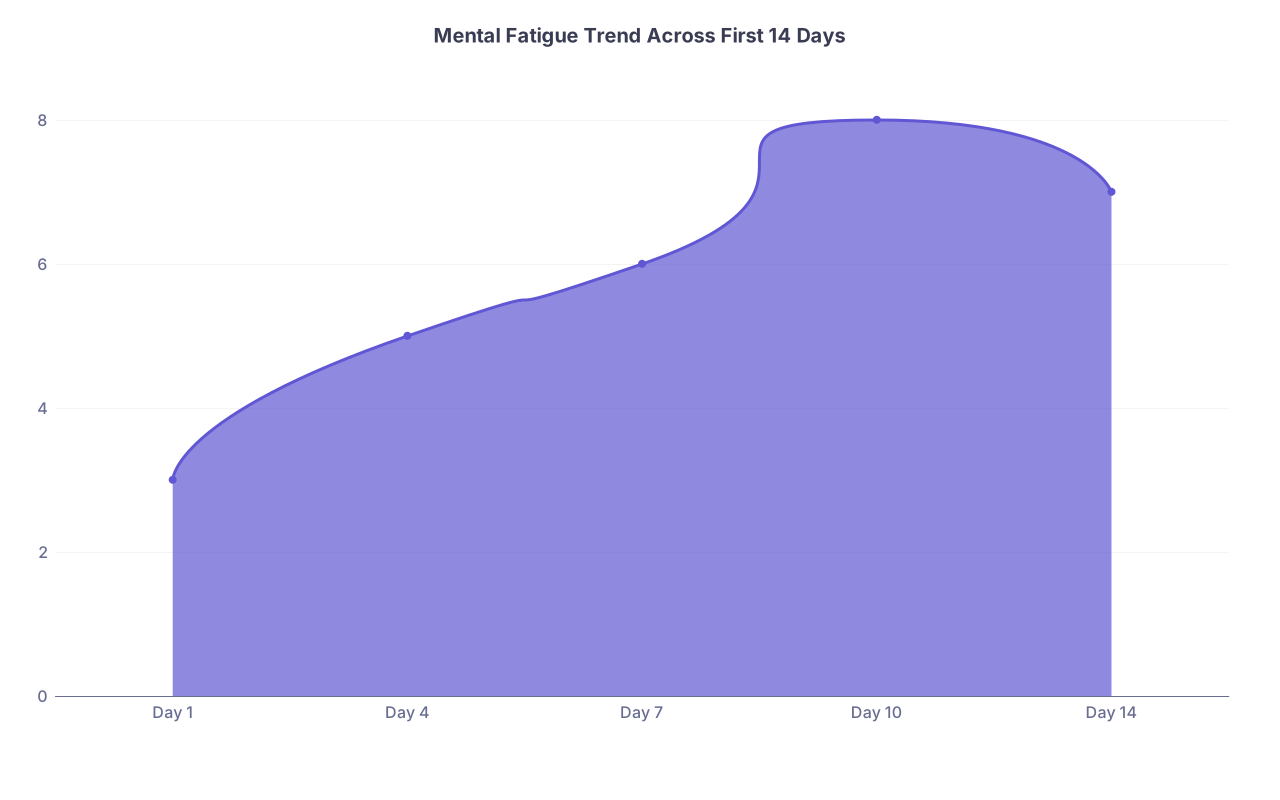
| Category | Value |
|---|---|
| Day 1 | 3 |
| Day 4 | 5 |
| Day 7 | 6 |
| Day 10 | 8 |
| Day 14 | 7 |
Boundary-setting without being “that student”
You will be tempted to say yes to everything. Extra notes, extra cases, extra scut. That is how people end up crying in their car.
On Days 8–10, practice controlled boundaries:
- When resident asks, “Can you stay late and…” and you are already at your limit:
- Try: “I can definitely help with X now. I do need to head out by 7:30 to be functional tomorrow. Is there something specific that absolutely needs me after that?”
- If you are repeatedly missing meals or bathroom breaks:
- Quietly tell your senior: “I want to be fully present and helpful, but I am realizing I have not eaten or had water in 8 hours the last few days. Would it be okay if I step away for 5 minutes mid-day?”
Good residents will respect this. Bad ones will at least be aware. Either way, you signaled that you are a human, not a machine.
Days 11–14: Lock in the Sustainable Version
By now, the rotation’s personality is clear. You know the workflows. The novelty is gone. This is where burnout or competence solidifies.
At this point you should convert your working routine into the sustainable version.
Formalize your “standard day” template
Write it down. Seriously. On paper or notes app.
Example:
- 4:55 – Wake, bathroom, dress.
- 5:15 – 5 min schedule check + “Top 3.”
- 5:20–5:45 – Commute (+ 10 min fast review from yesterday).
- 5:50–6:45 – Pre-round 3–4 patients + write skeleton notes.
- 7:00–10:30 – Rounds.
- 10:30–12:30 – Notes, orders, calls.
- 12:30–12:45 – Eat something.
- 1:00–4:30 – Tasks, consults, teaching.
- 4:30–5:30 – Finish notes, check out.
- 6:00 – Home: decompress 15–20 min.
- 6:30–7:15 – Study (questions + review).
- 7:15–8:30 – Dinner / life admin.
- 9:15–9:45 – Wind-down, in bed.
Is every day like this? No. But this becomes your baseline. Deviations are conscious, not accidental.

Mental health self-check (Days 11–14)
By the end of Week 2, you should pause and run a quick mental health systems check.
Ask yourself bluntly:
- Sleep: Am I averaging at least 6–7 hours? Or regularly below 5?
- Mood: Do I feel dread every single morning, or just normal apprehension?
- Thoughts: Any “what is even the point” thoughts that linger? Any passive self-harm ideation?
- Behavior: Have I stopped doing basic life maintenance (laundry, showering, answering texts) entirely?
If you are hitting the “red zone” on multiple:
- Email or message your school’s counseling/wellness service. Same day is ideal.
- Consider talking to your clerkship director or a trusted faculty about workload and supports.
- Tell at least one person you trust what is going on.
I have seen excellent students destroy themselves trying to “tough it out” through a 6–8 week rotation when they could have adjusted expectations or gotten support much earlier. You are not graded on suffering.

Adjust your study strategy for the rotation exam
By Days 11–14, the shelf or end-of-rotation exam is no longer some distant myth. Your routine has to incorporate exam reality.
Quick recalibration:
- Look at the calendar: how many days until exam?
- Estimate your current progress:
- Percent of question bank completed.
- Chapters or modules covered.
Then adjust:
- If behind:
- Slightly increase daily questions (e.g., from 10 to 15–20).
- Use dead time on the wards for single questions or flashcards.
- If on track:
- Maintain. Do not suddenly double your study load and crush your sleep.
Do not sacrifice sleep wholesale “just for the exam.” Chronically exhausted brains perform worse. Period.
Final 3 Takeaways
The first 14 days of each rotation are not just an orientation period; they are when you design the routine that controls your stress level for the entire block. Treat them as a build phase, not a blur.
Anchor your days early—wake time, bedtime window, one study block, and basic meal/snack windows—then iterate. Resilient routines flex under chaos but do not vanish.
Run honest mental health checks by the end of Week 2. If your sleep, mood, or basic functioning are collapsing, adjust your routine and pull in support now, not at the end when the damage is done.