This article is for educational purposes only. It is not financial advice, not legal advice, and not tax advice. Figures vary by individual circumstances, so consult a qualified professional before acting.
The Dangerous Sound of Surgical Irony: Why Misinterpreting Sarcasm Kills Evaluations
For further guidance on navigating these tricky dynamics, review how to use humor on rounds without undermining your professionalism.
The operating room runs on exhaustion, caffeine, and dark humor. That's not a flaw, it's a coping mechanism that keeps people functional through fourteen-hour cases and bad outcomes. But if you're an MS3 standing at the foot of the table for the first time, that dry attending banter isn't comedy. It's a minefield.
I've watched trainees torpedo their entire rotation because they couldn't read the room. A sarcastic "Yeah, you do it" gets taken literally. The student reaches for the needle driver. The attending's face goes flat. The evaluation writes itself from that moment forward.
Here's what nobody tells you in your third year: procedural specialties are where sarcasm is most concentrated and most dangerous. The stakes are higher, the fatigue is worse, and the tolerance for social missteps is razor-thin. An attending who's been standing in the same spot for six hours doesn't have the patience to explain that they were joking when they told you to close. They expect you to know. And if you don't know, they expect you to ask, not to blunder forward.
The mistakes I'm about to walk you through aren't hypothetical. Every single one has cost a student I've observed or worked with. Some cost them a letter of recommendation. Some cost them the respect of an entire department. One cost a student a patient complication that followed them into their Dean's letter.
This isn't about being funny. This isn't about learning to banter. This is about protecting yourself from the reputation-destroying consequences of taking exhausted, sarcastic people literally when you're standing at the operating table with someone's aorta in view.
Pay attention. This is the stuff that doesn't show up in your textbook.
Consulting resources on jokes that get you in trouble on rotations to avoid can prevent catastrophic evaluation drops.
For additional insights, review what attendings look for when you navigate off-service rotations to protect your narrative comments.
Pitfall 1: Taking 'Of Course You Can Do This' as Genuine Encouragement
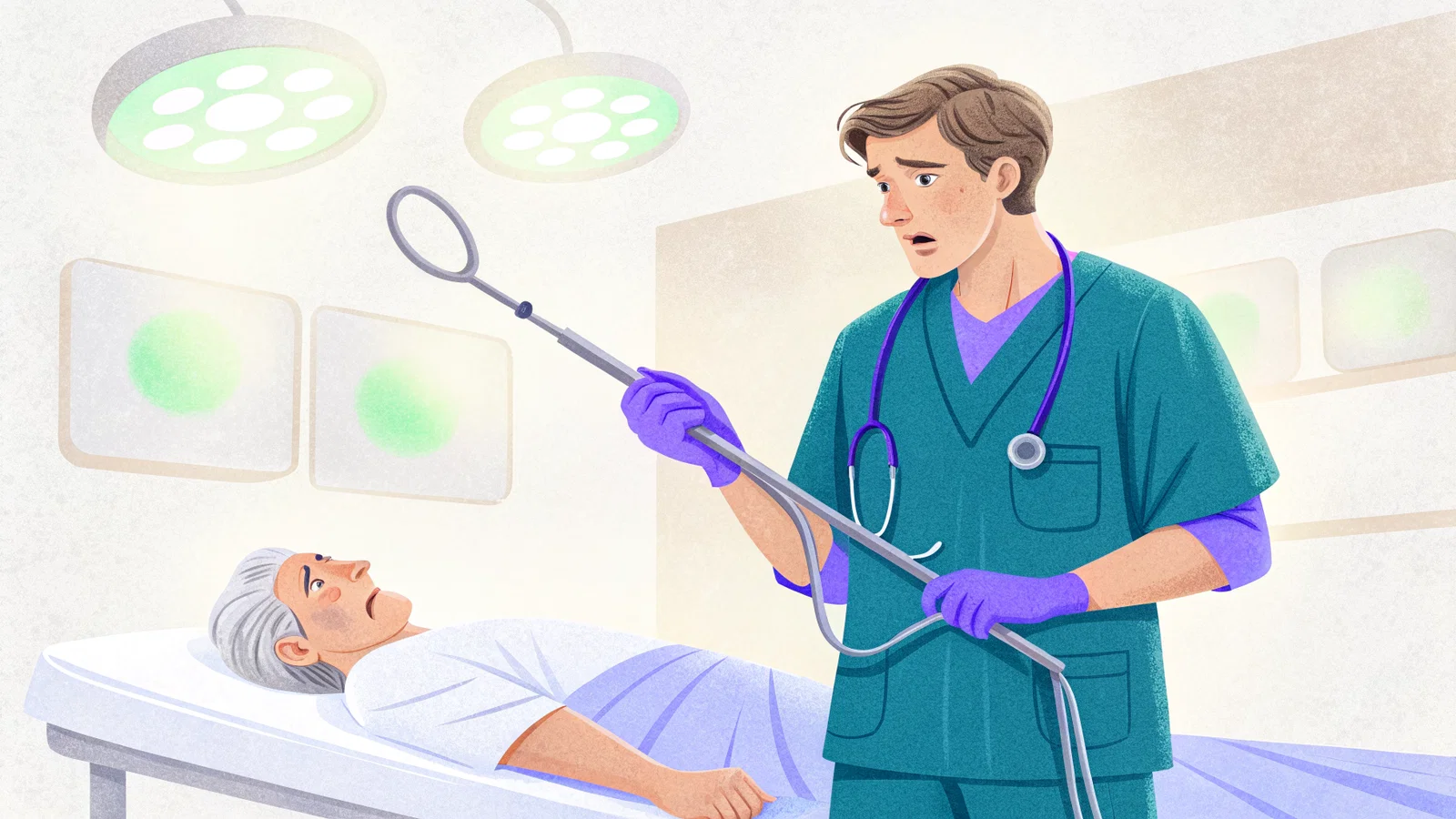
The classic. You're in the middle of a case, you've been helpful, the attending seems to like you, and then they say something like: "Sure, go ahead and close the aorta." Or "You want to put the last stitch in? Be my guest."
Your heart jumps. This is your moment. You step forward.
Stop. Read the room first.
Red flags that this is a trap and not genuine teaching:
- The task is wildly beyond your level. If you've never done more than tie superficial knots and someone's offering you a critical anastomosis, that's not mentorship. That's either exhaustion talking or a test of your self-awareness.
- The attending isn't looking at you. If their eyes are still on the field and they said it flatly while focused elsewhere, it's not an invitation. It's verbal filler.
- There's no setup. Real procedural teaching comes with positioning, instruction, and step-by-step guidance. "Go ahead and close" with zero context is sarcasm or negligence. Assume the former.
- The tone is too casual for the stakes. Genuine handoffs of critical steps come with seriousness. Sarcasm comes with a shrug.
So what do you do? You don't freeze. You don't panic. And you absolutely don't sound defensive.
The safe response is a calm, professional clarification: "I'd love to watch you do this one, would you prefer I just shadow this step?" Or: "I'm not comfortable doing that independently yet. Could I assist?"
That response tells the attending three things: you know your limits, you respect the patient, and you caught the tone. You just bought yourself credibility instead of a disaster.
Pitfall 2 through 7: From 'Great Knot-Tying' to 'You're Too Fast for Us'
The sarcasm traps don't stop at fake procedural handoffs. They multiply. Here are the six other ways I've seen students wreck their evaluations by misreading tone in the OR.
Pitfall 2: Sarcastic Praise for Terrible Technique
"Nice knot." You just threw a surgeon's knot that looked like a pretzel. The resident said it dryly. You smiled and said thanks.
Wrong. You just told them you can't tell the difference between a good knot and a bad one. That's worse than the bad knot itself.
Sarcastic praise is a probe. It's testing whether you have the self-awareness to recognize your own mistakes. When someone says "great knot" and the knot was objectively terrible, the correct response is: "Yeah, that was rough. I'll keep working on it." Acknowledge it. Move on. Don't accept praise you didn't earn.
Pitfall 3: 'You're Too Fast for Us'
This one sounds like a compliment. It isn't. When an attending or resident tells you you're "too fast" or "moving too quick for us," they're telling you to slow down. You're rushing, you're being sloppy, and you're making people nervous.
Take it literally as praise and you'll keep rushing. Take it as the actual feedback it is and you adjust. This is one of the most damaging misreads because the student often feels proud afterward. Pride while being corrected is a fatal combination.
Pitfall 4: Laughing Too Hard at Senior Sarcasm
Dark humor in the OR is a currency. But laughing too hard at a sarcastic comment made by a senior resident, especially one directed at a patient, another team member, or the institution, signals poor judgment.
A small, neutral acknowledgment is fine. A full belly laugh at a joke about a patient's prognosis? That goes in the evaluation under "professionalism concerns." I've seen it happen. The attending wasn't testing the student's humor. They were watching their restraint.
Pitfall 5: 'Why Don't You Teach Us This Part'
The fake delegation. A senior says, "Why don't you teach us this part, you seem to know it better than I do." This is almost always sarcasm triggered by a student who's been overconfident, talking too much, or correcting people unnecessarily.
If you respond by actually trying to teach, you're done. The correct move is silence or a brief, humble deflection: "I definitely don't, I'd rather watch how you approach it."
Pitfall 6: Misreading Equipment Irony
"Great use of the Bovie there." You just used the Bovie on something you absolutely shouldn't have cauterized. The comment was dripping. You said "thanks" and moved on.
Equipment irony is common because attendings don't want to stop the case to lecture you mid-procedure. They make a dry comment and expect you to reflect later. If you don't reflect, and you repeat the mistake, the next comment won't be sarcastic. It'll be a formal correction.
Pitfall 7: Ignoring the Body Language That Differentiates Real Compliments from Sarcasm
This is the meta-trap. Words alone won't save you. You need to read the whole signal.
Real compliments come with: eye contact, a pause in the procedure, specific detail ("that knot had good tension"), and sometimes a teaching point attached.
Sarcastic comments come with: no eye contact, continued motion, generic phrasing ("nice work" with no specificity), flat or exaggerated tone, and immediate subject change.
If you can't tell the difference, default to humility. Treat praise as provisional until you've verified it with results or repeated feedback. It's safer to under-acknowledge a real compliment than to over-accept a fake one.
Action Steps to Bulletproof Your Clinical Evaluations Against Irony
You can't eliminate sarcasm from the OR. You can't change the culture. But you can protect yourself with a few concrete habits.
1. When an instruction sounds absurd, clarify immediately, deadpan.
No sarcasm back. No nervous laughter. Just a calm, neutral question: "Just to clarify, would you like me to do this or observe?" That single sentence has saved more evaluations than any amount of studying.
2. Build a neutral facial expression and keep it.
This is your armor. When an attending makes a dry comment, your face should not register offense, confusion, or amusement. A flat, attentive expression tells them you're listening and processing. It gives you time to decide how to respond. Reacting visibly, wincing, laughing, looking hurt, gets remembered.
Practice this. Seriously. It's a skill.
3. Don't banter until you've earned it.
Third-year students who try to match the sarcasm of a senior attending almost always fail. You haven't been in the trenches long enough to participate in that register of humor. Stay professional. Stay quiet. Contribute when asked. The banter privilege is earned over months, not minutes.
4. Review your mid-rotation feedback actively.
Don't wait for the end. Ask for feedback halfway through the rotation. If there's been a misinterpretation, if someone thought you were arrogant or clueless because you took a sarcastic comment the wrong way, you'll catch it while there's time to correct it.
5. Before your MSPE goes out, schedule a sit-down with your attending.
This is your last line of defense. If you suspect a sarcastic interaction left a negative impression, address it directly: "I wanted to make sure I understood your feedback correctly during the case last week. I took your comment about my suturing as a signal to keep practicing, is that how you meant it?" That gives them a chance to correct the record if there was a miscommunication.

Key Takeaways
- Never assume an attending giving you an impossible procedural task on the first try is being entirely serious. If it sounds too good to be true, it probably is.
- A neutral, professional poker face is your best defense against misinterpreting sarcastic remarks in the operating room. Practice it before you need it.
- When in doubt about a sarcastic directive, politely ask for clarification rather than blundering forward. One calm question protects both the patient and your evaluation.
The OR will test you in ways no exam can. Sarcasm is one of them. Don't let it be the thing that ends your rotation before it really begins.