

A new sepsis AI alert is never just a software update. It changes who looks at what, who gets interrupted, who feels pressure to act, and who gets blamed later if the patient crashes. That’s the part administrators often underplay. They talk about innovation, early detection, improved outcomes. Fine. But on the floor, what really changes is workflow, attention, and liability temperature.
Here’s the thesis you should anchor to from day one: the real question is not whether the AI is “smart.” That word is mostly marketing. The real question is whether the model is calibrated to your hospital, clinically useful at the bedside, and safely integrated into your unit’s actual sepsis process. If it fires beautifully in a vendor slide deck and badly on your med-surg floor, it is not a good tool. It’s a noisy one.
So when the alert goes live, don’t admire it. Interrogate it. You need to know the trigger logic, the expected false-positive burden, the escalation pathway, the documentation expectations, and the answer to the most dangerous operational question in hospitals: who exactly owns follow-up when the alert fires? I’ve seen entire teams assume “someone must be looking at it.” That sentence has hurt patients.
What the AI Is Actually Flagging: Model Inputs, Thresholds, and Timing
Let me tell you what really happens behind the curtain. Most sepsis AI tools are only as good as the data feed they ingest, and hospital data in real life is messy. Vitals get entered late. Respiratory rate gets guessed. Lactate is ordered but not yet resulted. Mental status changes live in a nurse’s brain for twenty minutes before they make it into the chart. Antibiotics get started in the ED, but the med administration timestamp doesn’t line up cleanly with the clinical story. Then the model acts as if the data stream is clean and continuous. It isn’t.
That means your first job is to ask what signals the alert actually uses. Not the glossy summary. The actual inputs. Does it rely heavily on vitals, and if so, how frequently do those vitals need to be charted before risk updates meaningfully? If your floor gets q4h vitals on stable patients, a “real-time” model may be less real-time than anyone admits. Does it depend on lab values such as lactate, white count, creatinine, bilirubin, platelets? If yes, then the model may be blind until someone orders those labs. That matters. A delayed model can still be useful, but you need honesty about what phase of deterioration it catches.
Ask whether it incorporates charted symptoms or nursing assessments. Some tools pull from structured fields only. Others claim to use note text or natural language processing, but that often works unevenly across services and documentation styles. One unit writes detailed assessments. Another uses sparse templates and copy-forward clutter. Same hospital, different signal quality.
Medication triggers matter too. If broad-spectrum antibiotics, vasopressors, or fluid boluses are inputs, the model may partly be detecting clinicians already suspecting sepsis. That can make performance statistics look better than the tool deserves. It’s a classic trick of weak predictive systems: they “predict” what the team has already started to do.
Then comes the threshold question, and this is where faculty get blunt in private. At what risk score does the alert fire? Was that threshold set to maximize sensitivity, improve specificity, satisfy a quality committee, or simply reduce complaints from nurses who were getting hammered with nuisance alerts during pilot testing? Every threshold is a values decision disguised as math. If they tuned it for fear, you’ll get lots of alerts. If they tuned it for silence, you’ll miss cases. There is no neutral setting.
Also ask whether the score is static or continuously updating. A one-time risk flag generated at admission is a very different creature from a dynamic surveillance model that recalculates with every new data point. People confuse these all the time. A static risk score can help triage. It cannot replace active surveillance. If your hospital rolls out the former and talks like it bought the latter, somebody is selling confidence they haven’t earned.
The Three Questions Program Directors Wish Staff Would Ask on Day One
First question: what is the false-positive rate on our own floors?
Not in the validation paper. Not in the sales deck. Not in “peer institutions.” On your floors. In your oncology unit. In your post-op patients. In the ED hallway bed where lactates are delayed and everyone is tachycardic for three different reasons. If nobody can answer that, the rollout is half-baked.
Alert fatigue doesn’t begin when clinicians get cynical. It begins when the system is tuned for institutional anxiety rather than bedside utility. I’ve seen units where a new sepsis alert went live and, within ten days, nurses were clicking through it the way people clear low-battery warnings on a dying pager. Why? Because the alert was hitting every other patient with fever, mild tachycardia, and a postoperative white count bump. The tool wasn’t finding sepsis. It was rediscovering inflammation.
Second question: who is accountable for the first response, and how fast must the chart be reviewed?
This sounds basic. It isn’t. It is the operational fracture line. If the alert lands in a nurse inbox, a resident task list, and a hospitalist banner simultaneously, you do not have redundancy. You have diffusion of responsibility. Everyone assumes someone else is handling it. Program directors hate this because they’ve watched it happen repeatedly during new EHR feature rollouts. There’s a ping, there’s a banner, there’s a vague expectation, and there is no clean owner.
You want a simple answer. “Primary bedside nurse notifies covering clinician within X minutes.” Or: “Hospitalist reviews within Y minutes; rapid response criteria trigger escalation.” If they can’t state ownership in one sentence, the system is not deployment-ready. Full stop.
Third question: what happens when the alert is wrong or late?
Because it will be. Every model misses some cases and overcalls others. The issue isn’t perfection. The issue is whether your hospital has built a sane response structure. Can clinicians override the alert without creating a chart scar that later looks like negligence? Is there a way to document “evaluated, alternate diagnosis more likely, will monitor” without triggering three more nuisance prompts? If the model flags a patient after the sepsis bundle has already started, does it recognize that, or does it force duplicate work and duplicate charting?
More important, is there a post-alert review process? Good programs audit both misses and nuisances. They ask: was the patient actually septic, was the alert timely, was the response appropriate, did workflow break, did data latency distort the model? Weak programs just count how many alerts fired and call that engagement. That’s not quality improvement. That’s theater.

What to Check in Real Clinical Practice: Workflow, Documentation, and Human Factors
Now we get to the part that makes or breaks these systems. Workflow. Not theory. Not governance language. The real path from alert to human action.
Start with timing. When does the alert usually appear? During staffed hours when someone can reassess quickly? Or does it reliably fire at the worst possible moments: shift change, transport to CT, overnight cross-cover, or while the primary nurse is tied up in another room? I’ve seen beautifully designed alerts die because they surfaced during handoff windows when nobody trusted the other person had fully picked up the thread. A useful alert delivered at a useless moment becomes a useless alert.
Then examine the chain after the alert appears. Does it prompt bedside reassessment, repeat vitals, lactate, cultures, fluids, senior review? Or does it simply create a blinking icon and vague dread? Hospitals love to say they’ve “embedded the alert into workflow.” Sometimes that means nothing more than adding another interruptive pop-up to a crowded screen. That is not integration. That is digital litter.
Documentation is the next trap. And yes, this matters more than people admit out loud. If a clinician acknowledges the alert but doesn’t act, what record does the EHR create? Is there an audit trail that later makes it look like the team ignored a warning, even when the patient clearly had a non-septic explanation? That issue shapes behavior. Once staff realize every click leaves a footprint, some will overtest and overtreat just to avoid future scrutiny. More cultures. More broad-spectrum antibiotics. More fluid in the frail patient who didn’t need it. Bad medicine driven by defensive interface design.
Watch the language of the alert itself. Wording matters. “High risk for sepsis” triggers a different reaction than “Clinical deterioration pattern detected; bedside assessment recommended.” One sounds accusatory. The other is a prompt. Same data. Different psychology.
Color and repetition matter too. If every alert is bright red, nothing is red. If the same patient triggers six times in a shift, the system teaches people to distrust urgency. If dismissal requires six clicks but acceptance requires one, the interface is not neutral. It is steering behavior. Sometimes appropriately. Sometimes badly.
The human-factors test is simple: does the alert nudge people toward meaningful evaluation, or toward reflexive clicking? Spend one week watching how experienced nurses and residents interact with it when nobody from administration is standing nearby. That’s your real usability report. Not the training session. Not the committee minutes. The real one.
How to Evaluate Whether the Alert Helps or Harms
Insiders define success differently than vendors do. Success is not “high alert volume.” It is not “strong engagement.” It is not “clinicians saw the banner.” Success means fewer missed sepsis cases, faster bundle initiation when sepsis is actually present, and no wild increase in unnecessary workups or antibiotics. If your alert improves dashboard optics but worsens stewardship and burns out staff, it failed.
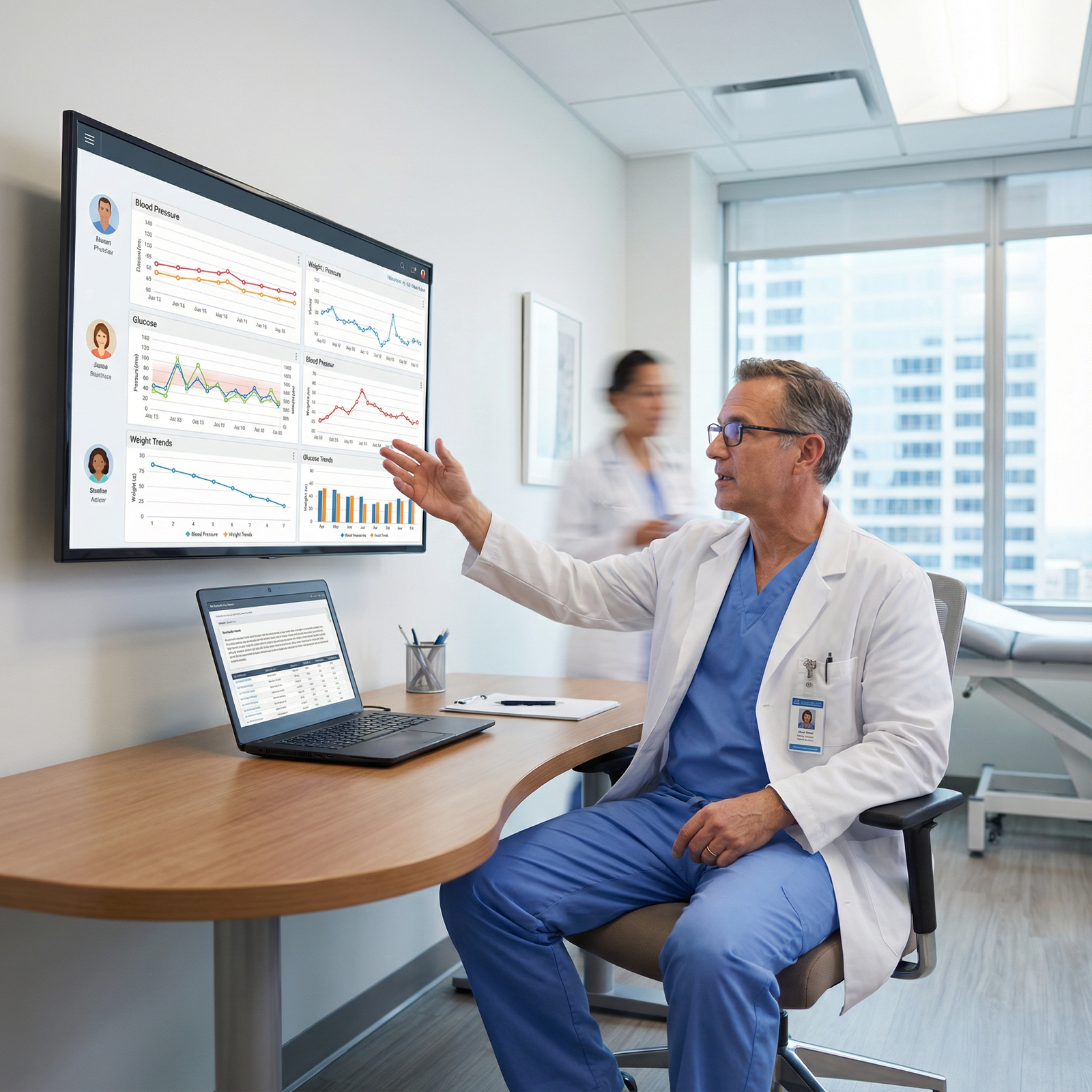
The metrics worth watching are pretty straightforward. Alert-to-action time is one. How long from fire to chart review, bedside evaluation, or order entry? Positive predictive value matters because staff feel that metric in their bones. Override rate matters because high override rates usually mean the frontline has already judged the tool as noisy, late, or irrelevant. ICU transfer timing matters because one promise of these systems is earlier recognition before the crash.
Look at trends by unit, not just hospital-wide averages. The ED is a different ecosystem from med-surg. Oncology patients are chronically complicated: fever, immunosuppression, inflammation, atypical presentations. Post-op patients trigger sepsis criteria for all kinds of noninfectious reasons. If leaders show you one global performance number, push back. Aggregates hide where the tool is weak.
And think like a pilot study, even if the system is already live. Compare before and after implementation. Ask whether the rise in “early detection” is actually a rise in meaningful intervention, or just a rise in alerts and documentation. I’ve seen hospitals celebrate shorter time to antibiotic ordering while quietly ignoring that half the extra antibiotic starts were in patients later found not to be septic. That’s not progress. That’s collateral damage.
What Leaders and Clinicians Should Ask for Before Trusting the Alert
Ask for local validation. Always. The dirty little secret in clinical AI is that general performance degrades when a model collides with your hospital’s actual data habits. Different documentation culture. Different lab turnaround. Different case mix. Different order sets. Different nursing workflows. Same algorithm, different reality. If the model was validated elsewhere, that’s interesting. It is not enough.
You also need governance clarity. Who monitors model drift? Who reviews changes in positive predictive value over time? Who can pause the tool if it starts misbehaving after an EHR update or a workflow redesign? I’ve seen systems drift quietly for months because everyone assumed “informatics” owned it, while informatics assumed quality owned it, while quality assumed the vendor was monitoring everything. That’s how bad tools become permanent.
Ask whether retraining or recalibration is planned and under what conditions. A model should not be treated like a static lab machine that just runs forever. Clinical practice changes. Populations shift. Documentation patterns evolve. If there is no maintenance plan, you are not using advanced medicine. You are using abandoned infrastructure.
And insist on a frontline feedback loop. This is non-negotiable. Nurses, residents, hospitalists, pharmacists, rapid response teams—they need a practical way to report missed sepsis, nuisance alerts, duplicate charting, and timing failures. Otherwise the system fossilizes. People complain in break rooms, not in channels that lead to fixes. Then leadership says, “We haven’t received significant concerns.” Of course they haven’t. They built no pathway worth using.
The best hospitals treat sepsis AI like a clinical instrument that requires calibration, oversight, and respect for human judgment. The worst hospitals treat it like a purchased solution they can announce and forget.
Closing: The Smart Move Is Not Blind Trust, It’s Active Verification
Hospitals that get real value from sepsis AI don’t worship it. They supervise it. They verify local performance, watch workflow consequences, and keep humans firmly in charge of interpretation and escalation. That’s the grown-up posture.
Your job as a clinician isn’t to be anti-AI. That posture is lazy. Your job is to be hard to fool. Understand what the tool sees, what it misses, when it interrupts, and what it silently pressures people to do. Ask ugly questions early. That protects patients and it protects your team.
Because this is just the beginning. The next wave of AI alerts will be more embedded, more automated, and more influential in how care gets prioritized. The clinicians who learn now how to interrogate these systems—not just click through them—will be the ones who shape safer adoption later. That’s where this is going. Better tools, more pressure, higher stakes. Start practicing discernment now.


