
The biggest lie you’re told in training is that genomics is “the future of medicine.”
It’s not the future. It’s already quietly driving decisions on rounds today—your attendings just aren’t narrating it to you.
I’ve sat in tumor boards, transplant selection meetings, and ICU huddles where a single line in a genomics report decides whether someone gets surgery, chemo, or hospice. And then the attending walks into the room and tells the family, “Based on the latest evidence, this treatment is unlikely to help,” and never says the word “genome” once.
You think you’re not doing genomic medicine yet. You are. You’re just not aware of how the people above you are using it—or how exposed you are ethically if you keep pretending this is all “for the specialists.”
Where Genomics Actually Shows Up on the Wards
Forget the textbook fantasy where genomics is all whole-genome sequencing and personalized vaccines. In real day-to-day medicine, faculty use genomics in a few very specific, very practical lanes.
And they almost never label it as such for students.
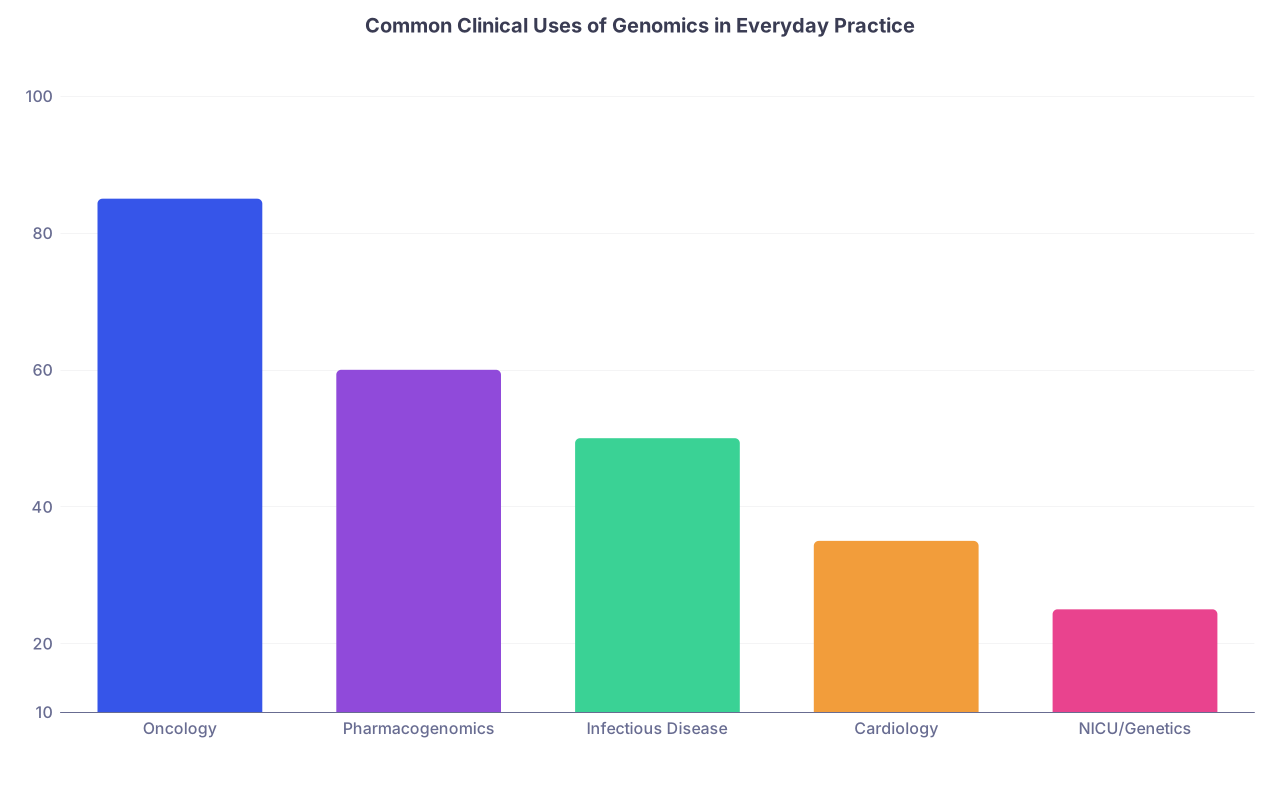
| Category | Value |
|---|---|
| Oncology | 85 |
| Pharmacogenomics | 60 |
| Infectious Disease | 50 |
| Cardiology | 35 |
| NICU/Genetics | 25 |
1. Oncology: The Quiet Puppet Master
If you’ve rotated on heme/onc at any half-decent academic center, you’ve already seen genomics in action—disguised as “molecular markers,” “NGS,” “targeted therapy,” or “we’re waiting for the panel.”
Real example from a tumor board I sat in:
“PD-L1 low, but we’ve got an MSI-high, high TMB, KRAS wild-type. She’s a candidate for immunotherapy; I’d skip FOLFOX in first line.”
The resident hears “immunotherapy candidate” and writes it down. The attending has actually just made a genomics-driven decision balancing survival, toxicity, cost, and quality of life based on half a dozen molecular results.
You’ll see this pattern:
- Lung cancer: EGFR, ALK, ROS1, BRAF, MET, RET, NTRK, KRAS G12C. The “standard regimen” is absolutely not standard; it’s stratified by mutation.
- Breast cancer: ER/PR/HER2 is old news; now they’re talking about PIK3CA, BRCA1/2, ESR1 mutation, and genomic recurrence scores (Oncotype DX, MammaPrint) to decide whether to give chemo at all.
- Colon cancer: RAS and BRAF status determine whether that expensive monoclonal has any business being used.
Nobody turns to the students and says, “We are now leveraging tumor genomics to avoid giving useless chemo that will only cause harm.”
They just say, “This mutation predicts poor response, so we’ll change direction.”
It sounds like “evidence-based medicine.” Under the hood, it is genomics.
2. Pharmacogenomics: The Orders That Magically Change
You’ve probably seen this and didn’t register it: an attending walks in, checks a lab you never knew was ordered, and suddenly switches the patient off a drug.
Classics:
- Psychiatry: The “mysterious” gene panel in the chart. Attending stops escitalopram and moves to another SSRI or avoids certain antipsychotics. The note just says “based on pharmacogenomic profile.”
- Cardiology: A clopidogrel non-responder (CYP2C19 loss-of-function). The interventional cardiologist says: “We’ll go with ticagrelor instead,” like that’s just a preference. It’s not. It’s genotype.
- Pain management: Codeine in a pediatric patient? The sharp pediatric anesthesiologists have started checking CYP2D6 status (ultrarapid metabolizers can literally die from “normal” doses).
Here’s what really happens behind closed doors:
On rounds, the fellow says, “Her gene panel suggests poor metabolism here; that’s why she’s not responding.”
The attending nods, changes the drug, then tells the family, “Her body doesn’t handle this medicine well, so we’re trying something safer.”
Ethically safer explanation? Maybe.
Complete explanation? Not even close.
3. Infectious Disease: Genomics by Another Name
You hear “PCR,” “NAAT,” “molecular panel,” “resistance genes,” “viral load.”
That’s genomics. You just weren’t told to treat it that way.
A couple of examples:
- TB and NTM: Rapid molecular tests for rifampin resistance. The ID doc will say, “We have a resistance marker; we’re escalating therapy.”
- Hospital outbreaks: Infection control gets nervous, sends isolates out for sequencing. Suddenly you hear, “These two patients aren’t the same strain; likely not a nosocomial cluster.” Translation: whole-genome sequencing just protected the hospital from a potential PR nightmare and spared half a unit from testing.
- HIV: Resistance genotyping guiding regimen changes. Residents hear “resistance profile,” but what’s actually being read is a tailored, patient-level genomic resistance signature.
Again, this is day-to-day medicine, not special “research protocol” work.
4. Cardiology and Sudden Death: The Family Meetings That Feel “Different”

When a 32-year-old drops from VT in the ED and survives, cardiology doesn’t stop with “idiopathic.”
What actually happens:
- Someone orders a panel for channelopathies or cardiomyopathies: Long QT, Brugada, ARVC, HCM genes.
- Electrophysiology quietly documents: “Concern for inherited arrhythmia syndrome. Recommend cascade testing of first-degree relatives.”
Then there’s that awkward family meeting where the attending says, “Your family may have an inherited tendency for abnormal heart rhythms. We’d like to test some relatives.”
You think this is patient education. It’s actually a deeply genomic, deeply ethical moment:
- Privacy vs duty to warn relatives
- Who pays for testing
- Who gets labeled “at risk”
- What happens if life insurance finds out
Most trainees stand in that room and think, “This is about ICDs and beta-blockers.”
The faculty are actually juggling a genomic disclosure problem in real time.
Why Faculty Don’t Spell This Out For You
Let me be blunt: faculty under-teach genomics for three main reasons, and none of them are noble.

1. They’re Not Fully Comfortable Themselves
Most attendings trained before the genomic firehose. They learned it piecemeal:
- Lung cancer: memorized a handful of driver mutations
- Breast: learned which commercially available score means “no chemo”
- Cardiology: learned which CYP2C19 genotype means “don’t use clopidogrel”
They aren’t going to expose their own knowledge gaps in front of a team full of medical students and residents. So they default to vague language:
- “Given her profile, we’ll avoid that.”
- “There are data that this patient is unlikely to respond.”
- “She’s not a candidate based on markers.”
“Profile.” “Data.” “Markers.” Those words are often covering “I sort of know how to interpret this genomic signal, but I can’t teach it cleanly in five minutes.”
2. Time Pressure Kills Nuance
You know the drill: 18 patients, noon conference, discharges pending.
There’s no time for this:
“Let me walk you through how a high tumor mutational burden interacts with mismatch repair deficiency and why that means immunotherapy instead of chemo in this case.”
So they don’t. They give you the bottom line: “We’re going with immunotherapy; write for pembrolizumab.”
The reasoning—deeply genomic—is invisible.
3. They Think You “Don’t Need It Yet”
Behind closed doors, faculty will say things like:
- “They barely know how to adjust insulin. Genomics can wait.”
- “I need my interns to recognize sepsis, not memorize gene panels.”
- “They’ll pick it up if they go into oncology or ID.”
That’s not entirely wrong. But it’s short-sighted.
Because even as an intern, you’re:
- Getting consent for tests you don’t fully understand
- Documenting diagnoses that will follow patients forever
- Explaining treatment changes rooted in genomics with half-truths
That’s where the ethical problem starts.
The Ethical Gray Zones No One Prepares You For
Genomics doesn’t just add complexity. It adds landmines. And residents step on them all the time without realizing it.
1. Consent That’s Not Really Consent
Residents love to say, “We’re going to send some additional labs,” when they’re actually ordering:
- Broad pharmacogenomics panels
- Hereditary cancer panels
- Exome sequencing on a child with developmental delay
You gloss over:
- Possible discovery of unrelated, serious conditions
- Implications for relatives (who haven’t consented to anything)
- Data storage in commercial databases
- Insurance and long-term insurability issues (GINA only covers so much)
I’ve seen this exact conversation dozens of times:
Resident to patient:
“We’re doing more specialized blood tests to understand your condition better.”
What’s actually happening: a hereditary cancer panel that might find a BRCA mutation which affects siblings, children, nieces, nephews—none of whom were in the room.
You’re not being malicious. But ethically, that’s shaky consent.
2. The “Incidental Findings” Dump
Genomic tests are messy. You go fishing for one thing and catch five.
Faculty handle this three different ways:
- They disclose everything in painful detail. Patients leave overwhelmed.
- They disclose only “actionable” findings and bury the rest in the chart.
- They defer to genetics to explain, which can take weeks or months.
You, the trainee, are usually the one standing in the room first. Patient asks:
“So, the test was normal, right?”
You saw the report: “Likely pathogenic variant in gene X associated with Y, uncertain penetrance.”
Nobody has told you what’s being communicated or what’s being hidden.
Ethically, you’re being used as a buffer. You’re smoothing over the rough edges of a genomic truth that’s been partially edited by your seniors.
3. Family Fallout
| Scenario | Hidden Genomic Issue |
|---|---|
| “Routine cancer panel” | Hereditary cancer risk for family |
| Sudden death in young adult | Inherited arrhythmia syndrome |
| Pharmacogenomic psych testing | Incidental risk markers |
| Exome in child with delay | Adult-onset disease variant |
| Viral sequencing in outbreak | Source patient identification |
Genomic information is rarely just about one patient.
Examples I’ve watched blow up:
- A BRCA mutation discovered in a woman with ovarian cancer. She doesn’t want her adult daughter told. The oncologist is torn between respecting privacy and protecting the daughter.
- A pathogenic LDLR mutation in a 19-year-old with severe hyperlipidemia. The father angrily refuses testing, says he “doesn’t want that information screwing up his life insurance.”
- A cardiogenetic diagnosis that implies risk to half the family. Some want to know, some absolutely don’t.
You will sit in these rooms. Nobody will call this “genomic ethics” in the moment. It will just feel like a tense, messy family meeting.
But genomics is driving the conflict.
4. Data, Privacy, and Cloud Storage You Never Mention
Here’s a phrase almost no one says to patients:
“Your genomic data may be stored long-term, re-analyzed in the future, and sometimes used for research, often in de-identified form but not absolutely zero risk of re-identification.”
Instead, they get:
“Your results will be in your chart and may be used to improve your care.”
Which is technically true and contextually incomplete.
From a trainee perspective, the key problem is this: you don’t even know where that data goes. You just know you clicked “order” in the EHR.
But ethically, you’re holding the door open to:
- Commercial databases
- Algorithm training datasets
- Future re-interpretation and recontact decisions
You’re part of it whether you own that fact or not.
How to Stop Being the Clueless Middleman
You don’t need a PhD in genomics. You do need to stop being the person in the room who’s faking understanding.
Here’s how faculty who actually get this will expect you to level up.
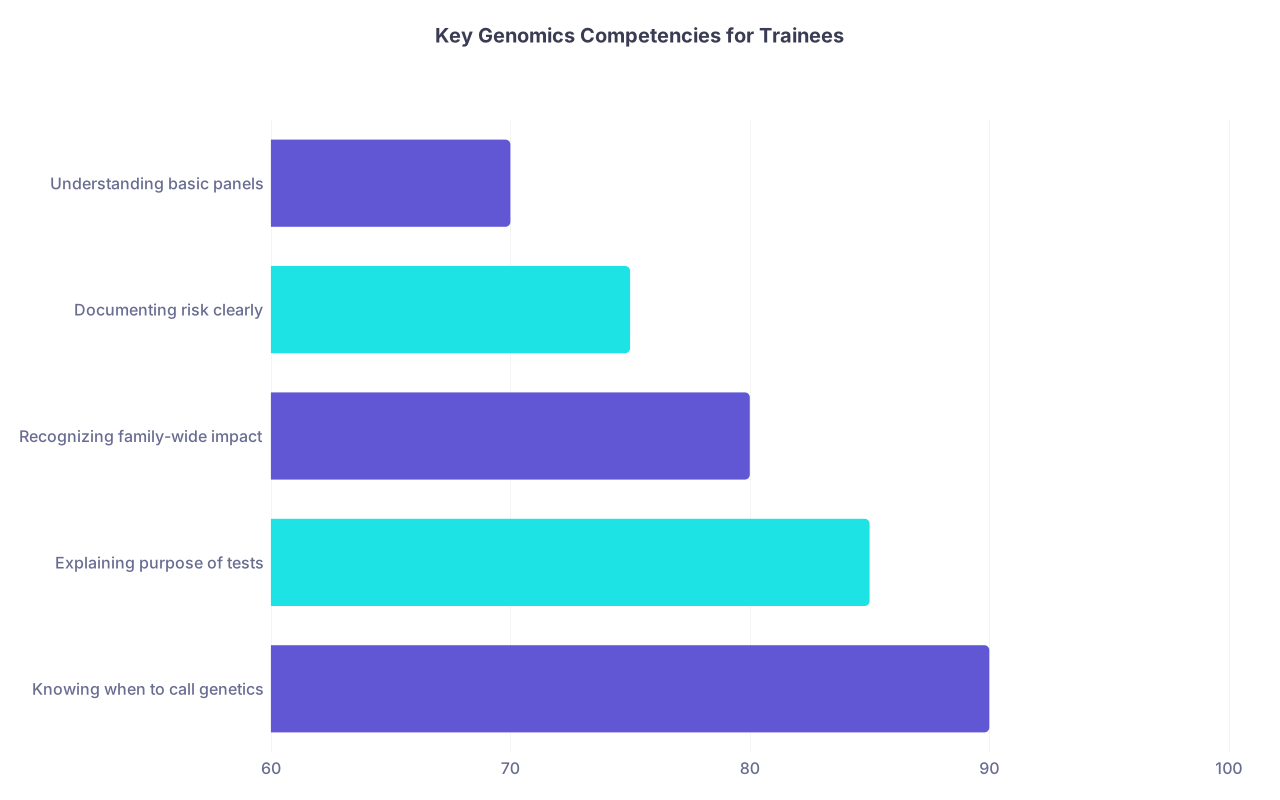
| Category | Value |
|---|---|
| Knowing when to call genetics | 90 |
| Explaining purpose of tests | 85 |
| Recognizing family-wide impact | 80 |
| Documenting risk clearly | 75 |
| Understanding basic panels | 70 |
1. Learn the “Few Things That Matter” in Your Field
Pick your current rotation and get ruthless:
- Oncology: Know 5–10 key mutations per common cancer and what they change (drug choice, prognosis, surgery yes/no).
- Cardiology: Know which arrhythmia/cardiomyopathy scenarios trigger “inherited” thinking and panel testing.
- Psych: Understand what those commercial pharmacogenomic panels do and don’t actually mean.
- NICU/peds: Know what exome or microarray normally triggers: cascade testing, long-term surveillance, family counseling.
You don’t need full mechanistic pathways. You need to know:
“What test, in which patient, changes what decision?”
2. Stop Using Vague Language with Patients
Cut phrases like:
- “More detailed tests”
- “Advanced labs”
- “Specialized blood work”
Say what it is, in plain English:
- “We’re ordering a genetic test to see if your cancer has changes that make some treatments more or less likely to work.”
- “We’re checking if you have any inherited tendency for abnormal heart rhythms. If you do, your relatives may want testing too.”
- “This test looks at how your genes affect the way you process medications, so we can avoid drugs that might not work well for you.”
Is that more complicated? Yes.
Is it honest? Also yes.
3. Ask Attendings to Show Their Work
You want the insider-level reasoning? Force it out.
I’ve seen the best residents do this on rounds:
“You mentioned she’s not a candidate for that chemo because of markers. Could you walk me through exactly which markers you’re looking at and how they change the decision?”
Or:
“You said her gene panel suggests a different antidepressant. Which part of the report are you using to guide that?”
You’ll be surprised how many attendings are relieved you asked. It gives them an excuse to turn a quiet genomic decision into a teachable moment.
4. Involve Genetics Early Instead of Dumping Late
Too many teams call genetics the day after they drop a genomic bomb on a family.
Better model:
- Before ordering a big genomic test (exome, broad panel, hereditary panel), ask: “Should genetics see this patient first?”
- If they’re not available, at least clarify with your attending:
- What will we do if we find an incidental finding?
- Who will talk to the family about implications for relatives?
- Are we documenting the possibility of those findings anywhere?
Even that level of intentionality lifts you out of the “just clicking orders” role.
5. Own Your Role in the Ethical Chain
You’re the one:
- Explaining tests at 10 p.m. when families are tired
- Getting phone consent
- Answering the first “what does this mean?” when results drop overnight
You won’t always have perfect answers, but you can stop pretending it’s “just another lab.”
Simple upgrade:
“This is a genetic test. It can tell us not just about you, but sometimes about family members too. It might find things we weren’t initially looking for. If any unexpected results come up, we’ll bring in our genetics colleagues to help explain options.”
That’s not overkill. That’s baseline honesty in 2026.
How This Ties Back to Your Development and Ethics
Personal development in medicine is not just about confidence or leadership. It’s about deciding what kind of physician you’re becoming.
With genomics, you’re at a fork:
- You can be the clinician who treats genomic tests like mysterious black boxes ordered “somewhere in the background,” parroting the plan.
- Or you can be the one in the room who understands enough to name the stakes, respect the autonomy, and see the family-level impact.
One of the most experienced oncologists I know at a major cancer center told a room of fellows:
“The most dangerous thing in my practice isn’t a mutation I can’t target. It’s a trainee who doesn’t realize when a test they order will haunt a family for decades.”
That’s the real line here. Not “Can you recite the KRAS pathway?”
It’s: “Do you appreciate when a quiet genomic decision today changes a family’s story forever?”
You’re already participating in those decisions. Time to stop pretending you’re not.