The dangerous myth is this: “The computer already analyzed the genes, so I just follow the report.” That mindset is how residents hurt patients with genomics.
Let me be blunt: genomic reports are not magic answers. They’re tools. And residents routinely misuse them in ways that lead to wrong diagnoses, inappropriate treatments, ethical breaches, and lost trust. I’ve watched it happen—oncology services chasing the wrong mutation, cardiology ignoring a VUS that later explained a sudden death, residents confidently quoting “pathogenic” from a 4‑year‑old report that was already outdated.
You do not need to become a geneticist. But you absolutely must stop making these specific mistakes.
1. Treating Every Variant as Clinically Actionable
The most common—and most dangerous—error: assuming “variant found” equals “do something.”
You see a mutation in a cancer gene. You see “pathogenic” in the summary. You feel compelled to act.
Slow down. This is how residents get burned.
There’s a hierarchy of relevance you cannot ignore:
| Level | Meaning | Typical Action |
|---|---|---|
| Pathogenic | Strong evidence of disease-causing | Often management change |
| Likely pathogenic | High probability but not absolute | Consider in context |
| VUS | Unclear significance | No management change alone |
| Likely benign | Probably harmless | Usually ignore |
| Benign | Not disease-causing | Ignore |
The mistake is assuming the word “pathogenic” always implies clinical action for your patient in this context. It doesn’t.
Common traps:
- Treating any detected variant as the cause of the disease, even when it doesn’t match the phenotype.
- Escalating care (prophylactic surgery, aggressive chemo, implantable devices) based solely on the genetic label.
- Ordering family cascade testing on a VUS or a marginal finding—then traumatizing relatives with uncertainty.
The rule: The patient’s presentation is boss. Genomics is supporting evidence, not the driver.
Protect yourself by asking, every single time:
- Does this variant match the phenotype, age, family history, and organ system?
- Is this gene strongly associated with this disease, or is it weakly linked from one small study?
- Would I make the same management decision if this variant were not present?
If the answer to #3 is “no,” you need genetics input before acting. Otherwise, you’re letting the report practice medicine.
2. Misunderstanding “VUS” and Creating Chaos
Residents mishandle “Variant of Uncertain Significance” more than any other category. This is a minefield.
Here’s the mistake pattern:
- Resident reads: “VUS in BRCA2.”
- Tells patient: “We found a mutation in your BRCA gene. We don’t fully know what it means yet.”
- Patient hears: “I might have a breast cancer gene. I might give this to my kids.”
- Panic. Dr. Google. Sleepless nights. Sometimes unnecessary mastectomy consults.
A VUS is not a soft version of “pathogenic.” It’s “we don’t have enough data to classify this.” And crucially, guidelines are very clear: you do not change management based on a VUS alone.
The big mistakes residents make with VUS:
- Presenting it to patients as a “possible cause” of their disease.
- Recommending increased surveillance or preventive surgery based on it.
- Suggesting family members be tested “just in case.”
- Documenting it in a way that haunts the chart (“likely cause of disease”) and misleads future clinicians.
Ethically, this is a disaster. You’re transferring uncertainty and fear to the patient without benefit.
The right way:
- In most cases, don’t lead with the VUS at all in a brief inpatient discussion unless the patient is already plugged into genetic counseling.
- If asked directly, frame it accurately: “This is a change in the DNA that we currently do not understand. Current guidelines say we do not use this to make treatment or screening decisions. It may be reclassified in the future.”
- Make sure your note doesn’t overstate its importance. Write something like: “VUS identified; per current standards, no management changes. Recommend follow-up with genetics.”
If you cannot explain VUS without scaring the patient, you should not be the one explaining it alone. Pull in genetics.
3. Ignoring That Genomic Reports Age—Fast
Another big oversight: acting as if a 4‑year‑old genomic report is timeless truth. It is not.
Genomic knowledge has a short half‑life. A variant classified as VUS in 2019 could be pathogenic—or benign—today. Databases (ClinVar, gnomAD, etc.) update constantly. Labs occasionally reclassify variants and sometimes send updated reports, but that process is inconsistent and easy to miss.
Common resident mistakes here:
- Copy‑pasting old report text and treating classification as current.
- Relying on a prior “negative” result without checking when the test was done and which genes were even included.
- Assuming the same assay and coverage are used across time and labs (they aren’t).
This is how you miss a now‑known pathogenic variant in a patient with a strong family history. Or you keep treating a “pathogenic variant” that’s been downgraded.
You need to think of genomic reports like imaging: would you rely on a CT from 7 years ago to decide today’s surgery? No. Yet residents do this with genomics all the time.
Protect yourself:
- Always check the date of testing and the exact lab.
- Look for language on variant reclassification policies in the report.
- If an old VUS looks suspicious in the current clinical context, explicitly request re‑review/re‑analysis by the lab or genetics.
- Be suspicious of any report older than 3–5 years on a rapidly evolving panel (hereditary cancer, cardiomyopathy, epilepsy, etc.).
If the case is critical (life‑altering surgery, high‑risk intervention), push for updated testing or reanalysis. Do not hang everything on an ancient PDF in the chart.
4. Overtrusting the Summary Page and Skipping the Details
The “summary” or “interpretation” section is where residents stop reading. That’s a mistake.
Those pages are marketing‑polished. Designed to feel conclusive. Color‑coded verdicts. Bold “Actionable mutation detected.” It tempts you to treat it as final.
But the clinically important nuance is almost always buried:
- Depth of coverage and whether key regions were poorly covered.
- Limitations of the assay (e.g., large deletions/duplications not detected).
- Whether a variant was found in tumor only or germline.
- Which transcript or reference genome was used.
- Confidence levels of the call.
If you skip that, you misinterpret everything else.
I’ve seen residents:
- Assume a negative gene panel was truly negative, when the small variant their attending cared about was in a poorly covered exon.
- Miss that a “pathogenic variant” was tumor‑specific only and not a hereditary mutation (completely different implications for family).
- Fail to realize the “panel” included only a subset of genes relevant today.
At minimum, always read:
- Methods/Assay section – What was tested? Exons only? Whole gene? Copy number?
- Limitations – What cannot be concluded from this test?
- Separate sections for germline vs somatic findings.
Do not let the executive summary think for you. Treat it as an introduction, not the verdict.
5. Confusing Somatic vs Germline and Blowing Up Families
Here’s an ethically ugly one: mixing up somatic and germline findings in cancer reports.
Somatic = mutations in the tumor only. Not inherited. Not passed to children. Germline = inherited variants present in every cell. These can affect family members.
Many oncology genomic reports contain both—or only one, depending on the test. Residents skim, see “BRCA1 mutation,” and announce, “You have a hereditary breast cancer gene.” Except sometimes it’s tumor‑only, with no proof of germline involvement.
Result? Terrified patients. Misled family members. Unnecessary cascade testing. Sometimes life‑changing decisions (like prophylactic surgery) based on a misinterpretation of what kind of DNA was tested.
Your job:
- Verify: Is this a tumor‑only test, a paired tumor–normal test, or a dedicated germline panel?
- Check the report headers: “Somatic variants” vs “Germline findings” are often separated.
- If there’s any doubt whether a variant is germline, that’s genetics territory, not resident territory.
Never, ever tell a patient, “Your children might inherit this” unless you are looking at a confirmed germline result or speaking after a genetics consult. Saying that prematurely is an ethical failure, not just a communication slip.
6. Overinterpreting “Polygenic Risk Scores” and Ancestry Data
As polygenic risk scores (PRS) and “risk stratification” creep into clinical genomics, residents are starting to treat them like hard diagnoses. Bad move.
The common mistakes:
- Taking a “high polygenic risk for coronary artery disease” and turning it into, “You’re guaranteed to have a heart attack.”
- Ignoring that most PRS are derived from and validated in specific ancestry groups—so applying them to a different background is shaky at best.
- Using PRS to justify aggressive interventions that aren’t guideline‑based.
Polygenic risk is population‑level information. It’s probabilistic. It’s not destiny. And it’s unreliable across ancestries in many current implementations.
Ancestry information itself is another trap. A genomic report might list “genetic ancestry inference” or show allele frequencies by population. I’ve seen residents:
- Make assumptions about “ethnic risk” based on crude categories.
- Downplay warning signs because “this variant is more common in this ancestry,” misinterpreting frequency for safety.
- Say things that veer into biologically sloppy territory about race and genetics.
Stay clean here:
- Do not use PRS as your primary decision‑maker for major interventions.
- Do not extrapolate ancestry inferences into sweeping statements about identity or risk.
- When in doubt, treat PRS as a conversation point, not a directive.
7. Forgetting Consent, Privacy, and Future Implications
Genomic data is not just another lab. Ethically, it’s closer to a lifelong tattoo than a BMP.
Residents routinely downplay or ignore:
- The implications for family members (who never consented but may be affected).
- The risk of reidentification and privacy breaches, especially with broad data sharing.
- The future uses of stored genomic data (research, secondary findings, insurance implications in some systems).
The common mistake is casualness.
“Yeah, we’ll just order a broad exome, see what we find.”
Except you might “find” things the patient never wanted to know—adult‑onset neurodegenerative risks, cancer predisposition, incidental findings with no current treatment.
Or you click through research/data‑sharing consent screens mechanically, barely explaining them to an overwhelmed patient. Ethically, that is sloppy at best.
Before supporting broad genomic testing, you should be sure:
- There’s been a meaningful consent conversation by someone trained (often genetics, not you alone at 2 a.m.).
- The patient understands that once data exists, it can be reanalyzed in ways no one can fully predict.
- You are not promising privacy you can’t guarantee.
If you feel pressured to “just get the test so we can move the workup forward,” at least document very clearly what was and was not discussed, and loop in genetics as early as possible.
8. Excluding Genetics from the Team Until It’s Too Late
The quiet mistake: treating genetics as a last resort instead of a parallel partner.
Residents often think:
“I’ll interpret this myself first. I don’t want to bother genetics unless it’s really weird.”
By the time you decide it’s “really weird,” you may already have:
- Given incorrect counseling.
- Documented misleading interpretations in the chart.
- Set expectations with the patient that are hard to walk back.
Genomics is complicated enough that trying to “figure it out solo” to look smart is not noble. It’s dangerous.
Use genetics early when:
- The result will lead to family testing or long‑term surveillance plans.
- The variant classification is ambiguous, and management would change significantly if clarified.
- The ethical weight is high (predictive testing, pediatric testing for adult‑onset disease, etc.).
- The disease entity is rare, syndromic, or unfamiliar.
Here’s the mindset shift: involving genetics does not make you look weak. It makes you look competent and safe. The resident who overconfidently misreads a report is the one attendings remember for the wrong reasons.
9. Believing the Tech More Than the Patient
Last mistake I’ll call out: letting a piece of paper override what’s in front of you.
You see a “negative” panel for hypertrophic cardiomyopathy. Patient has classic features. Strong family history. So you downgrade your suspicion because “the genes were negative.”
You see no actionable mutation in a tumor profile. You subconsciously treat the patient as having fewer options, even when standard therapies still exist and may be highly effective.
Or the reverse: you see a variant in a cardiomyopathy gene and jam the patient into that diagnosis, even though their symptoms and imaging do not quite fit.
This is how genomic technology warps clinical judgment. Residents often do not even realize it’s happening.
The correct order:
- Patient story, exam, imaging, baseline labs.
- Family history.
- Then genomics—interpreted through that lens, not above it.
If the genomic report doesn’t fit the real clinical picture, question the report. Question the lab. Question whether the right test was ordered. Do not gaslight the patient or contort their disease into matching some genotype.
The most ethical thing you can sometimes say is: “This genetic result doesn’t fully explain what we’re seeing. We may not have the full answer yet.”
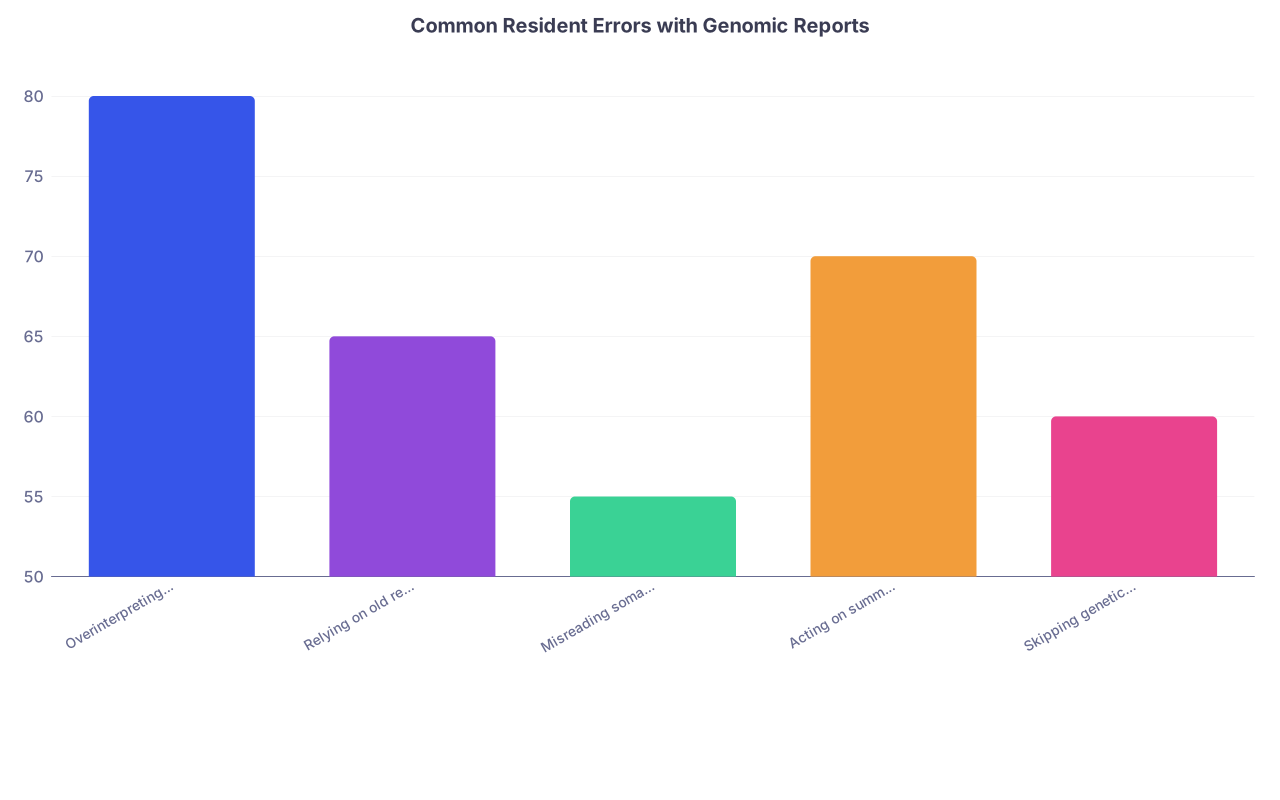
| Category | Value |
|---|---|
| Overinterpreting VUS | 80 |
| Relying on old reports | 65 |
| Misreading somatic vs germline | 55 |
| Acting on summary only | 70 |
| Skipping genetics consult | 60 |

| Step | Description |
|---|---|
| Step 1 | Receive Genomic Report |
| Step 2 | Check test type and date |
| Step 3 | Match findings to phenotype |
| Step 4 | Document and monitor |
| Step 5 | Consult genetics |
| Step 6 | Discuss with attending |
| Step 7 | Patient counseling with support |
| Step 8 | Variant affects management? |
| Step 9 | Confident within training? |

FAQs
1. As a resident, how much genomic interpretation am I actually responsible for?
You’re responsible for not causing harm with genomics. That means:
- Knowing basic terminology (pathogenic, VUS, somatic vs germline).
- Recognizing when a finding is outside your expertise.
- Not overpromising what genomics can answer.
- Pulling in genetics early when results affect long‑term management or family.
You are not responsible for independently classifying variants or arguing with ClinVar. But you are responsible for what you say to patients and what you document in the chart. If you’re guessing, stop and escalate.
2. Should I ever tell a patient about a VUS?
Yes—but carefully, and not as the headline.
If genetics is involved, they’ll usually lead that conversation. On your own, you should:
- Avoid framing a VUS as a likely cause of disease.
- Emphasize that current guidelines say it should not drive treatment.
- Encourage follow‑up with genetics, as reclassification may occur later.
If the patient is already overwhelmed, you don’t need to walk them through every VUS detail on rounds. It’s often safer to say, “There are some uncertain findings the genetics team will review with you in more depth.”
3. How do I know when to repeat or update genomic testing?
Red flags that should make you consider repeat testing or reanalysis:
- The report is more than 3–5 years old in a fast‑moving field (hereditary cancer, cardiomyopathy, epilepsy, developmental delay).
- The original panel was narrow, and more genes are now known.
- There’s a strong clinical and family history signal but “negative” or VUS‑only results.
- There’s been a major change in the patient’s clinical status that might be explained genetically.
Do not reflexively reorder the same test without coordination. Discuss with genetics or the ordering lab—reanalysis of existing data is often better than starting from scratch.
4. What’s the worst thing I can say to a patient when discussing a genomic result?
Variations of these:
- “You have the gene for this disease” (overstating penetrance and certainty).
- “Your kids probably have this too” (without confirmed germline and prior testing).
- “This result explains everything” (when you’re not sure).
- “Don’t worry, this will stay private” (you cannot fully guarantee that).
Better: “This is one piece of information that may help us understand your condition. We’ll review it with our genetics colleagues to make sure we interpret it correctly and talk about what it means for you and possibly your family.”
Open one genomic report from a patient you’re following right now. Read past the summary page. Look for: test type, date, limitations, and whether the key variant is somatic or germline. If you can’t explain those four pieces clearly, email or message genetics today and loop them into the case.