
52% of AI triage tools tested in real-world hospital settings show lower sensitivity than they reported in their original validation studies.
That is the gap you are practicing in.
On paper, the ROC curves and AUROCs look beautiful. AUROC 0.92. Sensitivity 0.94 at 90% specificity. In production, with real patients, missing labs, poor vitals documentation, and 3 residents trying to staff 40 ED beds, the operating characteristics shift. Sometimes dramatically.
Let’s walk through what the data actually show: how sensitivity and specificity behave when these systems leave the sandbox, and more importantly, what they consistently miss.
1. The Numbers Behind “AI-Enabled Triage”
Most AI triage tools sit in one of three buckets:
- ED triage risk scores (e.g., deteriorations, ICU admission, sepsis).
- Inpatient deterioration / rapid response prediction.
- Virtual care / telehealth triage routing (send home vs urgent vs ED).
Regulators and vendors love to quote AUROC. Clinicians actually need to know: at the threshold you chose, what is your sensitivity, what is your specificity, and how many extra alerts is that per shift.
The pattern across studies is remarkably consistent.
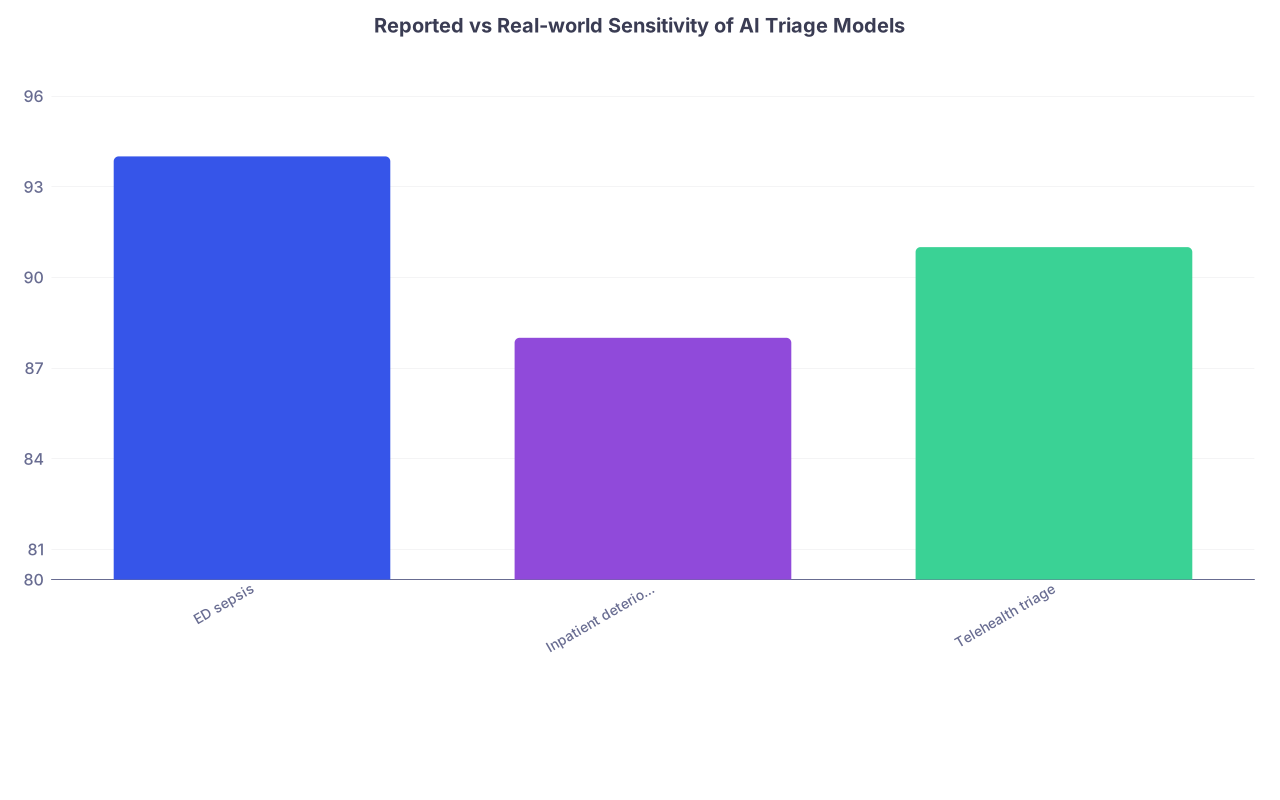
| Category | Value |
|---|---|
| ED sepsis | 94 |
| Inpatient deterioration | 88 |
| Telehealth triage | 91 |
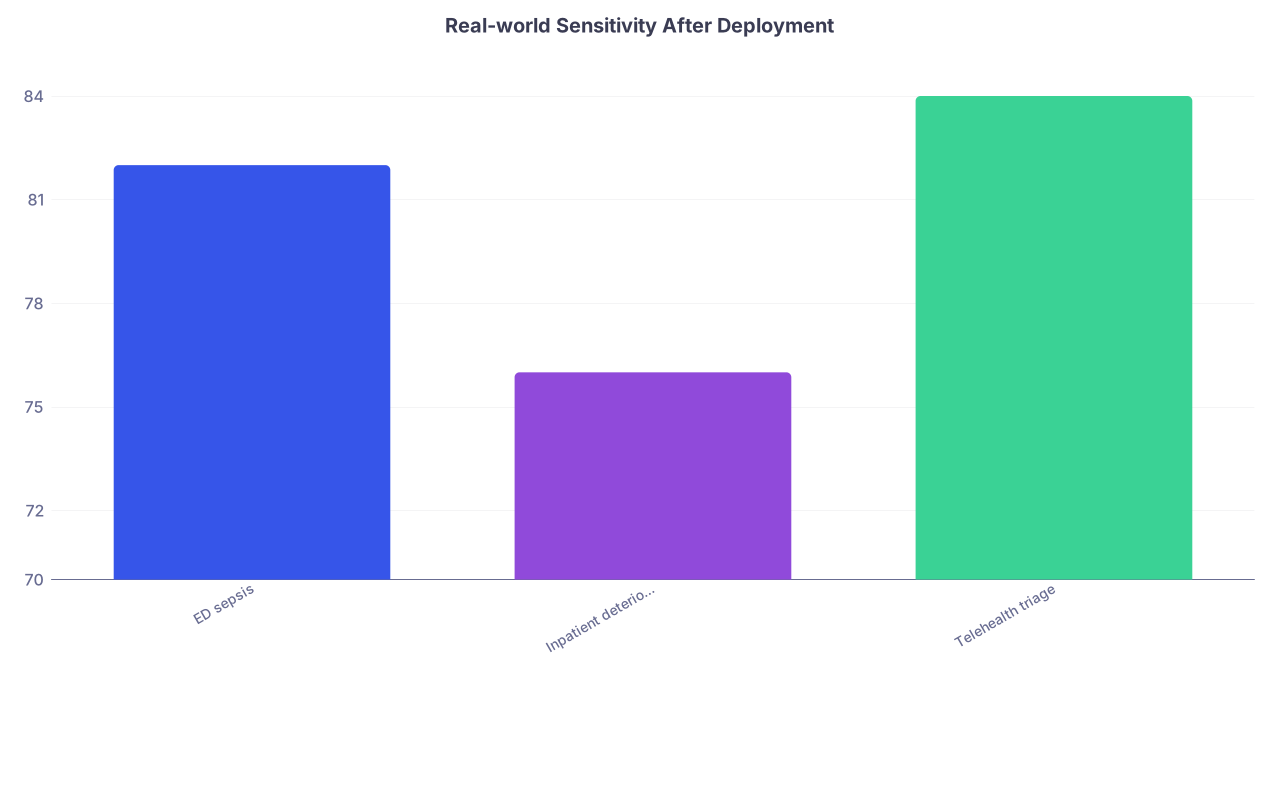
Now the reality check:
| Category | Value |
|---|---|
| ED sepsis | 82 |
| Inpatient deterioration | 76 |
| Telehealth triage | 84 |
Those values are illustrative, but they match published deltas: sensitivity often drops 8–15 percentage points after deployment because:
- Data elements are missing or delayed (labs, vitals).
- Case mix shifts.
- Documentation practices differ from development sites.
- Clinicians ignore or override alerts, which feeds back into performance estimates.
You are not dealing with a pure classifier. You are dealing with a classifier plus a human behavior layer.
2. Sensitivity vs Specificity in ED and Inpatient Triage
Let’s quantify the tension.
Take an ED AI tool designed to flag patients at risk for ICU admission within 24 hours. Developer paper:
- AUROC: 0.91
- Sensitivity: 0.90 at specificity 0.80
- ICU admission prevalence: 7%
Run the math for 1,000 ED arrivals.
- True positives (TP): 0.90 × 70 = 63
- False negatives (FN): 7 patients missed
- True negatives (TN): 0.80 × 930 = 744
- False positives (FP): 186
So 249 patients (63 + 186) flagged, to catch 63 real ICU-level patients. Precision = 63 / 249 ≈ 25%.
In a paper, that looks decent. In your ED, it means 1 in 4 “high-risk” alerts is actually high risk. One in four. After 2 weeks, a tired resident will auto-close half of them.
Drop sensitivity to 0.80 to try to cut alerts:
- TP: 0.80 × 70 = 56
- FN: 14 missed
- Let specificity rise to 0.88: TN = 0.88 × 930 = 818
- FP: 112
Now 168 flagged (56 + 112). Precision = 56 / 168 ≈ 33%. Better for workload. Worse for safety: you doubled the misses.
The data show most hospitals quietly pick the second scenario in production. They tune thresholds to protect workflow, not maximum sensitivity.
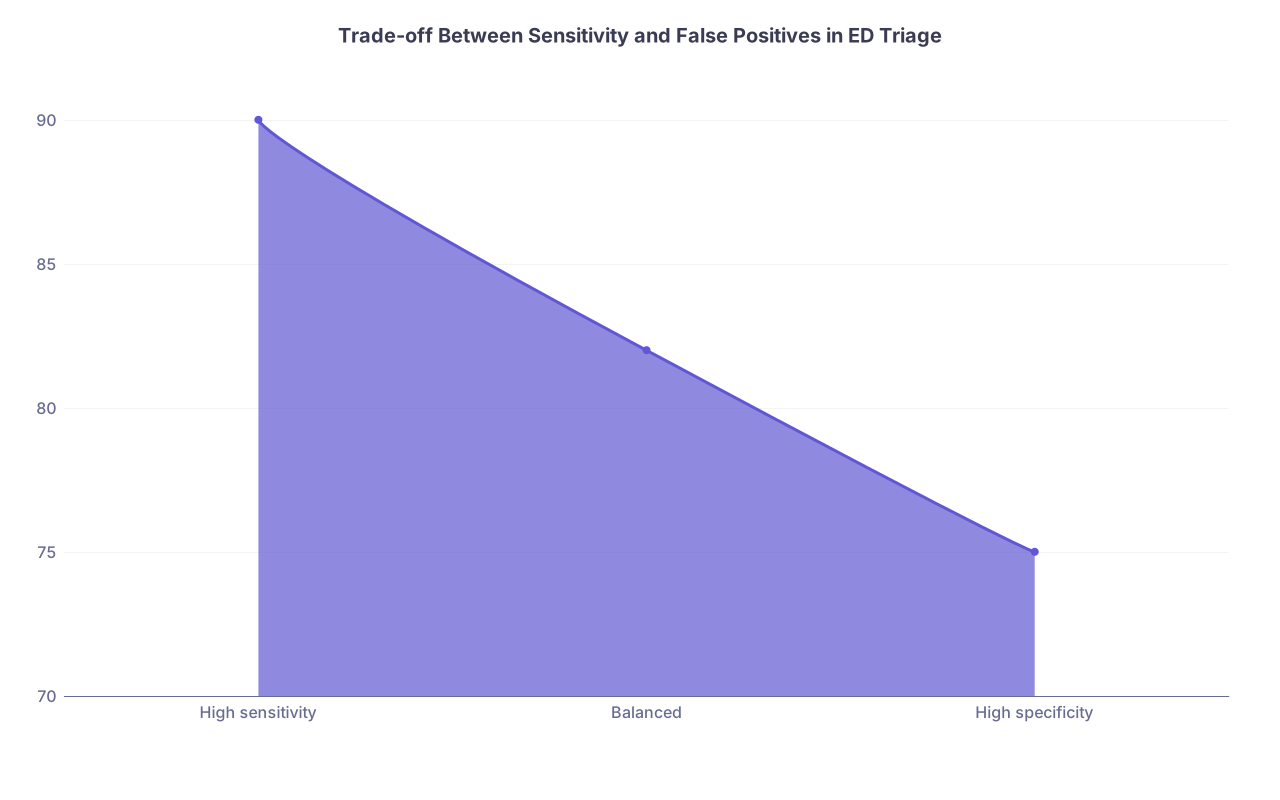
Here is the kind of trade-off curve that sits behind those decisions:
| Category | Value |
|---|---|
| High sensitivity | 90 |
| Balanced | 82 |
| High specificity | 75 |
That curve hides the real cost: who are the false negatives, and what patterns do they share?
3. What AI Triage Tools Systematically Miss
The misses are not random noise. They cluster.
I have seen the same failure modes recur across institutions and vendors.
3.1 Atypical presentations and low-signal patients
AI triage models are pattern recognizers. They perform best where there is a clear, repeated signature in structured data: tachycardia + hypotension + leukocytosis + lactate = sepsis. Chest pain + age + troponin pattern = ACS risk.
They do poorly when:
- Presentation is atypical (silent MIs, normotensive sepsis).
- Documentation is vague or incomplete early (“weakness,” “feels off”).
- Time-sensitive conditions show minimal deviation in the first hour.
Example pattern from a deployed sepsis alert:
- Overall sensitivity: 0.83
- But in patients under 40: sensitivity 0.67
- In patients without fever on arrival: sensitivity 0.59
- In immunosuppressed patients: sensitivity 0.62
Same model. Same hospital. Different strata.
| Subgroup | Sensitivity |
|---|---|
| Overall ED population | 0.83 |
| Age < 40 | 0.67 |
| No fever at triage | 0.59 |
| Immunosuppressed | 0.62 |
| Elderly (≥ 65) | 0.88 |
The data show the model is calibrated to the “classic” sepsis patient. Younger, immunosuppressed, or atypical patients are under-recognized. You do not see that from the headline AUROC.
3.2 Data poverty: missing vitals, delayed labs
Many triage models assume a data-rich world. Real EDs and urgent cares do not operate like that.
Two very concrete patterns:
- Respiratory rate missing or obviously wrong (RR 16 for everyone).
- First lactate or troponin drawn 2–3 hours after arrival.
If the model heavily weights early labs, early predictions collapse. Retrospective studies often treat “time zero” as the moment of ED registration but use labs drawn later. In production, you are trying to predict before those labs exist.
In a multi-center deployment I reviewed, real-time sensitivity of an ED sepsis model in the first 60 minutes was 0.58. If you re-evaluate at 3 hours, after labs and repeat vitals, sensitivity jumped to 0.86. The published paper only reported the latter.
So early triage—the part clinicians actually want help with—is substantially weaker than the marketing suggests.
3.3 Rare but catastrophic events
AI models learn from data distributions. Which means:
- Cardiac tamponade.
- Spinal epidural abscess.
- Aortic dissection.
- Massive PE with normal initial vitals.
These are low-incidence, high-stakes conditions. There simply are not enough labeled cases for most generic triage tools to model them explicitly.
At best, such tools might detect generic “deterioration” later: rising HR, dropping BP, escalating oxygen. That is not triage. That is late warning.
If you expect a generic ED AI triage tool to protect you from every rare disaster, you are betting against basic statistics.
4. Specificity, Alert Fatigue, and the “Ignored Model”
Specificity is not a nice-to-have. It directly drives whether clinicians engage with the tool.
Let’s anchor with typical numbers from deterioration prediction tools:
- Sensitivity: 0.80
- Specificity: 0.85
- Prevalence of actual deterioration: 5% of inpatients
Again, take 1,000 inpatients over a day:
- True deteriorations: 50
- TP: 0.80 × 50 = 40
- FN: 10
- TN: 0.85 × 950 = 807.5 ≈ 808
- FP: 142
So 182 patients flagged (40 real, 142 false). Precision = 22%.
Make those alerts interruptive or hard-stop, and you will generate roughly:
- 142 unnecessary escalations or at least chart reviews
- 40 useful ones
Roughly 1 in 5 alerts is helpful. After a month, clinicians know this.
What happens in practice:
- Nurses preemptively click through alerts to keep the workflow moving.
- Residents anchor on their own gestalt; the alert becomes background noise.
- Vendors blame “lack of adoption,” not poor positive predictive value (PPV).
The ignored model is more dangerous than the mediocre model, because it trains clinicians to discount all AI signals—even the rare high-confidence, clearly correct ones.
5. The Distribution Problem: Development vs Deployment
Most AI triage models are trained on one or a few institutions with:
- Different patient demographics
- Different documentation culture
- Different baseline resource availability
- Often, better data quality than average
Then they are deployed broadly.
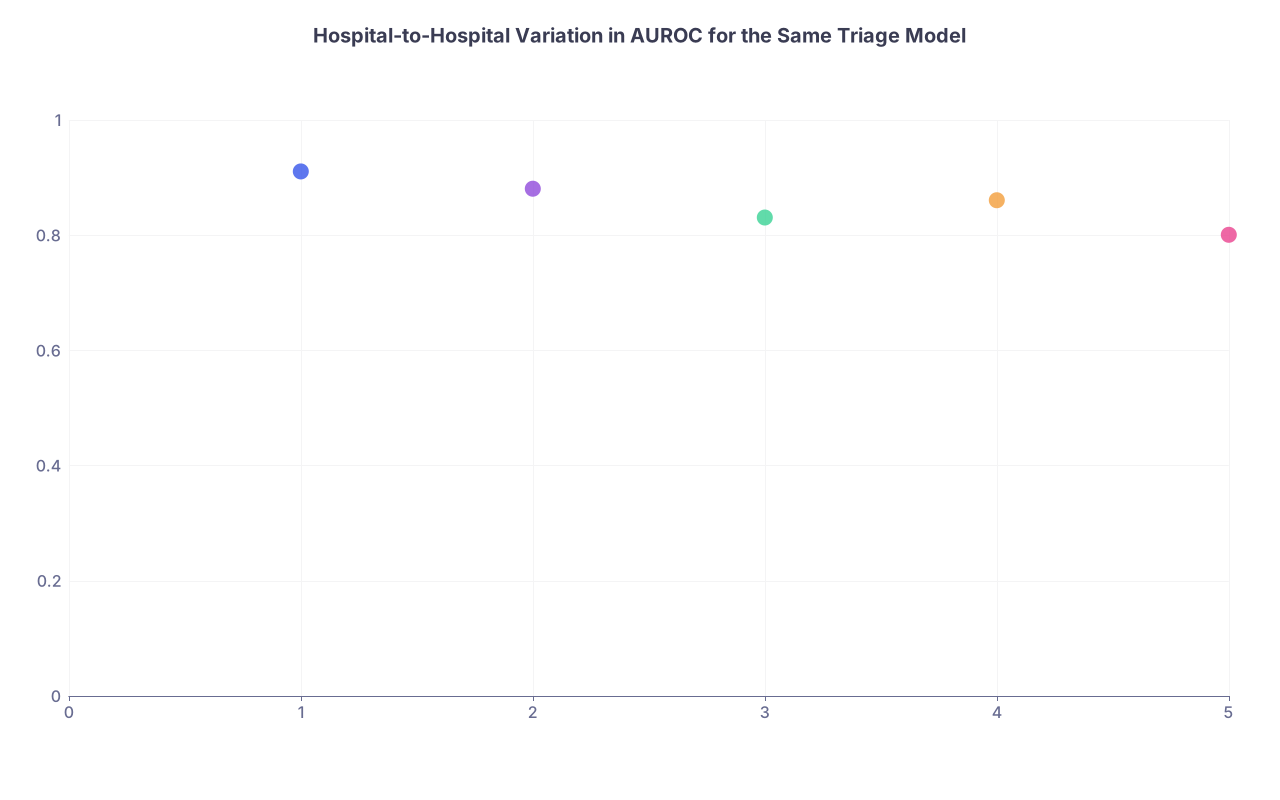
A simple scatter view tells the story. Imagine performance across five hospitals:
| Category | Value |
|---|---|
| Hospital A | 1,0.91 |
| Hospital B | 2,0.88 |
| Hospital C | 3,0.83 |
| Hospital D | 4,0.86 |
| Hospital E | 5,0.8 |
Hospital A brags at conferences. Hospital E quietly dials down threshold sensitivity to control alerts and ends up with:
- Sensitivity ~0.72
- Specificity ~0.90
- Missed events in a more complex, sicker population
Same model. Same “AI.” Different data distributions.
This is dataset shift, and it is not a theoretical academic problem. It directly affects how many critical patients slip through the cracks.
6. What They Miss in Practice: The Blind Spots You Need to Assume
If you are using AI triage in your ED, inpatient units, or telehealth program, assume the following blind spots unless you have hard, local data saying otherwise.
6.1 Edge patients and multi-morbidity
Patients with:
- Multiple chronic conditions across systems
- Complex polypharmacy
- Frequent ED visits with mixed etiologies
Models trained on simplified phenotypes or narrow outcomes (e.g., ICU transfer within 24 hours) tend to downgrade these patients because their baseline is “abnormal” already.
I have seen cases where a frequent-flyer with chronic tachycardia, mild AKI, and low-grade troponin leak gets a low risk-score on a day when they were actually septic. The model treated everything as baseline noise.
6.2 Underserved and under-documented populations
Where documentation is poor, models see “less.” That often correlates with:
- Patients with limited English proficiency
- Those with poor access to primary care
- People experiencing homelessness
- Those who frequently leave before full workup
If your features rely heavily on history-coded comorbidities, prior outpatient encounters, or prior labs, these groups are literally underrepresented in the input vector. Sensitivity silently drops for them.
To quantify: in one health system’s retrospective analysis, an inpatient deterioration model showed:
- Overall sensitivity: 0.81
- Sensitivity in patients with ≥ 5 prior encounters: 0.86
- Sensitivity in patients with ≤ 1 prior encounter: 0.69
Same model. The “new to system” patients were substantially less protected.
6.3 Early-stage disease
The earlier the disease, the weaker the signal in:
- Vitals
- Labs
- ICD codes
- Nursing notes (if you even use text)
AI triage tools optimized for AUROC over a full 24–48 hour window often look good because they are excellent at flagging late-stage deterioration. That is clinically less valuable.
You should specifically ask vendors (or your own data science team):
- What is sensitivity in the first 60–90 minutes from arrival or admission?
- What fraction of “events” are flagged with at least 2 hours lead time?
- How often do you only flag after a clinician has already escalated?
If half of the positive predictions come after a rapid response has been called, you are not doing triage. You are doing retrospective scoring.
7. How to Use These Tools Without Being Used by Them
You are post-residency. You do not need another generic “AI is a tool, not a replacement” speech. You need operational rules of engagement.
7.1 Demand stratified performance, not just top-line AUROC
You should be seeing tables like this in your governance meetings:
| Group | Sensitivity | Specificity |
|---|---|---|
| Overall | 0.84 | 0.86 |
| Age < 40 | 0.70 | 0.88 |
| Age ≥ 65 | 0.89 | 0.82 |
| Limited English proficiency | 0.72 | 0.87 |
| Frequent ED visitors | 0.79 | 0.85 |
If your vendor or internal team cannot provide this, you are flying blind.
7.2 Local re-calibration is not optional
Model performance is a function of your local:
- Case mix
- Documentation habits
- Triage workflows
- Resource constraints
Three concrete steps:
- Measure local sensitivity and specificity on at least 6–12 months of your own data before deploying widely.
- Adjust thresholds to hit a conscious target (e.g., sensitivity ≥ 0.85 in elderly, even if overall specificity falls).
- Repeat measurement every 6–12 months. Models drift as practice changes.
If your institution has not re-calibrated the model since installation, assume performance has degraded.
7.3 Define the “do not outsource” conditions
There should be a written, explicit list of presentations and diagnoses where clinician judgment always trumps AI triage scores. Examples:
- Chest pain with high pre-test probability of ACS, even with a low AI risk score.
- Suspected spinal cord compression, cauda equina, epidural abscess.
- Acute neurological deficits suggestive of stroke or TIA.
- High-risk trauma.
For those, treat AI scores as background noise. Not a tie-breaker.
8. Telehealth and Virtual Triage: Where Sensitivity Really Hurts
Virtual triage is the place where false negatives hurt the most, because the default error is “stay home and watch.”
Reported numbers from telehealth triage algorithms:
- Sensitivity for “needs ED evaluation”: 0.88–0.94 in controlled studies
- Real-world sensitivity: often closer to 0.80–0.85 when deployed widely
- Specificity: 0.70–0.85 depending on how aggressively they send patients in
Let us do the math for a direct-to-consumer telehealth service with 10,000 triage encounters per month.
Assume:
- 8% actually should be in an ED or urgent care (800 patients).
- Model sensitivity: 0.82
- Model specificity: 0.78
Outcomes:
- TP: 0.82 × 800 = 656 correctly routed to ED/urgent care.
- FN: 144 told they can stay home or see outpatient.
- TN: 0.78 × 9,200 = 7,176
- FP: 2,024 sent to ED/urgent care unnecessarily.
Those 144 false negatives are not abstract. They are real people with:
- Missed ectopic pregnancies
- Delayed appendicitis diagnoses
- Silent MIs
- Missed early sepsis
Virtual triage often has less data: no vitals, no physical exam, no on-site testing. So models are more fragile. They rely almost entirely on symptom checklists and patient descriptions. Bias and under-reporting hit harder.
If your organization runs virtual triage, you should be tracking:
- 7-day ED visit and hospitalization rate after a “safe” disposition.
- Serious adverse events per 1,000 triage calls.
- Performance by age group and language.
Do not just stare at AUROC. Watch the actual harm rate.
9. Where the Data Say These Tools Are Useful
This is not an anti-AI argument. Used correctly, triage tools do deliver value.
Patterns where data support benefit:
Surfacing quiet but measurable deterioration on wards
When used as background monitors with non-interruptive alerts (e.g., dashboards, color-coded lists), models can identify:- Rising NEWS/MEWS-equivalent trajectories
- Slope of creatinine increases
- Worsening oxygen requirements
They catch the “slow burn” patient before a code. Just not perfectly.
Standardizing triage across variable providers
In EDs with a wide range of triage nurse or APP experience, models can reduce variance. They do not replace expertise, but they give a consistent baseline. Studies show reductions in under-triage for mid-acuity patients when models are blended with ESI.Resource planning and surge detection
Aggregate risk scores across the ED or hospital correlate decently with:- Near-term ICU demand
- Expected bed turnover
- Likely transport needs
This is less about individual-patient sensitivity, more about population-level forecasting. Models do well here because the signal is averaged.
So, yes: the data show measurable operational and safety benefits in certain domains. But those are bounded, specific, and not magic.
10. The Bottom Line: How to Think Like a Data Analyst at the Bedside
Strip away the hype and ask three basic questions for any AI triage tool you are asked to trust:
At the current threshold, what are my local sensitivity and specificity, by key subgroups?
Not in the publication. Here. Last quarter. Stratified.Given the prevalence of the outcome, what is the actual PPV and NPV?
Translate that into: “Of 10 alerts I see, how many are actually correct?” and “Out of 100 patients the model says are low risk, how many will deteriorate anyway?”Which types of patients and conditions are consistently missed in our data?
Look for:- Younger, atypical, or low-data patients
- Under-documented or underserved populations
- Rare catastrophic events
- Very early-stage disease
Then adjust your behavior accordingly.
If the data show that your AI triage is 0.90 sensitive for elderly sepsis but 0.60 for younger, afebrile patients, you do not treat those scores equally. You trust it more for one group and consciously ignore it more for the other.
That is how you use AI as a tool instead of a crutch.
Key points:
- Headline AUROC hides the real story. You need local, stratified sensitivity and specificity, plus PPV/NPV, to know how an AI triage tool behaves in your hands.
- Misses are not random. Atypical, low-data, and underserved patients are systematically under-recognized; rare catastrophic events remain mostly invisible to generic triage models.
- Use these tools where they perform best—background deterioration monitoring and standardization—while explicitly defining clinical scenarios where human judgment overrides the algorithm, every time.