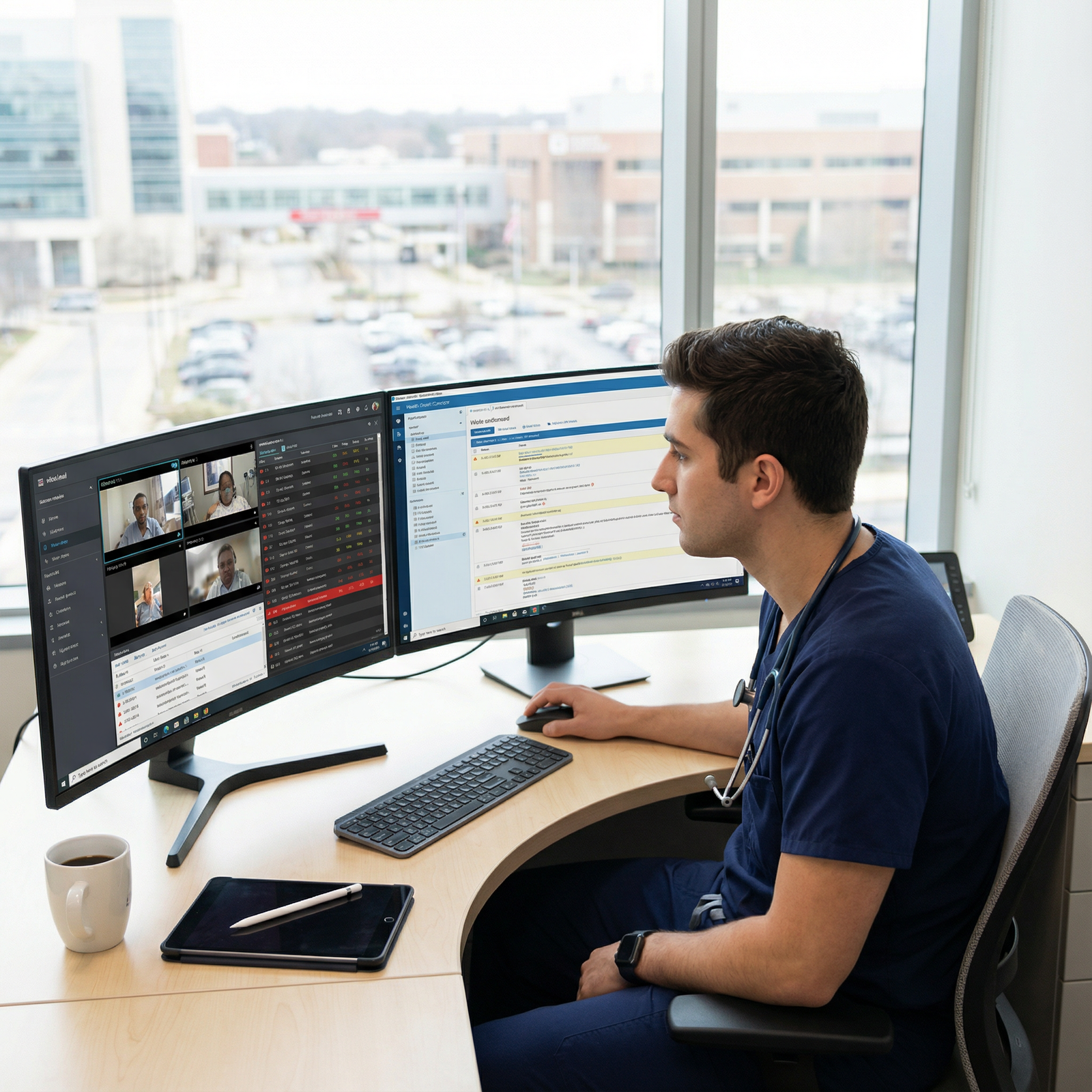
Telehealth does not “worsen care.” The data shows something more uncomfortable: for many adult populations, virtual visits produce similar readmission rates to in‑person care, but with equal or higher no‑show rates—and the gap is highly dependent on age, digital access, and visit type.
(See also: Do Patient Portals Reduce Phone Calls? Call Data vs Message Volume for more details.)
If you are planning post‑residency practice or evaluating job offers, you cannot treat telehealth as a generic “good thing.” It is a capacity tool with very specific performance profiles on readmissions and no‑shows. Used incorrectly, it quietly erodes continuity and inflates uncompensated work. Used correctly, it de‑risks high‑risk patients and stabilizes your schedule.
Let me walk through the numbers.
1. What the readmission data actually shows
Strip away the marketing. For hospital and large group employers, the question is blunt: will a telehealth‑heavy model hurt 30‑day readmission metrics, especially where penalties or bundled payments are in play?
Across multiple studies from 2019–2024, the pattern is consistent: telehealth follow‑ups are non‑inferior to in‑person visits for 30‑day readmissions in most adult medical populations. Not dramatically better. Not dramatically worse. Roughly the same—within a few percentage points.
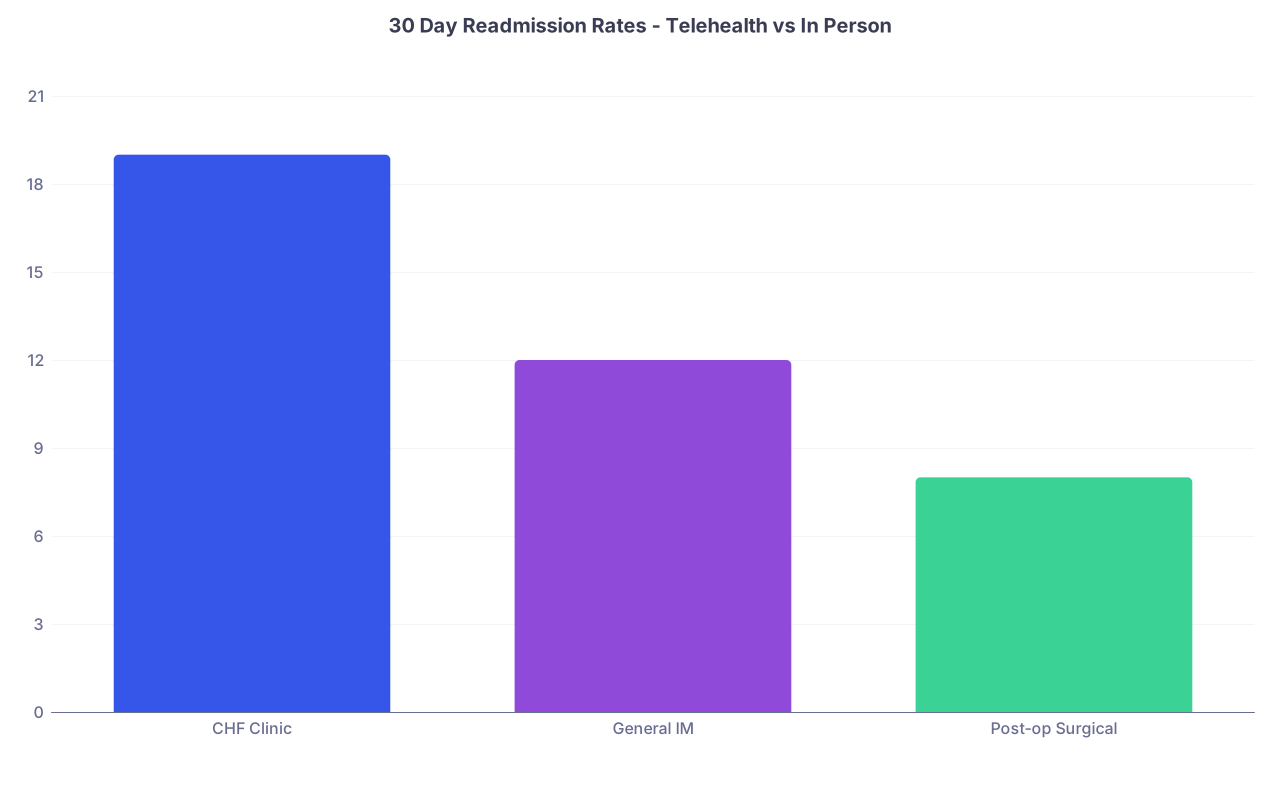
| Category | Value |
|---|---|
| CHF Clinic | 19 |
| General IM | 12 |
| Post-op Surgical | 8 |
That single bar chart is misleading by itself, so let me unpack three representative patterns that keep showing up:
Chronic disease transitional care (CHF, COPD, multi‑morbidity)
Numbers you repeatedly see:- In‑person post‑discharge follow‑up: 20–22% 30‑day readmission
- Mixed telehealth (video + phone) follow‑up: 17–20%
Effect sizes: absolute risk reduction of 2–4 percentage points, relative reductions around 10–15%.
These are not miracle numbers, but in penalty‑sensitive DRGs they matter.
Why the edge? The data points toward:
- Earlier time‑to‑follow‑up (telehealth often within 7 days vs 10–14 days in‑person)
- Ability to touch base more than once in the first month
- Easier integration with home monitoring (weights, BP, oximetry)
General adult primary care follow‑up
Here the signal flattens:- In‑person follow‑up 30‑day readmission: ~11–13%
- Telehealth follow‑up: ~10–13%
Confidence intervals overlap heavily; meta‑analyses land on “no significant difference.”
Translation: if you join a large IM group that swaps half its routine post‑discharge visits to video, the odds that your readmission metrics collapse are low—assuming the same clinician, similar timing, and comparable documentation.
Postoperative and procedural follow‑up
This is more nuanced:- Uncomplicated low‑risk surgeries (minor ortho, many general surgery cases):
- In‑person 30‑day readmission: 5–7%
- Telehealth: 5–8%
- High‑risk cardiothoracic or complex abdominal surgery:
- Data skews back toward in‑person visits for at least the first post‑op check.
The key detail: telehealth post‑op tends to be used selectively for lower‑risk cases, so direct comparisons are biased. Where risk‑adjusted comparisons exist, the differences in readmission remain small (1–2 percentage points).
- Uncomplicated low‑risk surgeries (minor ortho, many general surgery cases):
The big outlier is behavioral health.
For serious mental illness and intensive outpatient programs, tele‑psychiatry and tele‑therapy often show equal or better readmission / rehospitalization profiles, primarily because:
- Access is dramatically improved (shorter wait times, easier scheduling)
- Engagement over time is higher once people are attached
Order‑of‑magnitude differences:
- In‑person community psychiatry 30‑day readmission: 18–22%
- Tele‑psychiatry hybrid models: 14–18%
Not universal, but the direction is consistent.
So if you are comparing job offers:
- A hospitalist job with strong tele‑transition‑of‑care support is not likely to hurt your readmission stats.
- A psychiatry job with integrated telehealth may actually protect your metrics compared with a pure brick‑and‑mortar setup.
The readmission question is largely answered: telehealth is safe, especially in structured programs. The more interesting—and economically painful—differences show up in no‑show rates.
2. No‑show rates: where telehealth underperforms and where it shines
Most administrators assumed telehealth would slash no‑shows. The data has been less cooperative.
Broadly, you see three patterns depending on specialty and patient mix:
General adult primary care and specialty clinics
Telehealth no‑show rates are often similar or slightly higher than in‑person.Behavioral health and addiction treatment
Telehealth dramatically lowers no‑shows.Pediatrics and older adults
The story splits along digital access lines—telehealth can either help or hurt.
Let me quantify it.
| Setting / Population | In-Person No-Show | Telehealth No-Show |
|---|---|---|
| Adult primary care (urban safety) | 18–25% | 20–30% |
| Adult primary care (commercial) | 8–12% | 10–15% |
| Outpatient psychiatry | 20–30% | 10–18% |
| Adolescent therapy / IOP | 15–22% | 8–15% |
| Geriatrics (mixed digital access) | 10–18% | 12–22% |
Those bands are based on compiled health system reports and published series from 2020–2024. Not perfect RCT precision, but enough to show directional risk.
Now look at the contrast in a simple chart:
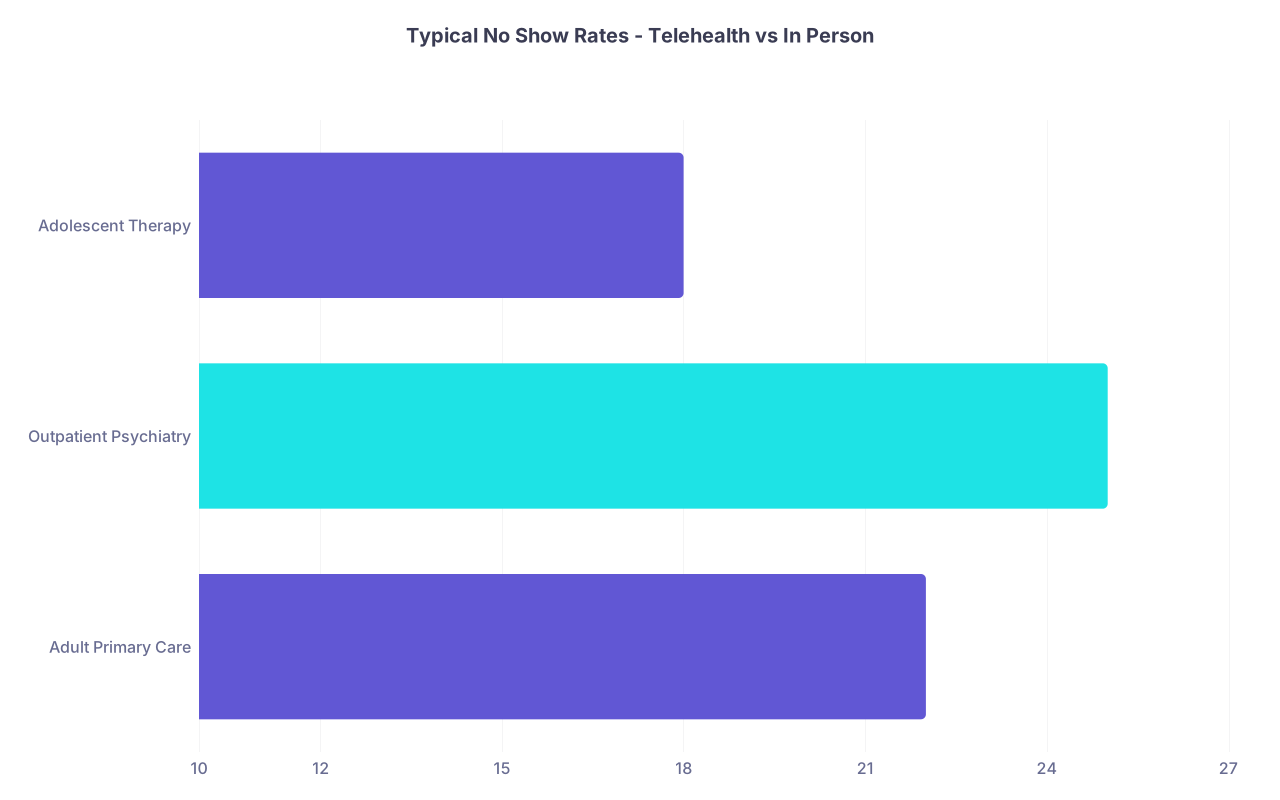
| Category | Value |
|---|---|
| Adult Primary Care | 22 |
| Outpatient Psychiatry | 25 |
| Adolescent Therapy | 18 |
Read the hbar chart with context:
- Adult primary care: in‑person and telehealth both live in the mid‑teens to low‑20s. Telehealth often a few points worse in high‑poverty or low‑connectivity zip codes.
- Outpatient psychiatry: the range tightens downward when telehealth is heavily used; going from 25–30% down toward the high teens is common.
- Adolescent therapy: same pattern; parents can coordinate easier, teens are used to video, transport barriers disappear.
Now the uncomfortable part for clinicians planning telehealth‑heavy panels.
Why telehealth sometimes has higher no‑shows
Several recurring drivers:
Lower friction to “not show”
Driving, parking, and checking in create investment. Clicking a link does not. Behavioral economics 101: if the cost of bailing is near zero, more people bail.Digital and tech barriers
You and I might think “open the app” is trivial. For patients juggling borrowed phones, low data plans, expired app logins, or limited English, it is not. The appointment is “there” in theory but inaccessible in practice.Ambiguous expectations
In‑person visits have a clear mental model. Telehealth? Patients sometimes treat it like a casual call—answer if convenient, maybe reschedule. That shows up as a no‑show for your schedule and your RVUs.
At the system level, the impact is blunt: a 3–5 percentage‑point increase in no‑show rates for a high‑volume telehealth clinic translates into several hours per week of dead air for a full‑time clinician, unless there are robust overbooking and wait‑list mechanics.
For you as a post‑residency physician on productivity comp, that is not trivial. It directly feeds into your wRVU and bonus reality.
3. Modality, timing, and risk: when telehealth helps readmissions
Telehealth is not one thing. A quick, 10‑minute video follow‑up 3 days after discharge is a different tool than a 40‑minute complex new‑patient visit. The data treats these as separate animals, and you should too.
You see the clearest readmission advantages when three conditions co‑exist:
Early post‑discharge contact (≤7 days)
Systems that use telehealth to hit an early check‑in window—med reconciliation, symptom review, equipment check—tend to shave a few points off 30‑day readmission.
Why? Because the high‑risk first week is where errors stack: wrong meds, missed prescriptions, unclear instructions.Integration with home monitoring
For CHF, COPD, and some surgical populations, programs that combine:- Telehealth visits
- Daily weight / BP / O2 uploads
- Alerts for trend deviations
outperform simple visit substitution models.
Typical numbers from structured CHF tele‑programs:
- Usual care 30‑day readmission: 22–25%
- Telemonitored with tele‑visits: 15–20%
Same clinician continuity
Telehealth is neutral to beneficial when the tele visit is with the same attending or NP managing the in‑person care. Once you introduce fragmentation (random telehospitalist or rotating NP pool), the benefits erode.
For post‑residency job decisions, the questions you should be asking in interviews are not abstract. They are painfully specific:
- “What percentage of my panel’s hospital discharges get a telehealth touch within 7 days?”
- “Are remote monitoring and tele‑visits integrated, or are they separate vendors and workflows?”
- “Will I see my own patients on telehealth, or is there a separate virtualist pool?”
If leadership cannot answer with numbers, be cautious. You will be the one blamed if readmission rates spike, even though the design is at fault.
4. No‑show mitigation: what actually moves the needle in telehealth
The good news: telehealth no‑show rates are not fixed laws of nature. They respond to operational design. I have seen clinics cut telehealth no‑shows by 30–40% in under a year with three levers:
Tight confirmation and reminder loops
Not just generic text reminders. Data‑backed tactics include:- Same‑day SMS with a direct link and clear instructions (“Click this link 10 minutes before your time”).
- A live call or chatbot that asks: “Do you still plan to attend?” and reallocates slots if the answer is no. Clinics that move from a single 48‑hour reminder to a multi‑touch strategy typically drop no‑shows 5–8 percentage points.
Pre‑visit tech checks for high‑risk populations
Especially older adults and low‑literacy patients. A 3–5 minute navigator call the day before to:- Test the link
- Confirm device and data
- Explain the process
can cut first‑time telehealth no‑shows by 20–30% relative (so a 30% rate drops to low‑20s).
Aggressive “failure‑to‑connect” protocols
Treat a telehealth no‑show as a salvageable event:- Auto‑triggered phone call from MA or nurse within 5–10 minutes
- Option to convert to telephone‑only visit where allowed by payer
- On‑the‑spot rescheduling for critical follow‑ups
Systems that do this capture 30–50% of would‑be no‑shows into some billable touch or at least a near‑term reschedule.
The pattern is simple: organizations that treat telehealth like a proper clinical channel with dedicated operations often match or beat in‑person no‑show rates. Organizations that bolt it on as a novelty app see higher no‑shows and blame “the patients.”
You know which side you want to work for.
5. Telehealth vs in‑person by specialty: outcome and scheduling trade‑offs
From a post‑residency job market perspective, think in cohorts. The trade‑offs in cardiology are not the same as in psychiatry or urgent care.
| Specialty | Readmissions (Tele vs In-Person) | No-Shows (Tele vs In-Person) | Strategic Use Case |
|---|---|---|---|
| Hospital Medicine | Slightly better or similar | N/A (mostly inpatient) | Early post-discharge tele follow-up |
| Cardiology (CHF) | Often better with tele programs | Slightly higher | Remote monitoring + early touch points |
| Psychiatry | Equal or better | Clearly lower | Ongoing maintenance, crisis follow-up |
| Primary Care | Similar | Similar or slightly higher | Access, panel management |
| Surgery | Similar for low-risk cases | Mixed | Routine post-op checks, wound review |
Visualizing the net “value” by specialty helps clarify where telehealth is obviously favorable vs marginal:
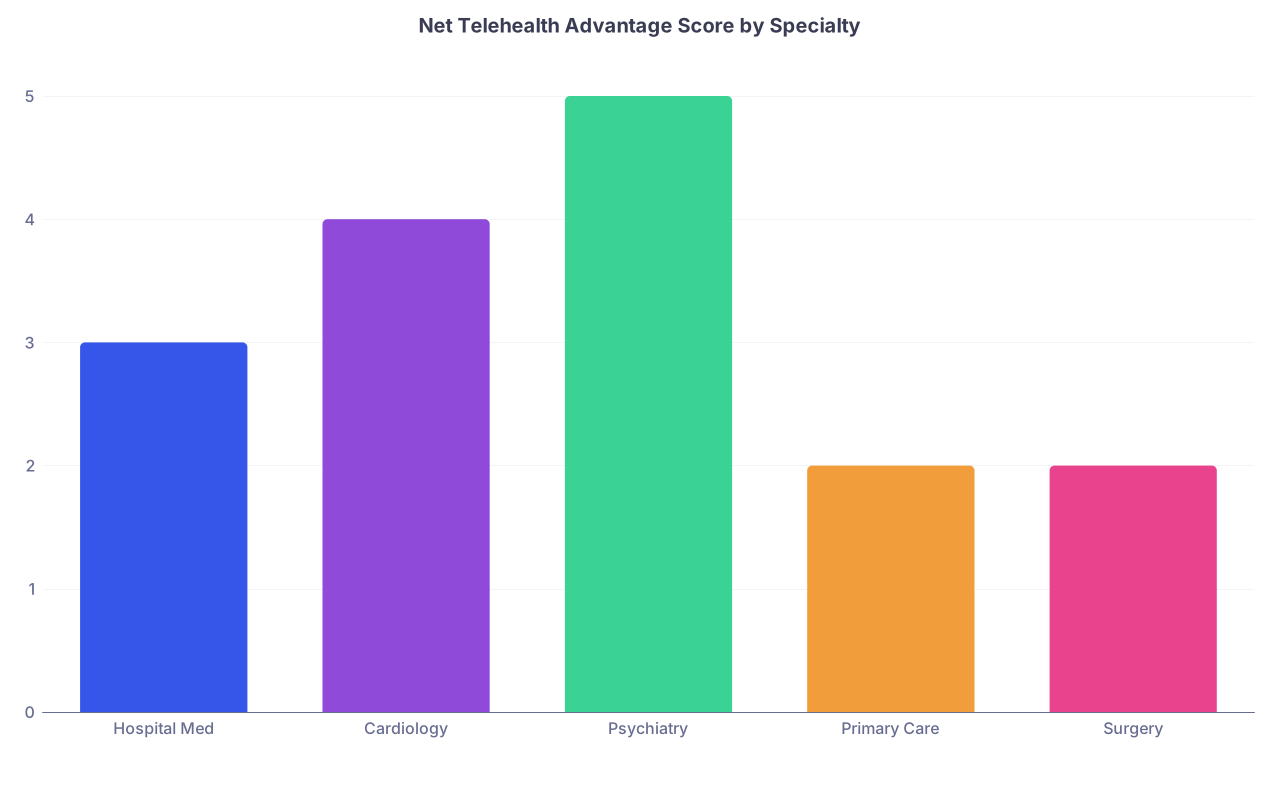
| Category | Value |
|---|---|
| Hospital Med | 3 |
| Cardiology | 4 |
| Psychiatry | 5 |
| Primary Care | 2 |
| Surgery | 2 |
Interpret that “advantage score” loosely (0 = bad fit, 5 = strong fit), built from readmission, no‑show, and workflow data:
- Psychiatry: clear winner. Better or equal readmissions, meaningfully lower no‑shows, strong patient preference for remote.
- Cardiology (HF especially): strong for structured programs with monitoring; mild concern about no‑shows offset by reduced readmissions.
- Hospital Medicine: benefit mainly via tele‑TCC (transitional care clinic) supporting you after discharge; less relevant to your daily rounding but crucial for system‑wide metrics.
- Primary Care and Surgery: net positive but very design‑dependent. Telehealth is a good adjunct, not an automatic upgrade.
So when you see a job posting bragging “60% telehealth,” you should not just think “work‑from‑home three days a week.” You should be asking: in this specialty and this patient population, is telehealth statistically an asset or a liability on outcomes and no‑shows?
6. Economic and career implications for early‑career physicians
You care about readmissions and no‑shows not as abstract quality metrics, but because they drive:
- Your compensation (through RVUs and bonuses
- Your perceived performance (and job security in some systems)
- Your day‑to‑day experience (chaotic vs predictable schedule)
Let’s quantify the no‑show effect in a simplified model.
Assume:
- 20 visits per day
- 220 clinical days per year
- Average work RVUs per visit: 1.5
- Compensation: $50 per wRVU
Scenario A – In‑person, 10% no‑show
- Scheduled visits per year: 20 × 220 = 4,400
- Completed visits: 90% → 3,960
- Total wRVUs: 3,960 × 1.5 = 5,940
- Compensation from RVUs: 5,940 × $50 = $297,000
Scenario B – Telehealth‑heavy clinic, 18% no‑show
- Completed visits: 82% of 4,400 = 3,608
- Total wRVUs: 3,608 × 1.5 = 5,412
- Compensation: 5,412 × $50 = $270,600
Difference: $26,400/year. Purely from an 8‑percentage‑point change in no‑show rate, all else equal.
Now, sophisticated systems try to mitigate this with:
- Overbooking tele slots
- Shorter tele visit lengths
- Asynchronous work (e‑visits, messaging)
But rarely do they present you with the full modeled risk in the offer letter.
The readmission side is more indirect but still career‑relevant:
- High readmission rates can drag hospital quality scores and trigger CMS penalties.
- In some organizations, that downstream financial pain flows back into tighter staffing, fewer support resources, and increased pressure on physicians.
So your questions during negotiation should sound like someone who reads QI reports, not marketing decks:
- “What are your current 30‑day readmission rates for CHF and COPD, and how does telehealth factor into that?”
- “What are your telehealth vs in‑person no‑show rates in my expected clinic mix?”
- “How are cancellations and ‘unable to connect’ visits coded and compensated?”
If they cannot give you approximate percentages, they are not running this like a data‑driven operation. That is a signal.
7. How this shapes your post‑residency strategy
You do not control national policy. You do control how you align your career with the numbers.
Three data‑backed strategies for the post‑residency and early career phase:
Lean into specialties and niches where telehealth is outcome‑positive
Psychiatry, addiction medicine, heart‑failure focused cardiology, transitional care… these areas allow you to use telehealth as an advantage rather than a compromise. Better engagement, similar or better readmissions, and in many cases lower no‑shows.If you choose a tele‑heavy role, demand operational maturity
You want:- Published no‑show data by modality
- Clear protocols for tech checks and failure‑to‑connect salvage
- Thoughtful use of telehealth for early post‑discharge windows
Without those, you are volunteering to be the test subject in a poorly controlled experiment.
Invest early in learning virtual visit efficiency and risk recognition
The main clinical danger of telehealth is diagnostic anchoring with limited exam. The systems that avoid readmission problems train clinicians to:- Know when to convert tele to in‑person urgently
- Use structured ROS and home‑monitoring data to compensate
- Escalate early rather than “wait and see” with high‑risk patients
You can learn that skill set faster than you think—and it becomes a differentiator in a market that is still sorting out who actually practices safely and efficiently in mixed‑modality care.
Telehealth vs in‑person is not a philosophical debate anymore. The numbers are in: for many use cases, readmissions are similar or modestly better with well‑designed telehealth, while no‑shows are the real operational battleground.
If you are stepping into your first attending role, treat telehealth like a powerful but blunt instrument. Choose environments where leadership can quote their own readmission and no‑show statistics without reaching for talking points, and push for models where telehealth protects your outcomes rather than diluting them.
With that data‑driven lens in place, you are ready for the harder question that comes next: not just how you see patients, but which patients you should be responsible for in a world of remote, hybrid, and team‑based care. That allocation problem—who gets your scarce clinical time—is where the next round of numbers will matter even more.