
Introduction: AI in Healthcare at the Bedside and Beyond
Artificial Intelligence (AI) is rapidly reshaping how healthcare is delivered—from the radiology reading room and ICU to outpatient clinics and telehealth platforms. For residency graduates and early-career physicians, understanding AI in clinical settings is no longer optional; it is becoming a core competency that will influence career trajectories, job descriptions, and the future of patient care.
By leveraging advanced algorithms, machine learning, and deep learning, AI in healthcare promises:
- More accurate and earlier diagnoses
- Personalized treatment plans and risk stratification
- Streamlined workflows and lower administrative burden
- Novel Clinical Applications such as predictive analytics and remote monitoring
At the same time, implementing AI in real-world clinical environments raises complex questions about Data Privacy, bias, accountability, regulation, and clinician roles. This article explores both the benefits and the challenges of integrating AI into clinical practice, with a focus on what matters for physicians entering the post-residency job market.
Major Benefits of Implementing AI in Clinical Settings
1. Enhanced Diagnostic Accuracy and Earlier Detection
One of the strongest use cases for AI in healthcare has been in diagnostics, particularly in specialties like radiology, pathology, ophthalmology, dermatology, and cardiology.
1.1 AI-powered image interpretation
Machine learning algorithms can process thousands to millions of labeled medical images—CT, MRI, X-ray, ultrasound, digital pathology slides—to learn patterns associated with disease. Deep learning models, such as convolutional neural networks (CNNs), excel at image recognition tasks and can:
- Detect subtle lung nodules or early interstitial changes on CT
- Identify microcalcifications and architectural distortions on mammography
- Flag suspicious skin lesions from dermatoscopic photos
- Recognize diabetic retinopathy from retinal fundus photographs
Several studies have demonstrated AI systems reaching or surpassing expert-level performance in narrow tasks—for example, algorithms that match or exceed radiologists in detecting breast cancer on mammograms or ophthalmologists in diagnosing diabetic retinopathy.
For practicing clinicians, this does not mean AI replaces radiologists or other specialists; instead, it functions as an additional “pair of eyes,” drawing attention to regions of interest, prioritizing worklists, and reducing perceptual errors.
1.2 Beyond imaging: multimodal diagnostic support
AI is increasingly used to combine multiple data sources—EHR data, labs, vital signs, medications, genomics, and imaging—to detect disease earlier and more accurately. Examples include:
- Early sepsis detection tools that integrate vital sign trends, lab values, and clinical notes
- ECG-based AI models that identify subclinical left ventricular dysfunction or atrial fibrillation risk
- Algorithms that analyze voice, gait, or typing patterns to screen for neurologic or psychiatric disorders
Actionable tip for clinicians:
When evaluating an AI diagnostic tool, ask about:
- The size and diversity of the training dataset
- External validation in independent cohorts
- Performance across different demographic groups
- How results will be integrated into existing workflows (EHR alerts, dashboards, structured reports)
2. Improved Patient Outcomes Through Predictive and Personalized Care
AI’s power extends beyond point-in-time diagnosis to dynamic prediction and individualized patient care plans.
2.1 Predictive analytics and risk stratification
Predictive models use historical data to forecast future outcomes, helping clinicians intervene before deterioration occurs. Common Clinical Applications include:
- Predicting 30-day readmission risk for patients with heart failure or COPD
- Estimating risk of post-operative complications or ICU transfer
- Identifying patients at high risk for clinical deterioration on the ward
- Forecasting progression of chronic diseases like CKD or diabetes
For example, some hospitals deploy AI models that continuously analyze EHR data to flag patients at rising risk of sepsis, enabling earlier antibiotic administration and fluid resuscitation. Others use AI to identify heart failure patients at high risk of readmission, prompting intensive discharge planning and follow-up.
These tools can transform care from reactive to proactive—if they are well-calibrated, integrated, and properly monitored.
2.2 Personalized treatment and precision medicine
AI also supports precision medicine by:
- Matching oncology patients to targeted therapies based on tumor genomics and clinical data
- Recommending individualized insulin dosing schemes based on continuous glucose monitoring data
- Suggesting antidepressants or antiepileptics based on predicted response and side-effect profiles
Systems like IBM Watson for Oncology (while controversial and evolving) represent early efforts to synthesize guidelines, clinical trial data, and patient-specific information to propose tailored treatment options.
For residents and fellows transitioning to independent practice, familiarity with these AI-driven decision aids will be increasingly important in cancer centers, academic medical centers, and integrated delivery systems.
3. Efficiency, Cost Reduction, and Workflow Optimization
AI in healthcare is not only about advanced diagnostics; a large share of impact will come from streamlining routine tasks and workflows.
3.1 Reducing administrative burden
Physicians spend a significant portion of their day on documentation, billing, and other non-clinical tasks. AI and Healthcare Technology can help by:
- Using Natural Language Processing (NLP) to transcribe and structure clinical encounters (“ambient scribing”)
- Automatically coding visits and procedures for billing based on notes and orders
- Extracting key data (medications, allergies, diagnoses) from free-text notes
These capabilities can reduce documentation time, burnout, and errors, freeing clinicians to focus on direct patient care.
3.2 Operational efficiency and resource allocation
AI can also optimize hospital and clinic operations:
- Predictive models for ED arrivals and admissions to inform staffing decisions
- Bed management algorithms to reduce boarding and optimize patient flow
- Operating room scheduling tools that anticipate case duration and prevent bottlenecks
- Supply chain forecasting to reduce waste and shortages
Over time, these efficiencies can translate into cost reduction and improved capacity, particularly in high-demand urban centers and resource-limited settings.
4. Continuous Monitoring and Remote Patient Management
Remote monitoring and telehealth—accelerated by the COVID-19 pandemic—are natural arenas for AI.
4.1 Wearables and home-based sensors
Smartwatches, patches, home BP cuffs, smart inhalers, and other devices continuously collect physiologic data. AI models can:
- Detect arrhythmias such as atrial fibrillation from PPG or ECG signals
- Monitor heart failure patients for early signs of decompensation via weight, heart rate, and activity data
- Track COPD or asthma control through inhaler use patterns and symptom reports
- Identify patterns suggestive of medication non-adherence or worsening depression
For patients with chronic diseases, this can mean fewer hospitalizations and more timely interventions. For clinicians, it represents a shift from episodic visits to continuous longitudinal care.
4.2 Virtual care and triage
AI chatbots and symptom checkers are used by some health systems to:
- Provide initial triage recommendations (self-care vs. telehealth vs. ED)
- Answer common questions about medications, pre-op instructions, or follow-up
- Support chronic disease education and behavior change
While these systems require careful oversight to avoid unsafe advice, they can extend the reach of clinicians and reduce unnecessary visits.
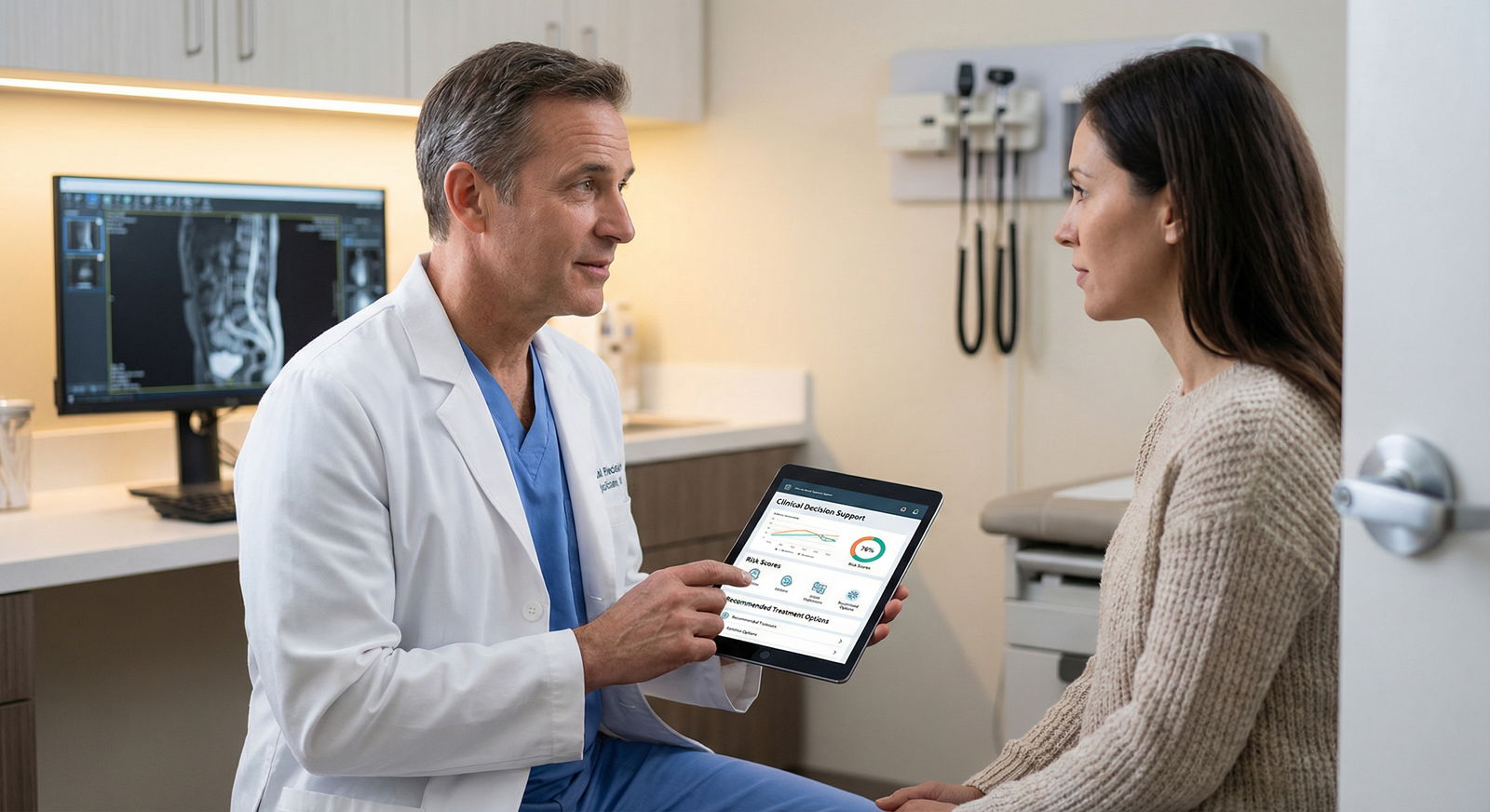
5. AI as a Clinical Decision Support Partner
AI-driven Clinical Decision Support Systems (CDSS) go beyond simple alerts to offer context-aware, evidence-based recommendations.
5.1 Augmenting clinical judgment, not replacing it
Examples of AI-enabled decision support include:
- Flagging potential drug–drug interactions based on a patient’s entire medication list and labs
- Suggesting appropriate imaging studies based on indication and guidelines
- Recommending antibiotic choices optimized for local resistance patterns and patient allergies
- Supporting diagnostic reasoning by proposing differential diagnoses ranked by likelihood
Importantly, these tools should be designed to support physician autonomy, allowing clinicians to accept, modify, or override recommendations with clear documentation.
5.2 Learning health systems
As AI systems interact with real-world data, they can contribute to “learning health systems” where care continuously improves based on accumulated outcomes. Feedback loops allow algorithms to be retrained, refined, and tailored to specific institutions or populations—provided governance and validation processes are in place.
Key Challenges of AI Implementation in Clinical Practice
Despite the immense promise, deploying AI in clinical settings is far from plug-and-play. Successful implementation requires grappling with technical, ethical, legal, and sociocultural barriers.
1. Data Privacy, Security, and Governance
AI depends on large amounts of high-quality data—often including highly sensitive protected health information (PHI).
1.1 Regulatory requirements and compliance
In the United States, HIPAA and state privacy laws govern the use and sharing of health data. Globally, frameworks like the GDPR (EU) and other regional regulations impose additional constraints. Health systems must ensure:
- Data used to train or run AI models are appropriately de-identified or used under valid legal bases
- Business associate agreements and data use agreements are in place for AI vendors
- Access controls and audit logs limit and track who can view or manipulate patient data
1.2 Cybersecurity and trust
AI platforms can become attractive targets for cyberattacks. Breaches not only endanger patient Data Privacy but also can corrupt training data or models themselves.
Best practices include:
- Robust encryption for data at rest and in transit
- Regular penetration testing and security audits
- Clear incident response plans and patient notification protocols
For clinicians, being conversant with these issues is valuable when participating in committees, negotiating with vendors, or leading quality and safety initiatives.
2. Integration with Existing Health IT Systems
An AI tool’s theoretical performance is irrelevant if it cannot be integrated smoothly into clinical workflows.
2.1 Interoperability and technical integration
Many health systems run legacy EHRs or patchwork IT infrastructures. Challenges include:
- Lack of standardized data formats or APIs
- Data silos across departments or entities
- Latency or reliability issues in data feeds for real-time AI applications
Modern standards like FHIR (Fast Healthcare Interoperability Resources) are helping, but integration often still requires substantial customization, IT resources, and ongoing support.
2.2 Workflow alignment and usability
If AI systems generate alerts or dashboards that clinicians rarely see—or that fire excessively and irrelevantly—they will be ignored or disabled. Key success factors:
- Co-design with clinicians to embed AI outputs in the right place and time (e.g., within order entry screens, flowsheets, or imaging viewers)
- User-centered interfaces that are intuitive and not disruptive
- Pilots and iterative refinement before broad rollout
For residents moving into attending roles, there is growing opportunity to participate in “clinical informatics” work, helping design, test, and refine these systems.
3. High Costs, Resource Needs, and ROI Uncertainty
Implementing AI in healthcare is not just a software purchase; it entails an ecosystem investment.
Costs may include:
- Licensing fees for commercial AI platforms or toolkits
- Hardware (servers, GPUs, cloud infrastructure)
- Data engineering and integration work
- Clinical informaticists, data scientists, and project managers
- Training, change management, and ongoing monitoring
Smaller hospitals, community practices, and rural clinics may lack the capital or expertise, contributing to disparities in access to advanced Healthcare Technology.
To justify investment, leadership increasingly expects clear return on investment (ROI):
- Reduced readmissions or length of stay
- Fewer adverse events or malpractice cases
- Increased throughput or revenue capture
- Improved patient and clinician satisfaction
Clinician champions who can connect AI tools to tangible clinical and financial outcomes are highly valued in these discussions.
4. Resistance to Change and Clinician Acceptance
Even well-designed AI tools can fail if clinicians do not trust or adopt them.
4.1 Concerns about autonomy and job security
Some physicians worry that AI might:
- Replace certain tasks or roles (e.g., radiology interpretations, triage)
- Undermine professional judgment
- Introduce opaque “black box” recommendations
Addressing these concerns requires transparency, education, and clear messaging: AI is a tool that extends human capabilities, not a replacement for clinical expertise.
4.2 Education, training, and digital literacy
Many clinicians have limited formal training in statistics, data science, or AI concepts. Health systems and training programs can improve adoption by:
- Offering workshops on basic AI principles, limitations, and use cases
- Providing hands-on training with new tools before go-live
- Creating clinician “superusers” who can support peers and provide feedback
For residents and fellows, gaining basic literacy in AI (even without coding) can differentiate you in the job market and position you for leadership roles in digital transformation.
5. Ethics, Bias, Accountability, and Regulation
Finally, the most complex questions often center on ethics and responsibility.
5.1 Algorithmic bias and fairness
AI models trained on biased or non-representative data can exacerbate disparities. Examples include:
- Under-detection of disease in underrepresented racial or ethnic groups
- Poor performance in non-English clinical notes
- Misestimation of risk in populations with different socioeconomic backgrounds
Mitigating bias requires:
- Diverse training datasets
- Ongoing performance monitoring by subgroup
- Inclusion of ethicists, patient advocates, and diverse clinicians in development and governance
5.2 Accountability and clinical responsibility
If an AI tool suggests a course of action that leads to patient harm, who is responsible?
- The clinician who followed or overrode the suggestion?
- The hospital that implemented the system?
- The vendor or developers?
Regulators such as the FDA are increasingly issuing guidance on “software as a medical device” (SaMD), adaptive algorithms, and clinical decision support. Institutions must clarify policies on:
- Documentation of AI-driven decisions
- Requirements to review AI output before acting
- Escalation pathways if clinicians disagree with AI recommendations

Real-World Clinical Applications and Case Studies
Example 1: AI in Radiology Workflows
At institutions like Stanford University Medical Center and others, AI algorithms have been deployed to assist in reading chest X-rays for conditions such as pneumonia, pneumothorax, and lung nodules. Documented benefits include:
- Automated triage of urgent findings to the top of radiologists’ worklists
- Reduced turnaround times for critical results
- Detection of subtle findings that may be overlooked in high-volume environments
However, these case studies also highlight:
- The need for continuous validation as patient populations and imaging modalities change
- Potential “automation bias,” where clinicians may over-trust AI suggestions
- The importance of explainable outputs (e.g., heat maps highlighting suspicious areas) to support human review
Example 2: Predictive Analytics for Sepsis and Deterioration
The University of Chicago Medical Center and other leading hospitals have trained machine learning models using EHR data to identify patients at risk of sepsis or sudden deterioration. These models monitor variables such as:
- Vital sign trends and lab values
- Nursing assessments and free-text notes
- Comorbidities and recent procedures
When threshold risk scores are surpassed, alerts prompt rapid evaluation and early treatment, which has been associated with improved survival in some implementations. Challenges include:
- Balancing sensitivity with specificity to avoid excessive false alarms and alert fatigue
- Ensuring clinicians understand and trust the model’s predictions
- Systematically evaluating outcomes after deployment, not just relying on retrospective validation
Practical Guidance for Early-Career Physicians
For residents, fellows, and new attendings navigating AI in clinical practice:
- Engage rather than avoid: Volunteer for committees or pilot projects related to AI tools in your department.
- Learn the basics: Understand core concepts—sensitivity/specificity, ROC curves, calibration, overfitting, generalizability.
- Advocate for your patients: Raise concerns about fairness, bias, and transparency when evaluating new technologies.
- Document thoughtfully: When AI tools influence your decision-making, consider how you describe this in the medical record.
- Think career strategy: Skills in clinical informatics, digital health, and AI governance are increasingly valued in leadership roles, academic positions, and health-system employment.
FAQs: AI in Clinical Settings for Physicians
Q1: Will AI replace physicians or certain specialties like radiology or pathology?
No. AI is best viewed as an augmentation tool rather than a replacement. It excels at narrow, well-defined tasks (e.g., image pattern recognition) but lacks holistic clinical judgment, empathy, and contextual understanding. Radiologists, pathologists, and other specialists will continue to be essential—though their workflows and skill sets will evolve to incorporate AI oversight, validation, and integration into multidisciplinary care.
Q2: How can I evaluate whether an AI tool is safe and effective for my patients?
Consider asking:
- What clinical question does it answer and how will it fit into my workflow?
- What is the evidence base—peer-reviewed studies, prospective trials, real-world performance data?
- How does it perform across age, sex, race/ethnicity, and other subgroups?
- Has it been externally validated outside the original development site?
- What regulatory clearances (e.g., FDA) and institutional approvals are in place?
Being involved in evaluation committees or quality improvement teams can give you a voice in these decisions.
Q3: What are my responsibilities regarding Data Privacy when using AI tools?
As a clinician, you should:
- Use AI applications only through approved, secure institutional platforms
- Avoid uploading PHI to unvetted third-party tools or consumer apps
- Report any suspected data breaches or inappropriate data use
- Be aware of your institution’s policies and consent processes for secondary use of patient data in AI development
Ultimately, health systems and vendors share responsibility, but individual clinicians play a key role in safeguarding patient trust.
Q4: How can I build relevant skills in AI and Healthcare Technology without becoming a data scientist?
You do not need to code to be effective in AI-enabled care. Consider:
- CME courses or workshops on digital health and AI in healthcare
- Online courses introducing machine learning concepts in medical contexts
- Involvement in projects with your institution’s clinical informatics or data science teams
- Pursuing additional training (e.g., clinical informatics fellowship, certificates, or master’s programs) if you are strongly interested
Familiarity with concepts, limitations, and practical implications is often more useful clinically than deep technical expertise.
Q5: What future trends in AI should early-career physicians watch?
Key emerging directions include:
- Multimodal AI models integrating imaging, genomics, labs, and notes
- Generative AI tools that draft clinical notes, patient instructions, and prior authorizations
- AI-driven care pathways in value-based care and population health management
- More stringent regulatory frameworks, transparency requirements, and fairness auditing
- Growing expectations that clinicians participate in AI oversight, governance, and ethical review
Staying engaged with these developments will help you navigate job opportunities, leadership positions, and evolving models of care.
By understanding both the transformative potential and real-world limitations of AI in healthcare, physicians entering the post-residency phase can actively shape how these tools are adopted—ensuring that AI ultimately strengthens, rather than disrupts, the core mission of medicine: delivering safe, equitable, and high-quality patient care.