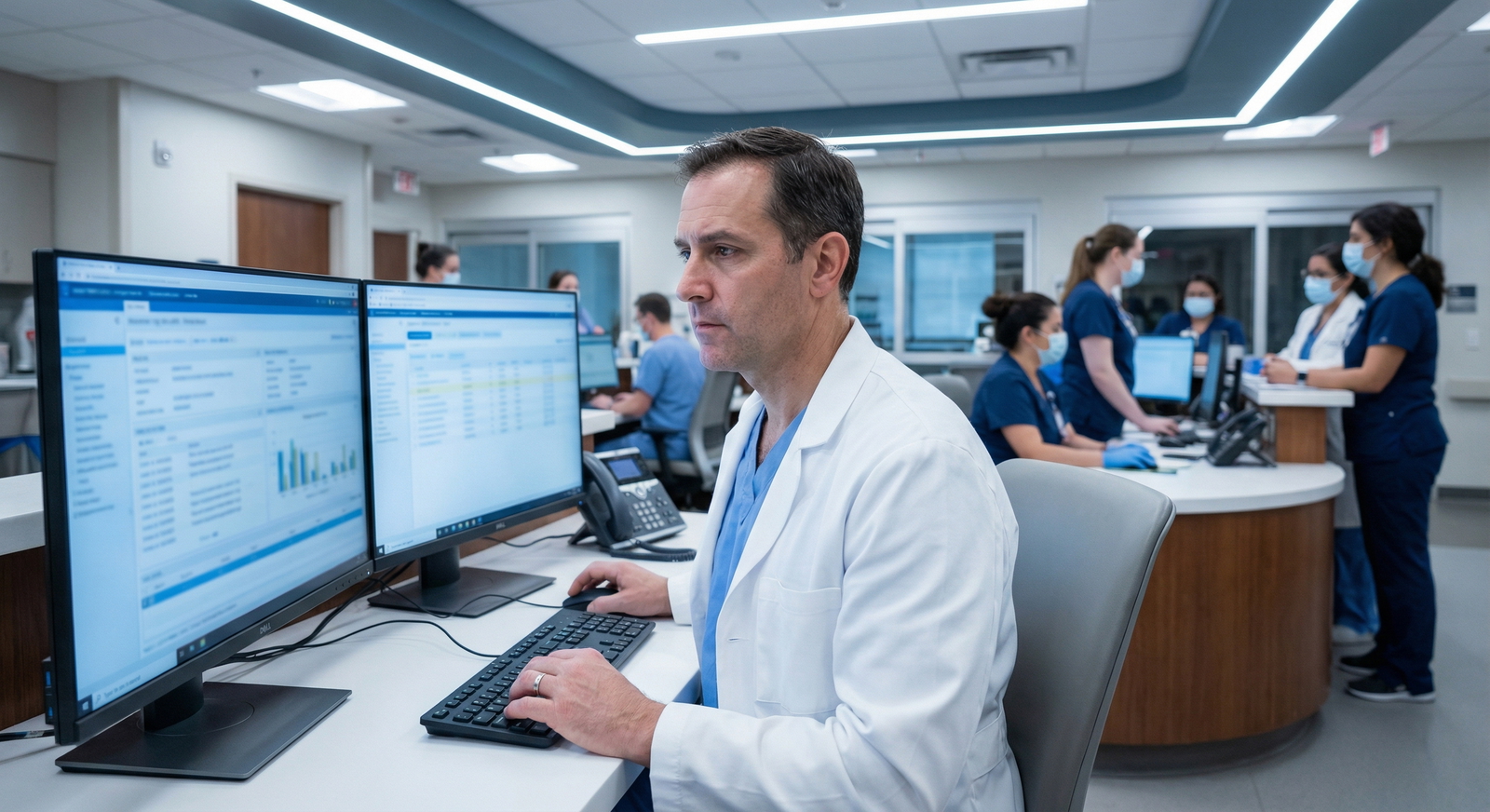
Introduction: How Artificial Intelligence Is Redefining Predictive Analytics in Medicine
Artificial Intelligence (AI) is reshaping nearly every industry, but its impact on healthcare is uniquely profound. For physicians, residents, and health system leaders, AI is no longer a futuristic concept—it is an operational reality influencing how care is delivered, documented, and evaluated.
At the core of this transformation is predictive analytics: the application of statistical models and machine learning algorithms to forecast clinical events before they occur. When combined with AI, predictive analytics becomes a powerful engine for Healthcare Innovation, enabling more precise Patient Care, earlier intervention, and truly Personalized Medicine at scale.
For trainees entering the post-residency and job market, understanding AI-driven predictive analytics is quickly becoming a professional necessity. This expanded guide explores:
- What predictive analytics in medicine actually is and how it works
- How AI enhances prediction accuracy and clinical relevance
- High-impact clinical and operational applications you’re likely to encounter
- Current challenges, risks, and ethical considerations
- Future trends that will shape your career and the health systems you work in
The Foundations of Predictive Analytics in Modern Medicine
Predictive analytics in medicine involves using historical and real-time data to estimate the likelihood of future clinical events—for example, which patients are at high risk of sepsis, readmission, or treatment failure. Unlike traditional analytics, which are mostly descriptive or retrospective, predictive models aim to answer “What is likely to happen next?” and “To whom?” in a quantifiable way.
Core Components of Predictive Analytics in Healthcare
Understanding the pipeline from raw data to actionable prediction is essential:
Data Collection and Sources
Modern predictive analytics draws from a wide range of data types:
- Electronic Health Records (EHRs): diagnoses, medications, vital signs, lab results, procedures, documentation notes
- Imaging and Waveform Data: radiology, pathology slides, ECG, EEG, ICU monitoring streams
- Genomic and Omics Data: DNA sequencing, transcriptomics, proteomics for precision oncology and pharmacogenomics
- Patient-Generated Data: wearables, mobile apps, home monitoring devices, patient-reported outcomes
- Administrative and Operational Data: admissions, length of stay, staffing levels, resource utilization
Data Cleaning and Preprocessing
Raw clinical data are messy. Before modeling:
- Missing values must be handled (imputation, exclusion, or domain-informed rules)
- Outliers are identified and addressed
- Units are standardized (e.g., mg/dL vs mmol/L)
- Free-text notes may be processed using Natural Language Processing (NLP) to extract structured information
Feature Engineering
Clinically meaningful predictors (“features”) are derived from raw inputs, such as:
- Trends in vitals (e.g., rising respiratory rate over 6 hours)
- Composite scores (e.g., qSOFA, modified early warning scores)
- Time since last dose or last admission
- Social determinants of health (e.g., housing instability, distance to clinic)
Model Development and Training
AI and machine learning models are then trained on historical data:
- Traditional models: logistic regression, Cox proportional hazards, random forests
- Advanced AI models: gradient boosting machines, deep neural networks, transformer-based architectures
These models learn complex, nonlinear relationships that may not be obvious to human clinicians.
Prediction Generation and Clinical Delivery
Once trained and validated, models ingest new patient data and output:
- Risk scores (e.g., 30-day readmission risk, sepsis risk)
- Probabilities (likelihood of response to a given therapy)
- Dynamic predictions that update as new data arrive
These outputs are then integrated into clinician-facing tools: dashboards, EHR alerts, or decision-support modules.

How Artificial Intelligence Supercharges Predictive Analytics
While predictive analytics can exist without AI, the combination is what unlocks the full potential of Healthcare Innovation. AI enables more granular, accurate, and context-aware predictions than traditional statistical techniques alone.
Processing Massive and Complex Healthcare Data
AI excels at handling the volume, variety, and velocity of modern clinical data:
- Multimodal inputs: AI models can integrate structured EHR data, imaging, free text, and genomics simultaneously
- Real-time updates: Streaming data from ICUs, telemetry, and wearables can feed continuous risk updates
- Scalability: Algorithms can process thousands of variables across millions of encounters—well beyond human cognitive limits
Example:
- IBM Watson Health has been used to process extensive oncology literature, clinical guidelines, and patient-specific data to suggest potential treatment options, particularly in complex cancer cases. While early hype has tempered, these types of systems illustrate the direction of AI-powered clinical decision support.
Discovering Hidden Patterns and Risk Stratification
AI is particularly adept at identifying patterns that are hard to detect with traditional methods:
- Subphenotypes of disease: Clustering algorithms can uncover distinct phenotypes (e.g., sepsis subtypes, asthma endotypes) that respond differently to treatments.
- Early deterioration signals: Subtle changes in vitals, labs, or nursing documentation can signal impending clinical decline before it’s obvious at the bedside.
Illustrative Study:
A study in Health Affairs demonstrated that an AI model using EHR data for patients with diabetes identified early patterns associated with complications. Health systems using such models reported reductions in emergency department visits and hospitalizations through targeted outreach and tighter outpatient management.
AI-Enhanced Clinical Decision Support at the Point of Care
Predictive analytics becomes most valuable when embedded directly into clinical workflows:
EHR-Integrated Alerts:
- Epic Systems and other major EHR vendors now include predictive modules that generate deterioration scores, sepsis alerts, and readmission risk flags.
- These tools can drive earlier escalation to higher-acuity care, timely antibiotic initiation, or additional diagnostic workup.
Treatment Optimization:
AI models can estimate individualized treatment effects, such as:- Which heart failure patients will benefit most from SGLT2 inhibitors or ARNI therapy
- Which oncology patients are most likely to respond to immunotherapy
This moves medicine closer to individualized “what-if” scenario planning rather than one-size-fits-all guideline application.
Enabling Truly Personalized Medicine
The promise of Personalized Medicine becomes much more achievable when AI-driven predictive analytics are applied to:
- Pharmacogenomics: Predicting drug response or toxicity based on genetic variants
- Oncology:
- Predicting tumor behavior and treatment response using genomic and imaging features
- Guiding selection of targeted therapies and immunotherapy combinations
- Chronic Disease Management:
Creating individualized risk trajectories for conditions like CKD, COPD, or coronary artery disease and dynamically adjusting management plans.
High-Impact Clinical and Operational Applications
AI-powered predictive analytics is already embedded in many aspects of modern health systems. As you enter practice, you’ll encounter these tools in both clinical and administrative contexts.
Disease Prediction and Prevention: Shifting from Reactive to Proactive Care
Predictive models can identify patients at high risk for:
- Cardiovascular events: Using EHR and imaging data to refine risk beyond traditional scores
- Type 2 diabetes: Combining BMI, labs, lifestyle factors, and social determinants to prioritize preventive interventions
- Cancer risk: Integrating family history, genetic markers, and prior imaging for targeted screening
Clinical Example:
A primary care network might use a predictive model to flag patients at high risk of progressing from prediabetes to diabetes within 2 years. Those patients can then be proactively enrolled in lifestyle modification programs or started on metformin, shifting care from crisis management to risk reduction.
Real-Time Patient Monitoring and Early Warning Systems
In acute and critical care settings, predictive analytics has become a cornerstone of Patient Care:
- Sepsis prediction models: Detect early signals from vitals, labs, and clinician notes, prompting rapid response teams
- ICU deterioration scores: Forecast the need for intubation, vasopressors, or higher-level monitoring
- SMART on FHIR apps: Interoperable tools that plug into the EHR to visualize risk trajectories and suggest interventions
These tools can reduce mortality, shorten ICU length of stay, and improve resource allocation—when carefully implemented and monitored.
Clinical Trial Design and Recruitment
In Healthcare Innovation and research, AI-based predictive analytics is transforming how studies are run:
- Optimal patient selection: Identifying who is most likely to benefit from or respond to experimental therapies
- Adaptive trial designs: Adjusting enrollment or randomization strategies in real time based on accumulating data
- Reducing trial failure: Using prior data to predict which compounds or approaches are unlikely to succeed, saving time and resources
For clinicians moving into academic or industry roles, literacy in these methods is increasingly important.
Operational Efficiency and Resource Management
Predictive analytics is not limited to direct clinical care. Health systems are using AI to:
- Forecast admissions and bed demand: Improving staffing, bed management, and ED throughput
- Predict no-shows and cancellations: Allowing better scheduling and backup strategies
- Optimize supply chains: Anticipating inventory needs for medications, PPE, and high-cost devices
Efficient operations indirectly improve Patient Care by reducing delays, overcrowding, and clinician burnout.
Enhancing Telemedicine and Remote Care
With telehealth now a permanent part of healthcare delivery:
- Risk-based telemedicine routing: Predictive models can determine which patients are appropriate for virtual visits versus in-person evaluation.
- Chronic disease remote monitoring: Wearables and home devices feed continuous data into models that alert teams to early signs of decompensation (e.g., weight gain in heart failure, AFib burden, COPD exacerbation).
- Digital therapeutics: Some AI-enabled apps personalize behavioral interventions and predict relapse risk in conditions like depression, substance use disorders, and diabetes.
Challenges, Limitations, and Ethical Considerations
Despite enormous potential, AI-driven predictive analytics comes with significant complexities that trainees and early-career physicians must understand.
Data Privacy, Security, and Trust
- Regulatory requirements: HIPAA, GDPR, and other frameworks tightly govern health data use.
- Cybersecurity risks: Large datasets and networked systems are attractive targets for cyberattacks and ransomware.
- Patient trust: Transparent communication about data use, de-identification, and security measures is critical to maintain public confidence.
Clinicians should be prepared to explain how patient data contributes to AI models and advocate for appropriate safeguards.
Algorithmic Bias and Health Equity
If training data reflect existing healthcare disparities, AI models can amplify inequities:
- Underrepresentation of certain racial/ethnic groups, genders, or socioeconomic strata can lead to:
- Miscalibrated risk scores
- Underprediction of risk in underserved populations
- Biased treatment recommendations
Actionable Strategies:
- Demand transparent reporting of model performance across subgroups
- Participate in governance committees that review AI tools for equity implications
- Advocate for inclusion of diverse populations in data collection and model training
Integration into Clinical Workflows and Human Factors
Technically strong models can fail in real-world use if they are poorly integrated:
- Alert fatigue: Excessive or poorly calibrated alerts can be ignored or overridden
- Lack of interpretability: “Black box” models may erode clinician trust
- Workflow disruption: Tools that add clicks or time without clear benefit face rapid resistance
For residents and attending physicians, being involved in pilot testing and giving structured feedback to inform iterative improvements is crucial.
Regulatory, Legal, and Professional Accountability
The regulatory landscape for AI in healthcare is rapidly evolving:
- Regulatory oversight: The FDA classifies many AI tools as Software as a Medical Device (SaMD), requiring evidence of safety and efficacy.
- Continuous learning systems: AI models that update over time raise questions about when re-approval is needed.
- Liability: If an AI recommendation contributes to harm, questions arise: is the clinician, the institution, or the vendor responsible?
Clinicians must maintain ultimate responsibility for care decisions, using AI as a support—not a substitute—for professional judgment.
The Future of AI-Driven Predictive Analytics in Medicine
The trajectory for Artificial Intelligence in healthcare points toward deeper integration, greater personalization, and more collaborative human–AI partnerships.
More Powerful, Interpretable, and Clinically-Specific Models
Advances on the horizon include:
- Explainable AI (XAI): Tools that show which features drove a prediction, helping clinicians understand and validate model outputs.
- Federated learning: Models trained across multiple institutions without sharing raw patient data, improving performance and generalizability while protecting privacy.
- Domain-specific models: AI tools tailored to specific specialties—such as cardiology, oncology, or psychiatry—using highly specialized data.
Interoperability and Data Liquidity
Improved interoperability will unlock richer insights:
- Standardized data formats and APIs: FHIR and related standards make it easier to share and integrate data across institutions and vendors.
- Regional and national data networks: Larger datasets improve model robustness and facilitate benchmarking and population health management.
For early-career physicians, working in organizations that invest in interoperability will provide greater access to these tools.
Wearables, Home Monitoring, and Continuous Risk Prediction
As consumer and medical-grade devices proliferate:
- Continuous data streams from wearables, smart inhalers, glucose monitors, and implantables will feed dynamic risk models.
- Context-aware predictions will consider not only biometrics but also behavior, environment, and social context.
- Personalized nudges and digital interventions will support self-management between clinic visits.
This shift will blur the lines between clinic and community, redefining how and where care is delivered.
Greater Patient Involvement and Shared Decision-Making
As patients gain more access to their own data and risk scores:
- Patient-facing dashboards: Visualizations of individual risk trajectories and expected benefits of interventions
- Shared decision-making: Clinicians and patients reviewing personalized predictions together to choose therapies aligned with values and preferences
- Digital literacy needs: Education to ensure patients understand what risk scores do—and do not—mean
For clinicians, communication skills around uncertainty, probabilities, and AI-generated recommendations will become increasingly important.

Practical Advice for Residents and Early-Career Physicians
To stay relevant and effective in an AI-enhanced healthcare system, consider:
- Develop foundational literacy in AI and predictive analytics—understand key terms like sensitivity, specificity, AUROC, calibration, and fairness.
- Ask critical questions about any tool you use:
- What population was this trained on?
- How does it perform in my patient population?
- How often is it updated and monitored?
- Participate in pilot projects and quality improvement initiatives that involve predictive models. Your feedback can significantly improve usability and safety.
- Consider advanced training (electives, certificates, or fellowships) in clinical informatics, data science, or digital health if you are drawn to this space.
- Stay patient-centered: Use AI outputs to enhance—not replace—clinical reasoning, empathy, and individualized care planning.
FAQ: Artificial Intelligence and Predictive Analytics in Healthcare
1. How are AI and predictive analytics currently used in day-to-day clinical practice?
AI-powered predictive analytics is already embedded in many health systems through:
- Sepsis and deterioration alerts integrated into the EHR
- Readmission and mortality risk scores used at discharge planning
- Oncology decision-support tools that suggest therapies based on tumor profiles
- Chronic disease management dashboards highlighting high-risk patients
- Operational tools that predict ED crowding, bed needs, and staffing demands
As a clinician, you may already be interacting with these tools, even if they are not explicitly labeled as “AI.”
2. What are the main challenges in implementing AI in healthcare settings?
Key challenges include:
- Data privacy and security: Safeguarding sensitive health data against misuse and breaches
- Algorithmic bias: Ensuring models perform equitably across diverse populations
- Workflow integration: Avoiding alert fatigue and additional documentation burden
- Regulatory and legal complexity: Navigating evolving rules for AI-based medical devices
- Trust and transparency: Helping clinicians understand, trust, and appropriately question model outputs
Successful implementation requires collaboration between clinicians, data scientists, informaticians, and administrators.
3. How will wearable technology and remote monitoring shape the future of predictive analytics?
Wearables and home monitoring devices will:
- Provide continuous, real-world data rather than snapshot measurements
- Enable earlier detection of deterioration (e.g., subtle changes in HR variability, activity level, weight trends)
- Support personalized risk prediction and tailored interventions delivered outside the clinic or hospital
- Allow more proactive disease management and reduced hospitalizations
However, they also raise challenges around data overload, false positives, patient adherence, and equitable access.
4. How can healthcare organizations and clinicians reduce bias in AI algorithms?
Strategies to mitigate bias include:
- Using diverse and representative datasets during model development
- Evaluating performance across subgroups (e.g., race, gender, language, socioeconomic status)
- Incorporating social determinants of health into models when appropriate
- Establishing governance structures to review model impact on equity
- Incorporating clinician and community feedback in tool design and deployment
Clinicians should advocate for transparent reporting and continuous monitoring to identify and correct disparities early.
5. What skills should residents and early-career physicians develop to thrive in an AI-driven healthcare environment?
Valuable skills include:
- Data literacy: Understanding basic statistics, model performance metrics, and limitations
- Clinical informatics awareness: Familiarity with EHR capabilities, decision support principles, and interoperability standards
- Critical appraisal: Ability to evaluate AI research and vendor claims
- Communication: Explaining AI-generated risk estimates and recommendations to patients in understandable, context-sensitive ways
- Collaboration: Working effectively with data scientists, engineers, and IT teams on multidisciplinary initiatives
These competencies will position you not just to use AI tools, but to shape how they are designed, implemented, and improved.
By thoughtfully integrating Artificial Intelligence, Predictive Analytics, and human expertise, healthcare can move toward a future defined by proactive, precise, and equitable Patient Care. For those entering the post-residency and job market, engaging with these technologies is no longer optional—it is a core component of modern medical practice and a key avenue for meaningful Healthcare Innovation and Personalized Medicine.