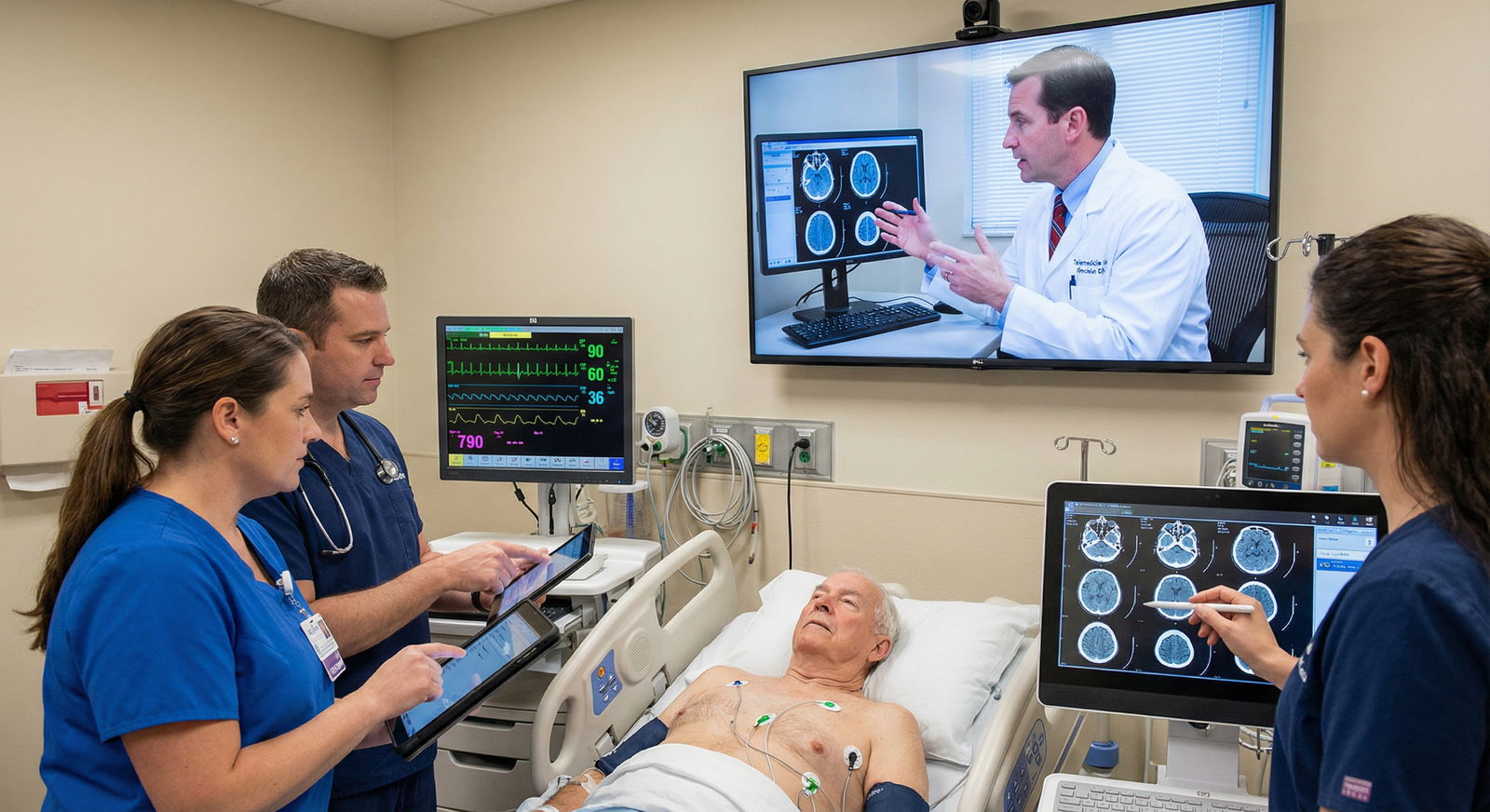
It’s 10:47 p.m. You’re the new attending on your first job, sitting in front of the EHR. The hospital’s shiny AI decision support tool flags a sepsis alert and suggests broad‑spectrum antibiotics. Your gut says, “This doesn’t look like sepsis.” You override it.
Next morning, the patient deteriorates. Code, ICU, family in tears.
And the thought punches through your brain:
“Was it me? Was it the AI? Am I about to get sued into oblivion for not following—or for following—this algorithm?”
Welcome to modern medicine.
Let’s walk through this like someone who is low‑key terrified of being the “test case” in an AI‑malpractice lawsuit.
First: The Ugly Truth About Liability With AI
Let me be blunt: right now, the law is behind the tech.
That’s the worst part. There isn’t one clean rule like, “If AI is wrong, the company gets sued, not you.” That fantasy does not exist.
The system still mostly sees it this way:
You ordered it. You documented it. Your name is on the chart. You own it.
The AI is treated—legally speaking—like:
- A diagnostic support tool
- A “high‑tech second opinion”
- A fancier version of a drug‑interaction checker or risk calculator
Which means: courts and boards are still expecting you to be the one applying judgment. Not the machine.
So in most real‑world scenarios right now:
- If you blindly follow AI and it was obviously wrong → you can be liable.
- If you ignore AI that gave a reasonable warning and you don’t justify why → you can be liable.
- If AI is wrong in a nuanced case and you made a good‑faith, documented, clinically reasonable decision → you’re probably okay.
“Probably” being the word that keeps you awake at 3 a.m.
Who Actually Gets Sued When AI Screws Up?
Let’s break down the players, because you’re not the only one with a target on your back.
| Actor | How They Get Pulled In |
|---|---|
| Individual physician | Malpractice claim |
| Hospital/health system | Vicarious + corporate liability |
| AI vendor/company | Product liability, negligence |
| EHR vendor | Design/implementation issues |
| Group practice | Supervision, policies, training |
Here’s how this tends to play out:
Plaintiff lawyers sue everyone with a name and a wallet.
You, the hospital, the vendor, the dog, the wallpaper. Whoever they can list, they list.The doctor is still the “face” of the case.
Because you’re the one the family remembers. You’re the one who “trusted the computer” or “ignored the warning.”Hospitals and vendors argue over contracts and indemnity behind the scenes.
You will not be invited to that party. You’ll just feel the splash damage.Boards care less about the AI and more about your judgment.
They’ll ask: Did you think? Did you document? Did you act like a physician, or like a button‑pusher?
So yes, AI vendors can be liable. But the presence of AI does not insulate you.
You don’t get to say: “Well, the algorithm told me to.” That’s like saying “Well, UpToDate said so” as your entire defense. It might help a bit. It does not save you if it was obviously nonsense.
Concrete Scenarios: What Happens to You?
Let’s run through some actual nightmare fuel, because that’s what your brain is doing anyway.
Scenario 1: You Follow the AI, Patient Is Harmed
Example:
AI says: “Low risk for PE. No CT needed.”
Your gut is mildly uneasy. But you’re slammed. AI says risk 0.3%. You trust it.
Patient goes home. Comes back next day with massive PE and dies.
Legally, people look at:
- Was the AI recommendation within the bounds of reasonable practice?
- Did your documentation show you even thought about PE?
- Did you rely on AI instead of clinically assessing the patient?
If the AI contradicted standard risk tools (Wells, PERC) or obvious red flags, and you didn’t document any reasoning, you look bad.
If you documented:
“Considered PE; AI tool suggests low risk, but patient tachycardic, pleuritic pain, recent surgery. Ordering CT despite AI output.”
That. That’s the kind of thing that saves you.
Scenario 2: You Ignore the AI and Patient Is Harmed
Example:
AI sepsis model fires. It recommends sepsis bundle now.
You think: “They’re just dehydrated.” You ignore it, don’t mention it in your note.
They later crash. Family learns there was a sepsis warning.
On review, you look like:
- Someone who received a “sepsis warning” and did nothing.
- Someone who didn’t even show they considered it.
Better version:
“System sepsis alert fired due to HR and WBC. Patient afebrile, lactate normal, no infection source on exam, stable BP, improving with fluids. Low suspicion for sepsis at this time; will monitor closely, defer broad‑spectrum antibiotics now.”
Now you’re no longer “ignoring” the AI. You’re overriding it with documented reasoning. That’s a very different story.
Scenario 3: The AI Is Just Flat‑Out Wrong and Nobody Could’ve Known
Example:
A radiology AI misses a microbleed or overcalls a subtle finding that three human radiologists also miss/agree with.
You or the radiologist rely on that. Bad outcome.
If what you did lined up with a reasonable standard of care—meaning most competent physicians would have done the same based on the data they had—you’re usually protected. The AI being wrong doesn’t automatically make you wrong.
This is where good faith + reasonable practice + documentation matter more than whether the AI was magical or stupid.
What You’re Actually Responsible For (Like It or Not)
Here’s the brutal bottom line:
Right now, regulators and courts expect you to:
- Treat AI as decision support, not decision replacement.
- Use your clinical judgment every time, even if it’s 2 a.m. and you haven’t peed in 9 hours.
- Know, at least broadly, what the AI is doing (risk prediction? image detection? order suggestions?).
- Recognize when AI outputs clash with reality.
You are not expected to:
- Understand the math in the model.
- Debug the neural network.
- Prove the ROC curve in court.
But you are expected to:
- Sense when something feels off.
- Not blindly follow the tool when your brain is screaming “This makes no sense.”
- Document your reasoning when you go with or against the AI.
How to Protect Yourself Without Losing Your Mind
Let’s talk coping strategies that actually help you, not just vague “be careful with AI” nonsense.
1. Know How Your Hospital’s AI Tools Are Framed
Ask these annoying but necessary questions:
- Is this tool FDA‑cleared or just “clinical decision support”?
- Is it required or optional?
- Are there institutional guidelines for when to follow or override it?
- Is usage audited? (If they’re tracking “accept vs override” rates, you need to know.)
You’re not being difficult. You’re protecting your license.

| Step | Description |
|---|---|
| Step 1 | AI Suggests Action |
| Step 2 | Consider following |
| Step 3 | Document agreement and reasoning |
| Step 4 | Override AI |
| Step 5 | Document why and plan |
| Step 6 | Seek second opinion |
| Step 7 | Decide and document |
| Step 8 | Clinically reasonable? |
2. Document the AI Like a Consult
You do not need to write a novel. But you do need breadcrumbs.
Examples:
- “AI read: no acute intracranial hemorrhage; my read consistent with this.”
- “Sepsis AI alert fired; low clinical suspicion—see exam; will observe closely.”
- “AI antibiotic recommendation overridden due to allergy and local resistance pattern.”
Template in your head:
“AI suggested X. I chose Y because Z.”
It looks boring now. It looks like gold in a lawsuit.
3. Don’t Be the First Lemming Over the Cliff
If a new AI tool just got rolled out and no one understands its quirks yet, be conservative. Especially in:
- High‑risk decisions (thrombolytics, surgery, chemo, ICU triage)
- Areas where AI false positives/negatives have big consequences
- Populations where the model might be biased (certain racial groups, pregnant patients, rare conditions)
In other words: treat early AI like a brand‑new intern. You listen. You don’t let them run the service.
4. Use AI to Support “Best Practice,” Not Replace It
Where AI is least likely to get you in trouble:
- Drug interaction checks
- Dose calculators
- Sepsis alerts that trigger “take another look,” not “you must order this now”
- Image triage (putting likely critical scans first in the queue, not making final calls)
Where you should be way more anxious:
- Tools that auto‑order things
- Tools that auto‑draft notes you barely skim
- AI that changes triage decisions or eligibility for procedures without strong oversight
Your defense down the line will not be “The AI was cool,” it will be: “I used this tool to support an already reasonable care process.”
Quick Reality Check: How Big Is the Risk Right Now?
You’re probably wondering, “Okay, but is anyone actually getting nailed for this yet?”
Short answer:
Not many public, clear‑cut “AI malpractice” cases. Yet.
But that doesn’t mean your risk is zero. It just means:
- You might end up in a regular malpractice case where AI is one of many factors.
- The plaintiff’s lawyer could argue: “They ignored a sepsis alert,” or “They blindly trusted an unvalidated AI tool.”
- Boards could decide you failed to exercise independent judgment.
And you absolutely do not want to be the name cited in the first big “Physician vs AI” appellate decision.
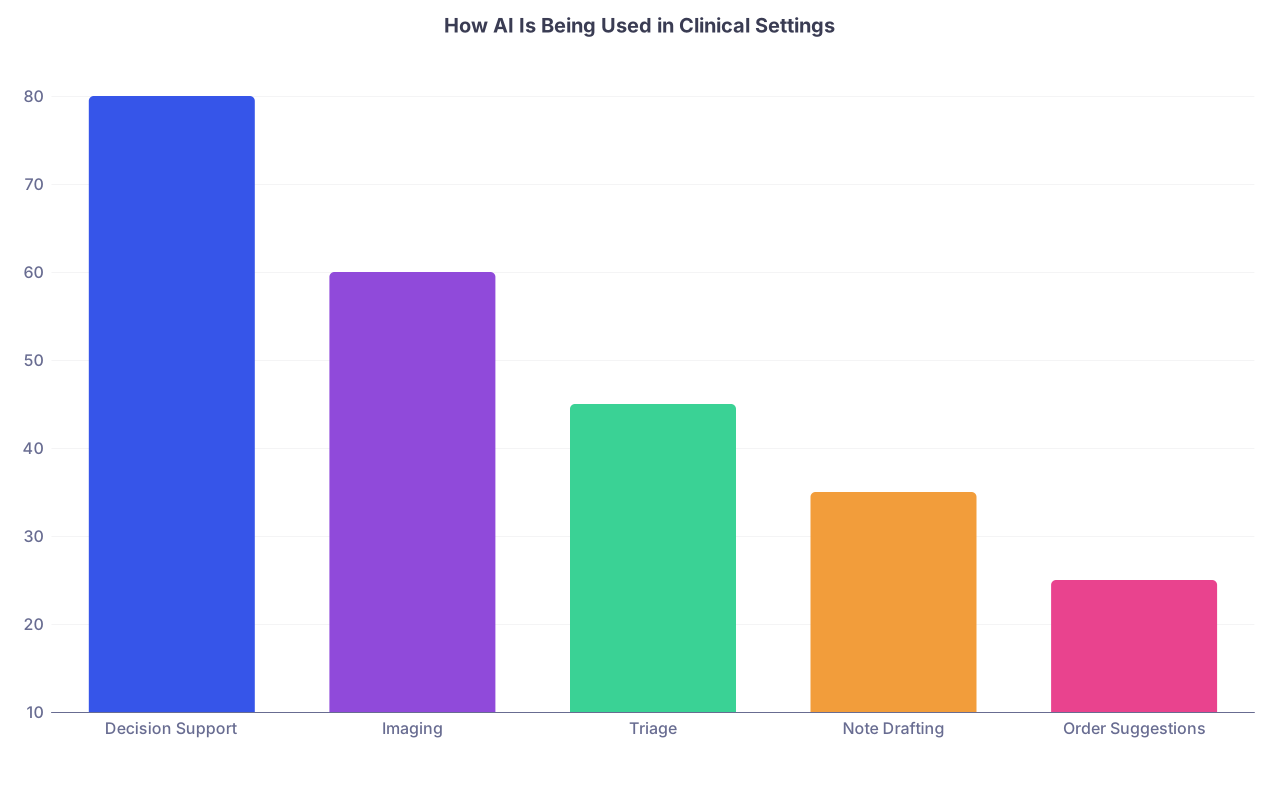
| Category | Value |
|---|---|
| Decision Support | 80 |
| Imaging | 60 |
| Triage | 45 |
| Note Drafting | 35 |
| Order Suggestions | 25 |
Point is: the safest mental model is this—
AI is just another part of the clinical environment you’re responsible for managing. Like residents. Or bad EHR design. Or confusing order sets.
Unfair? Yup. Real? Also yes.
Things Your Future Self Will Thank You For
Here’s what a sane, defensive, still‑human practice with AI looks like:
You know which AI tools you’re using.
You’re not randomly clicking “accept” on stuff you don’t understand.You treat AI as a suggestion, not a command.
You ask: “Does this match the patient in front of me?”You leave a clear paper trail.
A line or two per critical decision. That’s it.You speak up when the AI is clearly misbehaving.
“Hey, this sepsis alert fires on literally everyone; this is dangerous noise.”
That email to risk management? Also a future legal exhibit—on your side.You keep malpractice coverage that actually fits your job.
If your role involves heavy use of AI tools, ask your carrier outright:
“How are AI‑related decisions treated under my policy?”

Mini Playbook: When an AI Recommendation Pops Up
When you see an AI‑generated suggestion that actually affects care (not just “consider CBC” for the 19th time), run this quick internal script:
- Does this match the clinical picture?
- If yes →
- Follow it if it’s reasonable.
- Document that you considered it and why you agree.
- If no or unclear →
- Re‑examine patient / data.
- Ask a colleague if stakes are high.
- If you override the AI, document why.
- If the AI seems wildly off base routinely →
- Email your department lead / risk / IT with specific examples.
It’s not perfect. But it keeps you out of the “I just clicked buttons” category.

| Step | Description |
|---|---|
| Step 1 | AI Alert Appears |
| Step 2 | Check patient and data |
| Step 3 | Consider following |
| Step 4 | Document agreement |
| Step 5 | Reassess, maybe seek help |
| Step 6 | Override if justified |
| Step 7 | Document override reason |
| Step 8 | Output matches picture? |
The Fear Behind Your Question
Underneath “Am I liable?” what you’re really asking is:
“Is this new tech going to blow up my career for doing my job in good faith?”
I’m not going to sugarcoat it: AI adds another layer of risk. And chaos. And second‑guessing.
But the core standard hasn’t changed as much as it feels like it has:
- Think for yourself.
- Act reasonably for your training and context.
- Don’t let a tool—AI or otherwise—replace your brain.
- Leave enough documentation that, two years later, someone can see you were actually thinking.
If you do that, you’re not bulletproof. No one in medicine is.
But you’re not being reckless. And that matters.
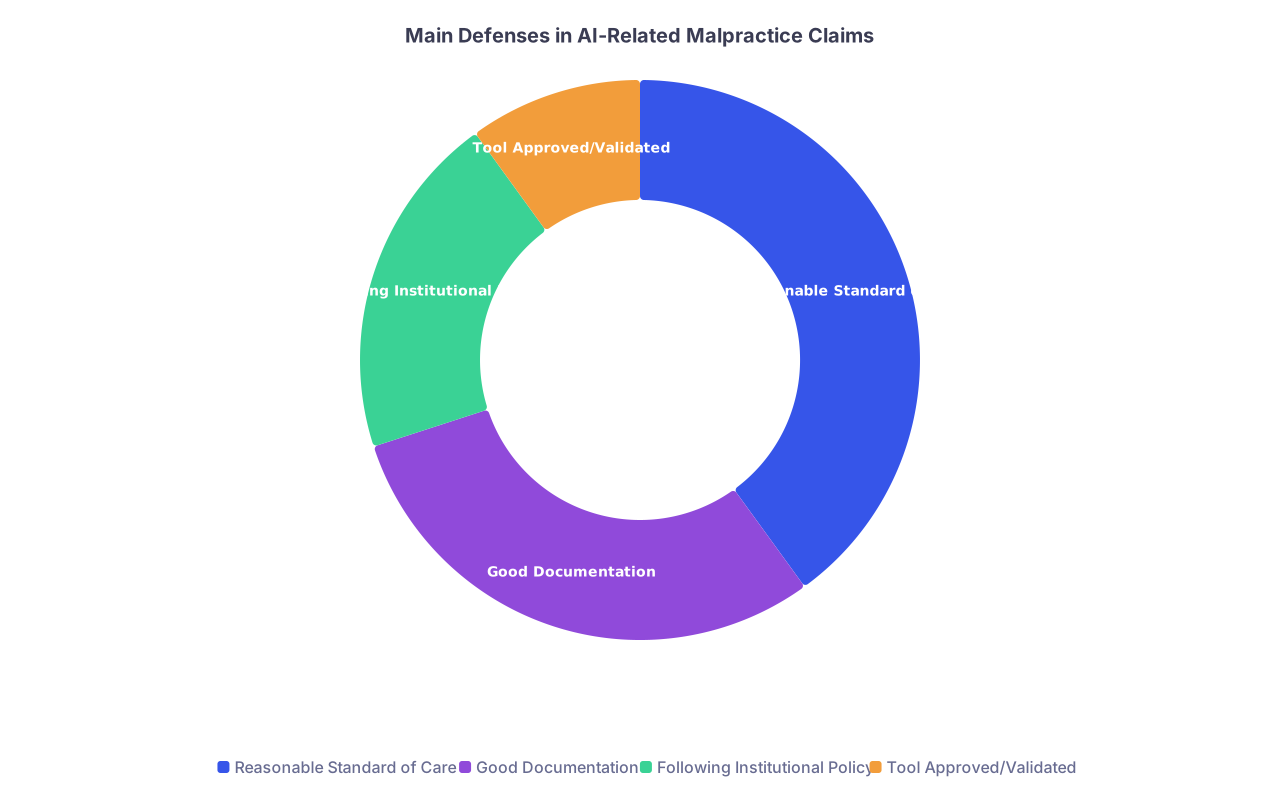
| Category | Value |
|---|---|
| Reasonable Standard of Care | 40 |
| Good Documentation | 30 |
| Following Institutional Policy | 20 |
| Tool Approved/Validated | 10 |
FAQ: AI, Mistakes, and Your Liability (5 Questions)
1. If the hospital requires me to use an AI tool, does that reduce my liability?
Not really in the way you’re hoping.
Hospital policies can be a defense (“I followed institutional protocol”), but they can also be a sword against you (“Even our protocol said to act on this alert and you didn’t”). You still have to exercise judgment. You can use “I followed policy” as one layer of defense, but it doesn’t cancel out obviously bad care.
2. Can I just document “per AI recommendation” and be covered?
No. That looks lazy and dependent. You want something like:
“Per AI recommendation and consistent with my assessment, initiating X because Y (clinical reason).”
Your note has to show that you—not the black box—made the decision.
3. Could I get in trouble for not using available AI tools?
Yes, potentially. If a widely accepted AI tool becomes part of standard practice (for example, a well‑validated sepsis prediction model in your system) and you never use it or you disable alerts, the argument could be: “A reasonable physician would have used all available, validated tools.” We’re not quite there for most tools yet, but that’s where things are heading.
4. Do I have to disclose AI use to patients or in consent?
Legally, this is still unsettled. Ethically, in high‑stakes decisions where AI meaningfully influences the plan, it’s not crazy to say something like: “We use a computer tool that helps assess X; I’m using it along with my own judgment.” For routine stuff (risk scores, dose calculators), nobody is doing a full disclosure speech. But expect pressure to grow for transparency.
5. What’s one thing I can start doing tomorrow to reduce my AI‑related risk?
Start adding one explicit line of reasoning when an AI recommendation changes your plan or when you override it. Literally one sentence:
“AI tool suggested X; clinically I agree/disagree because Y.”
It will feel extra at first. Then you’ll realize it’s basically free malpractice insurance you can generate in 5 seconds.
Today, do this:
Pull up a recent note where an alert fired or you used any AI‑like tool (risk score, sepsis alert, AI read). Ask yourself: “If this patient had a bad outcome, would anyone be able to tell what I was thinking, or would it look like I just clicked a box?”
If the answer is “they’d have no idea,” change how you document on your next shift. One sentence at a time.