
The fear that AI might quietly push you out of your own specialty isn’t irrational. It’s the fear nobody in leadership wants to talk about honestly.
You see it, right? Radiology tools reading scans faster than humans. AI scribes writing better notes than half your colleagues. Admins talking about “efficiency gains” like they’re not thinking, “Do we really need this many doctors?”
You’re not crazy for thinking:
“What if in 5–10 years I’m… redundant?”
Let’s talk about that. For real. No unicorns, no “AI will just help you!” spin. Then we’ll talk about how to actually future‑proof yourself so you’re not at the mercy of the next software update.
1. What specialties should actually be worried?
Some roles are clearly more exposed. You can feel it when you watch a demo and your gut goes, “Oh. That’s… my job.”
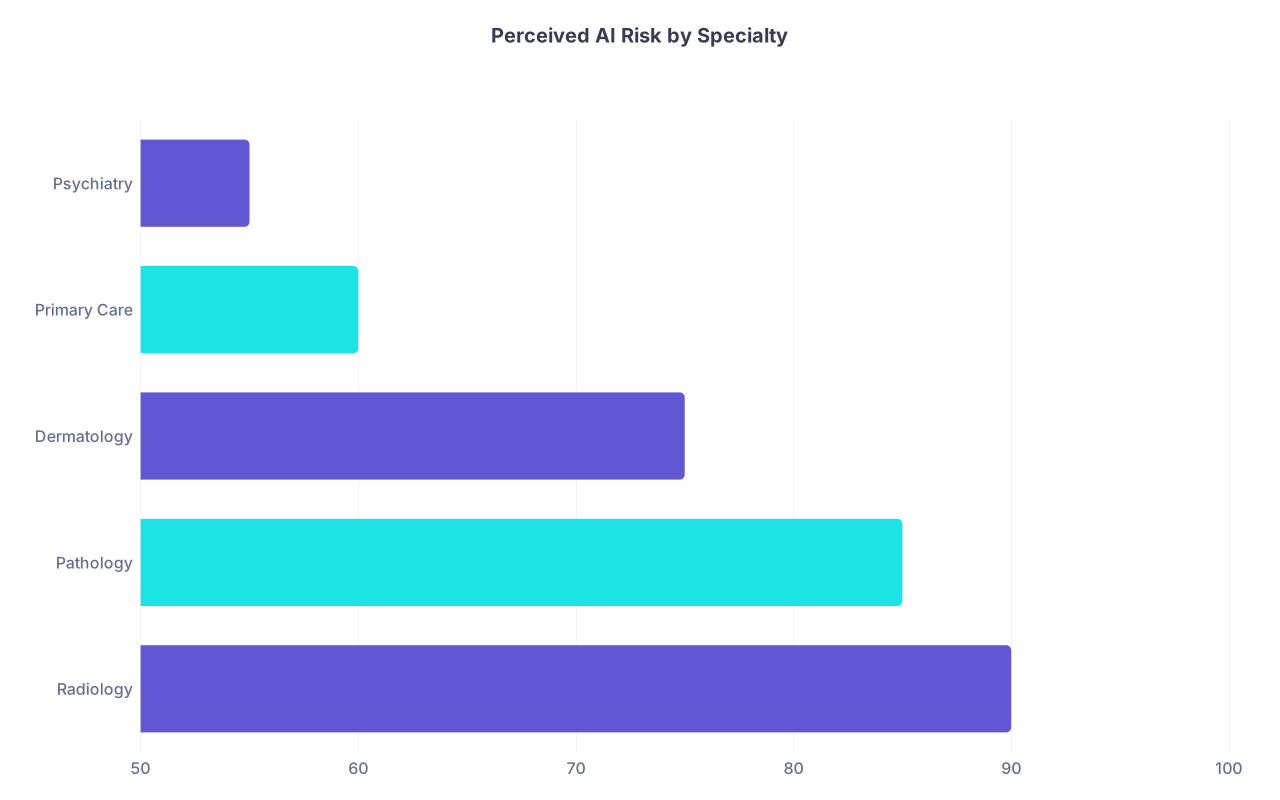
| Category | Value |
|---|---|
| Radiology | 90 |
| Pathology | 85 |
| Dermatology | 75 |
| Primary Care | 60 |
| Psychiatry | 55 |
This is perceived risk, but it’s not random. Here’s the ugly truth:
- Jobs that are repetitive, pattern‑based, and screen‑centric are most at risk of being partially automated.
- Jobs that involve messy humans, negotiations, and real‑time tradeoffs are harder to automate.
Think about:
- Radiology – Image interpretation is catnip for machine learning. That’s exactly the type of patterned data AI eats for breakfast.
- Pathology – Same deal. Slides, images, classification.
- Derm – High‑res images, triage, “is this concerning or not?”
- Ophtho, Cards imaging, any imaging‑heavy subspecialty – vulnerable slices.
But here’s where the panic goes too far: AI rarely replaces the entire job. It replaces tasks.
The dangerous story in your head is: “One day they’ll just fire all radiologists and let AI do everything.”
The more realistic story is: “One day a hospital might think they only need half as many radiologists.”
Which is… still terrifying if you’re one of the “extra” ones.
So the real question isn’t: “Will AI change my specialty?”
It’s: “When things tighten, how do I become the one they can’t cut?”
2. What AI is actually good at (and where it really sucks)
Administrators oversell AI as magic. Doctors dismiss it as stupid. Both are wrong.
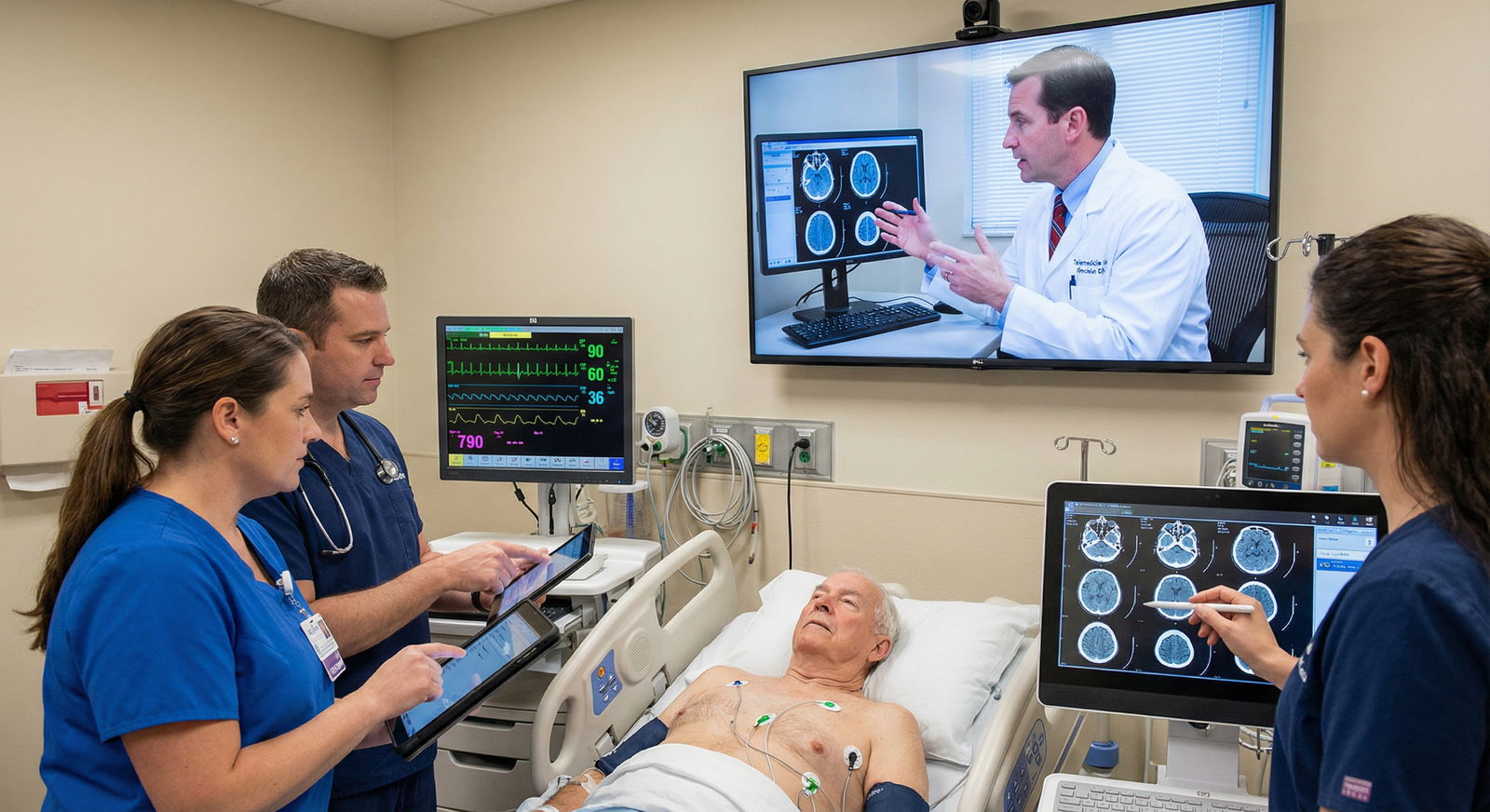
AI is legitimately strong at:
- Pattern recognition in huge data streams (images, ECGs, lab trends)
- Predictive modeling based on statistical correlations (readmission risk, sepsis alerts)
- Drafting: notes, letters, patient instructions, coding suggestions
- Repetitive tasks that don’t require emotional nuance
AI is still pretty bad at:
- Understanding context the way humans do (the “vibe” of a sick vs stable patient)
- Handling conflicting goals and values (patient wants X, family wants Y, system wants Z)
- Ethics and edge cases (what happens when nobody fits the guideline?)
- Managing humans: breaking bad news, mediating conflict, earning trust
- Taking responsibility when things go sideways
You know where things blow up? In all the messy human parts:
- The family that doesn’t agree on DNR
- The patient who “just has a bad feeling” and you know you can’t ignore it
- The unstable surgical patient whose vitals look “fine” but you know is crashing
No model handles that. You do.
So your job is not to “beat AI at radiology” or “out‑memorize a database.” That’s lost already.
Your job is to build the skills that sit around AI. Above it. Over it. Skills that require:
- Judgment
- Trust
- Accountability
Those are still scarce. And they’re where the future jobs cluster.
3. Worst‑case scenario: what if they really cut doctors?
Let’s walk through the nightmare scenario your brain is playing at 2 a.m.

| Step | Description |
|---|---|
| Step 1 | AI gets very good |
| Step 2 | Admin sees cost savings |
| Step 3 | Hire fewer physicians |
| Step 4 | Increased workload for remaining docs |
| Step 5 | Burnout and more attrition |
| Step 6 | More justification for AI tools |
| Step 7 | Physician role further eroded |
| Step 8 | You feel replaceable |
Could some version of this happen? Pieces of it already are.
I’ve seen:
- Groups quietly “not replace” retiring radiologists because AI + telerads coverage “seems enough”
- Outpatient practices leaning heavily on midlevels + AI decision support and cutting MD clinic time
- Health systems advertising “AI‑enabled virtual care” like physicians are a feature, not the core
But here’s what your anxiety always skips: the constraint no one can bypass—legal and moral responsibility.
At the end of the day, when:
- A child dies because sepsis was “low risk” on the model
- A cancer is missed because an AI over‑called benign
- A note auto‑generated the wrong med plan and nobody caught it
Someone has to own that. AI doesn’t sit for depositions.
Hospitals, insurers, governments are absolutely going to push boundaries. But they are not going to remove licensed physicians from the accountability chain. Too much liability, too much public trust at stake.
So yes: headcount can shrink. Workflows can shift. MDs can get pushed into narrower or more supervisory roles.
But fully “replaced”? No. That’s not how this game is structured.
Your job is to position yourself on the accountability and oversight side of that chain. Not the low‑value, easily sliced task side.
4. How to future‑proof your skills (concrete, not fluffy)
Let me be blunt: “Just be a good doctor” is not a strategy. That’s table stakes.
If you want to be hard to replace in an AI‑heavy system, there are four leverage points you should care about:
- Things that involve humans and trust
- Things that involve systems and workflow
- Things that involve data and tech fluency
- Things that involve money and strategy
4.1 Become un‑automatable at the bedside
Any specialty can lean harder into the human side, even radiology and pathology.
You want to be the person who:
- Talks directly with patients and families about imaging results, options, and uncertainty
- Runs multidisciplinary conferences and actually leads the discussion
- Is known as the one surgeons, internists, oncologists call when the case is complicated
Translation: stop hiding behind screens completely. The more face‑to‑face trust you own, the safer you are.
Concrete steps (next 12–18 months):
- Offer to lead or co‑lead tumor boards, M&M, case conferences
- Build a reputation as the explainer: volunteer to join patient/family meetings
- Get good at hard conversations: read “Difficult Conversations,” watch skilled attendings closely, steal their phrases
AI can print a script. It can’t replace the weight of, “I’ve done this a thousand times, and here’s what I’d tell my own family.”
4.2 Learn to design and fix workflows
This is where most physicians completely tap out. They hate meetings. They hate process. They hate “operations.” But guess what? Whoever designs workflows decides how many doctors you need.

If you can:
- Map clinical workflows
- See where AI and humans should each plug in
- Fix bottlenecks and safety gaps
- Translate clinical reality to tech and admin people
…you go from “interchangeable provider” to “essential architect.”
Concrete steps:
- Join (or at least sit in on) your system’s AI / digital health / quality improvement committees
- Take a short, practical course in quality improvement, Lean, or health systems engineering
- Pick one painful process (prior auth, clinic flow, imaging ordering) and make it your project to improve
You don’t need an MBA. You need reps solving real workflow problems that touch AI or tech.
4.3 Get “data and AI literate” without becoming a coder
You don’t have to write Python. But you can’t be the person who says, “Yeah I don’t really get how any of this works.”
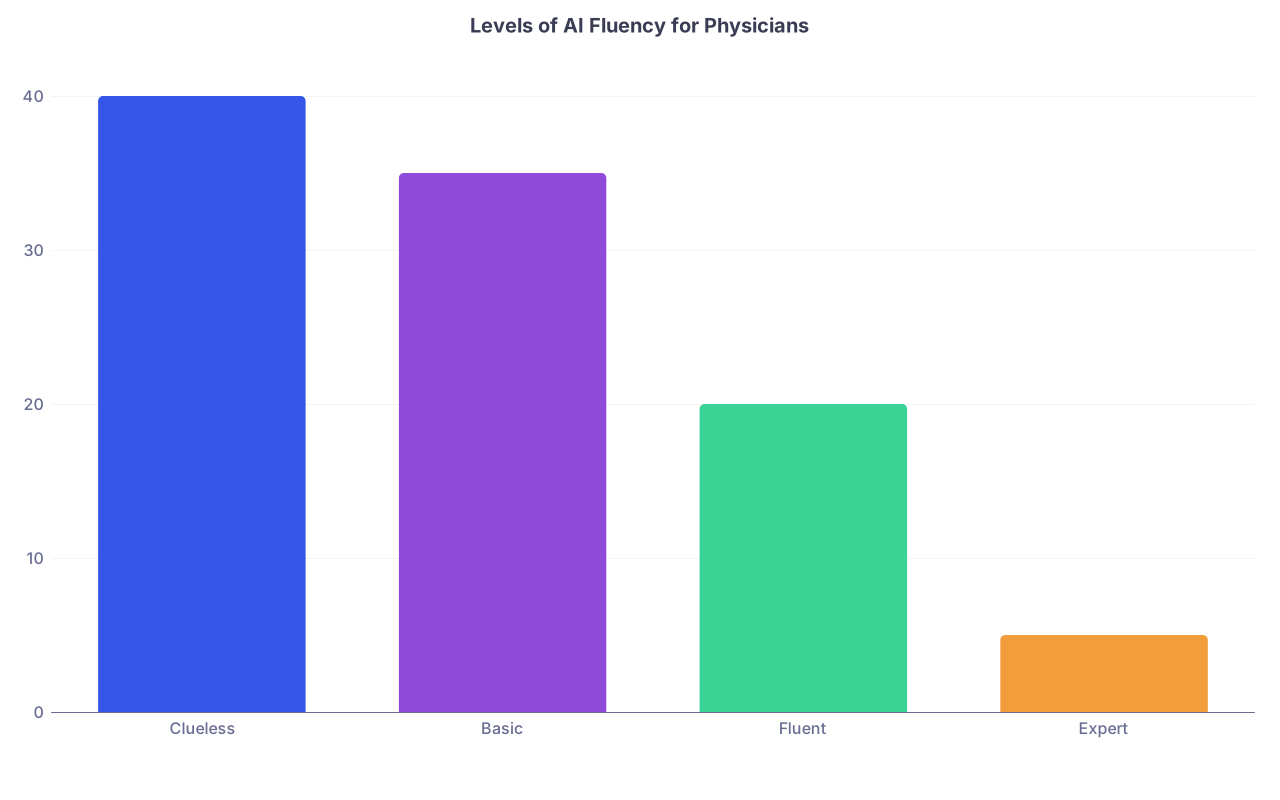
| Category | Value |
|---|---|
| Clueless | 40 |
| Basic | 35 |
| Fluent | 20 |
| Expert | 5 |
You want to hit “fluent”:
- You understand what a model is generally doing (classification, prediction, etc.)
- You know what bias, sensitivity, specificity, PPV, calibration actually mean in practice
- You can read an AI study and tell if it’s garbage
- You can look at an AI output and ask, “Where could this be wrong?”
Concrete steps (not 10‑year academic plans):
- Watch 2–3 high‑yield intros on medical AI (Stanford, MIT, or major conferences)
- Take one short structured course: “AI in healthcare” aimed at clinicians
- Shadow or meet with your hospital’s data science or IT folks; ask to see a model they’ve deployed and talk through:
- What data it uses
- How it was validated
- How clinicians are supposed to respond to its output
If you can calmly say in a meeting: “This model wasn’t validated on our population; the PPV will tank” — you’re valuable.
4.4 Move closer to the money and the strategy
It’s uncomfortable, but: power sits with whoever influences revenue, cost, and risk.
You don’t have to become an administrator. But you should not be:
- Completely clueless how your department gets paid
- Naively thinking RVUs are the whole story when AI changes volume
| Role Focus | AI Replacement Risk | Future Resilience |
|---|---|---|
| Pure image reading | Very High | Low |
| Patient-facing + image interpretation | Moderate | High |
| Workflow & QI lead | Low | Very High |
| Clinical informatics | Low | Very High |
| Pure RVU machine | High | Low |
Concrete moves:
- Sit down with your department chair or practice manager and ask: “How does our group actually make money? What are our biggest costs and risks?”
- Pay attention to which projects leadership gets excited about. Spoiler: ones that impact throughput, revenue, or risk reduction.
- Volunteer for at least one project that sits at this intersection: “Use AI to improve X in a way that saves time/money and improves patient safety.”
You never want to be the most expensive line item in a spreadsheet with no clear strategic value attached to your name.
5. Choosing how to position yourself post‑residency
If you’re just coming out of residency or fellowship and staring at this shifting landscape, you’re probably thinking:
“Did I train for a job that might not exist in 15 years?”
You didn’t. But you might have trained for a job that will mutate.

| Step | Description |
|---|---|
| Step 1 | Finish Residency |
| Step 2 | High AI exposure |
| Step 3 | Moderate AI exposure |
| Step 4 | Low AI exposure |
| Step 5 | Add patient facing or procedural niche |
| Step 6 | Gain informatics or systems role |
| Step 7 | Strengthen communication and leadership |
| Step 8 | Current Specialty |
Tactical ways to hedge yourself early:
- If you’re in a high‑AI specialty (Rads, Path, Derm):
- Add something hard to automate: procedures, interdisciplinary leadership roles, heavy patient/family interaction, or informatics.
- If you’re in a moderate‑AI specialty (Cards, IM, EM, Anesthesia):
- Double down on complex decision‑making, acute care, team leadership, and managing uncertainty.
- If you’re in a lower‑AI‑risk specialty (Psych, Peds primary care, some surgical subs):
- Don’t get complacent. AI will affect diagnostics, triage, resource allocation. Learn how to steer it in your field.
If you can, target jobs that:
- Involve committee work on digital health, AI, EHR optimization
- Explicitly mention quality, safety, or innovation in the job description
- Give you protected time (even 0.1 FTE) for systems / tech projects
That tiny sliver of “non‑clinical” time can be your lifeboat when the pure RVU world gets squeezed.
6. The emotional side: dealing with the constant “what if”
Let’s not pretend this is just an “upskill and you’ll be fine” problem. It’s an identity hit.
You trained for years to be the expert. Now there’s software getting more questions right on board‑style vignettes than you. Of course that feels like an existential insult.

Here’s what I’ve seen help people keep their sanity:
- Separate your worth from your task list
AI might take over colonoscopy pre‑note generation. It doesn’t replace the years you spent learning when not to scope, or how to reassure a terrified patient. - Admit the grief
It’s okay to feel: “I wanted to be the expert interpreter, and now that role’s shrinking.” You’re allowed to mourn that. - Stay close to peers who are adapting, not catastrophizing
Two types of colleagues:- “Everything is doomed; nothing matters.”
- “This is scary, but here’s what I’m trying.”
Stick with the second group.
- Periodically ask, “What do I actually like doing?”
Patient contact? Systems thinking? Teaching? Let that guide what you lean into as AI shifts things.
Your anxiety wants a guarantee: “Tell me my job will 100% be safe forever.” Nobody can give you that. But you can absolutely stack the odds so that, when things change, you’re one of the people driving the conversation—not waiting for the email.
FAQ (6 questions)
1. Is it dumb to go into radiology or pathology now with all this AI stuff?
No, it’s not dumb. But going in blind is. If you choose a high‑AI‑exposure field, you should plan from day one to build:
- A patient‑facing role (consults, multidisciplinary clinics, tumor boards), or
- A strong informatics / systems / quality niche.
The radiologists I worry about aren’t residents. They’re mid‑career people still acting like it’s 2005 and PACS was the last big tech shift.
2. Do I need to learn to code to be “AI‑proof”?
No. Coding is one possible path, but absolutely not required. Many of the most impactful AI‑in‑healthcare people are “translators” — clinicians who:
- Understand clinical reality deeply
- Understand AI’s strengths and limits conceptually
- Can shape workflows and policies around it
If you like coding, go for it. If you don’t, focus on literacy, not software engineering.
3. Could hospitals really cut physician numbers in half with AI?
In some narrow services? They might try. For example, telerads + AI for low‑complexity overnight reads. Or aggressive use of midlevels + AI decision support in urgent care. But across the board? Unlikely. There are too many tasks that need judgment, conversation, and responsibility. Expect role changes, productivity pressure, and shifting job descriptions — not a pure “half as many doctors forever” scenario.
4. What if I’m already out of training and feel behind on all this?
You’re not as behind as you think. Almost nobody in leadership actually understands AI deeply. What they do have is comfort sitting in rooms where it’s discussed. You can catch up. Pick one concrete step this year:
- Join a digital health or AI committee
- Take a 6–8 week online course on AI in healthcare
- Lead a small project integrating or evaluating an AI tool in your clinic
You don’t need to become “the AI person” overnight. You just need to stop being the person who opts out completely.
5. Is it safer to switch to a more “human” specialty like psychiatry or peds?
Safer isn’t the right word. Different risks. Psych and peds have more relational work that’s harder to automate. But they’re also historically underpaid and subject to different forms of devaluation. AI will still touch them: triage, decision support, therapy chatbots, remote monitoring. Switching only makes sense if you actually like the work — not just because you’re running from AI. You can future‑proof yourself in any specialty by owning judgment, trust, and systems.
6. How do I know if I’m actually future‑proofing myself vs just collecting random “CV fluff”?
Ask this brutal question: “If my hospital had to cut 20% of physicians in my specialty, would these activities make leadership more or less likely to keep me?”
The things that help:
- Directly improving patient outcomes or safety
- Saving time or money without harming care
- Owning relationships across departments (people say, “We need them in this meeting”)
Random committee memberships with no impact? That’s fluff. Leading the project that makes your AI sepsis alert usable for frontline staff? That’s future‑proofing.
Open your current job description or the one you’re aiming for and underline every task that AI could realistically do in 5–10 years. Then circle everything that requires trust, judgment, or system‑level thinking. Starting this month, put your extra effort into the circled side, not the underlined side.