Introduction: AI as the New Backbone of Diagnostics
Artificial Intelligence (AI) is no longer a distant promise in healthcare—it is now embedded in daily clinical practice, particularly in diagnostics. For medical students, residents, and early-career physicians, understanding AI in Healthcare is rapidly becoming as essential as understanding ECG interpretation or basic radiology.
Diagnostics has always sat at the center of Patient Care. Accurate, timely diagnosis determines outcomes, shapes treatment pathways, and influences healthcare costs. AI, powered by machine learning, deep learning, and advanced Predictive Analytics, is transforming this diagnostic core into something more precise, scalable, and personalized than ever before.
This enhanced landscape is not about replacing clinicians; it is about augmenting clinical reasoning, standardizing quality, and enabling earlier, more targeted intervention. From Medical Imaging and pathology to wearable sensors and genomic sequencing, AI is re-defining what is possible in disease detection and risk stratification.
This article explores how AI is changing the diagnostic landscape, what that means for patient outcomes and workflows, where the main Ethical Considerations lie, and how current trainees and new attendings can position themselves for the AI-enabled future of medicine.
AI Integration Across Diagnostic Modalities
AI is not a single tool; it is a collection of technologies integrated across the diagnostic spectrum—imaging, lab medicine, pathology, genomics, and real-time monitoring. Understanding these applications will help you anticipate how your own specialty will evolve.
AI in Medical Imaging: From Assistance to Co‑Reading Partner
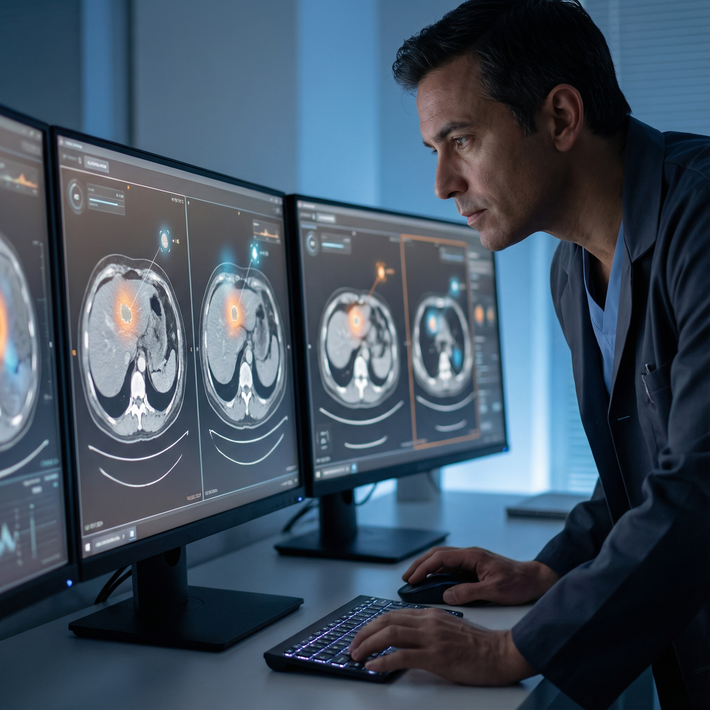
Medical Imaging is one of the most mature and visible domains of AI in Healthcare. Deep learning models, particularly convolutional neural networks (CNNs), can analyze high-dimensional pixel data and detect patterns that may be subtle or invisible to the human eye.
Key Applications in Imaging
Radiology (X-ray, CT, MRI)
AI systems can:- Flag suspected pneumothorax on chest X-ray for urgent review
- Quantify lung involvement on CT in interstitial lung disease or COVID-19
- Detect subtle ischemic changes on head CT in suspected stroke
- Assist in characterizing liver lesions or pulmonary nodules (benign vs malignant likelihood)
Breast Imaging
The 2020 Google Health study on mammography demonstrated that an AI system could:- Reduce false positives and false negatives compared with average radiologist performance
- Provide consistent performance across different clinical sites
In practice, AI is increasingly used as a “concurrent reader” that supports, rather than replaces, radiologists.
Cardiovascular Imaging
AI tools can:- Automatically segment cardiac structures on echocardiography or cardiac MRI
- Provide ejection fraction and volumetric data in seconds
- Assist in coronary artery calcium scoring and plaque characterization
What This Means for Clinicians
- Radiologists and other imaging specialists will spend less time on routine measurements and more time on integration, consultation, and complex decision-making.
- Non-radiology clinicians (e.g., ED, ICU) may increasingly see AI “pre-reads” for common studies, helping them triage and intervene early.
- Familiarity with basic AI terminology (sensitivity, specificity, AUROC, calibration, generalizability) will become critical when evaluating tools and interpreting their outputs.
Predictive Analytics and AI-Enhanced Screening
While imaging focuses on what is visible now, Predictive Analytics focuses on what may happen next. AI systems can synthesize extensive EHR data, lab trends, vital signs, demographics, medications, and social determinants to estimate risk and detect disease before it becomes clinically obvious.
Risk Prediction and Early Detection
Chronic Disease Risk Models
AI algorithms can integrate:- Age, BMI, blood pressure, and lab markers
- Family history and comorbidities
- Lifestyle data from wearables (activity, sleep, heart rate variability)
to estimate risk for: - Type 2 diabetes
- Atherosclerotic cardiovascular disease
- Heart failure exacerbations
Hospital-Based Predictive Scores
AI-based tools are now being piloted or deployed to:- Predict sepsis hours before traditional scoring systems trigger
- Anticipate deterioration on the wards and recommend step-up care or ICU transfer
- Identify patients at high risk of readmission post-discharge
Population Health and Screening
Health systems can use AI to:- Identify patients overdue for cancer screening with concerning patterns in labs or symptoms
- Prioritize outreach to those at highest risk based on multi-factorial models, rather than one-size-fits-all screening rules
Actionable Takeaways for Trainees
- Learn the risk scores and AI tools in use at your institution; understand their inputs and limitations.
- Use AI-derived risk predictions as one data point in your clinical reasoning—not as a final answer.
- Document how AI outputs influenced your decisions; this will matter for both quality improvement and medicolegal clarity.
How AI is Transforming Patient Outcomes and Clinical Workflow
AI’s value is not abstract. It becomes meaningful when it improves real-world Patient Care: earlier diagnosis, fewer complications, better resource utilization, and less clinician burnout.
Earlier Detection and Intervention
The greatest impact of AI in diagnostics is emerging in early detection—catching disease when it is more treatable and less costly.
Practical Examples
Wearables and Cardiac Monitoring
- Smartwatches and patches use AI to detect atrial fibrillation or frequent PVCs.
- Alerts allow PCPs or cardiologists to intervene before stroke or cardiomyopathy develops.
- For residency and early practice, you will see more patients presenting with device-generated alerts; knowing how to validate, interpret, and act on them is key.
Glucose and Metabolic Monitoring
- AI-enhanced continuous glucose monitors (CGMs) can detect patterns of nocturnal hypoglycemia and predict high-risk periods.
- Algorithms can propose dose adjustments or lifestyle modifications, and some closed-loop systems automatically adjust insulin.
Oncology
- AI-assisted pathology and radiomics (extracting quantitative features from imaging) can detect subtle changes suggestive of early malignancy.
- Integrated models can combine imaging, histology, genomics, and clinical data to better stratify cancer risk and guide surveillance intervals.
Streamlining Clinical Workflows and Reducing Burnout
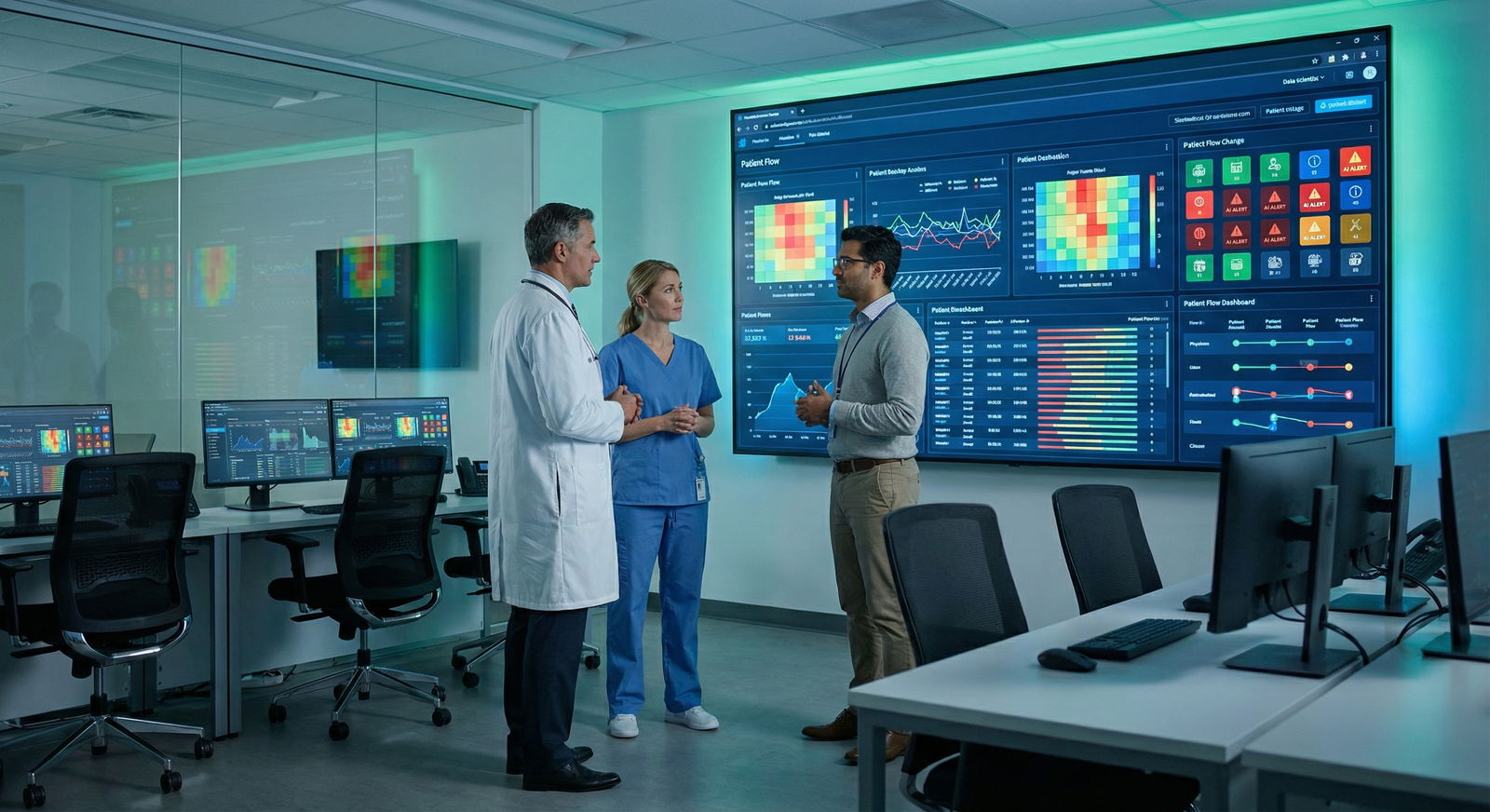
Behind the scenes, AI is reshaping workflow and operations—often as importantly as it reshapes direct diagnostics.
Clinical Prioritization and Triage
- AI systems can:
- Auto-triage imaging studies (e.g., suspected intracranial hemorrhage flagged for immediate radiologist review)
- Sort lab results by acuity (e.g., critical hyperkalemia) and push real-time alerts
- Classify ED patients by risk of deterioration, helping prioritize beds and staffing
Imagine an overcrowded emergency department where a triage AI continuously analyzes vital signs, brief histories, and chief complaints, flagging:
- A subtly septic patient with mild tachycardia and soft BPs who might otherwise wait
- A low-risk chest pain patient who can be fast-tracked through a diagnostic pathway
For residents, this can mean earlier escalation for the sickest patients and fewer missed deteriorations.
Automation of Repetitive Tasks
Natural Language Processing (NLP) can:
- Pull key data from prior notes, imaging reports, and labs to auto-populate problem lists
- Suggest diagnoses or differential diagnoses based on structured and unstructured data
- Draft discharge summaries or consult notes for clinician review and finalization
Administrative Efficiency
AI tools can:- Optimize scheduling and resource allocation (e.g., MRI slots, OR times)
- Predict no-shows and allow overbooking with lower risk
- Reduce time spent on medication reconciliation and prescription renewal workflows
These functions can free clinicians to spend more time on direct patient interaction and complex decision-making, shifting the balance from keyboard to bedside.
Ethical and Practical Considerations in AI-Driven Diagnostics
The rapid adoption of AI in Healthcare comes with serious Ethical Considerations and practical challenges. For early-career physicians, understanding these dimensions is as important as understanding the technology itself.
Data Privacy, Security, and Regulatory Compliance
AI thrives on data—large amounts of it. This dependence raises several issues:
Privacy Risks
- Training AI on EHR and imaging data requires de-identification and robust governance.
- Re-identification risks exist, especially with small or unique populations (e.g., rare diseases).
Security Concerns
- AI platforms integrated with clinical systems are potential targets for cyberattacks.
- Adversarial attacks—subtle manipulations that mislead models—are a growing concern in Medical Imaging and other modalities.
Regulatory Landscape
- Tools that affect diagnosis or management are typically regulated as medical devices (e.g., FDA in the U.S., EMA in Europe).
- Some AI systems are “locked” (static after approval); others are “adaptive” (continue to learn)—regulatory frameworks are still evolving.
As a clinician, you should:
- Know which AI tools in your institution are FDA-cleared vs experimental.
- Understand what data are being collected and how patients are informed.
- Be prepared to discuss data use and privacy with patients, particularly in consent discussions for AI-supported programs or research.
Human Oversight: AI as Assistant, Not Oracle
Even the best AI model is not infallible and cannot replace clinical judgment.
Complex Cases and Edge Scenarios
- AI systems may perform poorly in rare diseases, unusual presentations, or populations underrepresented in training data.
- Clinicians must be willing and able to override AI suggestions when they conflict with the clinical picture.
Explainability and Trust
- “Black box” models can be difficult to interpret. Explainable AI (XAI) methods (e.g., heatmaps on images, feature importance scores for tabular data) aim to bridge this gap.
- For medicolegal and ethical reasons, being able to articulate why you accepted or rejected an AI recommendation is important.
A productive mindset is to treat AI as a superspecialized consultant whose opinion you respect, but always contextualize—never delegate final responsibility.
Algorithmic Bias and Health Equity
AI can magnify health inequities if not designed and implemented thoughtfully.
Sources of Bias
- Training data that underrepresent certain races, genders, ages, or socioeconomic groups.
- Historical treatment patterns that reflect systemic inequities (e.g., undertreatment of pain in certain demographics) embedded into data.
Real-World Consequences
- Risk scores that underestimate risk in certain racial or ethnic groups.
- Triage systems that allocate fewer resources to historically underserved populations.
Mitigation Strategies
- Inclusive, diverse training datasets.
- Regular bias audits and performance monitoring across subgroups.
- Involving ethicists, community representatives, and front-line clinicians in system design and evaluation.
As a resident or young attending, you can:
- Question how an AI tool was validated across different patient groups.
- Report unexpected disparities and participate in quality improvement initiatives.
- Advocate for equitable technology deployment in your institution.
The Future Landscape: Personalization, Genomics, and Remote Care
Looking ahead, AI in diagnostics is converging with genomics, digital health, and precision medicine to redefine what it means to “make a diagnosis” and manage disease risk.
Personalized and Precision Diagnostics
The days of one-size-fits-all medicine are fading. AI enables more precise patient phenotyping and risk stratification.
Multi-Modal Data Integration
- Combining EHR, imaging, lab data, genomic sequencing, proteomics, and even microbiome profiles.
- Identifying patient subgroups with distinct trajectories and treatment responses.
Therapy Selection
- In oncology, AI can integrate tumor genomics, histopathology, and radiomics to guide:
- Targeted therapies
- Immunotherapy candidacy
- Surveillance imaging intervals
- In cardiology, AI may refine selection for device therapy or advanced heart failure interventions.
- In oncology, AI can integrate tumor genomics, histopathology, and radiomics to guide:
For your future practice, this means:
- Increasing need to interpret complex AI-generated risk profiles and treatment suggestions.
- Collaboration with data scientists, genetic counselors, and bioinformaticians as routine.
Integration of Genomic Data into Routine Care
AI is essential for interpreting genomic data at scale:
- Variant Classification
- Filtering and classifying variants of unknown significance (VUS) in the context of population databases and phenotypic data.
- Polygenic Risk Scores
- Estimating lifetime risk for conditions like coronary artery disease or breast cancer using multiple genetic variants.
- Pharmacogenomics
- Predicting drug responses and adverse reactions, guiding drug choice and dosing.
These tools will be increasingly embedded in EHR workflows, with AI summarizing complex genomic information into actionable recommendations.
Remote Monitoring and Continuous Diagnostics
The shift from episodic visits to continuous care is accelerating:
Wearables and Home Devices
- Continuous ECG, blood pressure, SpO₂, sleep, and movement data.
- AI models generating alerts for arrhythmias, sleep apnea, COPD exacerbations, and more.
Hospital-at-Home Models
- Combining home sensors, telemedicine, and AI triage for selected conditions.
- AI-driven decision support for when to escalate back to inpatient care.
For Healthcare Systems and Clinicians
- Opportunities to intervene early and reduce admissions.
- Challenges in data overload, alert fatigue, and reimbursement models.
Developing literacy in remote monitoring platforms and understanding which alerts matter clinically will be crucial skills for upcoming generations of physicians.

Positioning Yourself for the AI-Enabled Job Market
As you move into the post-residency and job market phase, AI competence is becoming a differentiating skill.
Skills and Competencies to Develop
Data Literacy
- Basic understanding of how AI models are trained, validated, and deployed.
- Ability to interpret performance metrics (accuracy, sensitivity, specificity, AUC, PPV/NPV, calibration).
Clinical Informatics Familiarity
- Exposure to EHR optimization, decision support systems, and clinical workflow design.
- Participation in committees or projects related to technology implementation.
Quality and Safety Mindset
- Thinking critically about where AI fits in clinical pathways.
- Helping create policies for override, documentation, and feedback loops.
Many institutions are beginning to list “comfort with AI tools” or “interest in digital innovation” as desirable traits in job postings. Early engagement can open doors in leadership, innovation, and academic roles.
Navigating Opportunities and Risks
Academic vs Community Settings
- Academic centers may lead in AI research and pilot programs.
- Community settings may adopt mature, vendor-provided AI tools at scale.
Career Paths
- Clinical AI champions or physician informaticists
- Participation in industry collaborations or advisory boards
- Dual training (e.g., clinical informatics fellowships) for those deeply interested
Maintaining Clinical Identity
- AI should complement your clinical skills, not replace your identity as a clinician.
- Emphasis on communication, empathy, and ethical judgment remains indispensable.
FAQ: AI in Diagnostics for Trainees and Early-Career Clinicians
1. How is AI currently used in Medical Imaging, and should I be worried about job security in radiology and related fields?
AI in Medical Imaging is primarily used as an assistive tool: flagging critical findings, automating measurements, and improving consistency. Systems can detect abnormalities (e.g., lung nodules, fractures, intracranial hemorrhage) and sometimes match or exceed average human performance on narrow tasks. However, they do not replace the holistic interpretation, integration with clinical context, and communication skills of radiologists and other imaging specialists.
Current evidence and practice patterns suggest:
- Radiologists’ roles will evolve toward more consultative, integrative, and interventional work.
- Demand for imaging continues to rise, and AI is more likely to help meet that demand than to eliminate positions.
- Familiarity with AI tools will likely be an asset in radiology, cardiology, emergency medicine, and beyond.
2. What role does AI play in Predictive Analytics and early disease detection, and how should I use these tools in my daily practice?
AI-based Predictive Analytics tools analyze EHR data, labs, and sometimes wearable data to estimate risk of conditions such as sepsis, readmission, heart failure decompensation, or diabetes progression. In daily practice:
- Treat AI-derived risk scores as an additional input—similar to existing clinical risk scores (e.g., CHA₂DS₂‑VASc, Wells)—not a final verdict.
- Understand the population on which the tool was validated and whether your patient matches that population.
- Document your reasoning when AI suggestions influence or differ from your plan. This is good practice for safety, quality, and medicolegal reasons.
3. What are the main Ethical Considerations I should keep in mind when using AI in Patient Care?
Key Ethical Considerations include:
- Data privacy and consent: Patients should know how their data are used, especially in training or improving AI systems.
- Algorithmic bias: AI can perpetuate systemic disparities if trained on non-representative data. Monitor for unexpected patterns across demographic groups.
- Transparency and explainability: Whenever possible, use tools that provide some rationale (e.g., highlighting image regions) and be ready to explain decisions to patients.
- Accountability: The clinician remains responsible for patient care decisions, even when AI is involved.
Being proactive in raising concerns and participating in institutional oversight efforts helps ensure ethical deployment.
4. Will AI replace healthcare providers, or will it mainly augment our diagnostic capabilities?
Current and foreseeable AI tools are designed to augment—not replace—healthcare providers. They:
- Take over repetitive, time-consuming tasks (e.g., measurements, simple classifications, documentation drafting).
- Offer second opinions, risk estimates, and pattern recognition to support decision-making.
- Free clinicians to focus on complex cases, communication, shared decision-making, and compassionate care.
Roles may shift, and some routine tasks may be automated, but the need for human judgment, empathy, and contextual understanding remains central to Patient Care.
5. How can I prepare myself for an AI-rich healthcare environment as I approach the job market?
To prepare:
- Seek opportunities to work with AI-enabled tools during training—ask your attendings or IT teams what is in use.
- Learn basic AI and data science concepts through electives, workshops, or online courses tailored to clinicians.
- Get involved in quality-improvement or informatics projects that touch on decision support or workflow redesign.
- Stay current with guidelines and position statements from specialty societies on AI in your field.
Demonstrating comfort with technology, openness to innovation, and a critical understanding of AI’s strengths and limitations will be increasingly attractive to employers in both academic and community settings.
AI is reshaping diagnostics across specialties and care settings, making medicine more proactive, data-driven, and personalized. For today’s trainees and early-career physicians, engaging with AI thoughtfully—understanding both its capabilities and its Ethical Considerations—will be key to delivering high-quality, equitable Patient Care in the decades ahead.