Introduction: Why 3D Printing Matters for the Future of Medicine
The landscape of modern medicine is evolving rapidly, with Healthcare Innovations reshaping how clinicians diagnose, plan, and deliver care. Among these Medical Technology breakthroughs, 3D Printing (additive manufacturing) has emerged as a transformative force with direct, practical impact on clinical practice, surgical training, and the post-residency job market.
For residents, fellows, and early-career physicians, understanding 3D Printing and Bioprinting is no longer optional. It increasingly influences:
- How complex surgeries are planned and rehearsed
- How prosthetics, implants, and surgical instruments are designed and manufactured
- How future tissue engineering and organ replacement therapies may be delivered
- How hospitals and health systems differentiate themselves competitively
This article explores the fundamentals of 3D Printing in medicine, key clinical applications, benefits and limitations, and where the field is heading. It is written with medical trainees and early-career clinicians in mind, focusing on practical relevance and career implications.
The Fundamentals of 3D Printing in Medicine
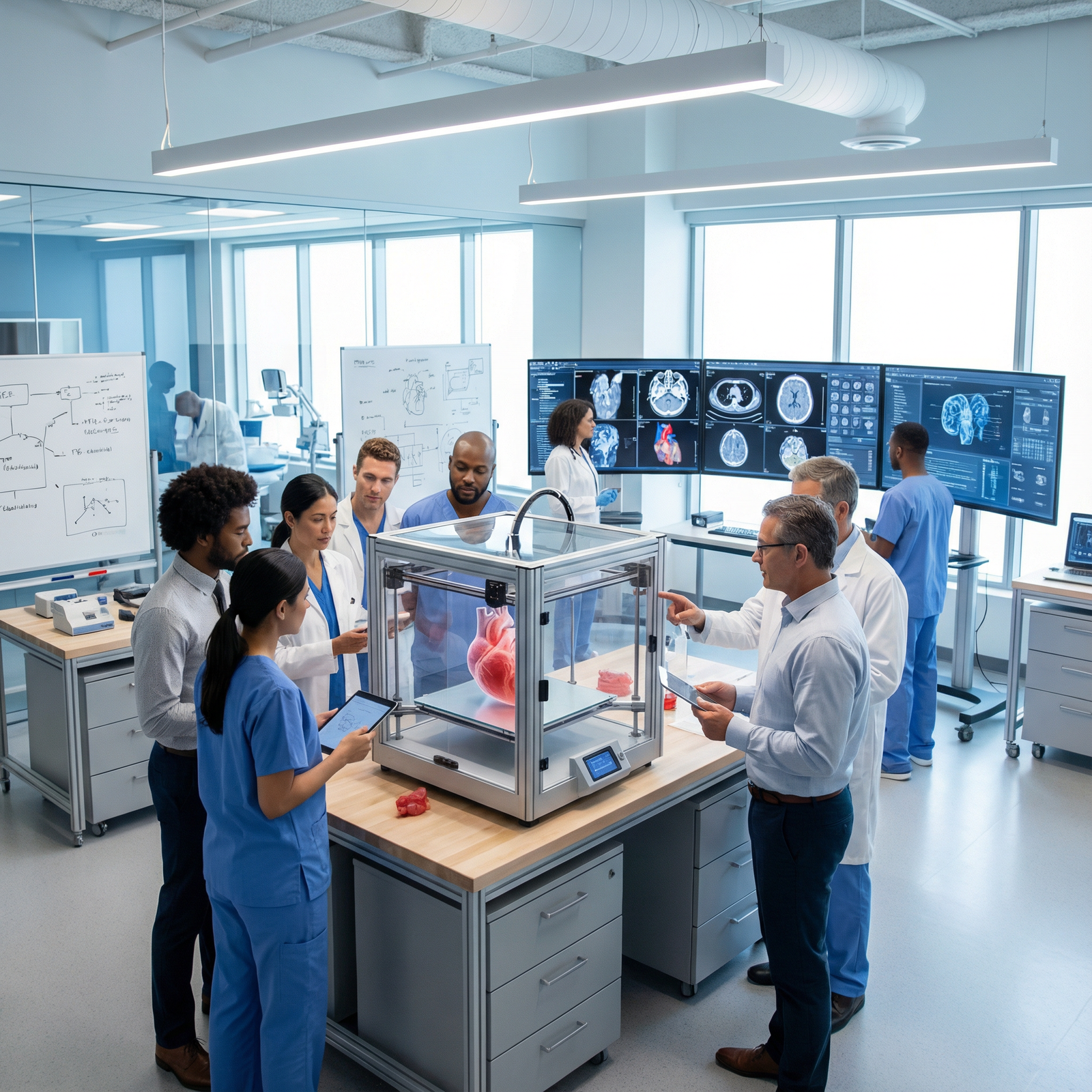
3D Printing, or additive manufacturing, is the process of creating three-dimensional objects layer by layer from a digital model. In medicine, this means translating anatomical data or device designs into physical objects—ranging from prosthetics and implants to surgical guides and experimental bioprinted tissues.
From Imaging to Object: How Medical 3D Printing Works
In clinical settings, the 3D Printing workflow typically follows these steps:
Data Acquisition and Segmentation
- Source data usually comes from CT, MRI, or 3D ultrasound.
- Radiology or biomedical engineering staff “segment” the anatomy of interest (e.g., a tumor, bone, vessel, or organ) using specialized software (e.g., Mimics, 3D Slicer).
- The segmented anatomy is converted into a 3D mesh (commonly STL file format).
Design and Optimization (CAD Stage)
- Computer-aided design (CAD) tools are used to:
- Refine anatomical models
- Add features (e.g., drill guides, fixation holes, labels)
- Design patient-specific devices (e.g., prosthetics, cutting guides, plates)
- For prosthetics or orthotics, surface scanning of the patient (optical or laser scanners) is often combined with imaging data for precise fit.
- Computer-aided design (CAD) tools are used to:
3D Printing Process
The digital model is “sliced” into thin layers, and the printer builds the object layer by layer using materials such as:- PLA (Polylactic Acid)
- Biodegradable plastic
- Ideal for anatomical models, prototypes, and low-cost training tools
- ABS (Acrylonitrile Butadiene Styrene)
- Tough, durable thermoplastic
- Used for functional parts, housings, and some external medical devices
- Nylons, photopolymers, metal powders, and ceramics
- Common in surgical instruments, dental appliances, and implants
- Biomaterials and living cells
- Used in Bioprinting research to create tissue constructs for regenerative medicine and drug testing
- PLA (Polylactic Acid)
Post-Processing and Validation
- Removal of supports, cleaning, curing (for resins), and sterilization (if for intraoperative use)
- Mechanical or dimensional testing if the device is load-bearing
- Clinical validation to ensure anatomical accuracy and fit
Key 3D Printing Technologies Used in Healthcare
Different printing technologies offer different strengths in terms of resolution, material compatibility, and cost.
Fused Deposition Modeling (FDM)
- Melts and extrudes thermoplastic filament (PLA, ABS, PETG) layer by layer
- Advantages:
- Low cost, accessible, easy to maintain
- Ideal for prosthetics, anatomical models, and simple jigs
- Limitations:
- Coarser surface finish and lower resolution compared to resin-based methods
Stereolithography (SLA) and Digital Light Processing (DLP)
- Use UV light to cure liquid resin in a vat, producing very fine details
- Advantages:
- High resolution and smooth surface finish
- Widely used for dental models, hearing aids, small orthopedic components, and surgical guides
- Considerations:
- Resins must be biocompatible and sterilizable for clinical use
Selective Laser Sintering (SLS) and Selective Laser Melting (SLM)
- Use a laser to fuse powder (nylon, titanium, cobalt-chrome) into solid objects
- Key for:
- Custom implants (e.g., titanium bone scaffolds, spinal cages)
- Specialized surgical instruments
- Advantages:
- Excellent mechanical properties
- Ability to create porous structures that promote osseointegration
Bioprinting Technologies
- Adapt similar principles but print bioinks—hydrogels laden with living cells and growth factors
- Used in research for:
- Skin, cartilage, vascular structures, and liver or cardiac tissue models
- Advanced in vitro models for pharmacology and toxicology
Core Clinical Applications of 3D Printing in Medicine
3D Printing is no longer purely experimental; it is embedded in day-to-day care at many major centers. Below are the highest-impact use cases across specialties.
1. Customized Prosthetics and Orthotics
3D Printing has dramatically lowered the barrier to providing personalized Prosthetics and orthotic devices, particularly in resource-limited settings.
Clinical Benefits
Personalized Fit and Comfort
Scanned anatomy and CAD design allow sockets, braces, and splints to be precisely matched to the patient’s contours, improving comfort, reducing pressure points, and enhancing adherence.Cost and Accessibility
- Traditional prosthetic limbs can be expensive and time-consuming to fabricate.
- 3D-printed prosthetic arms or hands can cost a fraction of conventional devices, enabling access for children, low-income patients, and populations in conflict zones.
Aesthetics and Psychosocial Impact
- Patients—especially children—can choose colors, patterns, and themes, increasing acceptance and enthusiasm.
- Rapid reprints are possible to accommodate growth in pediatric patients.
Example for Practice:
A pediatric rehab service partners with an engineering school to design 3D-printed forearm prostheses for children with congenital limb differences. Using low-cost FDM printers and open-source designs, they produce devices in days, allowing frequent resizing as the child grows and leaving budget room for additional therapy services.
2. Surgical Planning, Simulation, and Medical Education
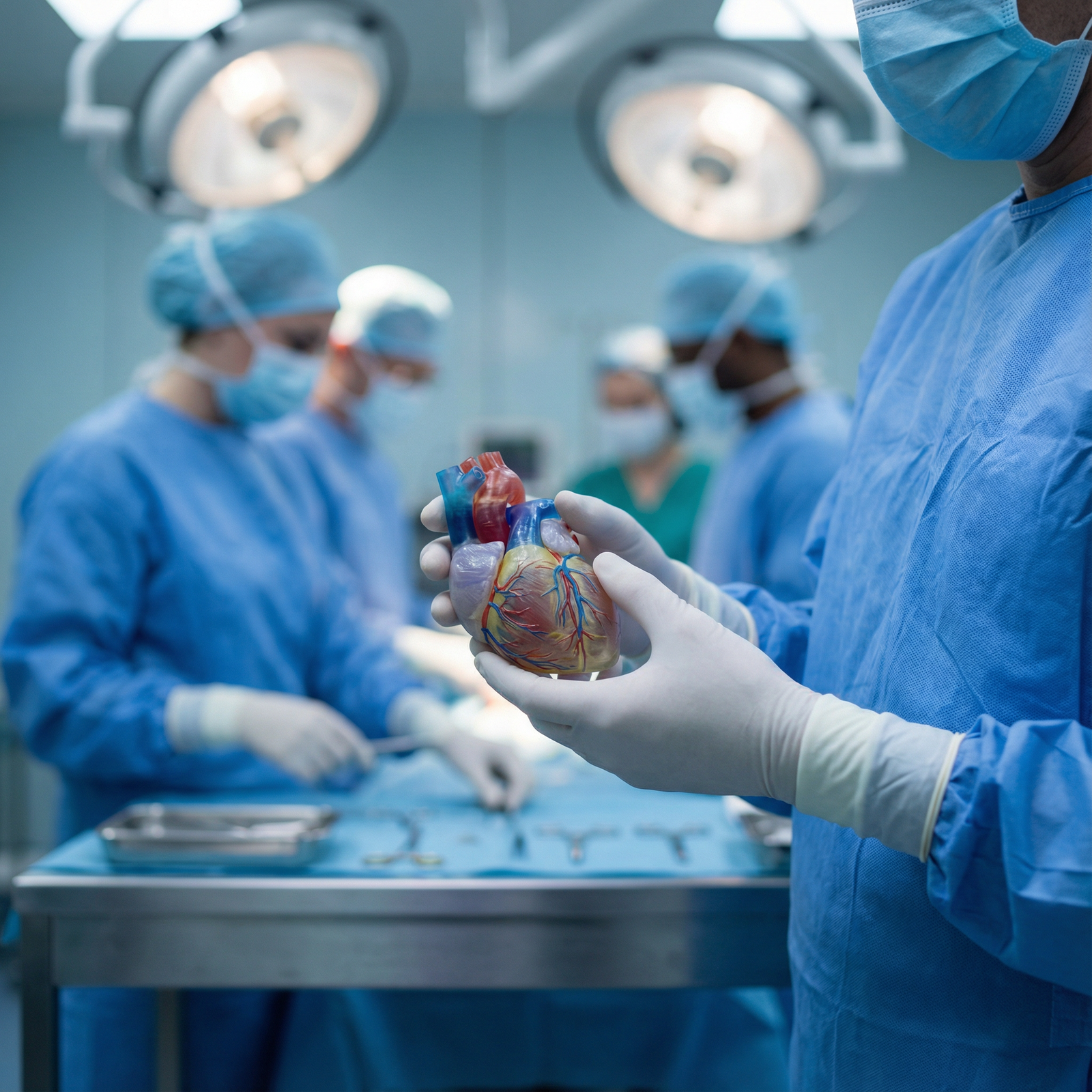
Perhaps the most widespread current use of 3D Printing in hospitals is the creation of patient-specific anatomical models.
Preoperative Planning and Intraoperative Guidance
Visualization of Complex Anatomy
- 3D models from CT/MRI help surgeons understand spatial relationships in tumors, vascular malformations, congenital heart disease, craniofacial deformities, and complex fractures.
- This is especially useful in neurosurgery, cardiothoracic surgery, ENT, orthopedics, and urology.
Hands-On Rehearsal
- Surgeons can rehearse osteotomies, determine optimal screw trajectories, and plan resection margins on the model.
- Simulated procedures can decrease operative time and blood loss and improve confidence.
Patient and Family Communication
- Showing a patient their own printed anatomy often improves understanding and informed consent, particularly for high-risk or staged procedures.
Clinical Scenario:
For a child with complex congenital heart disease, a 3D-printed cardiac model allows the multidisciplinary heart team to plan a surgical approach, anticipate potential complications, and reduce bypass time. Early studies suggest improved outcomes and shorter OR times, which are directly relevant to cost and patient safety.
Medical Education and Skills Training
Anatomical Teaching Aids
- 3D-printed bones, organs, and vascular trees can be shared across many classes and cohorts.
- Pathology-specific models (e.g., aneurysms, tumors) give trainees better pattern recognition.
Procedural Simulators
- Models with varying densities and embedded channels can simulate drilling, cutting, cannulation, or endovascular navigation.
- Particularly useful for low-frequency, high-risk procedures (e.g., pedicle screw placement, aneurysm coiling).
For residents, these applications directly support competency-based training and reduce pressure on using live patients for learning complex maneuvers.
3. Bioprinting: Tissue Engineering and Future Organ Replacement
Bioprinting represents the biological frontier of 3D Printing and is a central topic in Healthcare Innovations and regenerative medicine.
Current Capabilities
While fully functional, transplant-ready human organs are not yet available, Bioprinting has achieved:
Engineered Tissue Constructs
- Skin equivalents for wound healing research and early-stage graft applications
- Cartilage-like constructs for joint research and potential future meniscal or articular cartilage repair
- Vascularized tissue patches (e.g., myocardial patches in preclinical models)
Advanced In Vitro Models for Drug Development
- Bioprinted liver or cardiac microtissues used to screen drug toxicity
- Tumor models that better replicate human microenvironments than 2D cultures
These advances may significantly reduce reliance on animal testing and improve translational predictability.
Long-Term Vision: Organ Bioprinting
The strategic goal is to address the critical shortage of donor organs by eventually Bioprinting:
- Kidneys
- Livers
- Hearts
- Pancreatic islets and other endocrine tissues
Challenges include:
- Achieving vascularization robust enough to support full organ function
- Ensuring mechanical strength, immune compatibility, and long-term integration
- Navigating regulatory and ethical frameworks for first-in-human trials
For post-residency clinicians, familiarity with Bioprinting will be crucial as organ replacement and tissue engineering therapies move closer to clinical deployment.
4. Customized Surgical Instruments and Guides
3D Printing enables the design and production of tools and accessories tailored to specific procedures or patient anatomy.
Patient-Specific Cutting and Drilling Guides
- Common in orthopedics, maxillofacial surgery, and oncologic resections
- Guides are designed from preoperative imaging to direct saws or drills to precise angles and depths.
Procedure-Specific Tools
- Custom clamps, retractors, or positioning devices developed for unusual anatomy or novel techniques
- Often produced at a fraction of the cost and time of traditional manufacturing
Example:
A maxillofacial team uses 3D-printed cutting guides and templates for jaw reconstruction with fibular free flaps. The surgical time is reduced, and the occlusion and aesthetic outcomes are more predictable, which is a compelling advantage in head and neck oncology.
5. Implants, Scaffolds, and Biomaterial Applications
3D Printing has driven a paradigm shift from “off-the-shelf” to patient-specific implants.
Orthopedic and Craniofacial Implants
3D-Printed Titanium Implants
- Used in cranial reconstructions, spinal cages, acetabular cups, and segmental bone replacements
- Incorporate porous lattice structures that promote bone ingrowth and reduce stress-shielding
Bioactive and Bioresorbable Scaffolds
- Custom-shaped scaffolds for bone defects can be printed from bioceramics or composites
- Over time, these may be resorbed and replaced by native bone, reducing the need for secondary procedures
Dental and Maxillofacial Applications
- Dental crowns, bridges, surgical guides, and alignment devices can all be fabricated based on intraoral digital scans, increasing precision and reducing turnaround time.
For surgeons practicing in these fields, competency in interpreting and leveraging these technologies is increasingly part of being competitive in the job market.
Key Benefits of 3D Printing for Modern Healthcare Systems
3D Printing offers advantages that extend beyond individual procedures, influencing system-wide performance.
Clinical and Patient-Centered Benefits
Extreme Customization
- Tailored Prosthetics, implants, and devices improve fit, function, and patient satisfaction.
- Enhanced personalization aligns with the broader shift toward precision medicine.
Improved Surgical Accuracy and Outcomes
- Better preoperative planning and intraoperative guidance can translate into:
- Reduced operative times
- Lower complication rates
- Decreased need for revision surgeries
- Better preoperative planning and intraoperative guidance can translate into:
Enhanced Patient Communication and Engagement
- Physical models facilitate shared decision-making and realistic expectation setting.
Operational and Economic Benefits
Reduced Time-to-Device
- On-site or regional 3D Printing hubs can produce devices in days instead of weeks, reducing delays in care.
Cost Savings Over Time
- While initial setup costs can be significant, savings accrue by:
- Reducing OR time (high-cost minutes)
- Preventing complications and re-operations
- Lowering vendor dependency for certain devices
- While initial setup costs can be significant, savings accrue by:
Catalyst for Innovation
- Clinicians can prototype and iterate on ideas quickly, accelerating translational innovation within the hospital system.
For healthcare organizations, adopting 3D Printing and related Medical Technology can become a strategic differentiator in recruitment, reputation, and service offerings.
Challenges, Risks, and Ethical Considerations
Despite its promise, 3D Printing in medicine faces substantial hurdles that clinicians and leaders must navigate thoughtfully.
Regulatory and Quality Assurance Challenges
Device Classification and Approval
- Depending on the jurisdiction, 3D-printed devices may be classified as medical devices requiring regulatory clearance (e.g., FDA in the U.S., EMA in Europe, etc.).
- Patient-specific devices produced in-hospital may fall into regulatory gray areas, necessitating careful compliance strategies.
Standardization and Reproducibility
- Variations in printer calibration, material batches, and software workflows can impact device quality.
- Robust QA/QC protocols and documentation are essential, especially for implants and instruments.
Material and Technical Limitations
Biocompatibility and Sterilization
- Not all printable materials are safely sterilizable or biocompatible.
- Material selection must consider mechanical strength, toxicity, and interaction with body tissues.
Complexity and Skill Requirements
- Successful implementation requires cross-disciplinary expertise in radiology, engineering, surgery, and regulatory science.
- Training is essential for surgeons and staff to interpret models correctly and understand their limitations.
Ethical and Societal Questions
Equity and Access
- Will advanced Bioprinting and customized implants be accessible only in high-resource centers?
- How can health systems avoid widening disparities?
Bioprinted Organs and Tissues
- Questions about the moral status of complex, partially functional organoids
- Fair allocation policies once Bioprinted organs become viable
- Ownership and commercialization of patient-derived cells and tissues
Clinicians entering leadership roles should anticipate participating in institutional and policy-level discussions around these issues.
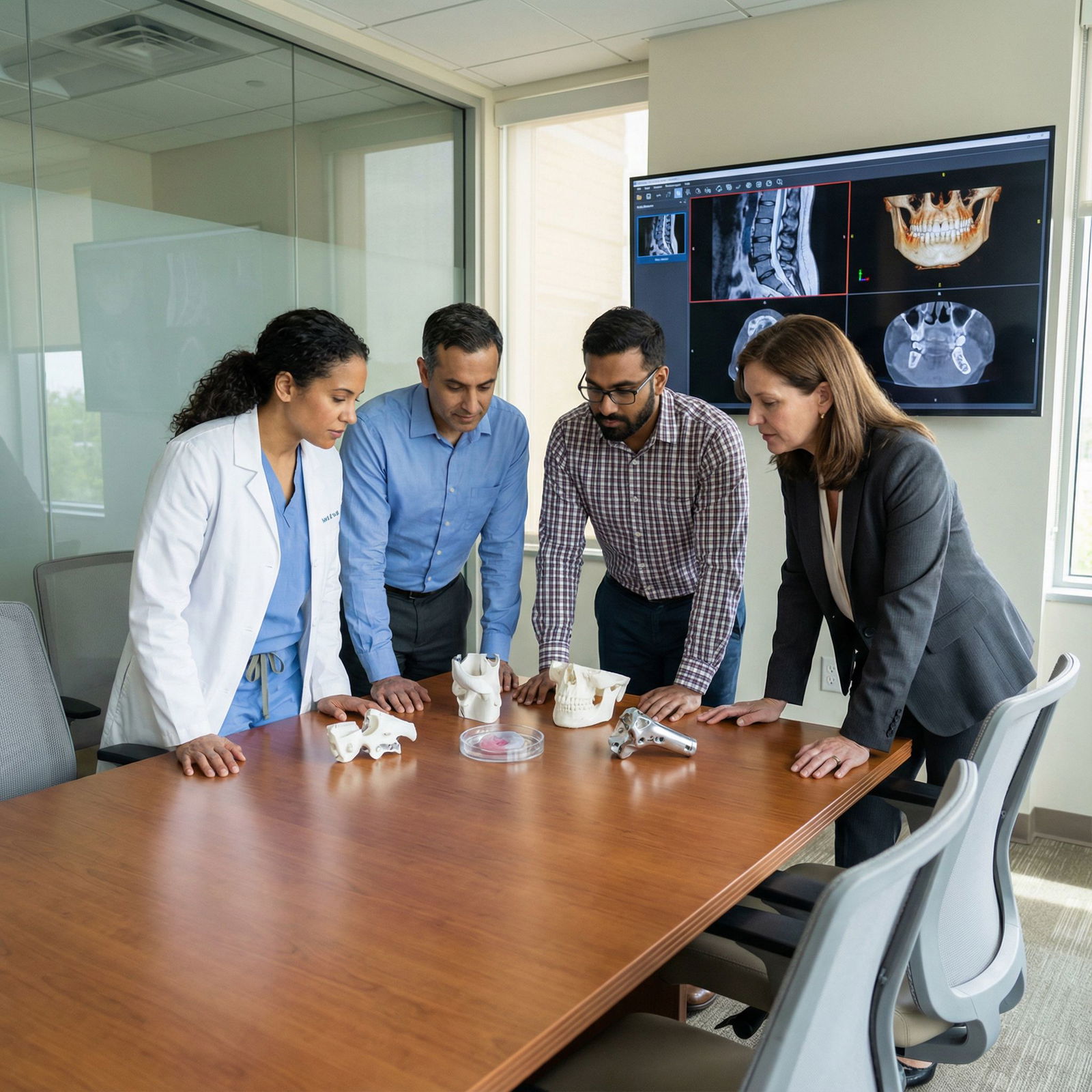
The Future of 3D Printing in Medicine and Your Career
Looking forward, 3D Printing will likely be tightly integrated with other emerging technologies to drive the next wave of Healthcare Innovations.
Integration with Artificial Intelligence and Advanced Imaging
AI-Driven Segmentation and Design
- Automated segmentation of imaging data to speed up model generation
- AI-driven optimization of implant geometry for load distribution and bone integration
Predictive Modeling and Simulation
- Computational simulations of how a 3D-printed implant will behave under real-world forces
- Virtual testing of Bioprinting scaffold designs before fabrication
Robotics, Automation, and Point-of-Care Manufacturing
Robotic-Assisted Fabrication and Finishing
- Robots may handle repetitive tasks like support removal, polishing, and quality inspection.
Point-of-Care 3D Printing Labs
- More hospitals are establishing in-house 3D Printing centers integrated with radiology and surgery.
- These labs will need clinicians who understand both clinical requirements and the technical capabilities of additive manufacturing.
Implications for Residents and Early-Career Physicians
Competitive Differentiation
- Experience with 3D Printing, Bioprinting, or image-based surgical planning can distinguish you in fellowship and job applications.
- Many academic centers now advertise their 3D Printing capabilities as a draw for faculty and trainees.
Opportunities to Lead Innovation
- Clinician innovators can partner with engineers to develop new devices and workflows.
- Knowledge of IP, regulatory pathways, and industry collaboration will be increasingly valuable.
Actionable Steps for Trainees and New Attendings:
- Seek rotations or electives in hospitals with active 3D Printing programs.
- Participate in research projects involving patient-specific models, Prosthetics, or surgical guides.
- Learn basic principles of CAD and image segmentation (many free tools and courses exist).
- Engage your institution’s biomedical engineering or innovation office early with ideas.
FAQs: 3D Printing, Bioprinting, and Medical Technology
Q1: What materials are most commonly used in medical 3D Printing, and how is safety ensured?
Common materials include:
- Plastics: PLA, ABS, PETG, and nylon for anatomical models, external devices, and training tools
- Resins: Biocompatible photopolymers for dental applications and surgical guides
- Metals: Titanium and cobalt-chrome alloys for long-term implants and some instruments
- Biomaterials: Hydrogels and cell-laden bioinks for Bioprinting research
Safety is ensured through:
- Use of certified medical-grade materials
- Validation of sterilization compatibility (e.g., autoclave, gamma, EtO)
- Adherence to regulatory standards and Good Manufacturing Practice (GMP) where applicable
- Institutional quality control, testing, and documentation
Q2: How does 3D Printing actually improve surgical outcomes in practice?
3D Printing improves outcomes by:
- Enhancing the surgeon’s understanding of complex anatomy
- Allowing preoperative rehearsal and optimization of the surgical plan
- Enabling patient-specific guides and implants, which improve precision
- Reducing operative time, blood loss, and intraoperative decision uncertainty
Multiple studies report improved alignment in orthopedic procedures, better margin control in oncologic resections, and reduced bypass or clamp times in cardiac surgery when 3D-printed models and guides are used.
Q3: Is it realistic for hospitals to have their own 3D Printing labs, and what roles do clinicians play?
Yes, increasingly so. Many tertiary centers now maintain in-house 3D Printing labs integrated with radiology, surgery, and biomedical engineering. Clinicians typically:
- Identify cases where patient-specific models or devices will improve care
- Collaborate on case planning and define clinical requirements
- Validate the clinical accuracy and utility of printed models and guides
- Participate in quality assurance and research to demonstrate impact
Residents and fellows often serve as key liaisons between clinical teams and engineers, making it a valuable area for academic contribution.
Q4: What are the major ethical concerns associated with Bioprinting?
Key ethical concerns include:
- Creation and use of complex human tissues and organoids
- Where is the line between research model and morally relevant “organ”?
- Equitable access
- Ensuring that future Bioprinted organs are not restricted to wealthy patients or high-resource countries
- Ownership of biological materials
- Clarifying who owns the rights to tissues, cells, and resulting constructs—patients, institutions, or companies
- Consent and transparency
- Ensuring patients understand how their cells are used in research and potential commercialization
Ethics committees, professional societies, and regulators are actively developing guidance, and clinicians will be central voices in these discussions.
Q5: How can I, as a resident or new attending, practically get involved in 3D Printing and related Healthcare Innovations?
Consider the following steps:
- Identify champions in your institution (radiologists, surgeons, engineers) already involved in 3D Printing.
- Ask to observe the workflow from imaging to printed model for actual clinical cases.
- Join or propose research projects evaluating the clinical or educational utility of printed models or guides.
- Take short courses or online modules in basic CAD design, DICOM segmentation, and regulatory basics for medical devices.
- Present your work at specialty conferences—this can strengthen your CV and open doors to innovation-focused positions.
By understanding and engaging with 3D Printing, Bioprinting, and related Medical Technology, you position yourself at the forefront of Healthcare Innovations that will define practice in the coming decades—from customized Prosthetics and implants to future organ replacement therapies.