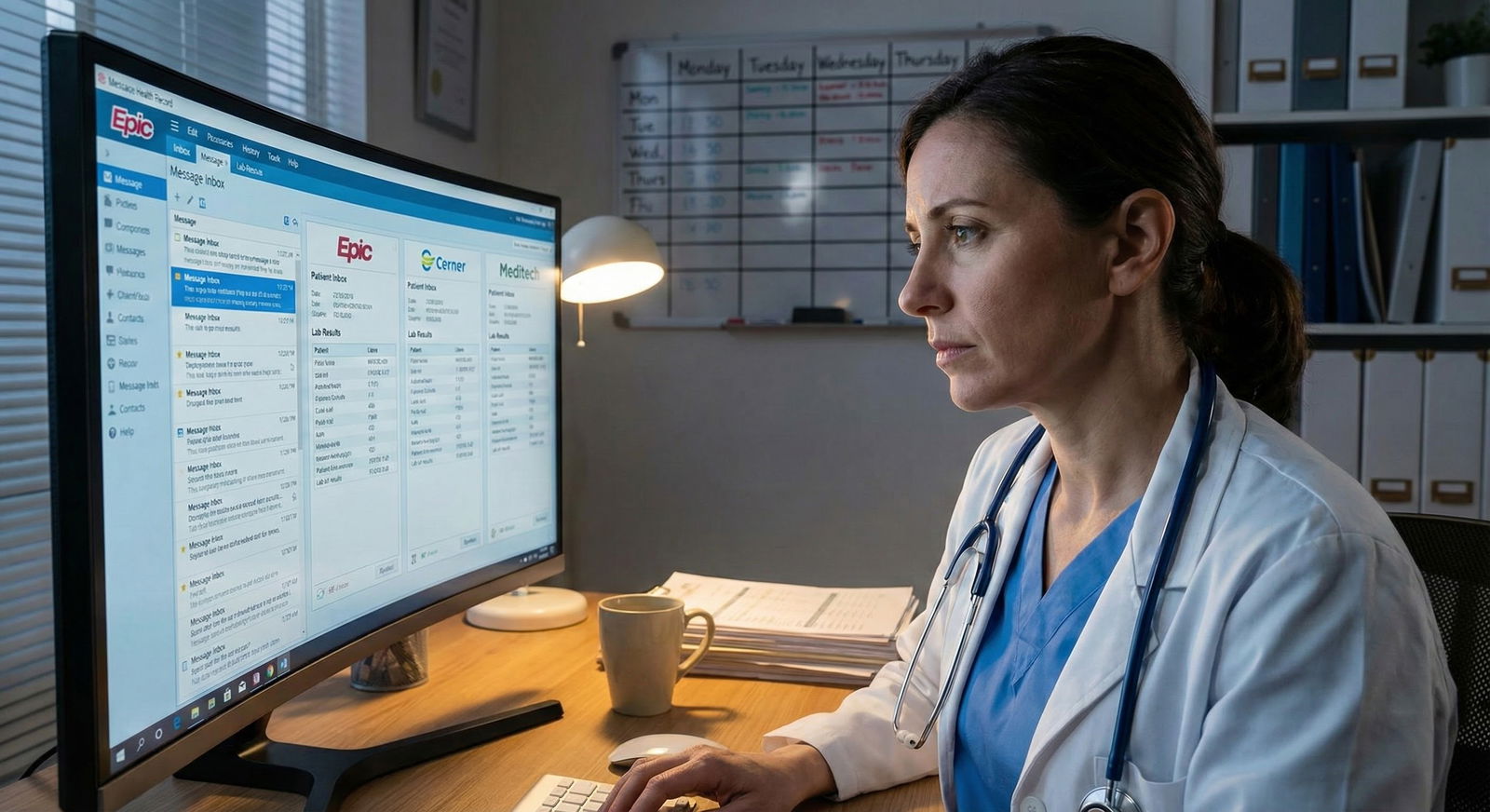
The myth that EHR inbox overload is a “primary care problem” is wrong. The data say otherwise, and the spread across specialties is far wider—and more consequential—than most graduating residents realize.
This is not a story about “burnout” in the abstract. It is a story about message counts per day, minutes per message, and how those two numbers quietly dominate your evenings and weekends once you are out of training. You negotiate salary, RVUs, and call. You rarely negotiate inbox volume. That is a mistake.
Let’s quantify what you are up against.
The Core Metric: Messages per Physician per Day
Research across multiple health systems converges on the same basic picture: the EHR inbox is not a side task; it is a separate job layered on top of clinical care.
Across specialties in large integrated systems, typical clinician message burden clusters in roughly this range:
- Total inbox messages (all sources): about 50–120 per workday
- Time per message (respond/triage/route): about 0.6–1.5 minutes
- Total inbox time: commonly 45–120 minutes per workday, plus spillover to nights/weekends
The mix, however, is not even remotely equal across specialties.
To make this concrete, here is a composite snapshot pulled from published studies (e.g., Kaiser Permanente, UCSF, multiple Epic-based systems) and normalized for a full-time clinician (0.9–1.0 FTE). Exact numbers differ by system, but the relative pattern is remarkably consistent.
| Specialty | Total Messages/Day | Patient Messages/Day | Rx/Refill Messages/Day | Result/Alert Messages/Day |
|---|---|---|---|---|
| Family Medicine | 90–120 | 25–40 | 15–25 | 20–30 |
| General Internal Med | 80–110 | 20–35 | 15–25 | 20–30 |
| Pediatrics (Gen) | 70–100 | 15–25 | 10–20 | 15–25 |
| Cardiology (Outpt) | 60–80 | 10–20 | 10–15 | 15–25 |
| General Surgery | 35–55 | 5–10 | 5–10 | 10–15 |
Notice two things:
- Primary care is high, but not an outlier by a factor of 5. Several cognitive specialties sit surprisingly close.
- Even general surgery, often perceived as “low inbox,” still carries 35–55 messages daily. That is not trivial.
Now look at how this translates into time:
- At 1 minute per message, 90 messages = 90 minutes per day.
- Over 4.5 workdays per week (typical for outpatient-heavy jobs), that is 6.75 hours weekly.
- Over a year: ~320–350 hours. About 8 full 40‑hour workweeks spent in the EHR inbox.
That is the baseline for many early-career outpatient physicians.
How Volume Actually Breaks Down: Not All Messages Are Equal
Lumping “inbox messages” together hides the real drivers of after-hours work. The data generally show four main categories:
- Patient portal messages (MyChart, etc.)
- Medication-related messages (refills, clarifications, PA requests)
- Results and alerts (labs, imaging, consult notes)
- Internal communications (staff messages, routing, FYIs, documentation queries)
Looking at representative distributions:
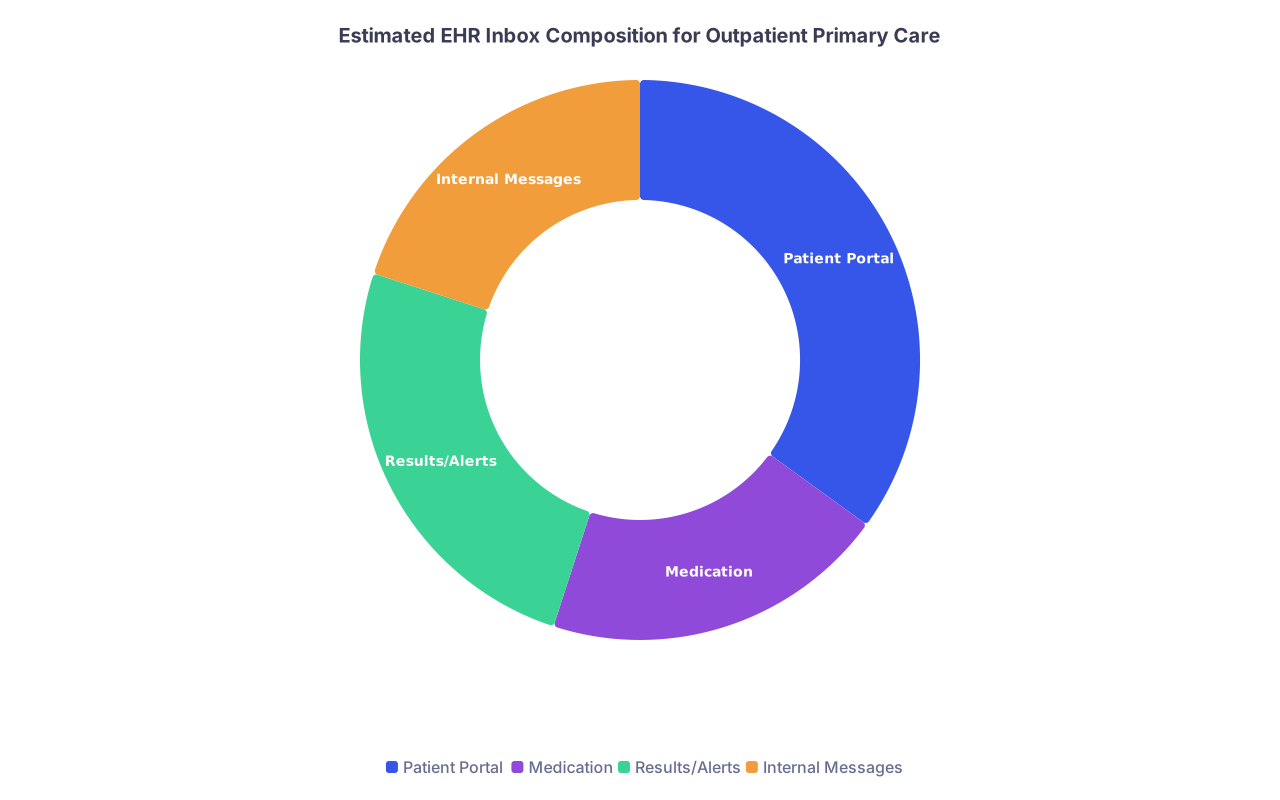
| Category | Value |
|---|---|
| Patient Portal | 35 |
| Medication | 20 |
| Results/Alerts | 25 |
| Internal Messages | 20 |
In words:
- Roughly one-third of messages are direct patient communication.
- Another 20% are medication-related.
- About a quarter are lab/imaging/alert follow‑ups.
- The remainder is internal chatter and workflow-routing.
You do not experience all of these equally. Here is where specialties diverge.
Primary Care and Pediatrics
The data are blunt here:
- Family medicine/internal medicine often see 20–40 patient messages/day.
- Pediatrics can spike seasonally (respiratory season, school forms) with short bursts of 30–50 messages/day.
A common pattern from time-motion and EHR log studies:
- About 1–1.5 minutes per portal message when you include chart review and documentation.
- 3–5 clicks per simple message, 7–10 for more complex issues (med changes, new symptoms, follow‑up planning).
If you are averaging 30 patient messages daily at 1.2 minutes each, that is 36 minutes just on portal replies. Add results, med refills, internal notes and you are quickly near 75–100 minutes.
Cognitive Subspecialties (Cardiology, Endocrine, GI)
These specialties often sit in the 60–90 messages/day range, not far behind primary care. The content, however, skews:
- Higher proportion of abnormal results and complex management questions
- More medication titration messages, especially in endocrine and cardiology
- Slightly fewer simple FYIs, slightly more high-stakes decisions embedded in “just one more question”
So for cardiology, 60 messages might take nearly as long as 90 in family medicine, because the clinical complexity per message is higher.
Surgical Specialties
Inbox burden is lower in raw volume, but the distribution is weird:
- Patients and staff often use the portal/inbox to bypass normal channels: “Urgent” post‑op concerns, wound photos, last‑minute clearance questions.
- Fewer total messages, but a higher proportion are time-sensitive.
- Many systems still force surgeons to own results and alerts they did not request or do not truly need.
The surgeon who says “I do not have an inbox problem” is either in a very protected practice or is silently offloading work onto staff or partners.
The Post‑Residency Shock: Why It Feels Worse After Training
Residents grossly misestimate post-training inbox work because the structure of residency hides the real numbers.
Here is what changes once you graduate:
Panel ownership: You move from transient ownership to longitudinal responsibility. Every abnormal lab, every portal message, every refill request eventually comes to you. No “the resident rotates off next month.”
Volume per FTE: A typical outpatient intern or resident might be shielded from full panel load. Attendings in full‑time clinic often see 1.5–2.5× the patient panel volume.
Less “free” admin time: Residency has built-in “non-clinical” time that quietly gets swallowed by EHR work. Post‑residency, that becomes “do it on your own time.”
Here is a simplistic but accurate trajectory for many primary care physicians:
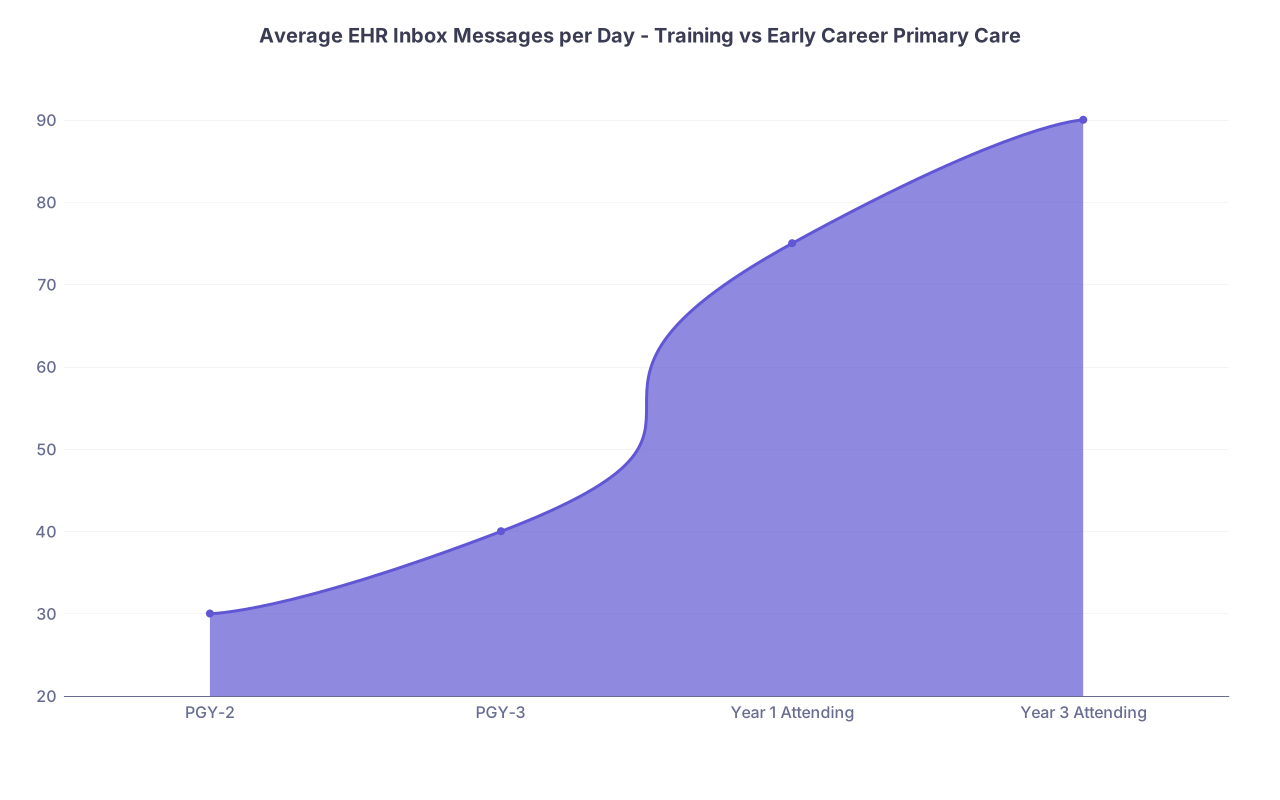
| Category | Value |
|---|---|
| PGY-2 | 30 |
| PGY-3 | 40 |
| Year 1 Attending | 75 |
| Year 3 Attending | 90 |
Even if this particular curve is off by 10–15 messages for a given institution, the direction is not up for debate: inbox volume roughly doubles between late residency and your first few attending years as your panel matures.
If you underestimate that doubling, you underestimate how much time you are privately donating back to your employer.
The Hidden Hours: Time-in-EHR vs Scheduled Hours
Studies using EHR log data show a consistent pattern:
- For outpatient specialities, 30–70% of total EHR time is spent outside of scheduled clinic hours.
- Inbox work is the single largest after-hours component (more than notes in many systems).
Typical week for a full-time ambulatory provider in primary care or an outpatient-heavy specialty:
- 32–36 scheduled patient‑facing hours
- 6–10 hours EHR work after hours
- Of that, 3–6 hours weekly in the inbox alone
Put differently, the inbox often adds the equivalent of one extra clinic half‑day every week. Unpaid, uncredited, and usually unmeasured at the contract level.
For many early-career physicians:
- “One bad Tuesday” = 120–150 messages
- 150 messages × 1 minute = 150 minutes = 2.5 hours
- You will not find those 2.5 hours blocked on your schedule anywhere.
You feel this as “I am always behind,” but the actual math is straightforward. You are over-scheduled for face-to-face care relative to the invisible inbox load.
Specialty Patterns: Where the Data Point You Should Look Hard
Let’s walk specialty by specialty and translate inbox numbers into practical job-market questions.
Primary Care (FM, IM, Pediatrics)
Inbox burden is baked into the job. The data show:
- 80–120 messages per day is entirely normal for full-time clinic.
- Volume is highly sensitive to panel size and composition (multi-morbidity, age mix, portal adoption).
- Practices with aggressive patient portal promotion often see 20–40% higher message counts per FTE.
If you are choosing between two jobs with similar salary/RVUs, ask for quantitative inbox data:
- Average inbox messages per PCP per day
- Patient portal messages per 1000 patients per month
- Ratio of staff-initiated vs patient-initiated messages
A seemingly small difference—say 20 messages/day—translates to roughly:
- 20 × 1 min × 220 days = 4400 minutes = 73 hours/year
That is two full workweeks. For free.
Medical Subspecialties (Cardiology, Endocrine, Rheumatology, GI, Pulm)
Cognitive subspecialty jobs often pitch: “lighter call, better control, slightly fewer clinic sessions.” They rarely mention inbox density.
What the data show:
- Subspecialists often have 60–90 messages/day, but with higher clinical complexity per message.
- The ratio of result alerts to total messages is often higher (imaging, specialty labs, consult follow-ups).
- Portal message growth is steep because established, chronic patients quickly learn to use messaging rather than visits.
Quantitatively, you should ask:
- Average total messages/day per full-time subspecialist
- % of imaging/lab results routed directly to the specialist, not the PCP
- Use of pooled inboxes (for RN/APP triage) vs direct-to-physician routing
A subspecialty job that uses RN triage to handle 40–60% of incoming messages can effectively cut your inbox workday by 20–30 minutes. Every day.
Surgical Specialties
Surgery is not inbox‑free, just different.
Patterns the data show:
- Total message counts: 35–60 per clinic day. Lower than primary care, yes, but not trivial.
- But a high fraction of “urgent‑feeling” messages: wound issues, pain, complications, pre‑op clearances.
- Many surgeons still act as clearinghouses for documents and administrative tasks that could be owned by staff.
Key quantitative questions:
- How many inbox messages does a typical surgeon handle on a clinic day vs OR day?
- Are post‑op questions triaged first by nurse/PA, or do they hit the surgeon’s inbox directly?
- Is there structured time in the surgeon’s template for inbox/documentation work?
The surgeon who has two full OR days and two clinic days with 40–50 messages each clinic day still has 80–100 weekly messages to clear. If each takes even 1 minute, that is 1.5–2 hours of overhead that most job offers do not mention.
System Design: Why Some Jobs Hurt More Than Others
Inbox misery is not immutable. There are measurable system-level differences. Several variables materially alter message volume and time:
Routing Rules
Systems that route every result and every FYI to the physician inflate message counts by 20–40%. Smart routing rules (delegated normal results to staff, pooled inboxes) cut volume substantially.Staffing Ratios
RN/MA/APP support ratios matter. A 1:1 MA:physician model vs 2:1 or 3:1 changes how much can be pre-triaged, drafted, or handled without touching your inbox.Standing Protocols
Systems with standing refill and lab protocols shift low‑complexity decisions away from the physician. Studies show 20–30% of refill and routine lab follow-up work can be safely handled this way.Patient Portal Policies
Automatic “free” messaging with no guardrails yields message inflation. Some organizations report portal encounters rising 2–3× over 5 years. Those that convert certain messages into billable e‑visits, or that steer non-urgent messaging through structured forms, often stabilize or reduce message volume.
The delta between a “good” and “bad” system can easily be 30–40 messages/day for the same specialty. That is 1–1.5 hours per day reclaimed.
What Graduating Residents Should Actually Ask
Here is where the data become useful, not just depressing. You can bring quantitative questions to interviews. If a group cannot or will not answer them, that is your answer.
Five questions that expose most of the reality:
“On average, how many inbox messages per day does a full-time physician in my specialty handle here?”
If they do not have an answer, assume high and unmeasured.“What percentage of messages are triaged or addressed by staff before they ever reach the physician?”
A number under 30% suggests you will be doing a lot of clerical work yourself.“Is there protected time in the schedule for inbox and documentation work?”
Look for at least 1–2 hours per clinic day blocked explicitly, or a lighter visit template that realistically bakes it in.“Do you track after-hours EHR time and try to reduce it?”
If no one looks at after-hours EHR metrics, they are unlikely to redesign workflows to protect your time.“How have message volumes changed in the past 3–5 years, and what have you done about that trend?”
Every system has seen growth. Mature organizations can show you actual numbers and describe countermeasures.
You are not being difficult by asking these. You are asking about the digital equivalent of call burden. It just happens to be invisible in most contracts.
The Future Trend Line: This Is Not Going Away
The direction of travel is clear: more digital touchpoints, not fewer.
- Portal adoption keeps climbing.
- AI and automation may filter some messages, but they also lower friction for patients to send more.
- Regulatory and quality programs keep pushing result-release and communication requirements that generate more alerts.
Expect:
- More remote management of chronic disease = more inbox demand.
- More patient-initiated messaging = more non-visit care.
- More automated alerts = more triage work unless carefully tuned.
The best systems will use automation to pre‑sort, route, and draft replies. The worst will simply flood you faster.
How to Use These Numbers in Your Job Search
You cannot optimize what you do not measure. But you can at least avoid walking in blind.
Three concrete steps:
Normalize everything to “messages per day per FTE.”
Do not be distracted by vague statements like “manageable” or “we all help each other.” Ask for a number. Compare offers numerically.Translate that number into annual hours.
Messages/day × minutes/message × workdays/year.
Example: 80 messages/day × 1.2 min × 220 days ≈ 352 hours/year (~8.8 workweeks).
See if compensation and scheduling reflect that reality.Negotiate structure, not just salary.
Far easier to ask for:- Pooled inbox and RN triage
- Explicitly blocked inbox time on clinic days
- Clear protocols for which messages convert to billable e‑visits
than to claw back an extra $10k in base pay later.
The doctor who negotiates 20 fewer messages/day is effectively reclaiming ~70 hours per year. Every year.
Key Takeaways
First, EHR inbox volume is a quantifiable, specialty-specific workload that often adds 1–2 unpaid hours to every clinic day. The variation across systems for the same specialty is large enough to materially change your quality of life.
Second, the data support treating inbox burden like call: ask for the numbers, compare across offers, and negotiate around structure and support. If a group cannot tell you their messages-per-day per FTE, they probably have not taken your digital workload seriously.