
Prescribing errors on medical missions are rarely about bad intentions. They are about bad systems. A clinician arrives ready to help, but the licensure paperwork is incomplete, the local authorization rules are fuzzy, the team assumes somebody else verified the order, and then a medication gets prescribed, dispensed, or administered without the right authority or the right documentation. That is how good people create dangerous messes.
I have seen this happen in field clinics, surgical camps, and mobile outreach days. A nurse hands over a chart assuming the physician will sign later. A PA writes an order that is valid at home but not under the mission's operating agreement. An antibiotic is given from the dispensary because "we always use this for pneumonia," but nobody documented allergies, weight, or who actually authorized it. Efficient? No. Reckless.
This article is the fix. Not theory. Not vague ethics talk. A practical set of steps you can put in place before you ever reach the clinic or operating room: credential maps, hard stops, two-check workflows, micro-protocols, documentation minimums, and end-of-day sweeps that catch the errors before they become patient harm or legal trouble.
This article is for education only, not legal advice or regulatory counsel. Authorization rules, prescribing limits, supervision requirements, and documentation standards vary by country, host institution, licensing body, and mission structure, so you should confirm local requirements with qualified legal, regulatory, and clinical leaders before deployment.
1) Pre-Mission Credential Map: Match Every Prescriber to Every Authorized Activity
Start here. Always here.
If your mission team cannot answer, on one page, who is allowed to prescribe, dispense, sign, verify, supervise, renew, and administer, then your medication process is not safe. It is improvisation dressed up as service.
Build a credential map before departure. One page. No excuses.
Include these columns:
- Clinician name
- Professional role: MD, DO, NP, PA, RN, pharmacist, dentist, CHW
- Home licensure and active status
- Host-country or host-site authorization status
- Allowed actions:
- assess/diagnose
- draft order
- prescribe
- sign medication orders
- dispense
- verify
- supervise
- renew/extend
- Restrictions by medication class:
- controlled substances
- antibiotics
- sedatives
- insulin
- IV medications
- Supervising prescriber, if required
Then make the rule painfully simple:
No signature without authorization.
If the action is not clearly listed on the map, the order does not get signed until the gap is fixed. Period.
That one rule prevents a lot of stupid decisions made under pressure.
Practical protocol:
- Assign one pre-mission lead to collect credentials.
- Verify documents against host requirements.
- Put the map in the onboarding packet and at the medication station.
- Review it verbally on day one.
- Update it immediately if staffing changes.
When somebody says, "I thought she could sign that," you already lost control of the process. The credential map stops that sentence before it starts.
2) Standardize Order Sets: Reduce Individual Interpretation and Missing Steps
Freehand medication ordering is a trap, especially in a temporary clinic. People are tired. The pace is fast. The formulary is limited. Handwriting gets sloppy. Memory fills in gaps that documentation should never leave open.
Use mission-approved order sets for common syndromes:
- malaria or undifferentiated fever
- community-acquired pneumonia
- dehydration
- skin and soft tissue infections
- asthma exacerbation
- pain control
- nausea/vomiting
- wound infection
- diabetes emergencies or insulin adjustments
Each order set should force a consistent structure:
- diagnosis or indication
- patient allergies
- weight, when dosing depends on it
- medication name
- route
- dose
- frequency
- duration
- contraindication prompts
- monitoring requirements
- follow-up instructions
This is how you reduce variation. And variation is where preventable mistakes breed.
A good order set also protects junior staff and visiting clinicians who are unfamiliar with local resources. If your mission formulary does not include a preferred first-line antibiotic, the order set should already direct the team to the approved alternative. No guessing. No corridor consultations while the patient waits.
What to do this week:
- Pick your top 5 clinical presentations.
- Build order-set templates for them.
- Have a physician, pharmacist, and nursing lead review each one.
- Test them on mock cases before deployment.
- Print them and preload them into whatever charting system you use.
The best order set is boring. That is the point. Boring systems prevent exciting disasters.
3) Implement a "Two-Check" Signing Workflow (Auth + Clinical Safety)
A signature means two things, not one:
- the signer is allowed to sign
- the order is clinically correct
Most teams blur these together. Bad idea.
You need a two-check workflow.
Check 1: Authorization
- Is the signer credentialed for this order type?
- Is the medication within that person's approved scope?
- Does this require co-signature or supervision?
- Is host-site approval already in place?
Check 2: Clinical safety
- Is the indication documented?
- Is the dose appropriate?
- Are allergies reviewed?
- Is weight documented if needed?
- Are route, frequency, and duration correct?
- Are there relevant labs, contraindications, pregnancy concerns, or interactions?
If either check fails, the order stops. No dispensing. No administration. No "we will fix it later." Later is how errors get buried.
In a high-volume mission setting, I like this assignment pattern:
- Prescriber/team lead handles authorization confirmation.
- Pharmacist or second clinician handles safety check.
- Nurse or dispenser confirms signed order before administration.
Three roles. Closed loop. Hard stop.
This does not slow care. It prevents rework, adverse events, and frantic chart chasing at sunset.
4) Lock Down Controlled Substances, Antibiotics, and High-Risk Meds With Micro-Protocols
Not all medications deserve the same process. High-risk drugs need tighter rules. Every mission should have micro-protocols for:
- controlled substances
- IV opioids
- sedatives
- broad-spectrum antibiotics
- insulin
- anticoagulants, if stocked
- pediatric emergency medications
Each micro-protocol should answer five questions:
- Who can initiate it?
- Who can renew or extend it?
- Who can sign it?
- What documentation is mandatory?
- What monitoring is required?
At minimum, require:
- clear indication
- exact dose and route
- maximum daily limits when relevant
- start and stop plan
- monitoring plan
- adverse-effect precautions
- wastage/disposal rules for controlled meds

This is where teams get casual and get burned. "It is just one dose." "We always use ceftriaxone." "The patient is in pain, sign it now." No. High-risk medications are where process discipline matters most.
A micro-protocol can be one laminated half-page at the medication table. It does not need to be elegant. It needs to be unambiguous.
5) Solve the "Scope Confusion" Problem With Plain-Language Rules for Each Role
Scope-of-practice documents are often written in legal language that nobody uses in the clinic. Translate them into plain-language mission rules.
For example:
- CHW may gather history, vitals, and medication lists. Does not diagnose. Does not draft or sign medication orders.
- RN may collect assessment data, administer approved medications, and flag protocol-based needs. Does not independently sign outside approved standing orders.
- NP/PA may assess and draft or sign orders only within documented host authorization and supervision structure.
- Physician signs within host-approved scope and handles escalation cases, co-signs, and exceptions.
- Pharmacist verifies dose, interactions, formulation, dispensing appropriateness, and may hold questionable orders pending prescriber review.
Then create an escalation ladder:
- Uncertainty identified.
- Immediate consult with designated supervising prescriber.
- Decision documented.
- Correct signer completes order.
- Team notified if protocol needs updating.
The point is clarity, not bureaucracy. Ambiguity causes drift. Drift causes errors. Plain-language rules stop both.
6) Standardize Documentation: The Order Must Be Findable, Traceable, and Auditable
If the order cannot be found later, it effectively did not exist.
Your documentation minimum should be the same every single time:
- two patient identifiers
- date and time
- weight, if relevant
- allergies
- diagnosis or indication
- medication, dose, route, frequency, duration
- prescriber identity
- signer identity, if different
- monitoring plan
- follow-up instructions
Think like an auditor, because eventually somebody will have to reconstruct what happened. Maybe it is your quality lead. Maybe it is a hospital partner. Maybe it is after an adverse event. Sloppy records do not become noble because the care was charitable.
My rule: another clinician should be able to pick up the chart six hours later and know exactly what was ordered, why, by whom, and what still needs follow-up.
7) Prevent "Signed But Not Administered" and "Administered But Not Signed" Disasters
These are the two classic mission-chart failures.
- The order is signed, but the patient never receives it.
- The medication is given, but the order was never properly signed.
Both are dangerous. Both destroy trust in your system.
Fix this with a closed-loop medication process:
- no administration without a signed order or a documented pre-approved protocol
- no dispensing without log entry
- no end-of-shift sign-out until orders and administrations are reconciled
Create a shift-end reconciliation between:
- signed orders
- medication administration record
- dispensary log
- controlled substance log, if relevant
Immediate fixes should be predefined:
- Signed not administered → locate patient status, clarify whether med was deferred, refused, unavailable, or missed; document outcome.
- Administered not signed → stop and correct documentation chain immediately; notify lead.
- Wrong medication/wrong dose → assess patient, disclose per protocol, document event, review process failure the same day.
Do not let discrepancies roll into tomorrow. That is how one missing signature becomes three contradictory records and a team argument nobody can untangle.
8) Build a Mission "Timebox" for Authorization Requests
Authorization gaps will happen. A new volunteer arrives. A host-site rule changes. A medication class requires extra approval. If you have no plan, patient care stalls or staff start freelancing. Both are unacceptable.
Use an authorization request timebox.
Set a template that includes:
- clinician name and role
- missing authority requested
- supporting credentials
- medication/order category affected
- supervising prescriber
- urgency level
- interim care plan
Then define who owns each step:
- who submits
- who reviews
- who approves
- how long before interim protocol activates
The key is interim care. If authorization is pending, the team should know exactly what is still allowed:
- limited formulary options
- non-prescription therapies
- supportive care
- delayed administration rules
- mandatory reassessment interval
This keeps care moving without crossing lines you cannot defend later.
9) End-of-Day Verification: One Quick Checklist to Catch Authorization and Signing Gaps
Every mission needs a daily sweep. Not a vague "everyone double-check your charts." A real checklist. Owned by one person.
Assign a quality lead each day, even if the role rotates.
That person verifies:
- controlled substances reconciled
- high-risk medication logs complete
- signed orders match administration records
- no unsigned orders remain in active charts
- every high-risk medication has the correct signer
- documentation minimum is present
- follow-up plans are documented for unresolved patients
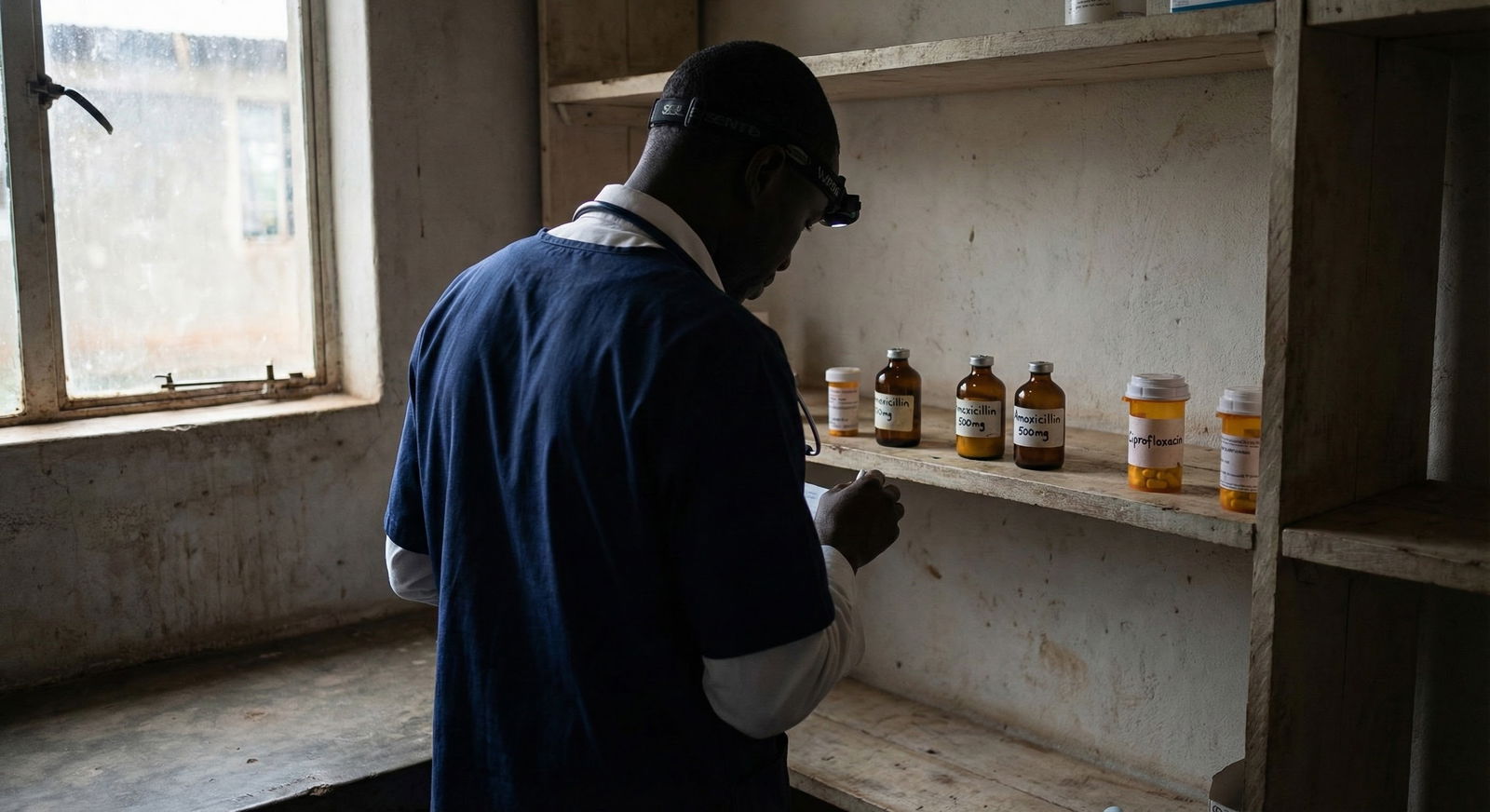
Use a fast checklist like this:
- Count controlled medications against the log.
- Compare MAR to signed orders.
- Pull all charts with high-risk meds.
- Flag and correct unsigned or mis-signed orders.
- Document corrective actions before team dismissal.
- Brief the next-day lead on unresolved issues.
This takes minutes, not hours, if your process is disciplined during the day. If it takes forever, that is not a reason to skip it. That is proof your system needs repair.
- Prevent prescribing-authorization mistakes by creating a pre-mission credential map and enforcing a hard stop: if it is not authorized, it is not signed.
- Use a two-check workflow: authorization first, clinical safety second.
- Standardize order sets, high-risk medication micro-protocols, and documentation minimums.
- Run a closed-loop reconciliation between orders and administration every shift.
- Build timeboxed authorization requests so pending approvals do not derail safe patient care.
- End each day with a quality sweep led by one accountable person.
The missions that handle medications safely are not the ones with the smartest people. They are the ones with the clearest rules. That is the truth. Good intentions do not authorize orders. Experience does not replace documentation. And charity is not a waiver for sloppy prescribing.
If you lead mission care, fix the system before the plane leaves. Build the map. Write the order sets. Assign the checks. Print the checklist. Then train the team until the process feels routine. That is how you protect patients, protect your clinicians, and keep your mission worthy of the trust people place in it.