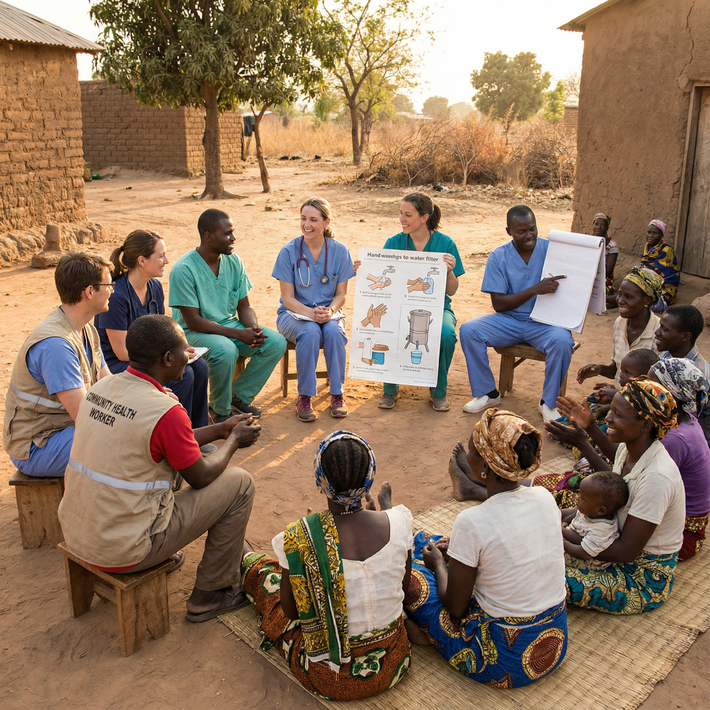
Two applicants. Same trip to Guatemala. Same week in a rural clinic. Same photo of them wearing scrub caps and sorting blood pressure cuffs under a painted cinderblock wall fan.
But then the applications diverge.
The MD applicant writes: Observed physicians in a resource-limited setting, coordinated patient intake, developed an interest in global health systems, and later pursued a campus research project on language concordance in preventive care.
The DO applicant writes: Served in an underserved community clinic, supported continuity efforts with local staff, and deepened my commitment to whole-person care and service for patients with limited access to primary care.
Both descriptions are plausible. Both may be honest. Both are also strategic.
That is the part applicants often miss. Medical mission experiences are not interpreted in a vacuum. They are filtered through the language of the application system, the priorities of the school, and the reader's tolerance for fluff, tourism, and ethical blind spots. I have seen the same exact trip read three different ways by three different reviewers: inspiring service, superficial travel, or basically irrelevant. The trip did not change. The framing did.
So the real question is not just whether mission trips “look good.” That question is lazy. The better question is this: what does the available data actually show about who lists these experiences, how often they show up, and how MD versus DO applicants tend to present them?
The answer is more nuanced than most advising forums make it sound. There is no neat national table from AAMC or AACOM saying “x% of MD applicants listed missions and y% of DO applicants did the same.” That dataset does not exist in a clean, standardized way. What we do have is indirect evidence from activity descriptions, admissions surveys, school mission statements, secondary prompts, matriculant profiles, and qualitative reviews of applicant narratives. Imperfect data. Still useful.
And the pattern is clear enough to say this plainly: both MD and DO applicants list mission-related experiences with regularity, but the experiences are often labeled differently, emphasized differently, and judged differently. That matters a lot.
What We Mean by “Medical Missions” in the Application Context
Before talking about patterns, we need to clean up the term itself. “Medical mission” is a messy label. Applicants use it loosely. Schools read it skeptically. Advisers often dislike it because it can mean something substantial or something embarrassingly thin.
In admissions language, medical missions usually include:
- Short-term global health trips
- Faith-based service trips with clinical exposure
- Volunteer clinical work abroad
- Public health outreach in another country
- Mobile clinics or screening campaigns in underserved regions
- Mission-adjacent domestic outreach that applicants frame similarly, especially free clinics or rural service intensives
That last category gets overlooked. Not every “mission-like” activity is international. Some applicants never leave the United States but describe prolonged service in migrant farmworker clinics, tribal health outreach, or homeless street medicine in ways that carry the same service-and-sacrifice narrative.
Admissions readers infer a lot from the wording. Sometimes too much. A mission entry may signal:
- Service orientation
- Interest in underserved communities
- Cultural exposure
- Adaptability in low-resource settings
- Global health curiosity
- Faith-driven service
- Or, if written badly, voluntourism and poor judgment
That is the hard truth. If an applicant writes three glowing sentences about “bringing care to the poor” but cannot explain supervision, scope, continuity, or what local clinicians were already doing, the entry starts to smell bad. Fast. Reviewers notice the tone. Savior framing is not subtle, and neither is ethical sloppiness.
A meaningful mission experience usually has at least one of three features:
Longitudinal commitment
The trip was part of a broader service pattern before and after travel.Defined role and supervision
The applicant can say exactly what they did, who oversaw them, and what was appropriate for a premedical student.Reflective depth
The lesson was not “I learned medicine is the same everywhere.” That kind of sentence deserves to be deleted on sight.
A one-off travel experience can still have value. I am not saying otherwise. But a four-day trip with photos, vague emotion, and no follow-up is weak. Weak clinically. Weak ethically. Weak narratively. Applicants love these because they feel dramatic. Committees are less impressed.
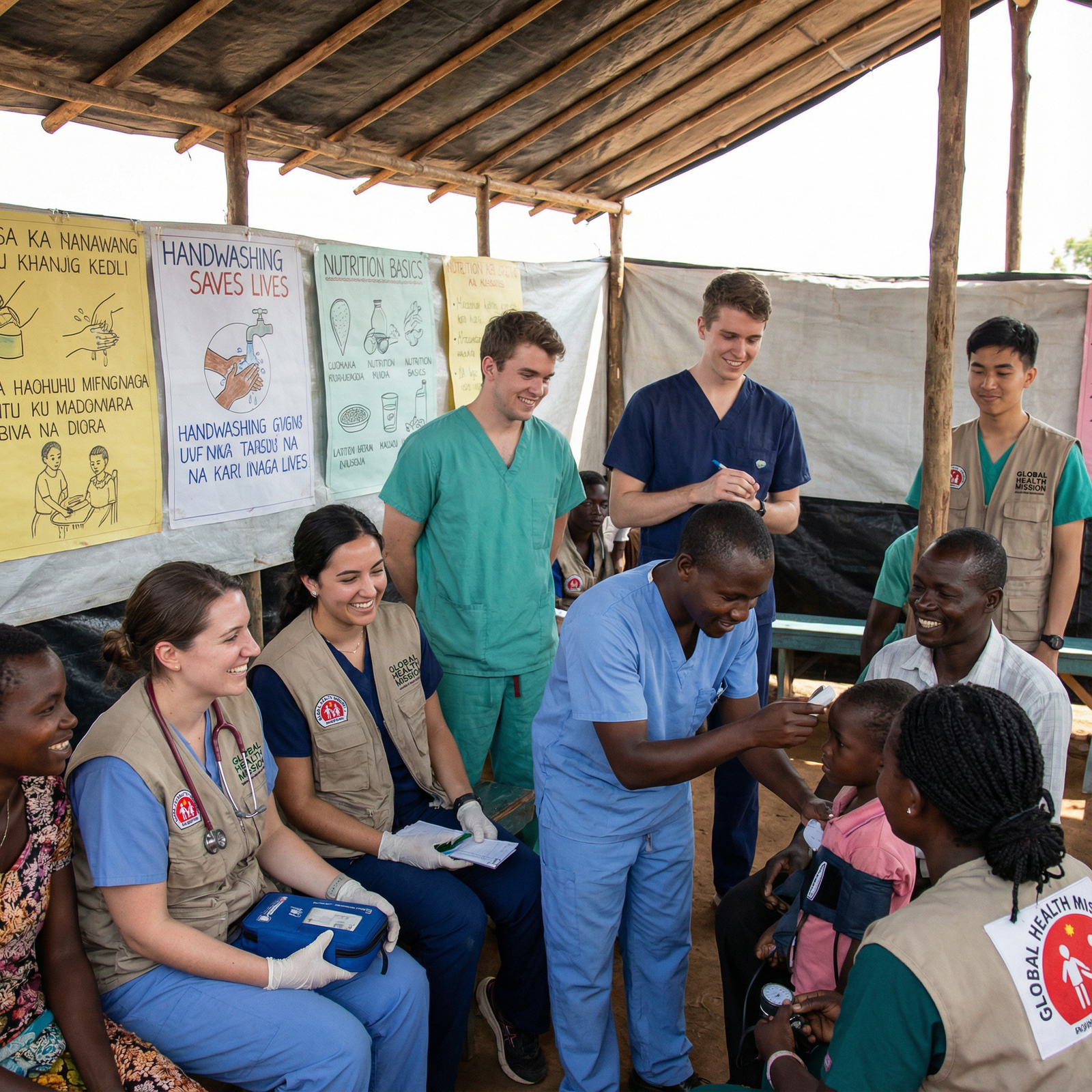
The strongest entries do not rely on the trip’s location to create meaning. They show that the applicant understood the limits of their role, respected local systems, and translated the experience into sustained service or mature insight. That is what carries weight.
What the Data Says About MD vs DO Applicants Listing Missions
Here is the honest version: the data is broad but not tidy.
There is no standardized national reporting category for “medical missions” across all MD and DO applicants. AAMC publishes robust admissions data, and AACOM provides applicant information, but neither system gives you a perfect cross-tab for short-term medical mission experiences. So when people claim exact differences, they are usually bluffing or overinterpreting scraps.
The evidence comes from four main places:
- School-specific admissions reports and mission-fit summaries
- Applicant self-report surveys and premed advising datasets
- Secondary essay prompts that reveal what schools expect applicants to discuss
- Qualitative analyses of activity descriptions, personal statements, and interview narratives
That means the data is indirect. Still, indirect data can show patterns if you read it carefully.
The broad pattern
Both MD and DO applicants commonly report service experiences that could reasonably be classified as mission-related or mission-adjacent. But the labels differ.
MD applicants are more likely to describe the activity using phrases like:
- global health
- health disparities
- public health outreach
- clinical volunteer abroad
- international service-learning
- research and service immersion
DO applicants are more likely to use language such as:
- underserved care
- community outreach
- service mission
- primary care exposure
- holistic patient support
- faith-based or community-based service
This does not mean DO applicants travel more or MD applicants care more about global health. It means the narrative packaging differs. That distinction matters because application readers react to words before they react to your intentions.
Why the pattern likely exists
DO programs, on average, emphasize community service, primary care orientation, access, and whole-person care more explicitly in their public mission language. Not every school. But enough that applicants tailor accordingly. I have reviewed AACOMAS-style narratives where the same trip is framed around continuity, listening, underserved families, and social barriers to care. That framing fits osteopathic messaging well.
MD applicants often feel pressure to position the same experience within a broader arc: leadership, health systems, epidemiology, language barriers, global policy, or scholarly curiosity. Sometimes that works beautifully. Sometimes it sounds like someone turned a week of intake paperwork into a pretend diplomatic posting.
What applicants appear to emphasize
If you pull from school websites, accepted-student bios, activity examples in advising offices, and common secondary themes, mission entries tend to cluster differently:
- DO applicants more often connect the experience to service identity, primary care aspirations, rural or underserved medicine, and humanistic care.
- MD applicants more often connect it to global medicine, public health, systems thinking, leadership, and occasionally research follow-up.
Again, these are tendencies, not laws. Plenty of MD applicants write excellent service-centered narratives, and plenty of DO applicants present mission work through public health and leadership language.
The chart above is illustrative in structure, not a national census. That caveat matters. But the directional pattern matches what many advisers and admissions readers see repeatedly.
What school prompts indirectly tell us
Secondary prompts are revealing because they show what schools want applicants to notice about their own experiences.
Many DO schools repeatedly ask about:
- commitment to underserved populations
- community engagement
- resilience through service
- fit with osteopathic principles
- why primary care or holistic care matters
MD schools, especially research-heavy or globally engaged programs, more often open doors for discussion of:
- leadership
- service and structural inequity
- health systems exposure
- diversity and cultural humility
- scholarly or policy implications of experiences abroad
Applicants respond to incentives. Of course they do. If a school asks about service to vulnerable communities, your mission trip gets framed around service. If a school asks about health equity and systems reform, the same trip becomes a story about barriers to care and local infrastructure. This is not dishonesty by default. It is rhetorical selection. But there is a fine line between emphasis and spin.
The limits of the evidence
This is where I get blunt: do not overread this topic.
The evidence has major weaknesses:
- Self-selection bias: applicants who had positive or prestigious experiences are more likely to report them prominently.
- Inconsistent terminology: one person says “global health internship,” another says “medical mission,” another says “community outreach abroad,” and they may have done nearly identical things.
- School-level distortion: mission-driven schools attract applicants who know how to speak the school’s language.
- No standardized coding: national systems do not uniformly classify these entries in a way that lets us compare apples to apples.
- Qualitative inflation: applicants often exaggerate the significance of short experiences, which contaminates any narrative analysis.
So what can we say with confidence? This:
- Mission-related experiences appear in both MD and DO applicant pools with regularity.
- DO applicants often frame them more directly through service, access, and primary care language.
- MD applicants often frame them more through global health, leadership, systems thinking, or academic extension.
- The strength of the entry depends far more on depth and honesty than on whether the applicant is applying MD or DO.
That last point is the one worth remembering. The letters after the school name do not rescue a weak story.
How Admissions Committees Interpret Mission Trip Entries
Reviewers are not asking, “Did this applicant go somewhere interesting?” They are asking a tougher set of questions.
- How long was the experience?
- What did the student actually do?
- Was there appropriate supervision?
- Did the applicant understand ethical boundaries?
- Is there evidence of reflection rather than self-congratulation?
- Did this experience connect to real service before or after the trip?
That is the checklist, whether anyone admits it or not.
A short trip can help. It can also hurt. Or do absolutely nothing.
When it helps
A short trip helps when the applicant had a clear, appropriate role and can reflect intelligently. For example: interpreter support, patient intake, logistics coordination, health education, pharmacy inventory, data collection under supervision. These are believable. Useful. Safe.
When it hurts
It hurts when the description implies clinical overreach. Premeds writing that they “treated patients,” “performed procedures,” or “delivered care independently” on a brief overseas trip are waving a red flag. Sometimes that flag is ignorance. Sometimes embellishment. Neither is good.
When it does nothing
Most mission entries do nothing. That is the underrated answer. They sit in the activities section as a mildly positive service item and carry very little weight because they are too brief, too generic, or too similar to dozens of others.
Here are the classic red flags:
- Vague language with no stated duties
- Heavy emphasis on travel and inspiration
- Savior tone
- No mention of local professionals or supervision
- Inflated claims of impact
- Glossing over the ethics of short-term care
- Treating patient poverty as a backdrop for personal growth
I have seen applicants sabotage otherwise strong files with one badly written paragraph about “bringing medicine to those who had none.” That sentence tells on you. Fast.
MD and DO programs may read the same experience through different institutional lenses. A DO school with a heavy service mission may respond positively to an entry grounded in continuity, humility, and underserved care. An MD program with strong global health infrastructure may value the same trip more if it led to sustained scholarly engagement or local advocacy. But neither type of school wants ethical nonsense. No one serious is impressed by a premed playing doctor abroad.
Why MD and DO Applicants May Present the Same Experience Differently
This is where strategy enters. Not fake strategy. Smart strategy.
Osteopathic programs often emphasize service, access, prevention, and whole-person care in ways that are explicit and repeated. Applicants absorb that. So they write about mission experiences through relationships, listening, primary care barriers, and community trust. Usually a good move.
Allopathic applicants, especially those applying broadly across mission-driven, research-intensive, and academically prestigious programs, often shape the same experience toward leadership, public health, systems awareness, or global medicine. Also understandable.
The problem starts when applicants optimize the story so aggressively that the human truth disappears.
You can hear it when it happens. The essay starts sounding machine-made. Every sentence is polished, mission-aligned, and dead. No friction. No uncertainty. No sense that a real person learned something uncomfortable. That is bad writing and bad self-presentation.
The same experience can change perceived value dramatically based on wording.
Compare these:
- “Participated in a medical mission to Peru and helped provide care.”
- “Supported intake flow, vaccination record organization, and Spanish-language patient navigation during a one-week clinic outreach coordinated by local physicians.”
- “The trip exposed me to healthcare disparities and inspired me to become a physician.”
- “I realized how quickly short-term service can center the volunteer rather than the community, which pushed me to continue working in a free clinic at home where continuity and accountability were possible.”
Second versions win. Every time. Specificity beats sentiment. Reflection beats performance.
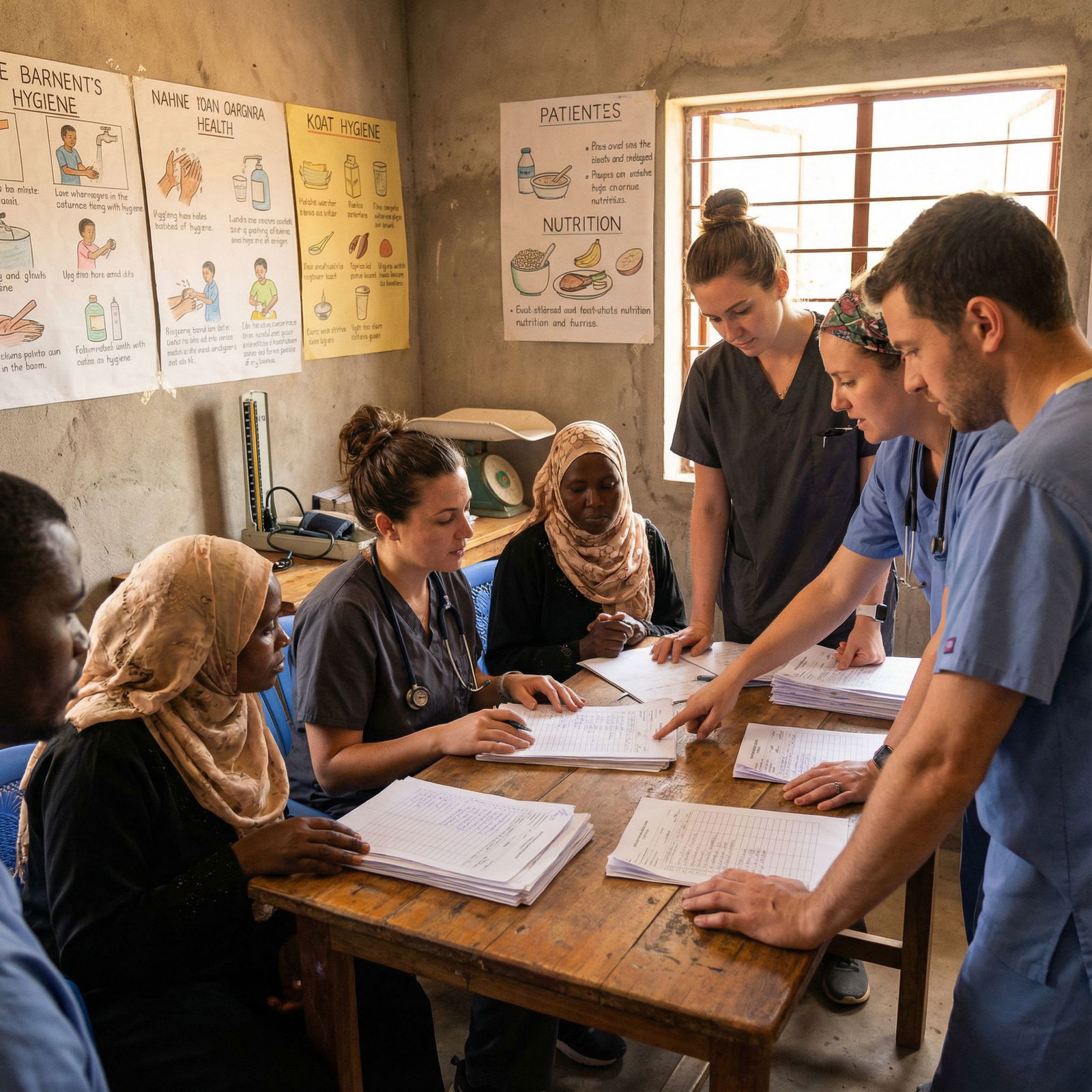
The trip did not become better because the prose became smarter. But the application became more credible. That matters.
Practical Guidance for Applicants Deciding Whether to List a Medical Mission
Here is my standard advice.
List the experience if you had a real role, stayed within ethical limits, and can discuss it with precision. Do not inflate it. Do not build your whole identity around it if it was brief. And do not pretend that going abroad automatically makes service more meaningful than serving your own community consistently for two years. It does not.
Use a simple decision filter.
You should list it if:
- You had defined responsibilities
- There was clear supervision
- The experience fits your broader service narrative
- You can explain what you learned without sounding self-congratulatory
- The trip influenced later action, reflection, or commitment
You should downplay it if:
- It lasted only a few days
- Your role was mostly observational
- You cannot describe outcomes or responsibilities clearly
- The most memorable part was the travel rather than the service
- You have stronger local service experiences that better show who you are
You should be very careful if:
- You performed tasks beyond your training
- The organization was poorly supervised
- The experience now makes you uneasy ethically
- You only want to include it because you think admissions committees expect it
That last one is common. And dumb. Applicants overvalue the optics of mission trips because they look dramatic on paper. But admissions readers are not tourists browsing your life for scenic highlights. They are trying to predict what kind of trainee you will be.
When you write about the experience, include:
- Location
- Setting: rural clinic, mobile outreach, church-affiliated health fair, community screening program
- Duration
- Your specific role
- Who supervised you
- What you learned
- How it shaped later action, if at all
For MD applicants, the strategic move is not to sound more intellectual than you are. It is to connect the experience honestly to health equity, systems, leadership, language barriers, or scholarship only if those links are real.
For DO applicants, the strategic move is not to mechanically sprinkle in “holistic” and “underserved” as if those words are magic spells. Show concrete service, relationship-centered thinking, and genuine fit with osteopathic values.
For both groups, authenticity is not a soft virtue. It is a practical advantage. Interviewers can smell canned narratives in minutes.
If your best evidence of service is a one-week trip abroad, your application likely has a deeper weakness. If your mission trip is one piece of a long pattern of service, humility, and clinical maturity, then yes, include it. Proudly. Carefully. Precisely.
Summary
The data does not support a simplistic MD-versus-DO story about medical missions. Both applicant groups list mission-related experiences. Both use them to signal service, commitment, and perspective. The real difference is usually not who went on the trip. It is how the trip gets framed.
DO applicants more often present these experiences through service, access, primary care, and whole-person care. MD applicants more often tie them to global health, leadership, systems thinking, or academic follow-through. Those are real trends, even if the evidence is indirect and messy.
But here is the part I care about most: committees do not reward the trip itself. They reward judgment. Clear role definition. Ethical awareness. Honest reflection. Sustained service. If your entry sounds like medical tourism with better lighting, it will not help you. If it shows maturity, restraint, and a real commitment to patients and communities, it can be genuinely valuable.
Same trip. Different application. Very different outcome.