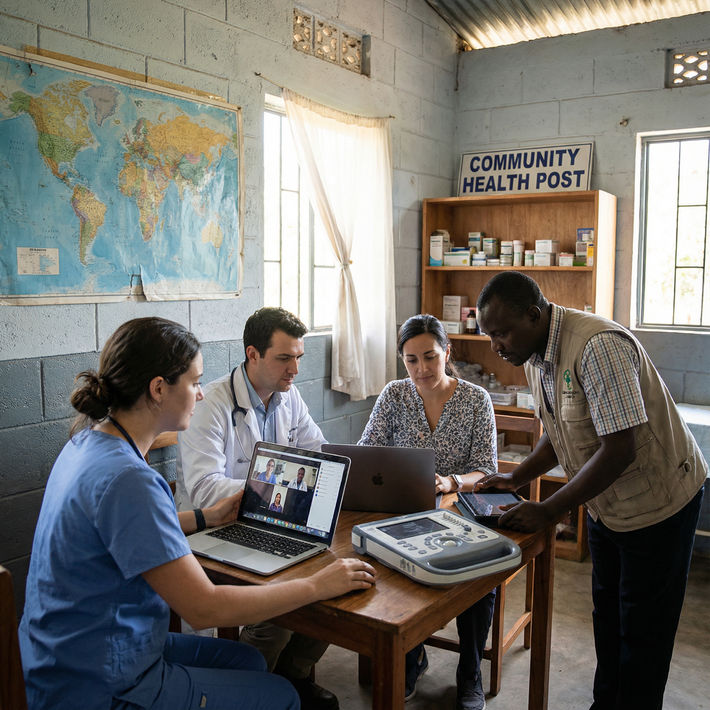
Mission trips can be meaningful. Sometimes life-changing. They can deepen your sense of service, expose you to health inequity, and give you stories that matter.
But here’s the mistake that hurts applicants every year: they take a meaningful mission experience and label it as clinical experience when it wasn’t.
That’s not a harmless wording choice. It’s an application risk.
I’ve seen this happen in real review conversations. An applicant writes “provided patient care on a medical mission trip,” then an interviewer asks, “What exactly did you do?” Suddenly the story becomes, “I helped with intake, translated, handed out supplies, and watched physicians treat patients.” That’s not the same thing. And once the wording looks inflated, the rest of the application gets viewed through a harsher lens. Fair or not, that’s how credibility works.
The downstream damage is real:
- You lose trust quickly.
- Interviewers start probing for exaggeration.
- A small wording error becomes a professionalism concern.
- Your genuine service work gets overshadowed by suspicion.
Don’t make the lazy classification mistake. Mission work can be:
- service
- observation
- public health exposure
- community outreach
- translation support
- logistics
- education
- sometimes direct patient care under supervision
Those are not interchangeable.
The safest move is also the strongest one: describe exactly what you did, in plain language, with no inflation. If your mission trip was admirable but non-clinical, say so. Cleanly. Specifically. Honestly. That protects you far better than a flashy label ever will.
Why This Labeling Error Can Sink Your Application
Residency applications are full of compressed language. Titles get shortened. Entries get trimmed. People try to make an experience “sound stronger.” That’s where applicants get themselves into trouble.
A mission trip often feels medical because it happened in a clinic, around physicians, around patients, in a setting of obvious need. But proximity to patient care is not the same as patient care. Don’t blur that line.
Reviewers are trained to notice overstatement. If you call yourself a “clinician,” “medical volunteer,” or someone who “provided care,” you are implying a level of hands-on responsibility that has to hold up under questioning. If it doesn’t, your problem isn’t just semantics. It’s judgment.
And judgment matters.
What reviewers often sort out immediately is this:
- Service = helping a community, often in non-clinical ways
- Observation = shadowing or watching care delivery
- Public health exposure = education, prevention, screening support, outreach
- Direct patient care = actual supervised clinical interaction with patients
Those categories overlap in spirit, but not on an application.
A lot of applicants think, “But I was in a medical setting, so calling it clinical isn’t that big a stretch.” Wrong. That stretch is exactly the problem. Interviewers can smell it. Program directors can smell it. And if one part of your application feels embellished, they start wondering where else you’ve rounded up.
Be protective of your credibility. That should be your rule. Accurate, specific wording is not underselling yourself. It’s professionalism.
What Counts as Clinical Experience vs Mission Service
Let’s make this simple, because applicants get tangled in this when they shouldn’t.
Clinical experience generally means one of these:
- Direct patient care, appropriately supervised
- A defined clinical role in a health-care setting
- Documented clinical volunteering
- Clearly described shadowing/observation, if labeled as observation rather than patient care
That means there is a real patient-facing medical component, and your role is clear.
Mission service is broader. It may include:
- community outreach
- health education
- patient intake support
- logistics and supplies
- registration
- translation
- transportation coordination
- public health campaigns
- screening support
- shadowing physicians or nurses
All of that may be valuable. None of it automatically becomes clinical experience.
Here are the common mislabels I’d avoid hard:
- “Clinician” when you were a student observer or volunteer
- “Medical volunteer” if the role was mostly administrative or outreach-based and the term would imply hands-on care
- “Clinical experience” when the work was mission service without direct patient interaction
- “Patient care” when you mainly escorted, interpreted, organized, or watched
The gray zone is where people get sloppy. For example:
- Day 1–2: observed mobile clinic physicians
- Day 3: assisted with patient flow and translated instructions
- Day 4: participated in diabetes education at a church
- Day 5: helped with blood pressure screening logistics
That is not one giant block of “clinical experience.” It’s a mixed service experience with observational and outreach components.
Classify mixed roles carefully:
- Separate observation from service.
- Name clinical tasks only if they were real and supervised.
- Don’t let the setting do the exaggerating for you.
Just because the trip was organized by a medical team doesn’t mean your role was clinical. That’s the trap.
How to Write Mission Work Honestly on ERAS and a CV
Here’s the good news: you do not need to exaggerate mission work to make it impressive. You need to write it well.
Start with safe, accurate wording. Good examples:
- Served in a community medical outreach setting
- Assisted with Spanish-English translation during clinic visits
- Supported patient intake and flow under team supervision
- Participated in community health education sessions
- Observed physicians in a mobile clinic serving rural communities
- Helped organize screening events and patient registration
- Supported follow-up communication and resource distribution
That language preserves impact. It also survives scrutiny.
Bad wording usually has one problem: it invites the reviewer to assume more than you did. Watch out for phrases like:
- “provided medical care”
- “treated underserved patients”
- “worked as a clinician”
- “managed patients”
- “performed examinations”
unless that is literally true, supervised, and defensible
I’ve seen applicants get burned by a single verb. “Assisted” was accurate. They changed it to “delivered.” Big mistake. Now it sounds like independent clinical action. Now it sounds implausible. Now you’re explaining yourself in an interview instead of talking about what you learned.
Where mission work belongs on ERAS or a CV
This depends on the experience.
If it was primarily service or outreach:
- Place it under volunteer experience, service, community engagement, or a similar section.
If it was primarily observation:
- Label it as shadowing, clinical observation, or observational experience.
If it included true supervised patient-facing work:
- You may describe the clinical portion accurately, but keep the wording narrow and factual.
What to include in the description
Use specifics:
- Setting: rural clinic, mobile outreach unit, community church health fair, vaccination drive
- Location: country, region, or city
- Supervision: supervised by attending physicians, nurses, local public health staff
- Actual duties: translation, intake, education, observation, registration, screening support
That is far stronger than inflating the title.
For example, compare these:
Risky:
“Clinical Experience, International Medical Mission — Provided patient care to underserved populations.”
Safer:
“Volunteer, Community Medical Outreach, Guatemala — Assisted with patient intake, translated during physician visits, and participated in diabetes-prevention education sessions under supervision.”
See the difference? One sounds padded. The other sounds real.

And one more warning: don’t use vague language and hope reviewers interpret it kindly. They usually won’t. If your wording makes them guess, they’ll often guess that you’re stretching.
Red Flags Reviewers Notice Immediately
Some phrases trigger skepticism on sight. Fast.
Here are the big ones:
- Inflated titles like “international clinician” or “mission physician assistant” when you were a student volunteer
- Impossible claims like independently diagnosing or treating patients abroad
- Descriptions that imply unsupervised practice
- Buzzwords without duties — lots of emotion, no concrete tasks
Another common mistake is inconsistency across materials. Your ERAS entry says “clinical volunteer.” Your CV says “medical mission service.” Your personal statement says you “cared for patients in rural clinics.” Then in the interview you admit you mostly observed and translated. That inconsistency is poison. Not dramatic. Just deadly.
If you can’t defend the wording out loud in a calm, detailed interview answer, it’s too strong.
And yes, specialty matters. Competitive fields and clinically intense specialties often scrutinize this harder because applicants sometimes try to use mission work to imply deeper hands-on experience than they actually have. Reviewers have seen that movie before. They know the script.
The solution isn’t to hide the experience. It’s to clean it up.
Safer Alternatives, Final Check, and When to Ask for Help
Before you submit anything, do this final check.
Your pre-submission checklist
- Does the title match what you actually did?
- Could you explain the role clearly in two sentences during an interview?
- Is the wording consistent across ERAS, your CV, personal statement, and talking points?
- Did you separate observation, service, and clinical tasks instead of blending them?
- Would a supervisor from that trip agree with your description?
If you hesitate on any of those, fix it now.
When you’re in doubt, use the fallback that almost never fails: describe the setting and the tasks, not the prestige label. Say what you did. That’s it. Clean, factual, defensible.
And if the experience lives in a gray zone, ask for help. A mentor. Faculty advisor. Pre-health committee member. Someone who has read applications and knows how these entries are interpreted. Don’t trust your own optimism here. Applicants are terrible at judging whether a description sounds inflated.
Revise now. Seriously. Don’t wait until interview season to discover that one overreaching phrase has made people question your judgment. Mission work can strengthen your application. But only if you present it honestly.
Protect your credibility first. Always.
Key Takeaways
- Do not label mission work as clinical experience unless it truly involved direct patient care or clearly documented clinical activity.
- Precise, defensible language protects your credibility far better than inflated wording.
- If the experience was mixed or borderline, describe the setting and duties carefully and get a second opinion before submitting.